
Welcome to "Donut Break the Internet", Donutz Digital’s weekly newsletter dedicated to digital marketing news. Here, you'll find a roundup of must-know updates, practical tips, and in-depth analyses on marketing.
This week's Donutz:
Your Dashboard Just Became Prime Ad Real Estate 🚗
What $8 Million Actually Buys in 2026 💰
Pinterest’s Tariff Trouble Signals Broader Retail Ad Pullback 📉
If you haven’t already, make sure to subscribe! Until then, enjoy your read. 🚀
Remember when your car just... drove you places? Those days are officially over. Automakers have discovered a lucrative new revenue stream hiding in plain sight: those massive infotainment screens sitting on your dashboard.
With connected screens now standard in 97% of new vehicles worldwide, manufacturers are transforming cars into rolling billboards. Companies like Ford, Toyota, Volkswagen, and Mercedes are partnering with platforms like 4screen to serve targeted ads directly to drivers.

Zerin Dube@SpeedSportLife
Late stage capitalism popping up on our Grand Cherokee.

11:22 PM · Nov 18, 2025 · 105K Views
42 Replies · 10 Reposts · 228 Likes
But it goes deeper than basic location targeting. Ford has patented technology that would listen to in-car conversations and serve relevant ads based on what you’re discussing. Yes, you read that right, your car could be eavesdropping on your chat about pizza night to suggest nearby restaurants.
The economics are compelling for automakers. Industry analysts estimate in-car advertising could generate between $100-$120 per vehicle annually by 2030, creating a $50 billion addressable market across 400 million connected cars globally. That’s serious money in an industry constantly searching for new revenue streams.
Why are manufacturers so aggressive about this? The answer lies in their increasing hostility toward Apple CarPlay and Android Auto. When drivers use phone-mirroring systems, automakers lose access to valuable data and advertising opportunities. GM has already announced it’s dropping support for these platforms entirely, with CEO Mary Barra citing the “very, very early stages of services” they want to deliver.
The 4screen platform tracks success by monitoring parking rates at advertised locations for up to three days post-notification, claiming conversion boosts between 3-7%. For advertisers seeking captive audiences already in motion, it’s an attractive proposition.
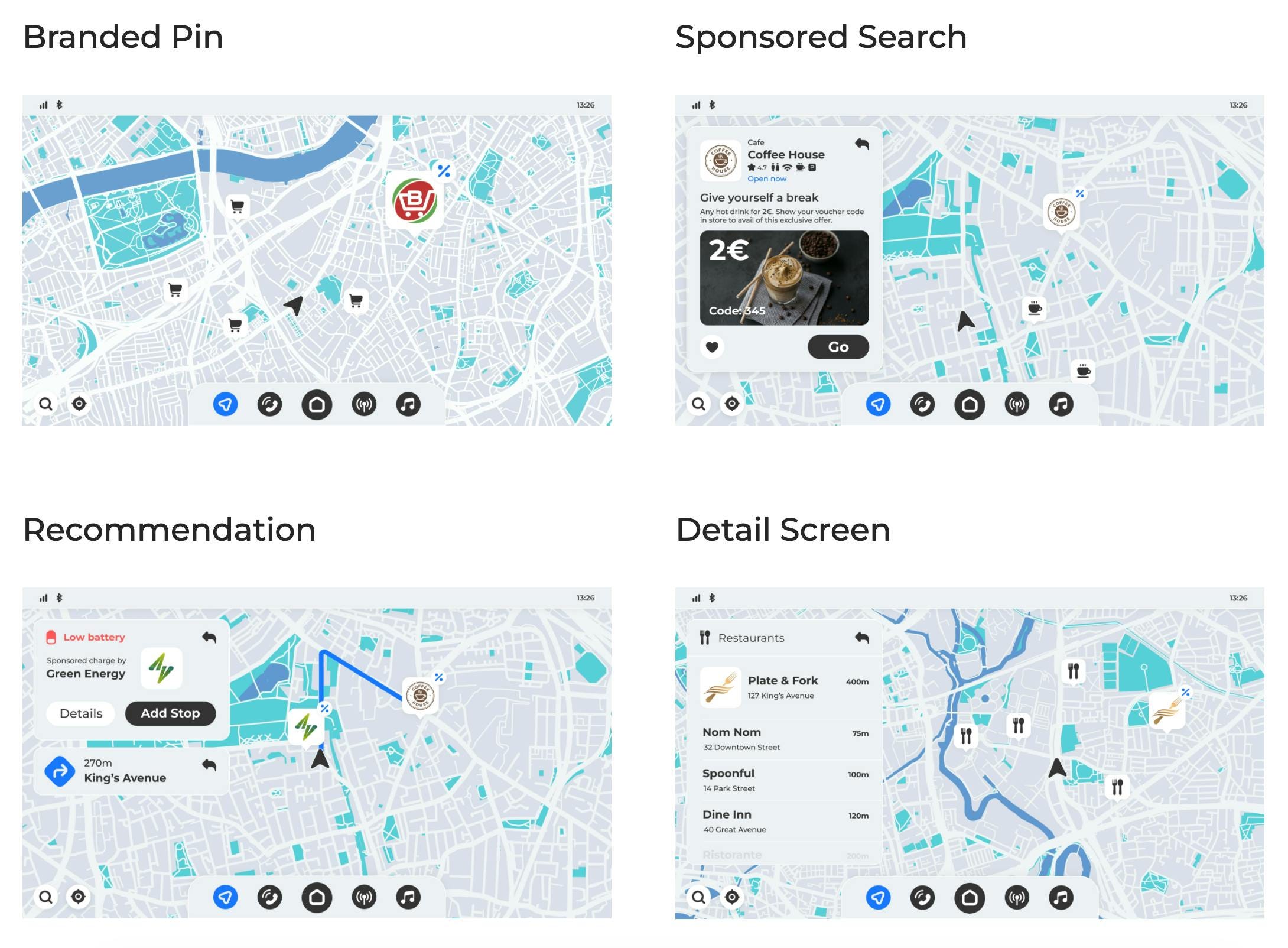
As autonomous driving technology advances, the potential explodes further. Passengers with nothing to do but stare at screens become perfect targets for sustained advertising campaigns. While platforms like Waymo have denied plans to use in-car cameras for ad targeting amid privacy concerns, the infrastructure and incentives are already in place.
For marketers, the message is clear: the automotive industry is opening up entirely new real estate for reaching consumers. The question isn’t whether cars will become advertising platforms, they already are. The question is how invasive we’ll allow them to become.

With Super Bowl ad slots hitting $8 million for 30 seconds of airtime, savvy marketers are asking the inevitable question: what else could we do with that budget?
The answer might surprise you. While the Big Game delivers access to roughly 127 million simultaneous viewers, that same investment can generate anywhere from hundreds of millions to several billion impressions across alternative channels.
Influencer partnerships offer scale at both ends of the spectrum. The same budget could fund collaborations with 780 micro-influencers (10,000-100,000 followers) or 52 elite macro-influencers (over 500,000 followers). Given that creators are increasingly featured in Super Bowl commercials themselves, the lines between traditional and influencer-led advertising continue to blur.
TikTok and Meta offer massive reach, though uncertainty around the platform’s future ownership looms large. With CPMs between $5-$10, $8 million translates to between 800 million and 1.6 billion TikTok impressions. Meta’s Reels, slightly pricier at $7-$12 CPMs, would deliver 667 million to 1.1 billion impressions.
Programmatic display remains the volume leader, generating nearly 1.6 billion impressions at estimated $5 CPMs. As one agency director described it, brands could create a “haunting presence” online, essentially turning the internet into a digital billboard by serving banner ads to every U.S. internet user five times over.
Retail media networks offer conversion-focused alternatives. On Walmart Connect, $8 million buys between 5.3 million and 16 million shopper clicks (depending on targeting strategy). Target’s Roundel delivers similar performance at slightly higher CPCs.
Out-of-home advertising provides surprising longevity. A single wallscape on Interstate 95 in Miami costs approximately $130,000 for four weeks. The Super Bowl budget could theoretically maintain that same placement for 4.7 years. Airport terminal dominations offer between 667-889 million impressions at CPMs ranging from $9-$12.
Traditional TV isn’t dead yet. According to one media planner, $8 million could secure prime-time network TV spots every single night for four months, making a brand “the main character of prime time from Labor Day to New Year’s Eve.”
Thinking about your advertising mix? Donutz Digital can help you maximize every marketing euro/dollar.
Pinterest shares plummeted 20% in after-hours trading following disappointing Q4 earnings that missed Wall Street expectations. The culprit? Trump-era tariffs are causing major retailers to slash advertising budgets across the industry.
The numbers tell a concerning story. Pinterest reported Q4 revenue of $1.32 billion, slightly below analyst projections of $1.33 billion, with adjusted EBITDA of $541.5 million falling short of the expected $550 million. Full-year revenue hit $4.22 billion, representing 14% growth, respectable, but not enough to satisfy investors expecting stronger performance.
CEO Bill Ready didn’t mince words on the investor call: “Many of the largest retailers have been disproportionately impacted by tariffs and have been pulling back on advertising spend across the industry as they seek to protect their margins.” Because Pinterest counts major retailers as a significant portion of its advertiser base, it’s feeling the pain more acutely than platforms with more diversified revenue streams.
User growth remains strong, offering a silver lining. The platform reported 619 million global monthly active users in Q4, up 12% year-over-year. Gen Z now accounts for over half of all Pinterest users, a demographic win for long-term positioning, even as short-term revenue faces headwinds.
The strategic pivot is already underway. Pinterest is aggressively pursuing mid-sized enterprises and small-to-medium businesses to compensate for large retailer pullbacks. Ready emphasized these advertisers “continue to represent a significant opportunity for us to scale advertiser demand,” targeting companies generating annual GMV between tens of millions and $30 billion.
Meanwhile, Pinterest continues investing heavily in AI capabilities. The company’s AI-powered campaign management platform, Pinterest Performance+, aims to automate more of the advertising process. Pinterest Assistant, an AI-backed shopping companion enabling text and voice product searches, represents the platform’s push to become more full-funnel.
The question now: Can Pinterest successfully transition to serving smaller advertisers while maintaining the technological edge necessary to compete in an increasingly AI-driven advertising landscape? The company’s Q1 guidance suggests tough quarters ahead.
Thanks for reading! If you enjoyed this newsletter, share it with your network.
Make sure to subscribe to stay updated on our next editions. Have questions, topic suggestions, or insights to share? Reach out, we value your feedback!
Carla from Donutz Digital 🍩
No posts
Comments
Nothing yet. Say the first thing.
Sign in to join the conversation.