
Welcome to "Donut Break the Internet", Donutz Digital’s weekly newsletter dedicated to digital marketing news. Here, you'll find a roundup of must-know updates, practical tips, and in-depth analyses on marketing.
This week's Donutz:
AI Advertising: The Google vs. OpenAI Showdown 🤖
TikTok Launches Local Feed: Discovery Goes Hyperlocal 📍
Brand Safety Alert: Toxic Content Kills Trust by 19% ⚠️
If you haven’t already, make sure to subscribe! Until then, enjoy your read. 🚀
The battle for AI-powered advertising supremacy is heating up, and it’s not happening on search result pages anymore. OpenAI and Google have revealed sharply contrasting visions for how ads will work in AI-driven experiences, and marketers need to understand both.
OpenAI’s approach: Think conversational, not commercial. Instead of traditional banner ads, OpenAI is testing sponsored responses that appear as clearly labeled recommendations within ChatGPT conversations. If you ask for accounting software recommendations, advertisers could show up in the answer itself, but structured to feel helpful. The guardrails? Clear labeling, query-based relevance, and zero use of private conversations for targeting. It’s a bet that trust beats tactics.
Google’s strategy: Evolve what already works. Google is layering AI across its entire advertising ecosystem, from Search to YouTube to Shopping, with Performance Max becoming increasingly autonomous in budget allocation. Their new AI Mode in Search is testing ad formats that showcase sponsored retailers alongside AI-generated shopping recommendations.
The implications are significant. As AI assistants become primary discovery interfaces, brands won’t just compete for clicks, they’ll compete for inclusion in AI-generated answers.
Whether users discover through ChatGPT or Google’s AI Mode, first-party data and high-quality content feeds will determine visibility.

TikTok has introduced the Local Feed, a dedicated tab designed to help users discover nearby businesses, restaurants, events, and local creators. Think of it as TikTok’s answer to Google Maps but with the algorithm working overtime.
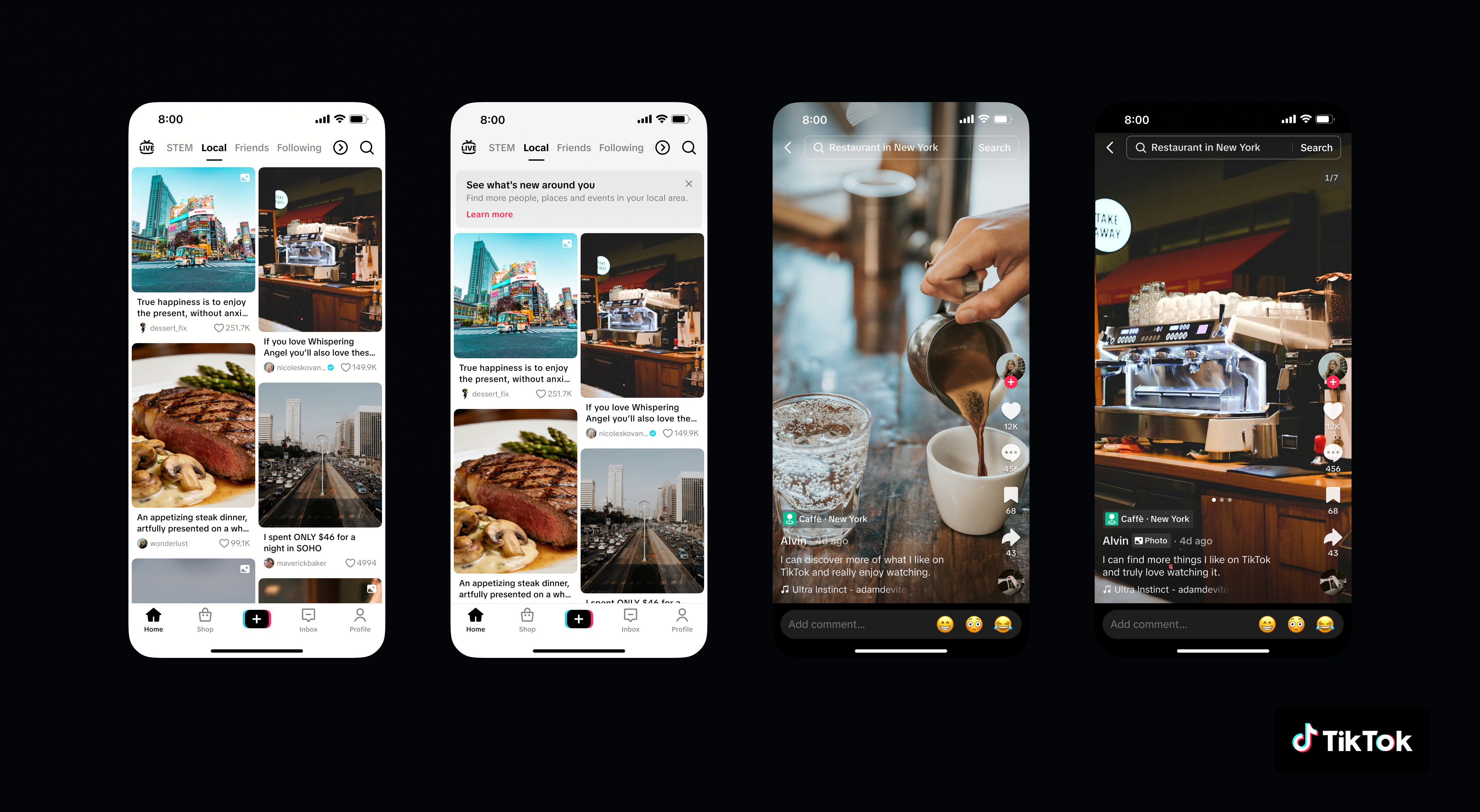
Content in the Local Feed is surfaced based on geographic proximity, topic relevance, and recency, making it easier for users to find what’s happening in their neighborhood. For small businesses, this is massive: 84% of TikTok small business users say the platform helped grow their business, while 75% reached customers beyond their local area.
Users must opt in to precise GPS location tracking, which defaults to off and only functions when the app is open. TikTok is clearly trying to balance utility with user control, especially given recent scrutiny around data practices.
For marketers, the opportunity is clear: local content creation just became a competitive advantage. If you’re a brick-and-mortar business, investing in TikTok content that highlights your physical location, local events, and community connections could drive actual foot traffic. The Local Feed turns scrolling into showing up.
Here’s the science that should make every media buyer sit up straight: When consumers see your ads placed next to unsafe or objectionable content, think racist posts, extremist material, or violent content, they view your brand up to 19% more negatively and trust you nearly 18% less.
The research comes from a comprehensive study analyzing 6.7 million posts on X, plus experiments across Facebook, YouTube. The findings? AT&T ads next to antisemitic content resulted in 18.8% worse brand opinions and 17.8% lower trust compared to neutral placements. Even people who only heard about the placement, without seeing it, had worse opinions of the brands involved.
The good news: response matters. An immediate brand response to unsafe placement incidents can increase trust by 18.1%, though delayed responses show diminishing returns.
What this means for your campaigns: Programmatic buying requires tighter controls. Focus on whitelisted channels, target by keywords rather than broad audiences, and implement rapid response protocols when things go wrong. Transparency and speed are your best defense against guilt by association.
This isn’t just about ethics, it’s about ROI. In an era where trust drives purchase decisions, adjacency matters as much as targeting.
Thanks for reading! If you enjoyed this newsletter, share it with your network.
Make sure to subscribe to stay updated on our next editions. Have questions, topic suggestions, or insights to share? Reach out, we value your feedback!
Carla from Donutz Digital 🍩
No posts
Comments
Nothing yet. Say the first thing.
Sign in to join the conversation.