
Ancient wisdom is not confined to academic lecture halls. From Stoic daily practices to Platonic reflections on civic health, we are witnessing a global hunger for frameworks that actually help us live well amidst complexity and rapid change.
That is precisely why the upcoming Pluartis Symposium 2026: The Philosophy Arena (taking place August 20–22 in Pula, Croatia) stands out as one of the most compelling events of the year; and it’s accessible online for everyone.
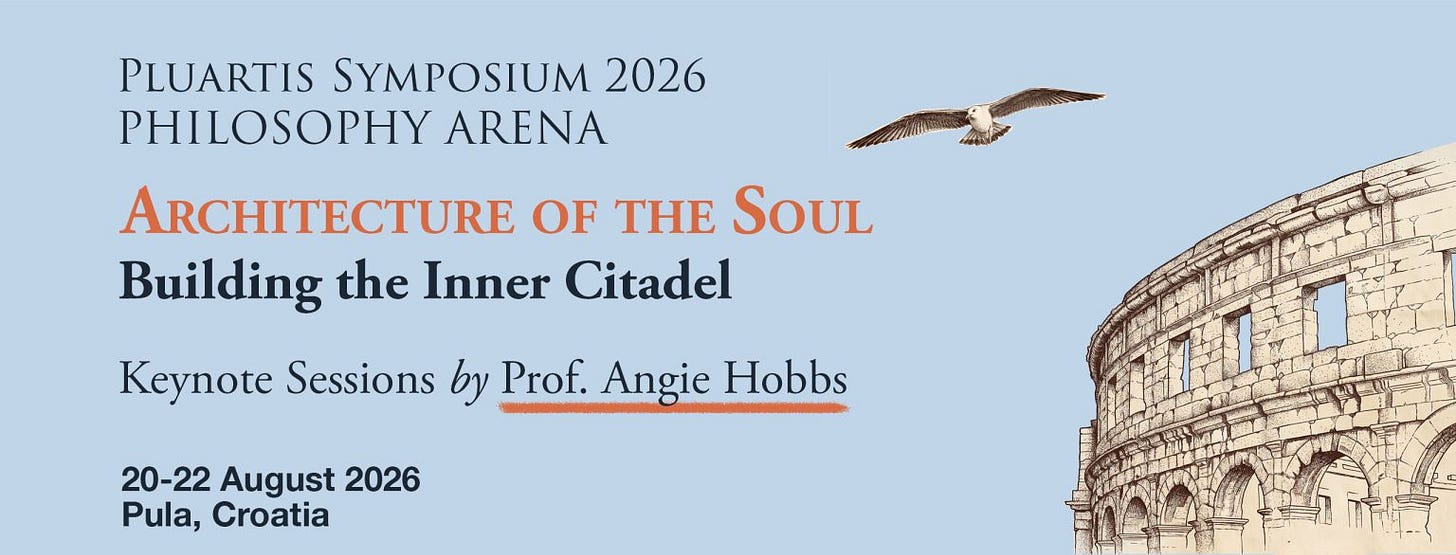
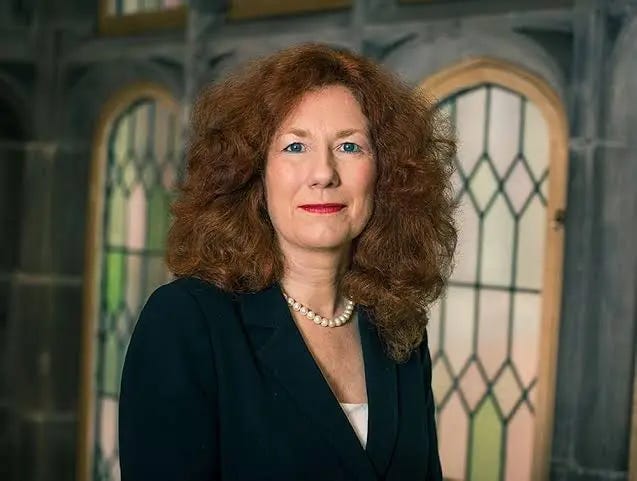
At the center of this gathering is keynote speaker Dr. Angie Hobbs—Professor Emerita of the Public Understanding of Philosophy at the University of Sheffield and author of Why Plato Matters Now—who is bringing two of antiquity’s most vital pillars directly into conversation with our contemporary dilemmas.
It forces a crucial question: As technology increasingly mimics human thought, creativity, and reasoning, what truly defines human virtue, consciousness, and character? Can an artificial mind ever develop an “inner citadel,” or is character inherently tied to the embodied human experience?
Set against the historical coastal landscape of Istria, the symposium’s central motif is Architecture of the Soul: Building the Inner Citadel. Particularly through the writings of Marcus Aurelius, the Inner Citadel represents the mind’s unshakeable fortress—a fortress constructed through self-examination, virtue, and clear perception that protects us from emotional turbulence and external chaos. But how do we actually construct such a citadel today?

Dr. Hobbs will lead the intellectual framework with two major keynote addresses designed to translate theory into actionable wisdom:
Why Plato Matters Now (August 20): Exploring Platonic ethics, fake news, autocracy, and the tripartite soul to help us diagnose and navigate the pathologies of modern public life.
Marcus Aurelius: A Leader for Our Times? (August 21): Focusing on Stoic strategies for cultivating mental resilience, emotional regulation, and inner stability in an increasingly fluid world.
What makes the Pluartis event particularly dynamic is how it bridges classical thought with cutting-edge existential questions. Alongside Dr. Hobbs’ keynotes, the symposium features afternoon debates centered on The Digital Soul: Can AI Inhabit the Citadel?
It forces a crucial question: As technology increasingly mimics human thought, creativity, and reasoning, what truly defines human virtue, consciousness, and character? Can an artificial mind ever develop an “inner citadel,” or is character inherently tied to the embodied human experience?
Dr. Hobb’s work consistently reminds us that philosophy isn’t a passive exercise or a fortress built for retreat; it is an active discipline designed to help us show up more clearly, courageously, and compassionately for ourselves and others.
Whether you approach philosophy through a Stoic lens, Platonic dialogue, or modern psychology, the core challenge remains the same:
How do we cultivate inner strength without shutting ourselves off from the world?
Dr. Hobb’s work consistently reminds us that philosophy isn’t a passive exercise or a fortress built for retreat; it is an active discipline designed to help us show up more clearly, courageously, and compassionately for ourselves and others.
If you are interested in exploring the full program or joining the debates in Pula you can read more about the lineup and registration details directly at Pluartis.com.
No posts
Comments
Nothing yet. Say the first thing.
Sign in to join the conversation.