
For those of you diligently making better-for-you swaps over the years and wondering if it’s all worth the money (or being nagged about your purchases): GOOD NEWS
…And full permission for a few “I told you so’s” aimed at your husband 😁
A recent study found that 103 female university students who swapped their personal care products for just 5 days lowered their:
∙ BPA by 39%
∙ Phthalates by 22%
∙ Parabens by 30%
Five days. Not five years.
Even if it is just one thing you switch out - it all makes a difference. Keep going - it’s not easy, but it’s worth it.
🛍️ As usual, here is the link to all my favorite things
🪥 The toothpaste I use and love is 20% off (🚨ends today): Use code MEMORIAL20, or if you missed the sale by the time you read this, my usual code PLATEFUL10 gets you 10% off.
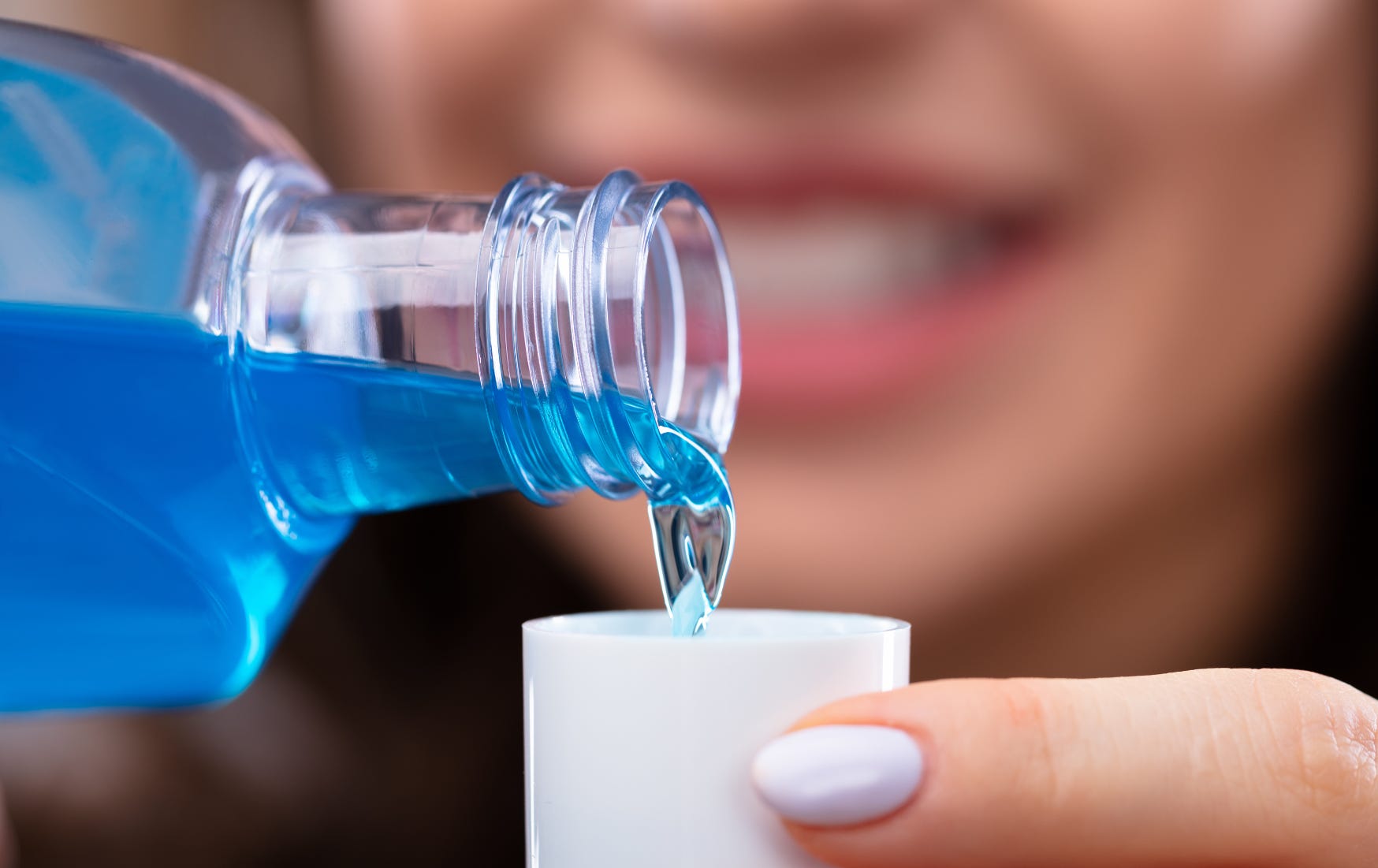
You’ve probably seen the headlines: “Listerine causes cancer.” “Mouthwash is harmful.”
There is now even a class action lawsuit filed against Johnson & Johnson in California, alleging that Listerine Cool Mint increases the growth of bacteria linked to colorectal and esophageal cancer.
Mouthwash didn’t become a bathroom cabinet staple because of groundbreaking science.
It became one because of brilliant marketing. In the early 20th century, brands like Listerine helped popularize a previously little-used term “halitosis” - turning foul breath into a social problem people needed to buy a product for.
Consumers were made to feel that this is what they needed to do to be socially accepted. By 2017, over 60% of Americans were using mouthwash, with 36% reaching for it every single day.
Maybe not. Just like we have friendly bacteria in our gut that are beneficial, there are a lot of bacteria in our mouth that are beneficial too!
Your mouth is a living ecosystem - the oral microbiome - home to hundreds of bacterial species. As with most ecosystems, balance is key, and killing 99.99% of bacteria may not be such a great thing - just like we know now that antibiotics can disrupt our gut microbiome in a negative way (antibiotics are life-saving, so take them if you need it - you can always re-build your gut after).
The real question isn’t whether mouthwash kills bacteria. It’s about which bacteria it’s killing and whether it’s beneficial for your health.
Let’s go through the evidence.
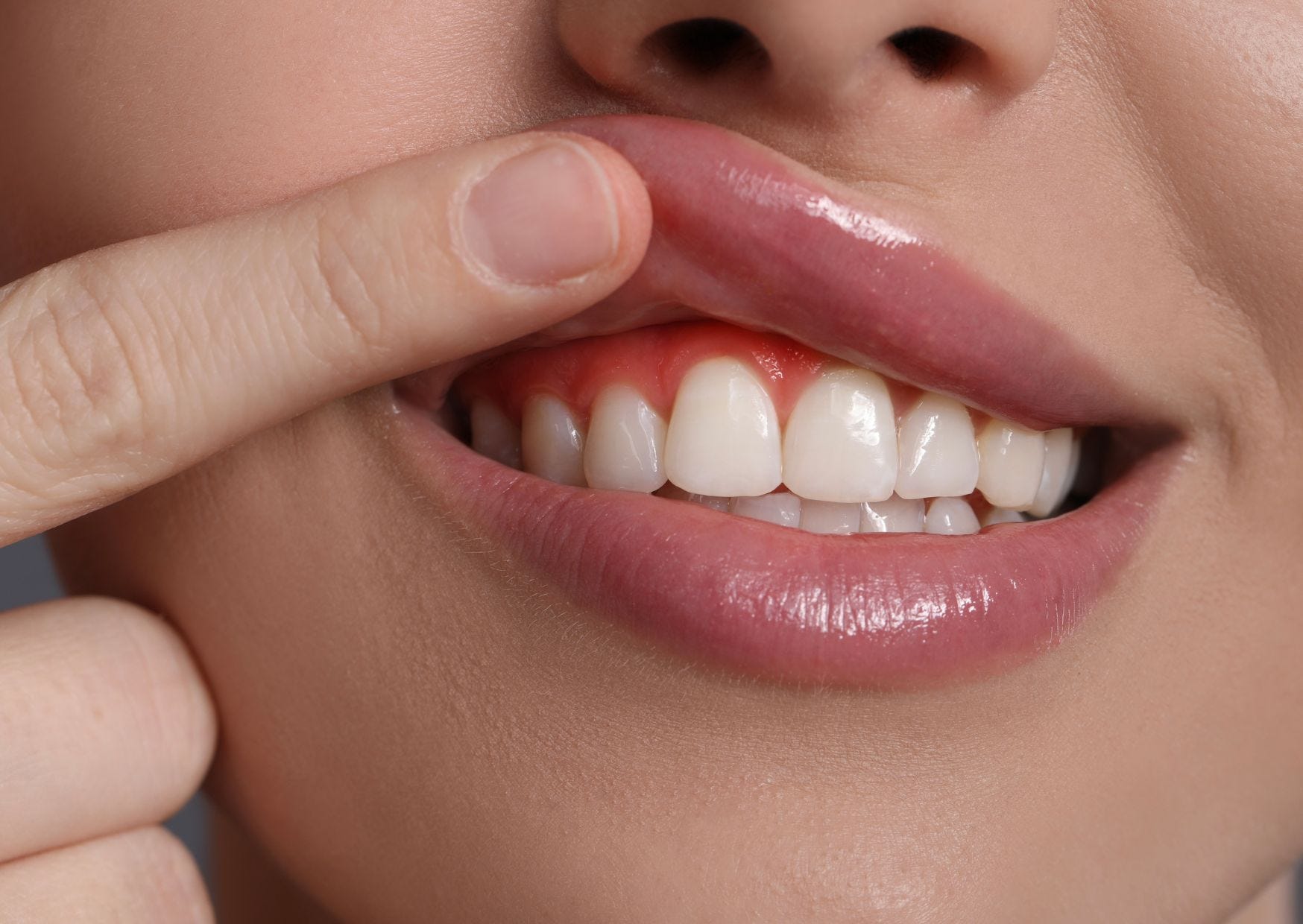
Gum disease begins when bacteria around the gums trigger inflammation - and over time, damage the bone supporting your teeth. What most people don’t realize is that gum disease isn’t just a local issue - it can cause inflammation in the wider body.
Chronic oral inflammation has been linked to cardiovascular disease, metabolic dysfunction (prediabetes, diabetes), and even cognitive decline.12 One long-term University of Minnesota study found that people with the most severe gum disease had around double the risk of developing dementia compared to those with healthier gums.3
The bacteria in our mouth like to hang out inside a protective layer called biofilm, so the antiseptic in your mouthwash is not actually reaching a lot of the bad guys you want ‘killed.’
To find out how effective mouthwashes really are, we can look at the data from this large Cochrane review of 51 randomized controlled trials.4 A Cochrane review is one of the best pieces of evidence available because it gathers data only from studies designed to prove cause and effect.
The result? They did find that chlorhexidine (a prescription antiseptic mouthwash in the U.S. but available over the counter in other countries such as the U.K.) reduced plaque and signs of gum inflammation, but mainly in people with mild disease.
For more advanced gum problems, the effects were limited. And chlorhexidine commonly causes tooth staining and taste disturbances, which is why dentists tend to recommend it short-term only.
Essential oil rinses like Listerine do appear to reduce plaque to some degree - one systematic review found around a 32% reduction.5 But for people who are already brushing well and following good gum care, adding an essential oil mouthwash did not make a major clinical difference.
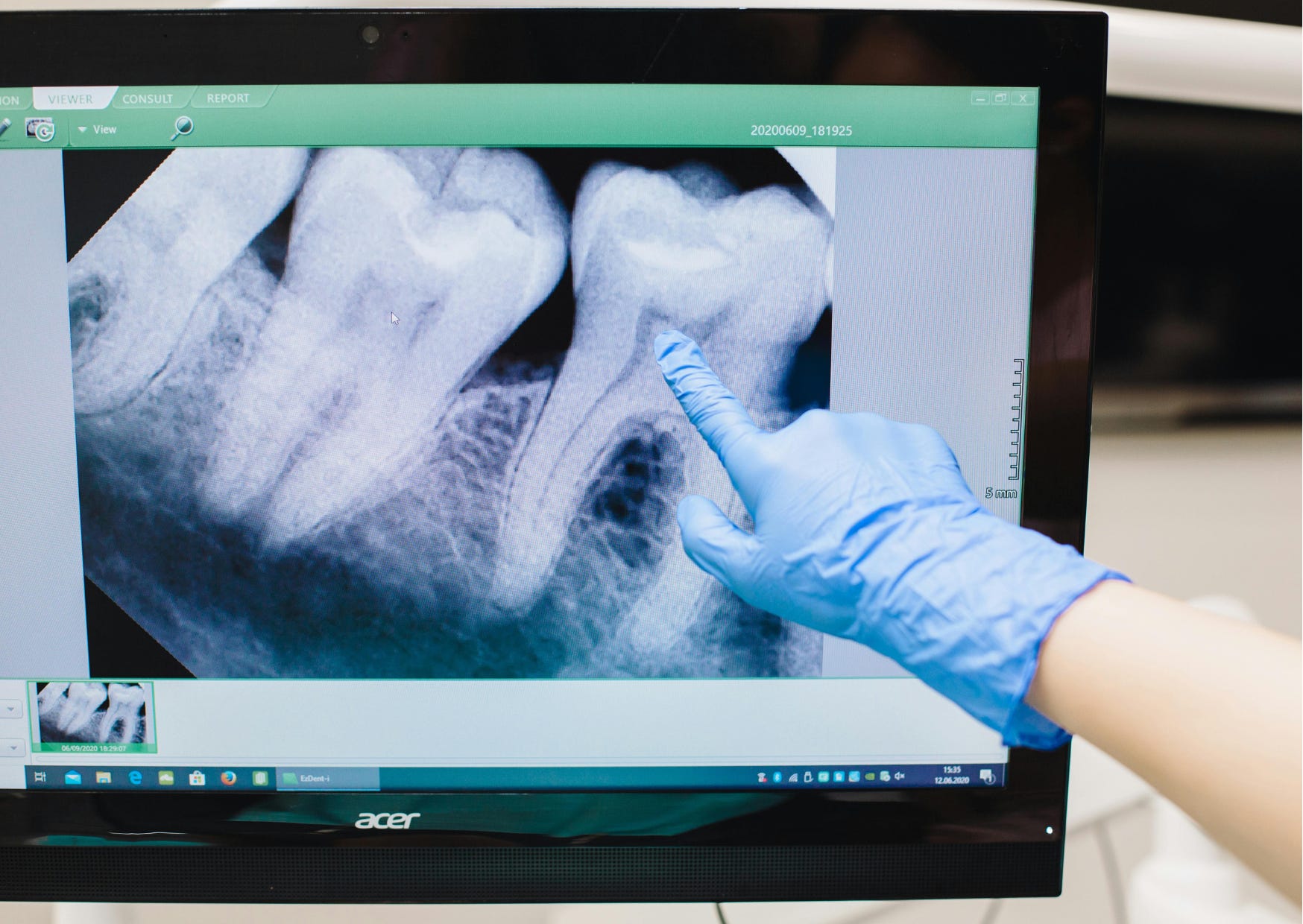
Fluoride mouthwash might have a role to play here, but we know this is a neurotoxin that comes with baggage, and it won’t appeal to most of you.
A Cochrane review of 37 studies found fluoride mouth rinses reduced tooth decay by around 27% in permanent teeth, even if they already use fluoride toothpaste.6 But remember that excessive ingestion of fluoride has been associated with other health impacts like underactive thyroid and lower IQ in children, and the ADA advises against the use of mouthwash in children under the age of 6 as they may swallow a lot of it.7
Note: Fluoride at this concentration is not an effective antiseptic - it supports remineralization - essentially, helping your tooth surface repair itself after a sugary attack.
One area I am watching is hydroxyapatite mouthwashes - a mineral that closely resembles natural tooth enamel. I already use HA toothpaste, which has fairly good evidence, but there is no solid evidence for HA mouthwash yet.
Ah, the original mouthwash promise. Halitosis affects around half the global population.8 Most of it comes from bacteria on the back of the tongue and in deep gum pockets, breaking down food particles and releasing sulfur compounds.
There is some evidence that mouthwashes containing active compounds like chlorhexidine may work for halitosis by reducing the sulfur-producing bacteria; however, the effect is not long-term, and they come with undesirable side effects like altered taste, possible staining of the tongue and teeth.9
The same study also found that mouthwashes containing zinc and sodium chlorite were effective at certain concentrations. These work by binding to the sulfur compounds and reducing the bad smell.
There are conflicting evidence whether mouthwashes containing cetylpyridinium chloride (CPC) could be effective.10
Lastly, there are products on the market do not contain these ingredients and are merely ‘cosmetic’ cover-ups - i.e. using essential oils to cover the smell rather than addressing the root cause.
The Cochrane review found only low-certainty evidence that mouthwash creates strong long-term improvements for bad breath.
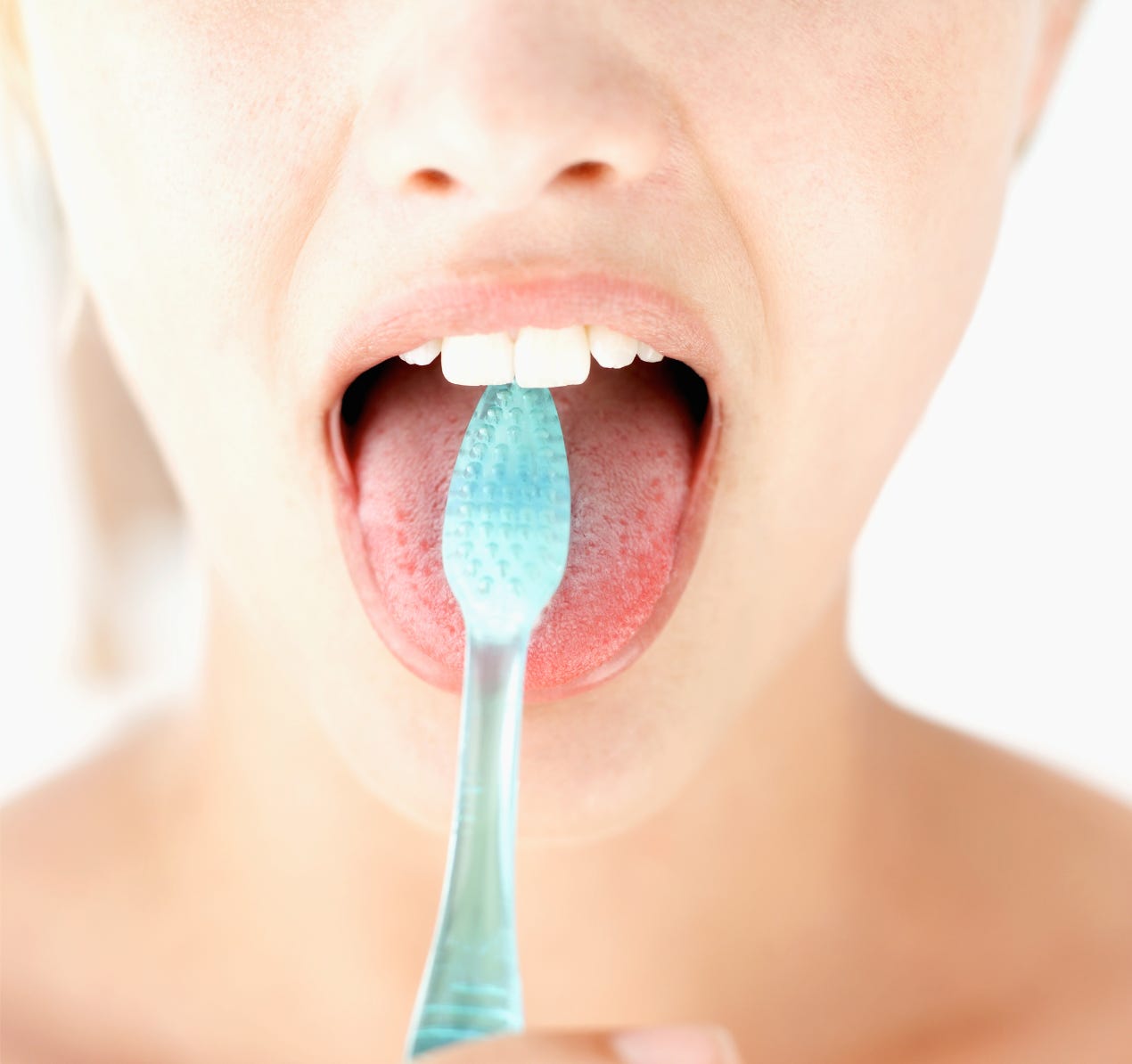
Brushing your tongue. One study found that brushing the back half of the tongue had a dramatic effect on bad breath - far more than brushing just your teeth or the front part of the tongue. The study also found that this was equally effective with toothpaste or with just water alone. Surprisingly, brushing just your teeth, even with toothpaste, was not effective at stopping bad breath.
The takeaway: You might get the same reduction in bad breath by just brushing the back of your tongue.
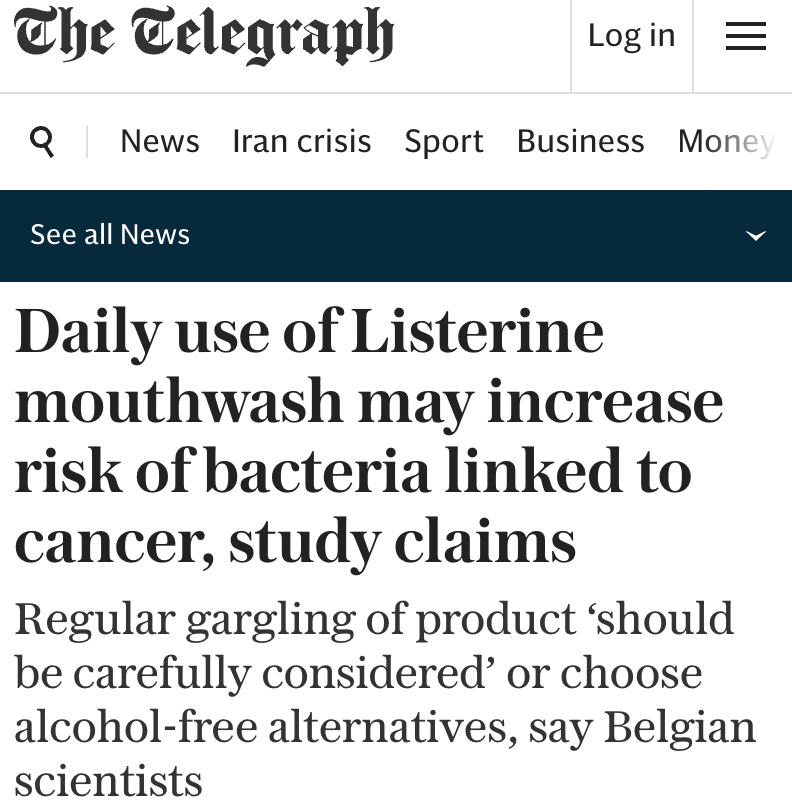
Where the headlines come from: In 2024, a study published in the Journal of Medical Microbiology examined the oral microbiomes of 59 men before and after using Listerine Cool Mint daily for three months. It found increases in two bacteria - Fusobacterium nucleatum and Streptococcus anginosus - which have previously been linked to periodontal disease, esophageal cancer, and colorectal cancer.11121314
One of the study’s authors gave a fairly alarming quote to the press: “Most people should not be using it.” And of course, the media went wild with it.
But here’s the critical detail the headlines mostly left out: there were no statistically significant differences between the Listerine group and the placebo control group. In other words, the changes in bacteria may not have been caused by Listerine at all - the results may have happened by chance.
Also - the link between the two bacteria and cancer risks is correlation - not causation. In other words, population studies previously found increased levels of these bacteria in diseased tissues itself; however, the studies do not prove that high levels of these bacteria in the mouth can cause these diseases.
If we want to be informed by large, high-quality systemic reviews, there’s no solid evidence linking mouthwash to cancer.
So, good news for those of you who love a mouthwash - a 2023 systematic review found that when the data is considered as a whole, there was no indication that mouthwashes increase the risk of oral cancer. 15
But go easy! When they looked only at particular subgroups of those who had increased frequency (3 times or more) or extended use (over 40 years), they found that these groups were associated with increased risks of oral cancer. The authors suggested that this may indicate a dose-response effect; however, they advised caution due to the low numbers of studies that looked at such high use frequency.
The alcohol in some mouthwashes (Listerine Cool Mint contains around 20% alcohol) does temporarily raise acetaldehyde levels in saliva, and acetaldehyde is a known carcinogen. This is a plausible mechanism for harm, particularly for people who also smoke or drink heavily. But the evidence for an independent link between mouthwash and cancer in the general population remains weak and inconsistent.
I think that the cancer headlines distracted from what I think is the more relevant conversation.
The 2024 study found that Listerine also decreased the abundance of a bacteria group called Actinobacteria - including species involved in the nitrate-nitrite-nitric oxide pathway, which is important for relaxing blood vessels and blood flow.
So this may potentially interfere with healthy blood pressure.
A short-term RCT found that using chlorhexidine mouthwash for just three days increased participants’ blood pressure by 2mmHg (not huge). Another larger observational study found that using mouthwash twice daily was associated with a higher risk of developing high blood pressure - so if you have high blood pressure, you may want to experiment to see if it has this impact on you however, just keep in mind that the effect was small.

Do I use mouthwash? No.
For most people with a solid oral hygiene routine, mouthwash is likely unnecessary. However, if your dentist prescribed it for you, you should probably use it, there are specific situations where it makes sense: high cavity risk, following oral surgery, dry mouth conditions, etc.
There is some weak evidence that it ‘may’ help those with mild gum disease - but if you have moderate or severe, it is unlikely to help.
Mouthwash with certain active ingredients like chlorhexidine or zinc and sodium chlorite could help with bad breath, but brushing your tongue works too, without disrupting your oral microbiome.
Could it be harmful? I do think it could have an impact on our oral microbiome, and we need more studies to learn exactly what and the impacts this has on our health.
If I were to use one, I’d make sure it is alcohol-free and devoid of ingredients like SLS, triclosan, artificial dyes, and parabens. (Triclosan, an antimicrobial harmful to mitochondria, was banned by the FDA in 2018 in toothpastes).
But before I reach for a mouthwash, I would:
Brush twice a day for 2 minutes.
Floss or use interdental brushes - this is where most of the action happens.
Brush my tongue, especially the back half if I’m worried about bad breath.
Stay well hydrated.
Manage my sugar intake, because no mouthwash in the world is going to outwork a high-sugar diet.
Just like our gut, our mouth is not meant to be sterile or ‘bacteria-free.’
The more we learn about the oral microbiome, the clearer it becomes that disrupting it without a clear reason is probably going to backfire, so I’d skip that mouthwash and save my money unless my dentist recommended it for me.
Is mouthwash an essential part of your oral health routine? Drop a comment below and share your thoughts!
As always, there’s rarely one answer that fits everyone. If you have specific concerns about your oral health, your dentist is always the best starting point.
Plateful Health is my passion project to review facts, data, and analyses on environmental toxins and lifestyle medicine. Please subscribe—it’s free.
If you feel called to support my work, I’d be deeply grateful for an upgrade to a paid subscription. Paid subscribers have access to my entire archive, can comment, join our community chat, and ask questions.
This year, all subscription proceeds will be donated to the Zero Foodprint, a non-profit organization with a cause close to my heart. I have a dream that one day we won’t need an “organic” label, because all food will support both human and planetary health.
When you subscribe, you’re not only helping to amplify my work, but you also help strengthen the health of our food, our environment, and the generations to come. I appreciate you more than I can say! ❤️
I’m an affiliate for some of the products linked on my website. I get asked about products I use and love all the time, and by being an affiliate, I can negotiate discount codes to share with you, plus earn a small commission if you use my code or link to purchase. This helps me to support my research so that I can continue to provide the content on my platform, thank you so much for your support.
D’Aiuto F, Gkranias N, Bhowruth D, Khan T, Orlandi M, Suvan J, Masi S, Tsakos G, Hurel S, Hingorani AD, Donos N, Deanfield JE; TASTE Group. Systemic effects of periodontitis treatment in patients with type 2 diabetes: a 12 month, single-centre, investigator-masked, randomised trial. Lancet Diabetes Endocrinol. 2018 Dec;6(12):954-965. doi: 10.1016/S2213-8587(18)30038-X. Epub 2018 Oct 24. Erratum in: Lancet Diabetes Endocrinol. 2019 Mar;7(3):e3. doi: 10.1016/S2213-8587(19)30036-1. PMID: 30472992.
Tran AH, Zaidi AH, Bolger AF, Del Brutto OH, Hegde R, Patton LL, Rausch J, Zachariah JP; on behalf of the American Heart Association. Periodontal disease and atherosclerotic cardiovascular disease: a scientific statement from the American Heart Association. Circulation. 2026 Feb 10;153(6):e73–e88. doi:10.1161/CIR.0000000000001390.
Demmer RT, Norby FL, Lakshminarayan K, Walker KA, Pankow JS, Folsom AR, Mosley T, Beck J, Lutsey PL. Periodontal disease and incident dementia: The Atherosclerosis Risk in Communities Study (ARIC). Neurology. 2020 Sep 22;95(12):e1660-e1671. doi: 10.1212/WNL.0000000000010312. Epub 2020 Jul 29. PMID: 32727837; PMCID: PMC7713724.
James P, Worthington HV, Parnell C, Harding M, Lamont T, Cheung A, Whelton H, Riley P. Chlorhexidine mouthrinse as an adjunctive treatment for gingival health. Cochrane Database Syst Rev. 2017 Mar 31;3(3):CD008676. doi: 10.1002/14651858.CD008676.pub2. PMID: 28362061; PMCID: PMC6464488.
Haas AN, Wagner TP, Muniz FWMG, Fiorini T, Cavagni J, Celeste RK. Essential oils-containing mouthwashes for gingivitis and plaque: Meta-analyses and meta-regression. J Dent. 2016 Dec;55:7-15. doi: 10.1016/j.jdent.2016.09.001. Epub 2016 Sep 11. PMID: 27628316.
Marinho VC, Chong LY, Worthington HV, Walsh T. Fluoride mouthrinses for preventing dental caries in children and adolescents. Cochrane Database Syst Rev. 2016 Jul 29;7(7):CD002284. doi: 10.1002/14651858.CD002284.pub2. PMID: 27472005; PMCID: PMC6457869.
National Toxicology Program, NTP Monograph on the State of the Science Concerning Fluoride Exposure and Neurodevelopment and Cognition: A Systematic Review, <https://ntp.niehs.nih.gov/sites/default/files/2024-08/fluoride_final_508.pdf>, Accessed 6th May 2026
Mokeem SA. Halitosis: a review of the etiologic factors and association with systemic conditions and its management. J Contemp Dent Pract. 2014 Nov 1;15(6):806-11. doi: 10.5005/jp-journals-10024-1622. PMID: 25825113.
Kleinberg I, Codipilly DM. Cysteine challenge testing: a powerful tool for examining oral malodour processes and treatments in vivo. Int Dent J. 2002 Jun;52 Suppl 3:221-8. doi: 10.1002/j.1875-595x.2002.tb00929.x. PMID: 12090457.
Kumbargere Nagraj S, Eachempati P, Uma E, Singh VP, Ismail NM, Varghese E. Interventions for managing halitosis. Cochrane Database Syst Rev. 2019 Dec 11;12(12):CD012213. doi: 10.1002/14651858.CD012213.pub2. PMID: 31825092; PMCID: PMC6905014.
Chen Y, Huang Z, Tang Z, Huang Y, Huang M, Liu H, Ziebolz D, Schmalz G, Jia B, Zhao J. More Than Just a Periodontal Pathogen -the Research Progress on Fusobacterium nucleatum. Front Cell Infect Microbiol. 2022 Feb 3;12:815318. doi: 10.3389/fcimb.2022.815318. PMID: 35186795; PMCID: PMC8851061.
Kumagai K, Sugano N, Takane M, Iwasaki H, Tanaka H, Yoshinuma N, Suzuki K, Ito K. Detection of Streptococcus anginosus from saliva by real-time polymerase chain reaction. Lett Appl Microbiol. 2003;37(5):370-3. doi: 10.1046/j.1472-765x.2003.01405.x. PMID: 14633106.
Gethings-Behncke C, Coleman HG, Jordao HWT, Longley DB, Crawford N, Murray LJ, Kunzmann AT. Fusobacterium nucleatum in the Colorectum and Its Association with Cancer Risk and Survival: A Systematic Review and Meta-analysis. Cancer Epidemiol Biomarkers Prev. 2020 Mar;29(3):539-548. doi: 10.1158/1055-9965.EPI-18-1295. Epub 2020 Jan 8. PMID: 31915144.
Tateda M, Shiga K, Saijo S, Sone M, Hori T, Yokoyama J, Matsuura K, Takasaka T, Miyagi T. Streptococcus anginosus in head and neck squamous cell carcinoma: implication in carcinogenesis. Int J Mol Med. 2000 Dec;6(6):699-703. doi: 10.3892/ijmm.6.6.699. PMID: 11078831.
de Araújo JSS, Magalhães EIDS, Lima HLDO, da Cruz MCFN, Thomaz EBAF. Mouthwash use and oral cancer: a systematic review and meta-analysis. Rev Saude Publica. 2023 Nov 8;57:90. doi: 10.11606/s1518-8787.2023057004752. PMCID: PMC10681539.
Comments
Nothing yet. Say the first thing.
Sign in to join the conversation.