
Undoubtly the big news of the week was Meta’s release of their new model (discussed below) which isn’t as much about a new model’s capabilities, but that Meta has reversed course and choosen an Apache 2.0 model and a size which puts it in consumers hands.
When this model is combined with ExecuTorch (also discussed below) it shows the potential of small models on embeded or consumer systems.
The end is here.
Michael
Meta release Muse Glimmer. It’s a new model targetting consumer hardware running agentic ai. This is a big step back into OpenSource AI as Meta had shunned it for its past few releases. See more deails below.
Mai-code is available on Github Copilot Consuming .25 of a normal credit, Mai-code gives users options for simplier tasks. read more
Anthropic wrote an article on how their inbound and outbound sales team use Claude. I was wondering why because they also said they have more customers than they know what to do with. But if you are looking for some automation ideas read more
Lucidworks announces two new CEOs. That’s -1 CEO and +2 more. read more.
LlamaIndex Introduces ExtractBench. Another properitary benchmark for document extraction read more.

Fitting with the release of Muse Glimmer that we discuss ExecuTorch. ExecuTorch is PyTorch’s solution for deploying AI models on-device, like your phone and if it will run on your phone it can run in many places. You can use this framework to deploy LLMs, vision, speech, and multimodal models with the same PyTorch APIs you already know.
Native PyTorch Export - Direct export from PyTorch. no onnx, no nadad.
Production Proven - It’s being used with billions of users at Meta.
Tiny Runtime - a 50kb base footprint. It can run on microcontrollers and up.
Read more on github.
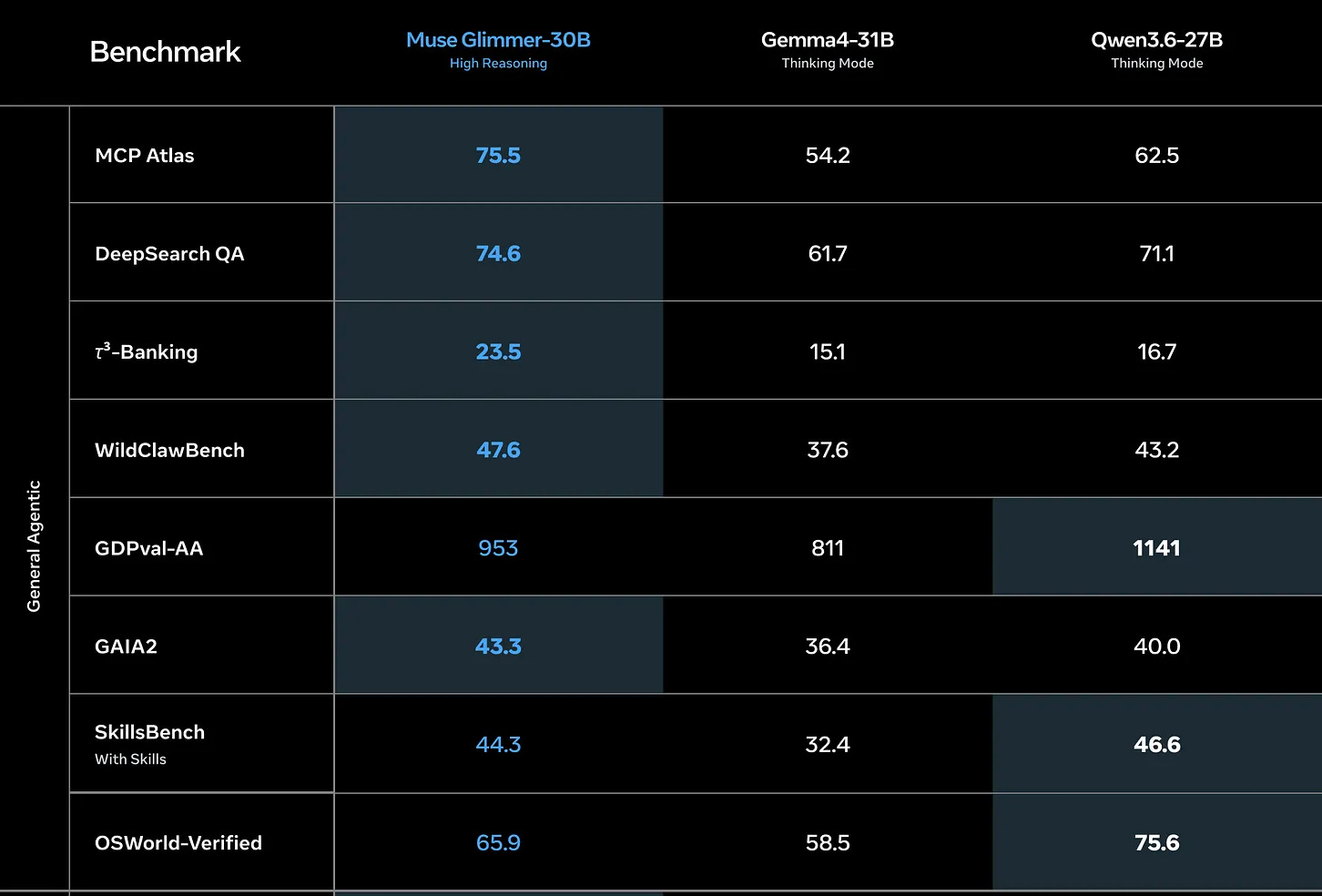
Meta is back with the elease of Muse Glimmer. Muse Glimmer, a 30 billion parameter open source model optimized for local agent execution on consumer hardware (Mac, PC, single GPU). It’s it Meta’s first release on the open source side for quite some time and it’s available now on llama.cpp, MLX, and ExecuteTorch.
Quantization floor validated - The 4-bit compression shrinks the model from 55GB to under 20GB with minimal degradation on agentic tasks; detailed ablation table confirms K-Quant-17GB variant preserves accuracy, leaving headroom for KV cache and perception encoders on 24-32GB GPUs.
Speculative decoding speedup - Using DFlash drafter produces token blocks for parallel verification, it yields 1.5–3.1x throughput gains across hardware.
Multimodal + tool-use pairing - The model uses an advanced perception encoder and precise function calling coexist with long-horizon reasoning and failure recovery, addressing the core requirements of personal agent workflows that need both semantic understanding and reliable external integration.
Permissive licensing + immediate ecosystem - Last but not least, did I say it was Apache 2.0? Yes, this was released under Apache 2.0.
Read more about it on Meta’s Blog
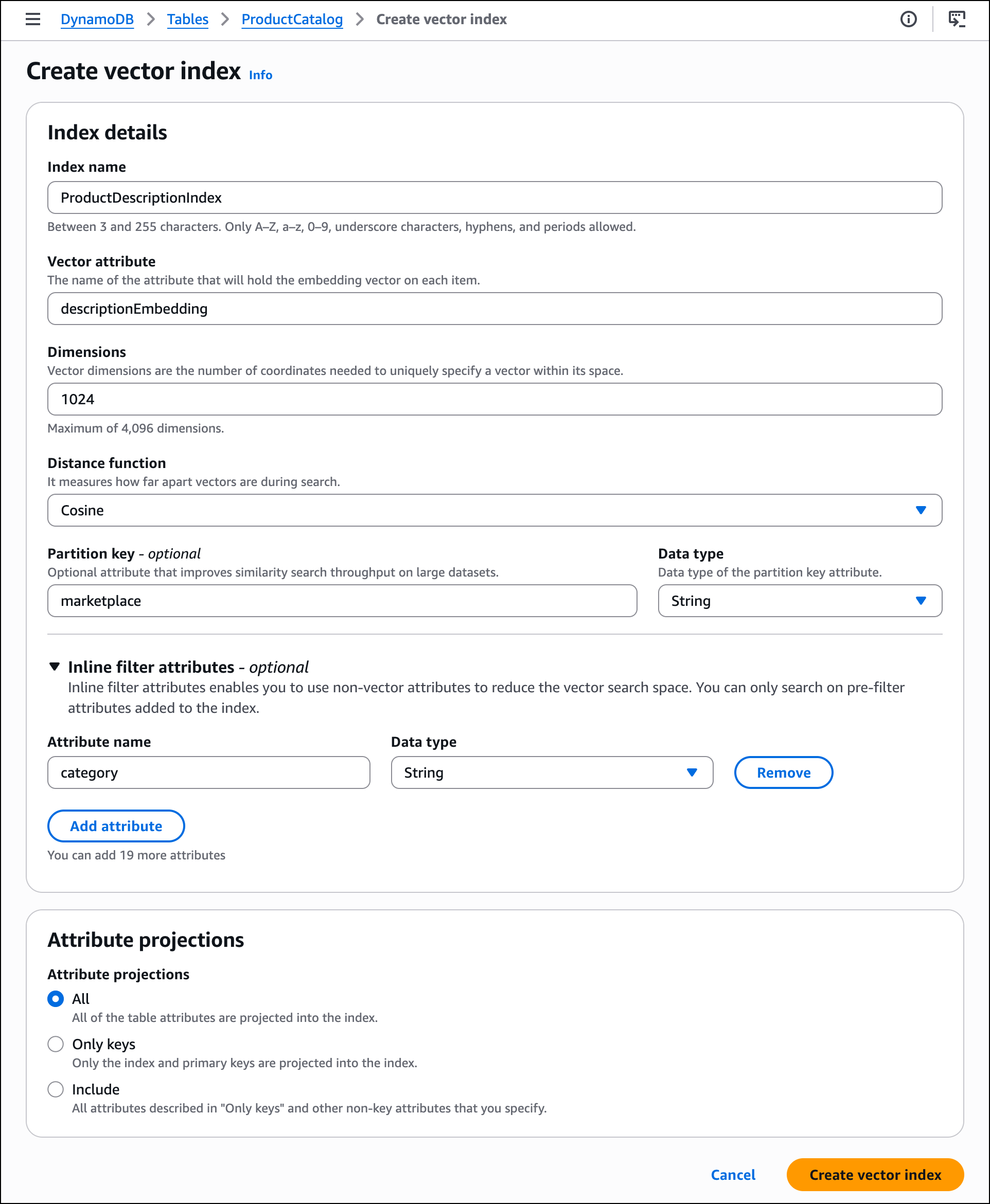
AWS DynamoDB announced the general availability of native vector search. This allows semantic similarity queries directly on embeddings stored in your DynomoDB tables with the ability to serve single digit millisecond latency at 99%+ recall, Available across all commercial AWS regions.
Architecture consolidation - Eliminates the operational tax of maintaining DynamoDB alongside a separate vector database and the synchronization pipeline between them.
Serverless vector indexing - Vector indexes scale horizontally with no infrastructure to provision, patch, or manage; the service handles maintenance windows and scaling automatically.
Inline filtering at query time - Supports filtering on non-vector attributes during search (e.g., marketplace, category) to narrow results without pre-filtering data.
Flexible distance metrics — Supports Euclidean, Cosine, and Dot product functions; guidance to match the distance function used to train your embedding model for best accuracy.
Read more on Amazon’s Blog
No posts
Comments
Nothing yet. Say the first thing.
Sign in to join the conversation.