
We had a couple of big releases this week from Elastic and OpenSearch. On the Elastic side they continue to build out their AI strategy in the sea of “Vector DBs” and “Agents”. What most people I think are failing to pay attention to is the models that they aquired from the Jina team which they are integrated into their platform. Small models, and as the Chinese are teaching us, and cheap models are the are the differentiator to make a reasonable ROI case.
Would love to hear your thoughts on this.
Michael
Elastic has released version 9.5 - with Columnar Mode! (Elastic)
Opensearch has released version 3.8 - Ingesting vectors up to 4.16x faster (OpenSearch)
Qwen 3.8 has been released to Qwen Cloud - with 2.4T parameters (95B active) and with open weights releasing “next” week (which is this week)- (Qwen)
SpaceX released it’s earnings - Significant revenue growth but increases its capital investments, wondering investors (CNBC)
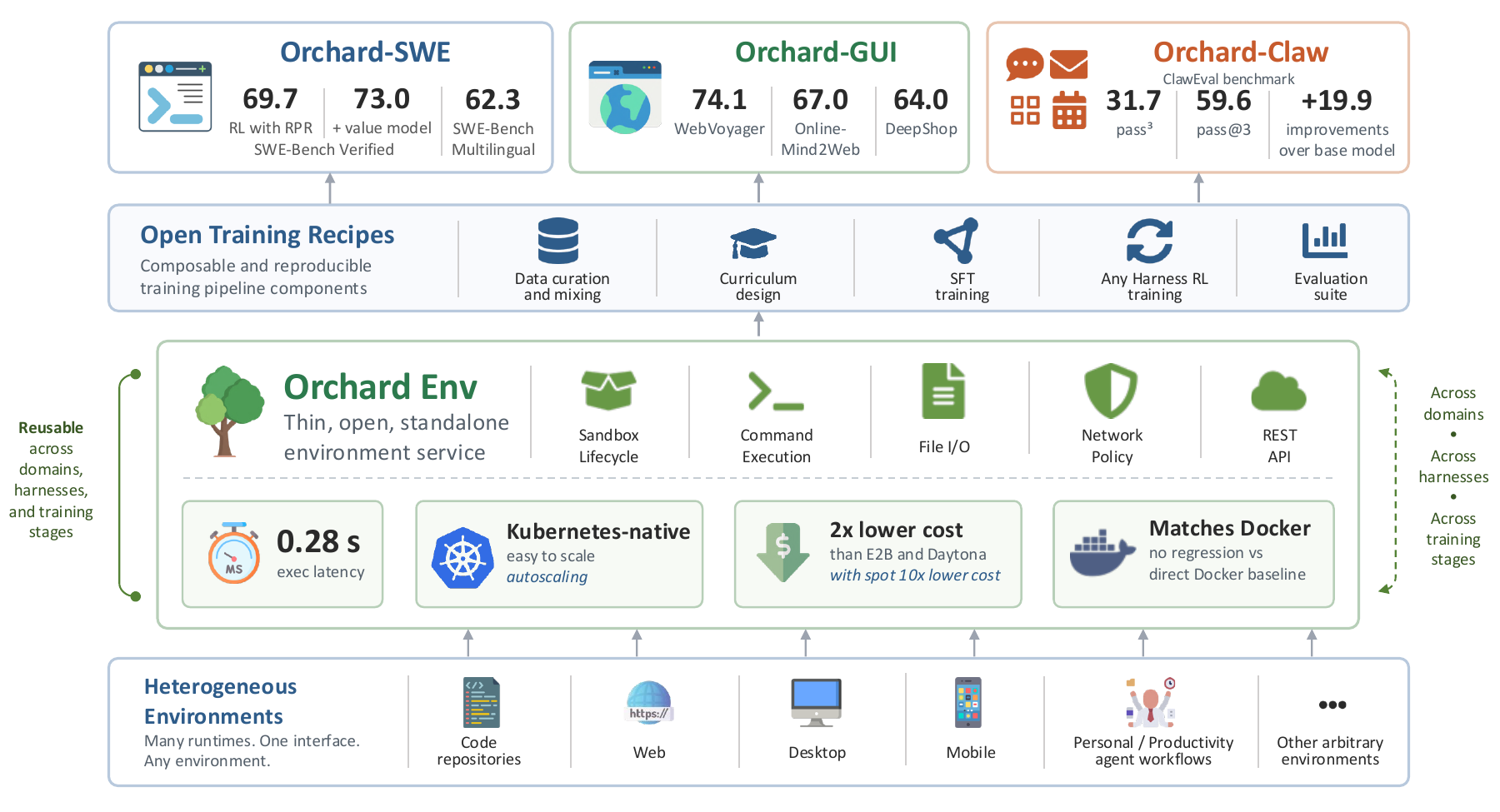
Orchard is an open foundation for agentic modeling research. What is “agentic modeling research? Great question. From their research paper, “Agentic modeling aims to transform LLMs into autonomous agents capable of solving complex tasks through planning, reasoning, tool use, and multi-turn interaction with external environments. In essesence, this gives you a framework to decouple the training of agentic tasks from the model and the training data. It provides the following components:
Orchard Env (The Shared Substrate): A thin Kubernetes-native environment service that handles sandbox lifecycles, command execution, file I/O, network policies, and browser automation (via Playwright). This in turn decouples the environment from any specific agent harness, trainer, or inference backend, allowing researchers to run rollouts securely and at scale.
Agentic Modeling Recipes: More importantly, it supports exploring agent recipes across multiple domains:
Orchard-SWE: For software engineering tasks (such as resolving GitHub issues).
Orchard-GUI: For vision-language browser navigation and computer-use agents.
Orchard-Claw: For personal-assistant and productivity workflows.
Training & Reinforcement Learning Techniques: It implements advanced training pipelines to make training more sample-efficient.
Read More at Github
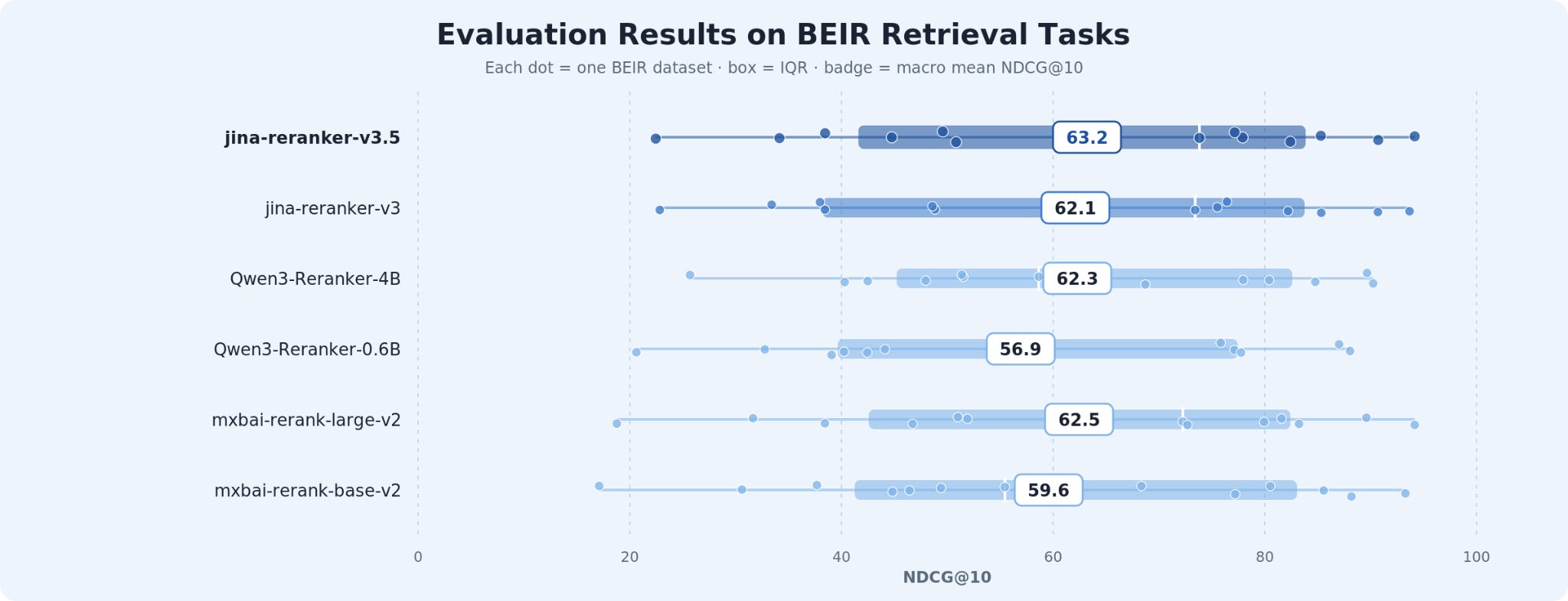
Jina AI (now Elastic) shipped Reranker v3.5, a 600M-parameter reranker that as the follow up to v3. V3 brough ‘frontier performance’ but had some weak spots around specific domains like legal, medical, financial, and structured data retrieval. It’s a drop-in replacement for v3, no API changes. Available via Jina API, Elastic Inference API, or on-prem container. Weights on Hugging Face under CC BY-NC-4.0 (free for research, commercial needs Elastic sales).
For details on the data sources and technical innovations in jina-reranker-v3.5, see their technical report.
Read more at Elastic
Qdrant v1.19.0 is the latest stable release, introducing new vector storage formats, improved memory control, enhanced filtering, and API changes in client libraries.
https://github.com/qdrant/qdrant/milestone/50 - TurboQuant 4-bit as a datatype of primary vector storage. Only store 4-bit quantized vectors and spare disk space on original vectors. [docs]
#9669, #9684, #9950 - Unify definition of memory usage strategy for collection components. Use
"memory": "cold" / "cached" / "pinned"to define memory behavior for each individual collection component. Allows for more fine-grained control over memory usage and performance. [docs]#9683 - Allow
"match": {"prefix": "..."}infilterto match keywords by prefix, must be enabled in keyword index. [docs]#9661 - Per-query IDF corpus for sparse vector search [docs]
#9899 - Slice filtering condition: sliced scroll / deterministic sampling [docs]
#9338 - Add routing token for deterministic read routes [docs]
Read more at Github
No posts
Comments
Nothing yet. Say the first thing.
Sign in to join the conversation.