
You know what I’m not hearing a lot about these days, Vibe coding. It’s almost laughable that a few months ago, Silcon Valley elites were champing multi agent workflows and multi threaded coding cycles. The sting of Copilot and others charging per use put the kabash on that. That is not to say that agentic coding isn’t valuable or provide accelerations. But to the pragmatic, the obvious has caught up to the hype.
This week’s newsletter hits on that theme as well with a couple of notes about benchmarking and frameworks that benchmark, because what really is the difference between tools or approaches if you don’t benchmark.
- Michael
+ The vector engine showdown nobody was telling the truth about - Fernando Rejon Barrera from Zeta Alpha challenged standard vector search benchmarks, surprise no one wins (link)
+ In case you had spare capacity, Claude Cowork is coming to mobile (link)
+ If you fake a doc, you can get better relevancy, Elastic demonstrates how to Hypothetical Document Embeddings (HyDE) on their blog (link)
+ Known to everyone who’s tried to improved vector search with long queries, When users enter longer searches, they click less (link)
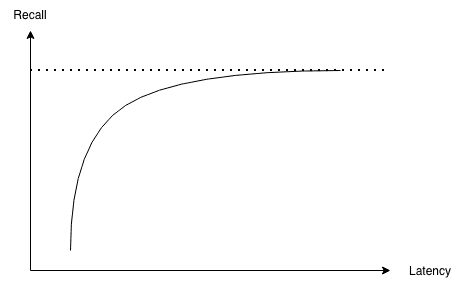
Using published benchmarks to try to compare vector search engines will generally not translate well to your specific use case. Most benchmarks hide critical assumptions: when is the index actually “ready”? How many warmup queries ran before measurement? Did background optimization finish? Elastic’s Jingra (Apache 2.0, open source) is a Java-based benchmarking harness built to make all of those choices explicit and reproducible, running the same workload against Elasticsearch, OpenSearch, and Qdrant under identical conditions.
Key Takeaways:
Three-phase structure eliminates hidden variables — Load (ingest + wait for true readiness), Eval (explicit warmup then measurement), and Analyze (recall curves, latency plots, CSVs) are separated so you know exactly what state you’re measuring and can reproduce it exactly.
await_index_readyis the key insight — Both Elasticsearch (segment merging) and Qdrant (post-ingest optimization) do background work after documents are loaded that materially affects query latency; Jingra holds the eval phase until that work is done rather than starting queries the instant ingestion completes.Parameter sweeps over single data points — Instead of reporting one benchmark number, Jingra runs across multiple
num_candidatesandkvalues in a single pass, producing recall-vs-latency curves that show the full trade-off space — which is what you actually need when tuning a production system.YAML-driven and commit-friendly — Benchmark definitions live in config files you can version-control, share, and rerun; switching engines is a one-line change, and credentials stay in environment variables.
Docker Compose demos, no cluster required — The quickstart spins up an engine, downloads a public dataset, and runs a full benchmark with a single
makecommand, lowering the barrier to running your own credible comparison significantly.
Read more at searchlabs
Following up our last newsletter with another model from Google. TabFM is Google Research’s first zero-shot foundation model for tabular data. (Think, the kind of structured rows-and-columns data that lives in spreadsheets, databases, and CSVs). Rather than training on your specific dataset, it reads your labeled rows as context and predicts new rows in a single forward pass. No fine-tuning, no hyperparameter search.
Key Takeaways:
Trained entirely on synthetic data — Google generated hundreds of millions of synthetic datasets using structural causal models (SCMs), sidestepping privacy and licensing issues with real-world data while still baking in realistic inductive biases about how features relate to each other.
Clever architecture for tables — It’s not a vanilla transformer; it uses alternating column attention (to learn feature interactions) and row compression (to summarize each record), feeding into a 24-block causal ICL transformer that treats your training rows as a prompt. Under the hood it’s closer to a sequence model reading your data than anything you’d find in traditional ML.
Competitive with tuned baselines — Benchmarked on TabArena across 51 datasets, it outperforms heavily-tuned gradient boosted trees (XGBoost, LightGBM) in zero-shot mode, which is a genuinely surprising result given those methods have dominated tabular ML for years.
Real hard limits to know — Max 10 output classes, max ~500 features, and memory scales linearly with your number of training rows since the entire dataset is passed as context. Not a fit for wide, high-cardinality classification problems.
Non-commercial license — The weights are under a custom TabFM Non-Commercial License v1.0, so the source is Apache 2.0 but you can’t productionize the model weights commercially. Worth flagging for anyone eyeing this for a real deployment.
Read more at huggingface
Couchbase, a pioneer in the nosql/document db space, announced general availability of its AI Data Plane, a unified data infrastructure layer purpose-built for production AI agents. Taking the approach of combinging search with the system of record, Couchbase collapses multiple services into a single governed platform that runs from cloud to edge. The release also bundles an enterprise-supported MCP server, an Agent Catalog, and significant analytics upgrades including Apache Iceberg federation.
Key Takeaways:
Agent memory is now a first-class primitive — Couchbase’s Agent Memory layer provides unified session persistence, context retrieval, and state management across restarts, something vector search alone can’t deliver for production agents.
One platform replaces the data sprawl — The AI Data Plane consolidates vectors, key-value, documents, full-text search, and cache into a single system with sub-millisecond latency, eliminating the “integration tax” that’s been the primary bottleneck moving agents from pilot to production.
Framework-agnostic by design — Validated with LangGraph, CrewAI, and LlamaIndex, the memory layer lets teams swap or combine orchestration frameworks without rebuilding their data layer — a significant architectural advantage as the agentic framework landscape continues to shift.
Edge-native AI data — Agents running on devices or in the field can access replicated data and run local vector search even offline, with new Couchbase Lite peer-to-peer Bluetooth sync and Edge Server 1.1 expanding the reach far beyond cloud-only deployments.
Read more at couchbase.
No posts
Comments
Nothing yet. Say the first thing.
Sign in to join the conversation.