
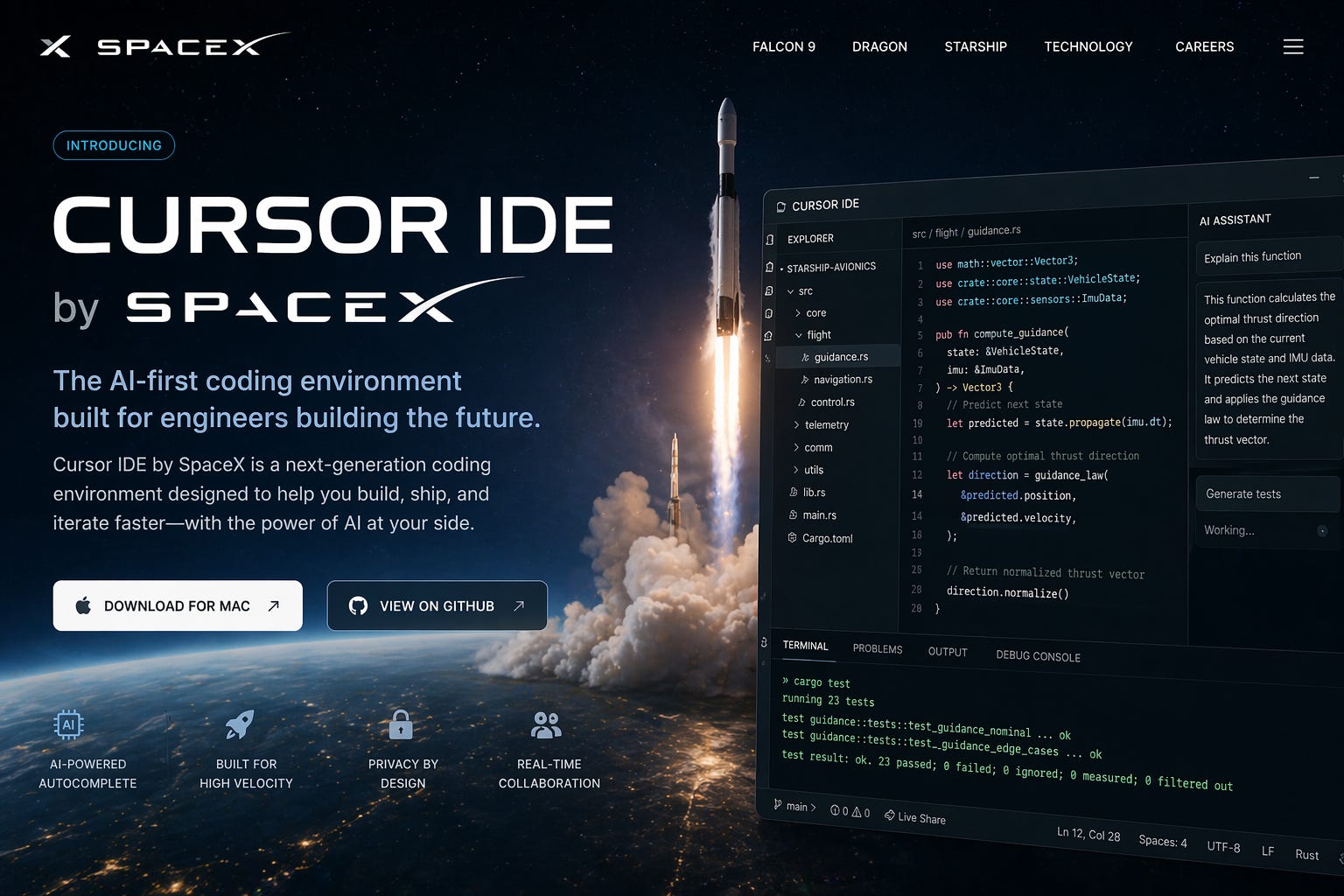
There is a theory of artificial intelligence investing that goes roughly as follows: in the long run, all the value in AI will accrue to whoever owns the frontier model. The reasoning is that a frontier model is a kind of platform — once you have the best model, everyone else builds on top of it, and then you capture a toll on all that value. The companies that are just wrappers around other people’s models are, in this theory, basically resellers. They’re fine businesses, maybe, but they don’t have durable competitive advantages, and they certainly shouldn’t trade at $60 billion valuations.
Cursor, the AI-powered code editor, does not own a frontier model. It licenses models from Anthropic and others, wraps them in a very nice interface inside VS Code, and charges developers a monthly subscription. It is, in the strict technical sense, an IDE with good autocomplete. It is a beloved product. Developers genuinely love it, in the way that developers love things they use eight hours a day and that make them feel slightly superhuman. But “$60 billion IDE” is a sentence that requires some unpacking.
And yet: SpaceX — the rocket company, the one that sends satellites to orbit and astronauts to the International Space Station, the company whose core competency is not crashing expensive things into the ocean — reportedly wants to acquire Cursor at a valuation in that neighbourhood. Let’s think about why.
The obvious question is: what does SpaceX need a code editor for? SpaceX is an aerospace and defence company. Its engineers write software, sure — flight software, mission control systems, that sort of thing. But they are not, as a rule, the target market for a subscription product aimed at web developers building SaaS apps. SpaceX’s core business problem is not “our engineers aren’t finishing their pull requests fast enough.” Its core business problem is “rockets are hard, and the atmosphere is unforgiving.”
So why would SpaceX want to buy Cursor? There are a few possibilities. One is that Elon Musk wants very fast code. Another is that this is about building an AI empire on paper for the purposes of a public offering.
I think it’s mostly the second one.
Here is the thing about SpaceX: it has, over the past few years, assembled something that looks like an AI conglomerate. There is xAI, which makes the Grok model. There is X, the social network formerly known as Twitter, which generates data and users. There is, presumably, some internal AI effort at SpaceX itself. And now there are reported discussions about Cursor.
When a company goes public, it needs a story. The story can be “we make rockets,” which is fine, but “we make rockets” isn’t a good enough story for a $2tn IPO. So we need to a) ride the AI wave (big technology shift) and b) use rockets to launch data centres (big investment scheme) into space. Also, we have a fast-growing AI segment that we’ve recently acquired with X and xAI for $250bn. It’s a better story because AI is currently the thing that makes investors give companies money at very high multiples, and “AI revenue” growing at triple-digit percentages is exactly the kind of thing that appears in an S-1 in a big font.
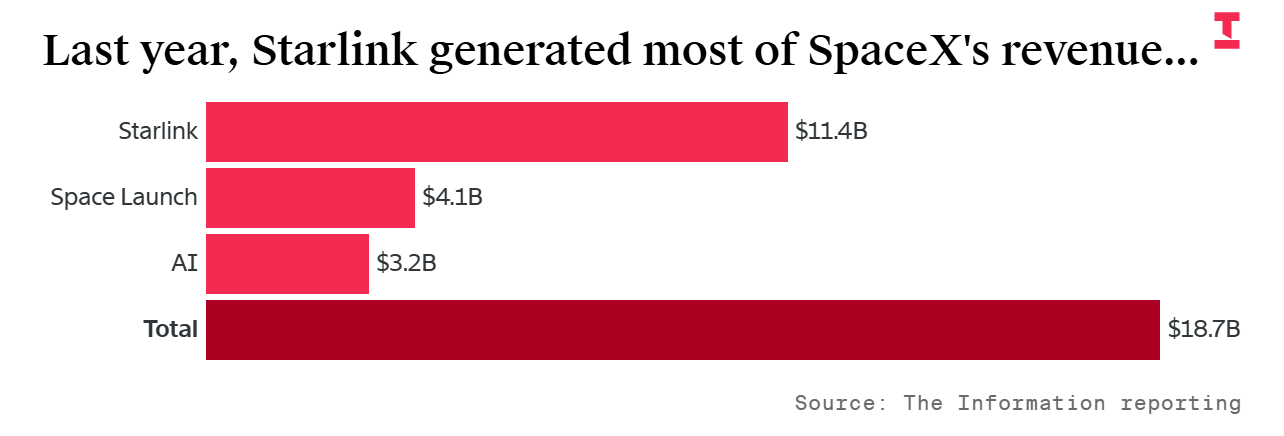
The problem for Musk remains that neither X nor xAI is generating a relevant amount of fast-growing subscription revenue. Cursor, in contrast, has been growing very fast through the last years. Revenue that was essentially zero a couple of years ago has scaled remarkably quickly on the back of developer enthusiasm. If you can consolidate that revenue into your own financial statements — and if you can call it “AI revenue” in your investor presentations, which, to be fair, it genuinely is — then your IPO story looks a lot more interesting than “we launch rockets and also have a chatbot.”
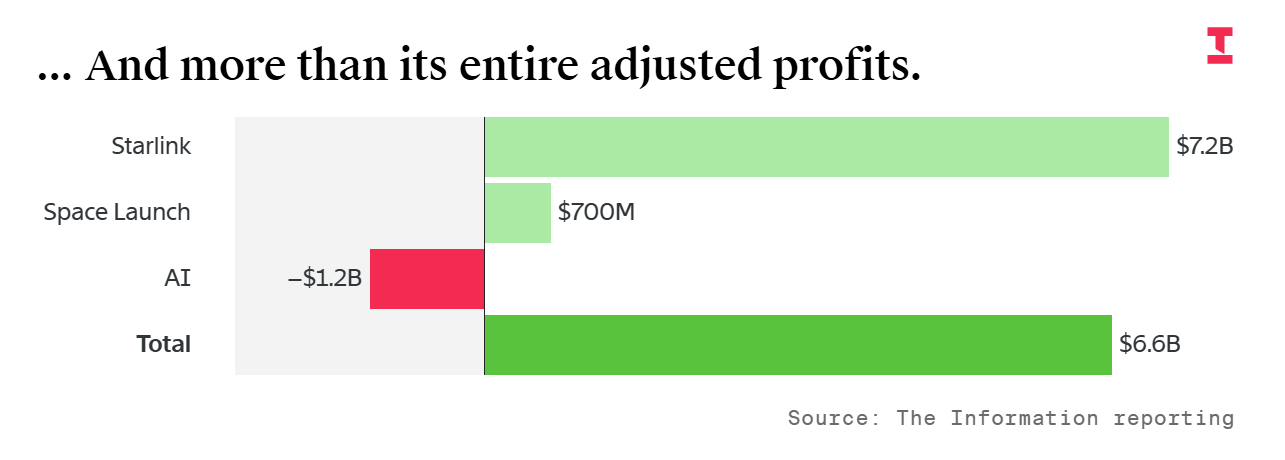
"The goal is not to use Cursor. The goal is to own a line item on a slide deck that says 'AI Revenue: $X billion, growing Y% year-over-year.'"
This is a very old trick in the mergers-and-acquisitions playbook. You are trying to go public. You need your numbers to look good. You have a core business that is lumpy and capital-intensive and not obviously a software company. You acquire a high-growth software business, consolidate it into your financials, and now your numbers look better. The acquired business doesn't have to make strategic sense; it just has to make the presentation look right.
Now, about that valuation. Sixty billion dollars is a lot of money for a company that does not own a proprietary model, competes in a market where the underlying technology is commoditizing rapidly, and whose main competitive advantage is that developers already have muscle memory for its keyboard shortcuts.
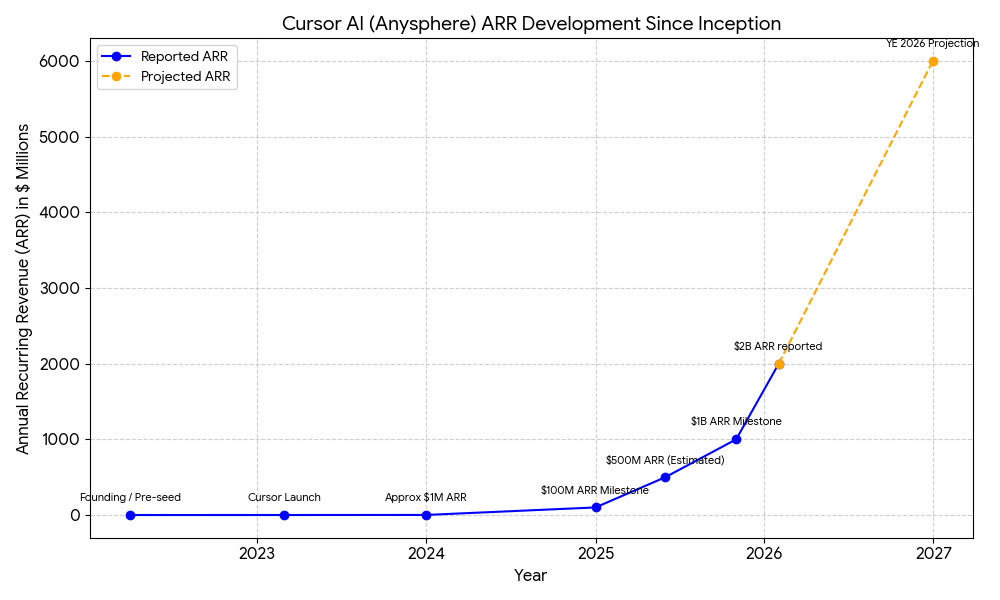
The thing about AI wrapper businesses is that they are genuinely hard to value, because the range of outcomes is very wide. In the optimistic scenario, Cursor builds deep enough integrations, network effects, and switching costs that it doesn’t really matter which underlying model it uses — it’s the interface layer that captures value, the way Microsoft Office captured value without owning the CPU. In the pessimistic scenario, Anthropic or OpenAI or Google ships a slightly better native IDE integration, and Cursor’s competitive moat turns out to have been a puddle.
At $60 billion, you are paying for the optimistic scenario, with some extra on top. That is fine if you believe the optimistic scenario. It is a lot of money if you think the pessimistic scenario has any probability at all.
The other fact that makes the deal viable for Musk, is that he may pay the 60 billion in his own inflated SpaceX stock which trades at more than 100x sales. Going shopping with that kind of valuation makes you a lavish acquirer.
Here is where it gets fun. Cursor recently raised another $2 billion from its existing investors, in a round that reportedly valued the company at, you guessed it, around $50 billion. This is notable for a few reasons.
First, the investors who put in that $2 billion were the same people who were already sitting on Cursor equity. They’re not new money coming in from the outside with fresh eyes; they’re insiders who already owned the company and decided to put more money in. That’s a signal that either (a) they genuinely believe in the business at that valuation, or (b) they had a very specific reason to want that valuation on the books.
Second, and this is the part that would make a financial engineering professor sit up in his chair, the acquisition reportedly comes with a $10 billion breakup fee if SpaceX walks away. Ten billion dollars. On a sixty-billion-dollar deal, that’s a roughly 17% breakup fee, which is likely the highest breakup fee ever and well into the territory of “this fee is doing some work.”
Think about what this means for the $2 billion investors. They put in $2 billion in the most recent round. If the deal closes, they participate in whatever upside the SpaceX acquisition brings. If the deal doesn’t close — if SpaceX decides rockets are more interesting than IDEs and walks away — the investors get made whole through $10 billion in breakup fees distributed to Cursor’s shareholders. Their $2 billion investment is, in a sense, largely backstopped by the deal structure itself.
On risk-free investments in startups
Venture capital is supposed to be risky. You put in money, you might lose it, but the upside is enormous. That’s the deal. When you structure a round such that the downside is largely eliminated by a contractual payment from the acquirer, you have constructed something that is not quite venture capital. It’s more like a structured note with equity-like upside. Nothing wrong with that! But it does suggest that the primary function of this round was not “fund Cursor’s growth” so much as “put money in a position where it will definitely come back to us one way or another.”
The cynical read is that everyone at the table knew this and did it anyway, because why wouldn’t you? The slightly less cynical read is that this is just how deals get done when both sides need the transaction to happen and the only uncertainty is regulatory and not commercial.
The structure creates a fascinating set of incentives. Cursor’s investors want the deal to happen, because SpaceX acquisition price. But they’re fine if it doesn’t happen, because breakup fee. SpaceX wants the deal to happen, because AI revenue for the S-1. But if the price gets too high, or regulatory issues emerge, they can walk away for a known cost. Cursor’s founders want the deal to happen, probably, because nine-figure personal outcomes are nice. And the whole thing has a certain elegant circularity: the round that was ostensibly raised to fund Cursor’s growth was actually raised to make the deal economics work for everyone.
Let’s step back. The operating theory here — and I want to be clear this is a theory, not a statement of fact — is that the xAI/X/SpaceX constellation of companies wants to go public, and wants to go public with a compelling AI story, and is therefore trying to consolidate fast-growing AI revenue ahead of that IPO window. Cursor, with its high growth rates and “AI-native” positioning, is a nice piece of that story even if it doesn’t fit obviously into the aerospace business.
This is not unprecedented. Companies have been buying revenue to improve their IPO optics for as long as IPOs have existed. The question is always whether the acquired revenue is durable, and whether the story hangs together under scrutiny. A $60 billion IDE is a large claim. But “here is our AI segment — fast growing, developer-facing, subscription model, beloved product” is a claim that investors in 2026 might be willing to accept if the growth numbers are good enough.
The growth numbers, thanks in part to that $2 billion round, will look good enough. The round wasn’t just capital; it was narrative infrastructure. Money raised can be deployed on sales, marketing, and distribution in ways that accelerate revenue in the short term, which makes the growth charts in the S-1 look steep, which makes the story more compelling, which supports the valuation, which makes the original investors happy.
Everyone wins. Except possibly whoever buys the SpaceX IPO at the implied valuation that includes $60 billion for the code editor. But that’s a problem for later, and “later” is a well-established tradition in venture-backed finance.
Relevant Reporting: 🔗 Financial Times | 🔗The Guardian | 🔗 New York Times | 🔗CNBC
1 All figures in this piece are hypothetical and illustrative. This article is a commentary and does not constitute reporting on actual events or transactions.
2 The “$60 billion IDE” framing is doing a lot of work here. Cursor is obviously more than just an IDE. But “AI-native developer platform with $60 billion valuation and no proprietary model” is a sentence that also requires unpacking, just different unpacking.
3 The structure of the investor round described here, where downside is backstopped by a contractual breakup fee, is a real phenomenon in M&A-adjacent financing. It is legal, it is common in certain deal structures, and it does create the incentive alignment described above.
No posts
Comments
Nothing yet. Say the first thing.
Sign in to join the conversation.