

The University of Michigan has devised a courageous response to declining academic preparation, rampant grade inflation and student anxiety: put the thermometer in a drawer and declare the fever emotionally invalid.
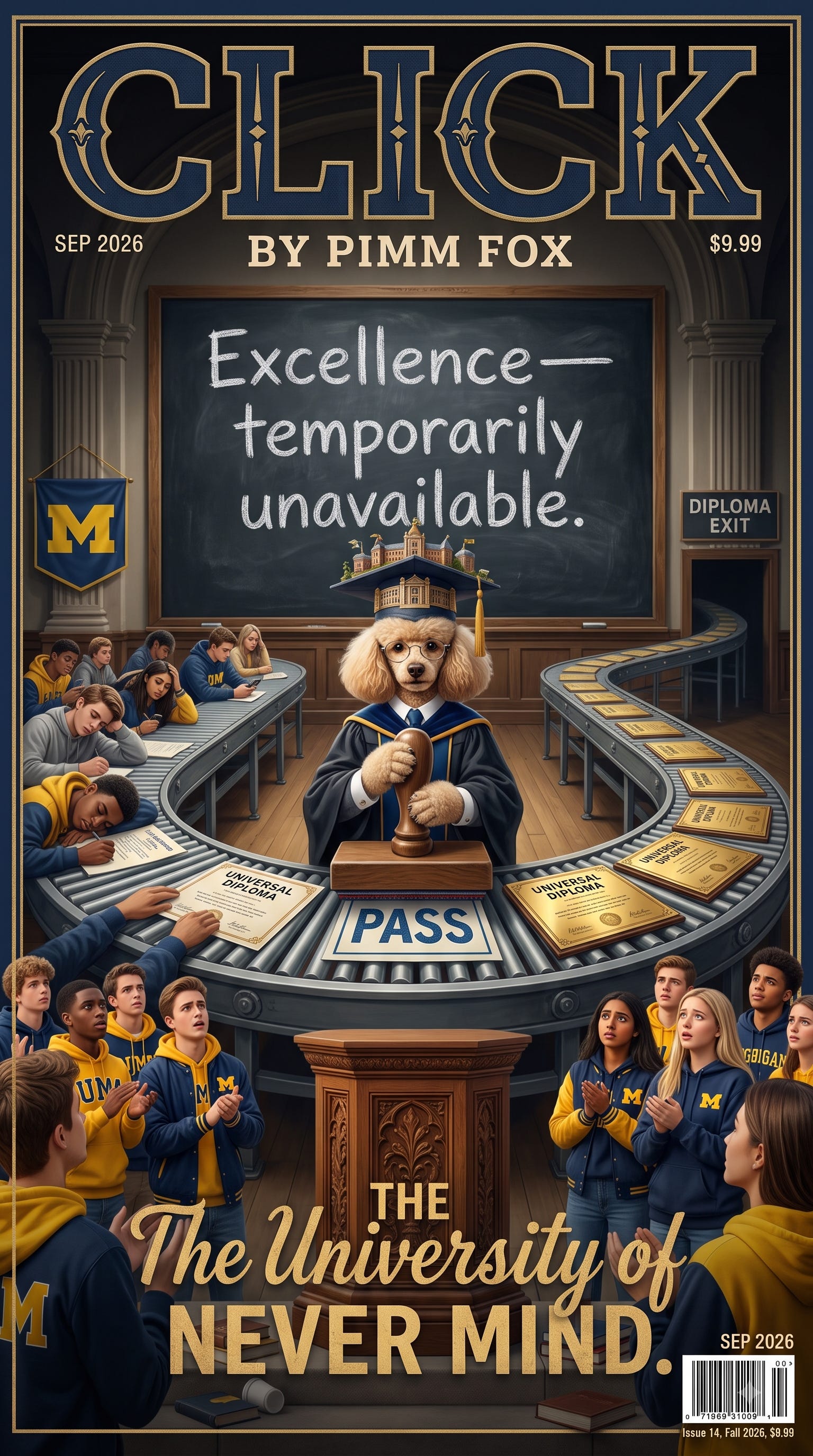
Beginning in fall 2027, first-semester freshmen in the College of Literature, Science, and the Arts—about half of Michigan’s incoming class—will receive Pass or No Credit on external transcripts.
Professors will still assign grades and feedback internally, partly for scholarships and academic awards, but those grades will not affect GPAs.
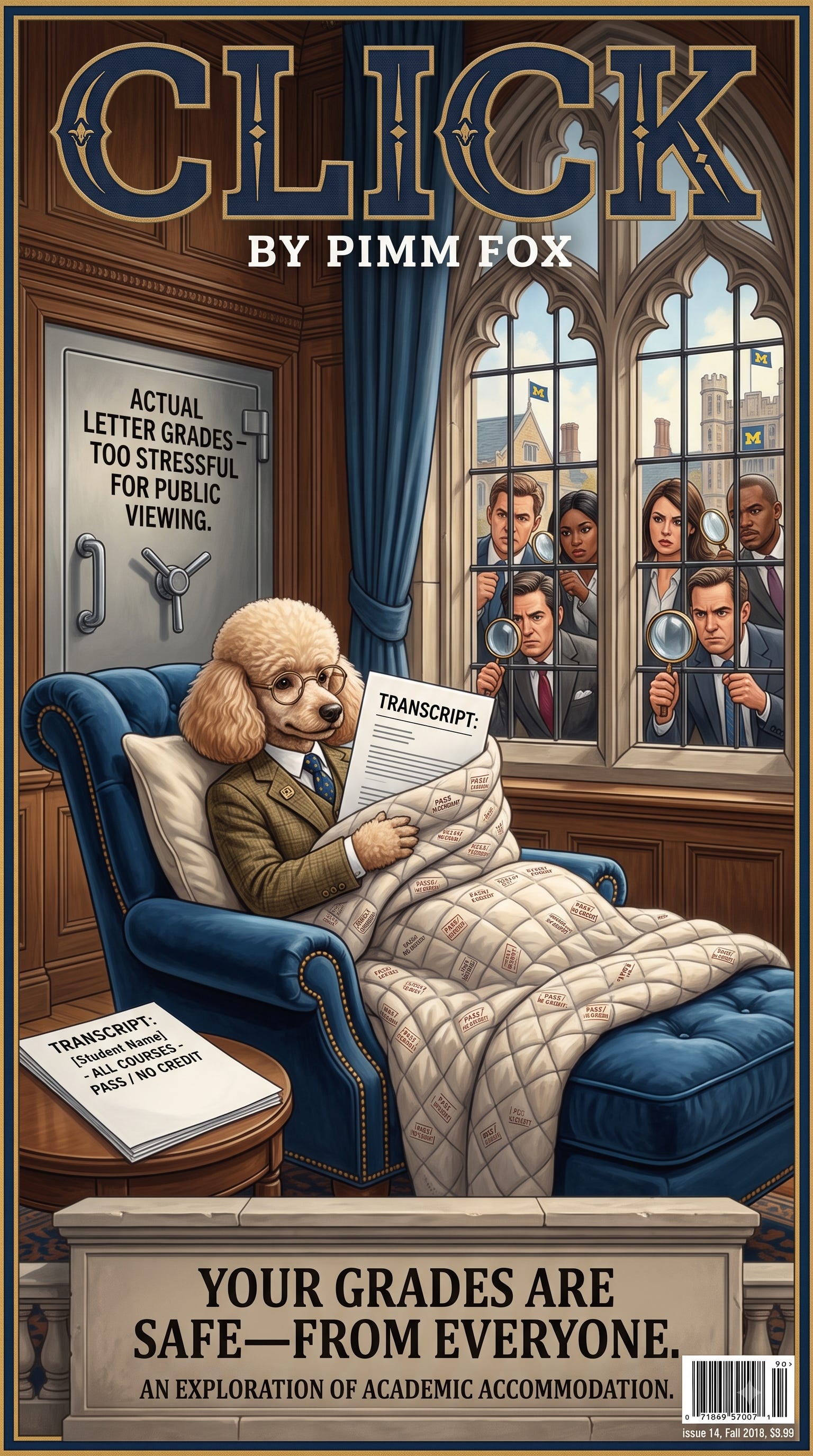
So Michigan is not abolishing measurement. It is measuring achievement, recording it behind the curtain and then showing the public a smiley face.
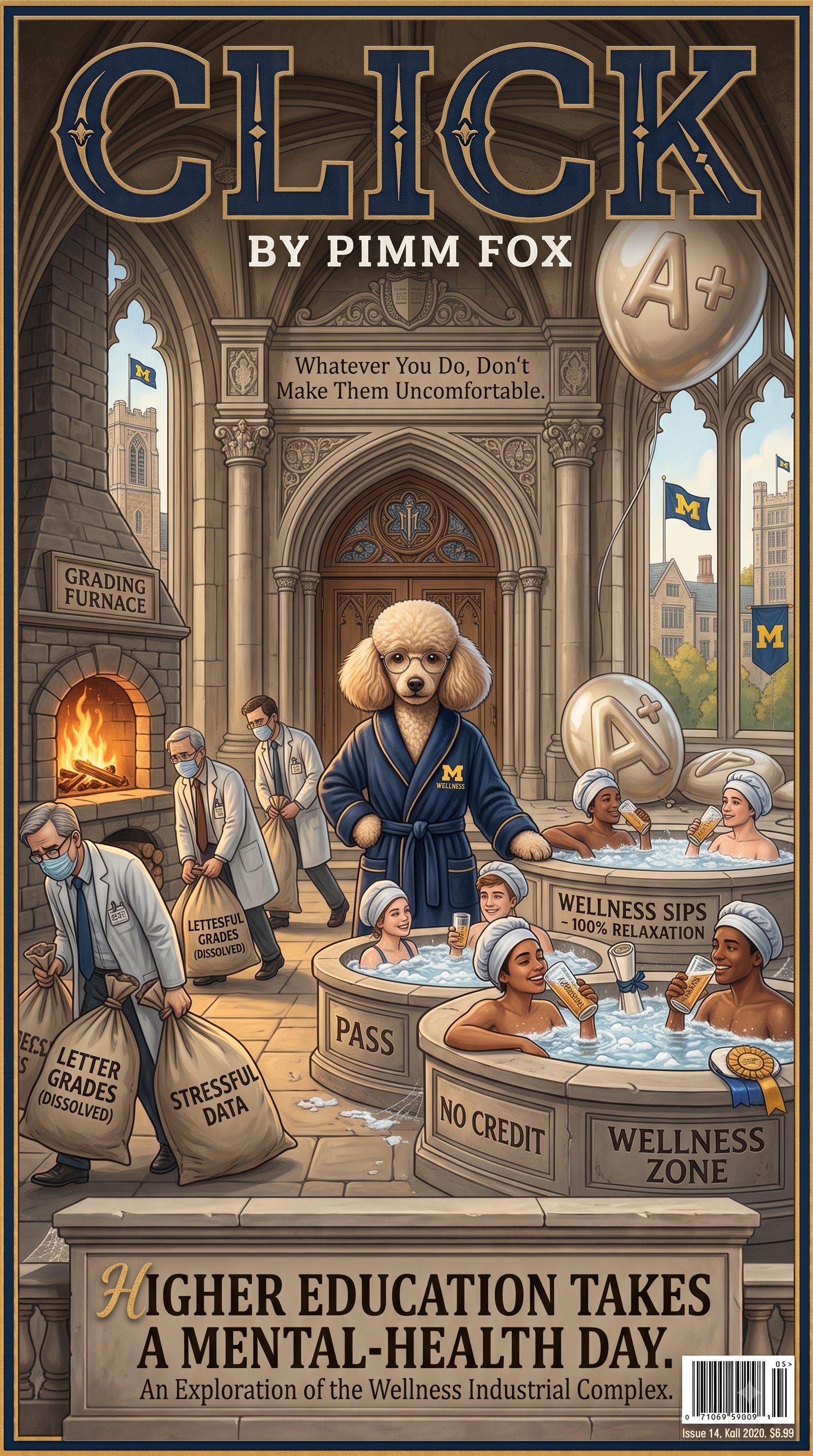
This is academic Spanx: the underlying figure remains exactly where it was, but everybody agrees not to mention the bulge.
The university says “grade covering” will help students acclimate, take risks, follow intrinsic motivation and survive a mental-health crisis.
Anxiety is real, and first semester can be disorienting. But education cannot cure every discomfort by removing the visible consequence.
Eventually the bridge must carry weight.
Michigan’s plan is to lower the river and issue the bridge a wellness certificate, a participation ribbon and an emotional-support pontoon for particularly turbulent syllabi.

What does “Pass” mean to a student who wants to know whether she mastered calculus brilliantly or barely escaped with eyebrows intact? She will still see her internal grade, Michigan says.
Fine — then the grade apparently possesses educational value. It simply becomes too dangerous for the transcript, where evidence goes when adulthood may inspect it.
The timing is exquisite.
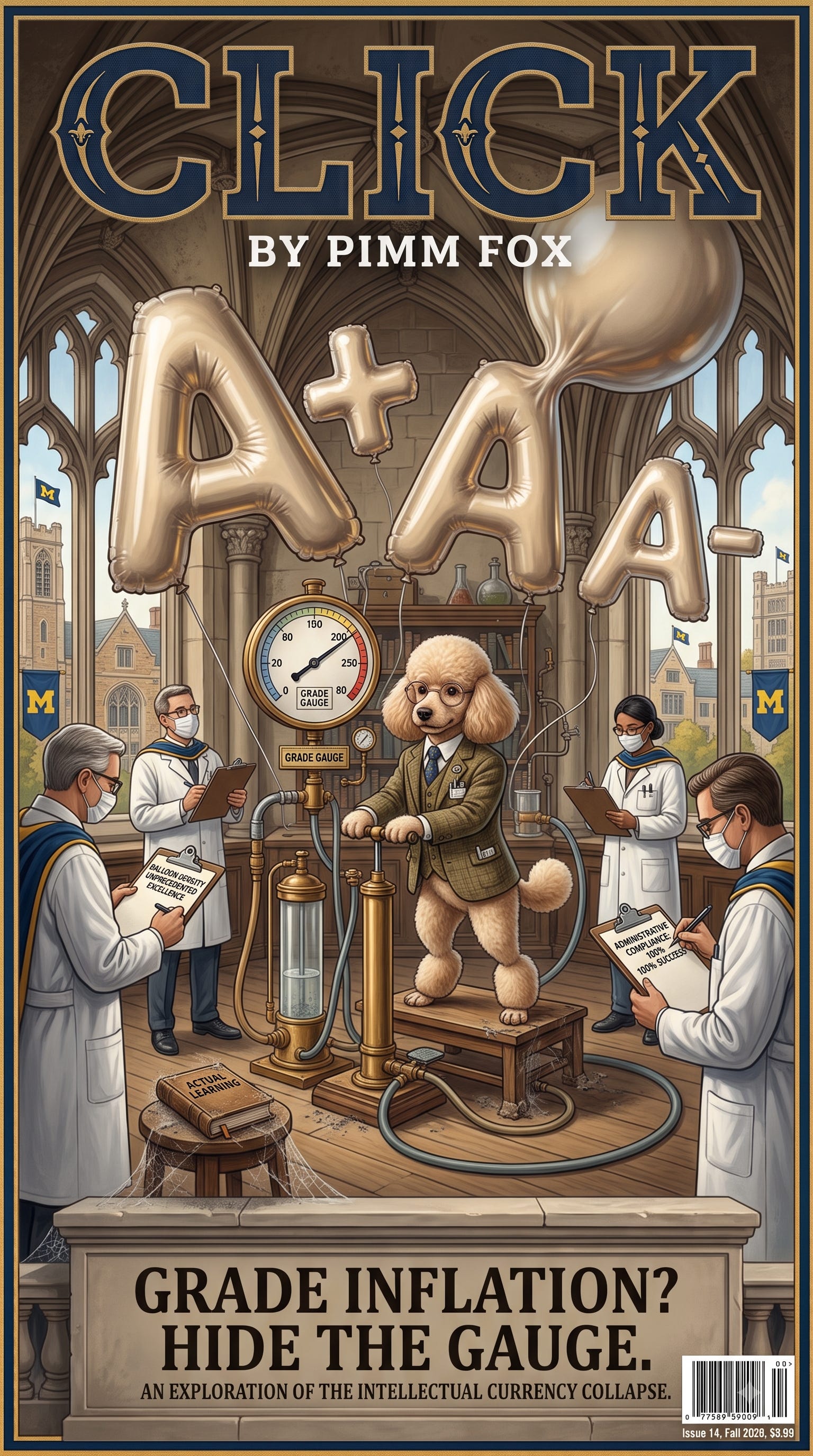
At Michigan, 74 percent of undergraduate grades in 2022 were some variety of A, up from 57 percent a decade earlier.
Elsewhere, universities report freshmen needing remedial elementary and middle-school mathematics.
Harvard has responded by capping A’s.
Michigan looks at inflated grades and says: what if we conceal the balloon?
Even the student-body president supplied the punch line.
He earned all A’s and one B during his first semester and said he probably would not have worked as hard under pass/fail — although he believes he might have learned more.
Perhaps.
People also claim they would read Proust if Netflix stopped keeping records.
Supporters cite social media, economic insecurity and bleak employment prospects.
Yet a liberal-arts education was never supposed to be four years of vocational aromatherapy.
Its purpose is learning to read closely, reason honestly, write clearly and encounter ideas that do not care about your comfort.
Employment matters, but college is not LinkedIn with dormitories.
Students today are not inherently dumber or weaker.
They are responding rationally to institutions that confuse compassion with concealment and customer satisfaction with scholarship.
Charge families enormous tuition, admit students, promise transformation — then protect the institutional brand by ensuring the first report card contains almost no report.
MIT and Caltech have used similar introductory systems, so Michigan is not inventing this retreat.
But precedent does not transform evasion into rigor.
Elite institutions can survive pass/no-record policies partly because their names already function as grades.
Schools should support distressed students with counseling, tutoring, sane workloads and excellent classroom teaching.
It should also distinguish exceptional work from adequate work and honest failure from genuine academic success.
Otherwise, “head of the class” becomes a charming historical phrase, like “standards,” “mastery”, and “please submit evidence.”
Everybody passes through the door feeling affirmed.
Whether anybody learned anything remains safely covered.
No posts
Comments
Nothing yet. Say the first thing.
Sign in to join the conversation.