
Hello and welcome to this edition,
Your brand narrative will have a direct impact on your content and marketing strategy.
5 Storytelling Frameworks to Attract B2B Buyers
Storytelling: how to stop being a vanilla brand (and forgettable)
5 Storytelling frameworks to help you now
Where and how to deploy your storytelling
This edition will help you for your storytelling in a B2B company or personal brand context.
🔴 New live workshop in my program on Thursday August 30!
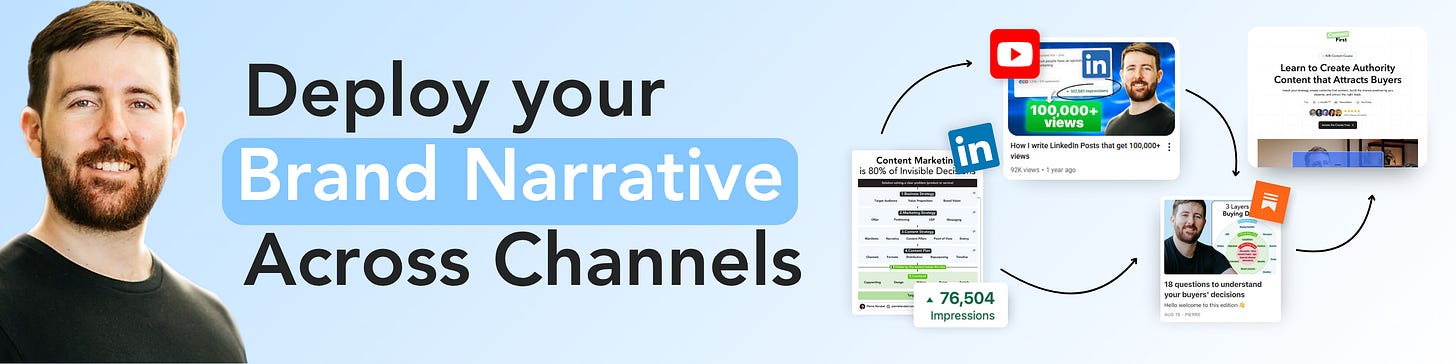
On Thursday August 30, I will give a 1-hour workshop on how to write your brand (or personal brand) narrative so you stand out from competitors and the AI slop.
Write your origin backstory with my help
Choose your enemy, point of view, and big idea
Deploy your brand narrative across 10 channels
→ Join my program here to access the workshop and all my lessons
Let’s start with a simple definition:
What is storytelling?
Storytelling in B2B marketing is the use of a narrative to communicate a brand’s message, values, and offerings. Instead of just listing facts or product features, brands weave these details into a story, making the brand much easier to remember.
Let’s answer this question with 2 angles
What a narrative is NOT:
In B2B, storytelling doesn't necessarily mean deeply emotional and amazing experiences. Instead, it's about creating a logical thread that connects your origin, your solution, and your customer's problem into one coherent story.
What a narrative IS:
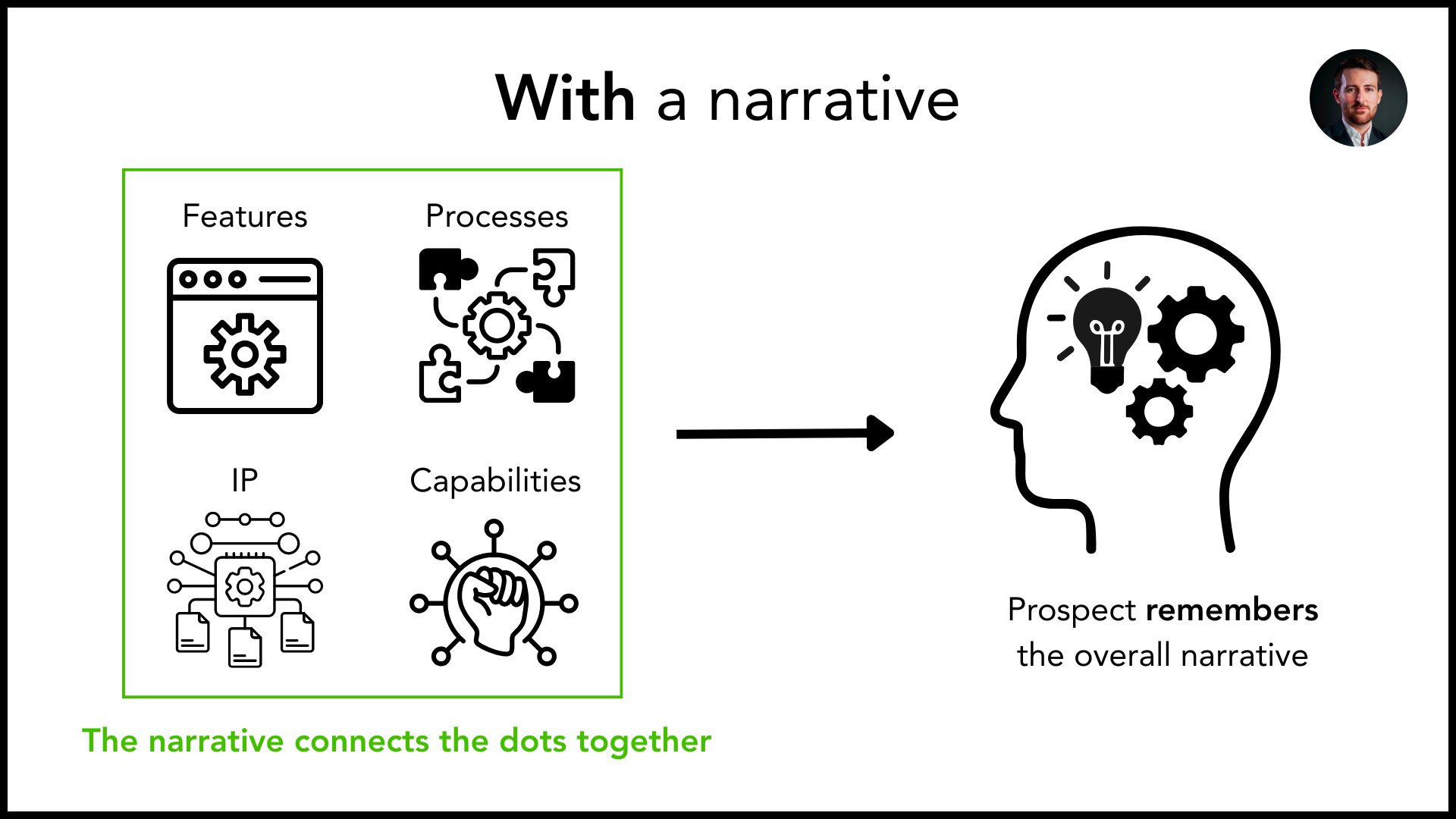
A narrative is the overarching story that explains why your brand exists, what you're fighting against, and how you help your customers win. It's the "red thread" that connects everything.
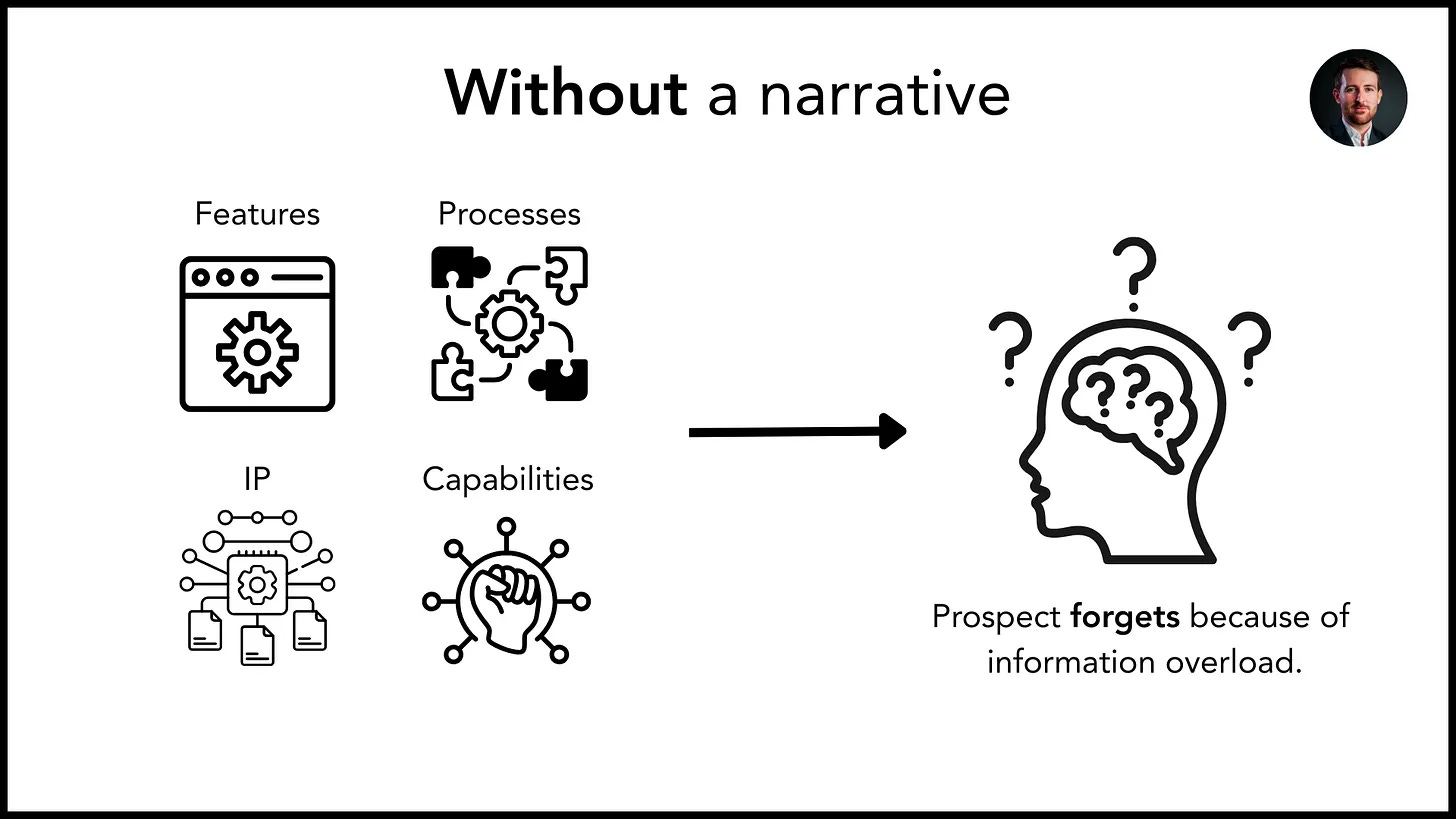
Without a narrative, your audience will forget your features, IP, capabilities, and processes because they lack context.
A narrative helps the audience to:
Understand the context of your product and why it matters
Remember what problem you solve and with what solution
Position your brand among the competition (you stand out)
Create enthusiasm around the solution with a aha! moment
The frameworks I’m sharing here can be applied to a personal brand or a company brand. That said, it’s always easier to use the founder to personify the story especially in early stage.
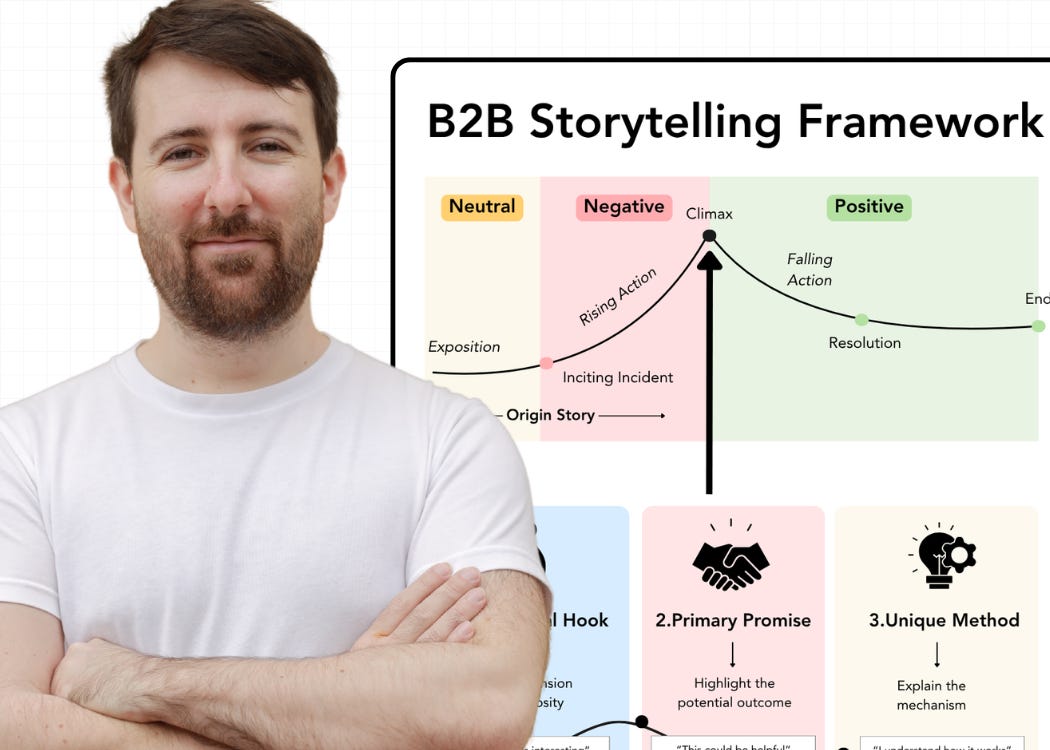
The Freytag’s pyramid will help you to pitch better by framing your business like a compelling story; showing the problem, the disruption, the journey, and the resolution.
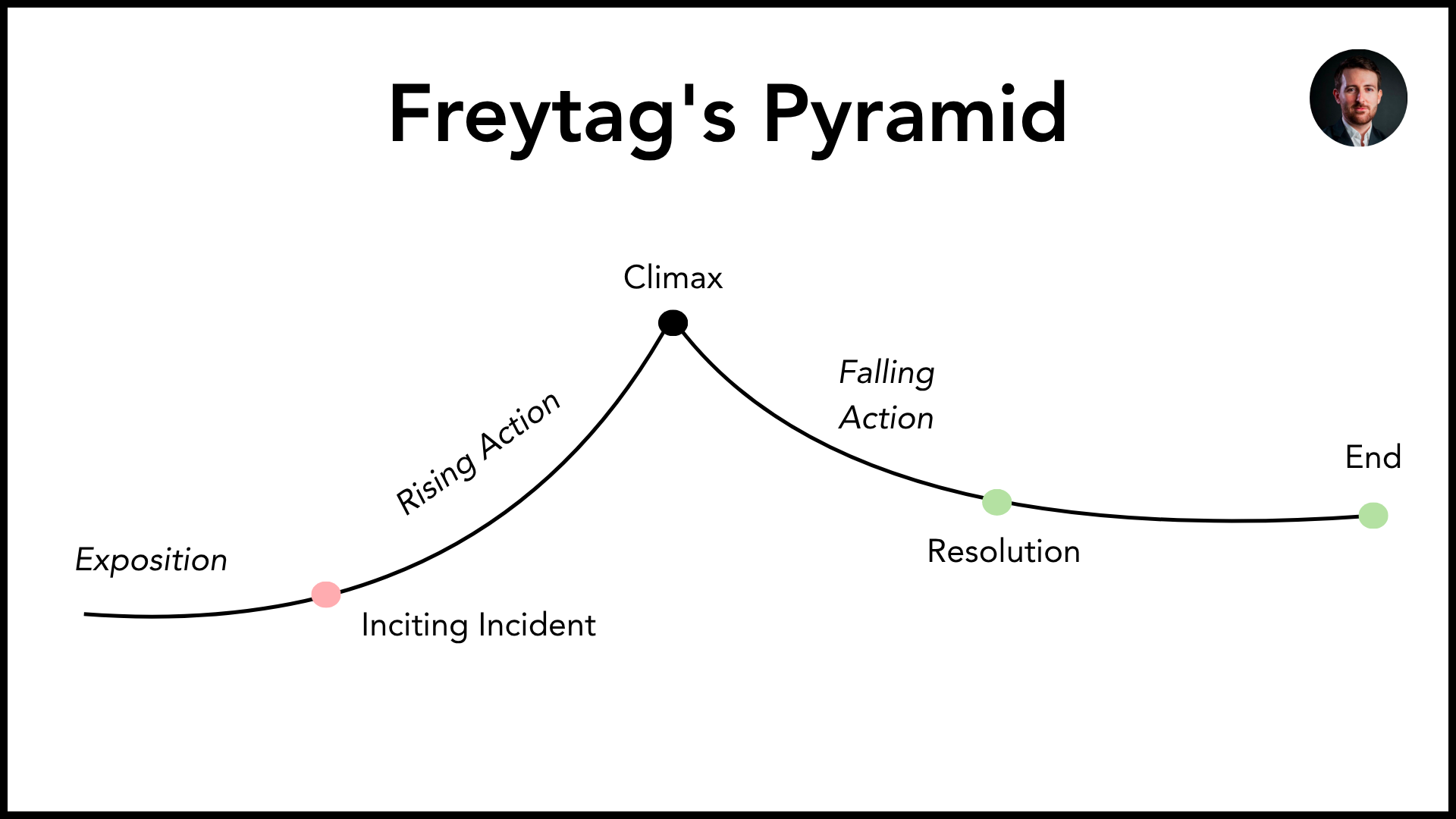
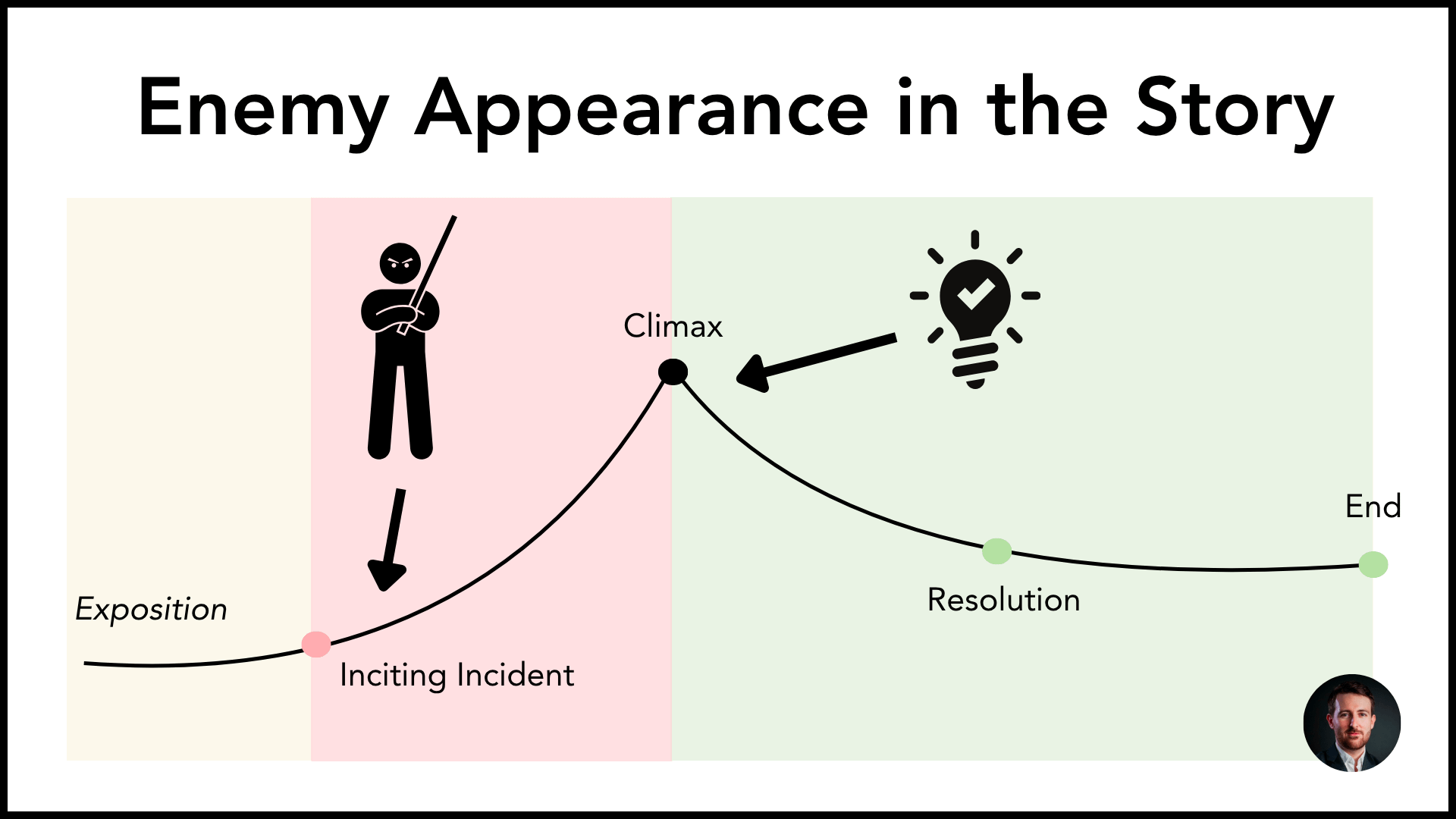
Exposition: What was the market like, and what did everyone accept as normal?
Rising action: What problem kept getting worse, and why did the existing solutions keep failing?
Climax: What is the product, and what insight made it the answer nobody had built?
Falling action: What proof shows it works: results, customers, adoption?
Denouement: What is the new standard the brand defends in the market today?
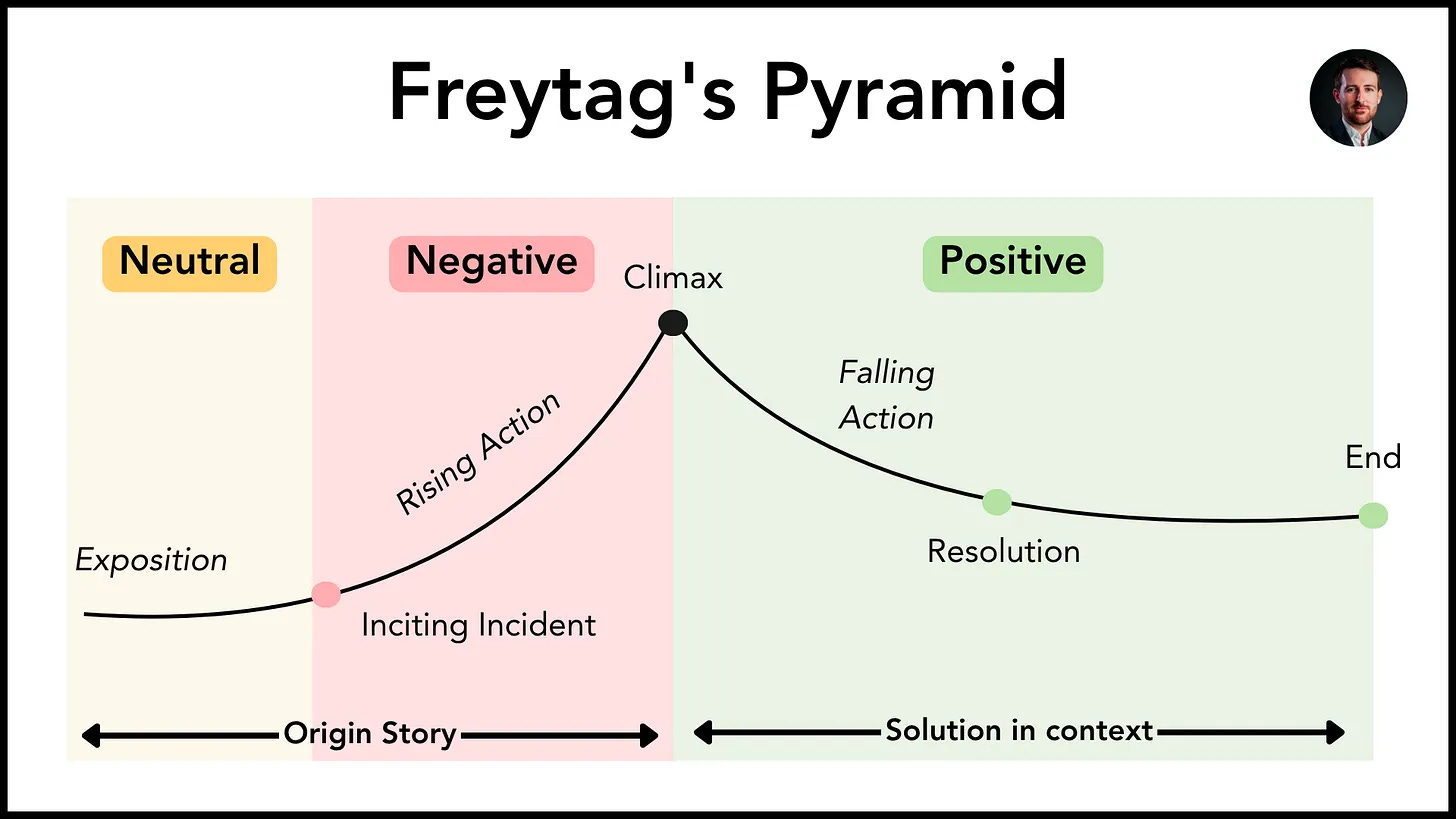
The origin story covers stages 1 and 2 of the pyramid: exposition and rising action. It explains the world before your product and the problem that made it necessary.
→ It answers: what was the market like, what did everyone accept as normal.
The solution in context covers stages 3 to 5: climax, falling action, and denouement. It presents your product as the logical answer to the tension built before.
→ It answers: what insight led to the product, what proof shows it works, and what new standard the brand defends today.
When writing your origin story, solution in context, and overall narrative, you can use the Pixar’s story framework to connect the dots:
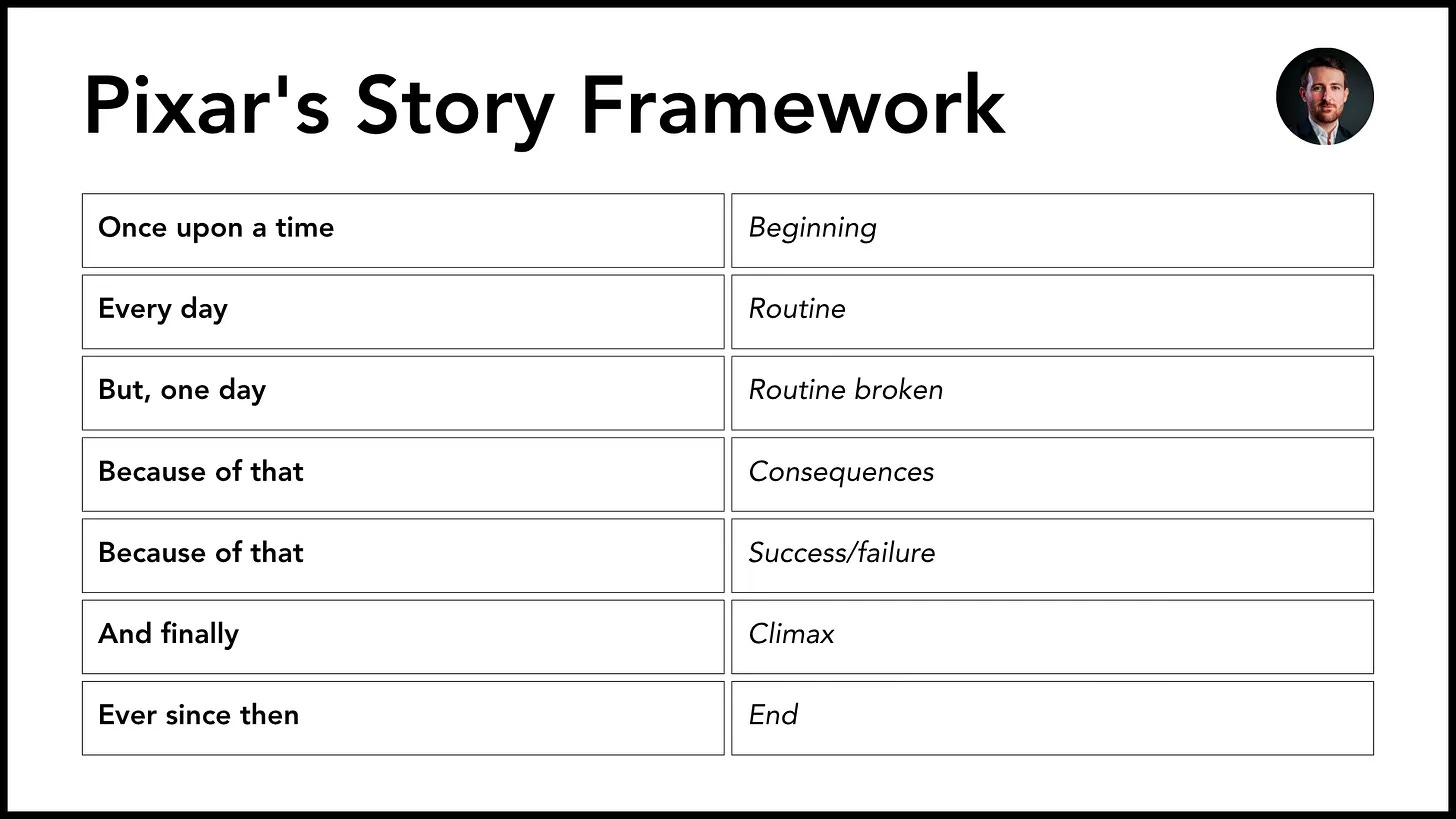
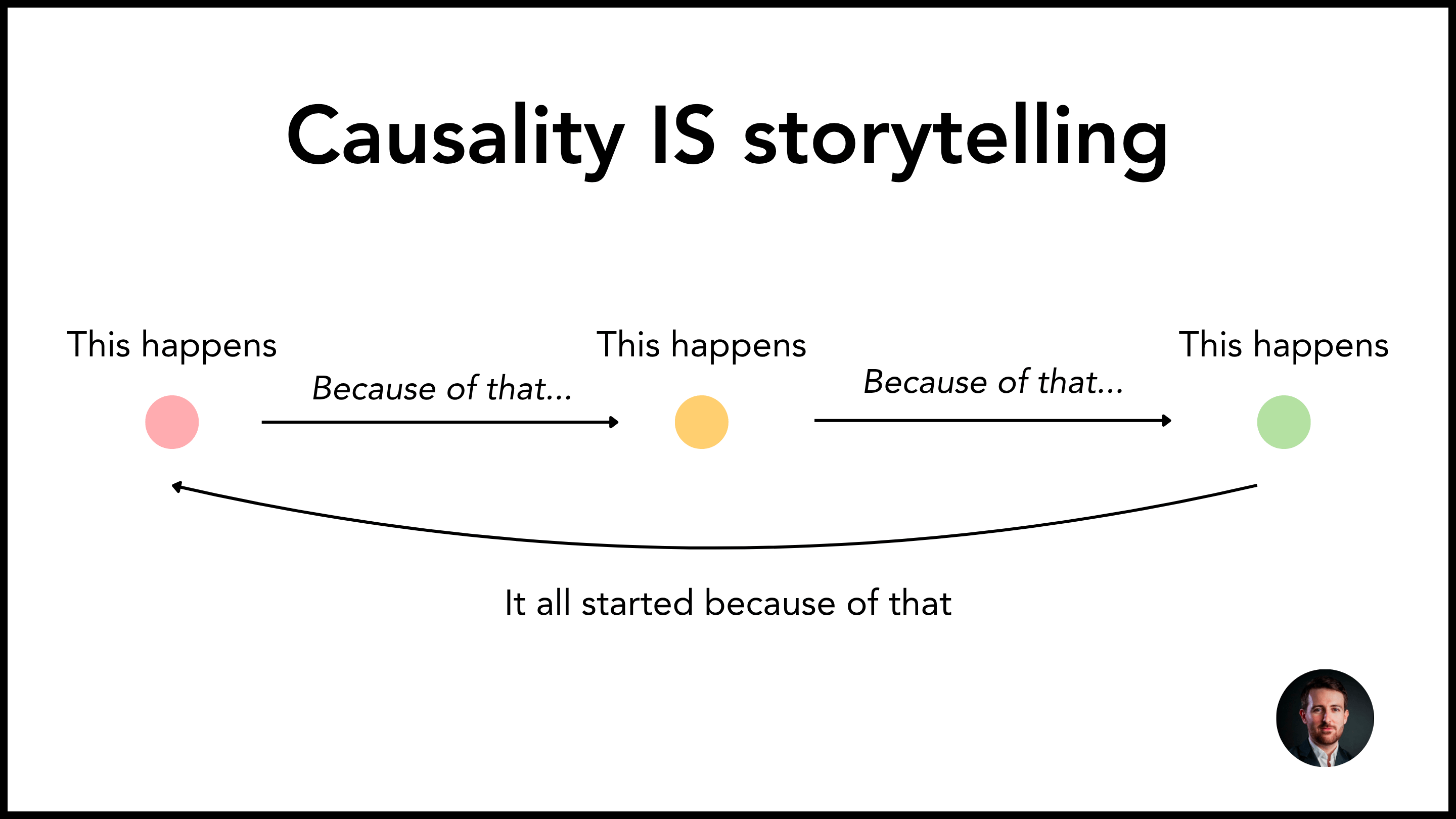
In this framework, you will notice one key element: the 'because of that' structure. It matters because it creates causality.
Causality in storytelling is the principle that every event happens because of a previous event, and leads to the next one.
And causality is crucial because it does 4 things for your story:
It creates momentum. Each event pushes the next one forward, so the story pulls the reader instead of the reader pushing through it.
It creates stakes. If actions have consequences, then choices matter. A character who acts without consequences is just decoration.
It creates meaning. The reader learns something about how the world works: “because he ignored the warning, he lost everything.” Remove the “because” and the lesson disappears.
It creates satisfaction. Endings feel good when they are the logical result of everything before them. Endings feel worthless when they arrive by coincidence.
In my coaching and consulting gigs, my clients are often surprised when I start talking about antagonists or enemies: “Does it really matter?”, “I don’t think we have an enemy, we’re a B2B SaaS”.
But choosing an enemy is a structuring part of your brand (or personal brand) narrative as it show what you’re fighting for. Let’s define it first:
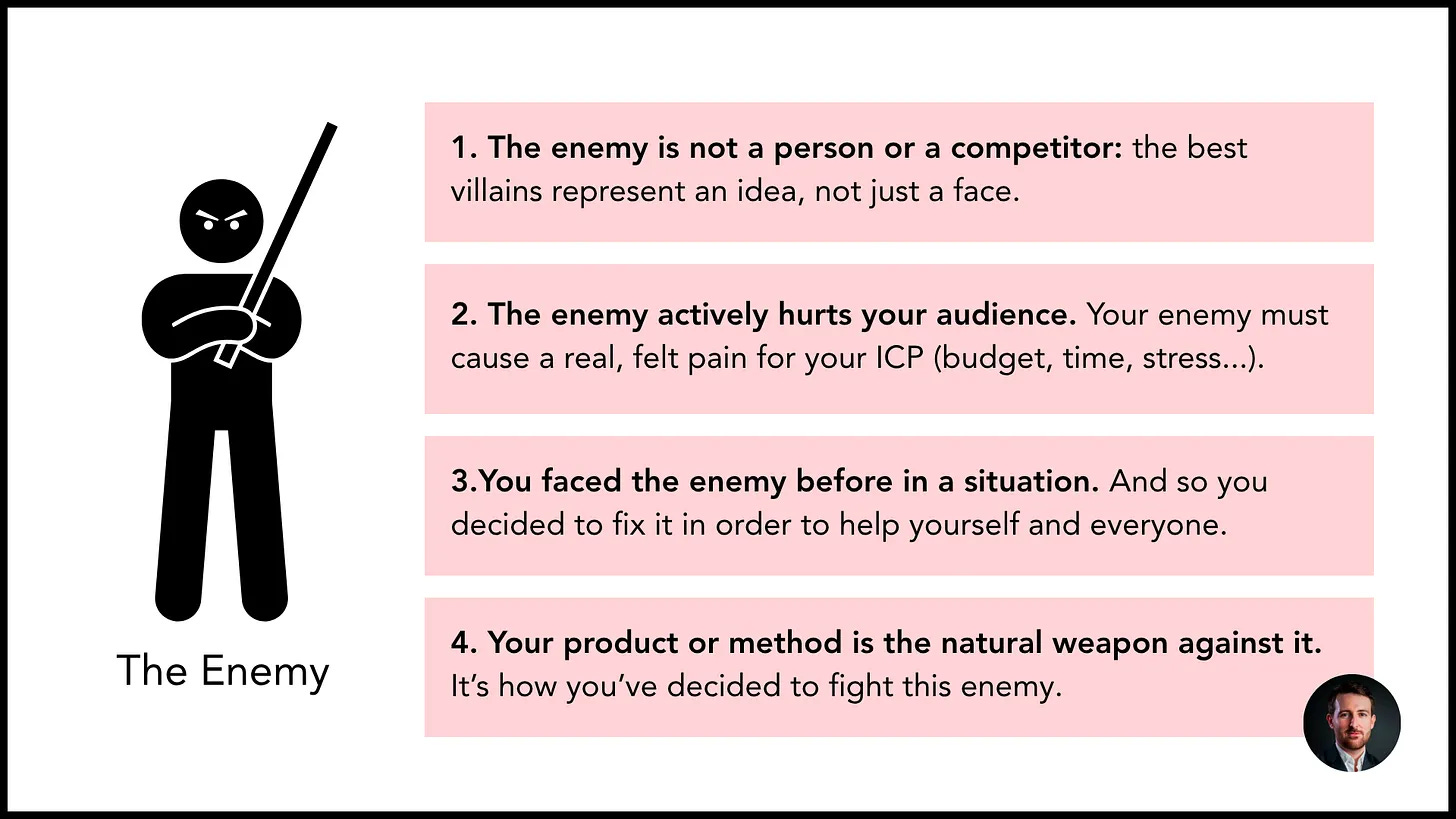
In storytelling, an enemy or antagonist is the main opposing force that creates conflict and stands in the way of the hero’s goals.
The enemy is the practice, belief, or system you need to stand against. Here are the 4 criteria of a good enemy in storytelling, applied to B2B marketing:
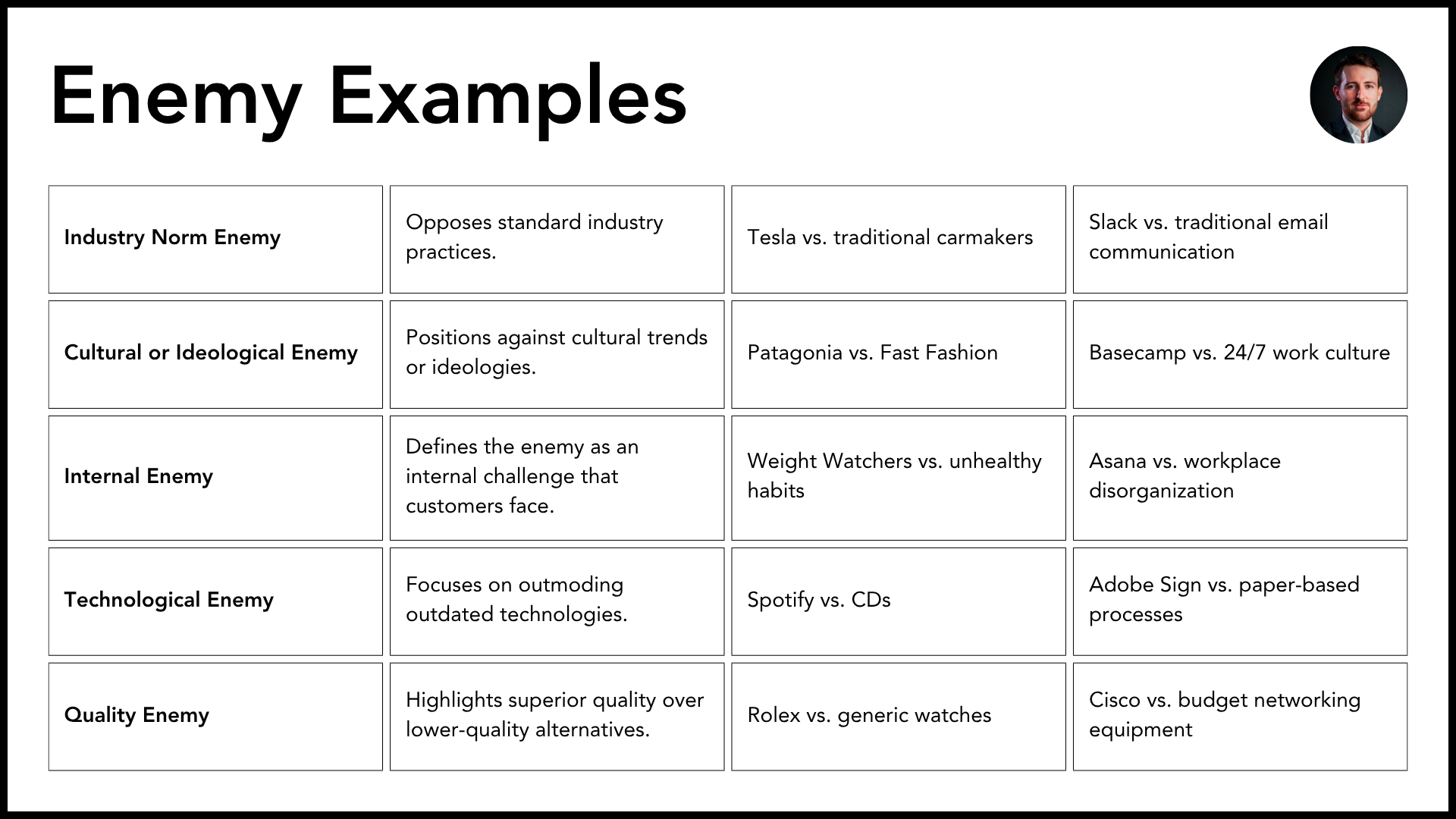
I can also give you some examples:
Now obviously, looking back at the Freytag’s pyramid, the enemy comes in after the inciting incident, it triggers the whole narrative. Now you understand why it’s so important: no enemy, no narrative.
Your solution should be more than a product, it should rely on an overarching idea that answers why it matters, how it helps, and what problem it solves.
A "big idea" in marketing is the central, creative message that powers a brand or advertising campaign.
This concept is widely known in the infoproduct sphere where you need to attach the course, coaching, or cohort to a central idea.
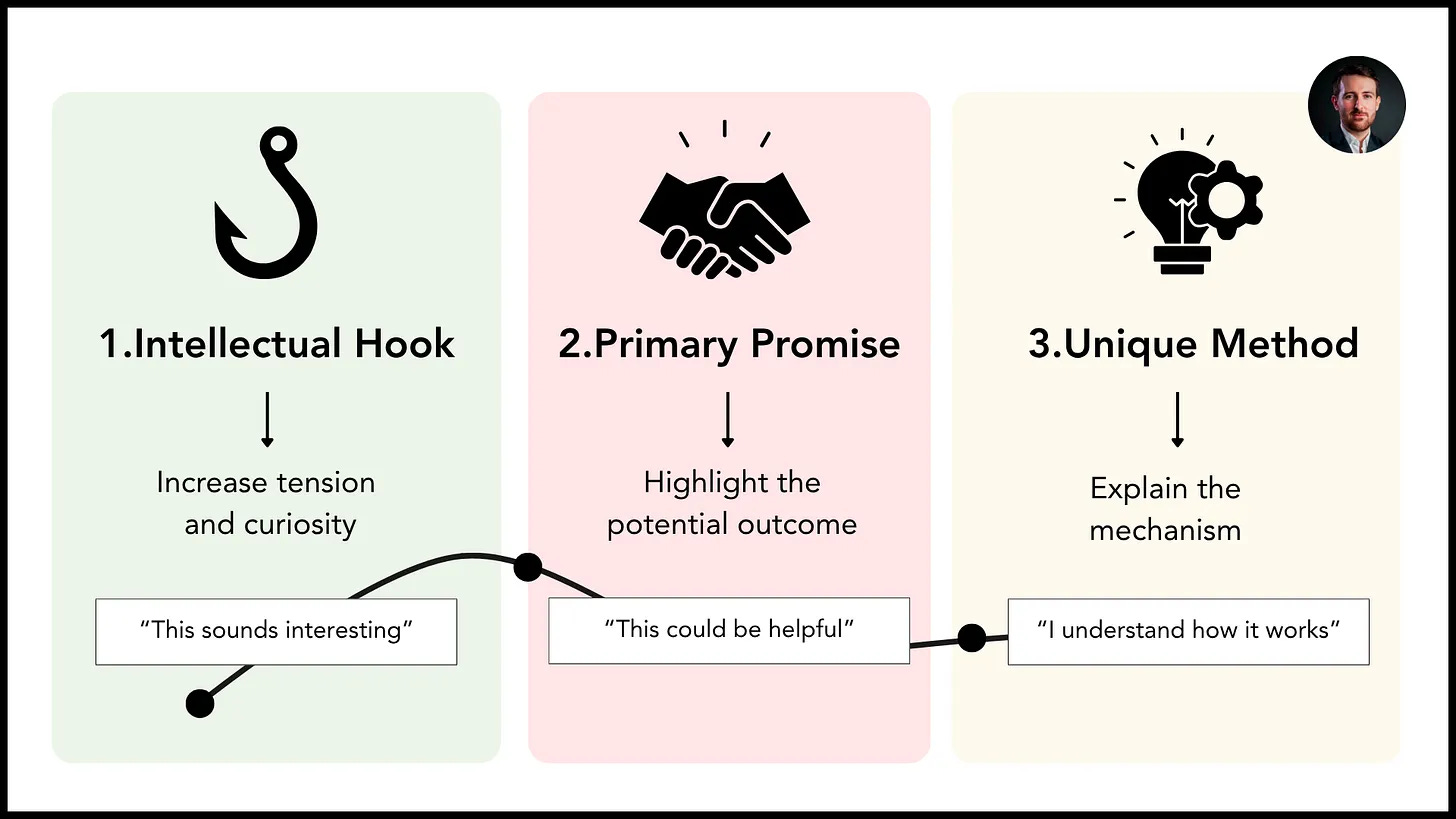
Intellectual Hook: The angle that reframes how the buyer sees their problem. It sounds like a fresh insight, not a pitch.
Primary Promise: The business outcome the buyer gets, stated in their language.
Unique Method: The specific mechanism that makes the promise credible. This is your process, technology, or approach that competitors do not have.
The 4 steps to find it:
Know Your Audience: Decide exactly who you are talking to.
Find the Tension: What is the biggest problem or frustration your customer has?
Name the Problem or Idea: Give the tension a memorable label the market can repeat.
Connect Your Solution: State clearly how your solution solves that problem in a way no one else is doing.
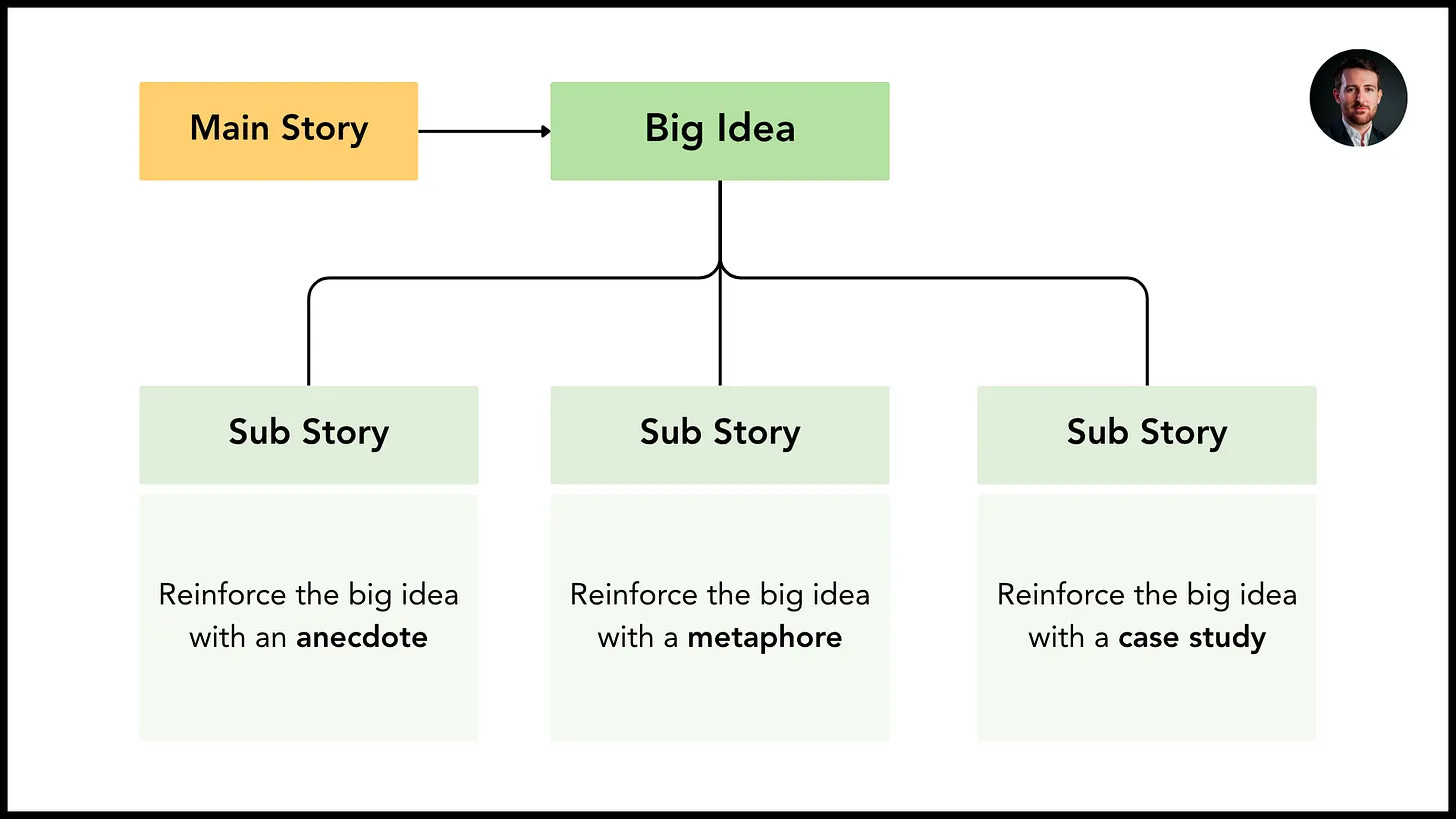
A narrative is not only about the big picture. We’ll believe it if it also comes from little anecdotes, metaphors, or cases that make it sound real and concrete in our day-to-day.
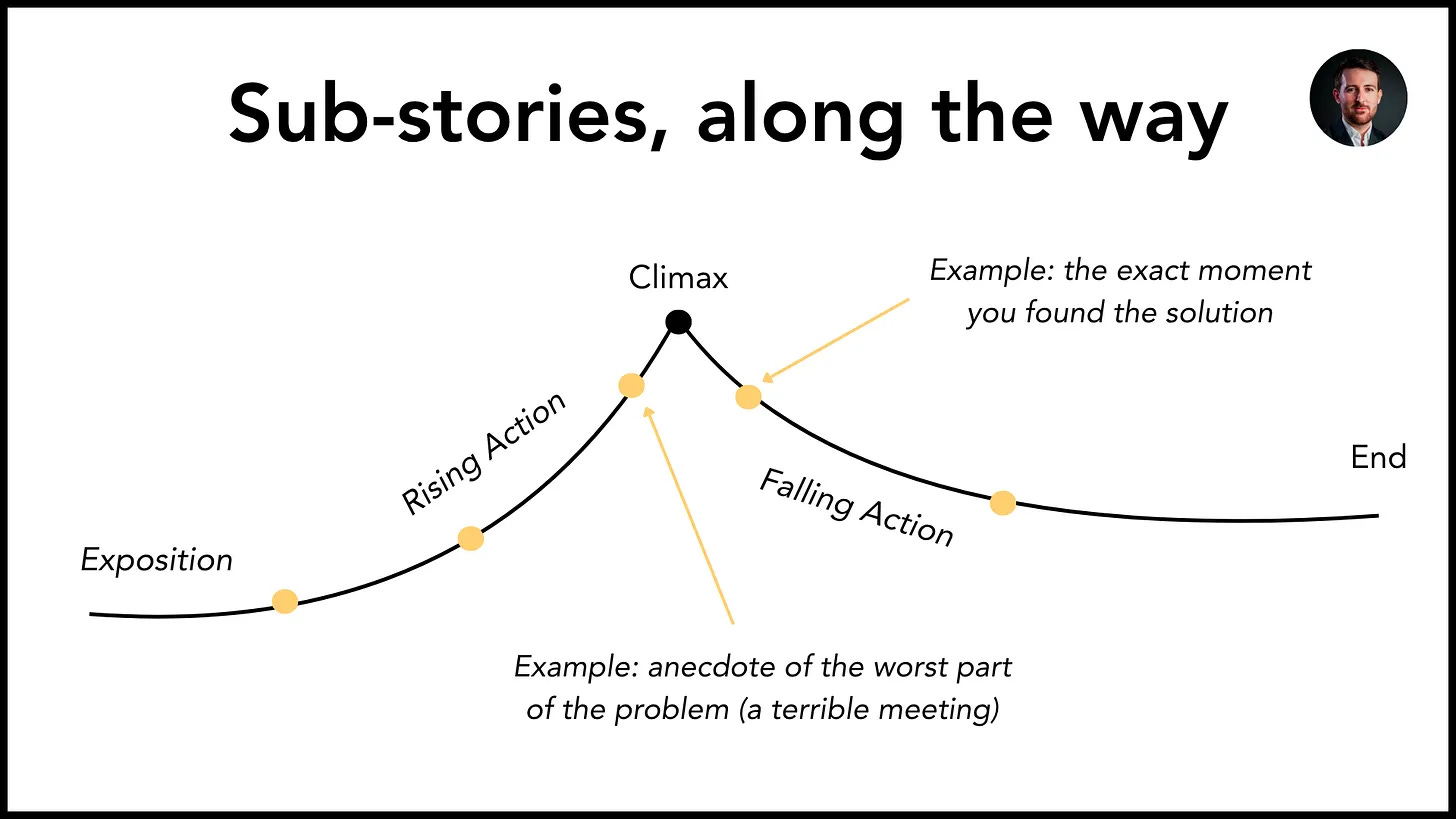
You could tell sub stories on:
Analogy that simplifies the concept
Credibility story that proves it in the wild
Counter-intuitive lesson that dissolves a common objection
Mini case that shows a concrete result
In 2011 during a guest talk they gave to a screenwriting class at NYU's Tisch School of the Arts, Trey Parker and Matt Stone explained their storytelling rules. A short video clip of that session circulated widely online, and that clip is what made the "But / Therefore" rule famous.
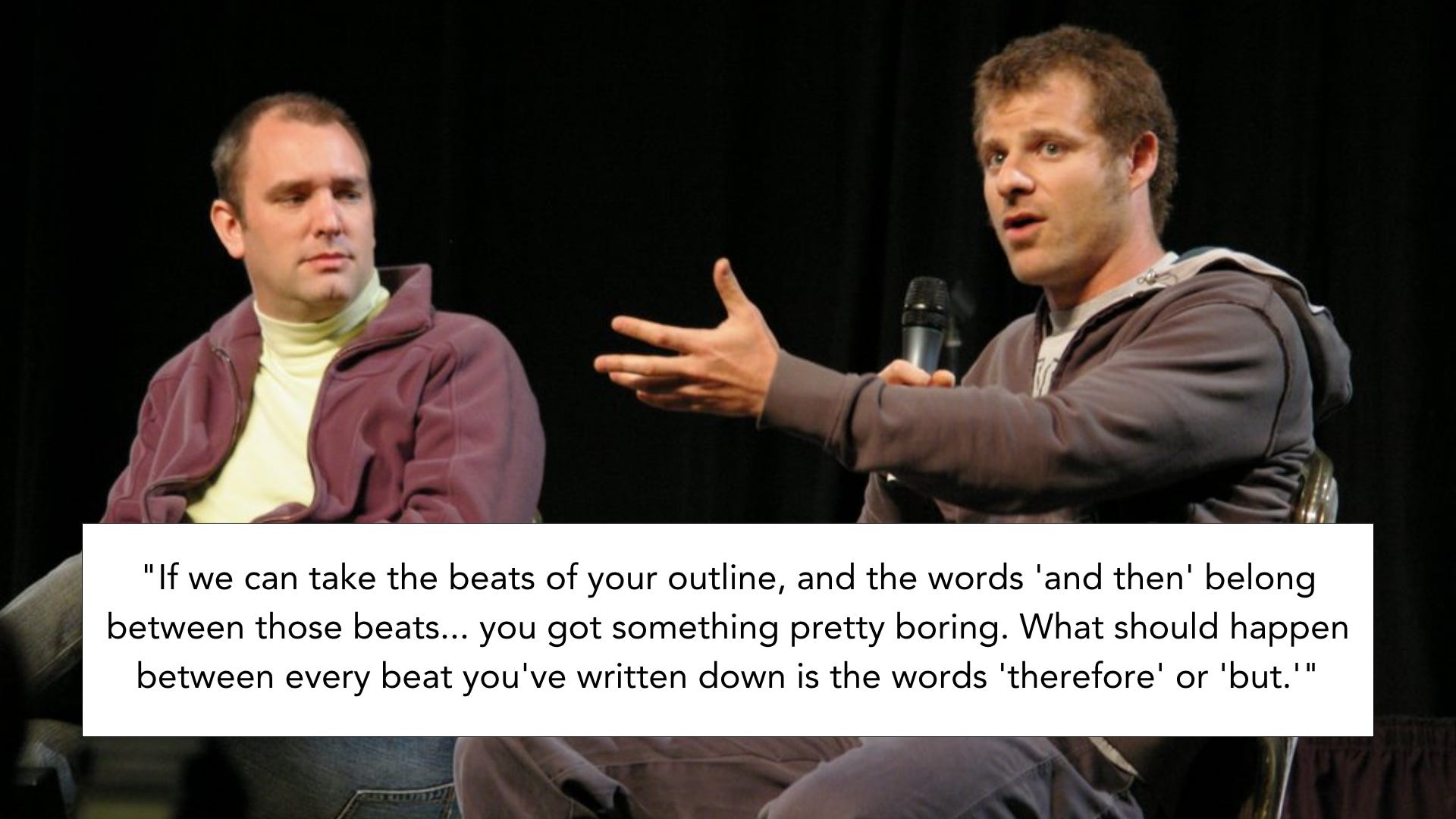
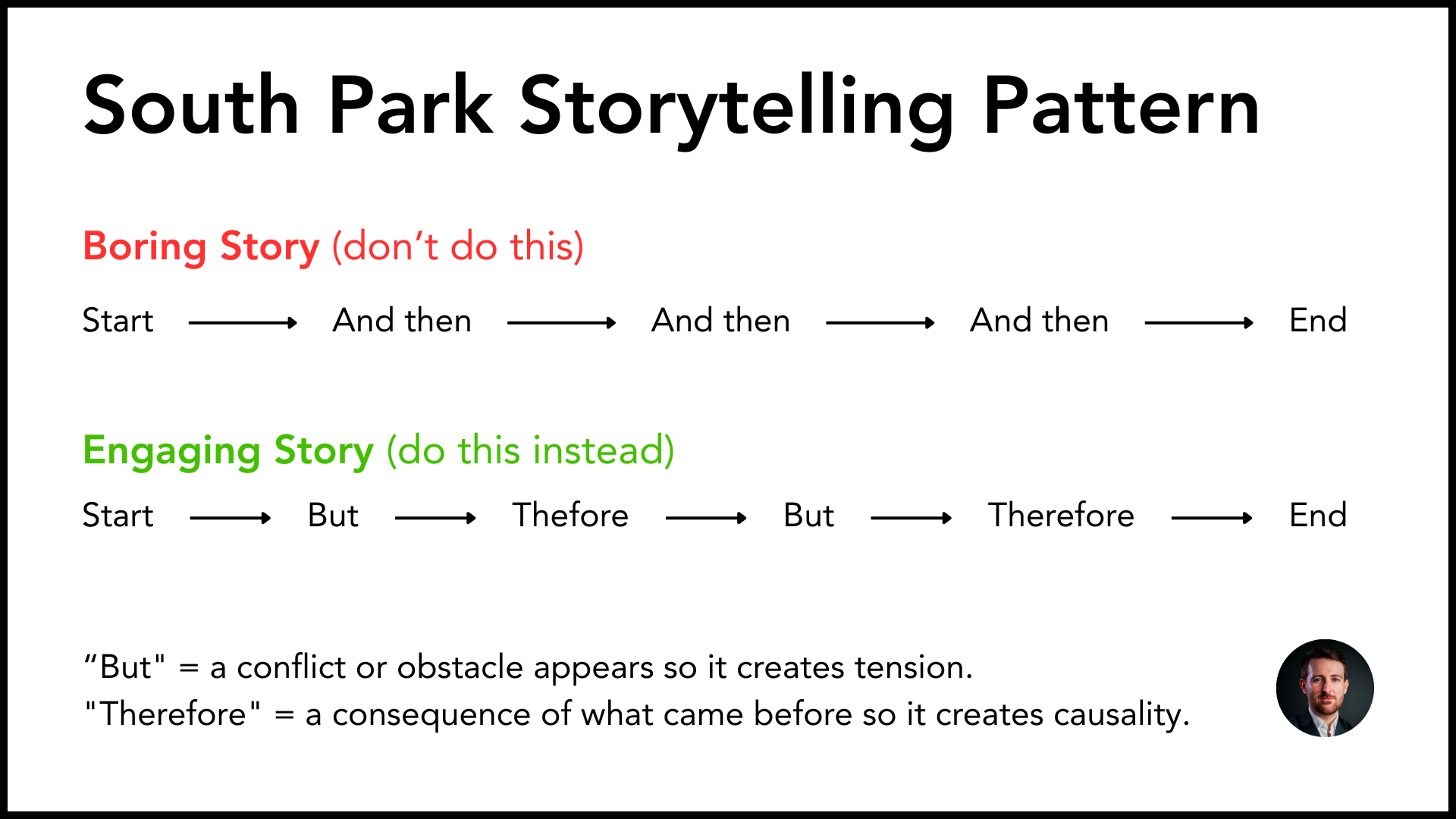
Here’s the explanation of the “But / Therefore” rule:
Look at the beats of your story: If you can connect them with “and then”, your story is boring. Because “And then” is a list of events with no causality. This happens, and then this happens, and then this happens.
Instead, to build tension and momentum, each beat should be connected by either “but” or “therefore”. Each “but” creates an open loop the reader wants to close. Each “therefore” rewards them with a logical payoff. The story pulls itself forward instead of just listing facts.
🔴 New live workshop in my program on Thursday August 30!
On Thursday August 30, I will give a 1-hour workshop on how to write your brand (or personal brand) narrative so you stand out from competitors and the AI slop.
Write your origin backstory with my help
Choose your enemy, point of view, and big idea
Deploy your brand narrative across 10 channels
→ Join my program here to access the workshop and all my lessons
No posts
Comments
Nothing yet. Say the first thing.
Sign in to join the conversation.