
Photography has been a passion since I was 10, but aside from occasional projects, hundreds of thousands of photos have never seen the light of day.
After so much photographic exploration, it's time to consolidate some of it into real, physical projects.
So, I made nine picture frames from reclaimed wood because I wanted a gallery of actual prints hanging on the wall.
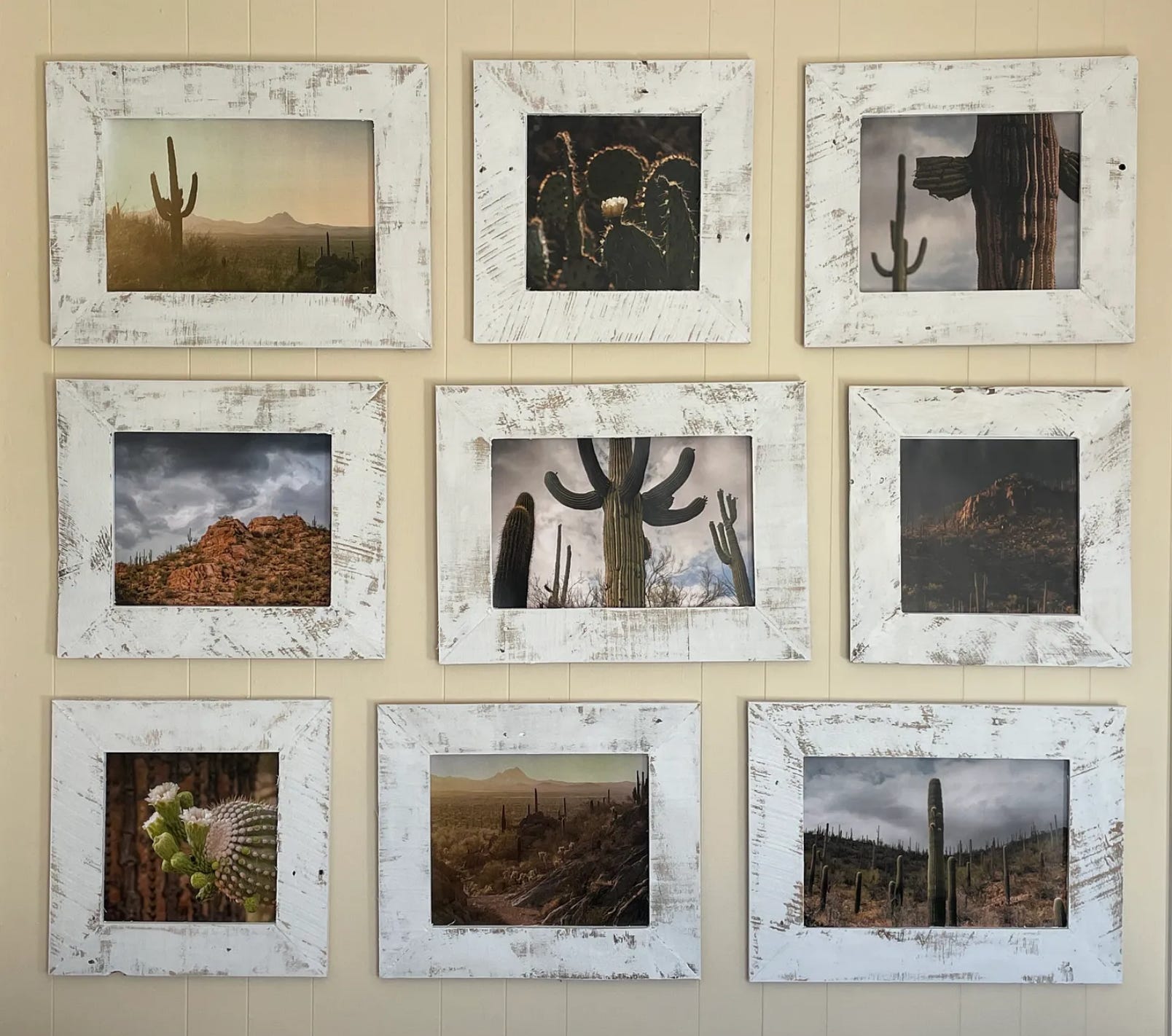
For my fellow makers/problem-solvers who love the nitty-gritty details, the next section details each step toward making the frames and every problem I encountered along the way :)
In any new project, the “how I figured it out” part is my favourite.
And for those of you who love memoir and philosophical reflections, I’ve written a final section for you.
I have thousands of photos from road trips sitting on hard drives, and almost none of them in print.
So I decided to create a gallery wall to display collages of family life and road trips from over the years.
The vision was white frames in various sizes. White works with any print tone, and I plan to change the pictures often.
As easy as it seemed, I couldn’t find a uniform style that covered 5x7 to 11x14.
Switching gears, I found a variety of white frames in different sizes with complementary styles, only to realize the whites were slightly different—cool, warm, neutral. Alone, they looked identical. Side by side, they looked like two completely different colours.
Eventually, after searching the entire earth online, I found similar styles in various sizes, but 12 frames cost nearly $1,000.
Maybe this is why I don’t have any prints on the wall!
However, I’ve learned that projects like this are always harder than they seem, and that if I just let the problem ride a bit, a solution will present itself during some mundane moment.
So, I put it out of my mind and took a drive with my kids.
A little way down the road, I spotted a pile of pallets on the side of the road.
I’m a sucker for a pile of pallets. I regularly drag them home, strip them down and build something out of them.
“Hey, kids, who wants to walk home so I can fold the seats down and cram a few pallets in the back of the van?”
“Daaaad!”
I craned my neck as we passed by.
A pallet is a simple thing, full of potential.
My mind wanders to all the things I could make out of them and lands on picture frames!
Pallet wood has exactly the look I wanted: Textured, imperfect, slightly weathered.
This is not the first time I’ve wanted to make my own picture frames.
About 10 years ago, I borrowed a mitre box, a hand saw, some carpenter’s glue, and roughed together my first photo frame from an old piece of wood salvaged from a trellis my dad built for my mom’s garden.
It was more of a prototype, a little wonky, and I needed proper tools to do it right. So, frame-making became one of those ‘one day’ goals.
Today is that day!
My friend Mike has a studio where he makes custom picture frames. I bet he’d show me the process and let me use his tools.
I tend to be the opposite of my friends.
When we first met years ago, I couldn’t get 4 pieces of wood to line up into a rectangle.
Mike, on the other hand, converted a century home into a portrait studio.
He produces fine-art prints for local artists using a printer as big as a car.
My printer took a ride through my window the second week I had it.
His precision and orderliness are perhaps best expressed in the most mundane photography on the planet - passport photos!
When I assisted him for a couple of days, he handed me a thick binder of instructions with exact specifications for clothing, cropping, lighting, and everything else.
He can meet the strict demands of passport photography without ever getting a photo rejected.
I, on the other hand, am gonna make you laugh for your picture like it’s a shopping mall photo booth.


I figure, if I don’t get you kicked out of the country - your own country - I didn’t do my job right.
The picture frames Mike makes are flawless, too. And even though I wanted rustic-looking frames, I knew from experience that I needed Mike’s guidance.
Opposite means that my friends tend to be skilled in areas that I am not, and I’ve got a lot to learn.
I began the frame project in the middle of winter, so I had to pry the pallets out of a Canadian snowbank.
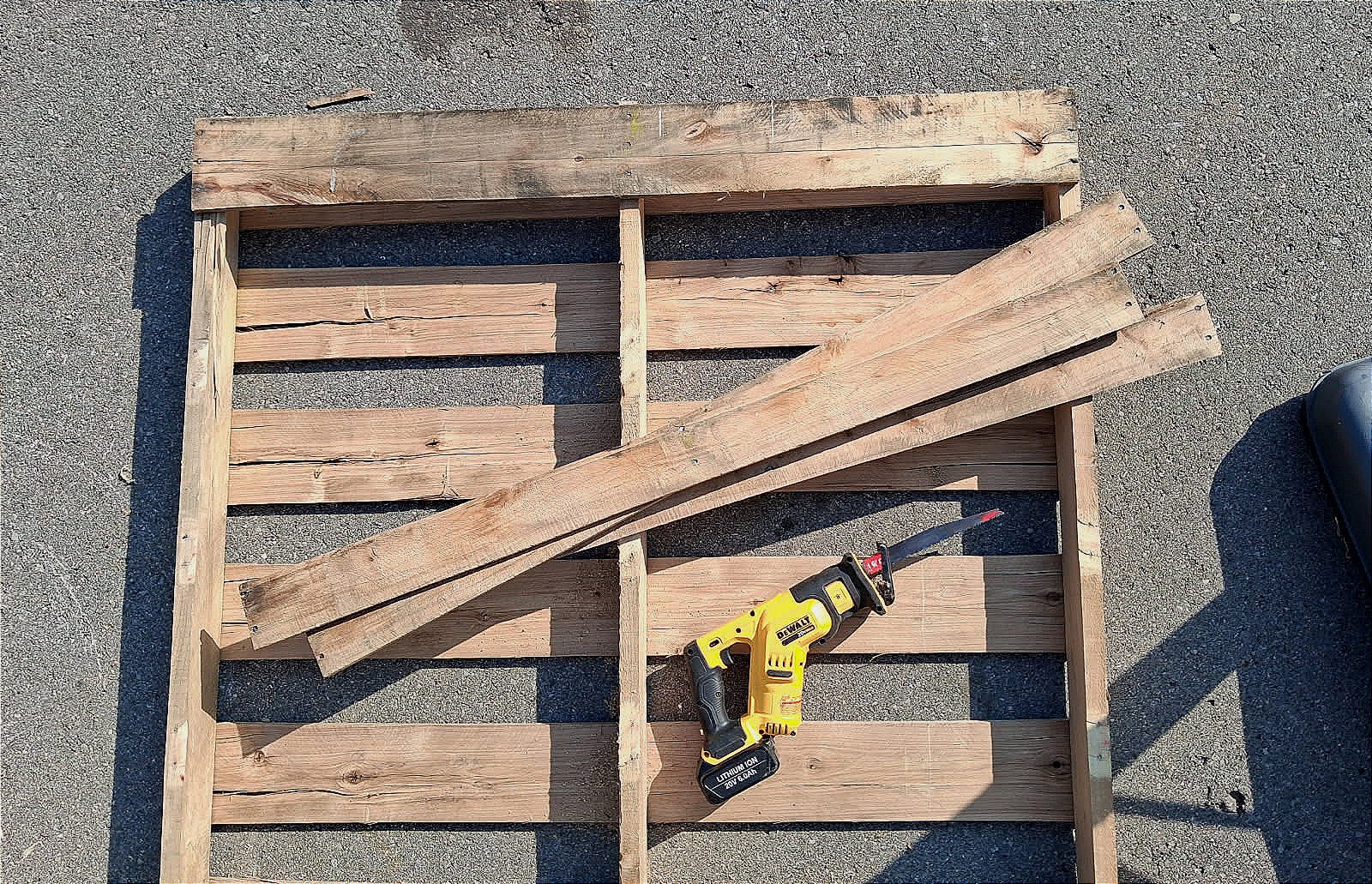
First, I cut the pallet apart with my saw. Then scraped the ice and snow off the boards.
Next, I measured and cut the lengths, and used a mitre saw to cut the corners at 45°. The saw clicks into place at that angle, so the cuts were perfect (if the angles are off, the corners won’t snap together).
The pieces thawed and dried on the minivan floor on the way to Mike’s studio to assemble the frames.
I laid out the pieces of wood, and most of them wouldn’t lie flat. Which is strange because they all lay flat when I cut them apart.
Mike asked me about the wood, and I told him about the snowbank and the ice-encased ends that I cut off.
The problem was that this pallet was made of light softwood, so it was warping as it dried (most pallets I use are made of hardwood).
Together, we selected the four flattest pieces, cut grooves with a router to hold the glass, and laid the pieces into the shape of a frame.
But those perfectly cut 45° angles didn’t meet properly.
Mike explained that there’s no such thing as a saw that cuts a perfect 45° angle.
Even though the saw locks into the 45° position, it turns out to be more like 45.00001°
At this point, I was beginning to feel a but self conscious. Mike’s studio is filled with framed artwork, and not one of them is made with warped wood and corners that don’t line up.
If you’re .00001° off on the way to the Moon, your trajectory will put you into a black hole.
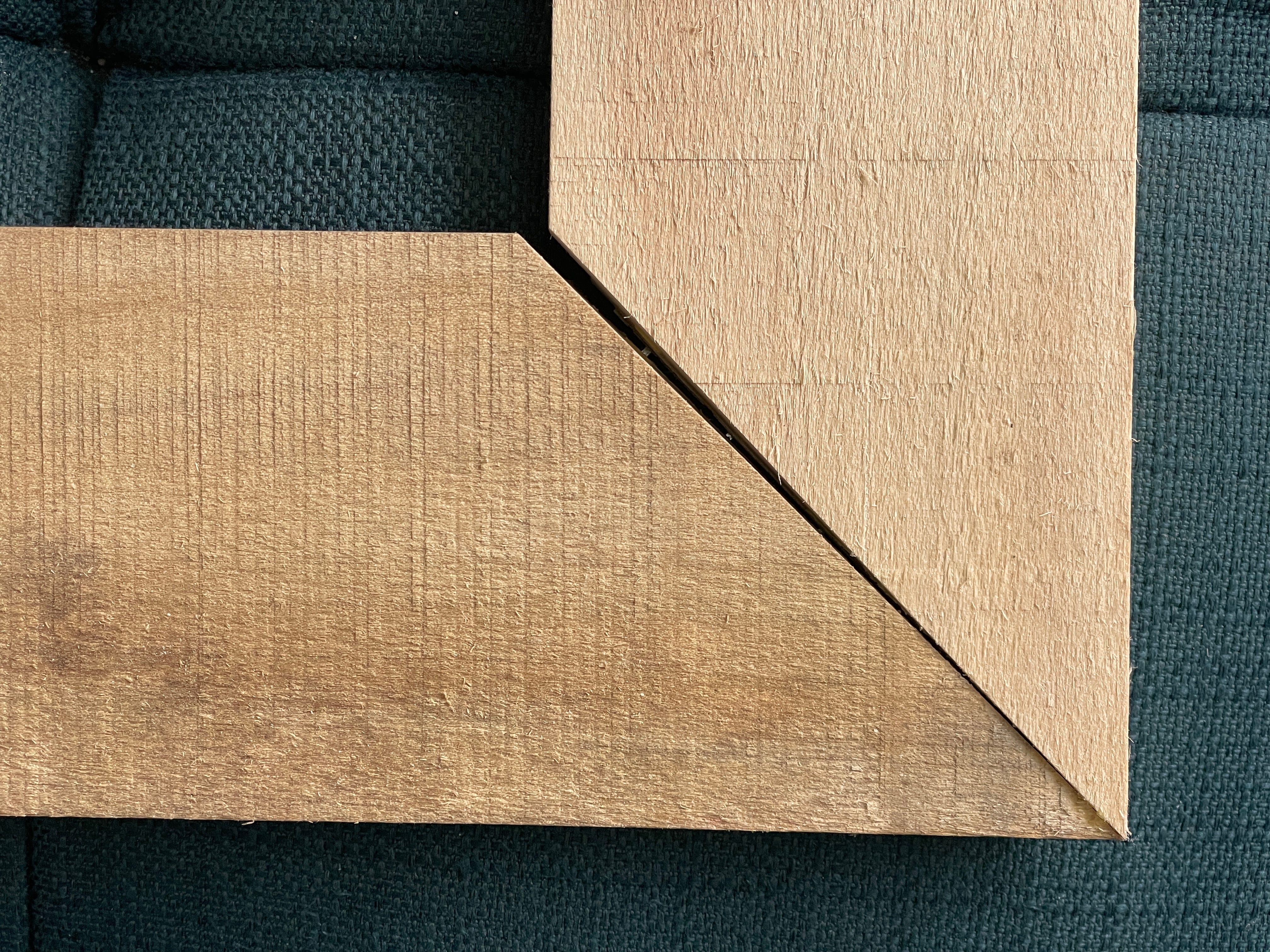
Thankfully, not only had Mike anticipated this, but he also knew fixing the corners was part of the process.
He had a guillotine cutter that could perfectly shave the 45° ends, so we trimmed everything and the corners lined up.
We glued it, clamped it, and left it to set overnight.
That night, I dreamed of a wall filled with framed prints. I slept soundly, blissfully unaware that the wood continued to warp as the glue dried.
The first frame fell apart when I picked it up.
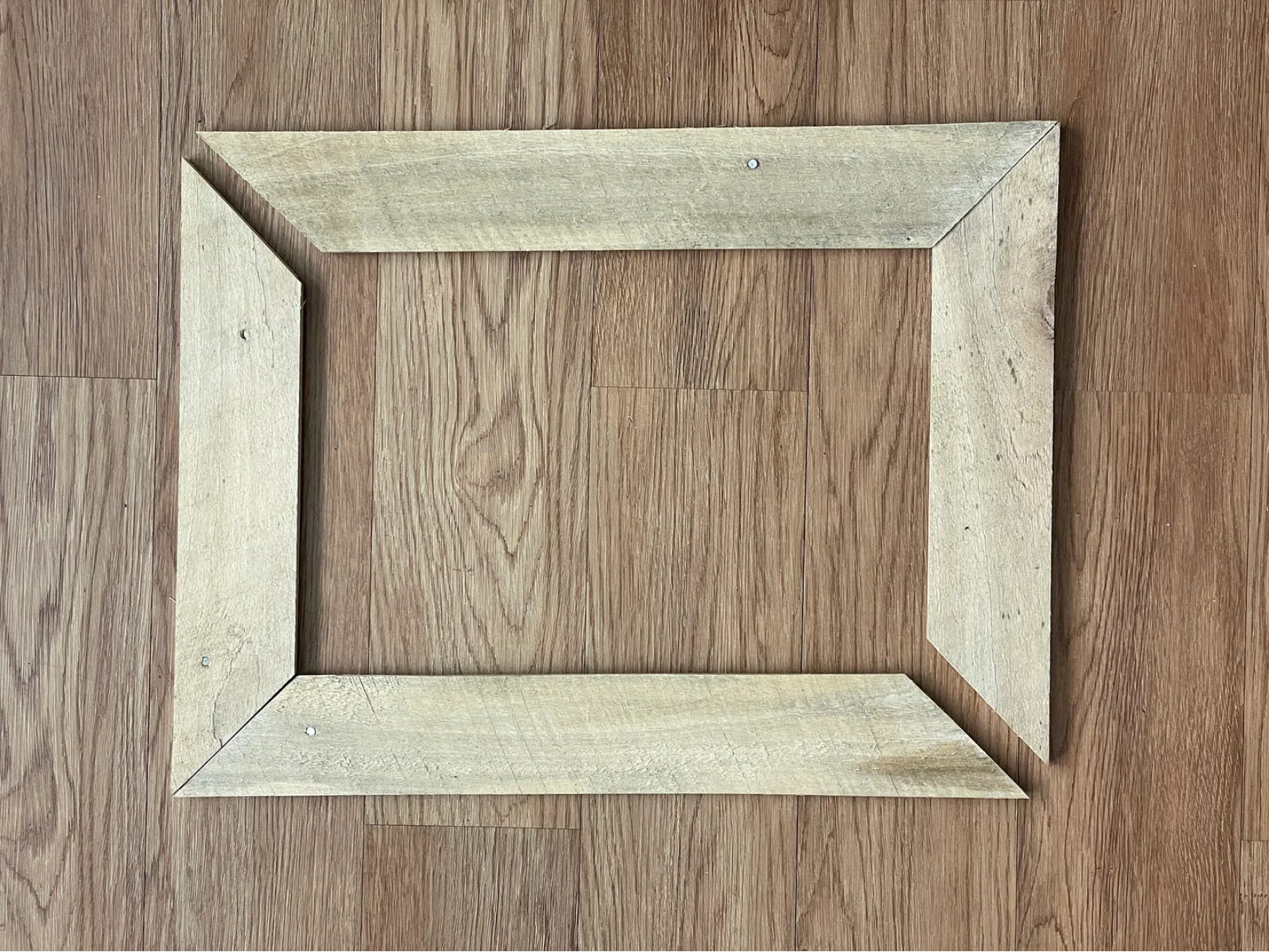
A few twisted like old rollercoaster tracks.
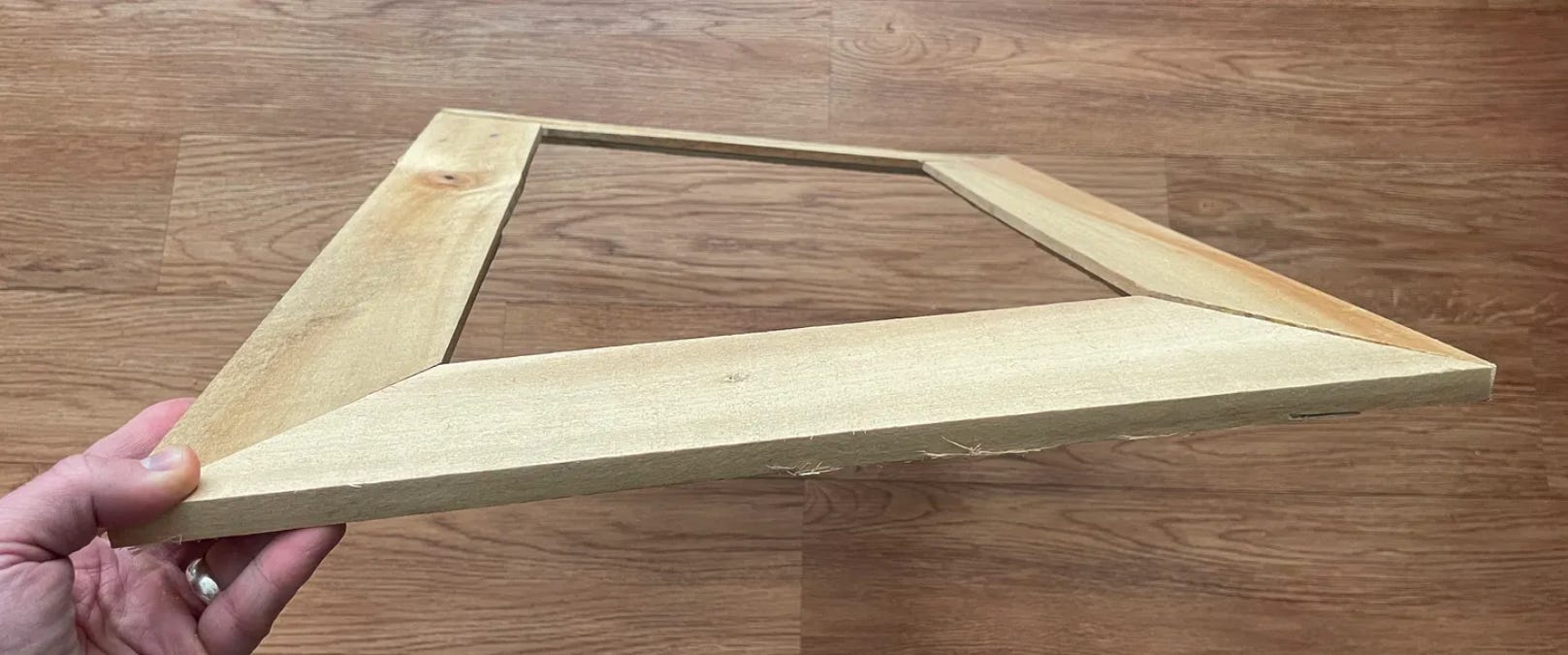
The rest would almost lie flat - if you didn’t look too close. But almost flat won’t hold glass.
Glass doesn’t almost bend.
It cracks and shatters.
The project had already taken weeks, and I was in over my head. It’s not working, and I’m looking like an idiot.
This is the point where I should give up. Blame the wood. Blame it on perfectionism. “Hey, I tried, but nothing was good enough.”
Mike suggested buying proper lumber instead—nice straight boards he often uses for his frames. They look great, and I was just about to pay him to make them for me.
But the whole point of this project was to use pallet wood.
Whenever we go on road trips, I see old fence boards or scraps of wood and think that would make a great frame. But when you’re travelling for two months, you can’t exactly start hauling lumber home.
Also, people tend to get suspicious if you wander into their yard and start carrying off pieces of their old fence.
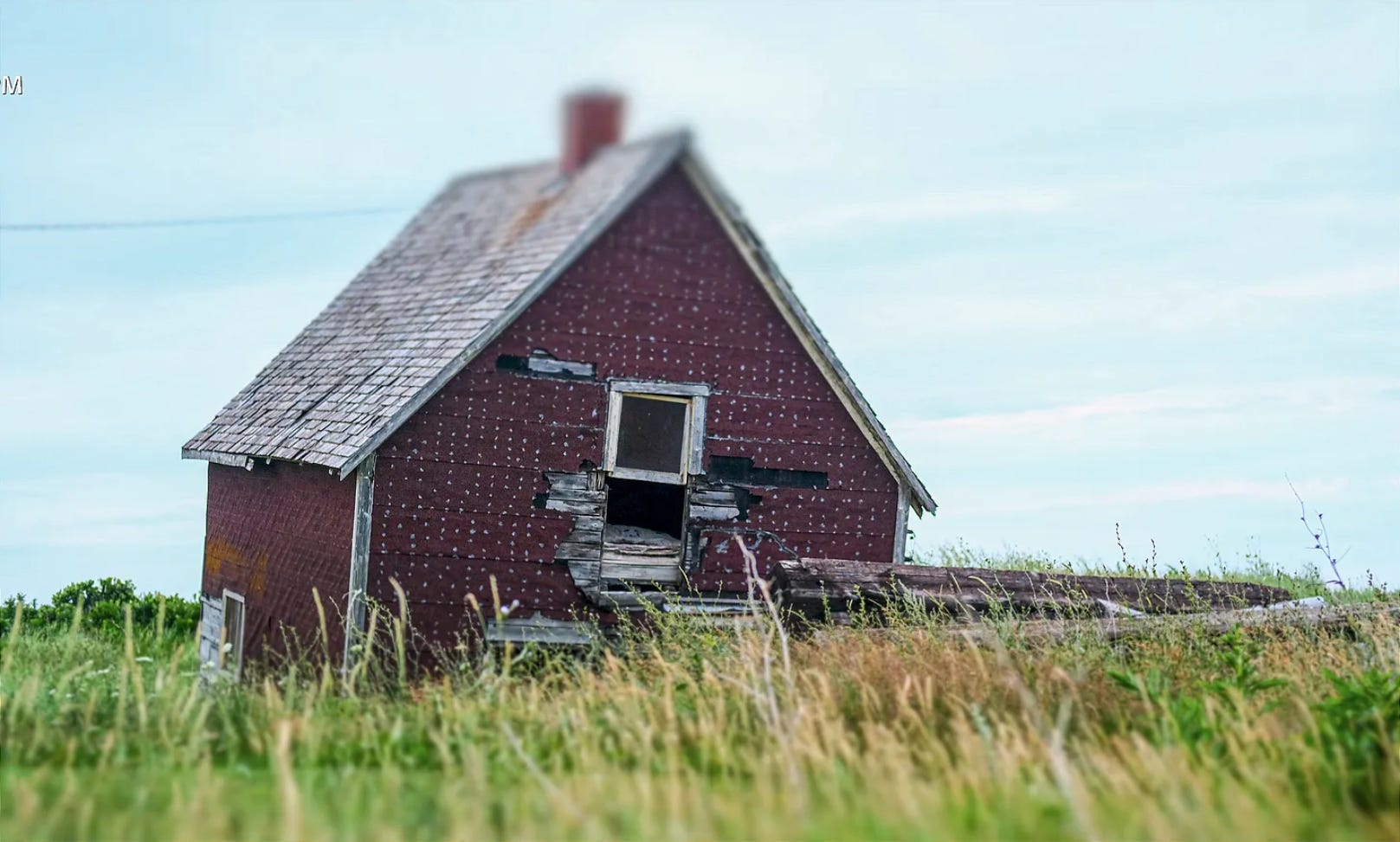
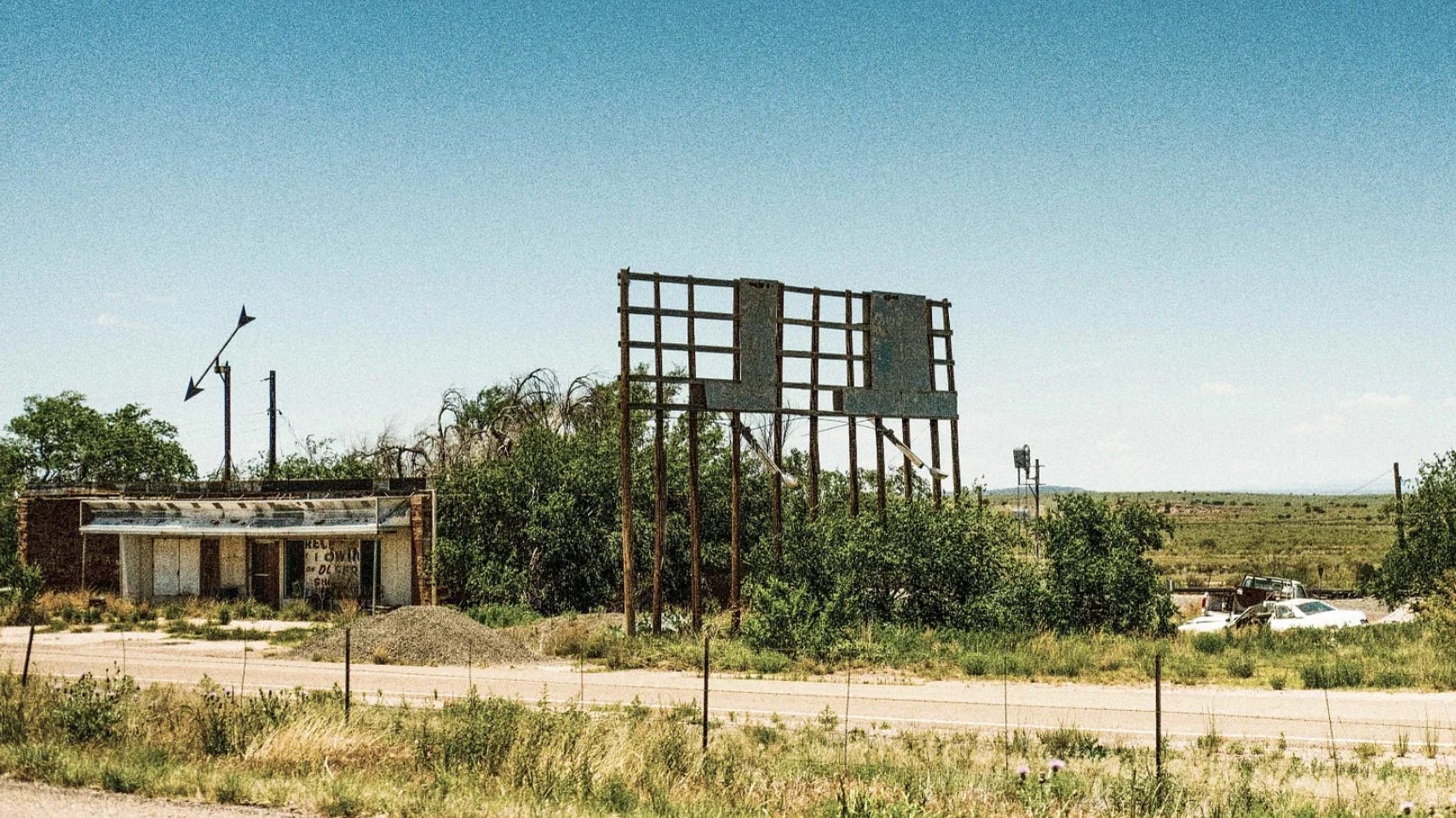
So I’m at this point where, after all these years, I’m finally making my own picture frames. And I’m getting the exact look I want from the pallet wood. Inspired by those weathered billboard signs in Arizona and dilapidated East Coast homes.
Not to mention the joy of hauling something off the side of the road, stripping it down and making something new out of it.
But every step of the way, it’s one problem and then another.
So I started thinking about the real problem.
I can live with the wonky wood.
But it won’t hold glass.
The real problem was the glass.
Glass requires precision. The frame has to be square, flat, and rigid.
My frames were none of those things.
I could pursue perfection, or I could work with the nature of the wood I’m using and the vision I first had.
I’ve set my heart on this pallet wood, and I’ve got to find a way to make it work.
The wood isn’t the problem; the glass is the problem.
Aha. The wood isn’t the problem; the glass is the problem!
Do I have to put glass in these frames?
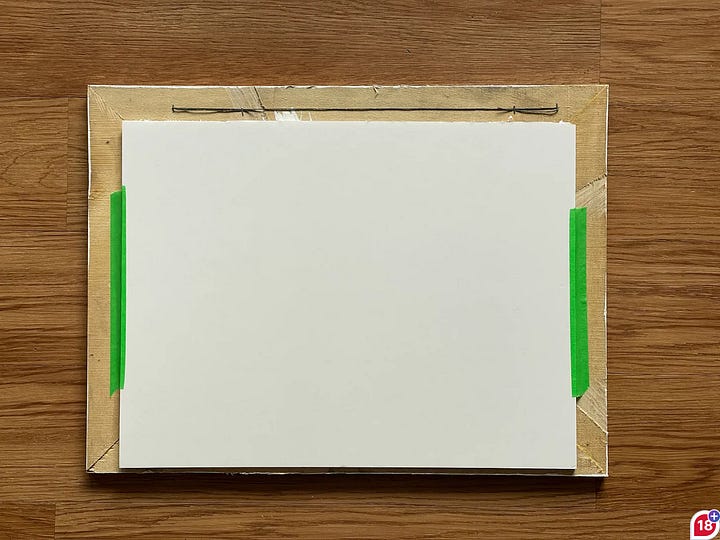
I mounted a print on a piece of foam board. And mounted the foam to the back of the frame.
The foam board moulded to the imperfectly flat frame.
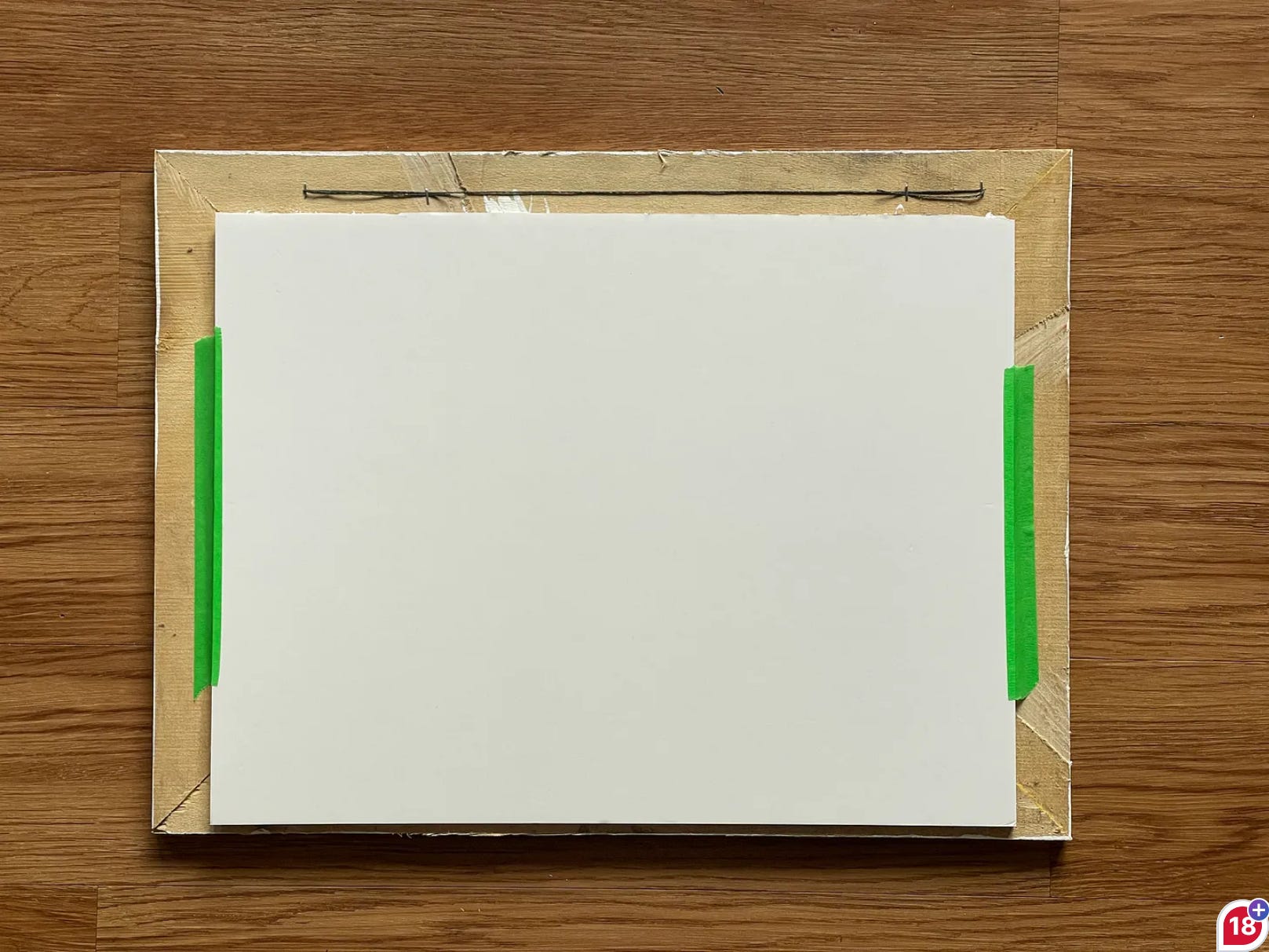
I put a quick coat of paint on the frame, and I loved it. This is exactly what I wanted.
And so I had my prototype.
Getting rid of the glass solved all my problems.
Now all that was left was to finish the other 8.
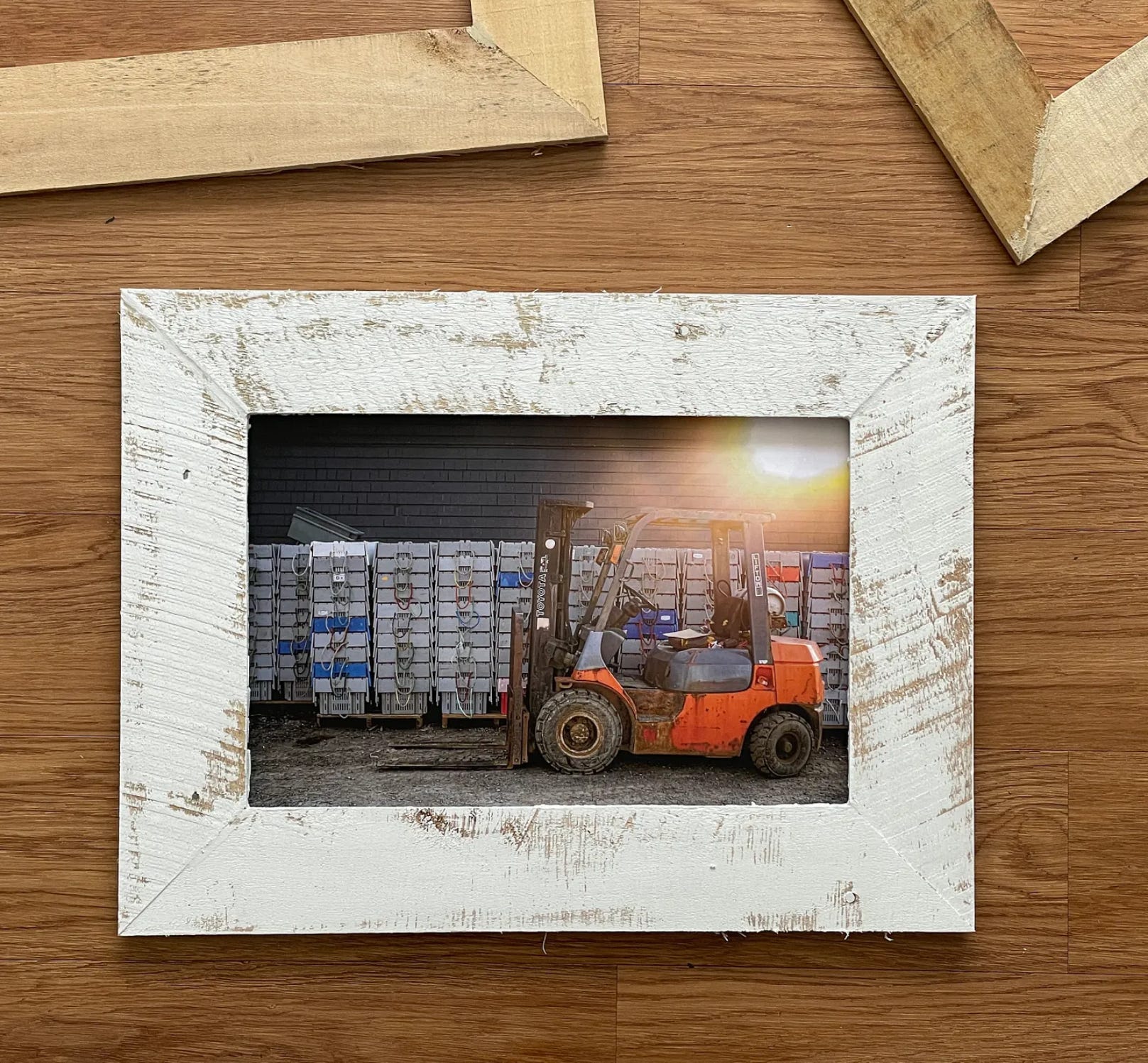
If I am inspired by the Arizona signs, the East Coast homes, I’ve got to work with the nature of the wood.
I decided to give up on precision.
So I trimmed the lengths perfectly, left the 45° corners just a little off, swiped the glue, tightened the noose, drove staples into the corners, and filled the gaps with liquid wood.
Finally, a quick coat of white paint with a foam brush, leaving it just shy of a proper paint job. And I had it.
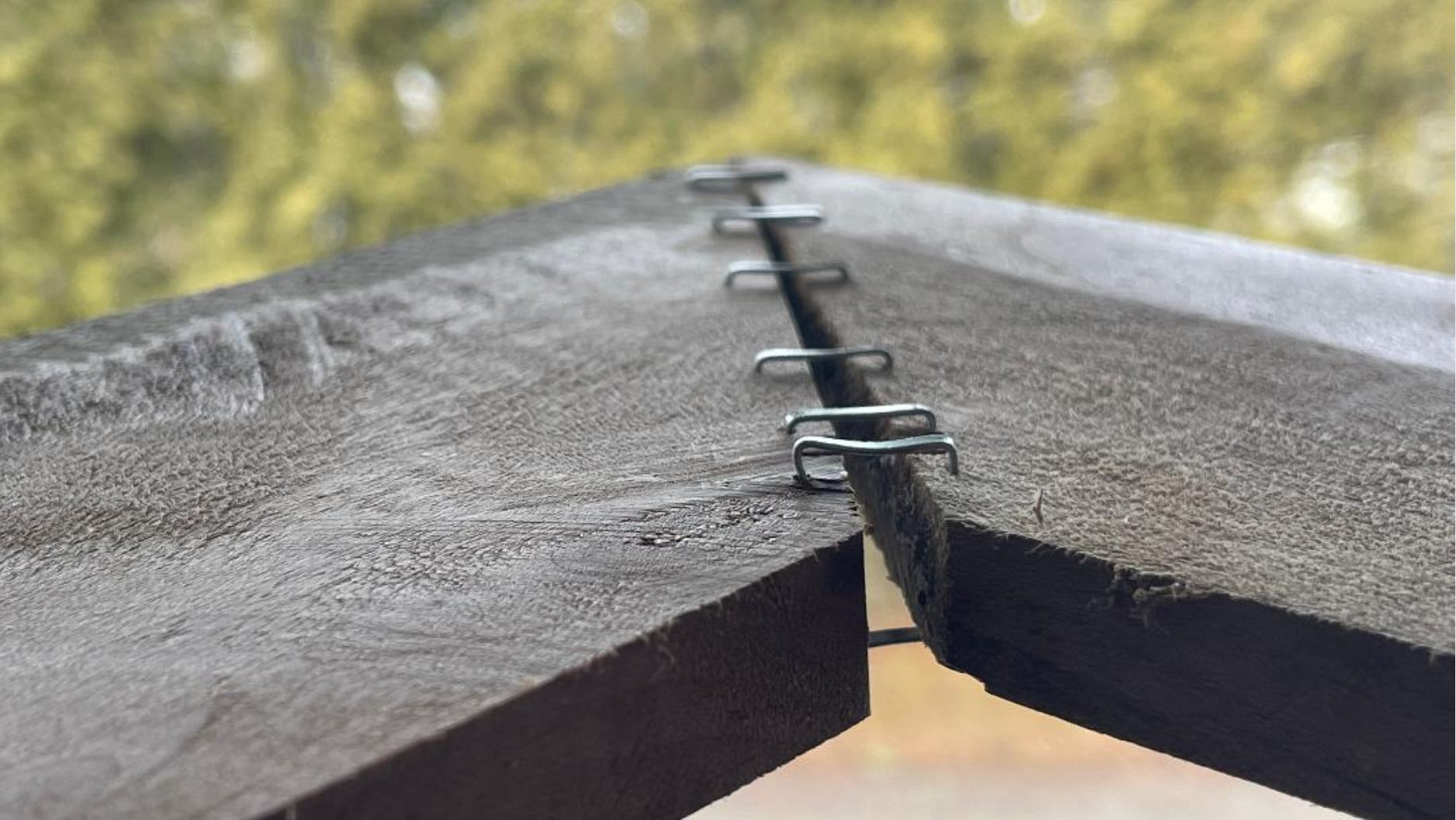
I opted for a noose and a stapler rather than the guillotine. This whole process was beginning to remind me of an Alice Cooper stage production.
When I get stuck on a project, I try to think like someone who knows what they’re doing.
In this case, a person who knows what they’re doing would choose different wood.
But this softwood had the exact look I wanted.
And so instead of thinking like a person who knows what they’re doing, I said, think like a person who’s never done this before.
As if picture frames had never been made before.
And this is where the idea to mount the photos on the foam board came from.
This brings me back to a theme I’ve been pursuing: the elements and principles of art and design.
And the way that we use the elements of art as photographers.
But more specifically, how photography trains us to see the principles of art as they show up in the real world.
My first full-time job was in a factory. Summers stacking cases of juice onto pallets. Watching forklifts deliver more pallets. Endless repetition.
Factory work is pattern without rhythm.
Start time. End time. Same product. Same motion.
And yet the pallet (the very symbol of factory repetition) becomes something entirely different when it escapes the system. When it’s discarded on the side of the road, suddenly it holds creative potential.
Inside the factory, it is structure without life.
Outside the factory, it becomes structure waiting for life.
That’s the off-beat in the repetition.
That’s rhythm.
For 50 years, my dad worked in factories to feed his family, loading full pallets onto freight trucks and unloading pallets of raw material to keep the factory running.
I learned my work ethic working summers with him through high school.




The Industrial Revolution gave us mass production and uniform parts. It gave us assembly lines, quality control, and perfection.
Having spent my early years in a factory, coupled with my naivety about DIY picture frames, made this project a moody mess.
Why won’t this work? Why is this so hard? Why did I ever get into this? Why don’t I just give up?
Until I submitted to the nature of the wood and the vision I had for the project.
We’re still just talking about pallets, right?
When I’m driving down the highway, one pallet gets me looking. But a stack of pallets has me hooked.
Elements of art in the real world: lines and shapes. The principle of repetition, but with rhythm.
Themes of soul-crushing order. Entrepreneurial chaos. And potential.
A whole pile of pallets is so much potential.
So much potential in a pallet. Discarded, having played its role in a system of uniform parts and mass production.
But with the potential to become something new, something creative, something beautiful. Something that perhaps represents an old, handmade way.
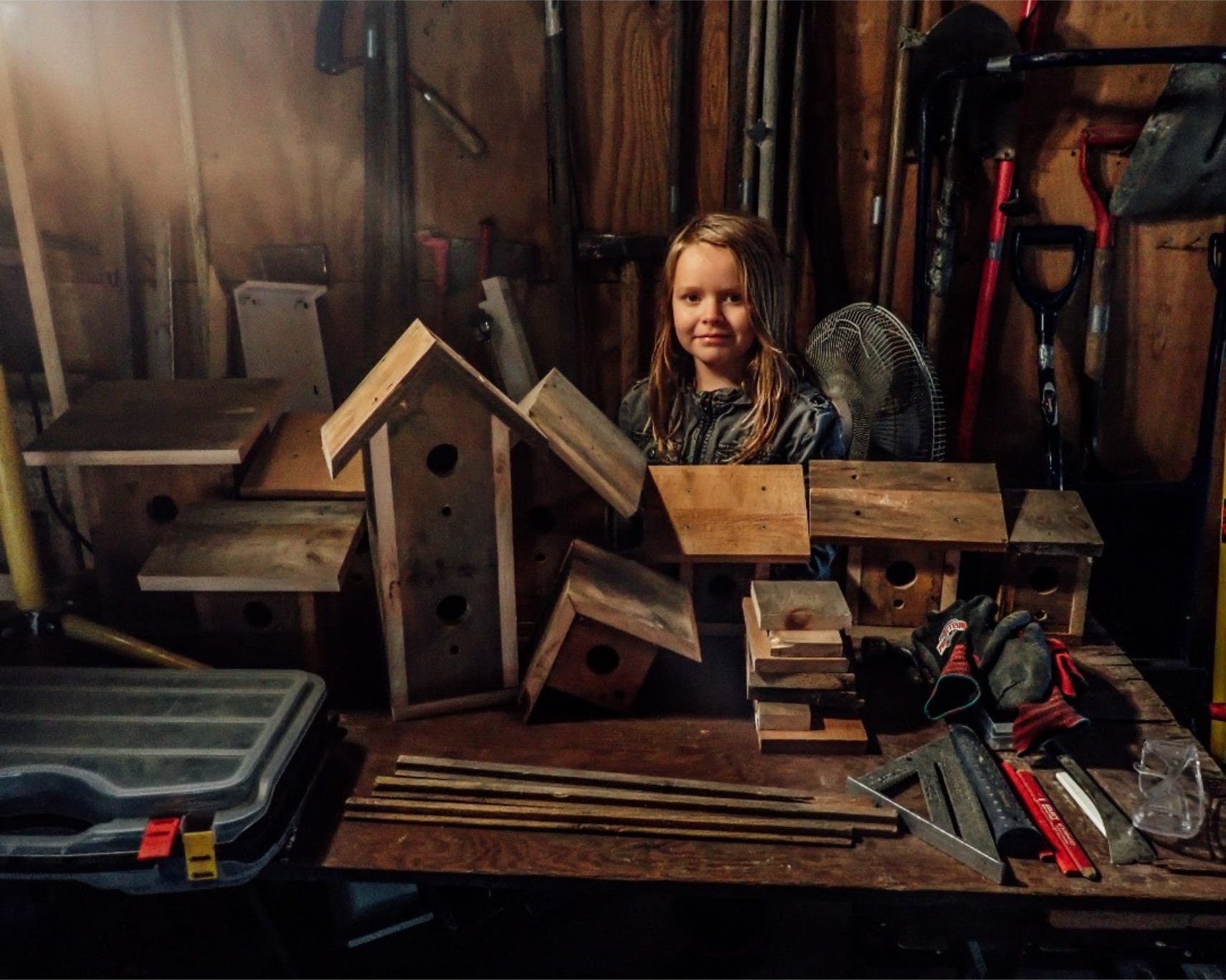
The more clearly I can see the end result in my mind, the harder the road to get there.
I find myself hiding behind perfectionism, willing to give up because it can’t be perfect, when really it’s just moodiness. I blame the wood, blame the saw, blame Mike for being too orderly, when all I’ve got to do is think a little deeper about what it is I was after and pivot when obstacles come.
What a good excuse to put off frame-making for another day. When I’ve got more time. When I find the perfect pallet. When…
Or, not shrink back from my hideous creation. Lean into its nature. Rescued from a snow bank on the side of the road. Straight pieces selected. Warps trimmed. Knots, splinters, and nail heads left in place.
Mat writes from Canada!
Sometimes his articles are a mirror of his stapled-together psychology - assembly line expectations dashed.
Comments
Nothing yet. Say the first thing.
Sign in to join the conversation.