
Eventually, our old instincts are no longer enough.
We have our habits, our two or three reliable approaches to photography, and they’ll take us a certain distance. But eventually the subject asks for something else, or we simply get bored with our own bag of tricks.
Creative frustration can be good news. It means we’ve found the edge of our current abilities, and if we’re willing to persevere through the discomfort of not yet knowing how, we’re ready to grow.
I ran into that edge while photographing a trail-running club, feeling frustrated for most of the way through. It wasn’t the mosquitoes, blackflies, or ticks. It was the boardwalk.
It was supposed to be the easiest photo I’ve ever taken, but I could NOT make that thing work through my frame.
All the more frustrating because boardwalks always look good. They pull the eye forward, suggest a journey, make a landscape feel like an invitation.
But not this stupid one.
To be honest, this particularly boardwalk gave me trouble last season, too.
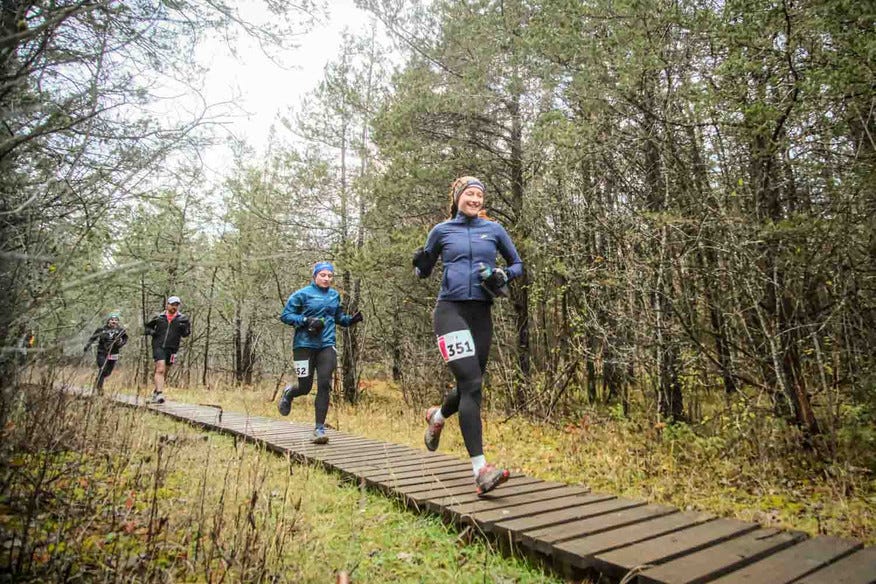
Maybe it’s not the boardwalk’s fault. Maybe they just don’t work for runners. Maybe they’re better suited to romance, or childhood adventure, or quiet landscapes. Maybe this boardwalk just wasn’t photogenic.
Whatever the reason, I couldn’t get that boardwalk feel that I wanted.
This is the boardwalk feel I wanted, but the running version...
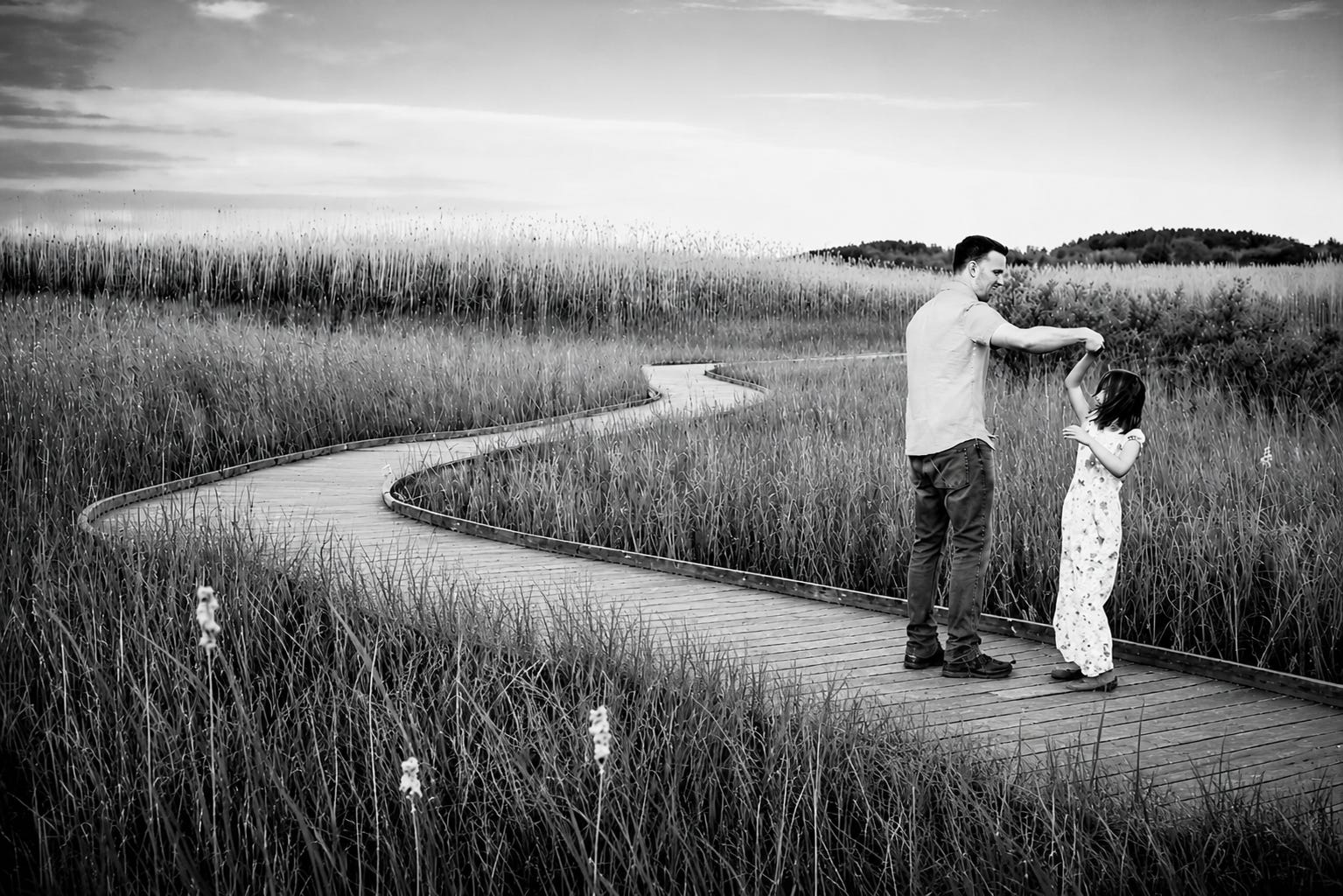
If I could only get a shot of a runner that felt like this.
After crappy photos in the fall, it bugged me all winter, and when I came back to it in the spring, I was determined to solve it. I photographed the runners from one side, then the other, and still came away with nothing I liked.
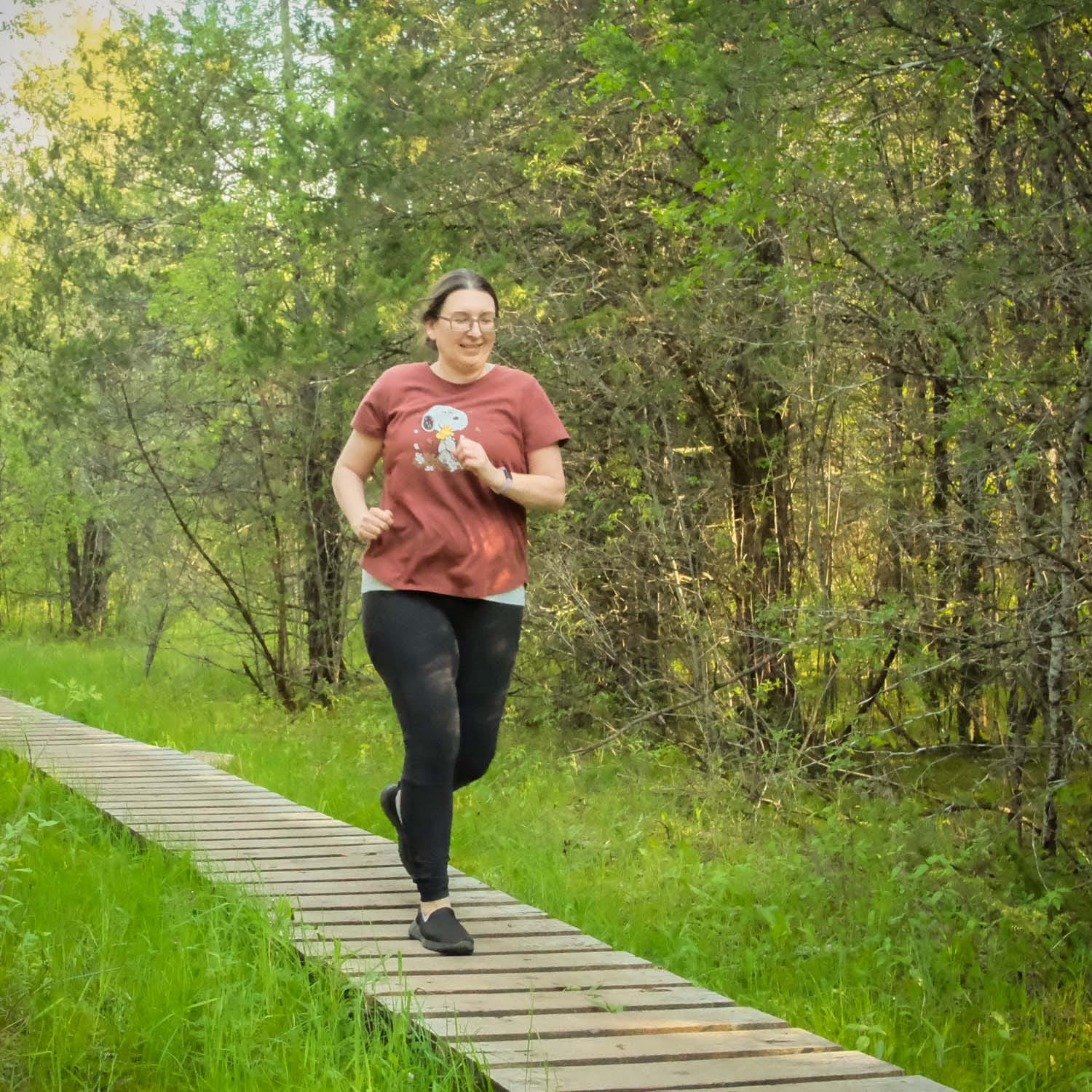
The runners were doing an out-and-back route, which meant they crossed the boardwalk again from the opposite direction. But who cares?!
I had given up on using the boardwalk that night, but was forced to snap a couple of runners passing by before I could escape the boardwalk.
And for some reason, those photos clicked!
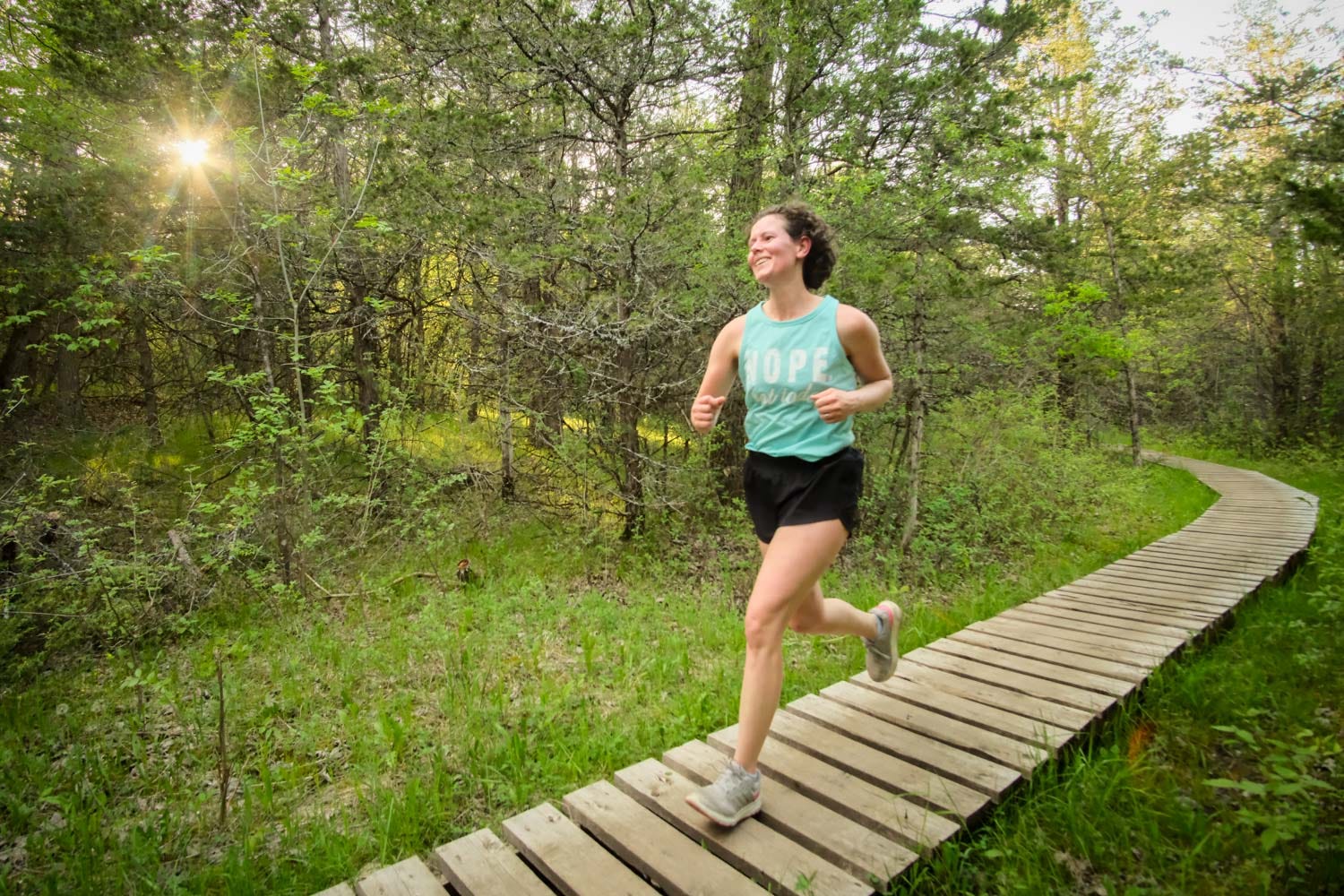
Why?
At first, I assumed it was the golden hour sun poking through the trees - one of the overused go-tos from my bag of tricks.
How often do we blame crappy light for our disappointments?
But after the photos were edited, the results shared with the club, and a few rounds of wrestling with my kids, an explanation presented itself to me.
Apparently, my mind was still processing notes from a workshop I’d taken on the visual elements of art, and it hit me:
Lines have energy.
I bet if I look at all my boardwalk photos, it is the way that the boardwalk is used as a line that makes the photo look good - or not.
Those first running photos were straight lines running through the photo. There’s nothing wrong with that, except that it doesn’t seem to be what the subject called for.
The following photo makes me feel like running. My legs almost start moving on their own.

The boardwalk wasn’t just a boardwalk anymore. In the flattened world of the photograph, it was a line - a classic element of art.
That turned out to be the difference.
The straight version of the boardwalk led the eye across the image. Sure, but it didn’t do much else. I’d reached deep into my bag of composition tricks, pulled out a leading line, and thought that was good enough.
The curved version drew me in. It felt less like a leading line across a frame and more like a force inside it. And because I was photographing trail runners carrying a lot of energy through the landscape, that difference mattered.
I hadn’t been using the line intentionally because I thought a leading line was good enough on its own. But in the recent set of photos, I had intuitively, though not intentionally, used the line in a better way than mere leading.
Honestly, it was just bad timing. I was trying to escape the dreaded boardwalk before the next runners approached, but I got caught. I had to snap the pic. It was only looking back that I understand why it worked.
Once I understood that, the whole problem snapped into focus. I could see why the boardwalk had kept frustrating me.
More importantly, I came away with more than a solution to one stubborn location. I came away with a new way of seeing.
A line wasn’t just a compositional tool anymore. It had character. It had force. And if that force didn’t belong with the subject, the photograph could fall flat, no matter how correct it looked on paper.
Straight lines are stable, balanced energy
Horizontal lines tend to have the lowest form of energy, almost restful
Vertical lines climb and defy gravity
Diagonal lines appear to rise or fall more quickly based on their angle
Bent lines create bursts of energy at the angle. The sharper the angle, the greater the energy.
One bend is a burst of energy
Many bends create repetition.
When that bend changes direction, you begin to feel rhythm, as in a heart monitor, or see pattern as in a forked lightning bolt.
Curved lines carry continuous energy at every point along the curve and across their entire length
The sharper the curve, the greater the energy.
Lately, I’ve been thinking of people, the human figures in my photos, as stick figures.
My children draw stick figures that are quite expressive physically and emotionally. When you think about a stick figure or an emoji, these are just simple lines and shapes.
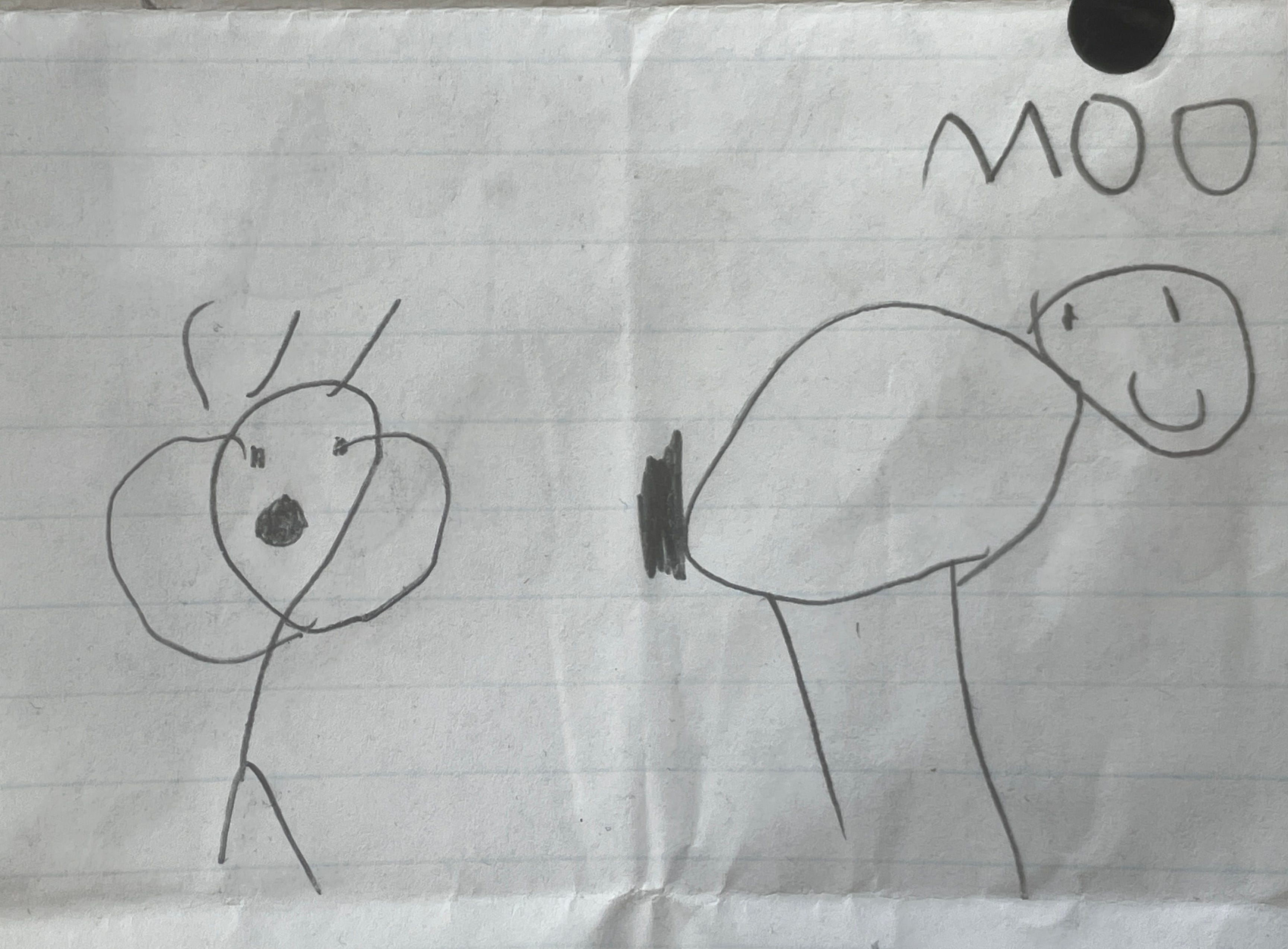
When I’m photographing a runner and want them to have just the right gesture, what does gesture mean?
Gesture is the behaviour of the lines that make up the human form - curved and graceful, packed with energy at every point, or sharp angles and bursts of energy.
A runner is a bundle of energy (lines, angles) on a trail that flows with movement (curved line).
Placing a runner on the line heightens the sense of movement through the runner’s gesture, which combines lines and angles.
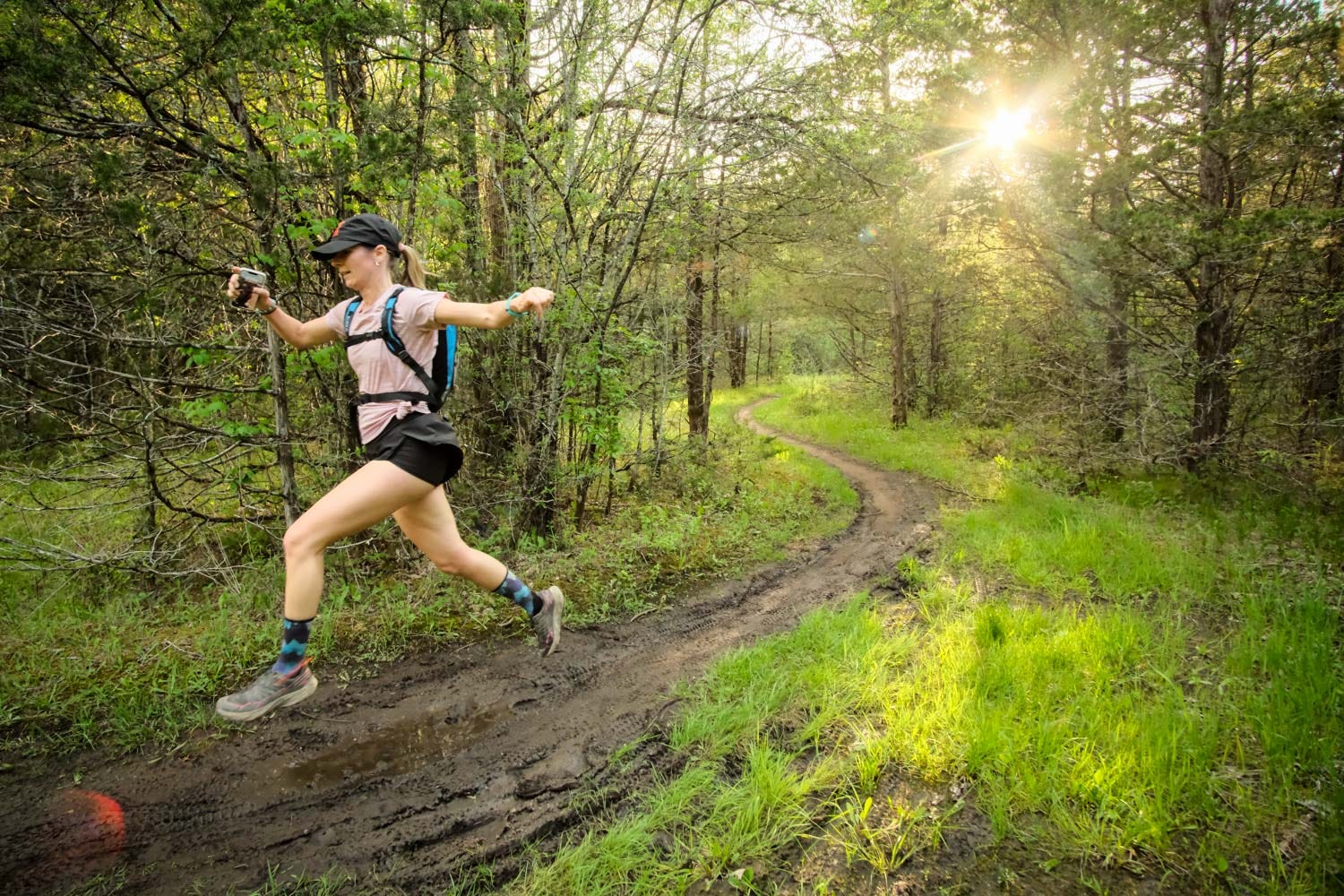
You can use lines as compositional tricks (lines for the sake of lines) or as an element of visual art with a meaningful connection to the entire image.
We’ve discussed the energy of lines, defining energy as the potential for change.
We’re going to deepen that understanding of energy as the potential for emotional change.
Lines carry the potential for emotional change.
I’ll illustrate this with a chokehold in a sweat-soaked wrestling ring
A wrestling match is pure energy, with every moment being packed with potential for change. And, believe me, change happens rapidly.
As I tried to capture that change, ringside, dodging bodies coming through the ropes, some of my photos worked, and some didn’t. I assumed it’s because I hit or missed the peak moment.
But I had never stopped to ask, what makes a peak moment peak?
Mere physical change doesn’t sell tickets on a small-town Saturday night. Wrestling fans are too sophisticated.
Emotional change puts butts in seats.
The same positive or negative emotional change that keeps you turning the pages of a novel or binge-watching a new series keeps wrestling fans on the edge of their seats.
On the surface, wrestlers tell an emotionally powerful story through their physical actions. But it’s not big arms, tight trunks, and powerslams that we show up for.
We come for the elements of art.
We come for the lines.
Lines are the main element used to create emotion and tell the story in a wrestling ring.
The height of action I was after was the peak moment of emotional suspense as portrayed through lines and angles.
In order to see how this works:
Reduce the wrestlers to stick figures
In order to see them as collections of lines
Study the energy (potential for change) of each line
Personify the lines to become potential for emotional change
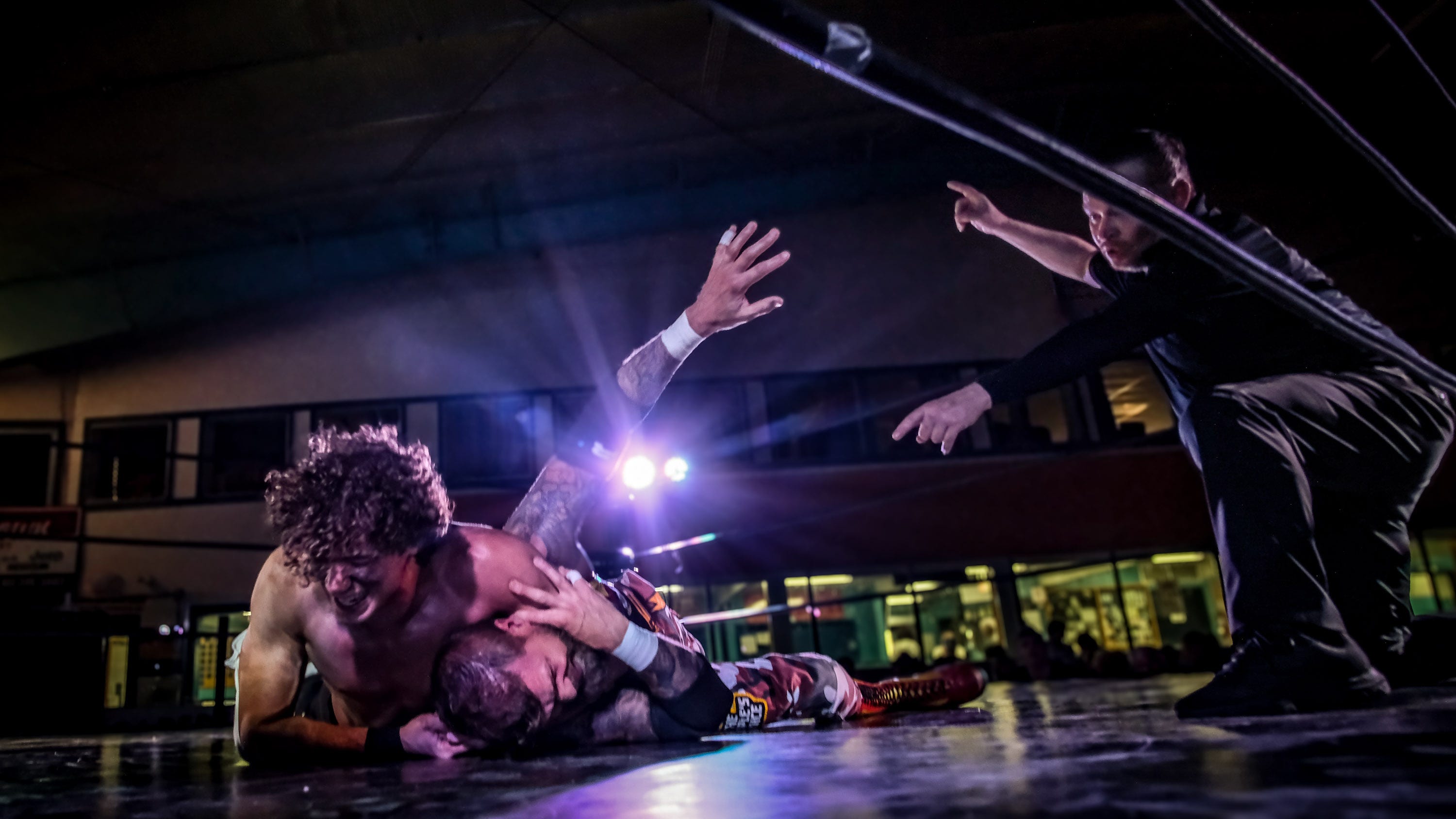
Deaner is locked in a chokehold - a critical moment in the match. With air and blood flow cut off, fans are looking for any sign that Deaner still has a chance to win.
QB Zakk P
One arm at a right angle, stabilizing the end of the match
The other at an intense acute angle, creating massive energy around Deaner’s neck
The ref:
Stable leg at a right angle, rooting him to the mat, objective judge
Arms at a high intensity acute angle, ready to call the match and count Deaner out
Deaner:
His torso and leg form a low-energy, horizontal line, ready to go to sleep
But one arm in a high-intensity angle grasps desperately toward Zakk’s locked arm
The other arm is mostly straight, lifting diagonally; the slight bend gives it a hint of energy (but it’s dropping); the diagonal direction accelerates as fingers branch in tiny angled bursts.
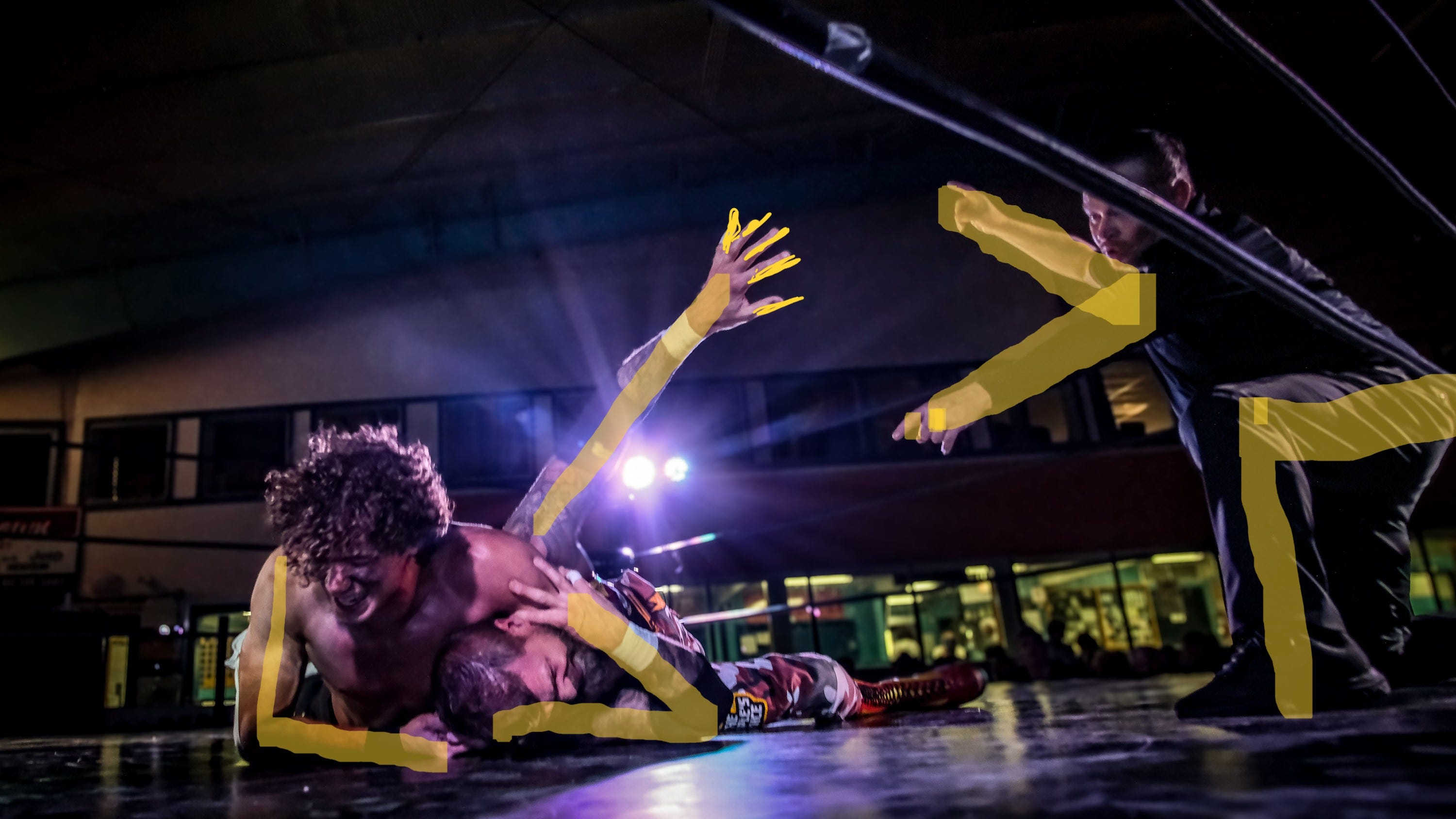
Those angled bursts of emotional energy are just what the fans are looking for.
Hope.
The potential for change.
At every level, the lines and angles are in complete contrast, fueling the crowd's emotional energy - hatred and hope - changing on a dime… as the lines shift.
Up, down. Acute, obtuse. Horizontal, diagonal. Hatred, hope.
You’ve likely noticed another element of art: value. That burst of light in an otherwise dark arena heightens the tension and energy of the moment. Light and dark at odds. Light is often symbolic of hope.
This is how the elements of art come together meaningfully in your composition.
I want to challenge you to never think about leading lines ever again. Banish that concept from your mind.
Maybe a line leads the eye, but it’s far too simplistic.
Who cares?
Why is it leading your eye?
Where is it leading it to, and why does that matter for this photo?
Lines Must Have Deeper Purpose and Intentionality
Review your sketches and photos from last week’s assignment and examine the energy and personality of the lines you see. Lines are there, notice them or not. They’ll make or break your photo.
Lines don’t just carry energy; they carry meaning. And the meaning can create real emotion, as in the angle of a line on a graph indicating a rise or fall.
This is how lines work in stories, in data, and in the visual art of photography.
We know how lines and emotion work with a chokehold in a sweat-soaked wrestling ring, and on a blackfly-bitten, mosquito-swarmed, tick-infested trail run deep in the woods.
Next time, we’ll explore the psychology of line in a memoir article that will help us get to know each other more.
Mat Coker is a photographer from Canada.
For fun, he gets swarmed by mosquitoes, blackflies, and ticks, and dodges bodies ringside at wrestling matches.
Whatever he’s up to, he’s always looking for art in everyday life.
Check out the archive for more articles like this.
Comments
Nothing yet. Say the first thing.
Sign in to join the conversation.