
Skeletons in swim trunks. Jack-o’-lanterns carved out of watermelons. Spirit Halloween pool inflatables selling out before the pool season is even over. If you’ve walked a Target or Dollar Tree aisle in the last few weeks and wondered why the candy corn is sharing shelf space with sunscreen, you’re not imagining things. Welcome to Summerween, and it’s not a gimmick anymore. It’s a retail strategy.
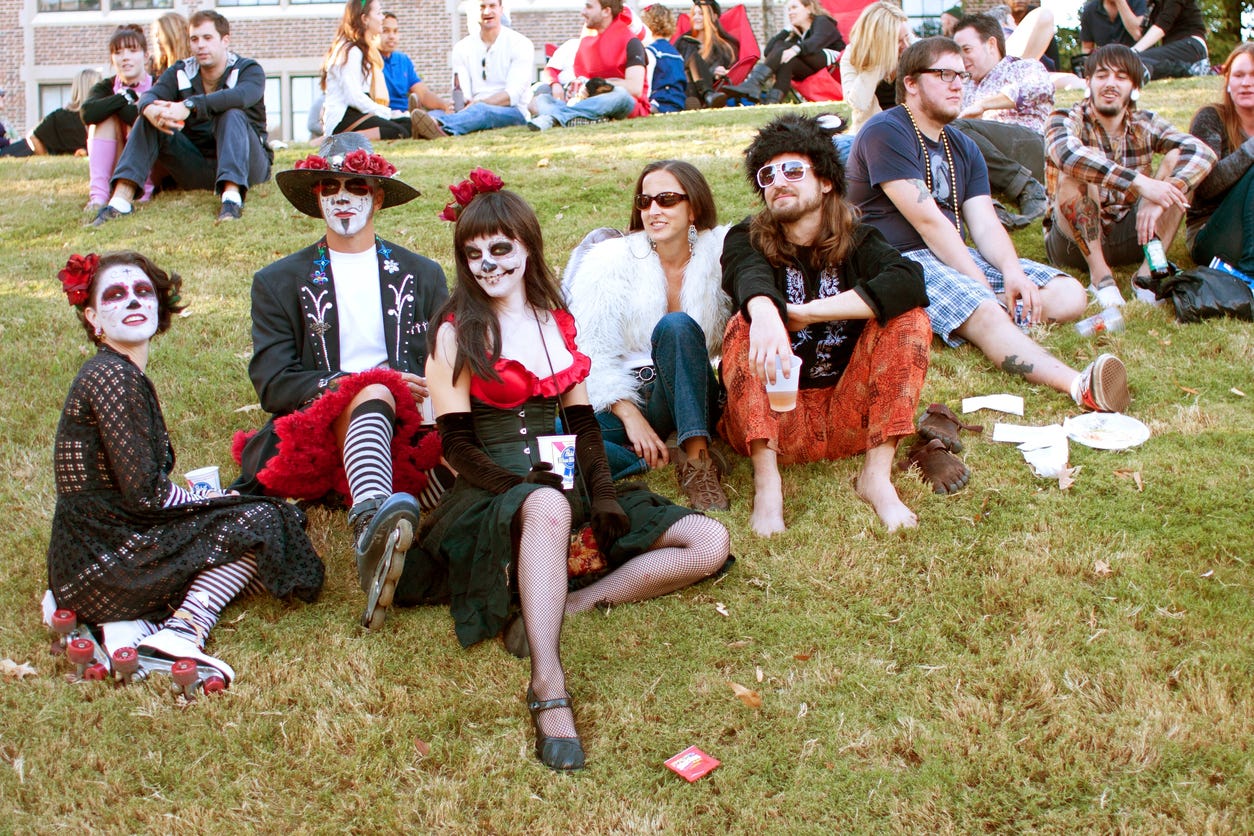
The name comes from “Gravity Falls,” the animated Disney series where the fictional town celebrates a mid-year Halloween on June 22 because, as one character puts it, the townspeople “love Halloween so much they celebrate it twice a year.” That joke aired well over a decade ago. It didn’t become a consumer behavior until Gen Z and millennial creators on TikTok and Instagram turned it into an aesthetic — half spooky, half poolside — and retailers noticed the engagement numbers before anyone in merchandising had it on a planning calendar.
By 2024, CNN and the New York Times were writing about Halloween candy showing up in July. By 2025, Walmart, Home Depot and Michaels were treating it as a legitimate second selling season, with trade press comparing it openly to “Christmas in July.” This year, Home Depot rolled its animatronic “Skelly” out in April under a “Halfway to Halloween” banner, and Spirit Halloween’s summer product drop which included a Terrifier-branded line and pool-float-style inflatables, reportedly sold through fast enough to catch even the retailer off guard.
The math behind it is simple. Q4 is the biggest, most competitive, most margin-pressured stretch of the retail calendar. Summer is comparatively dead. Any retailer who can pull spend forward into July and August without cannibalizing October is printing incremental revenue on inventory that would otherwise be sitting in a warehouse. Summerween didn’t get invented by a shopper marketing deck, it got adopted by one, and quickly, once the data proved it worked.
This is where it gets real for our industry, not just culturally interesting. The National Retail Federation is projecting Halloween 2026 spending will again set a record — north of $13 billion, with per-person spend near $114, up from $108 the year before. Eighty-one percent of people say they are planning to celebrate Halloween this year. Nearly half of shoppers now say they start buying in September or earlier. That’s not incremental; that’s a structural pull-forward of demand into a period retailers used to treat as filler.
Layer Summerween on top of that early-shopping trend and you get a genuine planogram problem. Retailers built Halloween resets for a traditional late-September/October surge. Summerween shoppers are hitting discount and specialty stores in July, and vendors, many of whom source costumes, decor and candy components overseas, are dealing with tariff-driven cost and lead-time pressure on top of it. Put those together and don’t be surprised if by early-to-mid September, the early, most Instagram-friendly SKUs, i.e., the novelty inflatables, the trend-driven costumes, and the specialty candy are picked over or gone weeks before the holiday itself; while the traditional October reset still shows up on schedule behind them. Shoppers who wait for “real” Halloween in October may find the fun stuff already sold through in July and get the leftover assortment instead. That’s a merchandising and demand-forecasting headache retailers haven’t fully solved yet, and I know first-hand it’s a live conversation in category reviews right now.
Here’s the part that actually interests me most. Why is a fictional joke holiday from a kids’ cartoon turning into a multi-week, multi-billion-dollar season?
I don’t think it’s complicated, and I don’t think it’s mindless. We are deep into what I’ve called the Polycrisis Shopper era — tariffs, inflation that won’t fully let go, a K-shaped economy where higher-income households are still spending freely while lower- and middle-income households are stretching every dollar, plus a nonstop political and geopolitical news cycle. NRF’s own research on this lines up with what I hear anecdotally: people aren’t shopping early for Halloween because of price. The leading reasons are emotional. People are looking forward to fall, and to one of their favorite holidays. They want the mood of the season now rather than waiting for the calendar to catch up.
Now that’s not America trying to escape from the scary realities of the moment. That’s America rationing joy across more of the calendar because the news doesn’t let up long enough to concentrate it into one night in October. Costumes and decorations are one of the lowest-cost, lowest-commitment ways to opt into fun on our own schedule. We don’t need a vacation, a reservation or a plane ticket. All we need is a $12 skeleton and a slightly ridiculous idea, and for one afternoon you get to be something other than a person managing a grocery budget under tariff pressure.
Retailers who treat Summerween as pure margin opportunity are only getting half of it. The real opportunity is emotional merchandising — giving shoppers permission to feel something lighter, earlier, and more than once. The ones who get that will win two seasons instead of one. The ones who just move Halloween SKUs into July without understanding why shoppers are reaching for them will just create more stockouts and more frustrated shoppers by the time actual October rolls around.
Trick or treat comes early this year. So, apparently, does the relief.
● Discount stores are the Summerween winners. NRF data shows discount stores now capture 42% of Halloween shoppers, up five points from last year — and Dollar Tree in particular has quietly built out a full Summerween assortment (lab flasks, googly-eye cups, spider webbing) priced for impulse buys, not planned trips.
● Tariffs are the shadow story. 79% of Halloween shoppers expect higher prices this year specifically because of tariffs, and most costume, decor and candy components are still sourced overseas.
● UK retailers are testing the trend. Asda has started stocking Summerween-specific items, per Manchester Evening News coverage. It’s worth watching whether this becomes a transatlantic season or stays a U.S.-driven phenomenon.
● Pop culture is reshaping the costume aisle. Pokémon, Wednesday Addams and KPop Demon Hunters characters are joining witches and vampires in this year’s top costume searches. A reminder to every retailer that streaming content, not just candy, now drives Halloween merchandising cycles.
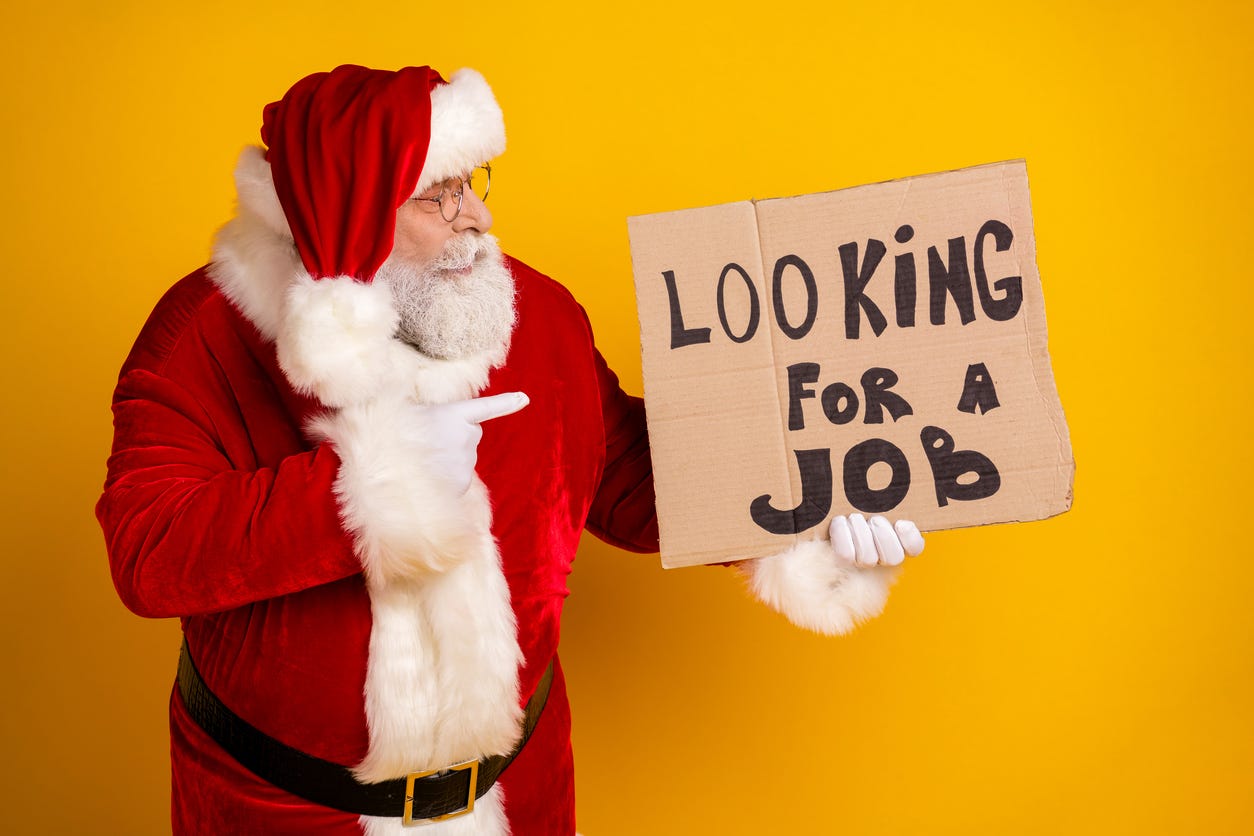
Here’s a contradiction worth noting: the National Retail Federation says retailers will cross $1 trillion in holiday sales for the first time ever this year, growing 3.7% to 4.2% over last season. In the same breath, NRF is projecting retailers will hire somewhere between 265,000 and 365,000 seasonal workers that’s potentially the smallest seasonal hiring push in more than 15 years! Record demand, record-thin staffing. It’s the new operating model.
Seasonal hiring has been sliding for two years running. Last holiday season, outplacement firm Challenger, Gray & Christmas forecast retailers would add fewer than 500,000 seasonal positions that’s below the prior year’s 543,000 and the smallest seasonal gain since 2009, when the recession pushed hiring down to 495,800. NRF’s number for this year comes in well under even that low bar.
The reasons stack on top of each other. Tariff volatility has made merchandise costs and margins hard to forecast, which makes retailers reluctant to commit to headcount months in advance. The labor market itself has cooled. The June 2026 report (released July 2) shows nonfarm payrolls up just 57,000, well below the ~113,000 economists expected, with April and May combined revised down by 74,000. Unemployment ticked down slightly to 4.2%. And then there is a structural shift toward automation, AI-assisted customer service, and “flex” internal labor pools is quietly replacing the wave-hiring model retail relied on for decades.
That last point is the one I’d flag hardest for anyone in this industry. Target has told the market it’s leaning on roughly 43,000 existing store employees in an “On-Demand” flexible pool and offering current staff extra hours, rather than running a traditional seasonal hiring campaign. Amazon, notably, is holding steady at 250,000 hires, the same as the prior two years, which in this environment counts as an aggressive signal of confidence. Macy’s, UPS and others have either scaled back specific numbers or stopped disclosing them altogether, a departure from years of routine pre-season announcements. Andy Challenger at Challenger, Gray & Christmas put it plainly: “This year may be more about doing more with less.”
For consumers, this shows up as thinner staffing on the floor and in fulfillment centers right as record numbers of people are shopping. Which I see is a service-quality risk retailers will need to manage carefully, especially layered on top of the early Summerween-driven demand pull I wrote about above. For the industry, it’s a signal that retailers are no longer treating seasonal labor as a cost that scales automatically with sales. They’re treating it as a lever to protect margin, confident that automation, flexible internal staffing and tighter fulfillment operations can absorb volume that used to require bodies on the clock.
This is the K-shaped economy showing up on the employment side, not just the spending side. High-income shoppers are still spending freely, pushing sales to record highs. Meanwhile, the labor market that used to absorb hundreds of thousands of workers into extra income for the holidays (often lower- and middle-income workers who counted on that seasonal paycheck) is offering fewer of those opportunities. Retailers are optimizing for margin resilience in a tariff-and-uncertainty environment; the people who used to get a few months of extra income each winter are the ones absorbing that optimization.
This is the time to watch this space closely over the next few weeks. If holiday sales come in as strong as NRF expects some of these companies could see a late hiring push. But the cautious, cost-disciplined posture retailers are taking right now, even while forecasting record spending, tells you something important about how this industry is managing risk in 2026: not by adding people, but by adding flexibility.
● Amazon’s steady 250,000 is the tell. Holding hiring flat for a third straight year, while peers cut or go dark on numbers, reads as a competitive bet that scale and automation let Amazon absorb volume peers can’t.
● Spirit Halloween is bucking the trend — for now. The retailer’s 50,000-person seasonal hiring plan is unchanged from last year, notable given how exposed its category is to both tariffs and the early-shopping pull-forward from Summerween.
● Disclosure itself has become a signal. Target, Macy’s and UPS declining to publish specific hiring numbers this year — after doing so routinely in the past — is itself a data point. When retailers stop bragging about headcount, it usually means the number isn’t one they want to lead with.
● Watch the September jobs report. Seasonal hiring announcements typically cluster in September; a weak read there would confirm this is a durable pullback rather than a one-year blip.
Friday’s paid subscriber edition goes deeper on a story hiding in plain sight this Halloween season: the tariff cliff landing right in the middle of peak Halloween production. Section 122’s flat 10% global tariff expires on Friday July 24 — the exact window when Halloween goods are moving from factory floor to container ship for October delivery — and the proposed Section 301 replacement tariffs (10–12.5% across dozens of countries, stacking on top of existing China duties) could reshape landed costs before retailers even finish setting their October floor sets. I’ll break down who’s exposed, who’s insulated, and what it means for private-label decorations and costume pricing heading into the real Halloween season. Paid subscribers, watch your inbox Friday. And just a reminder, 10% of all paid subscriptions are donated to Feeding America.
I’m actively booking keynotes for the remainder of 2026. If your organization is planning a conference, sales meeting, or industry event, I’d welcome the conversation. Here’s just a few of the topics I’m covering:
● The K-Shaped Economy: How diverging high- and low-income shopper behavior is reshaping retail strategy, pricing, and assortment.
● The Polycrisis Shopper: Navigating consumer behavior when tariffs, inflation, labor and geopolitics all hit the cart at once.
● Tariffs & the New Trade Reality: What the 2026 trade landscape means for food and retail pricing, sourcing, and margin.
● GLP-1 and the Future of Food Retail: How weight-loss medications are reshaping grocery categories, portion sizes, and shopper behavior.
● Backwards Shopping: Why shoppers are reordering the traditional path to purchase — and what retailers need to do about it.
● AI in Retail: Practical applications and near-term disruption across merchandising, pricing, and the shopper experience.
● The Fifth Force of Food Inflation: Weather and disease as a new, permanent driver of food prices alongside tariffs, labor, energy, and geopolitics.
Thanks for reading The Lempert Report!
Comments
Nothing yet. Say the first thing.
Sign in to join the conversation.