
More than 2,000 years old, and possibly the oldest city in Germany, Trier was the administrative centre of Gaul in Roman times and one of the largest cities in the known world.
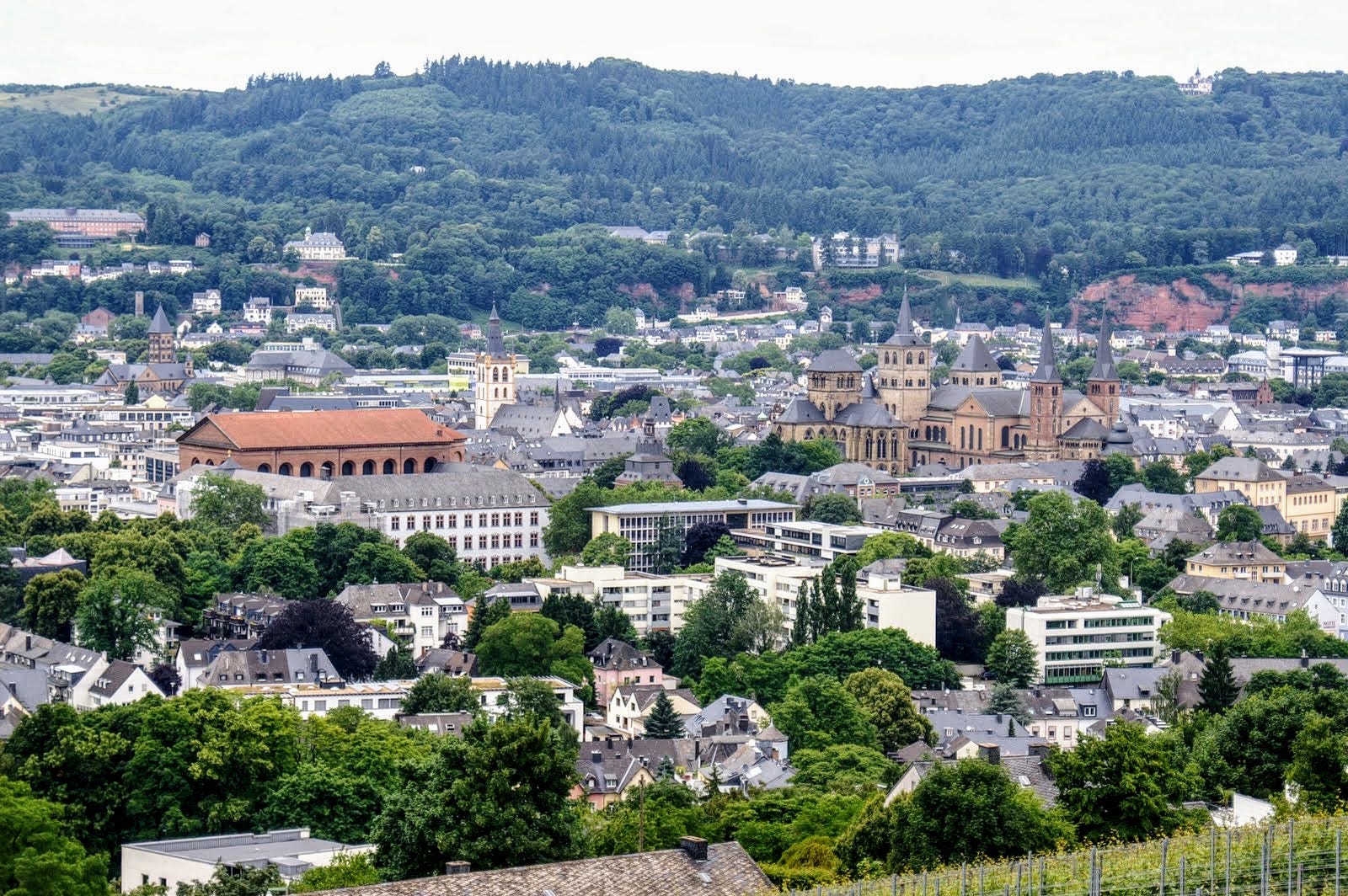
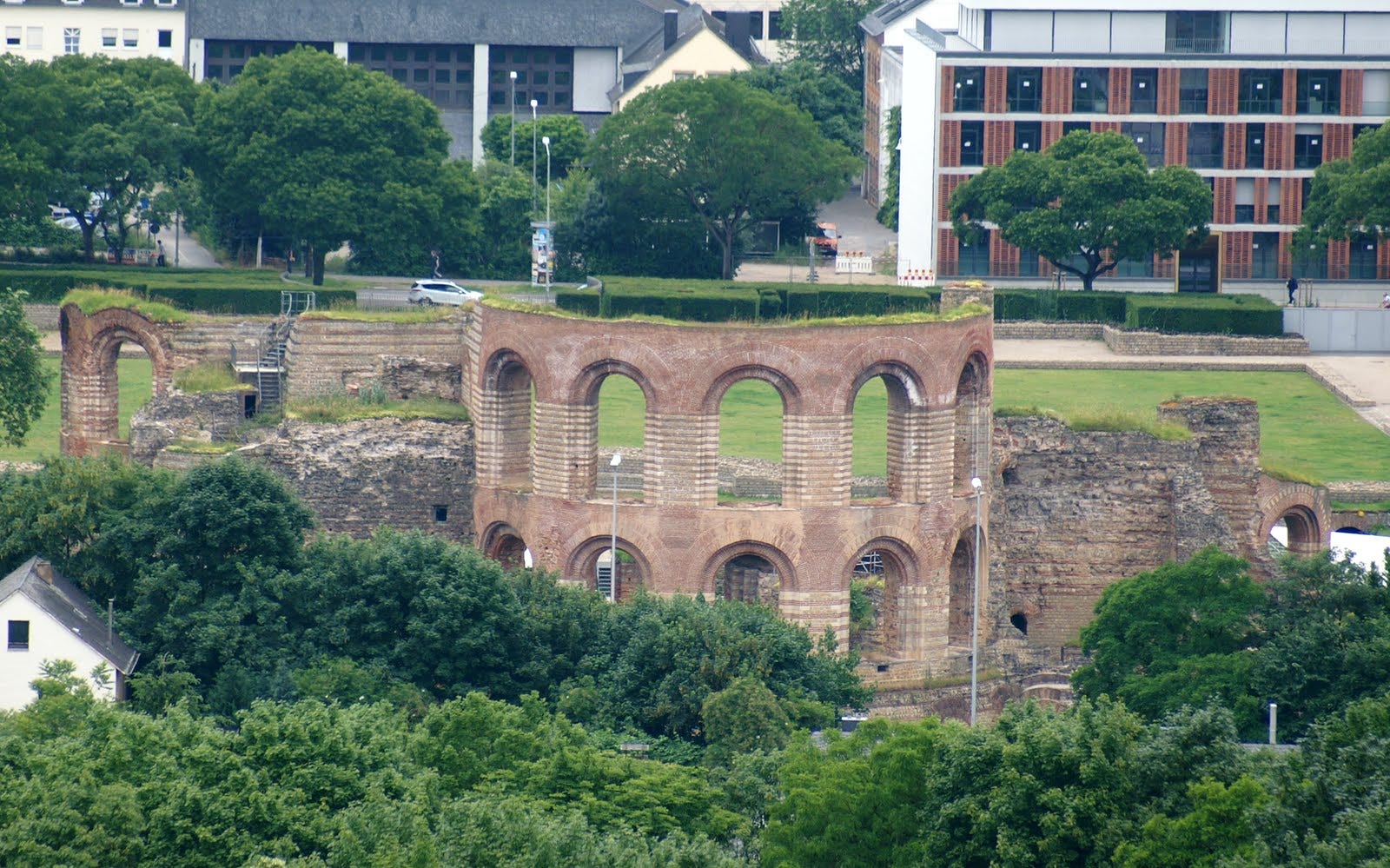
The city lies on the River Moselle. There are three Roman baths here (see below) and a huge basilica (above, left centre) that is today in use as a protestant church. An amphitheatre also survives, at least in terms of having left its shape in the ground, as well as a bridge across the Moselle that was built in the second century and still carries traffic.
The Dom, or Cathedral, of St Peter also was founded in Roman times, (above, right centre) whilst the Liebfrauenkirche next door is in the French Gothic style. The Archbishops of Trier were important princes of the Church and Electors of the Holy Roman Empire.
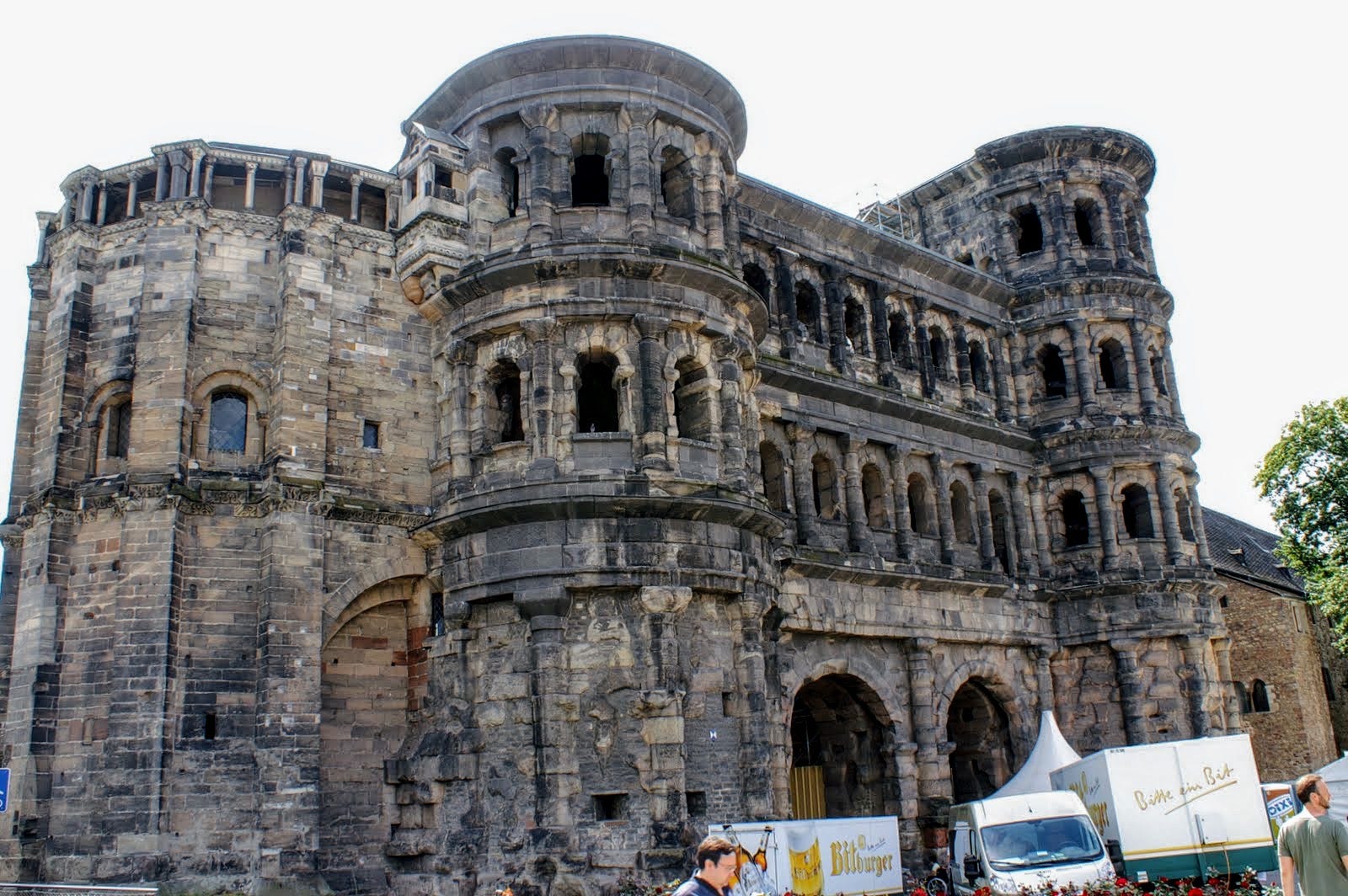
Trier’s famous Black Gate (Porta Nigra, below) is the best preserved Roman city gate in Northern Europe, though it was tricky to photograph during our visit because a major festival in the city was using it as a stage for a pop concert. I think this must have been the first time I ever heard Gang Nam Style.
Karl Marx was born in Trier in 1818, shortly after Prussia took over sovereignty once again from France. In the USA, both Illinois and Minnesota have towns named New Trier that were founded by settlers from the area.
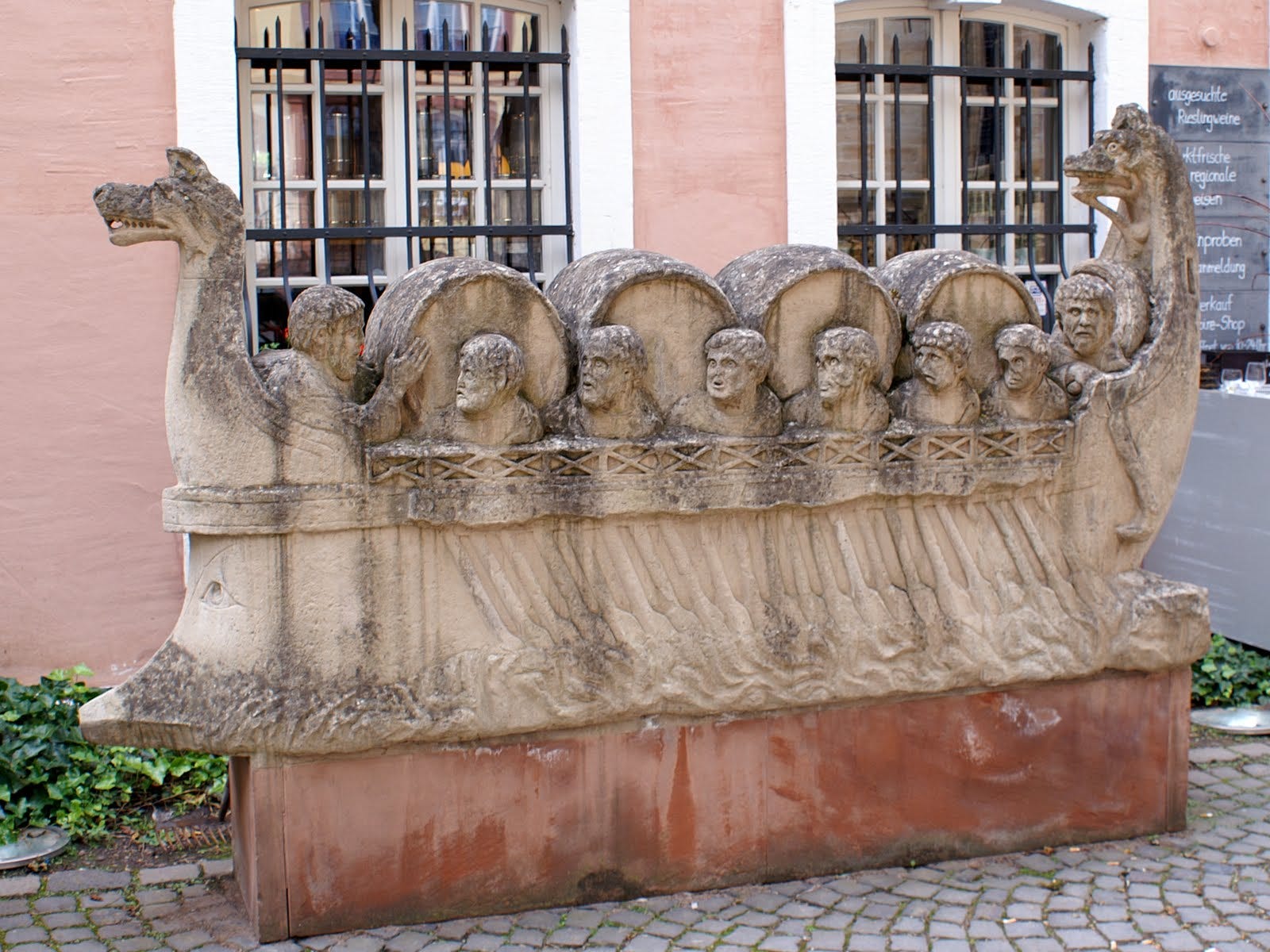
Evidence of the early and continuing importance of wine is preserved in the form of this well known statue outside the Liebfrauenkirche.
Certainly a city that required more time than we had. I suspect that it really deserves a few days rather than a couple of hours. I was however grateful to have been given the opportunity to photograph the whole panorama of the city and its valley from the great hill that overlooks it (top).
.
.
Comments
Nothing yet. Say the first thing.
Sign in to join the conversation.