
I have, in the past, had great difficulties in getting past censorious bots when trying to write, or (worse) post photographs, on social media about things in which the English language diverges sharply from American usage. One such topic is the bird family of Paridae, which is never called Paridae by anyone other than an ornithologist or someone trying to write about ornithology on social media without being censored,
Anyway, four species of tit are to be found around Sliabh Mannan. All of them come to my garden. Sometimes on a grey day they can be hard to distinguish by sight. The easiest to confuse are the great tit (parus major) and the coal tit (parus ater).
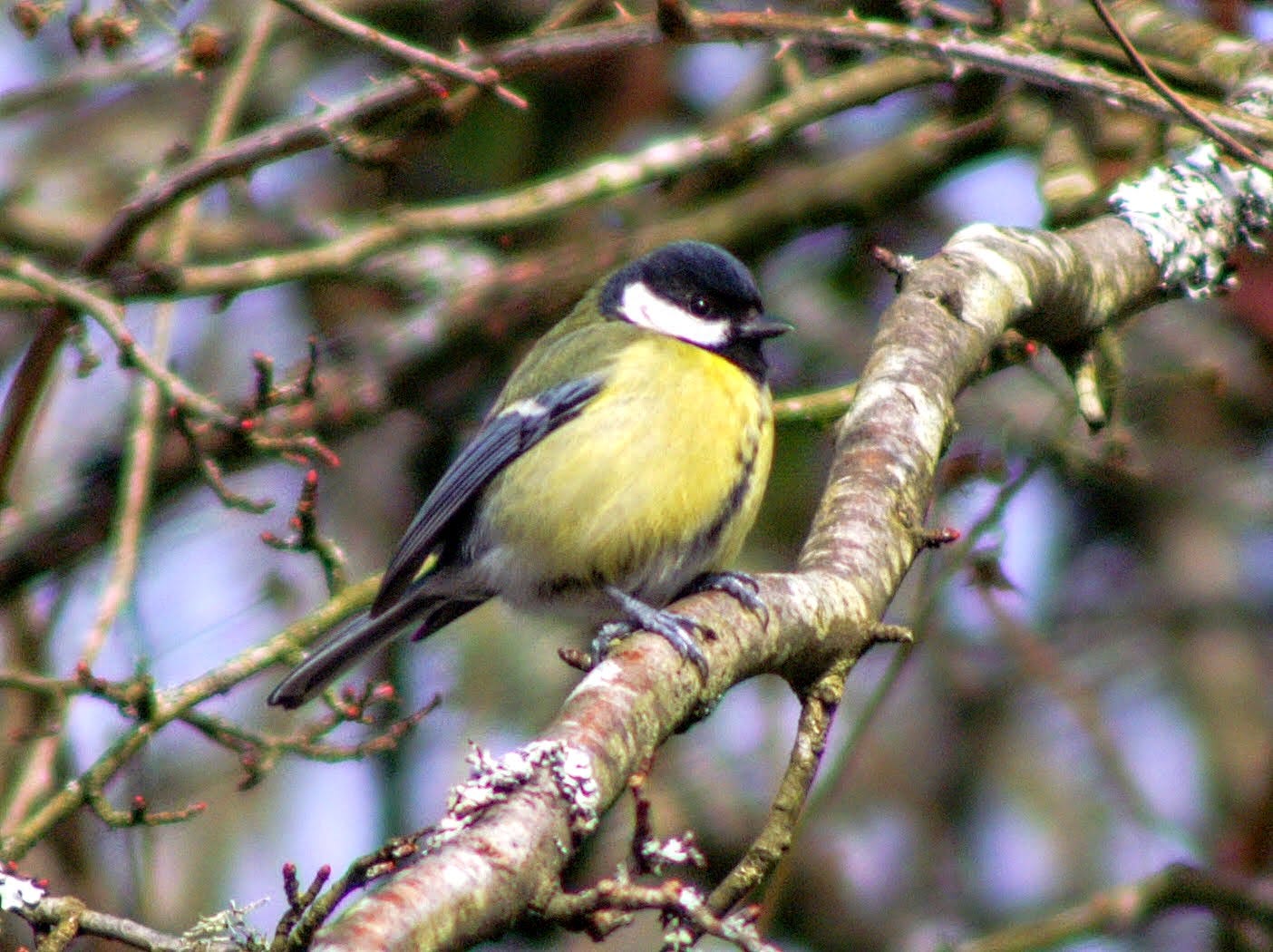
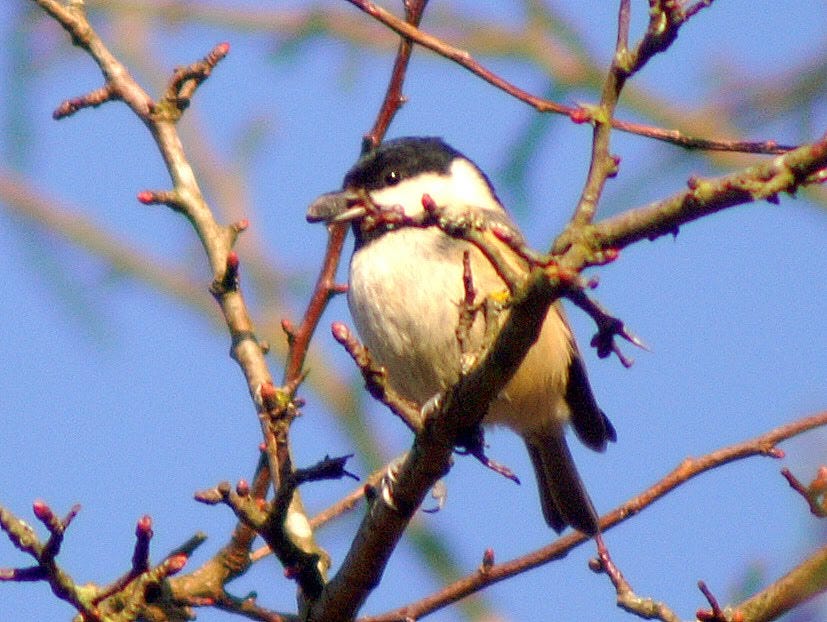
The naked eye is drawn straight to the white cheeks and black cap that the two species have in common, and although the great tit is larger this is not much help if you don't see the two together.
A good distinguishing feature is the bright yellow underparts with a black stripe down the middle of the belly of the great tit, whilst the coal tit has what you might call dull buff / pink underparts. The black “cheek strap” is usually incomplete in the coal tit, which also has a white stripe down the nape of its neck, (not seen in this picture.)
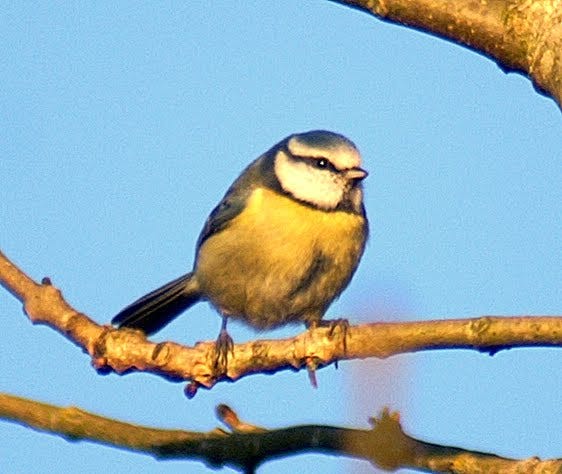
The blue tit (parus caerulis) is much more easily distinguished by its colour though this can sometimes be a little dowdy in winter. One pair obligingly occupied a nest box outside my kitchen window and very kindly cleaned house after raising a family and moving out. I suspect it was this bird that the wartime US song writer had in mind when writing about what was flying over the white cliffs of Dover, because bluebirds are not found in the UK, but Vera sang about them anyway, bless her.
It is interesting that these three species seem quite at ease with each other, as well as with other individuals of their own species. I have observed none of the sort of territorial feuding that can often be seen, for example, amongst robins.
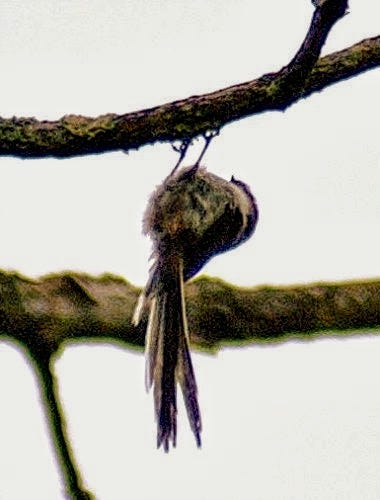
The fourth species, more commonly to be found in fields and woodlands around the moor than in the garden, is the long tailed tit (aegithalos caudatus). There is no mistaking these, but they skitter and are reluctant to pose for the photographer, chattering away to each other and performing acrobatic manoeuvres in the shrubs and trees, frequently in garrulous flocks after the breeding season.
The whole extended family is numerous locally and often to be heard even when not seen.
.
Comments
Nothing yet. Say the first thing.
Sign in to join the conversation.