
My new podcast, Private Practice Matters, just dropped everywhere you listen :)
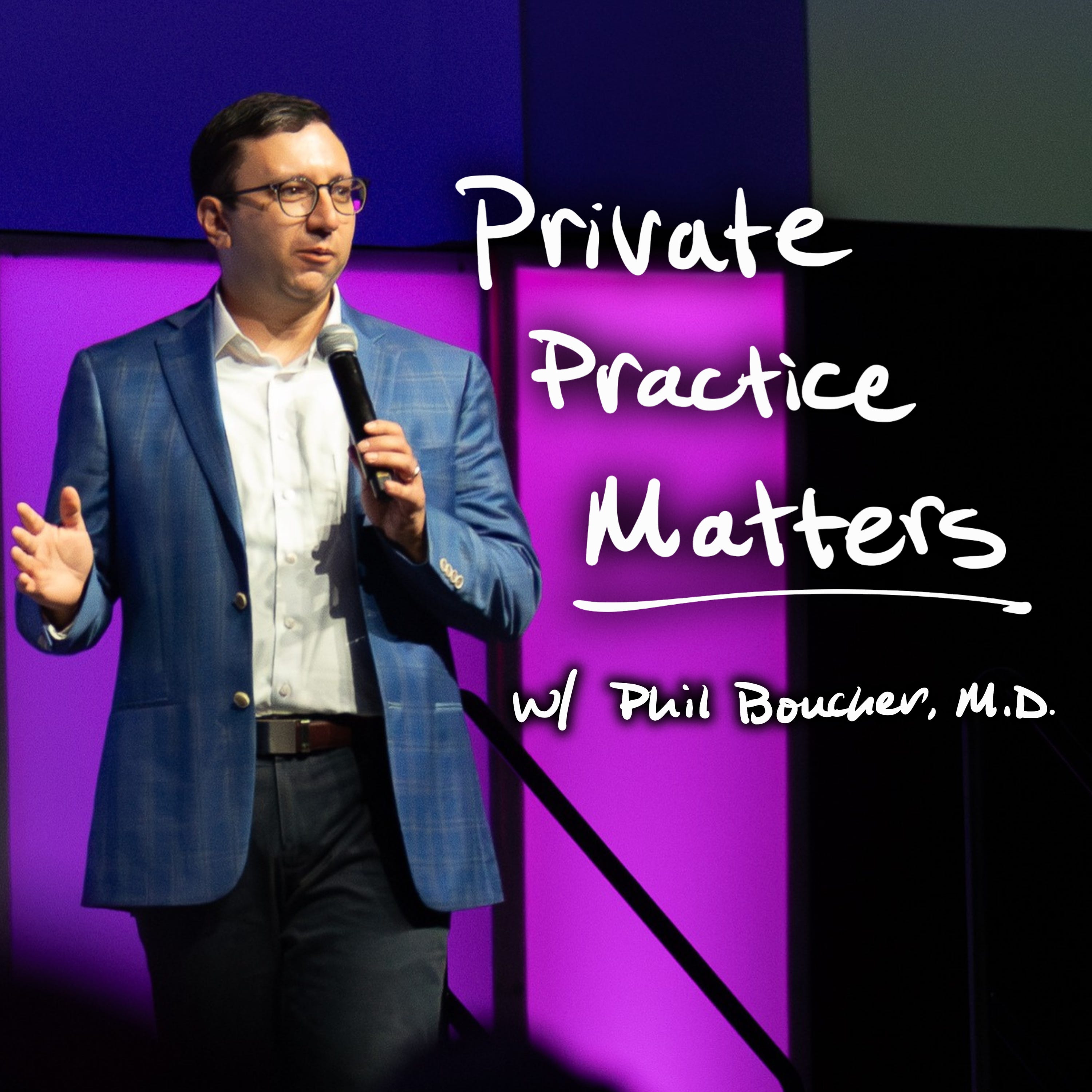
It’s not actually a new podcast…I did this for several years before making the leap and starting my own podcast and I finally have the bandwidth and something to say again about the art & science of private practice.
Here’s the shape of it. Each episode, I take an article that’s making the rounds about private practice and break down what it actually means for someone running a practice.
Then a deep dive or interview, where I go a few layers into something practical: how I do it, what I got wrong first, what I’d tell you to do Monday.
Then a question from a listener on something relevant to those in the trenches.
It’s for anyone who owns their practice. If you’re independent and you’re figuring out how to stay that way, this is for you.
I’ve spent the last five years building Frontier Pediatric Care from nothing, and somewhere along the way I moved from having opinions about private practice and started having evidence and talking with friends across the pay spectrum (direct care, fee for service, hybrid) and in all walks of life (physicians, dentists, therapists…primary care and specialists). This refreshed podcast is less theory, more of what’s actually working and help practice owners to thrive.
My first clinical rotation as a third-year medical student was on surgical oncology. We did a procedure where you fill the patient’s belly with warm chemotherapy and then, essentially, shake them (I googled it, it’s HIPEC (Hyperthermic Intraperitoneal Chemotherapy)… they call it a “shake and bake”.
What I remember is the senior resident asking how we were going to get all of it back out, and the intern turning to me with the answer: the solution to pollution is dilution.
I think about that line every time a practice owner tells me they’re trying to get a bad Google review taken down.
Here’s what came out of a new Medical Economics survey of more than a thousand patients: 75% won’t book with a clinician rated below four stars. Fifty-five percent have already canceled or avoided booking because of something they read. That feels deeply unfair, because you cannot control what any one person writes about you. Send a bill someone didn’t expect, and you might get one star for it.
But you can control the denominator.
Nobody expects you to be perfect. If you looked up a practice and saw 500 reviews at a flawless 5.0, you’d assume they were scrubbing the bad ones, and you’d trust them less for it.
Four stars and change is more believable than five. So stop spending hours on takedown requests that almost never work, and start asking the patients who already love you to say so.
One more reason it matters now. Forty-seven percent of patients say they ran a clinician through ChatGPT, Google AI, or Claude before booking. Nine months ago that was 31%. Those tools read your reviews and your replies when they summarize your practice. So the reply isn’t just for the person who left it.
The part of the survey that stuck with me most, though, wasn’t about stars at all: When patients were asked what actually turned them away, outdated facilities came in at 11%. Scheduling difficulty at 20%. The top two, at over 50%, were rude or unhelpful staff, and the sense that the doctor didn’t listen.
Which means the highest-leverage reputation work in your practice isn’t happening online…it’s happening in on the phone, in the waiting room, and in the exam room.
That’s part of why the deep dive in this week’s episode is about scribes, and why I don’t hedge on it.
If you’re documenting while your patient is talking, you are producing the exact experience that shows up later as a one-star review. There are free tools now that will handle it. I make the whole case in the episode, including the two objections that stop most doctors from actually trying a scribe.
Not consider one. I started a pre-med student scribe program many years ago, back when that meant recruiting gap-year pre-meds who hadn’t matched yet and buying them a computer on wheels. That whole apparatus is now free software offered by dozens of companies. I go through what I use, why the differences between them matter less than you think, and the two objections that stop most people from ever starting: perfectionism & patient consent…both are very solvable.
A colleague wrote in stuck on this exact problem. He wants to be a voice for good information locally and cannot figure out where to start, which is the most common place I see practice owners freeze. My answer is to pick one topic and one channel, and I walk through what that looks like using ADHD as the example: what it means online, what it means with referring clinicians, what it means at community events. Including the one question to open with when you reach out to an OT or a speech therapist, which is not a pitch and works much better than one.
Links
The article: “How AI, Online Reviews, and Rising Standards Are Redrawing the Path to Care,” Medical Economics, August 2026
Got a question you want me to take on? Comment below!
This episode is sponsored by Practos, the AI receptionist we use for our own phone line.
Ours recptionist is named Cami. She routes calls without a phone tree, takes messages, and handles the questions your staff answer fifty times a day. An AI receptionist doesn’t replace your team…it puts a layer between your team and the interruptions so you can elevate patient care and keep your team focused on what matters. Learn more here.
Comments
Nothing yet. Say the first thing.
Sign in to join the conversation.