
The 2025 holiday season marked a pivot point for AI-assisted development. Anthropic’s decision to double usage limits for Claude Code during the final week of the year triggered a viral wave of building. Developers shipped new sites and interfaces at unprecedented speed. But it wasn’t just developers. Hobbyists and first-time builders discovered “vibe coding” too, using AI to create personal automations and simple websites for problems only they cared about solving.
On a recent episode of Hard Fork, Casey Newton and Kevin Roose called Claude Code the “next evolution” in AI since ChatGPT’s launch. I totally agree. The barrier between having an idea and seeing it run has never been lower. People who never thought of themselves as developers are suddenly building things that work. That’s not a small shift.
This isn’t a complaint about the tools. It’s an observation about what happens when millions of people use them.
As this initial wave stabilizes, a clear trend is emerging: the more we produce, the more everything starts to look the same.
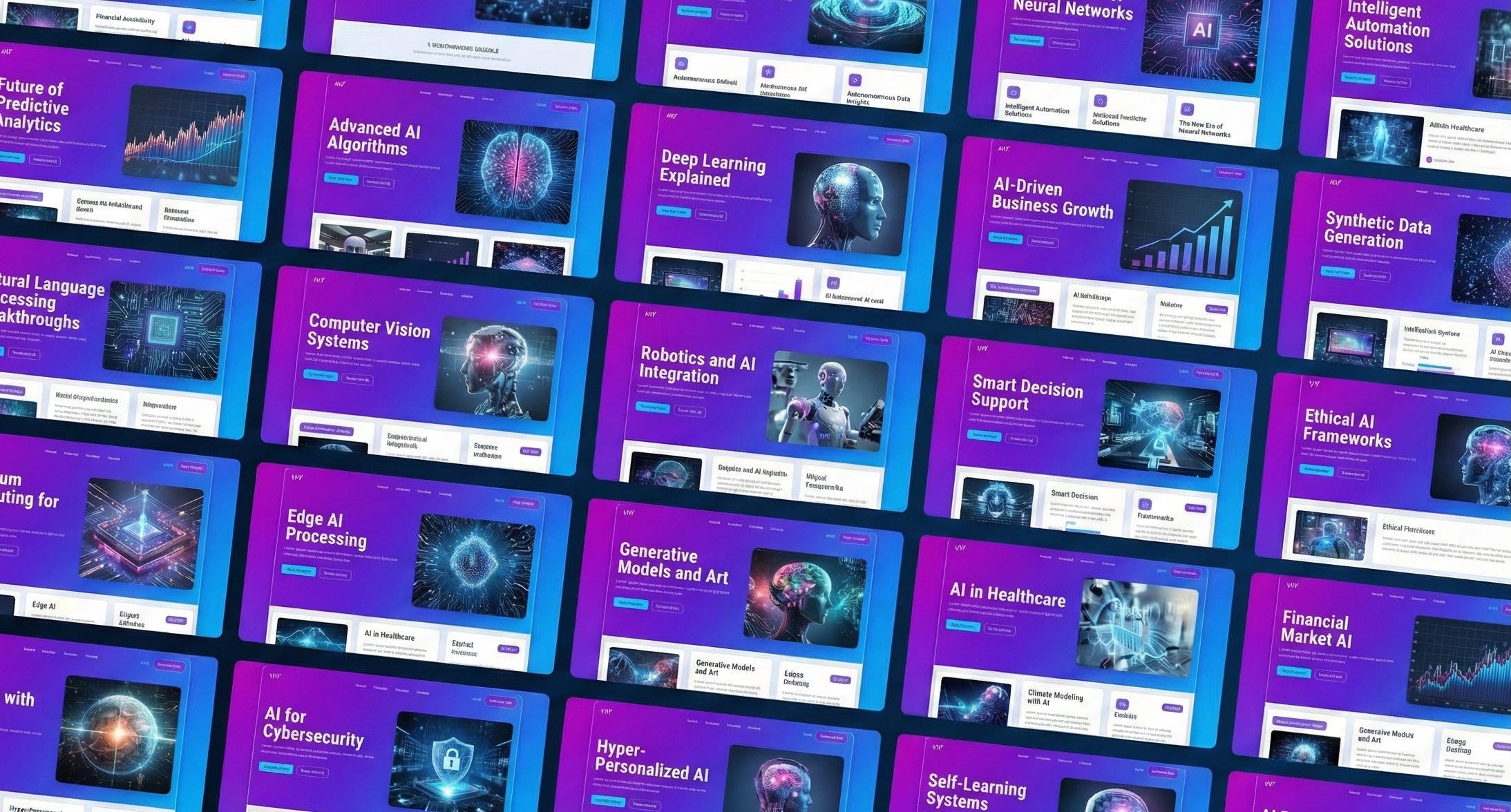
We are entering the era of what I call the Vibe Average. These systems rely on genuine randomness, yet the collective results are becoming increasingly predictable. We have a machine capable of infinite variety that, when used at scale, defaults to a mid-level manager’s version of “correct.”
I’m not writing this from the outside. I use Claude Code every day, for work and personal projects. I first noticed this pattern in my own output. This isn’t a criticism of the technology. I’m caught in it too.
Think about it this way: if you ask an AI to design a living room, it will likely give you a beautiful space with two windows. It does this because it was trained on millions of photos of high-end homes where light is abundant. It isn’t “designing”; it is reproducing a successful look it has seen before.
Human designers don’t start from scratch either. One approach is to work from design patterns. When a designer uses a pattern like Christopher Alexander’s “Light on Two Sides of Every Room” from A Pattern Language, the process is completely different.
Alexander observed that people are instinctively drawn to rooms with windows on two sides, but the “why” is functional, not aesthetic. A room with light from only one side creates a harsh silhouette effect; the wall beside the window falls into shadow while the window itself is blindingly bright. This creates glare, a physical tension that makes the eyes work harder. Light on two sides washes out these shadows, resolving the tension.
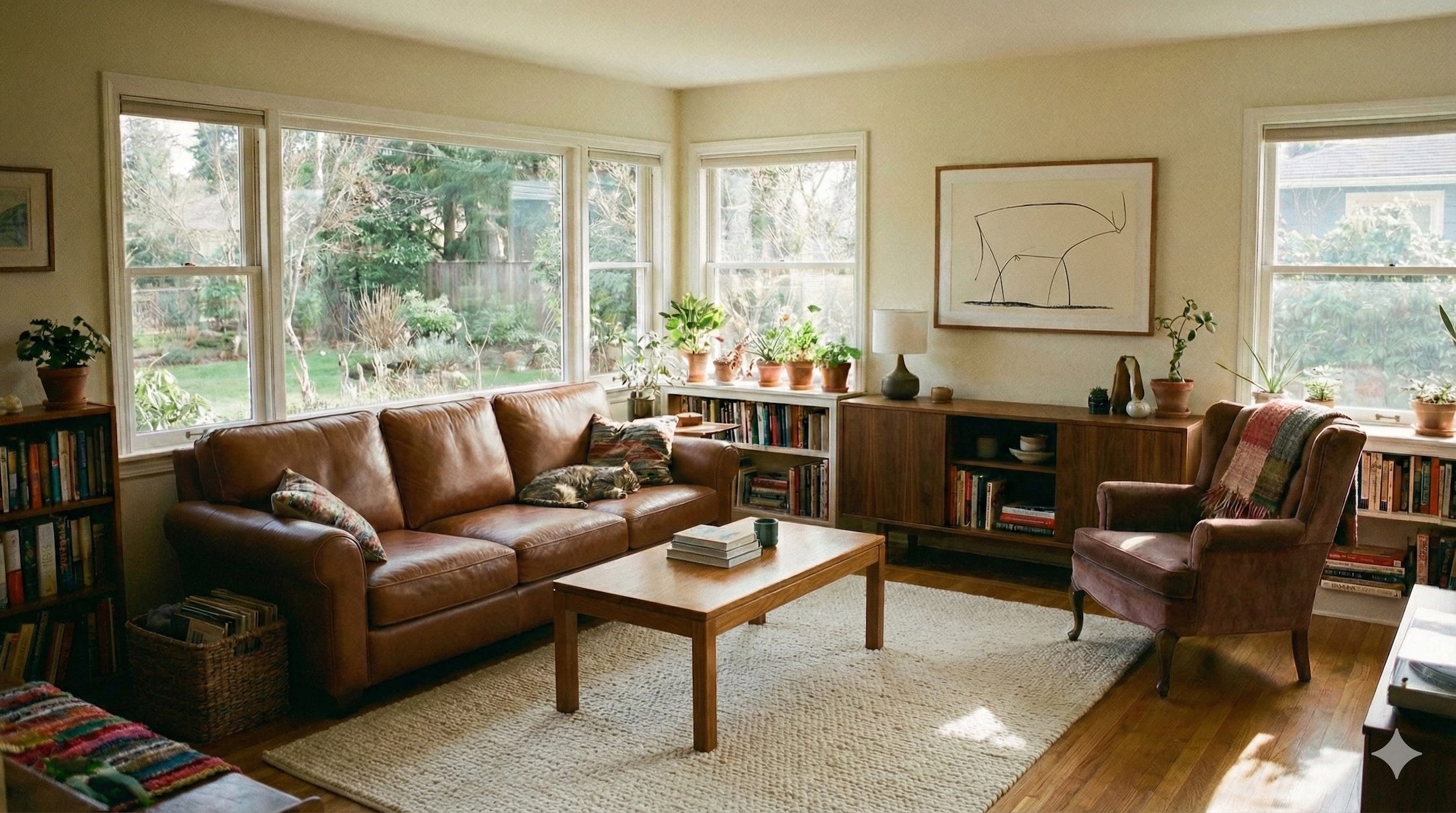
The human designer doesn’t start with an image of a bright room. They start with the tension. They feel the discomfort of the glare. They adjust the window placement based on the specific plot of land, the height of neighboring trees, and how the sun hits the desk at 4:00 PM. They aren’t copying a template; they are solving for a specific light-force.
The AI provides the image of a solution. The human resolves the problem.
I ran into this distinction while researching design patterns for my own book. I wanted to see if patterns still matter in a world where AI can generate the work for us. What I realized is that we are losing what I call the generative layer of design.
A pattern isn’t just a template to be copied. It is a way of distilling a problem down to its core tensions. It’s the connective tissue that allows us to move from an abstract idea to a specific result adapted to its environment. Alexander scholars call this the difference between the “image of life” and the “structure of life.”
The root of the problem is what AI models are actually trained on: finished products. They study the end result: the polished UI, the final book, the compiled code. They never learn the reasons why those solutions exist. When you jump straight from prompt to artifact, you skip the very layer where actual design happens.
Recent research published in Science Advances confirms this at scale: while AI increases individual productivity, it leads to a decline in collective novelty. When a critical mass of creators uses the same probabilistic starting point, the total pool of unique ideas shrinks. We are shifting from a process of construction to a process of curation, selecting from a pre-generated menu rather than building from scratch.
AI learns solutions. It never learned the problems.
The answer isn’t to abandon these tools. It’s to stop using them as a shortcut past the hard part. Understanding the tensions, the forces, the actual problem: this is the generative layer, and this is where design happens. AI can help us build faster once we’ve done that work. It just can’t do that work for us.
No posts
Comments
Nothing yet. Say the first thing.
Sign in to join the conversation.