
I spent the holidays this year watching my family the way I watch everything else: like an anthropologist taking field notes on a system I don’t fully understand. It was the usual… cousins forming temporary alliances, conversations clustering in the kitchen instead of the living room we’d cleaned, and of course, my sister-in-law repeating the stolen bike story from 1993.
Yes, that’s who I am. A nerd who sees complexity theory even in the mashed potatoes.
Family gatherings really are one of the most complex systems in miniature. Not complicated—complex. The difference between complicated and complex is that no one person controls what emerges in complex systems, rather the patterns seem to organize themselves.
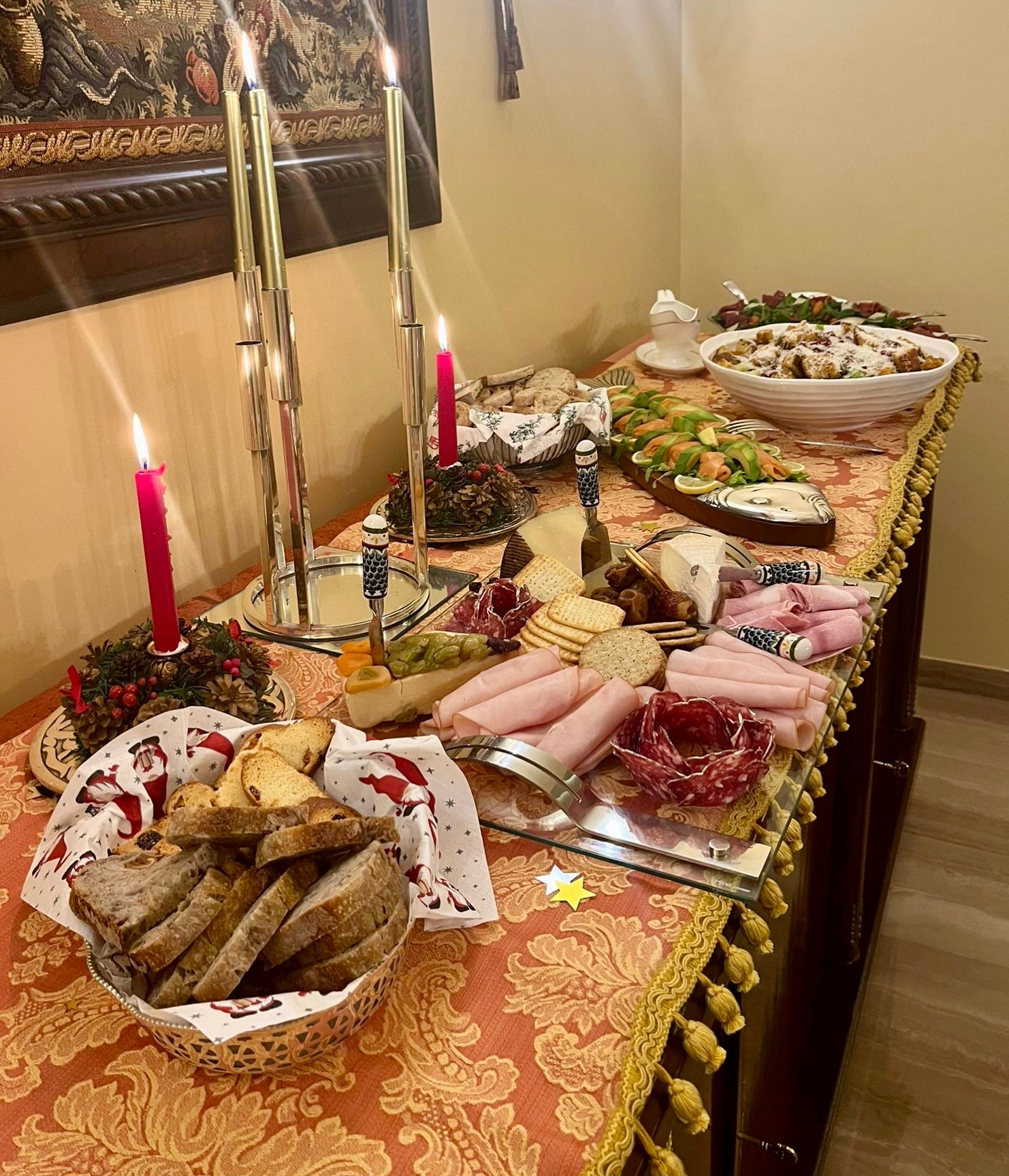
Next time you’re at a group gathering, notice where people actually gather. You may have arranged chairs in the living room expecting people to use them a certain way, and you probably spent three hours decorating the appetizers table yet, somehow, eight people are crammed into the kitchen, talking over each other while only one person does any actual kitchen-related work, often it’s stirring the gravy.
The kitchen wasn’t designed for gathering but it became one anyway. In this way, we can see that the system found its own center.
And this phenomenon isn’t confined to the kitchen… The pre-teen kids form temporary alliances that of course shift by the hour, depending on the stakes. Perhaps two cousins who were inseparable by noon are enemies by dinner, then co-conspirators in orchestrating more screen time again by the time dessert is on the table. What’s always predictably fascinating to me is that nobody orchestrates this; the relationships reorganize themselves based on who has the better toys, who got the last cookie (justly or unjustly depending on who you ask), who knows what micro-grievances we’ll never hear about only to come out as lore decades later.
If you’ve been reading along, you’ll know that I’m working on a book about emergence, which is what happens when systems cross a threshold and start behaving in ways you couldn’t have predicted from observing the parts alone. I often look for this in organizations, cities, games, software; anywhere where we perceive complex systems to exist.
It also exists in the humble living room. In my experience, almost any social gathering has a life of its own that no one person controls.
As the host, you can set the conditions for the Christmas Eve you’ve imagined all year. You design the menu and plan every plate, arrange the chairs in a thoughtful yet inviting array, and invite the people who you think will mesh well together. But the gathering that actually happens is never the one you envision, it is its own beast, emerging from the interactions between your guests and their myriads of moods, expectations, appetites, grudges… things you could never plan for but are instead shaped by alchemy and history and mood and who sat next to whom and how warm the room was and who has gossip for who.
What I’ve learned, the hard way sometimes, is that I simply can’t script it. What I can do is create the conditions and then let go, choosing agency over control.
Maybe there’s something freeing in this… I don’t have to strive to make the holidays perfect. I can’t, actually, no matter how much I plan for it. No matter what I put down on paper, the system will do what the system does.
And somewhere in that chaos, as I contend with a rogue visitor at the door, a broken lamp, a delayed guest and their unexpected plus one… I sometimes catch a glimpse of something emerging that I never could have planned. And the less I plan for perfection, the more I plan for emergence, and that is truly the better way to celebrate the holidays.
What patterns did you notice in your gathering this year?
No posts
Comments
Nothing yet. Say the first thing.
Sign in to join the conversation.