
Welcome to our third Phase Reading, our monthly format where we explore a global trend in politics, technology, economy and society - or all of these together, when we want to follow the longer threads behind the news. This week we explore potential developments of the chaotic political situation in the United States.
The American social contract is broken, and the contest to sign a new one is raging on. A year and a half ago, it seemed that MAGA had won this contest, launching an attempt to reshape the United States as an authoritarian regime. Now, however, MAGA is on the back foot, hampered by the contradictions within its social coalition and by Trump’s mistakes. The outcome now hangs in the balance. Facing MAGA are the Democrats, who are favourites for the midterms and may even win the Senate, which would allow them to block judicial and federal agency appointments.
However, Democrats themselves hold together a loose constellation of social groups with diverse if not diverging interests, many of which recognise themselves only partially in the Democratic political agenda – or rather agendas. Beating MAGA, then, would need to go beyond winning an electoral majority built on backlash to Trump, which risks being undone in 2028. It would require a stable social coalition alternative to MAGA, capable of renewing the American social contract and rebuilding democratic consent. There are several constraints to this process, and few actors are in a position to carry it out. Here is our attempt to explore what such a coalition could look like, why the existing constraints make other paths less convincing, and what its success or failure would mean.
We cover the following sections:
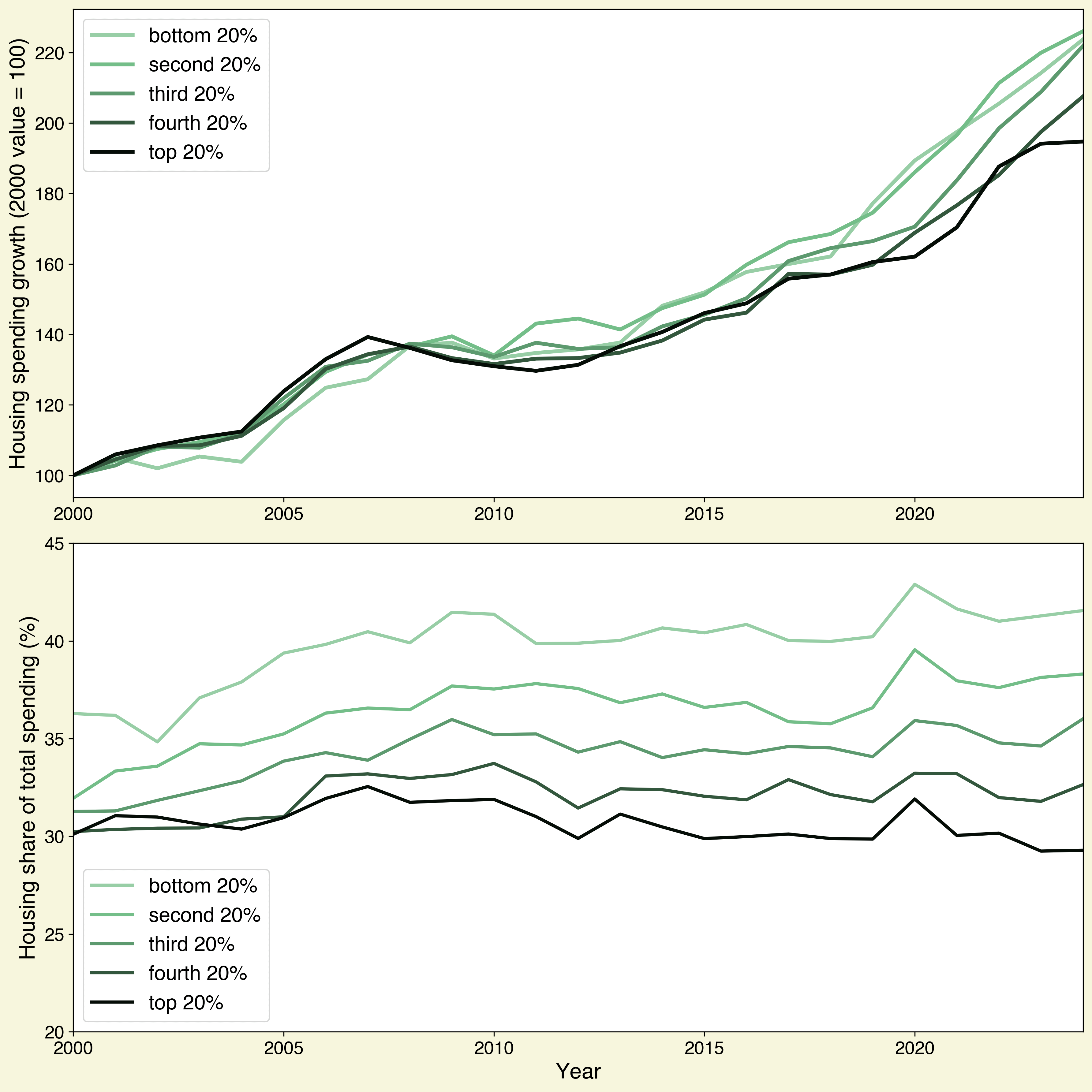
It is no secret that American society is extremely unequal, at least compared to other advanced economies. There are well-known redistribution issues, with massive wealth accumulated at the top end of the distribution, while low-income families constantly struggle to make ends meet. The lack of a social safety net pushes hundreds of thousands into homelessness1, fewer people earn more than their parents at the same age, and the cost of living weighs progressively more on household incomes, making this economy progressively harder to endure for large parts of the population. Housing, in particular, is eating away a growing share of low-income households’ expenses, with healthcare coming in second.
There are also inherently cultural and political dynamics. The country’s political elite and economic elite have actively promoted growing inequality for decades, while at the same time hollowing out American manufacturing. While the economy as a whole has benefited from the transition from manufacturing to services and tech, the process has left entire regions, more often rural, severely depressed.
The reframing of the civil rights movement in mainstream discourse as identity politics, however unfairly, fostered the perception in many predominantly white and often rural communities that they had been left behind.
These two overlapping dynamics have created the conditions for the MAGA coalition which Trump unified behind himself through his image as an outsider who swept away the old Republican political class. Of course, this is more perception than reality. Trump is deeply tied to the economic elites responsible for today’s inequalities; in fact, Trump is part of those elites. Today’s Republican Party is pro-business as much as, if not more than, the neocons in the Bush era. Many have simply rebranded themselves as MAGA without really changing their positions. Figures such as Marco Rubio and Lindsey Graham are a case in point.
Far from damaging MAGA, this fundamental contradiction allows Republicans to bind together a significant share of the American population, roughly 30-35% willing to vote for Trump no matter what, with big business, especially tech.
Large parts of this coalition are deeply suspicious of the United States’ role as guarantor of the international order. Because that role is tied to globalisation and the post-Cold War neoliberal order, they see it as a drain on national resources for the benefit of “globalist” elites at their expense. It is a conspiratorial version of reality, but one that works partly because it is rooted in reality.
In 2025, Trump began governing accordingly. He moved to reward corporate and tech interests by cutting taxes and weakening regulation; dismantle USAID and American foreign-aid infrastructure and push an isolationist foreign policy; weaken environmental protection; limit the right to protest; purge women and minorities across federal agencies and the armed forces; pressure universities and cut research funding; launch mass deportations against migrants.
Grasp the material reality behind the news cycle.
Subscribe to phase:shift to see the signal behind the noise.
Unfortunately for MAGA, in pursuing its agenda, the Trump administration has made extraordinary mistakes, some simply the consequence of its policies, others entirely self-inflicted by Trump’s misplaced personal judgement.
The first serious errors were the ICE operations in Los Angeles, Chicago, and Minnesota, which resulted in arrests, injuries and the killing of immigrants, whether documented or not, as well as US citizens. The perception of brutality may have caused lasting damage to the Republicans among Latino voters, who had moved sharply to the right in 2024, and among independents.
Tariffs are another unforced error, entirely rooted in Trump’s personal convictions and with little connection to economic reality. Tariffs failed to revive American manufacturing – investments have, in fact, fallen – while damaging relations with allies, one of the central pillars of America’s hegemonic position. Several businesses and their associations have sued the administration over taxation that increased component costs and reduced their profit margin.
The Supreme Court eventually struck down tariffs, but it is arguably unwise for a pro-business administration to alienate businesses. Moreover, the One Big Beautiful Bill Act worsened federal debt2, while the threat of bringing the Federal Reserve under executive control undermined confidence in the stability of the dollar system.
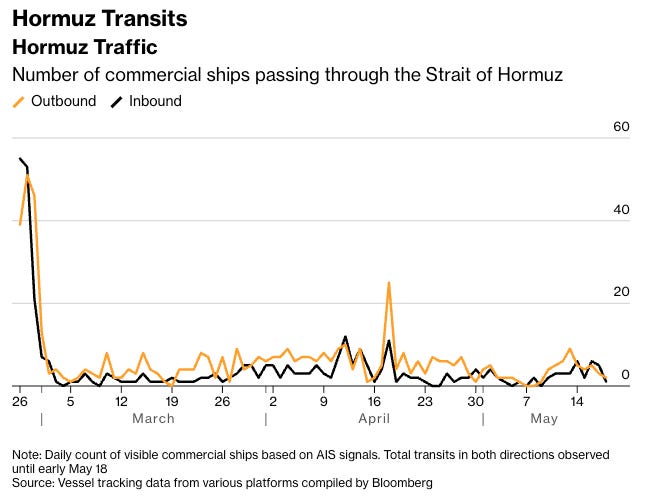
Most importantly, the attack on Iran broke Trump’s campaign promise not to start new wars and drove up fuel, fertiliser, and supply chain costs, materially hurting farmers – a key MAGA constituency – and pushing inflation up from 2% to 4% in just three months, breaking another core electoral promise. This also caused severe reputational damage in many ways. It exposed the pervasive neocon influence inside the president’s circle, which is anathema to many major MAGA figures, and the final agreement, which is hard to spin as a win, damages the US’s standing in the world.
The damage has thus been both material and reputational. A revealing example is Iowa, a key agricultural state in the Corn Belt, where farmers vote 70% plus for Republicans and which has moved right since 2016. Now, Trump’s approval rate in the State is 9 points underwater, 44-53. Other safe red states, like Texas, have similar numbers.
The feeling of widespread corruption that surrounds every activity the President is involved in certainly does not help his popularity. The recent disaster with the Reflecting Pool is only one example of Trump’s way of doing business3, much like the 3,600 stock-market transactions in the first months of 2026.
Trump has been constantly haemorrhaging support during this term and now his approval sits only around 35%, with a disapproval around 60%. His situation is much worse than it was in 2018, when Trump was 14 points underwater (41-55), enough to propel Democrats to win big in that year’s midterms. Now, basically, only the MAGA base is still supporting the President.
And there are signs of cracks even in the MAGA coalition. Various MAGA or MAGA-leaning commentators have heavily criticised the President for the war in Iran, some even going so far as to call him a traitor to the America-first agenda.
The Trump-backed candidate lost the Iowa gubernatorial primary to a rival who ran to his right. Thomas Massie, an America-first Republican from Kentucky who broke with Trump over the Epstein files, lost only narrowly to Trump’s endorsed candidate in a bitter primary campaign that almost certainly alienated part of the Republican electorate of the district. Marjorie Taylor Greene, a die-hard MAGA from Georgia, resigned as a US House representative after a disagreement with the administration over last year’s government shutdown. And Trump just lost a War Powers Resolution vote, where a few Republicans broke ranks with the administration to formally stop the President from resuming hostilities with Iran without congressional authorisation.
Although still at the margins, these are signals that some right-wing figures think their political future is safer leaving a sinking boat.
We are always looking for emerging trends, local developments, research, industrial shifts, and overlooked dynamics.
If you work on these issues, or track them closely, get in touch.
Reach out by email or direct message.
The path is wide open for a sweeping Democratic victory in the midterms. In all likelihood, they will take control of the House and, if they can take back control of the Senate, a toss-up as of now, they will make Trump all but a lame duck and be able to both severely hinder his agenda and block his appointments – possibly the most important development.
So why do I still believe the situation hangs in the balance? After all, Trump is almost 80, he will not be around for long, his mental acuity seems to wane by the day, and none of his potential successors can hold the MAGA coalition together.
The fact is that American social reality is still going to exist, and none of the problems I described at the beginning is going to vanish. Trump is just an individual, no matter how powerful, and American social reality will outlive him. Tech companies are still going to be there, with their immense capital and ability to capture political power, and so are immigrants and people trying to make ends meet.
Moreover, impressive as it may be, Democrats are almost as distrusted as Trump. Their approval rating is only slightly better than Republicans’, or even worse in some polls. The difference is mostly due to Democrats not approving of their own party’s record4, while Republicans are mostly happy with their party, no matter what they do. But this is the whole point: Democrats cannot consolidate a stable base of support because their own voters do not think the party has their back.
The political project of the Democratic leadership is, at heart, a project of preserving existing conditions. Reading liberal and centrist commentators, one often gets the impression that America is not going through a transformation of its social order, but that MAGA is mindlessly destroying an order that has worked so well for the United States. No doubt it worked well for them, but their inability to understand that it did not for so many people prevents them from building a broader consensus.
The Democratic leadership’s crisis has finally produced a power vacuum that is now being filled by Progressives and Democratic Socialists. This is, in a sense, an analogous process to the rise of MAGA: new candidates emerge partly because they have a new agenda, partly because they are just new. They are not tied to the old, unfair order. The Democratic Socialist sweep of this week’s New York elections is a good example.
There is clearly a Mamdani effect, but this should also give reasons for pause. Mamdani is popular, an effective communicator, and an excellent politician overall. However, he won the Mayoral elections by barely exceeding 50%, while Democrats constantly get north of 70% of the vote in a normal election against a Republican candidate. Obviously, his opponent Cuomo was himself a Democrat. Yet he had Trump’s – admittedly reluctant – endorsement, and a significant share of New York Democrats opted to vote for a Trump-endorsed candidate rather than a socialist. As most areas of the country are definitely to the right of New York City, this should be a warning that there are sectors of the country ready to swing back towards Republicans.
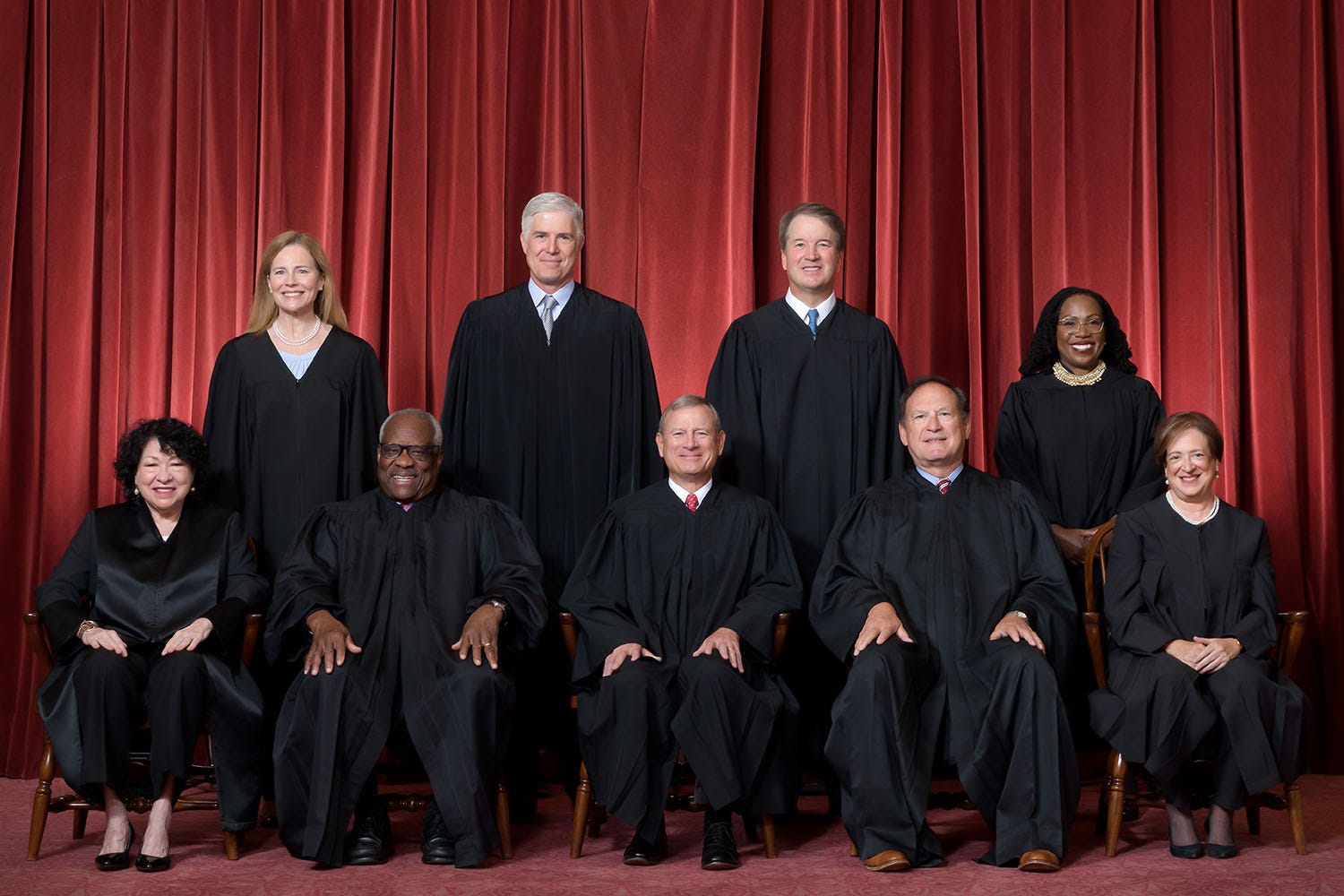
The institutional environment is also tilted in the Republicans’ favour. In his nearly 6 years in power, Trump has nominated a number of judges who are loyal to him more than to the Constitution, starting with the Supreme Court. In recent years, the Court has issued the most extraordinary rulings: creating a doctrine of broad presidential immunity – hardly a democratic decision by any measure, hollowing out the Voting Rights Act, effectively opening the door to racial gerrymandering in the South, allowing the dismantling of federal agencies without congressional approval, and so on. Clearly, reforming the judiciary requires more than narrow majorities and volatile popular support.
Finally, until now, American civil society has proven vibrant, active, and capable of organising quickly and effectively. The response to ICE raids in Minnesota and Chicago is a striking example of this. Yet, there are also signs that large segments of the population are growing tired of political polarisation, constant turmoil, chaotic policy and deteriorating living conditions. Young Americans in particular are increasingly disengaging from politics altogether.
This trend is reflected by the growing number of independents. Many of them vote pragmatically, with limited interest and access to political information. For the time being, they are blaming the chaos on the Trump administration. Will they continue to do so once Democrats win back Congress?
If you know someone in research, policy, academia, or industry who could use our work, share phase:shift with them.
Be part of the early network.
Historically, such moments of transition, when a nation has to rebuild itself through a new social contract, have unfolded in two ways. The first one is unilateral. One political force imposes a new order on the rest of society. This can take the form of a coup (Italian Fascism), a grassroots revolution (Soviet Bolshevism) or the subversion of the state from within through an electoral victory (Nazi Germany). The other way is democratic renovation, the greatest example of which is possibly Roosevelt’s New Deal.
The unilateral way, at the moment, can be pursued only by MAGA. No other political force has the unity, force, and resources to pull it off. And this is exactly what MAGA is trying to do. The other way, however, requires a stronger social compromise that limits the economic and political power of the economic elite while allowing them to maintain their position as “the elite”.
What would this coalition look like, then? It has to hold together the constituencies harmed by the Trump administration; it has to redistribute wealth and power and address the fundamental inequalities that fractured the country in the first place; and it has to be able to withstand attacks from the right without letting consent swing back towards MAGA.
These constituencies include migrant and low-wage workers – two groups with a large overlap – who keep the care, service and manual economy running; Black and Native communities, who always pay the price first from an increase in inequality and suffer disenfranchisement in the South5; academia and the research ecosystem, where funding cuts are derailing jobs and careers, while political pressure targets academic freedom and entire fields of research, from clean energy and public health to critical studies; the defence community and the national-security establishment, which has been damaged by Trump’s erratic foreign policy and will see its influence reduced by America’s diminished standing; finally, finance.
Finance is doing just fine, but its global dominance depends on foundations that MAGA is eroding: the centrality of the dollar, confidence in US debt, the credibility of American institutions, and the assumption that the US remains the world’s safest and most attractive destination for global capital. It may not be damaged now, but it risks being so in the future. Moreover, a large share of stock-market growth is concentrated in a handful of AI companies. If AI goes bust, the financial sector is going to suffer terrible losses.
Still, this is obviously an unnatural alliance. The interests of low-wage workers and bankers are obviously on opposite sides of the spectrum. Redistribution for the first means taxation for the second. Academics are considered part of the elite, too, and at least partially rightly so (although I would recommend checking postdoctoral researchers’ and teaching fellows’ salaries before making too many assumptions). The forever wars, which the national-security establishment had a major role in, are exactly what working-class Americans have been up against in the last fifteen to twenty years.
So, not unlike the New Deal, it should work through a bargain, guaranteeing each constituency the preservation of what it risks losing under MAGA.
On the one hand, the agenda has to address the material sources of American malaise, guaranteeing access to housing and healthcare, a safety net for low-wage workers and the unemployed, and generally reducing inequalities and racialised poverty. This requires a vast mobilisation of resources, which can only be raised through higher taxes on top incomes and, above all, on financial and real-estate rents.
This is where the bargain with finance comes in. In exchange for higher taxation, finance would have to be offered a commitment to defending US financial hegemony and its “exorbitant privilege”, threatened for the first time in a systematic way by Trump’s presidency: centrality of the dollar, confidence in US debt, and the institutional stability that underpins the US financial system.
Not every actor in finance would accept this, many would still prefer low taxes and high short-term profits. But this is not the point. The point is to show enough fiscal and political responsibility to shield the agenda from moral panic and attacks from the right and the centre.
The current environment leaves very little margin for error. Large chunks of the media infrastructure are directly controlled by the right or right-leaning. Fox News, the Wall Street Journal, and the New York Post are all part of the Murdoch media empire. The Washington Post has been bought by Jeff Bezos, Amazon’s CEO and a major Republican donor, and CBS and now CNN have been acquired by the Ellison family, right-wing billionaires who built their fortune through Oracle6. The Ellisons also control TikTok US operations, while X was famously acquired by Elon Musk, and even Mark Zuckerberg, once a prominent liberal donor, has shifted right, forging closer ties with Trump and altering moderation rules on Meta’s platforms to favour right-wing commentary.
Social media platforms are the ecosystem through which most political news gets distributed, especially among young people. All of these are controlled by tech billionaires, a key constituency of the MAGA coalition. Triggering backlash from this media ecosystem could prove fatal, as a series of coordinated attacks could push independent voters back right.
This is why it is key to keep out of this dynamic at least moderate outlets. Between 2022 and 2024 I used to amusingly read Bloomberg, which kept announcing a recession caused by Biden’s policies. It was always along the lines “the economy looks great now, but in fact the underlying numbers reveal a worrying trend”. The recession never happened, but Biden’s announcement of new taxes on corporate income and capital gains was enough to trigger a consistent wave of attacks that certainly contributed to derailing his re-election efforts.
This is not to diminish Biden’s personal and political flaws, of course, but it is important to recognise the power media wield in determining political fortunes or misfortunes. A new political leadership should recognise this and make concessions to get at least part of these outlets on board with their political project.
A similar agreement should be achieved with the national security community. It is hard to overestimate the damage Trump and MAGA are doing to the US’s standing in the world. A social coalition based on renewed democratic commitment would preserve American primacy. That would have to be reoriented as a tool to empower a more democratic management of the world’s affairs. There is no going back to the old order. The unipolar moment is gone for good, but the US would still be at the centre of it as guarantor of multilateral institutions.
Alexandria Ocasio-Cortez does seem to understand this. Otherwise, why should she have gone to the Munich Security Conference to present her vision for American foreign policy? It was very clearly an attempt to reassure the transatlantic elite that she is someone they can talk to, much more so than the current administration in the White House. This is smart politics, as it reduces the room for conservative and centrist attacks without compromising one’s own agenda.
Academia would be one of the easier constituencies to bring into such a coalition. Academics are overwhelmingly liberal, and they would have much to gain from a renewed commitment to public funding and full restoration of academic freedom. Higher education is also one of the main channels of social mobility. Building a system where access to it is not determined by income would therefore be a major step towards resolving the country’s social contradictions.
This is how a social coalition alternative to MAGA could hold, by striking a compromise with key elite constituencies around a redefined form of American primacy that would protect the coalition at the centre, while still providing better material conditions for working-class Americans. None of this would erase the contradictions between these groups, but it would give each of them reasons to prefer a democratic reconstruction of American power to MAGA’s chaotic attempt to impose an authoritarian order.
Over time, this agenda would also drive a wedge into parts of the MAGA coalition. Many poor rural white voters, politically disconnected but exposed to the same failures in healthcare, housing, wages, and public services, would benefit from this programme, and some of them could be pulled away from MAGA. On the contrary, such a coalition would provide the political space to tackle the issues of capital concentration in the tech sector and in the media, which inevitably turns into an outsized political role.
This scenario is, of course, not set in stone. There are many factors that could upend or modify the entire scenario.
Trump is old and increasingly erratic. He is often damaging his own coalition, and by 2028 he may be sidelined. A significant part of MAGA voters come out to vote only for Trump, while MAGA candidates are often weak and have little charisma and preparation. Without Trump, the coalition may fragment forever, never to be built again.
However, the forces we have identified will still be there. Rural whites will still feel left behind. Tech capital’s economic power and political influence will still be there. A large part of this sector is aligned with an openly authoritarian agenda and will keep finding new ways to push for it. AI is now one of the main drivers of American growth, and tech billionaires want this role politically sanctioned.
This exposes another possible breaking point. If AI companies are not able to turn their massive investments into profits and the sector goes bust, the sheer scale of these investments would trigger, in all likelihood, a financial crisis and a recession, which would force the state to intervene and stabilise the economy. This could certainly be an occasion to break tech capital concentration. An AI bailout, however, would not weaken these companies. Rather, it would just prove their centrality in the American political economy.
As we like to repeat, we do not try so much to make perfect predictions as to identify the structural constraints that limit the scope for action and that have to be governed if the future is to take a different shape. The ending will depend on how political actors move. The good news is that we, and you, are also all actors. The ending is open: there is room to change it.
740,000 according to the US Department of Housing and Urban Development, an unbelievable 19% of which, 140,000, in New York City alone.
Moody’s downgraded US triple-A sovereign debt rating for the first time since 1917, following similar downgrades by S&P in 2011 and Fitch in 2023.
Trump awarded a $14 million no-bid contract to have the bottom of the Reflecting Pool painted blue and improve its appearance. The coating altered the pool’s water recirculation, causing an uncontrolled algal bloom that turned the pool green and slimy. To kill the algae, the administration had a massive amount of hydrogen peroxide poured into the water, which ended up peeling off the new blue bottom.
Although there are signs of this reversing as we get close to the midterm elections. YouGov finds a strong rebound in the approval of congressional Democrats among Democratic voters.
Oracle is one of the most exposed companies to AI-related debt. Should the bubble pop, this would be an interesting angle to follow, as this new media empire may unravel.
Comments
Nothing yet. Say the first thing.
Sign in to join the conversation.