

When Simon Haisell sent me his answers to this interview, I wrote back almost immediately to tell him that I had teared up reading them. So corny, I know. But I had been thinking about something that I suspect a lot of us who spend time in the online book world have felt: when does all this enthusiasm about reading start making people feel bad about reading?
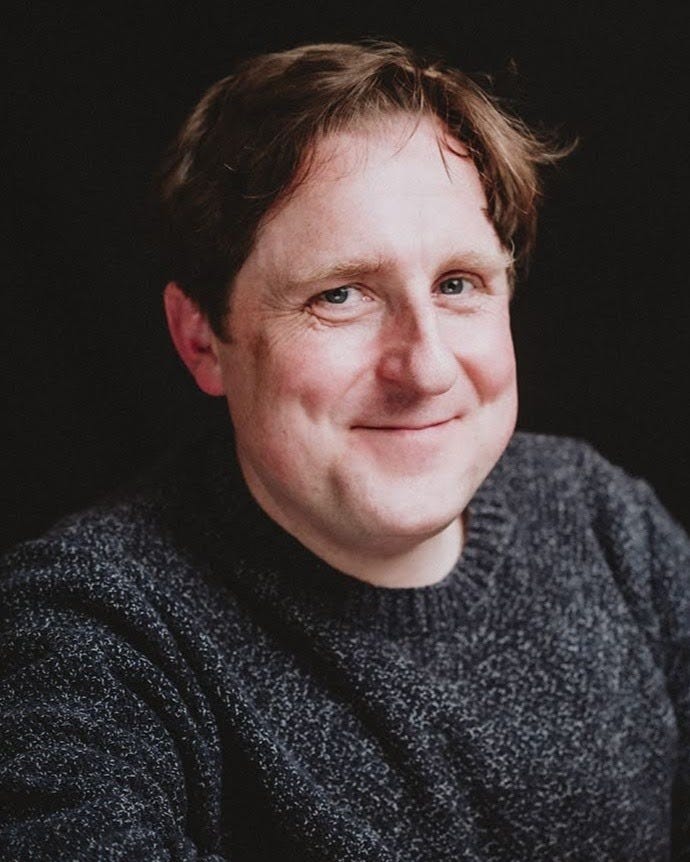
There are reading goals and reading challenges, elaborate TBRs and annual wrap-ups, lists of classics we should have read by now and increasingly impressive stacks of books consumed each month. Even those of us who genuinely just love books can get caught up in what I described to Simon as an ever-escalating internet arms race. Read more. Read better. Read more widely. Take better notes. Remember more of what you read.
And Simon — whose reading life is, by almost any measure, wildly ambitious — made me feel better about all of it.
Simon hosts year-long slow reads of ambitious reading projects such as War and Peace and Wolf Hall. He spends entire days close-reading a week’s assigned pages. Reading and writing about books have become his livelihood. And yet, as you will see below, his answers contain remarkably little anxiety about being a Good Reader.
He dog-ears his books, he forgets things… he daydreams while reading and sometimes misremembers what he’s read. He doesn’t rate books. He doesn’t keep track of what he wants to read. His carefully constructed reading plans are routinely derailed by what he calls “whims and sudden squalls of curiosity.” And when I asked what advice he would give to people who want to read more, his first instinct was that maybe we should stop making people feel as though they ought to be reading more in the first place.
What a relief.

Tell me a little bit about what role reading plays in your personal and professional life?
OK, so reading has now become my life and livelihood – although I don’t recall making a conscious decision to become a professional reader. For as long as I can remember, reading has been one half of an imaginative inner life. Reading or listening to stories is like breathing in, and writing is breathing out. For me, it is almost unimaginable to do one without the other. I read to write and write to read. Together, they make this creative space where new ideas and stories meet old and familiar thoughts and feelings, and if I stop visiting that space for any length of time, I start to go a little loopy.
For most of my life, this creative obsession has been a solitary and private pursuit. Yes, friendships have formed around a love of certain books, and I have shared my writing with a few close friends. But outside of university, I never joined a book group or a writing circle. When I started sharing my reading life on Instagram in 2018 or thereabouts, I had no idea that I would wind up hosting an enormous slow read-along of War and Peace in 2023 that would take over my life and become Footnotes & Tangents.
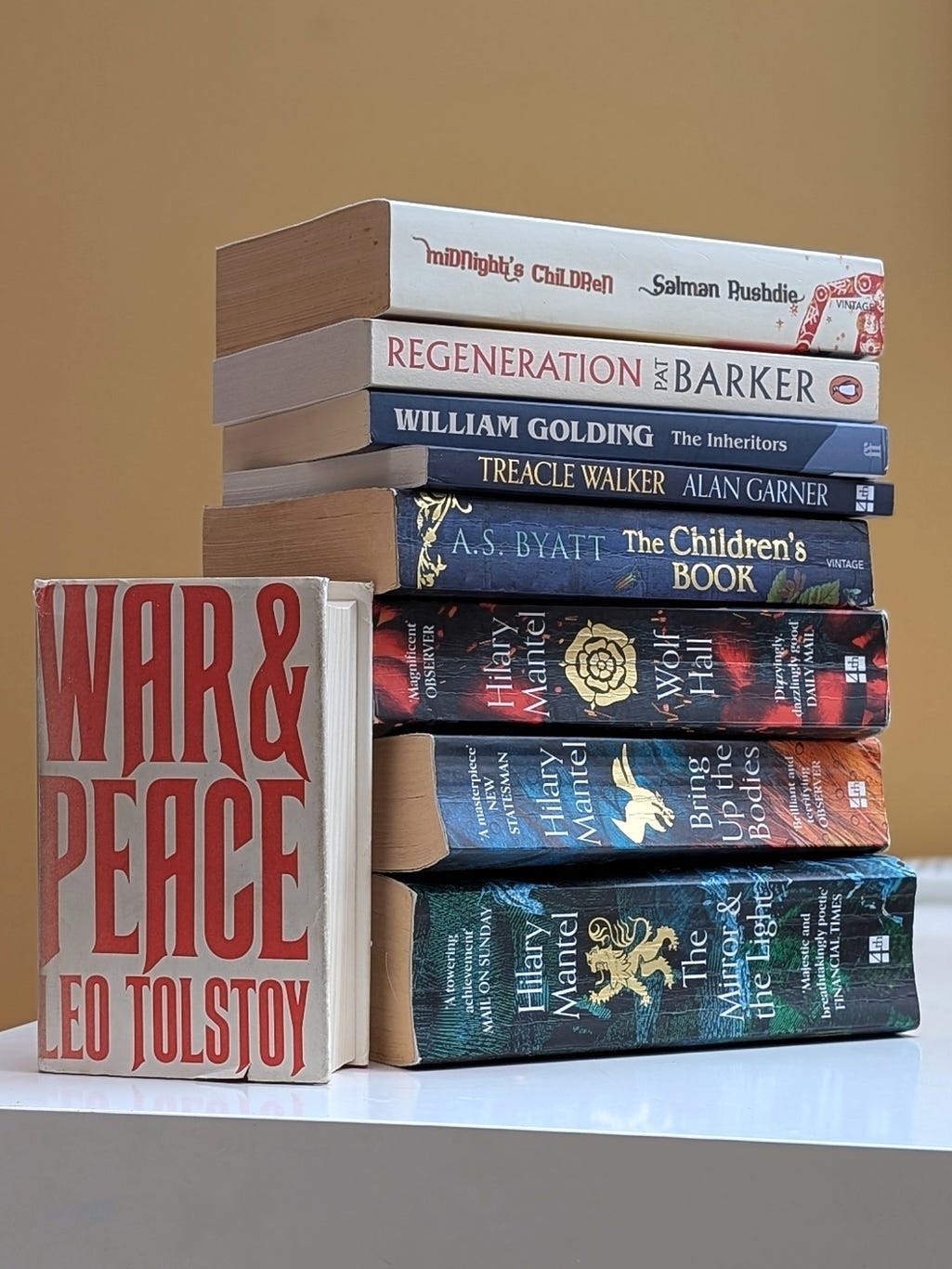
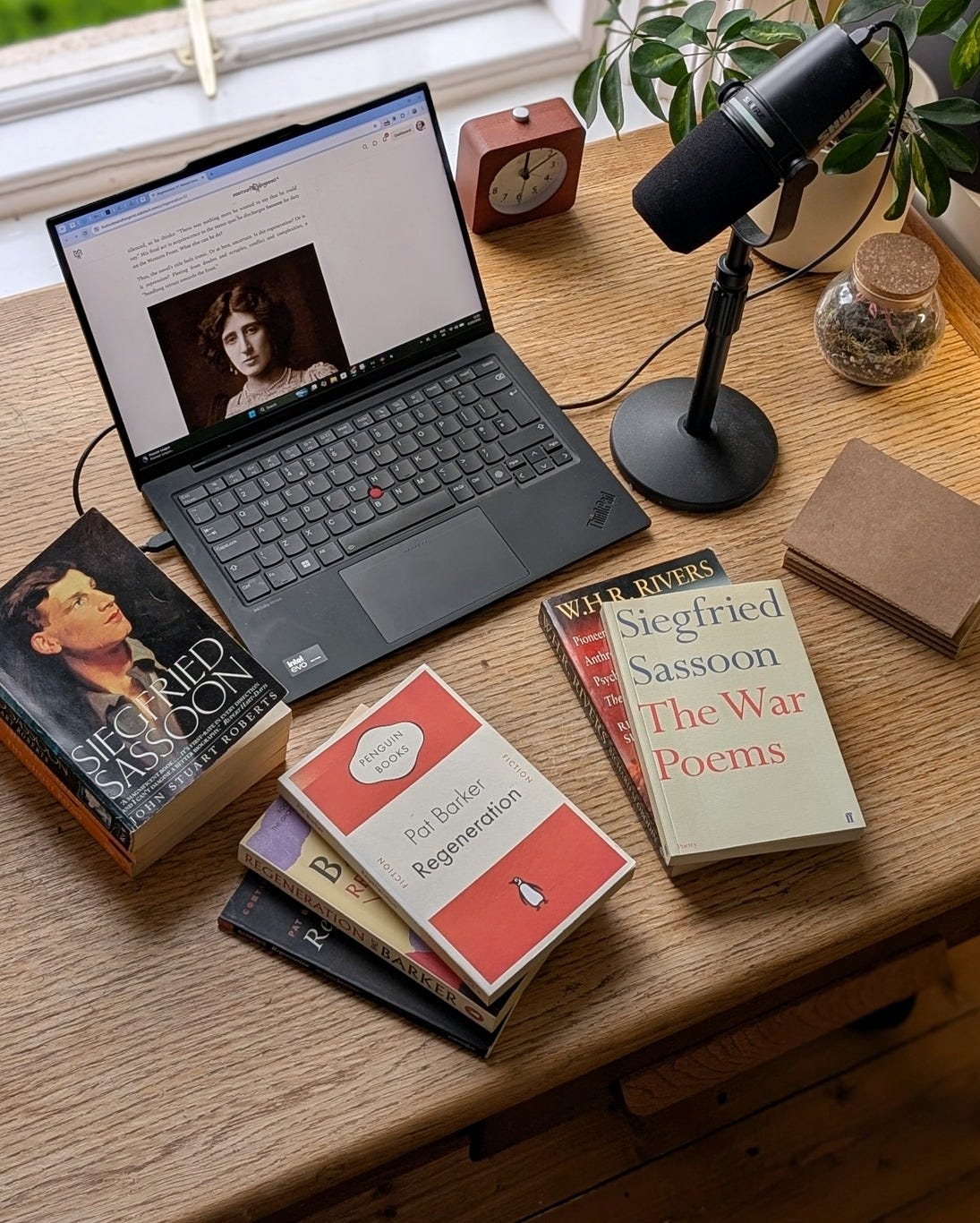
Four years later, I have written twelve guides to support slow reads of some of my favourite books. We’ve done Hilary Mantel’s Wolf Hall trilogy (three years running!), Salman Rushdie’s Midnight’s Children, as well as books by Pat Barker, William Golding and Alan Garner. Most days I have to pinch myself to realise that my professional life is spent reading and writing about books I love, and that I get to introduce them to new readers all over the world. It’s a bewildering, bemusing, but ultimately joyous state of affairs. Long may it continue!
On an average week, how much do you read and when?
Well, first things first, I am a fanatical audiobook listener. The hill I will die on is that listening is reading. We’ve been listening to stories far longer than we have been writing and reading them. To listen to a book is primal, intimate fireside magic. I’ll typically listen to between one and three hours as I go about my day. I love how listening imprints the story onto places and activities so that a book embeds itself into certain memories. This way, you revisit past places when you re-read old books, and vice versa.
I’ve got two kids under six, and they demand my attention in the morning and after work – times I used to spend reading. These days, I’m unlikely to pick up a hard copy of a book before bedtime, and I’ll probably be too tired to read very much. The days of curling up in bed with a book for hours and hours are a distant memory! But fortunately, I’ve got the read-alongs and book guides, and they demand my full attention. I start most weeks with a close reading of that week’s scheduled text, a task that can take a full day. Of all my reading, it is the most rewarding.
PKG: I could not agree more re: audiobooks. Here’s a post I wrote on the topic — A guide to audiobooks from a former skeptic — early on into my experience with audiobooks. Like Simon, I am a very enthusiastic fan.
What do you like to read? How has your taste changed over the years?
The best books take you places – figuratively, intellectually, emotionally. They are generative and expansive, inspiring and insisting on new lines of inquiry and invention. They make you want to live, to know more, and to create. As the name of my Substack suggests, I like to read books that send me off on a tangent or call for footnotes, real or imaginary. Typically, historical fiction and classics lend themselves to this kind of reading. But also translated fiction, where the social and cultural context is unfamiliar. I like to read into the unknown.
Has my taste changed much? You know, I don’t think it has. I’m still reading the same hodgepodge of British folk fantasy, ancient myths and legends, classics and literary fiction that I was reading thirty years ago. There are big holes in my reading. Beyond John le Carré, I haven’t hacked into thrillers. Beyond Frank Herbert, I’m at a loss with most science fiction. I know nothing about Romance; I wish I enjoyed cosy murder mysteries more than I do, and embarrassingly, I think Tolstoy is a beach read. I’ve re-read Mervyn Peake’s Gormenghast many times, but cannot finish The Lord of the Rings. Sorry Tolkien fans!
If I gravitate towards classics and literary fiction, it is a matter of habit, temperament and inclination. As far as I am concerned, the notion of a Canon of Great Literature is absurd. Taste and aesthetic judgement change over time and vary across cultures and societies. A book is great if the reader finds greatness in it. Stories are what you do with them, and if my tastes have changed, I think I have become better at finding the good and the interesting in whatever I read, and have learned to ignore the bad. This makes me a terrible critic and a useless reviewer of books, but a happy reader nonetheless.
PKG: This is where I teared up first because I felt a strong sense of recognition. I, too, largely am able to find the good and the interesting in everything I read. I also cringe at snippy take-downs of books by critics because my respect for the effort and ambition of writing is too big.
What’s a reading ritual or habit you’ve developed that’s unique to you?
Gosh, I doubt any of our habits are truly unique! I think I’d need an anthropologist to watch me read, as I don’t think I’m self-reflexive enough to know my own habits. I start at the beginning and read through to the end! I always finish books, even if I need to put them down for a decade or two. I wouldn’t dare express an opinion about a book I haven’t finished. I don’t rate or rank books – this popular convention strikes me as a strange and undignified way to treat a story, but each to their own. I’m not precious about my books: I dog-ear the pages, scribble in them and drop them in the bath. If I love a book, I know I’ll come back to it. So I don’t fret about understanding everything. I let myself daydream; I forget bits, misremember and make things up. If these are habits, they seem fairly chaotic and anarchic – and I can live with that!
Do you take notes while you read? If yes, are you particular about your materials - notebooks, pens, highlighters vs. pencils, etc?
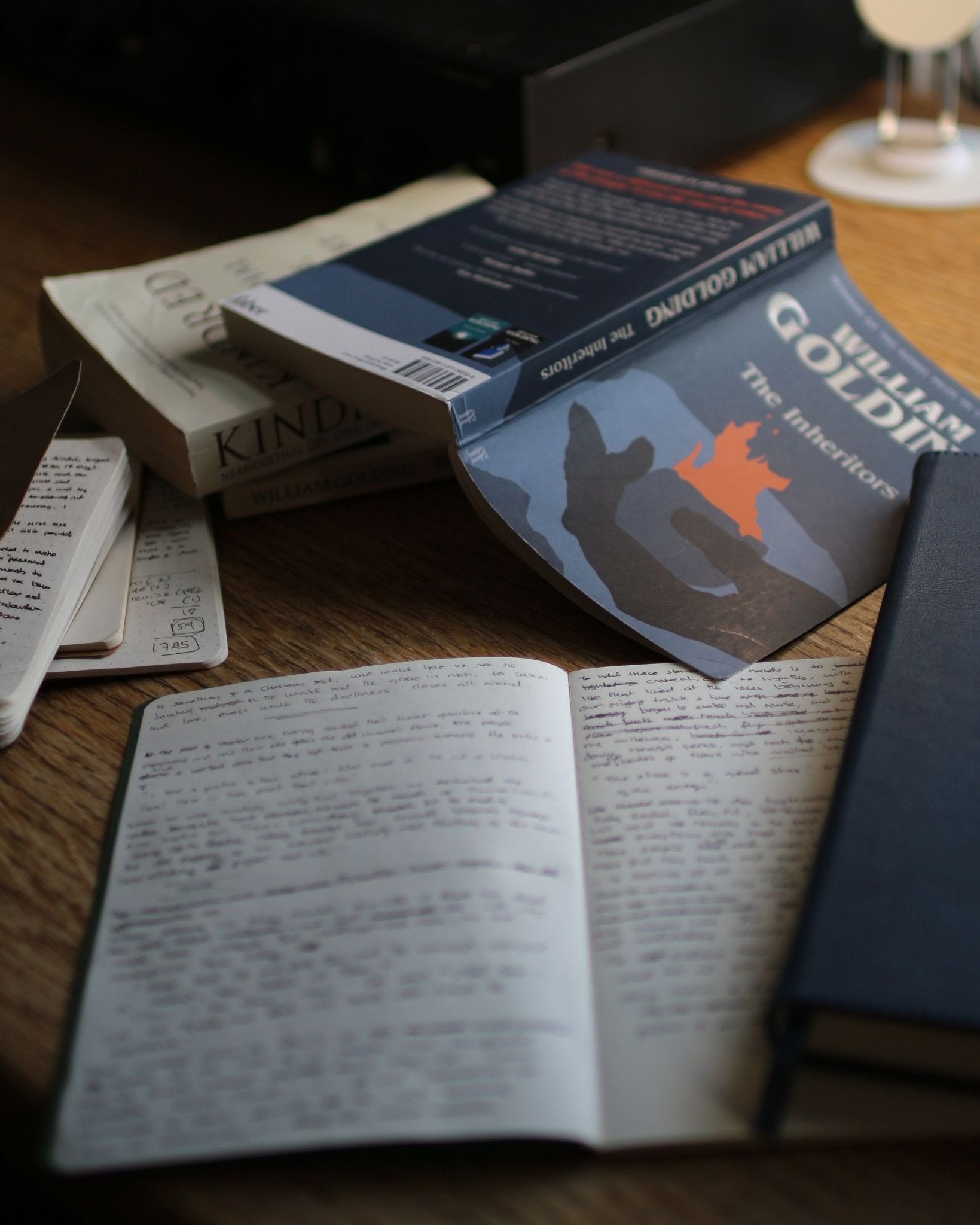
Ordinarily, no, I don’t take deliberate notes for a book. The story, style, and ideas inevitably seep into whatever I am writing at the time, but I don’t take systematic notes. I just read for the joy of it, occasionally underlining something and making a mental note to return to anything I find particularly interesting. I usually forget.
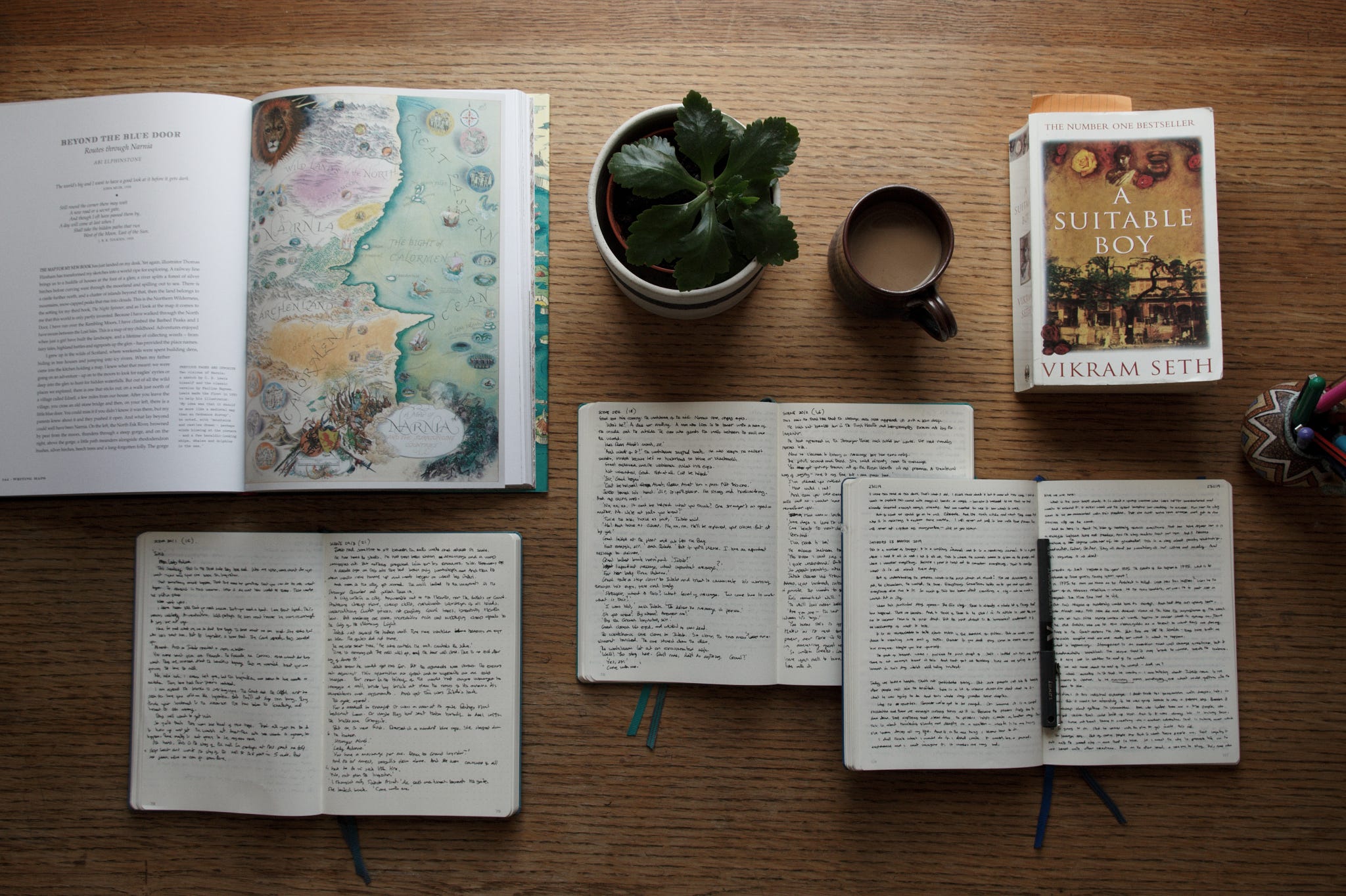
The slow read-alongs at Footnotes & Tangents are different. There, each book is a more careful re-read, and I am always working towards a weekly post. I annotate the text and make notes on areas for discussion and research.
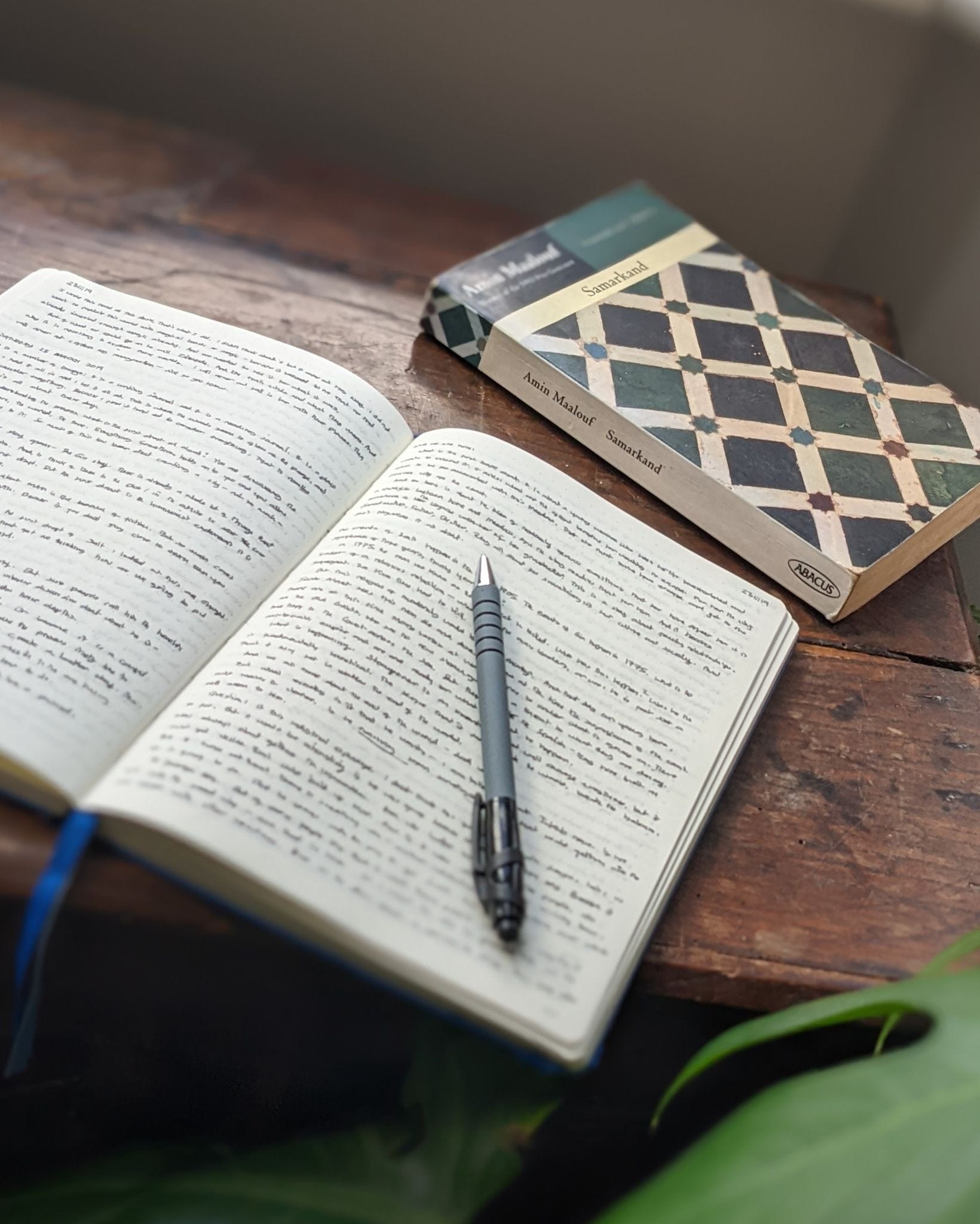
I’m not attached to any special materials. Pencil will do; pen is better. My handwriting is tiny, so a fine liner of some kind is best. Since my schooldays, I’ve been using a black Pilot V5 0.5. I think it’s because my Dad uses them (he was a school teacher). They do the job. I like dotted paper. I try to do as much of my work away from a computer screen – not always successfully. This year, I got a BYOK typewriter for distraction-free work, and I’m trying to use that more.
How do you keep track of what you want to read?
I don’t! Perhaps I should, but all my attempts to make lists and keep track of books have fallen out of use. If a book keeps popping up on my radar, I will eventually read it, but there is no system.
Where do you get ideas about what to read?
Books suggest other books, so the more you read, the more books will present themselves. I especially enjoy our slow reads for this reason, as they give us the opportunity to pick up adjacent and related texts that I would otherwise never have read. For example, Penelope Fitzgerald’s The Blue Flower led me to Andrea Wulf’s Magnificent Rebels, the story of the Jena School of early German Romanticism.
Once a month, I ask my Substack community what they are reading and what books they would like to read with us. Last year, lots of people suggested AS Byatt’s Possession. I read it and loved it, then read Byatt’s The Children’s Book and loved it even more – so much so that we’re starting a slow read of it in September.
PKG: I am feeling a VERY strong urge to join this slow read.
Podcasts are great for book recommendations. Last year, I binged episodes of Backlisted and discovered some superlative books: Sylvia Townsend Warner’s Lolly Willowes, Ulverton by Adam Thorpe, and Russell Hoban’s Riddley Walker. Those last two need the slow-read treatment at some point – magnificent magical books.
How do you decide what to read next? Are you a mood-reader or a planner?
I’d say I read best from my gut. I need to feel excited and inspired by the next book, and plans take out all the impulsive spontaneity of reading. A few years ago, I did attempt a Read the World project, picking a handful of books from each country I “visited”. I discovered a lot of interesting authors this way – Viet Thanh Nguyen and Tash Aw, for example – but my reading plans are always blown off course by whims and sudden squalls of curiosity.
It’s a bit ironic then that this solitary, chaotic, mood-reader has become the accidental host of slow, organised read-alongs. I have often set the reading schedule a year in advance, essentially planning a significant portion of my reading far into the future. This may go against my nature, but it does open up all kinds of possibilities for communal, close and intentional reading that I would otherwise miss out on. I read extensively around our set reading, discovering more books and thinking about future slow-read projects.
When people ask me how come I read as much as I do, I frequently just give them a list of things that I don’t do as regularly as I probably should: exercise, clean house, spend time with friends. What do you choose NOT to do in favour of reading?
I’m not sure if there is anything I SHOULD be doing. Listening to audiobooks means I can do all those tedious activities like exercise and cleaning while also reading. But there’s stuff I wish I did more of, but I choose to read instead. In particular, watching TV and films and playing computer games.
If I had my life three times over, I’m sure I would get lost in box sets, watch three or four films a week, and idle away hours playing Civilisation. I haven’t played a game in years – they’re so addictive and immersive, and you lose all track of time. But so much fun! I’ve seen less than half a dozen films in the last year, if that. We went to see Nolan’s Odyssey last month, and it made me think we should do regular movie nights because there are so many films I haven’t seen. Oh, and music! There’s not enough music in my life.
Do you have any tips or advice for people who wish they were reading more?
I think, first, it is important not to give the impression that people should read more. Chronic, obsessive readers like ourselves can sound a bit pious and worthy when we get onto the subject of the benefits of reading. We enthuse so much about books that we forget that the reading life is one among many. There is nothing inherently inferior about choosing not to read, nor will reading necessarily make you a better, kinder, happier, more interesting person. I wish!
So step one is: don’t feel bad about how much you read. Don’t compare yourself to other readers out there, living lives wildly different to your own, with their own priorities and commitments. Start where you are and start small. Pick a book you really want to read. Find ten minutes a day when something like scrolling on social media can be replaced with a little reading. And start. It’s the hardest part, but it creates the habit and appetite for more.
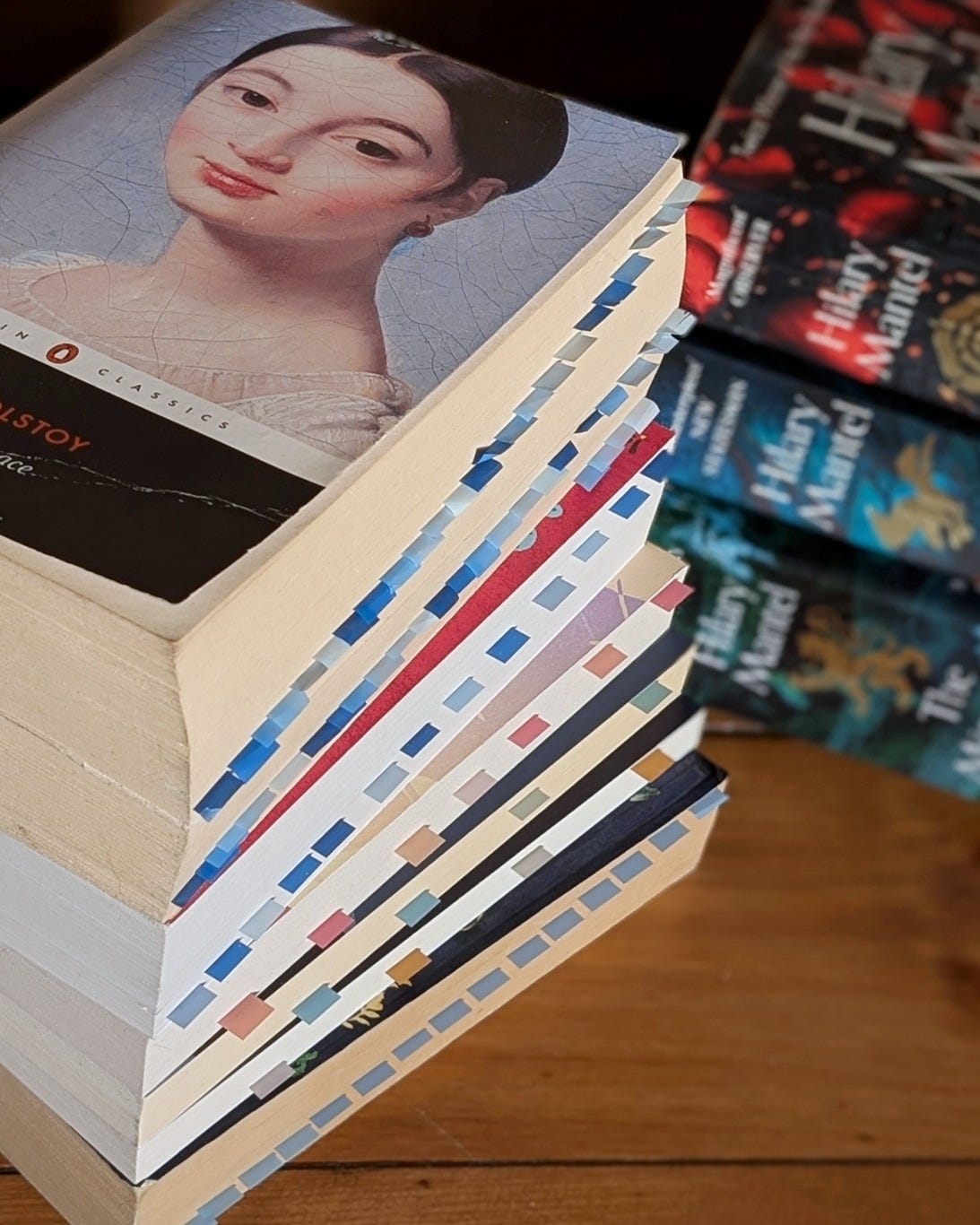
This has been the magic of reading Leo Tolstoy’s War and Peace, a chapter a day, with the community at Footnotes & Tangents. Tolstoy’s epic is made up of 361 short chapters. Many people who join our read-along have lost the habit or joy of reading. And when you’ve lost your reading mojo, the idea of completing a beast like War and Peace seems impossible. But each chapter is not only short but far easier and more enjoyable to read than you might imagine. The power of this daily habit and the sense of achievement upon finishing War and Peace have boosted many readers’ confidence and renewed their appetite to read more and more challenging books.
What books do you find yourself recommending over and over again?
Well, I’ve just mentioned one of them! Honestly, I think everyone should give War and Peace a chance. Depending on your preconceptions, you might expect a dense and dry nineteenth-century novel or a miserable Russian meditation on war and death. War and Peace is neither of these. It is light and pacey, full of humour, drama, and sharp observations on character and human nature. And it is an eminently humane and wise book about the meaning of life. Don’t be intimidated by its size, or those long Russian names! Pick it up today and thank me later.
Inevitably, I also recommend Hilary Mantel’s Thomas Cromwell trilogy, starting with Wolf Hall. Some wit dubbed our year-long slow read “Wolf Crawl”, and the name stuck. Perhaps you have no interest in historical fiction or scant knowledge of Tudor England. Well, these books may surprise you. They are a rags-to-riches rise-and-fall tale of power, ambition and revenge; a story about the public performance of self, the unreliability of memory, and the making of the modern world. It’s also a first-rate ghost story, and it will haunt you for the rest of your reading life

What I love so much about sharing thinking space with Simon Haisell is that he so beautifully shows a way of being a reader that allows you to take books very seriously without yourself as a reader very seriously. Who cares if your reading life is not perfect if it perfectly fits into your very real and imperfect life?
Which of Simon’s tips and practices resonated with you the most?
What’s one expectation about being a “good reader” you’d happily let go of?
Simon says his reading plans are often derailed by “whims and sudden squalls of curiosity.” What’s the last bookish tangent you followed, and where did it take you?
On her podcast Good Hang Amy Poelher always has a little pre-chat with a friend of her guests where they spend a few minutes gushing about all the ways in which they are completely wonderful. She says, let’s talk nicely behind their back. I love that so much and that’s my dream for our discussions of our Reading Life guests who so vulnerably open up about such personal aspects of the lives. Thank you for always being so kind and affirming!
Comments
Nothing yet. Say the first thing.
Sign in to join the conversation.