

It takes a lot of trial and error to discover what you like to read. I know it’s obvious on some level but it bears repeating — if you are not liking what you’re reading, you simply must try reading something, ANYTHING else and FAST. Because as you do, you will eventually stumble upon a figurative bookstore aisle where finally you will be surrounded by works that make sense to you.
Some of us are lucky to arrive at our intuition sooner than others. Those of us who are late-bloomers in identifying our literary preferences just get bonus points for not giving up on ourselves. I spent most of my 30s stumbling around like a drunk person, picking up this title and that… not all of it totally off the mark. But it wasn’t until two years ago that I felt that I had a reading PROJECT — a cohesive point of view, a sensibility — that I was after. As you can imagine, I feel very protective of my discovery. There is enormous pleasure in finally making sense to oneself as a reader.

Over the years — and especially after embarking on this newsletter — I have also learned a lot about the various ways in which one can be a reader. As a result, I have become increasingly suspicious of the puritanical effort to stay focused on a specific genre, tradition or type of literature long enough to become recognizable for it. Some of that pressure, I think, is connected to a broader capitalist logic around productivity. A focused reader is a classifiable reader, they are easier to understand. And once a reading life becomes legible, it also becomes easier to convert into output: criticism, recommendations, expertise, content, a brand.
A reader who reads across genres is more of a wild card. A mix of high and low reading signals a willingness to entertain reading for work AND for pleasure, for discernment AND escape, for education AND entertainment. That kind of reader may be harder to summarize — and therefore harder to package. In other words, a diverse reader is not only not behaving like a worker, reading with an eye toward output but she is also a less predictable consumer. A focused reader is an understandable consumer, a classifiable consumer, a targetable consumer. Once your taste becomes legible, someone can SELL to you — and, increasingly, your own reading can be turned into something you sell to others.
Either way — what may make you appear a “better,” more serious reader to “the culture” is also what might be putting limits on what you allow yourself to read and how. In a way, being a “better,” more professionalized reader may be making you a less free reader, beholden to the invisible hand of the algorithm.
I have definitely grappled with the idea of embracing my current hyperfixations with the awareness that a) some of the particular reading I tend to gravitate toward in the moment can be quite challenging both intellectually and emotionally
and b) I may simply be cutting myself out of interesting reading that can be fulfilling in different ways. Not to mention the tinges of embarrassment I carry around taking my reading and myself too damn seriously.
My baby-attempts at identifying reading that is smart but not exhausting have yielded mixed results, with my most famous failure including my foray into trying to appreciate romance. Which — spoiler alert — did not work for me and only made me retreat deep into the familiar territory of odd, artistic and impenetrable literary fiction.
The best readers that I love, trust and admire all seem to allow themselves to read “off-season:”
After two years of talking with serious readers, I have noticed that the best ones have a go-to genre that they read when needing to step away from the main stream of things. Amor Towles loves to read suspense series during the summer. Deborah Craytor started a trend during one of our early community zooms by getting everyone excited about reading horror. Celine Nguyen, who is one of the best known book nerds on Substack, shared in her Reading Life interview that embarrassingly-not-embarrassingly she loves to read self-help.
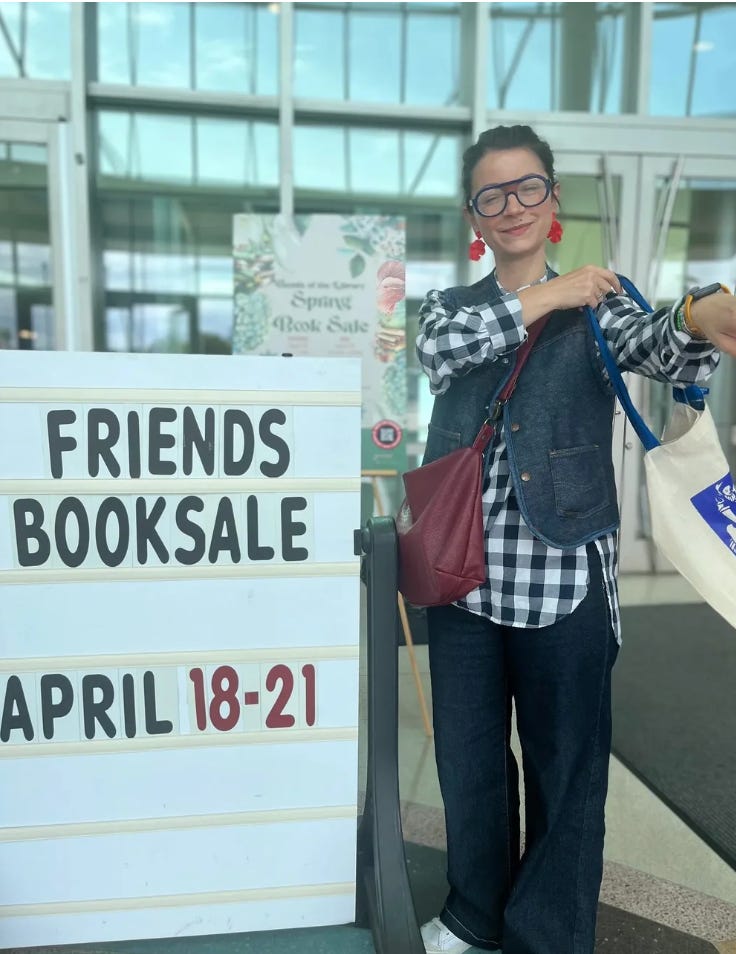
Every time I go to my local Friends of the Library sale, I watch patrons walking out with a stack of Lee Child, Kate Atkinson or John Grisham novels and my heart feels this pang that all they have to do to close the distance between current state and perfect state is to make it home and brew a cup of coffee. I think I envy their ease. They know what they like, they buy six of them, they go home. Nobody appears to be standing in the parking lot asking whether Jack Reacher sufficiently coheres with their intellectual project.
When the New York Times posted their list of the 50 Best Thrillers of the 21st Century, I was intrigued. To build the list, the Book Review sent ballots to novelists, editors, booksellers, librarians and other book lovers, asking them: What are the 10 best thrillers published since 2000?
Freida McFadden and Lee Child took part. So did S.A. Cosby, Gillian Flynn, John Grisham, Alyssa Cole, Stephen King and hundreds of others. Readers can also participate by voting for their top picks.
Here are gift links to the project, c/o The NY Times:
Even though I was familiar with several of the titles on the long list, I had only read a small subset of them and, after spending some time with the final list of 50, I felt compelled to reach out to the Book Review editors with some questions. I was grateful to receive very thoughtful responses from New York Times Book Review Deputy Editor Tina Jordan, which I am sharing below in full and would love to discuss:
Many of my readers primarily read literary fiction, but they’re also curious about what they should reach for when they want reading to feel effortless and immersive. What separates a truly great thriller from one that’s simply a page-turner?
The elements that elevate a thriller are the same elements that elevate any piece of great literature: excellent writing, originality, the author’s skill in grappling with complex moral issues.
There are so many different kinds of books that fall under the thriller umbrella: classic mysteries, courtroom dramas, psychological thrillers, cozies, espionage fiction, crime novels. What these have in common, of course, is that they’re plot driven. Does that make them all “simply page-turners”? I would argue that the answer to that is no: The best ones are much, much more than that.
Do you think readers should have an “offseason” in their reading lives? I’m fascinated by the books we choose when we’re tired, stressed, traveling, or simply don’t want to work so hard as readers. Do you see thrillers filling that role, or do you think the best thrillers demand just as much from readers — just in different ways?
Pick up John le Carré, Tana French, Lawrence Osborne or Marlon James, and you’ll find books that demand just as much from a reader as traditional literary fiction. But at the same time, the genre also offers fantastic stories that are pure enjoyment.
What we reach for when we’re tired or traveling is personal. My own comfort picks range from midcentury spy novels and Sarah Caudwell mysteries to Lee Child and Sarah Waters. Whether someone turns to suspense, romance or fantasy, it’s not about working less, but enjoying the storytelling.
Which 3 titles from this list would you specifically recommend to someone who reads mostly literary fiction and wants permission to downshift, without it feeling like a lesser choice?
I disagree that reading a thriller would be a “downshift” for someone who reads mostly literary fiction. Great storytelling is great storytelling, regardless of the genre. High concept suspense and literary craft aren’t mutually exclusive, and many of the finest modern novels operate in both spaces. In fact, two of the novels on this list won Pulitzers (The Sympathizer and The Goldfinch) and two others were shortlisted for the Booker Prize (Room and Fingersmith). If someone who reads mostly literary fiction wants to try a book with excellent prose and depth, I would recommend starting with those.

I must own up to the fact that as I read my own questions back, they absolutely reek of genre-ism. Tina Jordan is basically telling me, RESPECTFULLY, you have no idea what you are talking about. Which is absolutely fair. She is actually disagreeing with the very premise of my questions.
I truly fear that as readers we become less free when we organize ourselves around perceived seriousness and cultural prestige… but then, when I had my chance to talk to people at the ultimate prestige literary institution, I couldn’t help but question which thrillers were respectable enough for a literary-fiction reader. The irony.
Over the last two years I have been working hard on building a reading life based around curiosity, pleasure and personal appetite rather than external validation. I have thought endlessly about the difference between books that are “good” and books that are good for me. I have written about reading taste and intellectual insecurity and all the invisible systems of hierarchy and status that get in the way of a truly authentic reading life. And yet, apparently, so much of the language in my questions is the language of labor: “work harder,” “downshift,” “off-season.” Even while arguing that reading should resist the logic of productivity, I still measure books by how much labor I imagine they require of me. To be clear, I don’t think the answer is to begin pretending to enjoy genres that simply do not work for you. But I definitely do not want to become the kind of reader who knows in advance what she is allowed to like.
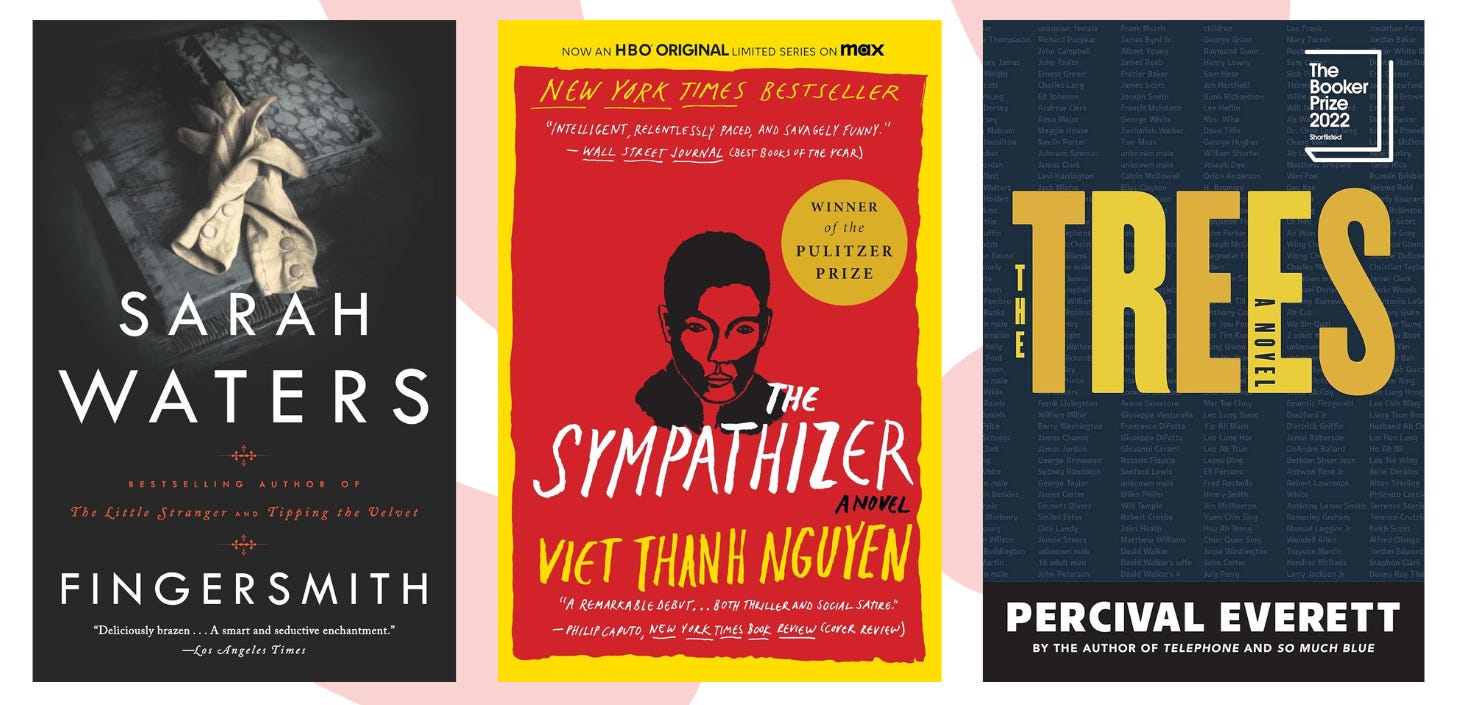
I do appreciate the perspective of the Times’ list because it introduces readers to a broad swath of writing generally united by its focus on plot-driven suspense and storytelling. Of Tina’s recommendations, I have already read Room and The Goldfinch, but I am adding Fingersmith and The Sympathizer to my list right away, as well as The Trees by Percival Everett, which did not make the final 50 but I know would be both well written and morally complex. I know that people on the internet generally love to argue over the accuracy or utility of this type of list — why these titles, why these voters, etc. — but I appreciate this genre-focused list more than the broader “Great Books” list that preceded it.
As I attempt to widen my scope, I still find genre-based scaffolding helpful. There is something about testing out genres, one at a time, that appeals to the social scientist in me. I am obviously making no attempts to be scientifically accurate or objective, but I do want to enter into experimentation with a commitment to fairness and rigor. I will attempt to introduce chaos into my reading mix, but will want to do so in an orderly manner.
Has knowing your taste ever felt limiting?
When do you feel the most free as a reader? When do you feel the happiest and most satisfied?
Thriller people: if you could give a literary-fiction reader three books to change her mind, what would they be? Did you like The NY Times list?
Comments
Nothing yet. Say the first thing.
Sign in to join the conversation.