
In what turned out to be a completely unforeseen coincidence, Rome, in 2010, opened two museums for contemporary art. Both museums were by star architects. Fun fact, Zaha Hadid (1950-2016) and Odile Decq (1955-) were also both internationally acclaimed female architects. For each to have opened a major museum project in the same city in the same year is noteworthy in itself.
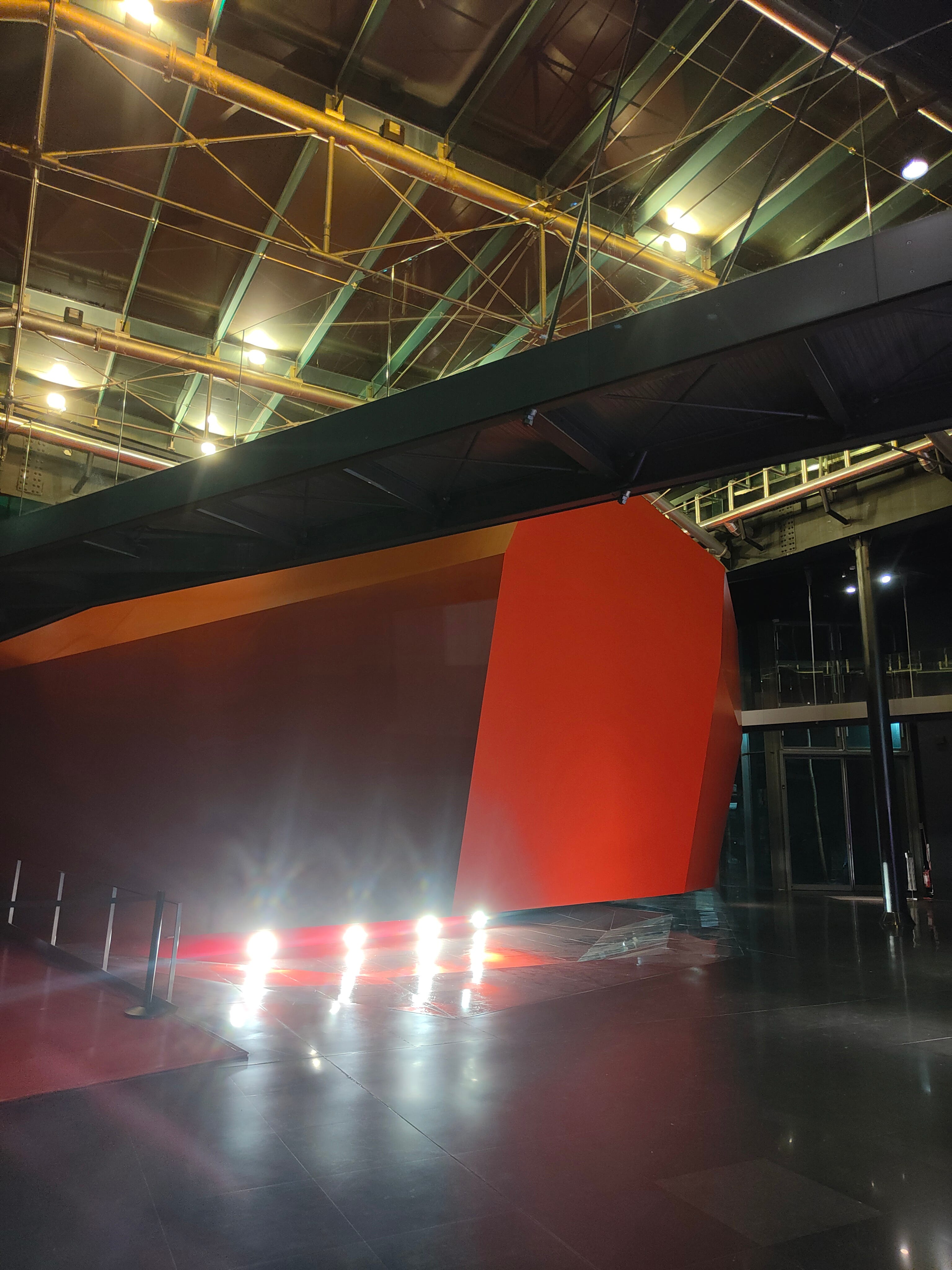
But that’s where the two projects diverge. Zaha Hadid’s MAXXI, possibly one of her best and most luminous designs, is a sinewy concrete structure piggy backed onto a ex-military barrack that reaches up to the sky. Odile Decq’s design for MACRO, on the other hand, began with a much more complex urban brief: she was obliged to reconcile a former industrial brewery on one end of the urban block with an odd anvil shaped void that abruptly turns the corner towards the other. Decq’s solution was quite ingenious, the whole thing pivots around a singular red diamond shaped auditorium, but the architectural solution, including a central covered courtyard and series of sprawling roof terraces doesn’t give the composition a sense of lightness or transparency. Rather, the museum comes off as strangely dark and gloomy.
The place, I have to admit, is quite goth, and arguably the strangeness of the architecture might have a role in the institution’s difficult path to success. Like the Addams’ family victorian mansion, the MACRO has a history of unsettling its occupants, and gives trepidations to all those who have tried to tame its spaces and entertain its public. As time has shown, the MACRO is an extremely challenging place to mount full scale exhibitions.
But strangely enough, I find these challenges liberating. The ambience here is unlike any other museum space I know, there is none of that satiating happiness that institutions like to promote; nor are there any of those Disney-world fantasies that drive today’s public cultural expectations. Ever since I can remember coming to the MACRO it has always been something of an uncanny experience. And, maybe its just me, but I value the way the MACRO entertains no preconceptions.
A new director has arrived on the scene,— Cristiana Perrella, and with her a new program of events. After a long spell of time the caffe and roof terrace restaurant have now reopened, spaces have been repurposed and Rome’s mayor Gualtieri in his push to give students much needed study areas, has designated specific room for their needs. Entry to the exhibitions spaces is no longer free, but ticket prices are relatively reasonable. I mention all this because the MACRO has repopulated after a difficult period where attendance was at a bare minimum.
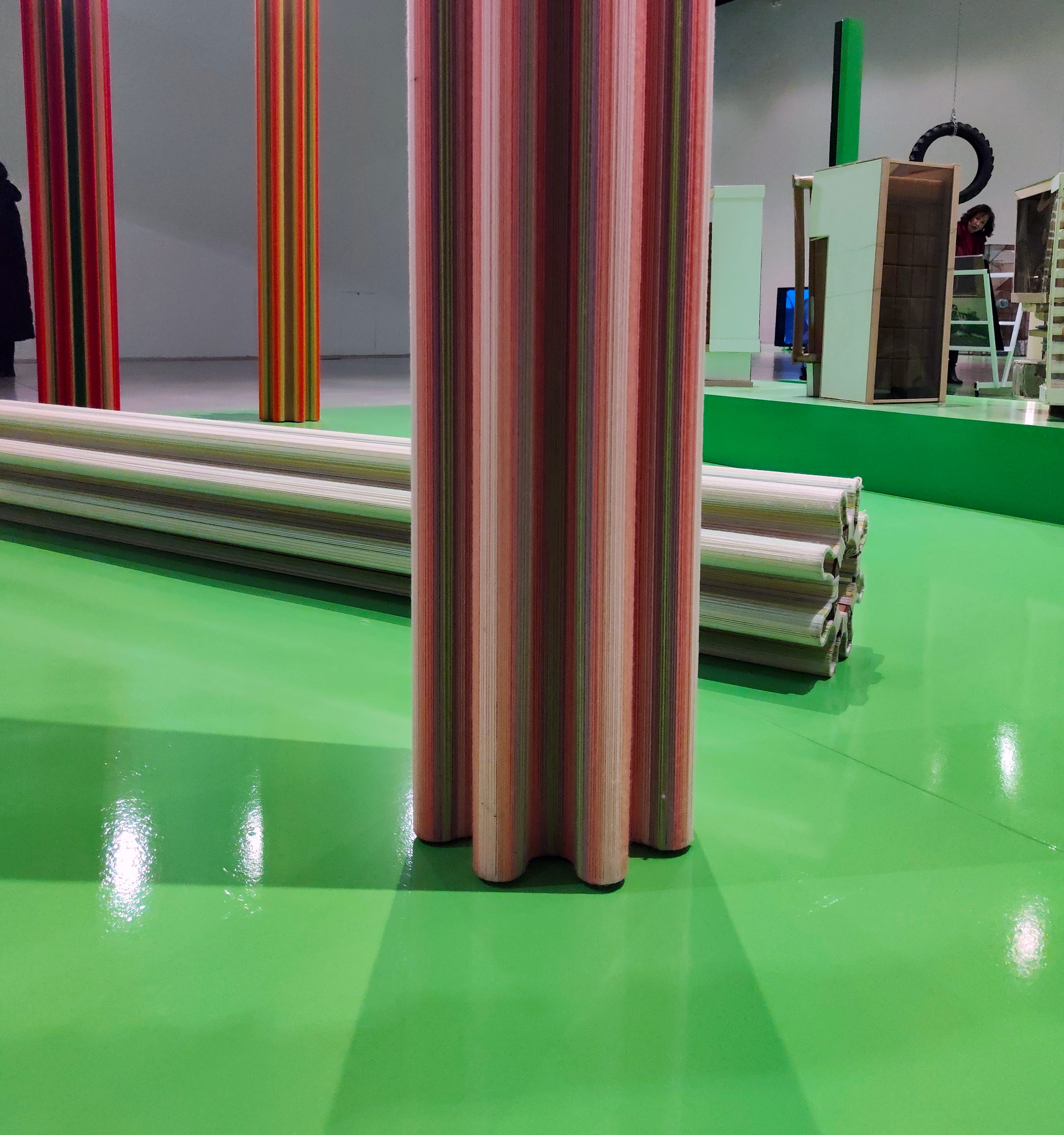
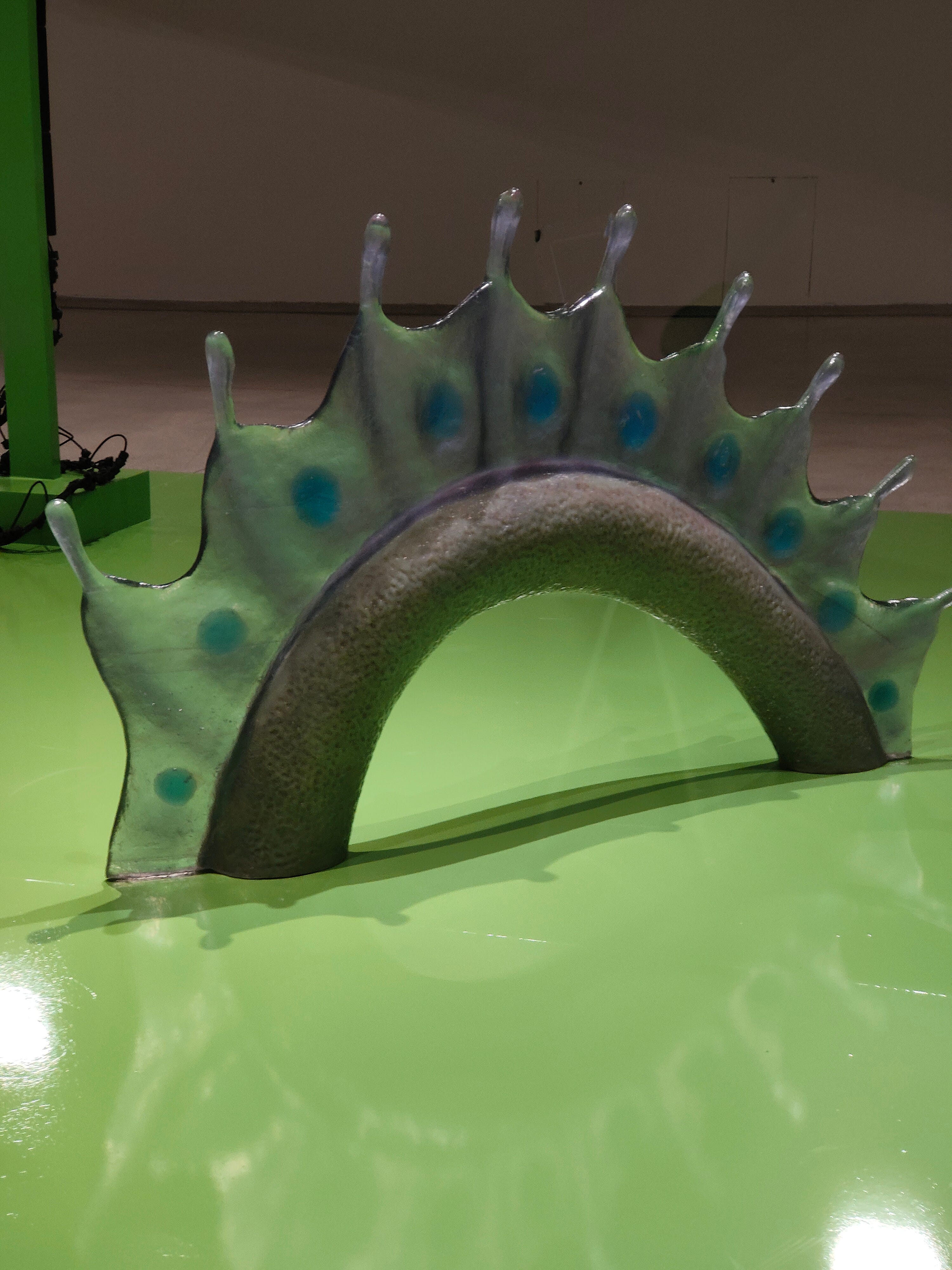
The series of three exhibitions and correlated events now open to the public reflect this newly expanded program. UNAROMA, curated by Cristiana Perrella and the museum’s former director Luca Lo Pinto, runs until April 6, and features a selection of artists currently working in and around Rome. A “green screen tongue” painted on the gallery’s floor acts as a unifying stage device bringing together an eclectic assortment of paintings, video works, multi-media objects, ominous artifacts, and sound installations. Nothing adorns the walls in this immense gallery, making you feel like you are walking around in a strange unfamiliar landscape.
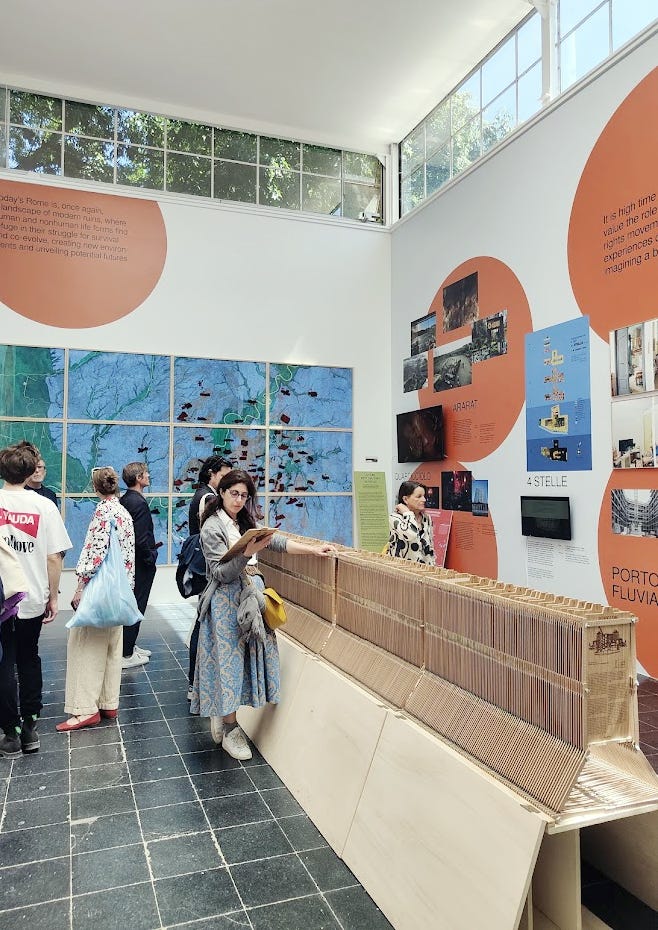
One flight up, inside the industrial wing of the museum is another vision of Rome, much more gritty and totally unconventional. On the invitation of Cristiana Perrello, the group Stalker presented the Roman half of the exhibition that occupied the Austrian Pavilion at the Architecture Biennale in Venice— Agency for Better Living— Vienna, Rome. Curated by Giulia Fiocca and Lorenzo Romito this reconfiguration, “Abitare le rovine del presente (Inhabiting the ruins of the present) running at the MACRO through March 22, brings together a more ample selection than was seen last year at the Venice Biennale. The premise in Venice was to provide contrasting approaches to housing- in Vienna, from the top down, and in Rome, from the bottom up. If Vienna guarantees all citizens the right to housing, in Rome that right has been forfeited to unregulated speculation.
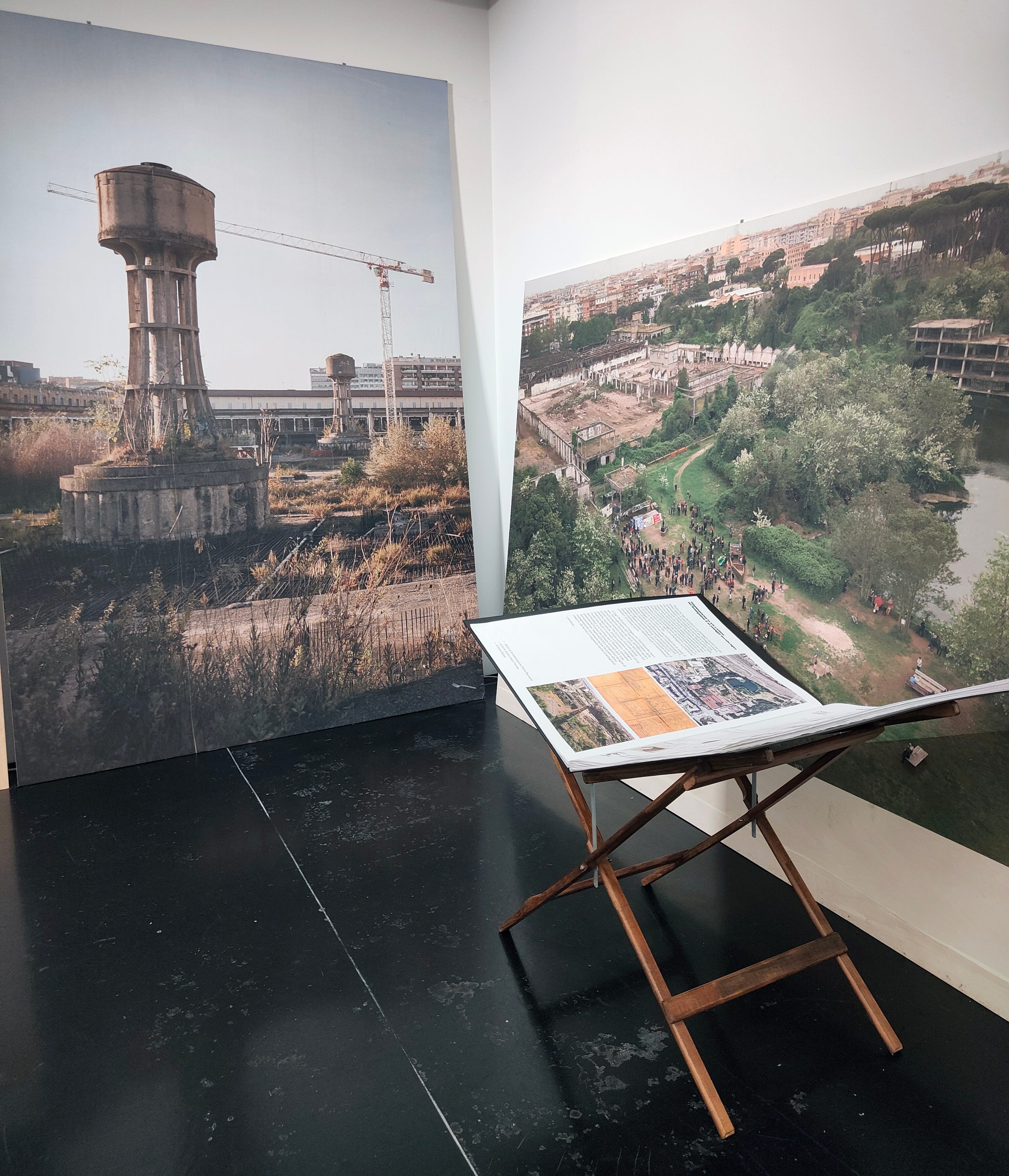
What you see happening in Rome, and at a scale unparalleled elsewhere in Europe, are well coordinated local community organizations that seek informal housing arrangements, including abandoned public or private buildings around Rome and its periphery. As Fiocca and Romito see it there is much that is positive about the informal housing settlements around Rome, as these collective actions succeed in shaping communities through mutually supportive activities.
“Rome,… according to the curators, is “a city unique in its ability to regenerate itself over time, becoming the starting point for exploring practices of reuse and rebirth. Its ruins—both material and symbolic—are interpreted as territories of possibility, where spontaneous forms of renaturalization and civil coexistence generate new urban and social ecologies.” *
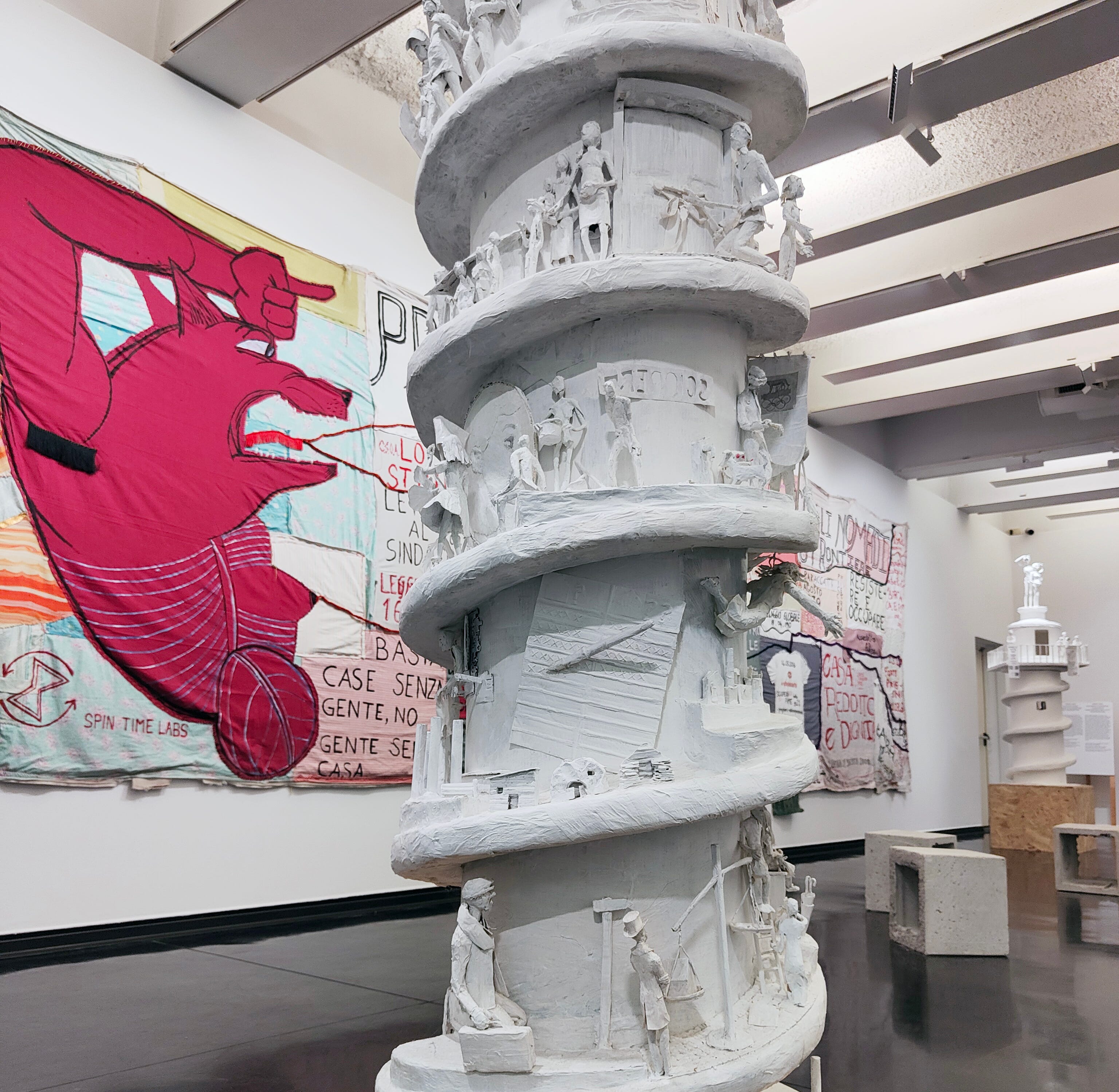
The two galleries are chock full of information on key examples of community initiatives, including the Bullicante Lake-ex Snia site that pried an abandoned factory site and an underground parking—turned lake— from private landowners with multiple violations for use as a municipal park; the ex-Mercati Generali a huge area once dedicated to the city’s produce markets that was to be converted into a cultural youth hub by the star architect Rem Koolhaas and then financially abandoned; and the Porto Fluviale building complex in the neighborhood of Testaccio, another informal housing site that was successfully renovated in partnership with the municipality without evicting its original tenants.
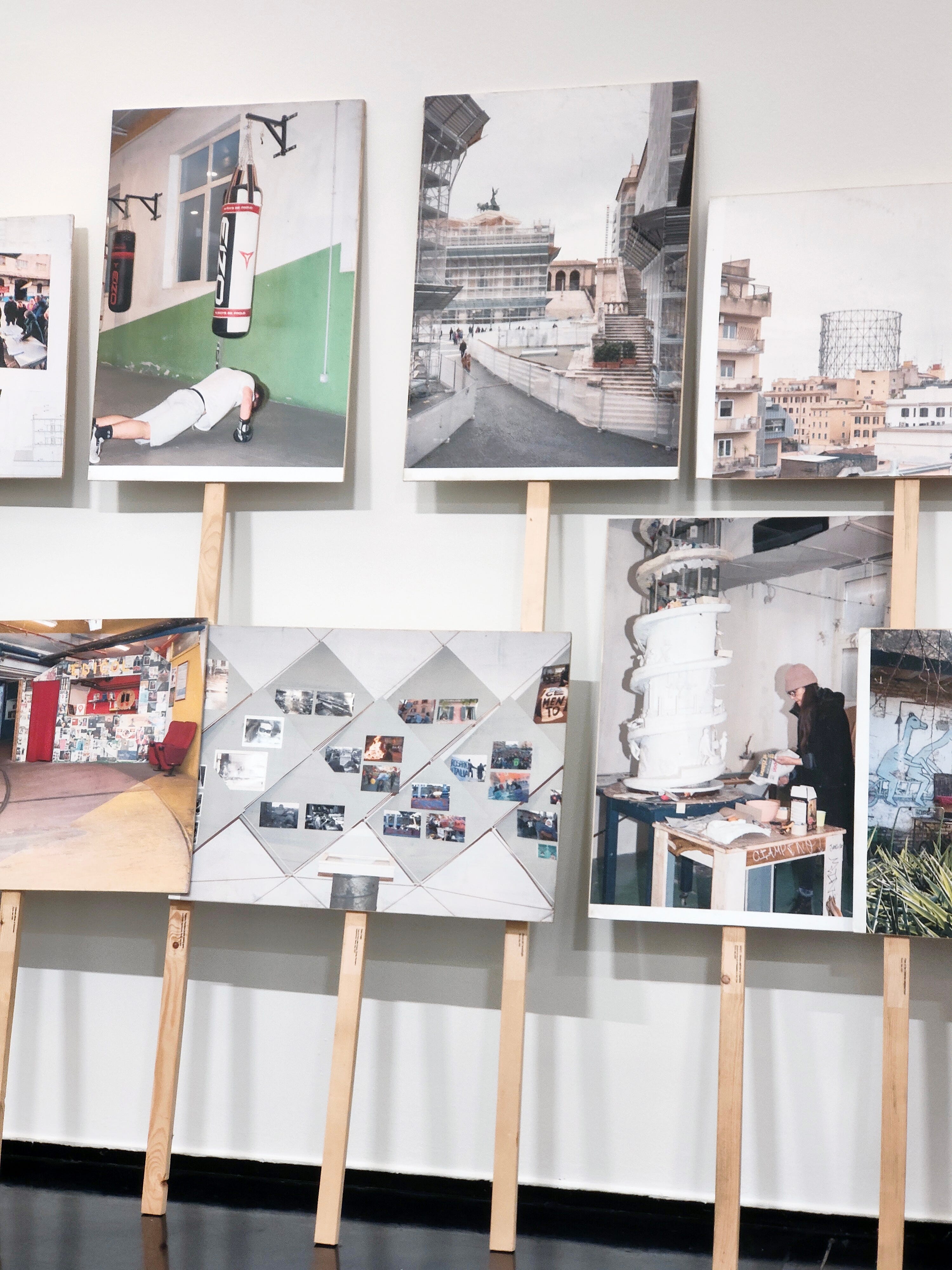
But despite the fact that these “ground-up” collective efforts are getting major national and international recognition, their futures remain precarious. While I am writing this newsletter, another major project that Stalker has been involved with over the last couple years, Spin Time, and probably one of the more successful informal housing communities in Rome is being threatened with eviction. The pressure is rising day per day while hundreds and hundreds of sympathizers from all over Rome are coming out to support Spin Time and the mostly immigrant families who have made the building their home. Its almost surreal to think that inside MACRO, the Contemporary Art Museum of Rome, owned and run by the city government, there is a whole gallery space dedicated to the very place that the city is in the process of closing.
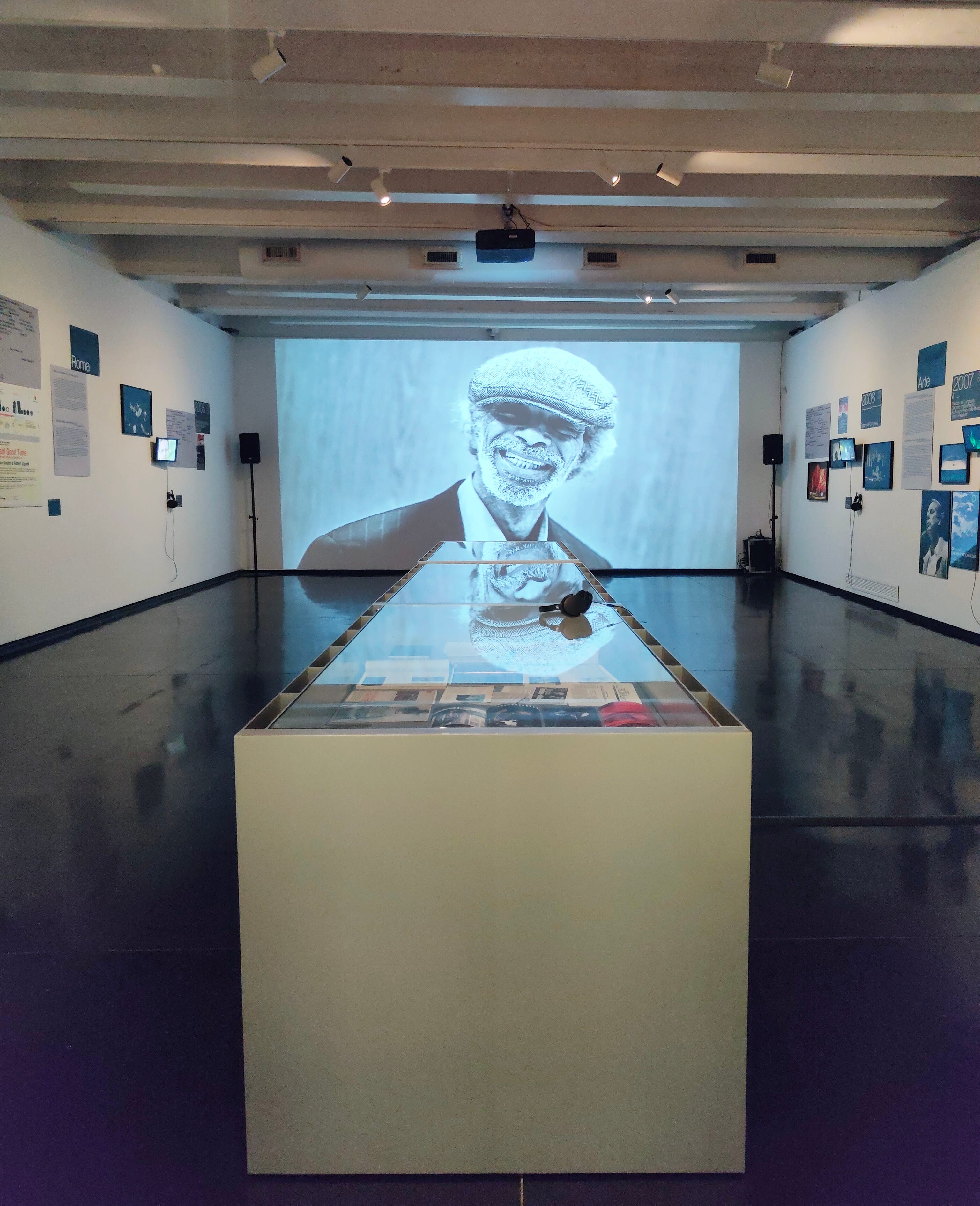
I cannot predict with certainty that this time around under MACRO’s new leadership the place will have any more luck holding the public’s interest but it might not matter much anyway. There is nothing wrong in visiting a place that can both make you uncomfortable and still be stimulating at the same time.
*translated by DeepL.
No posts
Comments
Nothing yet. Say the first thing.
Sign in to join the conversation.