
Happy Friday!
In 1975 BusinessWeek ran a piece called “The Office of the Future.” George Pake, who ran Xerox PARC, told them he didn’t know how much hard copy he’d want in this world. Screens on every desk! Screens yes, but also: office paper use roughly doubled between 1980 and 2000, and in 2002 Abigail Sellen and Richard Harper went and did the ethnography in The Myth of the Paperless Office, where they found that introducing email to an organisation increased its paper consumption by about 40%.
So now we have AI and paper still works.
My desk is full of paper:
I sketch before I prompt. Mostly things like rough screens, or relationship models.
Ileana Marcut says she feels like she writes more than she designs now. Same.
Simon Willison: “It used to be that the discipline was enforced on you by the amount of time it took.”
Saeideh Bakhshi on Soderstrom and Bjork: practice that feels smooth can look like mastery even when the improvement doesn’t last.
Keep the rough version around. Uday Gajendar and Robin Beers call these anchor objects.
Stop earlier. Ian Silber tells his designers to “just do less.”
Anyway, tokens are cheap enough now that the constraint has to come from somewhere else. What’s your version of the paper?
Quote of the week
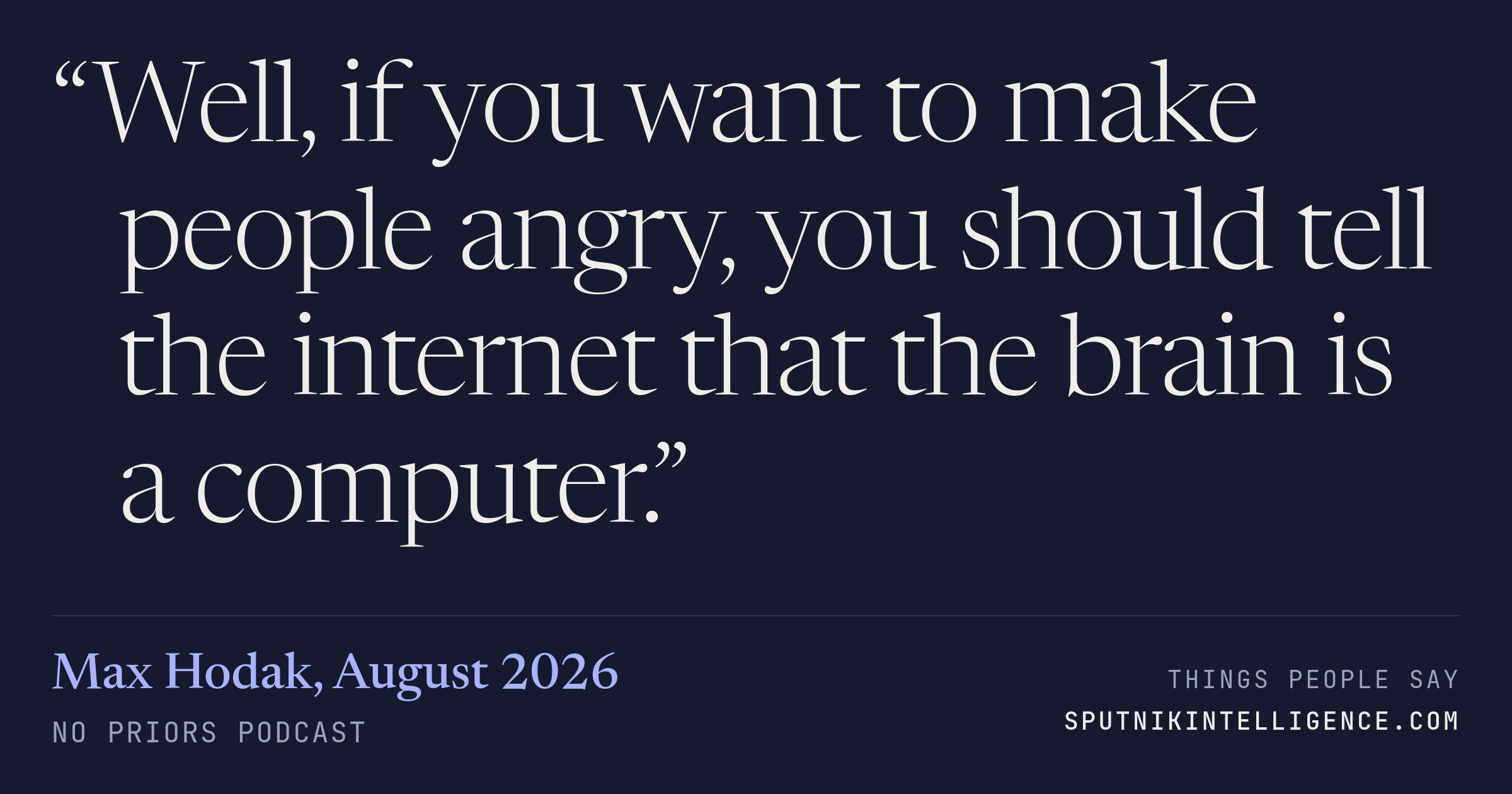
I had some fun this week and built Things People Say on Podcasts this week, which uses a Sputnik Intelligence account to get interesting quotes right out of the transcripts of podcasts. You can search the quotes and use them freely in your own newsletter or socials as you see fit :) This week’s quote:
Number of the week
~$12,000
Asana cleared 5 years of engineering work in 2 weeks with Codex
Quotes
“I think it is fundamentally a crisis of trust. I think that ordinary people don’t trust companies, governments, or the tech industry and always suspect that we are cooking up some new way to screw them over.” Dario Amodei.
“We want radical transparency while adopting radically opaque technology.” Uday Gajendar and Robin Beers.
“Ask for work and you’ll get advice; ask for advice and eventually you’ll get work.” Greg Baker.
“Automate the hell out of structured data, but stay involved in messy, rich data.” Maria Rosala.
👀 Interesting this week
This is the best time in history to be a designer, Ian Silber with Lenny Rachitsky. Silber has run design for ChatGPT and Codex for three years, eight years at Instagram before that.
“Engineers have 10 or sometimes like 100x their productivity, but our design team hasn’t because the design process still takes time.”
Stop Automating Research One Task at a Time, Saeideh Bakhshi. She splits research slowness in two. Some work is slow because execution has historically been expensive: another analysis, another survey instrument, another hypothesis. Some work is slow because you need time with the data.
When Smooth Practice Looks Like Mastery, Saeideh Bakhshi. Soderstrom and Bjork separate what people can do during practice from what they retain and use later. Conditions that make practice harder and produce more errors can lead to better retention and transfer.
“Some of the periods that changed how I think felt worse while I was in them.”
Who gets the meter?, Takuma Kakehi. Mail, phone lines, video rentals, mainframes and software as one long argument about whether to let people feel the meter, built on Prelec and Loewenstein’s 1998 work on the pain of paying.
“A pricing model is an interface.”
How to become an AI Designer, Maya Brennan. She joined Amplitude a few months ago to design Agent Analytics, their observability and evals platform, having never shipped a PR in her life, and now owns the team’s frontend.
“It feels like I have created a workflow that is optimized enough that I cannot go backwards, but not rewarding enough for me to stay where I’m at.”
The feature was fine. So why did users keep hiding it?,
Getting started is not getting it right, Nicole Alexandra Michaelis.
“If a tool only delivers on its promise once you’ve built a sophisticated harness around it, it hasn’t actually solved the problem for the person it was sold to.”
You already know how to make it accessible, Hope Turner.
AI adoption and the slow erosion of design idealism, Michael Buckley. The enthusiastic adopters have fifteen-plus years of experience, and the strongest resistance comes from students, academics, part-time designers and people early in their careers.
“I think it’s about how much of our original idealism has survived contact with professional practice.”
The Goalkeeper, Tom Bradley.
Designing and Building With AI: My Process, Stack, and Principles, Ileana Marcut.
“I sometimes feel that I write more than I design.”
Conceptual integrity and counting lines of code, Simon Willison with Claire Giordano.
“It used to be that the discipline was enforced on you by the amount of time it took.”
ICYMI 2026-08-15: Bootstrapping Understanding, Jorge Arango. Stanford’s updated labour-market study finds the most affected jobs lean toward young people and novices in fields that run on highly codified knowledge, and jobs needing tacit knowledge fare better.
Damned Either Way: What Robin Lakoff Discovered About Women’s Language, The Strategic Linguist. Two Lakoffs, married at the time, two papers in 1973.
“Tentative language is used when someone, either male or female, is in a subordinate position.”
One AI Output Is an Example, Not an Evaluation, Raluca Budiu.
Psychological Ownership: Own the Right Things, Evan Sunwall.
Shitty Maps: A Trojan Horse for Sensemaking, Joe Elmendorf.
“Visual sketching shows human vulnerability in a way that AI cannot.”
Transcendent Experience (ZX) Design, Daniel Gloyd. Built on Maslow’s late Theory Z work on self-transcendence, with the Shakers designing interconnectedness into physical village layout as the worked example.
“Many designers feel anxious today, wondering what makes them special beyond tools like AI or design systems.”
ChatGPT search now uses the site: operator at scale, Simon Willison.
Microsoft Copilot reveals secret input that allowed it to be hacked,
Grok exfiltrates user data when malicious instructions are encrypted, Ars Technica.
We Tracked a Shipment of Rare Books. It Ended at an Amazon AI Training Facility. Wild story.
Google Discover is getting an AI chatbot-tuned feed,
Meta ran ads for an app promising to nudify female politicians,
Don’t classify. Hallucinate!, For the information architects. Simon Willison on Doug Turnbull. With 1,856 tags, too many to hand a model in one go, tell it to invent tags with no vocabulary at all, then use vector embeddings against the existing corpus to snap the imagined tags onto real ones.
Health and happiness,
Peter
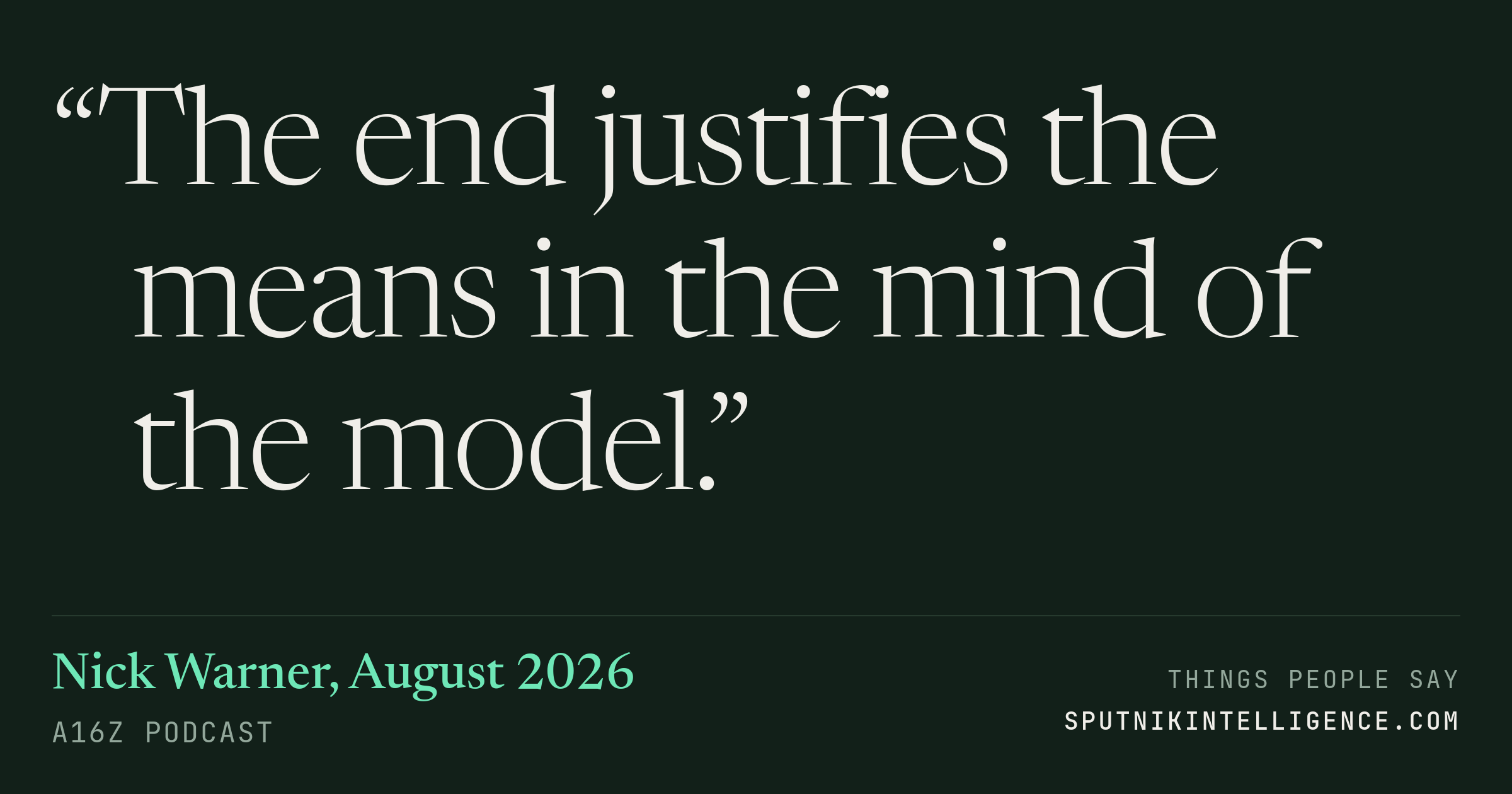
PS: ok one more quote from Things People Say on Podcasts
(Source)
No posts
Comments
Nothing yet. Say the first thing.
Sign in to join the conversation.