
First, while I try to label my political columns with “POLITICS,” not only is this one pretty obviously politics, making me question the need for such a label, but it also has a lot of Asian culture content mixed in too, again, making me question the need for a “POLITICS” label but for the completely opposite reason.
Second, do I really need a trigger warning to tell you that an essay with this title is going to discuss racism? And it might offend someone? Worse yet, it might make some people actually have to think and question their beliefs? Oh my.
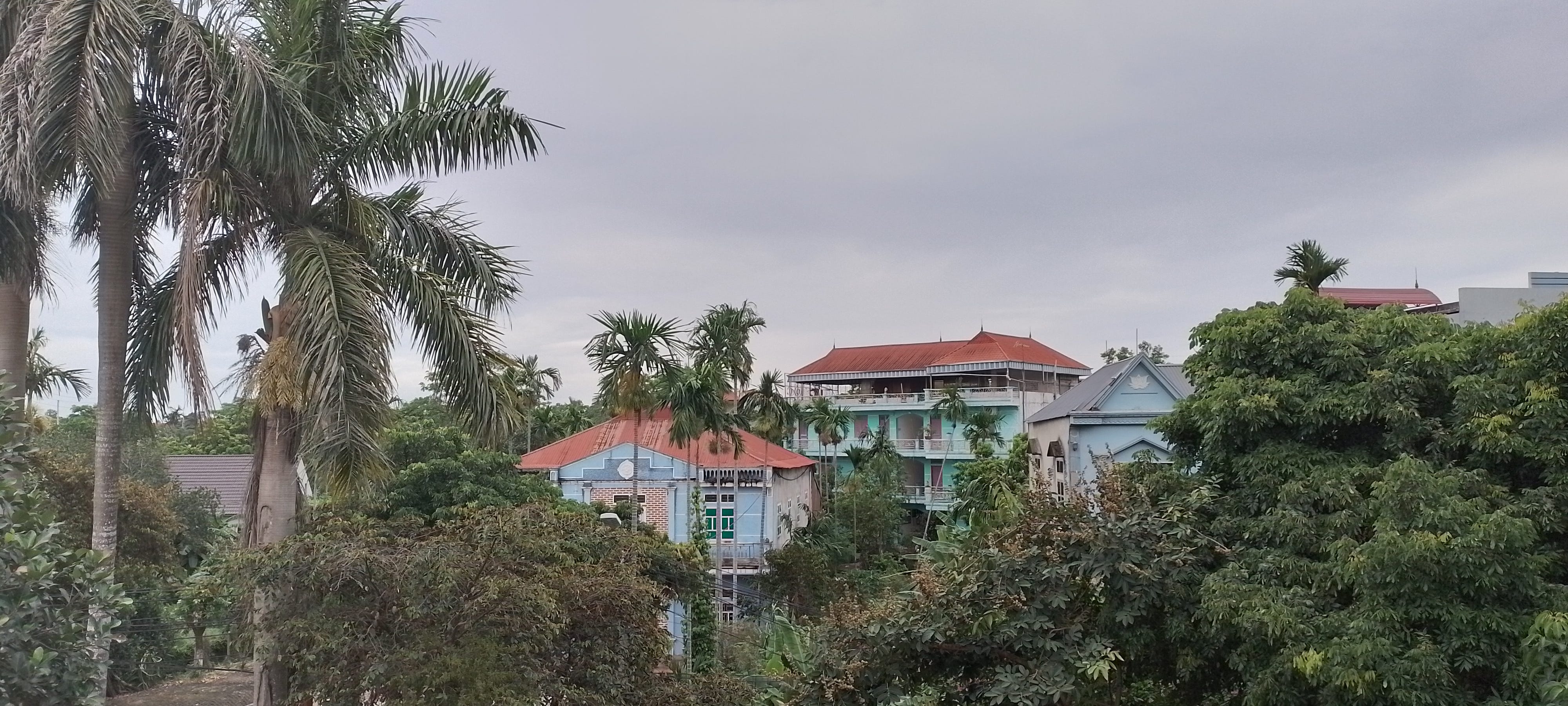
Vietnam
In the meantime . .
As I am on vacation, at last I have time to share some political thoughts that have been on my mind for some time. And many of these relate to not just where our country is now and where it is heading, but how we all got here. While having Donald J. Trump, an overtly racist and sexist, multi-convicted felon, serial swindler, pathological liar, and adjudicated sex offender as President of our nation is indeed a problem, it is also a symptom and evidence of other, more deeper problems that need to be looked at. Many of these have to do with race and the USA’s racialized and racist history and the ways, healthy and otherwise, that we as a nation respond to this history..
Today, I suffered multiple micro-aggressions and was “othered” because of my race by a large group of people who showed no regrets for othering me and never apologized and are likely to do it again. The horrors. The trauma. If only I could find a therapist who would take me, but failing that I’ll share the story now and pour out the trauma hoping to heal my deep seated psychological wounds through my writing.
As mentioned last time, I am now in Vietnam. I have left Hanoi and am visiting people, Vietnamese people, and pardon me if I keep things vague for obvious reasons, but I have not seen another Caucasian for over two days. Yesterday, a decision was made, not by me, to go to the local swimming pool and go swimming and I agreed to participate and go swimming. It was an outdoor pool, located on the grounds behind what appeared to be a very nice hotel. The hotel, as near as I can guess, gets much of its business from people who might wish to spend time in a small town with clean air and trees, something one does not see much in Hanoi or perhaps it caters to businesspeople seeking deals on agricultural products grown or raised in this region. Perhaps I will learn more on this later.
Anyone who wished could swim in the pool and it cost the equivalent of about 70 or 80 cents to swim. Everyone present, in or near the pool, was Vietnamese, and almost everyone swimming or playing in the pool was a pre-adolescent child. (I had not been told of this beforehand, but I did know that we were bringing children ourselves when we went to the pool. On the other hand, no one had told me that there would be very few adults in the pool and I would stick out for that reason alone. So if the idea of me, an adult man swimming in a pool of mostly children seems strange, well, while unintended and unplanned, here it really is not.
The pool was nice and clean, although, as would be expected, not all the safety standards used in the USA were adhered to. Several children, for instance, were swimming with life jackets on, and it was difficult to tell if there was a lifeguard on duty. There was a man watching, but he did not have swimming clothes on and disappeared without making an announcement when it looked like the weather would shift. and lightning might start.
So what do you think happens when a White guy enters a swimming pool full mostly of children around age nine in a region of Asia where one rarely sees White folks or any non-Asian folks? Well, as Asian children tend to do, first they stare (OH MY! OTHERED!!) then they say “Hello” in English. Now, I, of course, do speak English. I even read and write it a bit, as I hope you my readers have noticed, but I will tell you most of the Spanish speaking Central Americans I knew in Taiwan, and there were several, a story for another day perhaps, simply hated it when people assumed they were English speaking. (OH MY! STEREOTYPED BASED ON THE COLOR OF MY SKIN!!)
So multiple little children looked at me, confused to see a White guy in the local pool, as this is not something one normally sees in a small town in Vietnam, smiled at each other, and then one by one they got up the courage to approach me and say “Hello, how are you?” This is often the only English children this age know.
And they have been taught that this is what one does if one sees a non-Asian looking foreign person.
To expand a bit, in 2006, I was in Taiwan studying Mandarin and teaching English and there was an ad for cell phones that ran on the local TV. The pitch of the advertisement was that if you gave your child a cellphone then when they walked home from school, their mother could speak to them the whole trip and guide them through any difficulties they might encounter on the way home from school. And the ad, which naturally was all in Mandarin, featured a mother advising her elementary school child to be careful when crossing the streets, avoiding barking dogs, and so on, as they walked home from school. At one point the child says to her mother, again in Mandarin, “Mom, I see a foreign person.” (“媽媽,我看到一個外國人.”) and the mother promptly instructs the child to say “Hello, how are you?” (“說 ‘Hello, how are you?”)
So, while Taiwan is not Vietnam, anymore than France is Italy, in this that particular instruction spread internationally. So, this is what kids here are also told to do when they see a non-Asian foreign looking person. So they did.
Now if you are experienced in Asian cultures, then you know the best possible answer for little children in this situation is “I am fine, thank you. And you?”
And this is the best possible answer, simply because it is the one they are taught, they will hear when they take English lessons. Give them a different answer, and you will simply confuse them. In fact, back in the day, I knew one naughty young man in Taiwan, American I believe but he might have been Canadian, definitely not me, seriously, who thought it was great fun to respond to little Taiwanese children with phrases like “I am fine today, thank you. How are you today?” which was just enough off from the phrases they had been taught to confuse the poor little tykes and leave them all tongue tied and unsure of how to respond. Naughty, naughty young foreign guy, but he found it hilarious and considered it an insightful illustration of the problems with Taiwanese English teaching methodology. But that’s a different issue.
So I was at this pool full of Vietnamese kids and several approached me and said “Hello, how are you?”
And each and every time they did, being an experienced Asian hand, I would reply “I am fine, thank you. And you?” And the kids would smile and swim away quite satisfied with the interaction.
And then some decided to go deeper, and they would approach me, and ask “What is your name?” And I would answer “My name is Peter. What is yours?”
And this pleased them even if none of them could get that final “R” in Peter correct. In fact, it pleased them so much that one little boy asked me my name three times, and each time I gave him this same answer. Why did I do that? Because I am experienced in living and travelling in Asia as a Caucasian and this is the best way to act when this happens. Really. Just act like the children expect a foreign person to act, answer the questions the nine year olds ask in the way that nine year olds expect them to be answered. This is an important part of interacting with foreign cultures. When it’s harmless, and you know what they expect, and you wish smooth sailing and to build groundwork for productive future interactions, just do what they expect a polite and good foreign person to do. That way they categorize you as a polite and good foreign person and treat y you accordingly.
One kid, the same one who asked me my name three times, asked me something like “Can you in Vietnam?” which his little friend, I asked if it was his sister and they said “No,” helped him correct. A discussion with her in the Vietnamese languge with her coaching him and egging him on, he returned and asked “Do you speak Vietnamese?” to which my usual answer in these situations is to say in my terrible accented Vietnamese “Toi khong biet noi Ting Viet” (“I don’t speak Vietnamese.”) if I am feeling silly or “Toi biet noi mot yit Ting Viet.” (“I speak a little Vietnamese.”) if I am not feeling silly. And he thought that was great. Then he swam off to play with his friend. (And, yes, the Vietnamese script should have tone markers on each vowel, but my word processor is not set up for that and this is probably more accurate anyway as I tend to get the tones all wrong anyway.)
One young boy even touched my arm, which is something that happens sometimes. If you are a Caucasian male in East Asia and are around a group of harmless, curious little Asian children, expect to have your arms touched. They won’t ask. You will just suddenly realize that a small child who has been staring at your arm is now touching the hair on your arm and stroking it. This seems very strange but is harmless. Just a few superficial strokes and then they disappear unless they go find a friend and come back to show them the strange foreign man with hair on his arms.
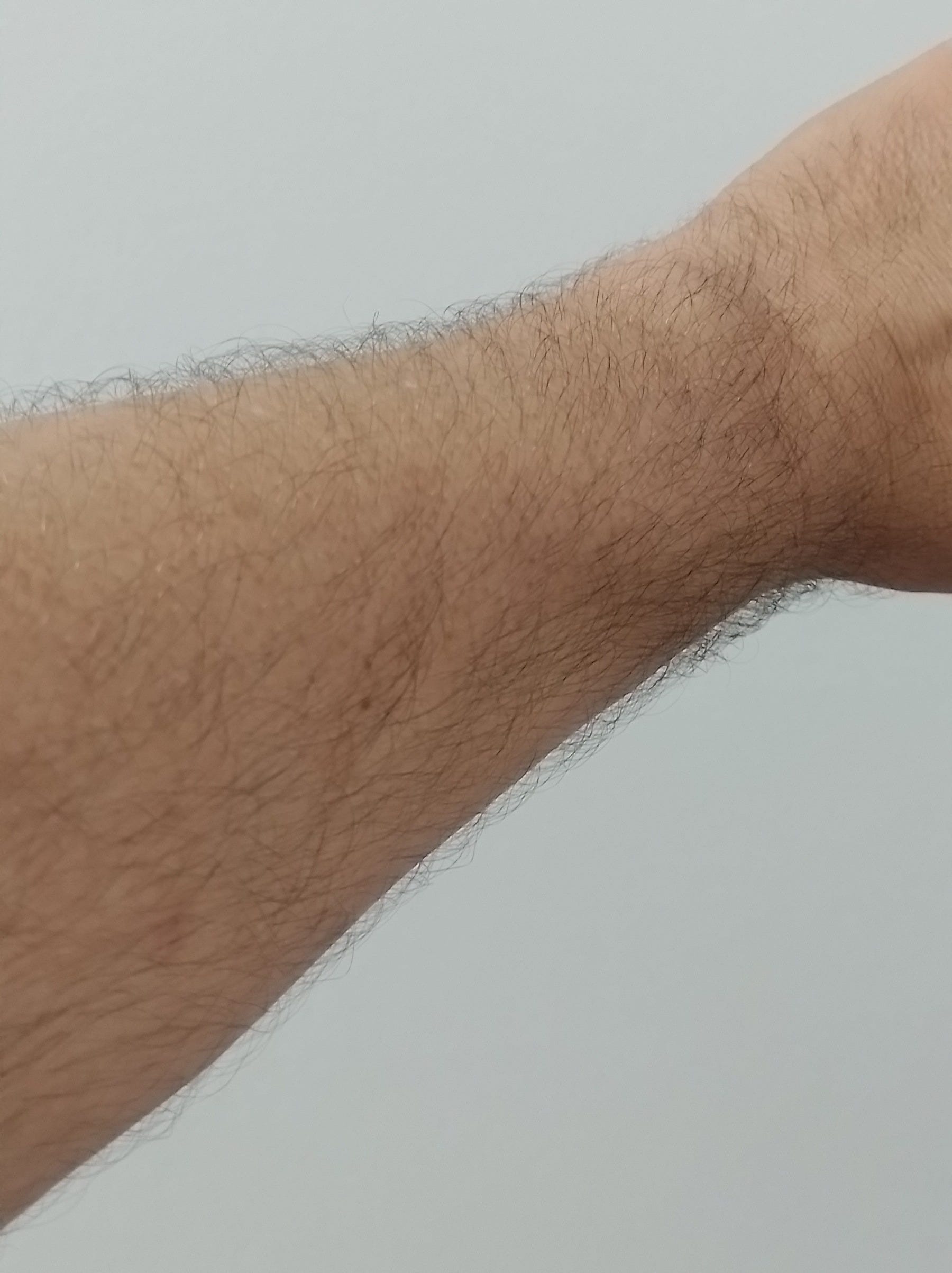
Pete’s not terribly but somewhat hirsute arm.
Caucasians, compared to Asians, are noticeably hairier. While no one in the USA would think twice about the hair on my arms, it’s really nothing out of the ordinary among us White males, to Asians, particularly little children who have never seen a man with hairy arms except on TV or in the movies, find arm hair a very strange and fascinating thing. In social situations, sometimes children, especially little children, will try to touch a White guy’s arms to see what it feels like. If they are feeling naughty, some children may comment “You look like a monkey” referring to the hair on my arms.
In such cases, do not react with anger. And, yes, where I come from to say to someone “People of your race look like monkeys” is considered fighting words and grounds for people being fired from their job if in a work setting, or getting punched and kicked in barroom settings, but forget all that.
Do not say something like “Oh yeah, you and your family and your entire country are the ones with the flat noses and flaring nostrils, buddy! Now who is it really that looks like a monkey, huh?” Do not do that. Just let it slide and laugh or smile and if you can’t do that, and I am 100% serious, if you find yourself in Asia be careful where you go or where long sleeves around kids, shave your arms if you have to (not that I have ever heard of anyone doing this, but you could), or something, whatever it takes, if you are unable to control yourself should this happen. Seriously, know your limits and stay out of trouble by avoiding hot button situations. Really.
If you are in Asia and a curious five year old reaches out and starts stroking your arm without warning, and it does and could happen if you are a normal, unshaved Caucasian male, let it slide. Nothing good comes from losing your temper over this, and if you do react angrily their parents, who generally have no idea at all as to what it is like to be treated this way, will have no empathy or respect for your outburst, and instead just view you as a potentially dangerous and definitely ill-mannered person who has just lost control and become hostile around their child. If you are lucky they will never let you around their child again. If you are not lucky, you could get hurt because few parents will allow a stranger to endanger or threaten their child. So just be chill when this happens.
Oh, I admit, the first time I was in Asia, I did not always act as I should have when this happened, and, yes, back in the USA this would be unbearably rude, disrespectful, and, yes, racist. (I know. I shocked the cash register clerk at the local Barnes and Noble Bookstore at home by telling her this story, —she had asked me what it was like to live in Shanghai, so I told her a couple stories— and she told me people in China should not act this way. Good luck with that ‘changing China’ thing, by the way. It has been tried before with very mixed results.) Well, here’s the thing. If this happens to you in Asia, you are not in the USA and should not act like you are in the USA. You are in Asia, and you should act like you are in Asia. In other words, just go with the flow.
As I have been typing, I have been wondering how they would suggest that one deal with unwanted “othering” attention from little children in a situation like this.
And I suspect their condescending answer would begin with a sigh and a sneer and then with “Well I would start by trying to build a world where that would not happen.” Which, for the record, is a bullshit answer even if it does let slip their not so secret desire for world dominance and forcing everyone everywhere globally to succumb to THEIR norms of behavior and THEIR ideas on morality. I mean, I would like to start by trying to build a world where I had a much higher income and Quentin Tarantino would beg me for the opportunity to take my ideas and turn them into movies, but I don’t think it’s going to happen anytime soon.
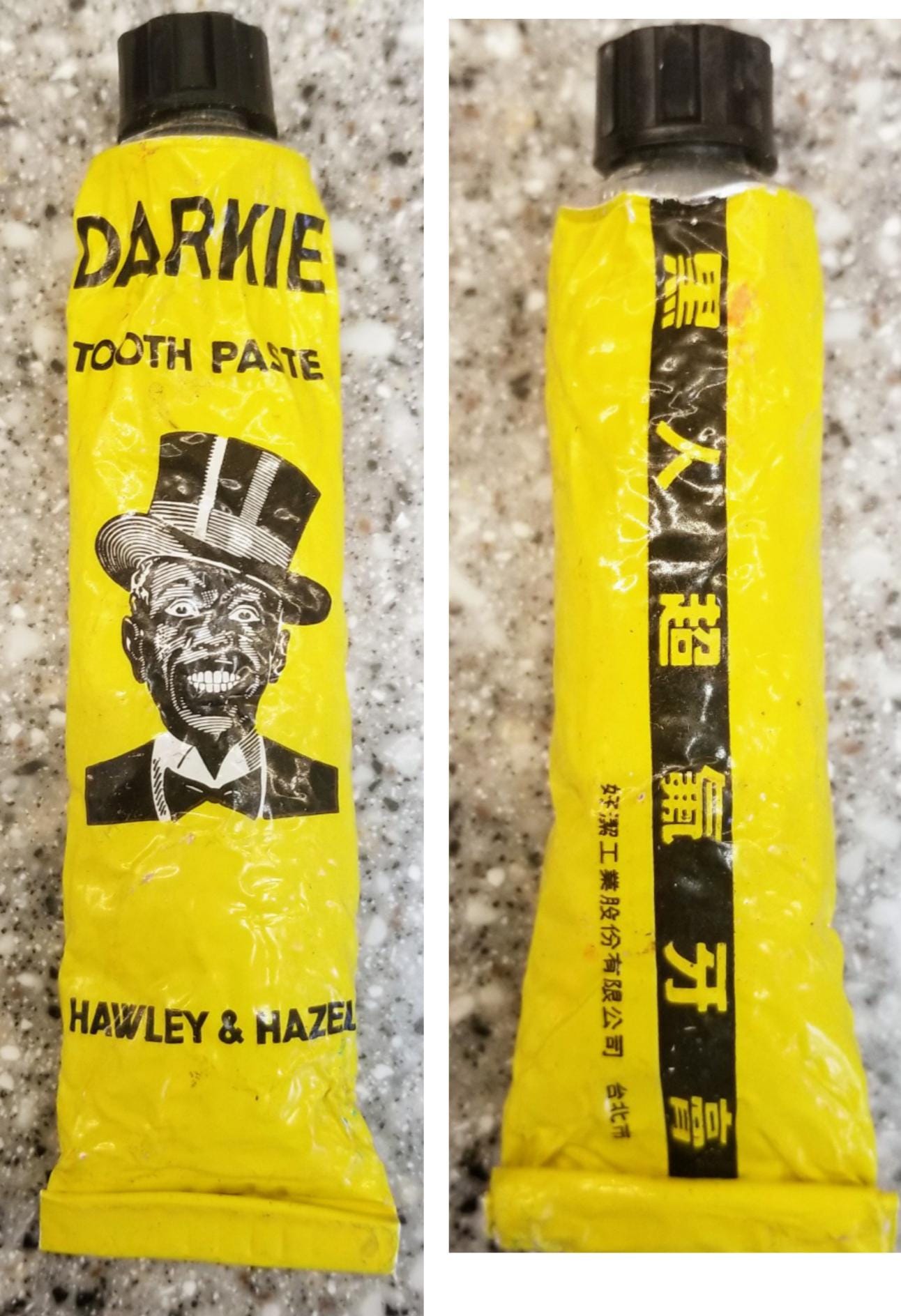
This is “Darkie Toothpaste.” In the 1980s, it was a popular toothpaste brand in Taiwan but in the early 1990s the multi-national corporation that produced this brand of toothpaste decided it was definitely time to phase it out or at least rebrand it. One of my Taiwanese acquaintances objected to this interference from abroad in their toothpaste brand choices at the time and insisted to me that this was an example of “Racism, anti-Asian racism,” and Asian people had a right to use whatever brand of toothpaste they wanted without outside people telling them what they were allowed to brush their teeth with. And, yes, she was serious. Was she correct? Now you tell me who was being racist? The evil White heterosexual male dominated corporations who said “Well, you know this stuff does sell in Taiwan and Asia, but it’s really making us look like truly sh*tty people and it’s long past time for that logo and English name to go so we must remove this product in this form from the Taiwanese and Asian market.” (and they did let the Chinese name which translates as “Black person toothpaste” stay.) Or were the Taiwanese who bought it the anti-Black racists when most of them had never actually met a Black person face to face and some did genuinely ask me, “But don’t Black people have shiny white teeth? Isn’t that true?” and they said it with no malice or hatred, just genuine curiosity.
And was it anti-Asian discrimination to remove it from the market? Or was my Taiwanese friend wrong-headed when she claimed it was? And before you answer, be aware she did have a genetic disability, and you would not wish to criticize someone who is differently abled, would you? And you know what else I just realized, and this is true, at one point she had a very close relationship with an African man, a racially Black man from Western Africa she met while studying in the USA, and I think they may have been engaged. (Asian women are often close lipped about their past relationships.) So does that mean she cannot be racist against Black people? Even if she uses this toothpaste?
And, yes, I completely admit that I am being an a*hole here with this part of my essay, but on the other hand, all of my facts are true and were believed by people who did not consider themselves racist. Just throw out some thoughts to ponder here.
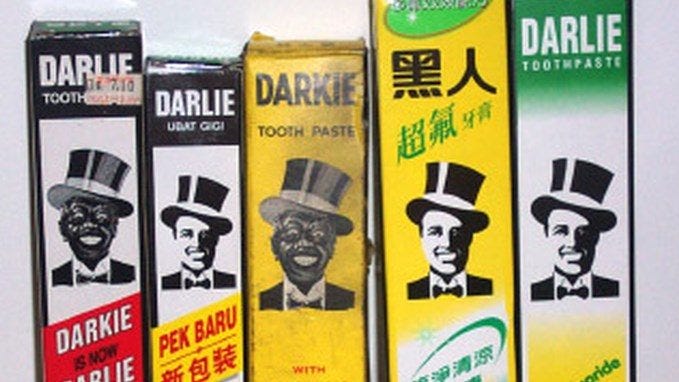
Here you can see the shift from “Darkie toothpaste” to the rebranded “Darlie Toothpaste” with the new logo, although the Chinese name “黑人” or “Black Person” remained the same. The second from the left appears to be a Malaysian version with “Pek Baru” meaning “New Package.”
But in the meantime, if you go and spend time among other cultures, you have to understand that they will act differently. It’s not a difficult concept in theory. In practice however, it takes some getting used to. They will not act like extreme American Liberal Progressives think they (and all people everywhere) should act because they are not such people. In fact, only rarely will they be able to understand how extreme American Liberal Progressives think. Obviously sometimes I don’t understand how they think and by most people’s definition I am an American Liberal Progressive. Many of these people are dangerously ignorant bullies. Make of that what you will.
And sometimes to function effectively in a different culture and among a different group of people, you have to turn off the part of your brain that produces moral outrage. Things will happen, be done, or be said that, at least where I come from and how I was raised, should not happen, should not be done, or should not be said. But they do happen, just as they did on a small and harmless scale at the swimming pool, and they will be done, and they will be said, and there’s nothing that you can do about it.
(OH!!! And the number of times I have tried to tell these people about Asian culture or any other culture and gotten the condescending answer “Well, we do that too,” when generally we do not, and they missed the point of what I said, and they said it in such a way so that it’s inaccurate, arrogant, and shows a smug refusal to actually seek intercultural understanding because they already think they have achieved it when they have not, along with an attempt to label ME as racist because I reported what I saw and learned, And there are so many, many examples that I could give, but lack of space and increasing loss of focus to this essay stops me.)
And in the meantime,
So, yes, if come to East Asia, you will be “othered” if you come to Asia for any length of time and are not Asian. And, honestly if you are racially Asian, you will still be “othered” if you do not speak the languages that they think you should or conform to the customs of either your ancestors or the people the local people think are your ancestors.
And is it only children who are fascinated by Caucasian’s hairy arms? Virtually but not always. When I lived in Shanghai and taught at Fudan University, I did once have a nerdy, brainy Chinese graduate student working on his PhD in Computer Science do that to me, you know reach out and start stroking the hair on my arm out of intellectual curiosity, entirely out of curiosity, it was nothing sexual I am sure, and this was a bit unusual due to his age. In fact, the Fudan professor who had introduced us and promised me he could fix my computer (And he did a great job of that) was terribly embarrassed by him doing that and told him to stop immediately, but at that point I just laughed because the whole thing was so silly and weird.
Thanks for reading Mostly Asian History! This post is public so feel free to share it.
No posts
Comments
Nothing yet. Say the first thing.
Sign in to join the conversation.