
[I picked a name for that tattered-book giveaway…so I’m sorry if it wasn’t you…maybe next time there’s something up for grabs. Thanks for the interest, I appreciate it.]
I recently sat down and chatted with (and talked at) Kyle Barton and Sean Wisniewski of the MWA podcast, my first time being on their program. If you care to listen to me blather on - have at it, or scroll through the unbelievable list of previous episodes.
This blog post was going to be about making JA ladderback chairs as I’ve been getting ready for next week’s class. But I wasn’t happy with the photos & video I shot to illustrate it, so it became a case of “no time to do it right, but time to do it over.”
Then it was going to be part 2 of looking at Plymouth Colony furniture - and it sort of still is - but it became different once I sat down & looked at photos. So here it is, the third attempt at a blog post. Plymouth cupboards.
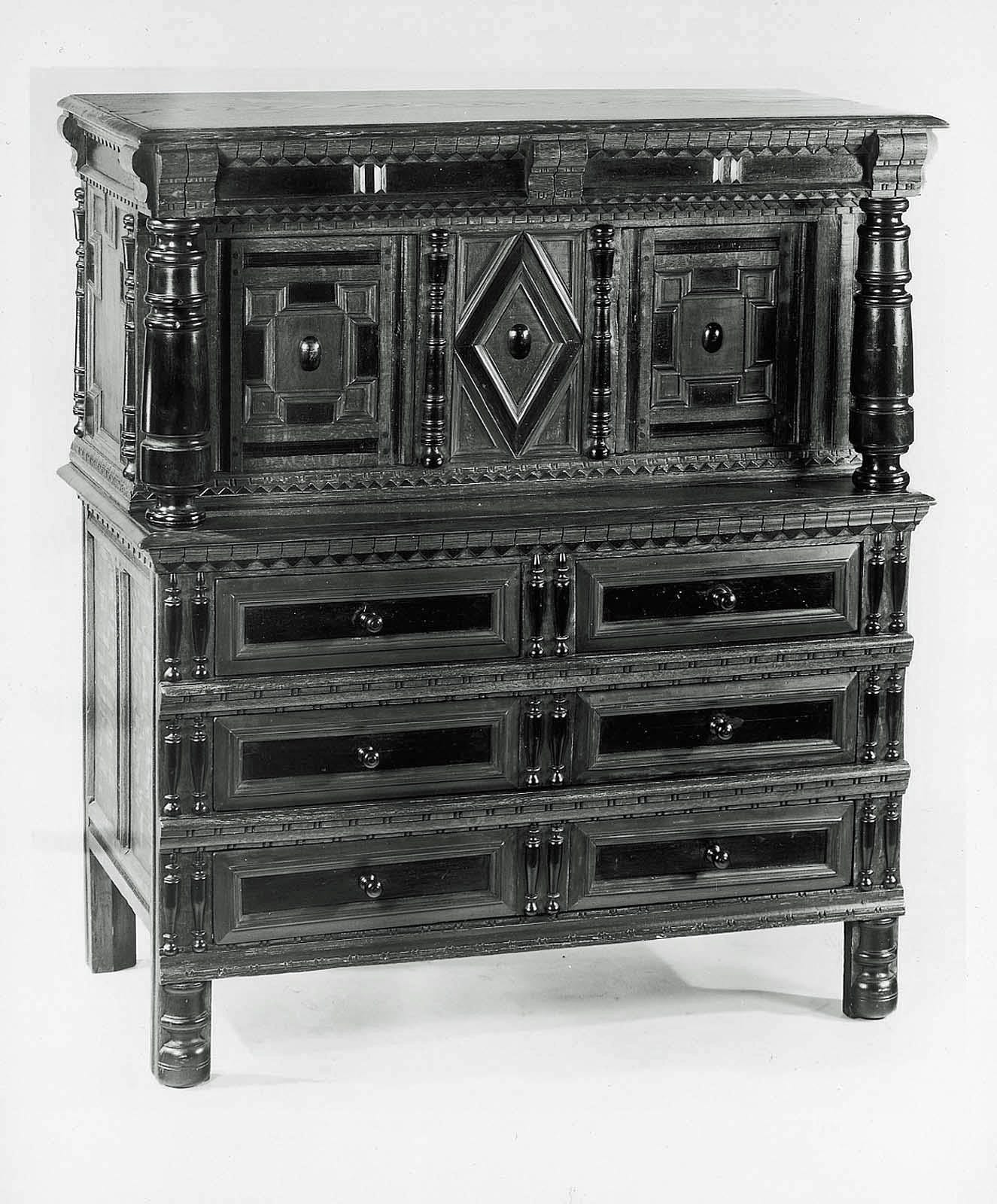
The one above is at the Museum of Fine Arts, Boston. Others are at Winterthur Museum, the Wadsworth Atheneum and the Metropolitan Museum of Art in NY.
Here’s a gallery of the Met, Winterthur & Wadsworth examples -
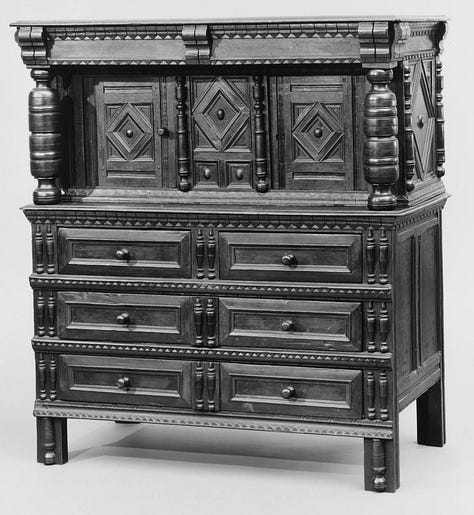
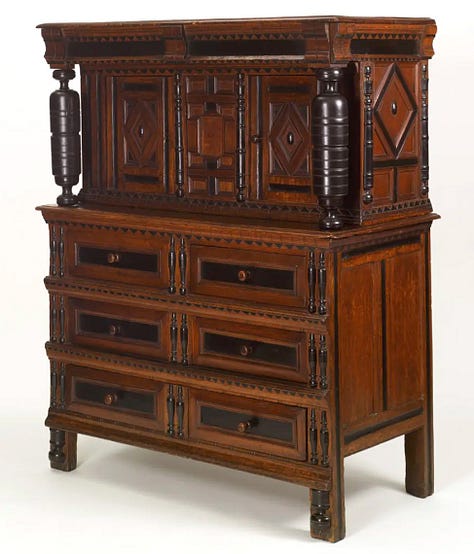
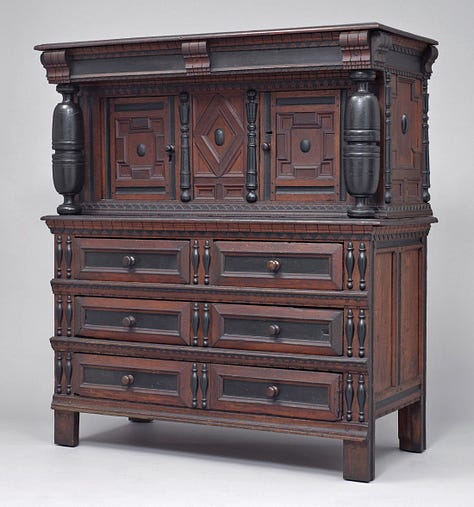
If you saw the first post, you’ll recognize right away many of the features - the applied turnings and moldings, the “sawtooth/serrated” decoration on the large moldings. Rows of dentil chisel chops - you can infer the lipped tenons on those large moldings above and below the drawers.
Most of them are pretty much the same - 4 drawers in the lower case; two small side-by-side drawers in the top row then two large drawers below, a fixed panel in the middle of the upper case, flanked by doors left and right. Large turned pillars supporting the cornice. Flat-fronted upper case, unlike the trapezoidal cupboards often seen. Many of the turnings on the Wadsworth one are replaced - the pillars are distinctly different from the others.
There’s one at the Met that’s open below - many period cupboards follow this format.
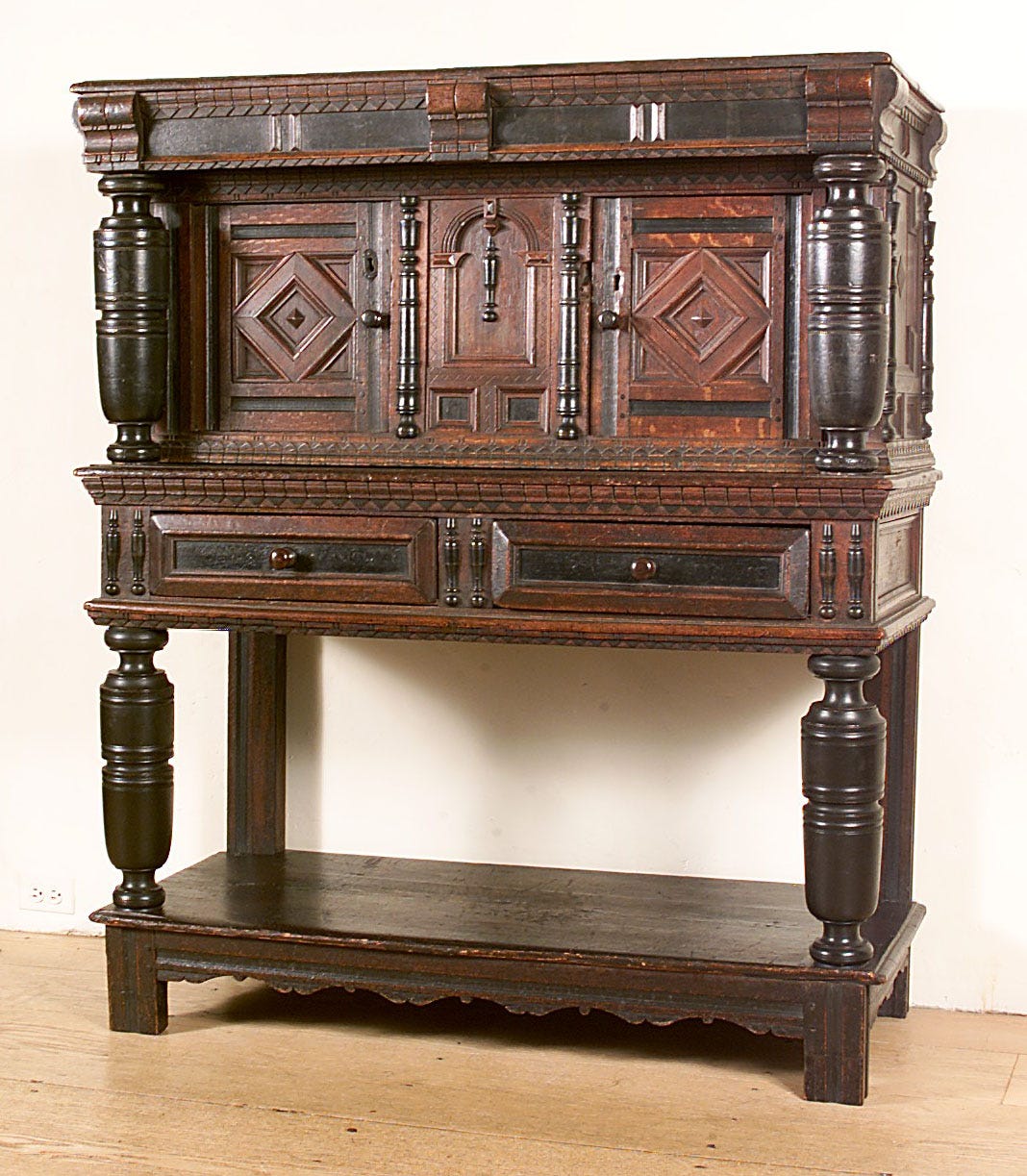
But this one is restored, here’s a photo before the restoration.
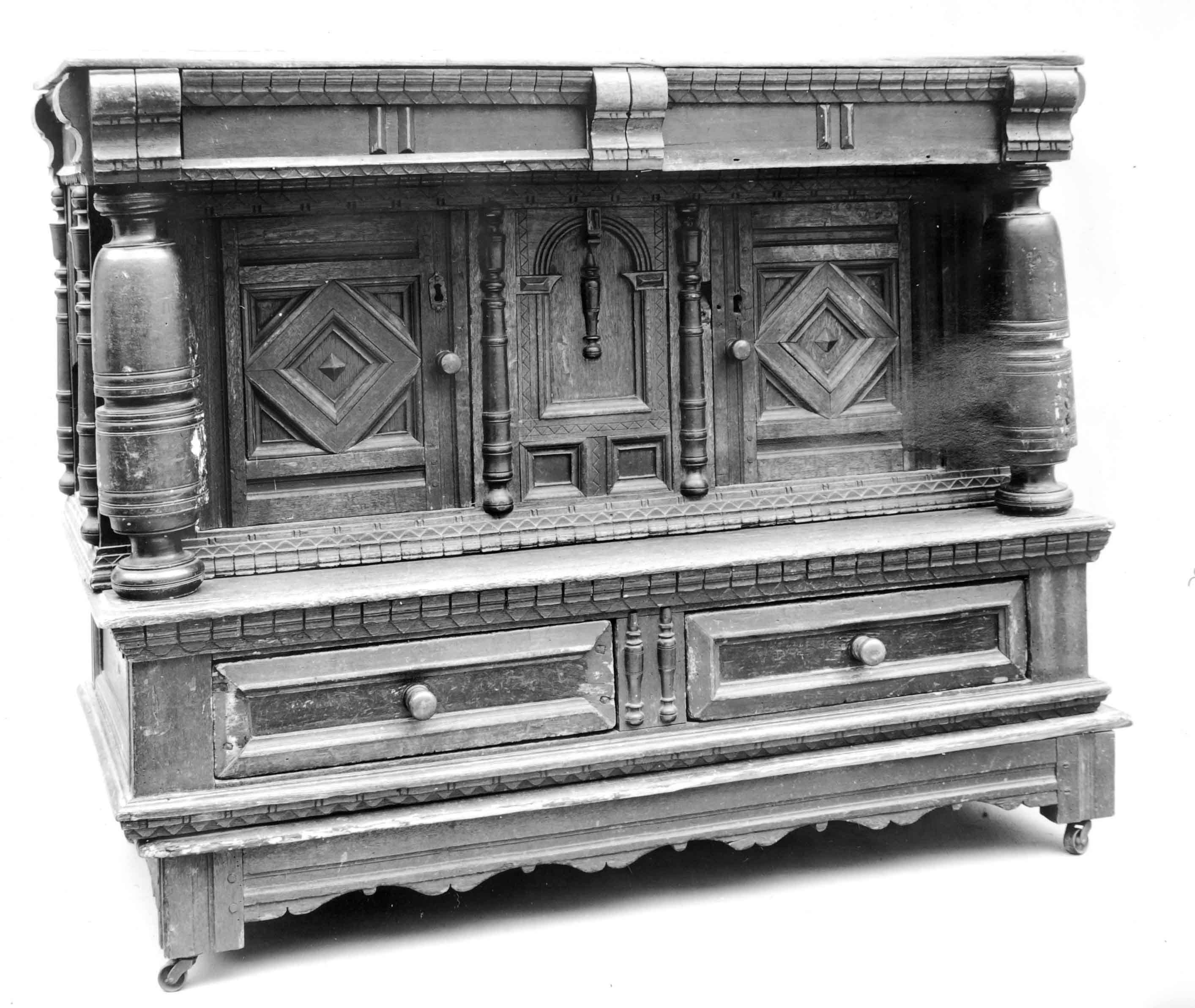
It clearly followed the format of an open base, but we’re still left with conjecture as to the details. It’s not terrible, it’s probably very close to what it was...but we don’t know for certain.
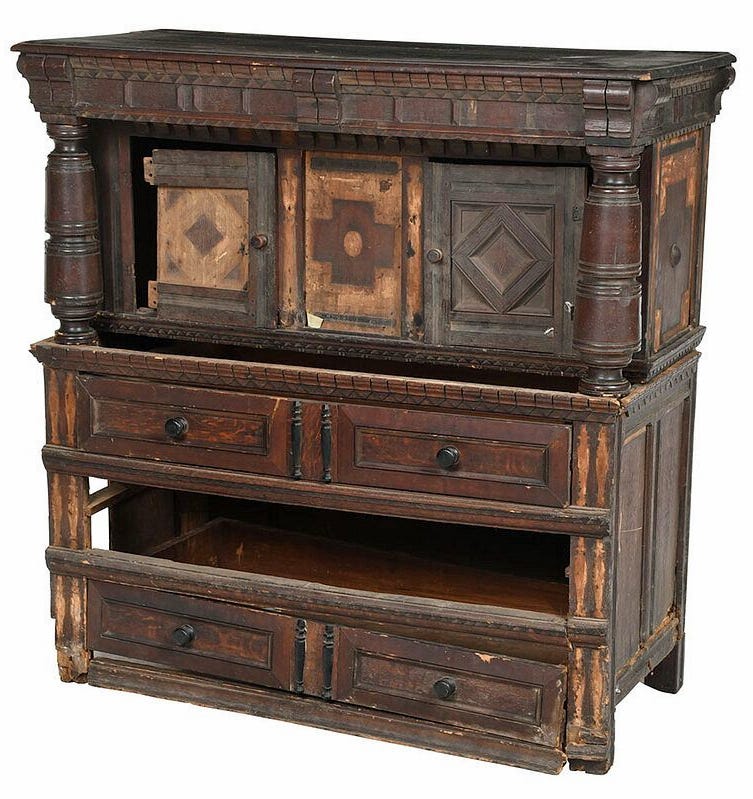
Which brings me to one I saw in pieces nearly 30 years ago - which came up for sale in 2021. (All the photos of it are from Brunk Auctions)
Comments
Nothing yet. Say the first thing.
Sign in to join the conversation.