
Last week I wrote a brief piece about two period chairs from the town of Hingham, Massachusetts. When I was looking them up, one reference book I dug out was Robert B St. George’s The Wrought Covenant. (1979) This little exhibition catalog goes all the way back to the beginning of my joinery career. In one of the first letters Alexander sent me on the subject suggested I get copies of that book and Fairbanks and Trent’s book New England Begins - another exhibition catalog. The St. George book was pretty easy to find at the time, the local museum that published it still had copies on hand 11 years later. [I have a completely tattered & worn shop copy that I’ll give away to a paid subscriber if anyone is interested. Details at the end of the post..]
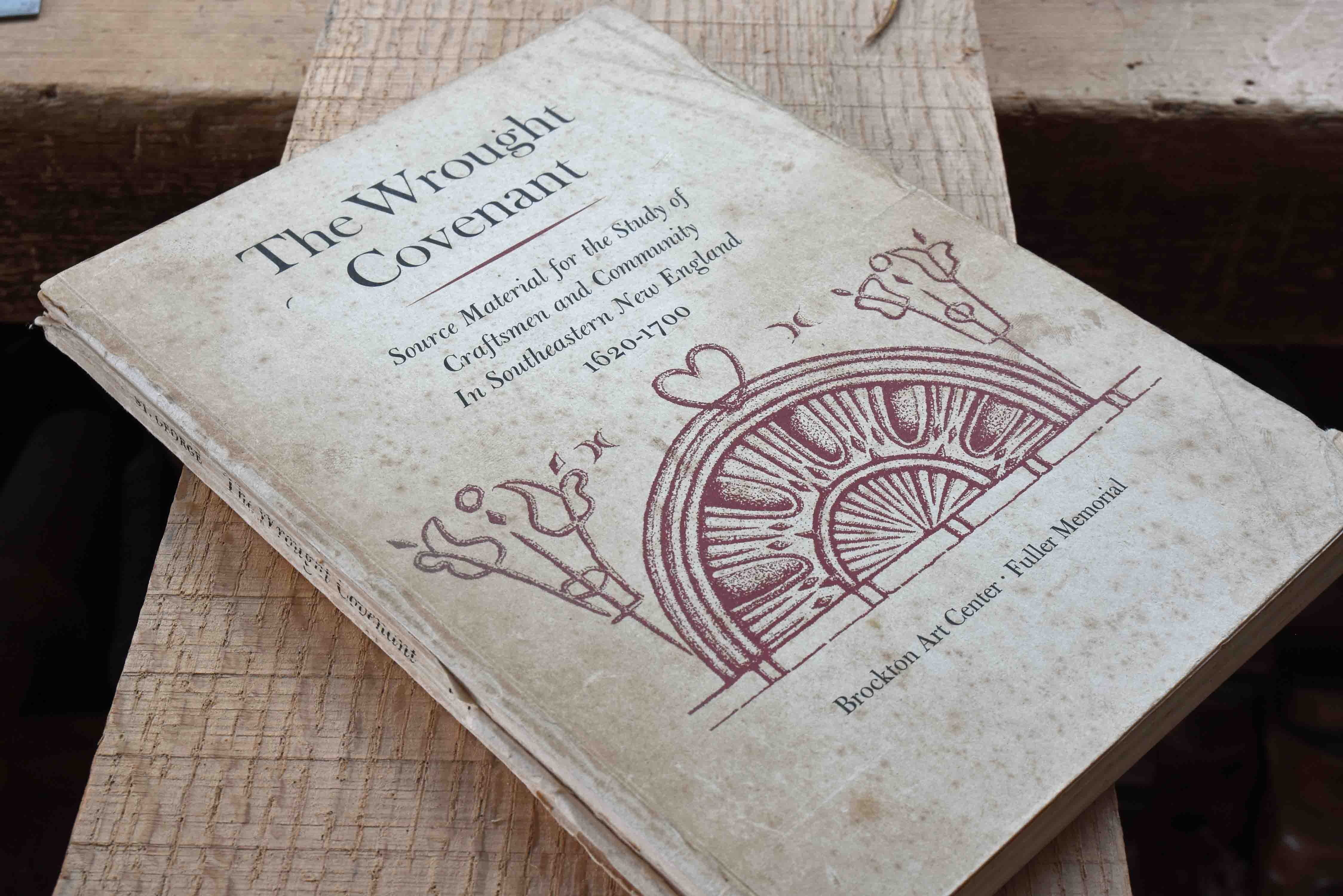
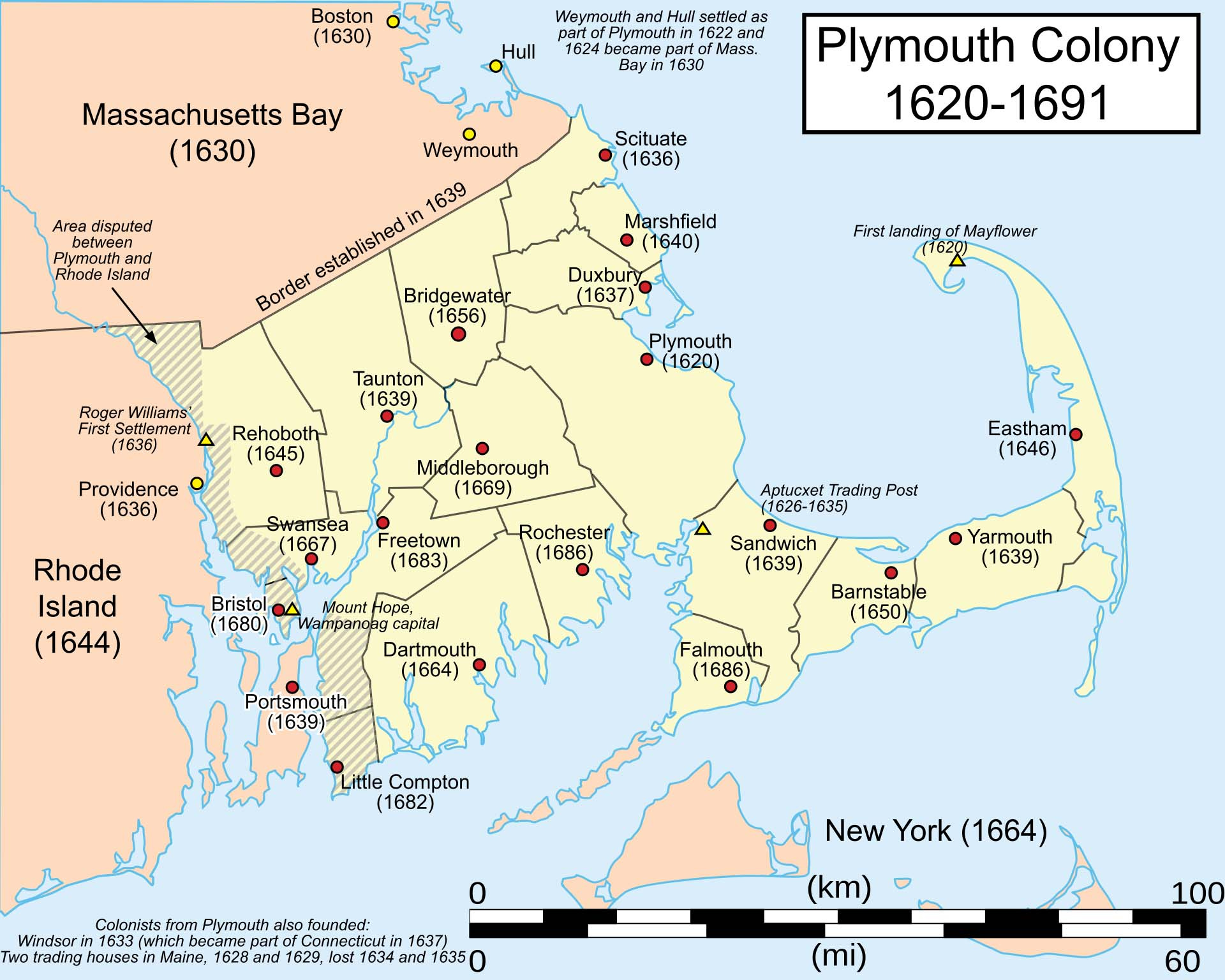
When I first had that book, I consumed its contents - not so much the written essays, but the images and captions of the objects and the appendices about tool inventories. Over and over I read those sections. The broad subject is the 17th century furniture made in what is now southeastern Massachusetts. One sub-set of this group is Plymouth Colony furniture - Plymouth Colony was for most of the 17th century separate from Massachusetts Bay Colony to the north. By the 1690s it was subsumed into Mass Bay…here’s a map I copped from Wikipedia:
The Plymouth Colony furniture is pretty distinctive. Once you learn some of its features, it’s easy to recognize. I’ll start with the joined chests with drawers.
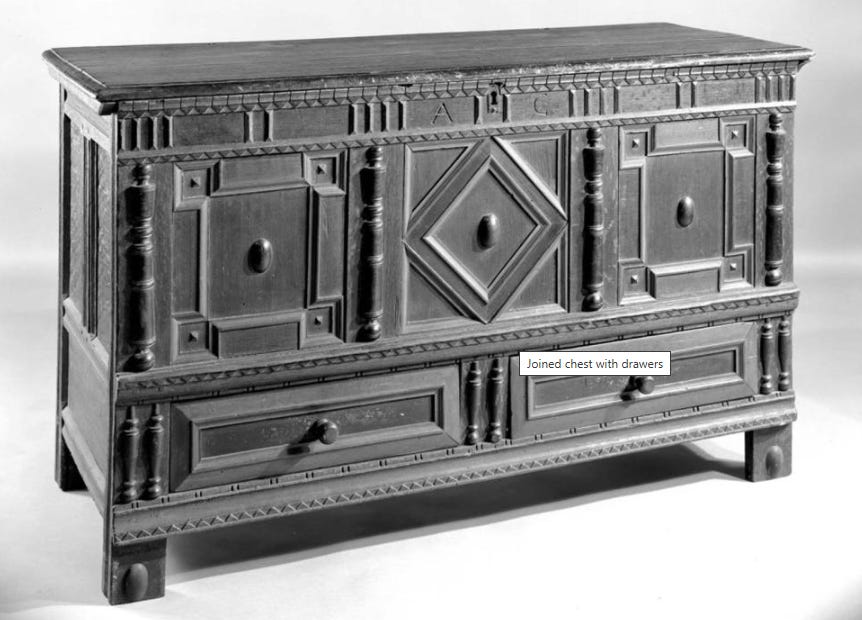
First - no carving, this is applied molding and turning style decoration. One distinction is the drawers are side-by-side - not a full-width drawer like many period New England chests. Smaller drawers are easier to handle in use - but can’t hold larger textiles like a full-width drawer. More on that when we get to the cupboards in a future post.
Above and below the drawer section are two large moldings, often called “serrated” moldings, a term coined by Wallace Nutting a hundred years ago to describe the sawtooth decoration on these rails.
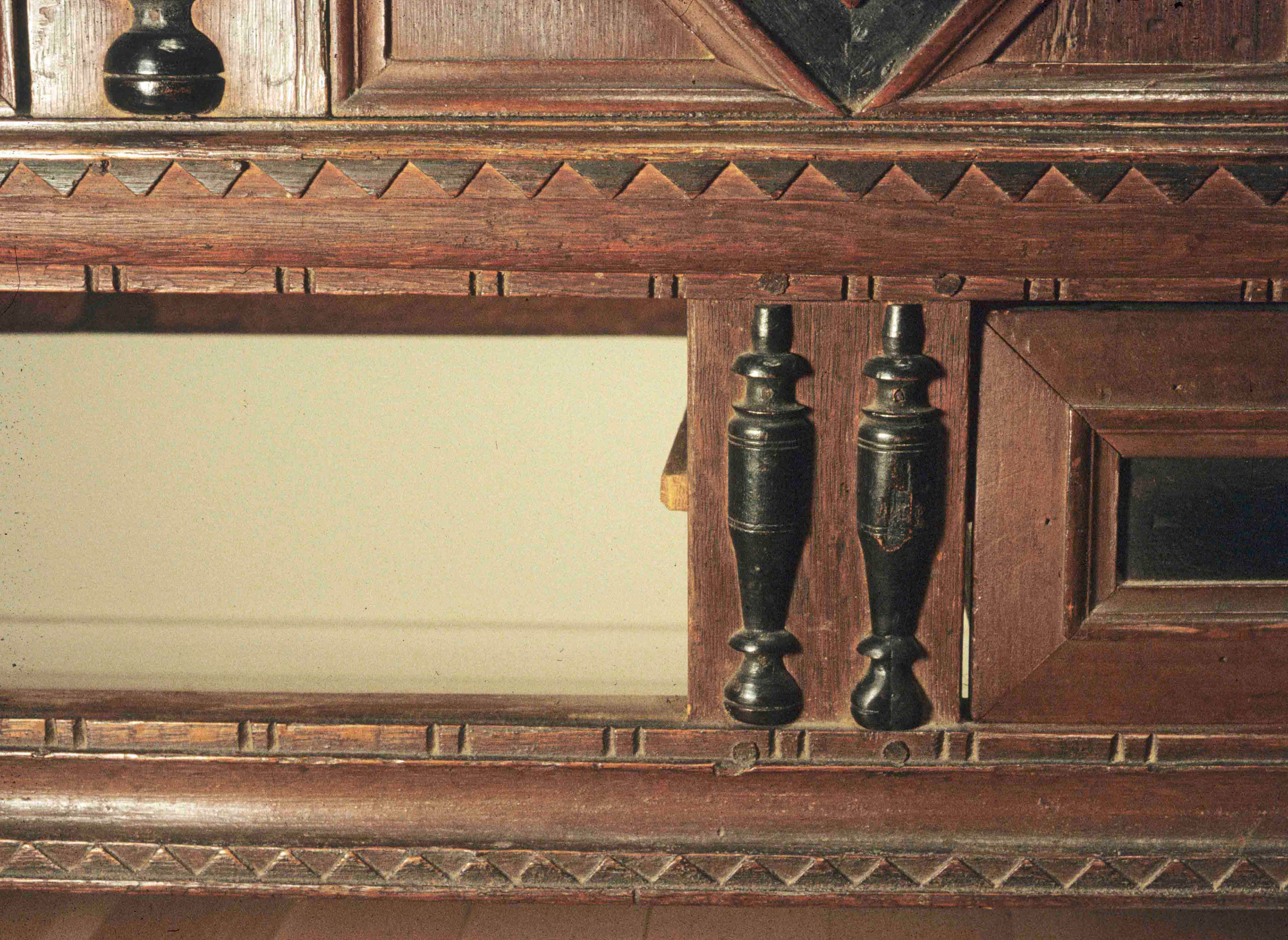
The main thing about these moldings is that they are not applied as we might expect, but an integral part of the rail. The thick rails are cut with a “lipped” tenon that has an extended section that fits over the stile that the rail meets. That joint is in all the molding-decorated Plymouth Colony joined chests and the large cupboards from the same shops.
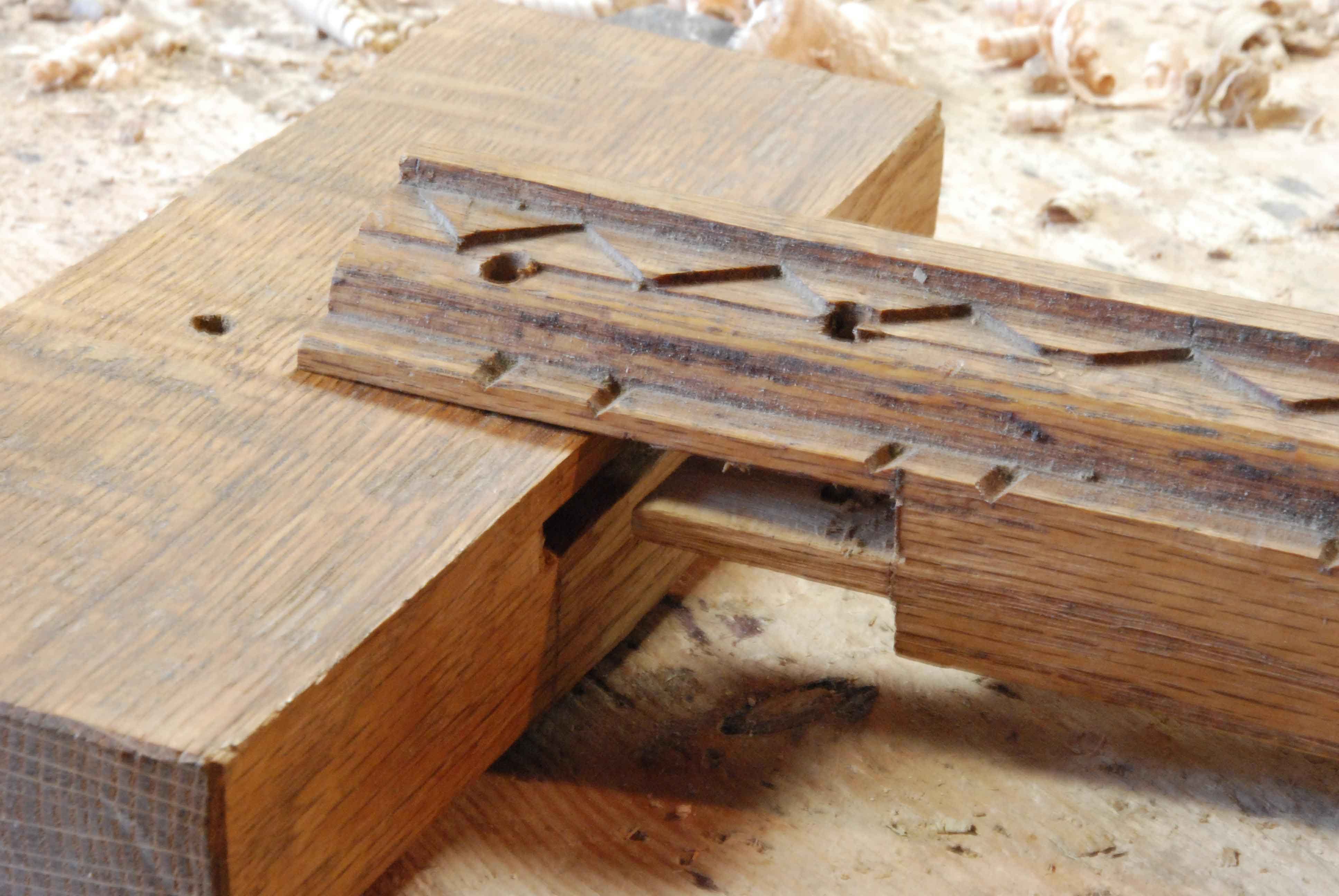
I’ve only seen this joint used in one other New England piece, in that version it had an applied molding attached to it, so was done to make that molding appear thicker than it was.
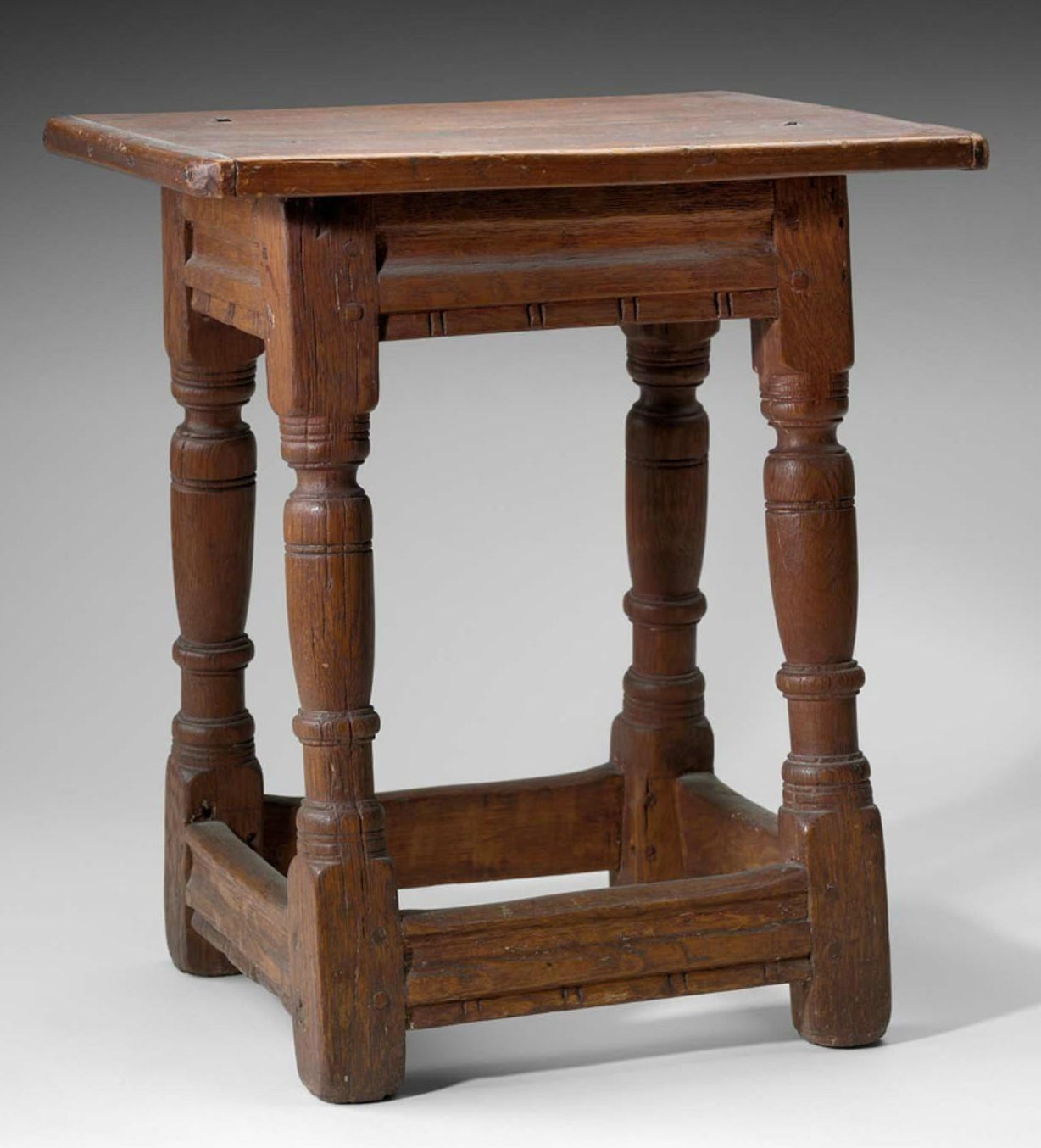
The chests share many more common features. There’s a small rabbet at the edge of that molding with pairs of chisel chops spaced across the length/width. These are considered versions of dentils - they show up on every version of these rails, but on other molded rails too. The first joined stool I studied had them, as did the first table I saw - both seem to be from either Duxbury or Marshfield - towns along the North River near the northern end of Plymouth Colony.
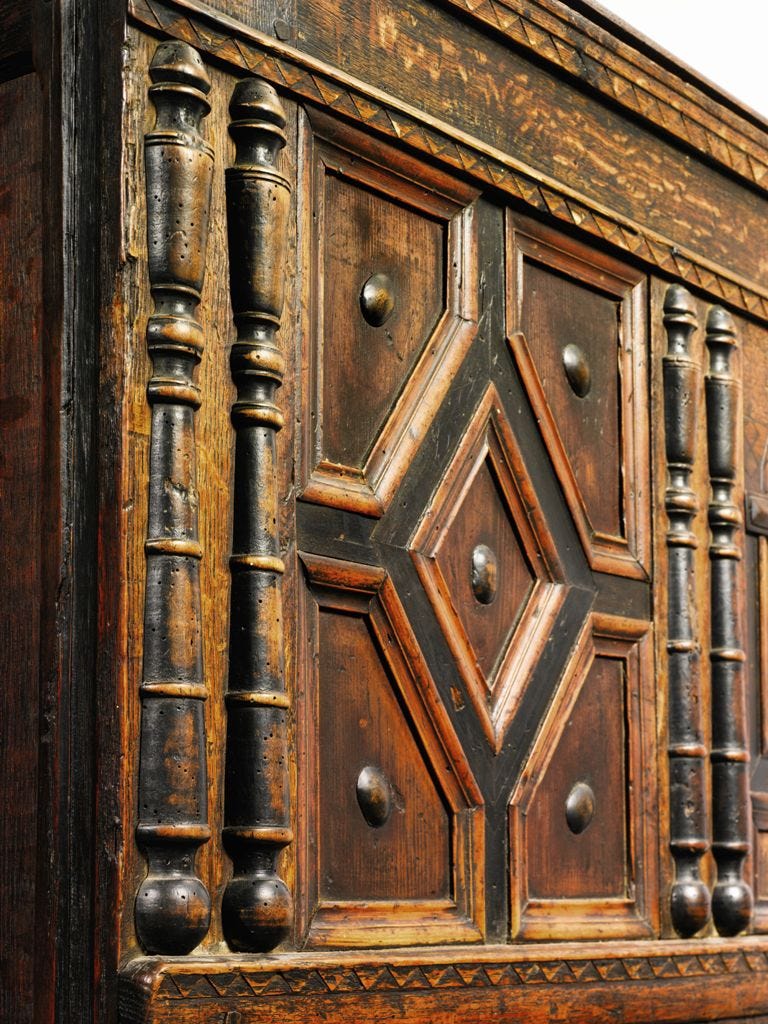
The applied turnings, usually in pairs, but some singles, follow one format with only slight variations.
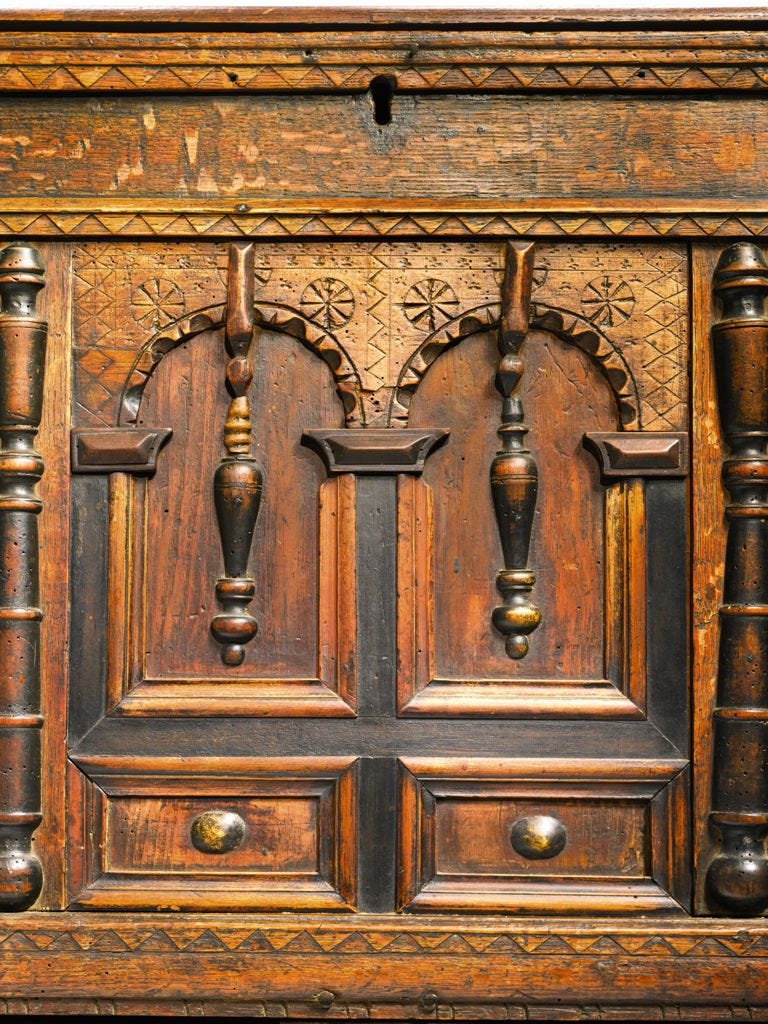
And the panel decorations formed by the applied moldings fall into a few different designs - some diamonds, some arches - here’s an example:
Comments
Nothing yet. Say the first thing.
Sign in to join the conversation.