
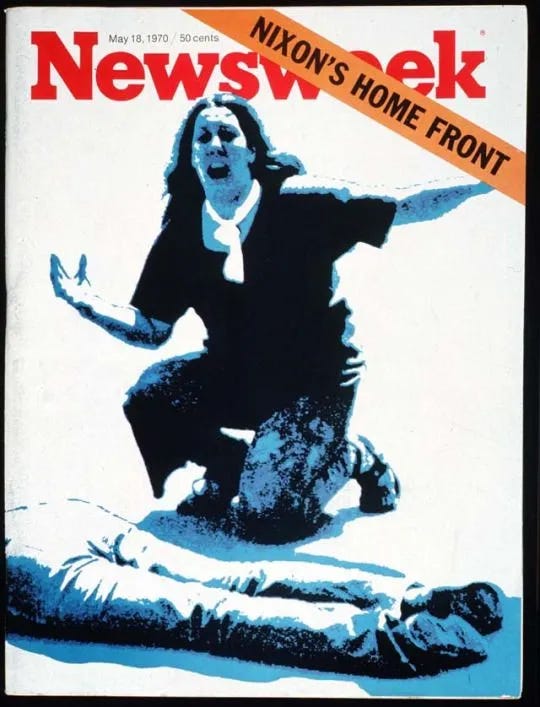
There is a through line from the Sheriff of Nottingham to the ICEmen who murder people in cold blood. The individuals are interchangeable functionaries within a culture of government violence against anyone from the subservient classes who speaks up, speaks out, gets out of line, or just insists on living. From the Kings of England to the slaveholders of North America to the bosses who hired Pinkertons to beat, maim, and kill Union organizers to municipal police officers who brutalize and murder black and brown people to ICE agents in the Trump Administration, the police force has never been subject to the Rule of Law. For the most part, there are no laws governing what the police do. Police culture is a self-reproducing system that operates according to its own rules. It is not now nor has it ever been democratic or democratically controlled.1
What holds it in check—to the extent anything does—is public opinion, including public intolerance of known excesses.
Moral norms are the product of (a) our collective refusal to tolerate improper behavior and (b) our collective demand for good conduct. Actions fall on a moral continuum:

Where types of actions fall on that continuum is not fixed. What yesterday was taboo may be perfectly acceptable tomorrow. And vice versa. Various social forces contribute to shifts in the moral framework of a group, an organization, or an entire society.
What happens to the moral framework when public officials like Donald Trump and the ICEmen violate long-established norms of socially prohibited conduct? The answer depends in large part on us—you and me. When public intellectuals say nothing, when political leaders say nothing, when religious leaders and religious communities say nothing, when we say nothing—then what was intolerable and forbidden can slide over into the acceptable column.
To have a society in which ICEmen feel free to murder with impunity, it is necessary only that the rest of us do and say nothing.
Under Donald Trump, public discourse has coarsened and public morality eroded. But millions of ordinary citizens have spoken out in one voice to say, “This is unacceptable.” They have done this in No Kings rallies, protests at Tesla dealerships, in front of courthouses, and holding signs in front of ICE detention facilities. And thousands have put their lives at risk by protecting targets of the ICE abduction machine.
Some may wonder whether all this demonstrating has any effect. Did the persistent anti-war protests during the Vietnam war hasten its end? Some social scientists conclude it did.2 Did the demonstrations protesting Jim Crow oppression in the South have an impact on public policy, leading to the Civil Rights Act of 1964 and the Voting Rights Act of 1965? Social scientists argue persuasively that these protests were key factors in bringing about an end to legal segregation.3
Regardless of the direct political effect of these protest movements, however, extended public protests can reshape moral norms by altering what people and institutions regard as tolerable, legitimate, or shameful; the U.S. Civil Rights movement is one of the clearest examples of protests that affect what we will and will not tolerate.4
As a child, I remember people in my town asking why the Germans permitted the Nazis to commit atrocities on an industrial scale. Their tone was slightly accusatory, as if to say, “We wouldn’t let that happen here.” The short answer is that many Germans did resist the Nazi machine and were promptly and efficiently murdered by the German government.5
The First Amendment to the US Constitution states:
Congress shall make no law respecting an establishment of religion, or prohibiting the free exercise thereof; or abridging the freedom of speech, or of the press; or the right of the people peaceably to assemble, and to petition the Government for a redress of grievances.
That language is in the First Amendment for a reason.
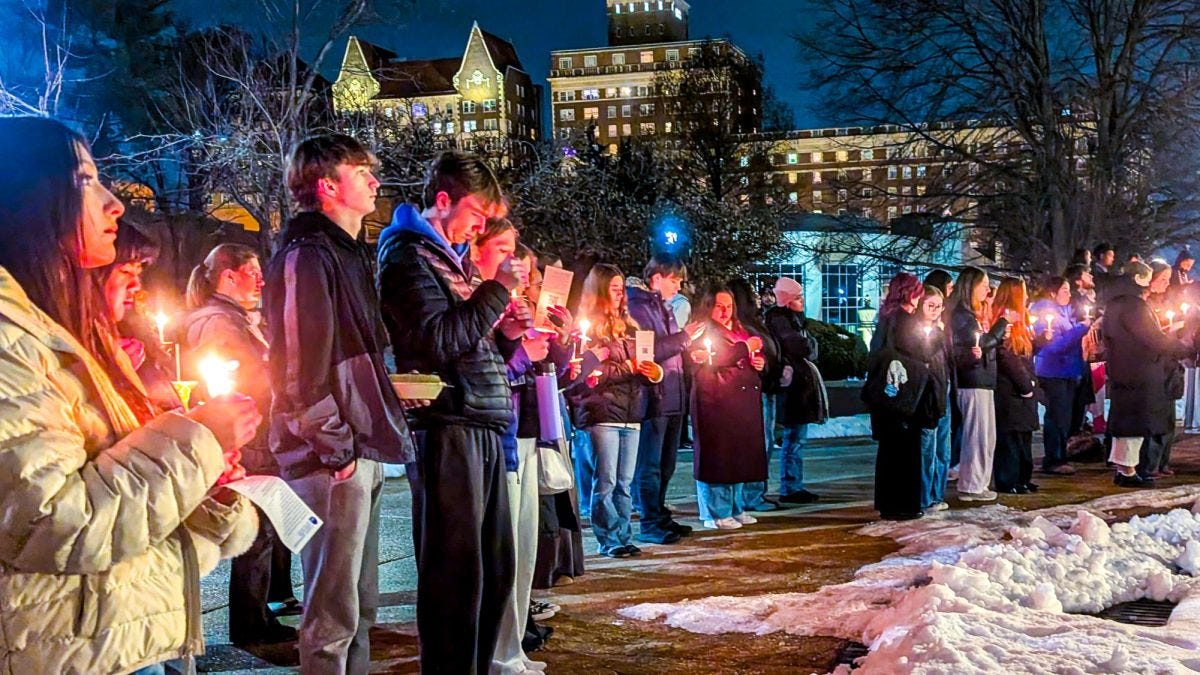
Organizing and showing up for a vigil to mourn the victims of ICE violence is a way of saying we find this conduct intolerable. It is a way, as Mary Gentile puts it,6 of giving voice to values— in this case, the sanctity, worth, and dignity of each human life.
Editor’s Note: At 4:00 on Saturday, July 25, Indivisible Middlebury is holding a vigil for the Victims of ICE Brutality starting at the Cross Street Bridge in Middlebury. Please join us.
See, e.g., Doug McAdams, Political Process and the Development of Black Insurgency 1930-1970 (2nd ed., University of Chicago Press, 2010); Kenneth T. Andrews and Sarah Gaby, “Local Protest and Federal Policy: The Impact of the Civil Rights Movement on the 1964 Civil Rights Act,” 30 Sociological Forum 509 (2015); Stephen Zunes and Jesse Laird, “The US Civil Rights Movement (1942-1968),” Center for Non-violent Conflict Research (2010). There appears to be a consensus that civil rights protests were an important driver of the end of legal segregation because they raised the political and moral costs of maintaining Jim Crow, strengthened reform coalitions, and helped trigger federal legislation and enforcement.
See, e.g., Anders Sevelsted and Jonas Toubøl, “Paradigm Lost? Three Dimensions of Morality and Social Movements,” ch. 2 in Anders Sevelsted and Jonas Toubøl (eds.), The Power of Morality in Movements (Springer, 2023); “Values, Activism and Changing Attitudes: Individual-Level Moral Development in Social Movement Contexts,” ch. 5 in id. 95-118; Soumyajit Mazumder, “The Persistent Effect of U.S. Civil Rights Protests on Political Attitudes,” 62 Am. J. of Political Science 922 (2018).
Comments
Nothing yet. Say the first thing.
Sign in to join the conversation.