
On May 26, 2026, the Vermont Senate passed H.727 by a vote of 26–3. It cleared the House almost unanimously. H.727 would have created strict rules to control the building of large Artificial Intelligence (AI) data centers. It aimed to protect local energy bills, water supplies, and the climate.1
On May 28, Governor Scott vetoed the bill, writing, “this bill creates an unacceptable precedent which will have much broader consequences for economic opportunity and long-term competitiveness in Vermont.”2 He indicated that Act 250 is sufficient to address concerns about data centers. He did not, however, say how the existing regulatory system provides the protections Vermonters want. It doesn’t.
Let’s take a look at the protections H.727 would put in place that Act 250 does not afford.

H.727 introduces extensive, explicit protections for data centers that fall entirely outside the traditional jurisdiction of Act 250, focusing on grid stability, consumer protection, and strict environmental accountability.3 Financially, the legislation shields everyday consumers by requiring data centers to sign minimum 10-year utility contracts and absorb 100% of their infrastructure costs. Furthermore, it mandates real-time grid integration into utility-managed Virtual Power Plants (VPPs) for load-shifting, levies a recurring multi-million dollar energy transformation fee to fund local weatherization, and enforces continuous monitoring for EPA-detectable PFAS chemicals, known as "forever chemicals" because they don’t break down in the environment or the human body.
Procedurally, the bill establishes rigorous, data center-specific requirements that go far beyond standard Act 250 land-use reviews. Before applying for permits, facilities must conduct pre-permit site suitability analyses alongside local utilities and Efficiency Vermont. And they are required to use closed-loop cooling systems unless proven structurally infeasible. Additionally, H.727 lowers groundwater withdrawal permit thresholds and enforces mandatory biennial compliance audits to ensure ongoing adherence to grid and environmental standards. Ultimately, authority is distributed between the Public Utility Commission for grid and utility contracts and the Agency of Natural Resources for water and environmental permits, bypassing Act 250 entirely.
Governor Scott’s statement that Act 250 provides sufficient protections for Vermont’s rate payers and the environment is simply not true.
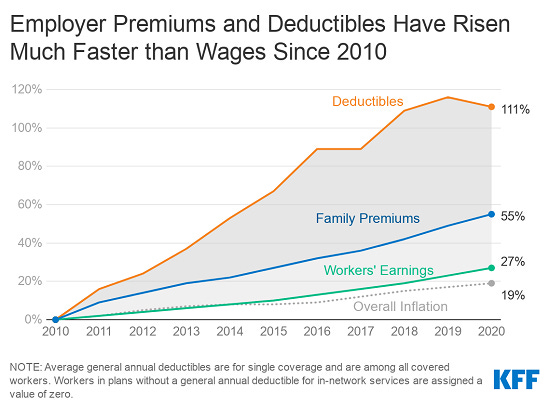
On June 16, 2026, Scott vetoed S.190, one of the healthcare-related bills the legislature passed this session. The bill would have helped lower costs for two groups paying some of the highest premiums in the state: public school employees and Vermonters buying coverage on the ACA marketplace, whose premiums have skyrocketed after Congress let the subsidies expire.
Governor Scott vetoed that bill too because it did not cover everyone.

In June 2024, Scott vetoed the Vermont Data Privacy Act — a comprehensive bill that had passed the House 139–3 and would have given Vermonters the right to sue companies that misused their personal data, with strong protections aimed at children.4 Scott’s objection centered on that right to sue, which he warned would expose businesses to costly litigation. Well, the right to sue helps keep corporate capital from abusing its power. The Senate couldn’t muster the votes to override.5
Vermont lawmakers didn’t give up. Over the next two sessions they stripped out the provision Scott objected to and rebuilt the bill — S.71 — around Connecticut’s much weaker, industry-preferred model: consumer opt-ins, no right to sue, and lighter obligations on the companies collecting Vermonters’ data.6 On June 16, 2026, Scott signed it.
Compare what Vermonters lost. The 2024 bill would have let people sue companies that violated their privacy rights after giving those companies three months to fix the problem. The bill Scott finally signed gives Vermonters no such recourse — just the same “notice and choice” framework that privacy advocates nationally have called an illusion of protection. Big Tech companies including Google, Meta, Apple, and Amazon publicly thanked Scott’s administration for the 2024 veto. Vermont’s Attorney General said at the time that the administration had been “almost entirely absent” from the years of public process that built the stronger bill.
Scott never introduced his own privacy bill. He waited for the Legislature to write him a weaker one, and only then put his signature on something.
Governor Scott’s most recent vetoes brought his total to 63, over three times the number of any other governor in Vermont history. So many that insiders now call him Governor No.
As I wrote in a previous essay, Phil Scott is also the No Plan Man. Combine the lack of a strategy with the no to legislative initiatives and you have a Vermont on the road to nowhere.
Here’s why his obstructionism matters:
First, Vermont has real problems that are not being addressed because of Governor Scott’s obstruction. Highest-in-the-nation health insurance premiums (19.6% in Vermont compared with 4.2% in New Hampshire). 45% of adults earning less than a livable wage. Young people leaving the state. Population declining. Record homelessness. Second-highest median new home prices. Soaring property taxes.
Second, constant vetoes demoralize volunteer legislators. Each of our representatives and senators spends hundreds of hours crafting legislation to address and solve problems only to get stabbed in the back with Governor Scott’s veto pen. He doesn’t work with them to devise legislation he can support. He just lies in the weeds and then pounces when they do what they can. No wonder so many of our veteran legislators are retiring.
Third, vetoing legislation like the data centers bill and the healthcare premium reduction bill contributes to the continuing decline of our beautiful state. There is a compounding effect. Innovative organizations struggle to get going for lack of housing, unaffordable health care, and high property taxes. No one is managing the store. And it shows.
Governor Scott’s approval rating has dropped to 51% and his disapproval rate has risen to 43%. He’s not doing the job, and Vermonters have noticed.
Three bills. Three different issues — healthcare costs, energy costs, data privacy. Same governor, same move each time: block the Legislature’s solution, point vaguely at existing tools or a future executive action, and let the problem sit. None of these vetoes came with a competing plan. Two came with promises of “executive action” that, months later, remain unspecified. The third came with silence until someone else did the work of writing him something he’d accept.
That’s not fiscal caution. It’s not a competing vision for how to solve Vermont’s affordability crisis. It’s a governor whose only consistent program is stopping other people’s programs.
Governor No Has Got to Go.

Fortunately, this year we can replace Governor No with Amanda Janoo. Amanda has the plan, the expertise, and the experience to lead a well-being economy and fix what is broken in Vermont. Learn more at Janoo for Vermont. Get involved. Get your neighbors involved. The future of Vermont depends on it.
Phil Scott: Vermont’s No Plan Man, June 7, 2026
The Plan Phil Scott Once Had, June 15, 2026
Is Governor Scott Trapped by Bad Thinking, June 29, 2026
The Myth of the Inevitable Governor, July 3, 2026
Comments
Nothing yet. Say the first thing.
Sign in to join the conversation.