

Slava Ukraini! In early 2022 I began a Telegram channel aggregating news from a number of sources daily on the war in Ukraine. In June 2023 I began providing a daily draft for the Ukraine War Brief Podcast collecting news from over 70 sources daily, which formed the basis of the script. While the Podcast no longer exists I have continued to make this Brief available for my subscribers here on Substack and anyone who wishes to keep up with the news from the war.
If you find the Brief informative I would appreciate it if you shared it with others.
For: Aug 15, 2026
The General Staff of the Armed Forces of Ukraine in its Operational Information update at 08:00 on Aug 15 stated that day 1634 of the full-scale invasion of the Russian Federation against Ukraine had begun.
Ukrainian defenders continue to actively conduct the systematic destruction of the enemy and offer effective resistance in all areas of the front, causing them significant losses in personnel, equipment and technology. The AFU are exhausting the enemy along the entire front line and disrupting their plans to advance deeper into the territory of Ukraine.
Over the past 24 hours, 233 combat engagements took place.
During the past day, aviation, missile troops and artillery of the Defense Forces of Ukraine have hit two control points, five enemy manpower concentration areas, three artillery systems and eight unmanned aerial vehicle control points.
Over the past 24 hours, the enemy carried out 71 air strikes, used 10,626 attack drones and carried out approximately 3,040 attacks on populated areas and the positions of Ukrainian forces.
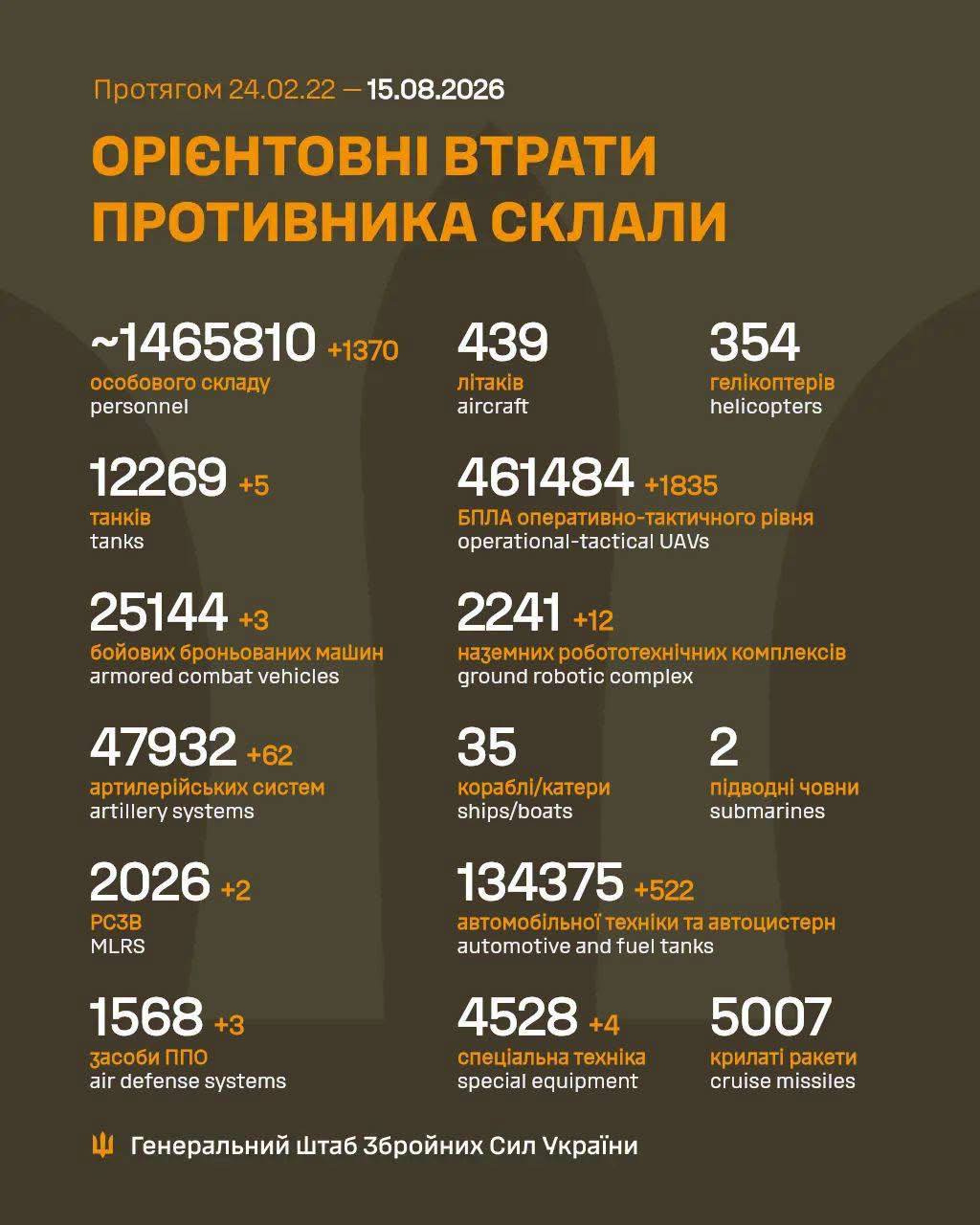
127 ENEMY TARGETS SHOT DOWN/SUPPRESSED
➖➖➖➖➖➖➖➖➖
During the night of Aug 15 (from 18:00 on Aug 14), the enemy launched an attack using 152 attack UAVs of the Shahed type (including jet-powered ones), “Gerbera,” loitering munitions called “Bandera,” and imitation drones of the “Parody” type, launched from the directions of: Kursk, Orel, Millerovo, Primorsko-Akhtarsk – Russia, and the temporarily occupied territory of Donetsk.
The air attack was repelled by aviation, anti-aircraft missile forces, electronic warfare units, and unmanned systems, as well as mobile fire groups of the Ukrainian Defense Forces.
According to preliminary data, as of 09:00, the air defense forces destroyed/neutralized 124 enemy UAVs of the Shahed and Gerbera types, as well as other types of drones, and 3 “Bandera” loitering munitions in the north, south, and east of the country.
Hits by enemy air attack assets were recorded at 16 locations, and debris from downed aircraft fell at 1 location.
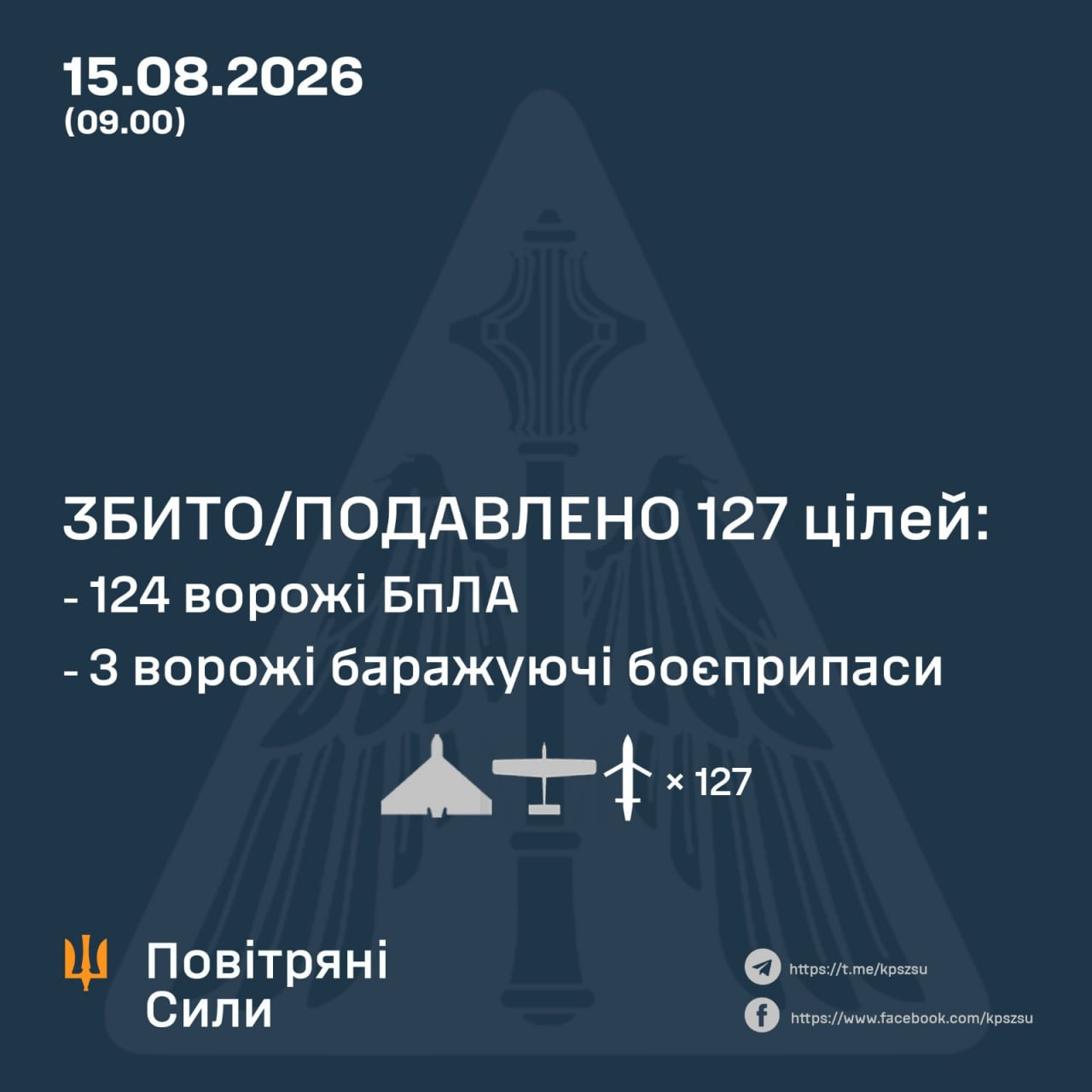
This section of the Brief is compiled from information taken from the Institute for the Study of War (ISW), a US based think tank, in their daily Russian Offensive Campaign Assessment.
Kupyansk Sector: Russian forces recently conducted infiltration missions in the Kupyansk direction.
Geolocated footage published on Aug 11 shows Ukrainian forces striking Russian positions in northeastern and central Kupyansk after what ISW assesses were infiltration missions.
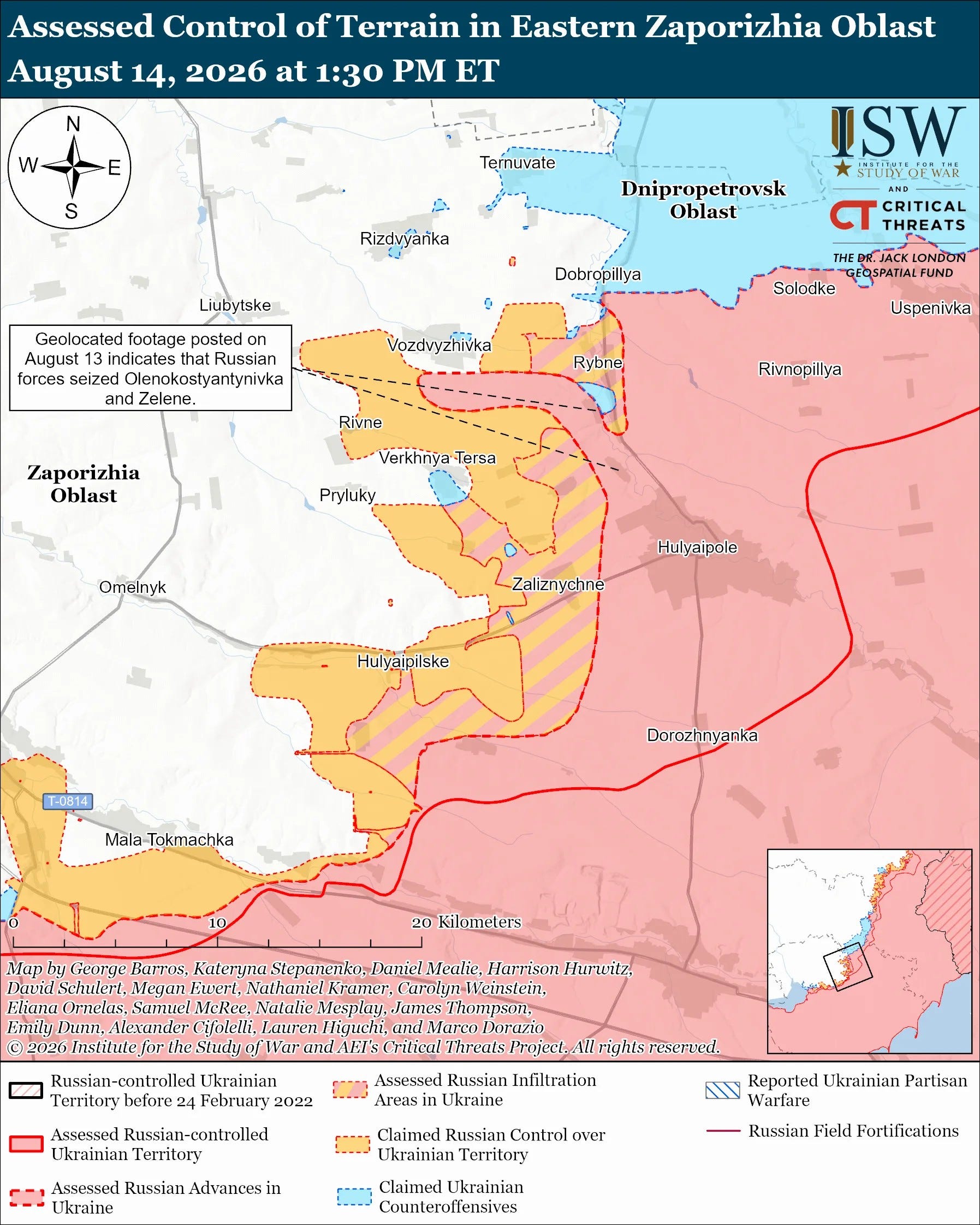
Eastern Zaporizhia Sector: Russian forces recently advanced in the Hulyaipole direction.
Geolocated footage published on Aug 13 shows Ukrainian forces striking Russian mechanized vehicles attempting a roughly platoon-sized mechanized assault southeast to south of Vozdvyzhivka (northwest of Hulyaipole), indicating that Russian forces have likely seized Olenokostyantynivka and Zelene (both east to southeast of Vozdvyzhivka).
Nothing major to report.
Nothing major to report.
Russian attacks killed at least one person and injured 49 others across Ukraine over the past day, the Kyiv Independent reported citing local authorities on Aug 15.
In northeastern Kharkiv Oblast, three people were injured in Russian attacks, Governor Oleh Syniehubov said. Russian forces used missiles, guided aerial bombs, Lancet and Molniya drones, FPV drones, and other unmanned systems against the region.
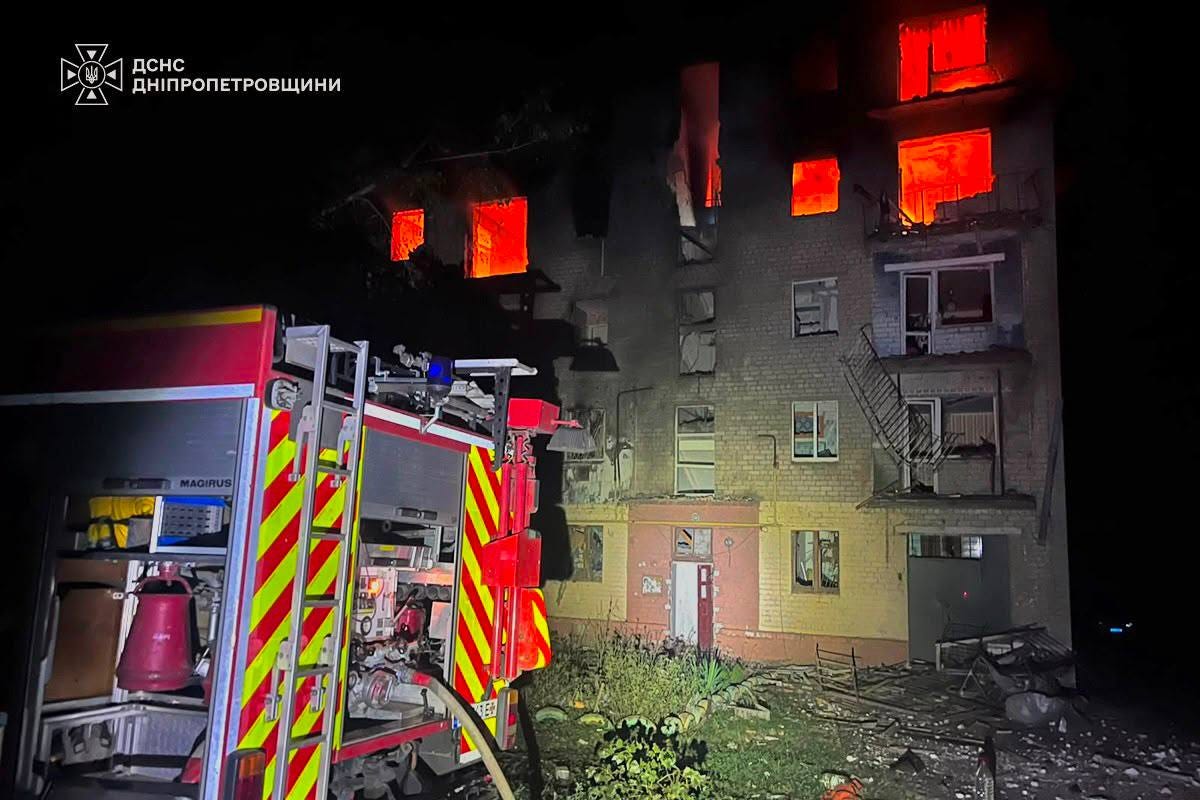
In Dnipropetrovsk Oblast, a 3-month-old child was killed and 11 people were injured, including two children, Governor Oleksandr Hanzha said. Russian forces attacked three districts more than 70 times using drones, artillery, and aerial bombs.
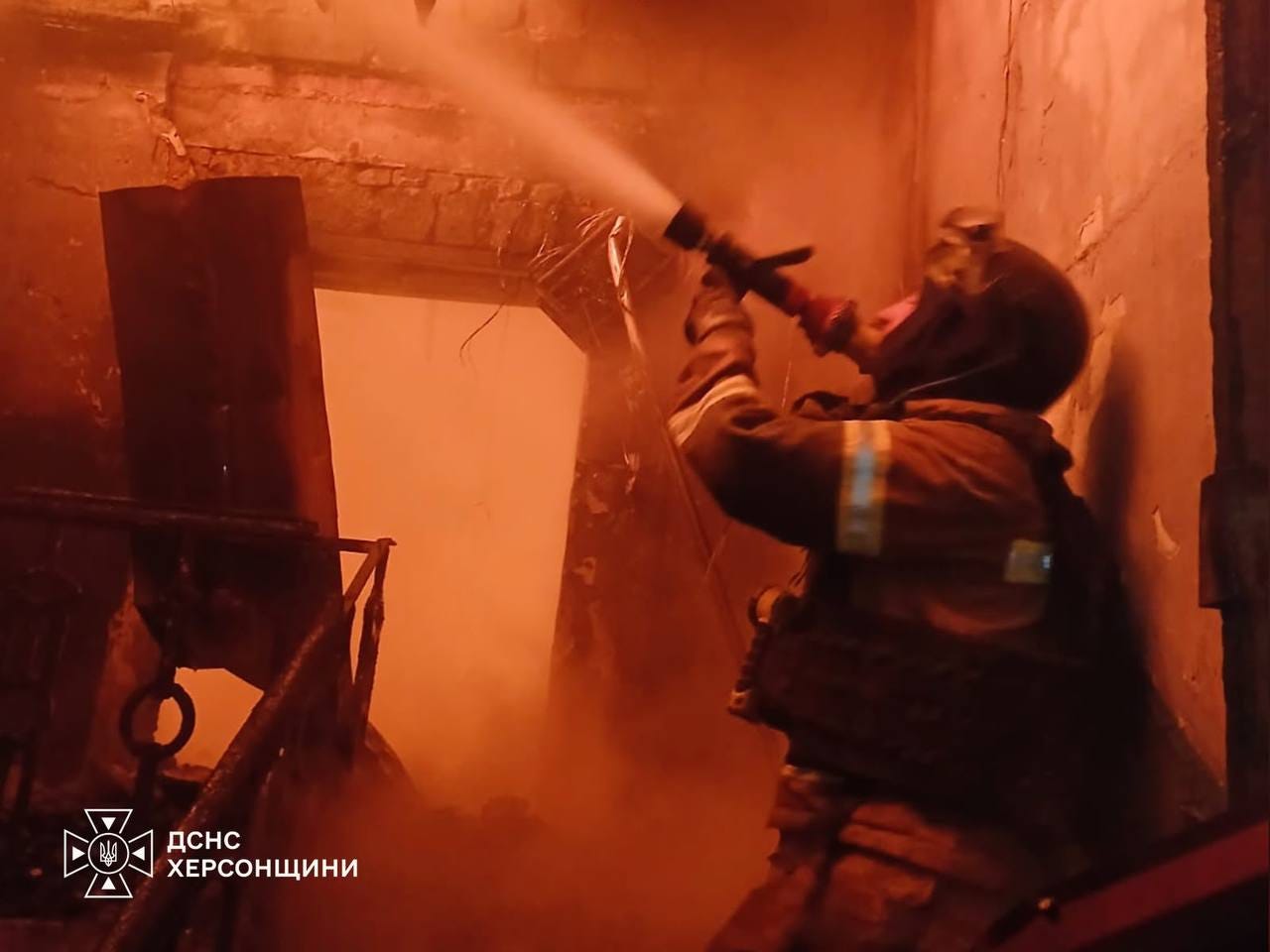
In Kherson Oblast, Russian forces targeted 25 settlements, including the regional center of Kherson, injuring 28 people, including a child, over the past day, the local military administration said.
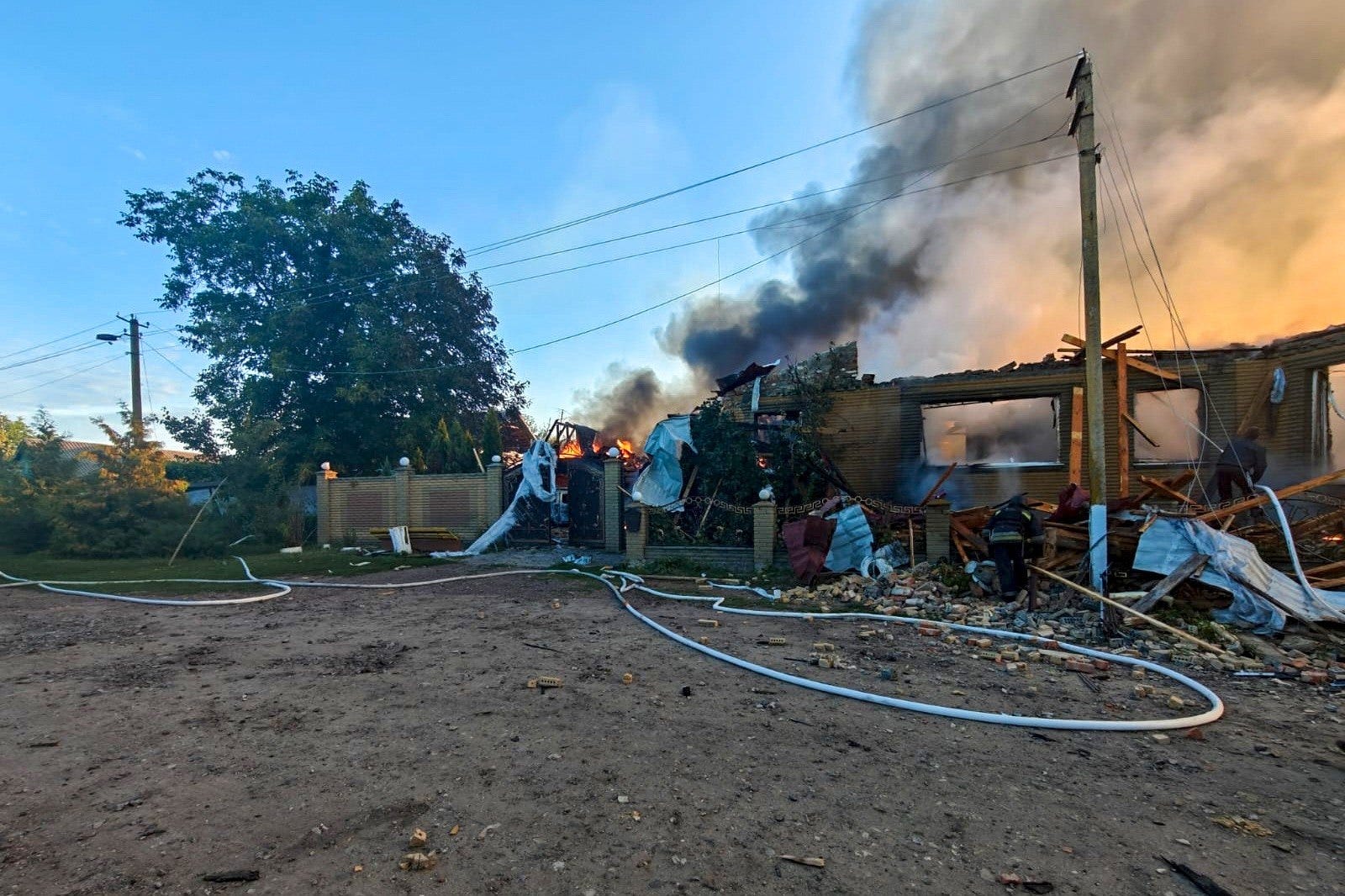
In Sumy Oblast, Russian attacks injured four people and damaged private homes, non-residential buildings, and civilian infrastructure, according to the local military administration. Russian forces carried out nearly 60 attacks against 27 settlements in the region.
In Donetsk Oblast, Russian forces injured one person in Sloviansk and shelled settlements across the region 37 times, Governor Vadym Filashkin said.
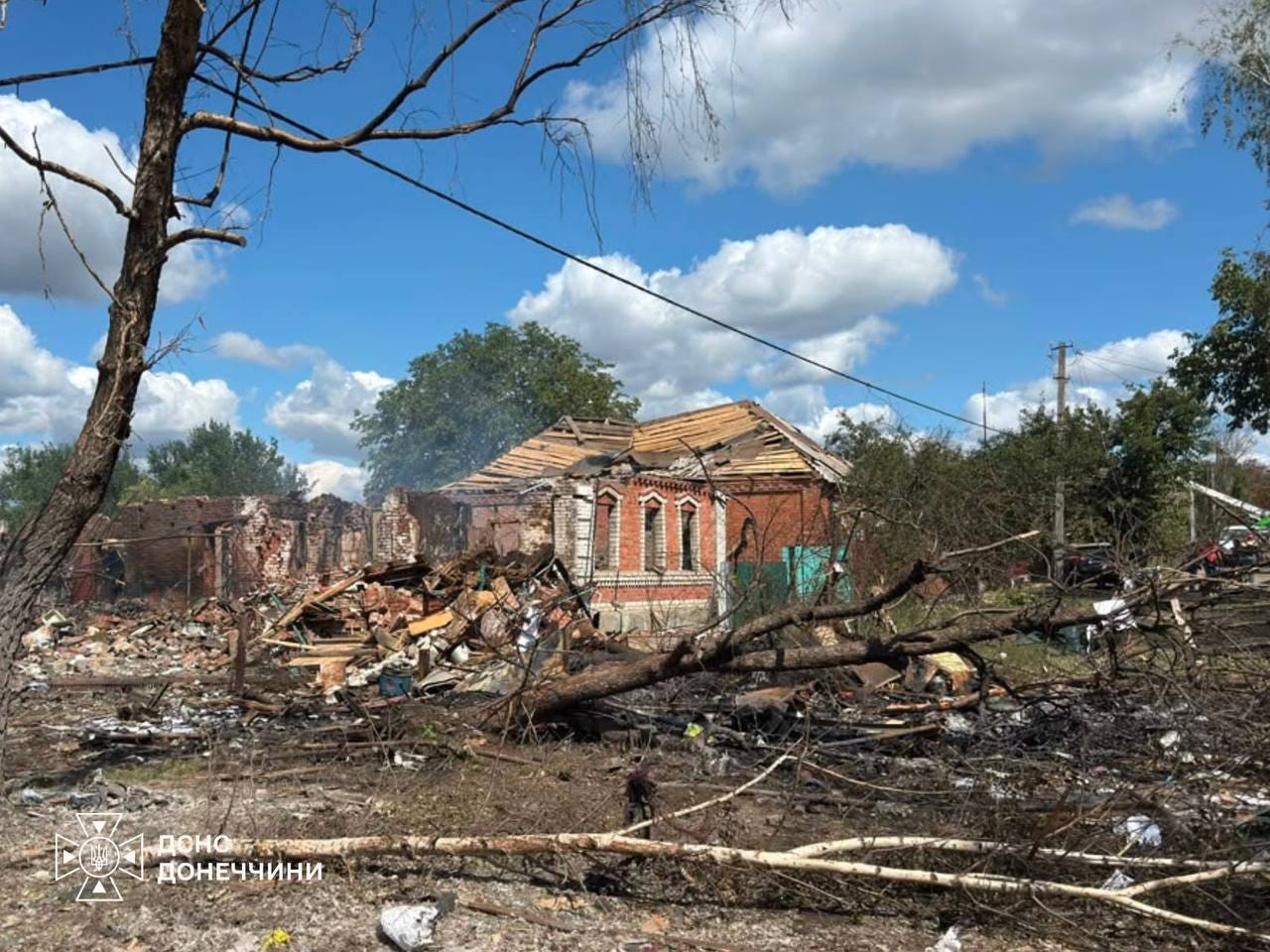
In southeastern Zaporizhzhia Oblast, two people were injured in Russian attacks on Zaporizhzhia district, while Russian forces carried out 971 strikes against 42 settlements over the past day, Governor Ivan Fedorov said.
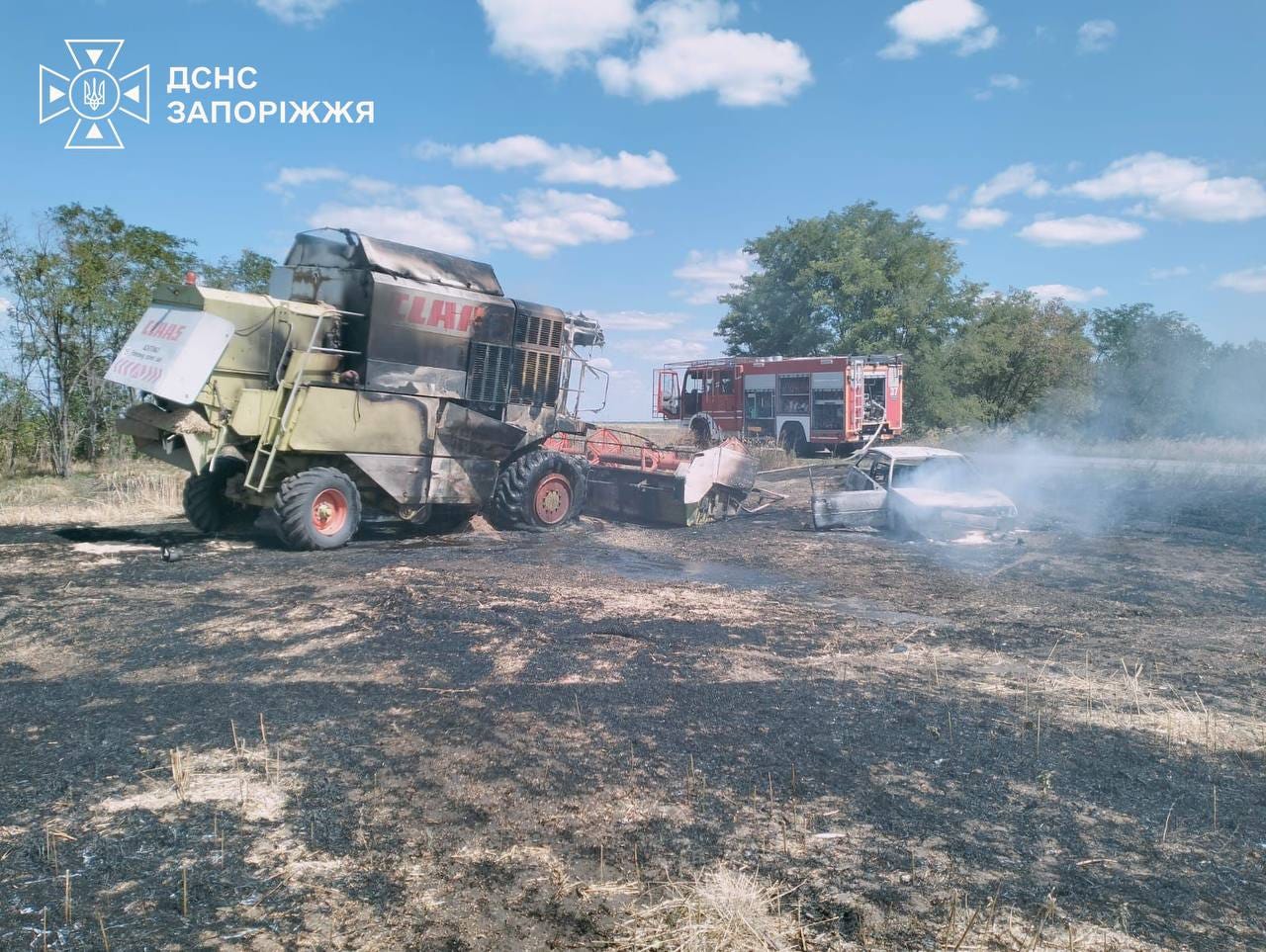
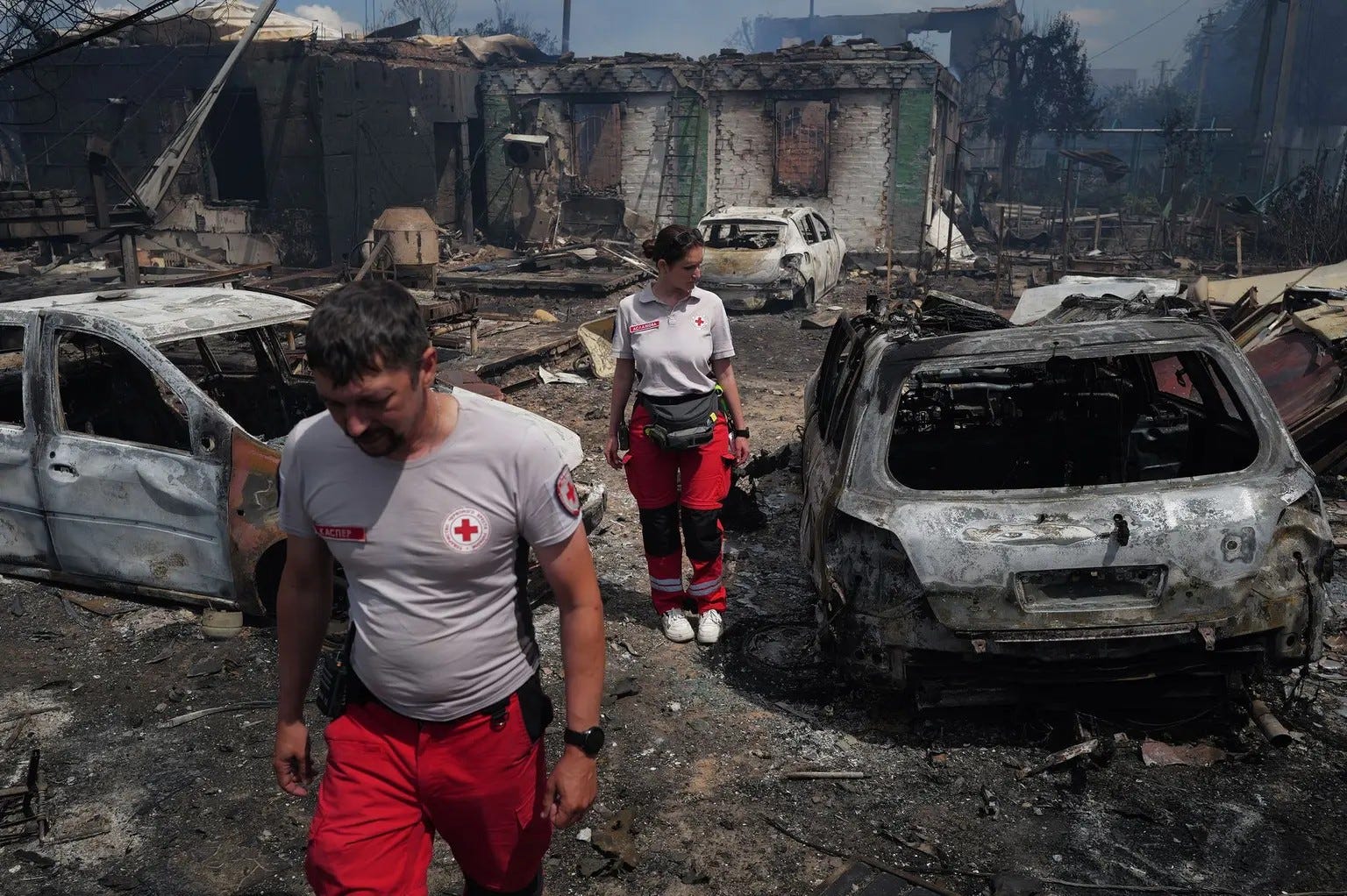
July of 2026 saw the most civilians killed or injured in Ukraine since March 2022, the U.N. Human Rights Monitoring Mission in Ukraine (HRMMU) reported on Aug. 13.
March 2022 marked the onset of Russia’s full-scale invasion, launched a week before on Feb. 24. As Russia exploits Ukraine’s air defense shortage with escalating ballistic missile attacks, casualties in spring and summer 2026 have risen to their highest levels since the early days of the war.
At least 437 civilians in Ukraine were killed and 2,610 injured in July alone, the monitoring group said. This represents a 30% increase from June, which previously held the record for deadliest month since April 2022.
Casualties in July 2026 increased by 70% compared with July 2025. Child casualties also rose to their highest level since April 2022, with 17 children killed and 166 injured.
“Every month this year the number of killed and injured civilians has increased,” HRMMU Head Danielle Bell said. “That trend accelerated sharply in July.”
The deadliest attack of the month came on July 2, when Russia struck Kyiv with over 70 ballistic missiles and nearly 500 drones. At least 30 civilians were killed and over 100 injured in the assault.
Russia’s bombardments have continued into August. Kyiv and the surrounding region have continued to suffer large-scale ballistic missile strikes, while cities closer to the front lines face daily threats from short-range drones and guided aerial bombs.
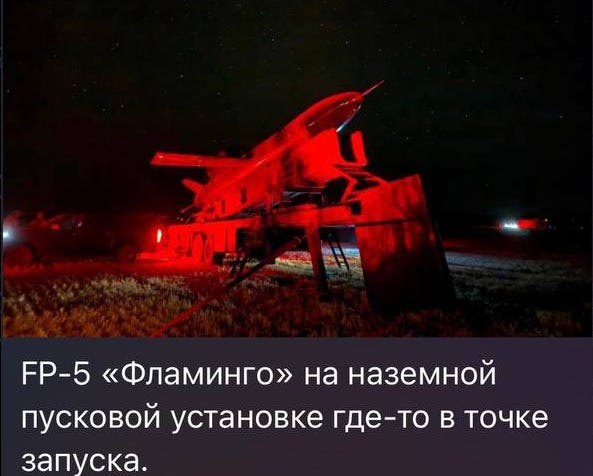
Ukrainian forces struck Russia’s Savasleyka military airbase and a key Roscosmos facility in Samara Oblast using domestically produced Flamingo missiles, President Volodymyr Zelenskyy confirmed on Aug 15.
“The Savasleyka airfield, where the carriers of Russian missiles that strike our cities and villages are based, was also reached by our long-range sanctions,” Zelenskyy said. “It is about 700 kilometers from Ukraine,” he added.
MiG-31K fighter jets capable of carrying Kinzhal ballistic missiles are known to have been stationed at the airfield.
Explosions were also reported in the Russian city of Samara, where Ukraine struck the Progress Rocket Space Center, one of the key enterprises belonging to Russia’s state space corporation Roscosmos.
“The progress center, which was involved, among other things, in producing electronics, was hit. Flamingo missiles were used — a good achievement,” Zelenskyy said.
Samara Oblast Governor Vyacheslav Fedorishchev earlier said that missiles had struck an “industrial facility” in the region without identifying the site. Authorities were still determining whether there were casualties or additional damage, he added.
Zelenskyy said the progress center lies around 900 kilometers (560 miles) from Ukraine’s border, while the Savasleyka airbase is approximately 700 kilometers (435 miles) from Ukraine.
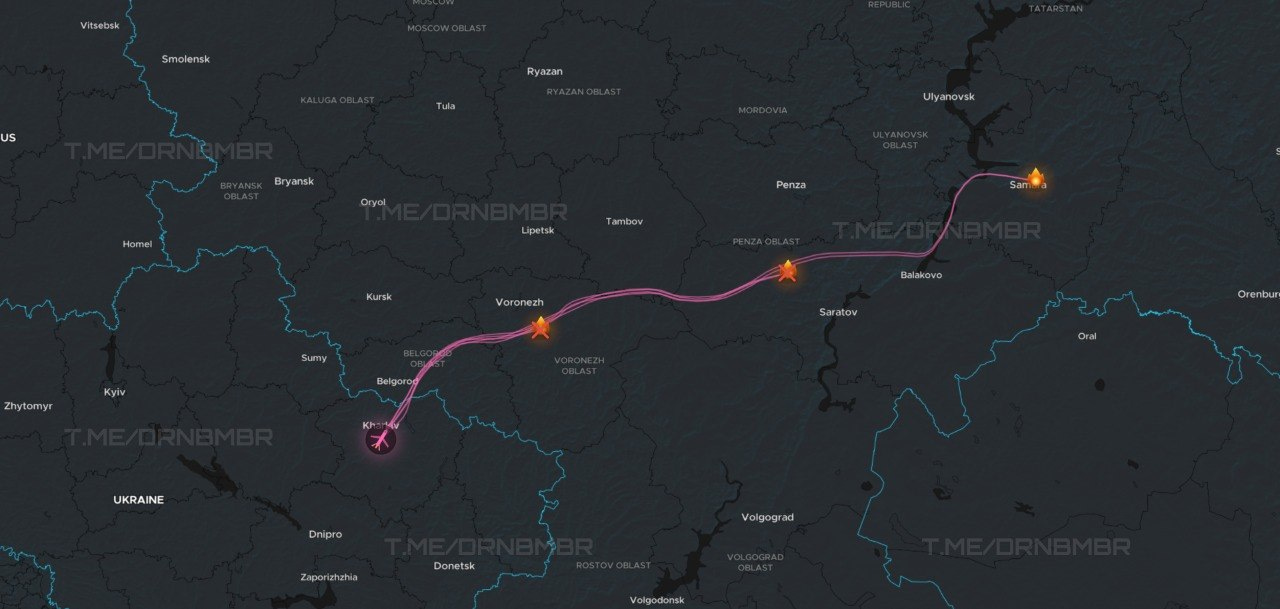
Dronebomber Telegram channel analysed the effectiveness of the strike.
Based on monitoring of key enemy resources and comparing available information regarding the night attack on August 15th, the following picture emerges regarding the use of FP-5 “Flamingo” cruise missiles.
Five missiles were used. According to available data:
🔴One missile was intercepted in the Voronezh region;
🔴Two missiles were intercepted in the Saratov region;
🔴Two missiles successfully reached their target in Samara.
“Progress” RCC is one of the key enterprises in the Russian rocket and space industry. It produces “Soyuz-2” launch vehicles (including “Soyuz-2.1b”), which are used to launch satellites into orbit, including elements of the Russian communication constellation “Rassvet.”
To repel the attack, the Russians deployed as many as four A-50U aircraft. This is a rather rare concentration of such scarce assets. Previously, their active use significantly increased the percentage of “Flamingo” interceptions. This time, even this number was not enough to completely thwart the strike.
Two out of five missiles reaching their target at such a distance, and with the active operation of A-50Us and tactical aviation, is already a significant result compared to the past few weeks, when the interception rate was higher.
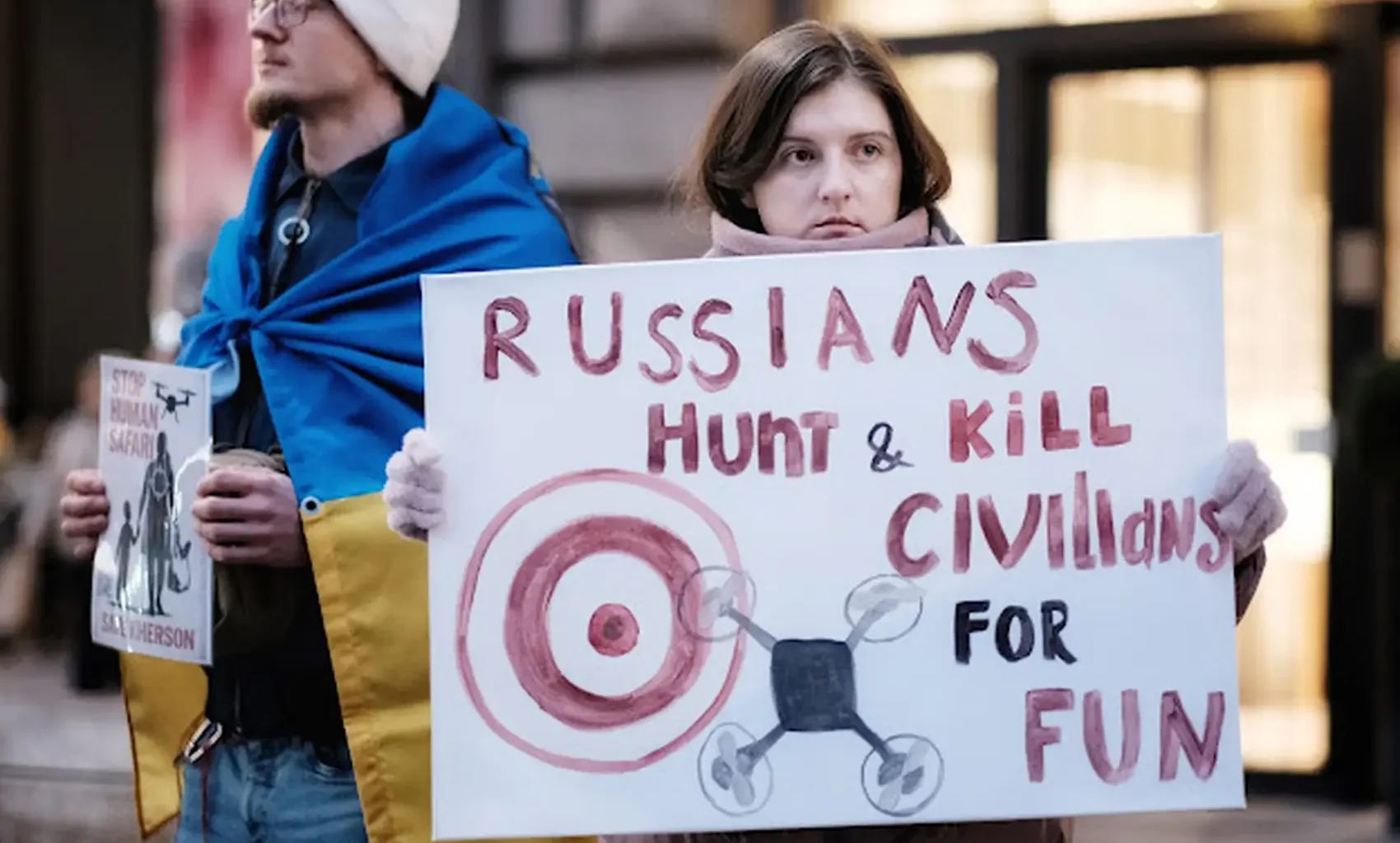
A New York networking company sold radios that let signals travel 100 kilometers. Ukrainian civilians say Russian drone crews used them to hunt people in Kherson, and they are asking a Manhattan jury to hold the company responsible, Euromaidan Press reports.
Ukrainian civilians and relatives of people killed by Russian drones sued Ubiquiti Inc. in the US District Court for the Southern District of New York on 11 August, alleging the company’s wireless equipment became the backbone of the command network behind Russia’s “human safari” against civilians.
The case rests on a comparison that the plaintiffs draw themselves. In February 2026, Starlink terminals that Russian forces had mounted on reconnaissance and strike drones were shut off after Ukraine and SpaceX built a whitelist of authorized terminals. Ubiquiti, the complaint alleges, had the same technical and contractual power over its own devices and did not use it.
That precedent cuts both ways. SpaceX had denied for years that Russian forces were using Starlink systematically, and the whitelist came together only after Ukraine’s newly appointed defense minister, Mykhailo Fedorov, approached the company directly. The fix was technically possible—and it took a government to force it.
The law firm DiCello Levitt LLP filed the case, Kovalenko et al. v. Ubiquiti, Inc., No. 1:26-cv-06838. The plaintiffs are Ukrainian civilians who were maimed, displaced, or forced to live under drone surveillance, along with family members of civilians killed in drone attacks. They are seeking a jury trial.
Ubiquiti, listed on the New York Stock Exchange as UI, makes long-range wireless “bridges” widely used for internet access in areas without cable. Its radio bridge antennas and airMAX technology are subject to US export restrictions on Russia. The complaint alleges the devices kept reaching Russian forces through intermediary supply chains, and that they now link reconnaissance units, drone operators, attack units, and commanders across roughly 100 kilometers of encrypted battlefield network.

“Battlefield communications are the central nervous system of the Russian occupation forces: without them, they could not coordinate the human safari or maintain the occupation,” Scott Gilmore, the lead attorney for the plaintiffs and a partner at DiCello Levitt, said in an interview with Euromaidan Press.
The complaint cites US export-control restrictions, Russian import data, public reporting, Russian military statements, battlefield images and video, and Ubiquiti’s own device telemetry. It alleges the company held location data showing where its devices were operating, including inside Russia and occupied Ukrainian territory, and that it was repeatedly warned its products were being smuggled across the border.
It further alleges Ubiquiti continued issuing firmware updates and technical support that kept those devices running, and that it could have cut the pipeline off—by geofencing, by terminating distributors tied to sanctions-evasion routes, or by building a remote-disable feature into its firmware.
“Companies cannot willfully blind themselves when sanctions and export controls are being breached, and their devices are being foreseeably used in dangerous ways,” Gilmore said. “US law is clear that companies bear legal responsibility when they entrust dangerous devices to end users who they know or should know are hurting people. This case is not about standard warfare: it’s about murdering civilians.”
Analysis of trade records found the value of Ubiquiti shipments crossing into Russia rose by 66% after the full-scale invasion, despite US and EU export controls, and that the shipments included models released after the bans took effect. The goods moved mainly through distributors in third countries such as Kazakhstan and Türkiye. Russian units often received the bridges from volunteers who bought them with crowdfunded money.
“The human safari is one of the most horrific crimes against humanity of the 21st Century,” Gilmore said. “We intend to present evidence of the widespread and systematic nature of this campaign in court, including international documentation. These coordinated attacks do not happen randomly: they require communications systems and a chain of command. That is precisely why the United States banned the export of Ubiquiti’s radio bridge antennas to Russia—because they are necessary for Russia’s war machine.”
Gilmore, who has investigated war crimes for two decades, said the legal framework needed already exists at national and international levels, and that in mass-atrocity cases from Syria to Sudan, investigations, jurisdiction, and remedies take years. He said he expects accountability for Ukrainian victims to come through criminal prosecutions, civil litigation, and regulatory enforcement together.
“Our clients want to shine a light on the atrocities being committed against civilians in Ukraine and to remind companies that compliance with sanctions and export controls is not a mere technicality: it’s a matter of life or death,” he said.
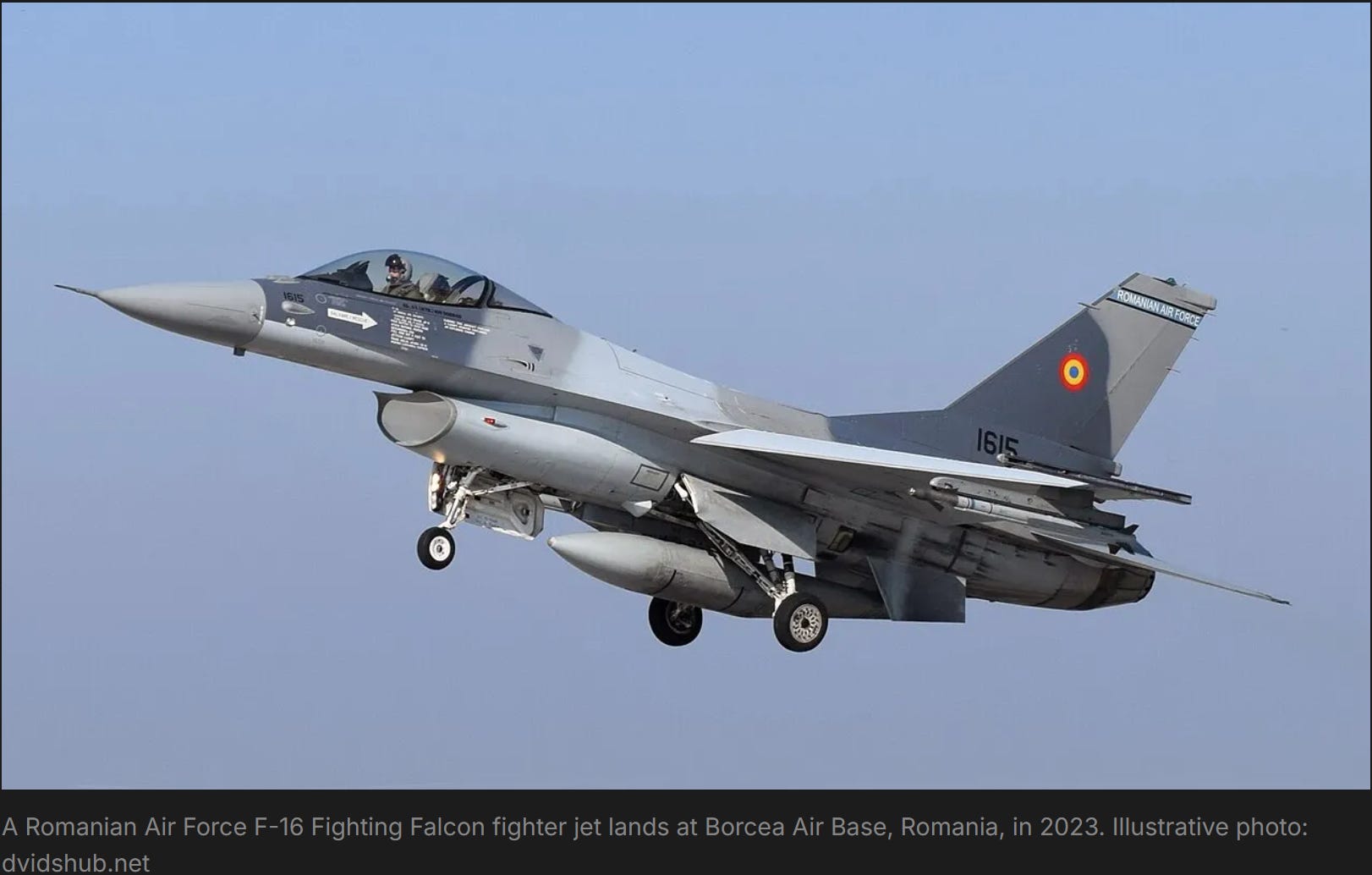
More than 100 drones were detected near Romania over the past 96 hours, with NATO fighter jets scrambled seven times in response to the increased aerial activity, Romanian Defense Minister Radu Miruță said, Antena 3 CNN reports.
The latest figures underscore how Russia’s drone war is increasingly reaching NATO’s eastern flank, with Romania already forced to destroy several drones this summer.
The figures come as Romania faces a growing number of drone incidents linked to Russia’s war against Ukraine. Romanian forces have recently shifted from monitoring and escorting drones to actively destroying those that enter Romanian airspace, while NATO aircraft are increasingly being called on to respond to aerial threats along the alliance’s eastern flank.
According to Miruță, Romanian authorities detected more than 100 drones in the vicinity of Romanian territory during the four-day period. NATO fighter jets participating in air-policing missions were activated seven times.
Miruță did not report how many of the detected drones entered Romanian airspace, nor how many were identified as Russian or Ukrainian.
Miruță said most of the drones were destroyed by Ukrainian air defenses outside Romania, but close enough for their debris to reach Romanian shores.
“[Russia’s war in Ukraine] is a real war, with real consequences. That is why we are taking every measure we can to limit the indirect consequences that are also being felt here,” Miruță wrote on Facebook.
In late July, Romanian F-16s shot down three drones over Romanian territory and territorial waters in three consecutive days. One of the drones was identified as a Russian Shahed-type attack drone, while investigations were conducted into the others.
The July incidents marked a shift from Romania’s previous approach of tracking or escorting drones that crossed into its airspace during Russian attacks on Ukraine. Four of the five drones shot down in EU and NATO countries at that point had been neutralized by Romanian military pilots, according to Miruță.
Romanian President Nicușor Dan called the repeated violations of Romanian airspace “inadmissible and intolerable” and Bucharest prepared a diplomatic protest to Moscow after one of the downed drones was identified as Russian.
The incidents have also extended beyond Romania. On 14 August, NATO fighter jets shot down a foreign drone after it entered Latvian airspace. Latvia said the drone had entered its airspace as a result of Russian electronic warfare activity.
The repeated incidents have made drone activity around NATO’s eastern border an increasingly regular consequence of Russia’s war against Ukraine.
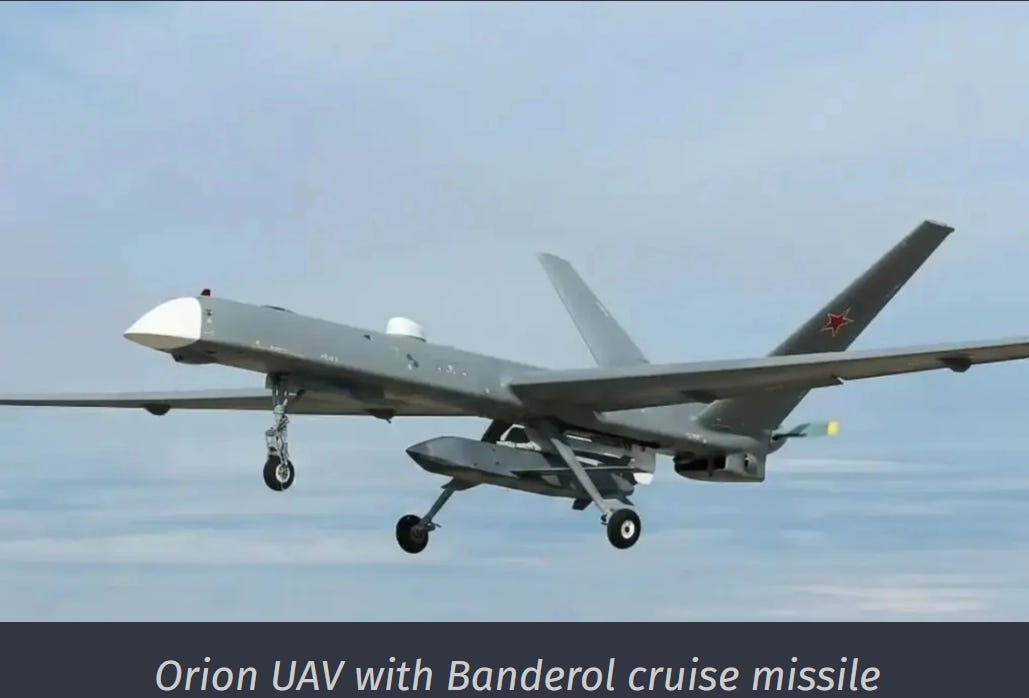
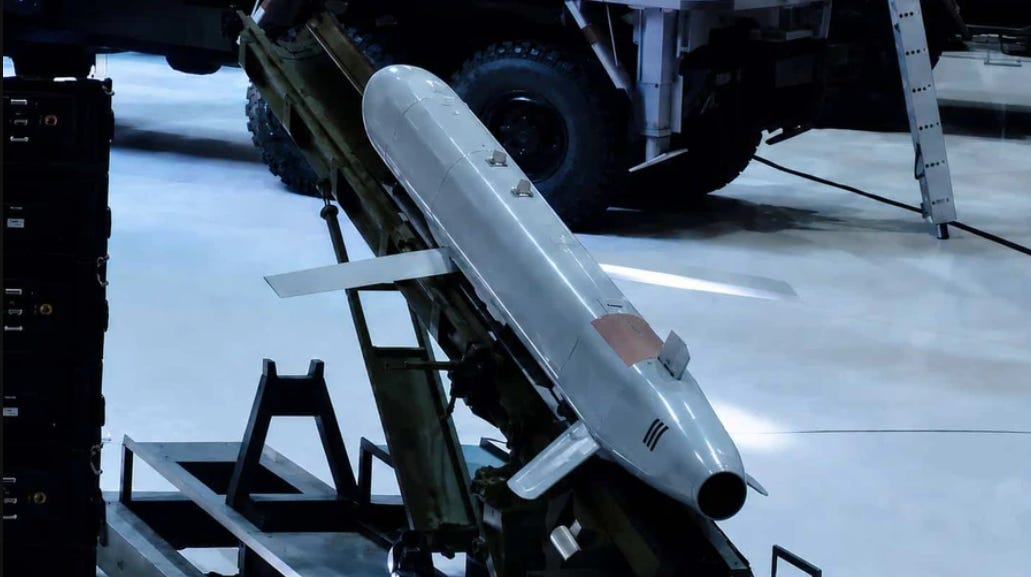
In recent months, Ukraine has increasingly seen Russia’s use of the relatively new Banderol cruise missile, Mezha Defense reported on Aug 14.
On August 9 alone, the Russians launched 11 “Banderols” over Odessa, along with several Kh-59 cruise missiles. And although the Air Force managed to shoot down most of the missiles, some of them still managed to reach their targets.
Such missile attacks occur almost daily. It was the “Banderol” that was one of the reasons why Ukraine was forced to close its ports in the Black Sea. According to Vladyslav Vlasyuk, the presidential representative for sanctions policy, about 80% of attacks on Odesa’s infrastructure are carried out with the participation of these missiles.
Russia continues to expand production of Banderols and is now capable of producing dozens per month. Defense tells how the Russians developed a new, cheap cruise missile and how it has become a new challenge for Ukrainian air defense.
The development and production of the S8000 Banderol missile was carried out by the Kronstadt JSC company. It is also known for the production of expensive and technologically advanced Orion reconnaissance and strike UAVs.
According to Yuriy Ignat, spokesman for the Air Force of the Armed Forces of Ukraine, the Russians began testing “Banderols” back in 2024. At the same time, there was no information about them for a long time.
The use of the S8000 Banderol was first reported in the spring of 2025. The characteristics became known thanks to the Main Intelligence Directorate (DIU), which published an analysis of the Banderol fragments. The appearance of the missile became known thanks to reports from the Russians themselves.
Externally, the Banderol resembles a scaled-down version of the X-101 cruise missile. It also has wings that unfold during flight, and its specific shape is designed to reduce radar signature. But that’s where the similarities end.
Unlike the X-101, which is launched thousands of kilometers from strategic bombers and has a warhead weighing up to 900 kg, the Banderol is much smaller.
It is capable of flying at speeds of up to 600 km/h over a range of up to 500 km and has a high-explosive fragmentation warhead weighing 114 kg. These missiles were mainly launched from Orions, which were produced at the same enterprise. But there is also integration into Mi-28 helicopters.
Inside, they are also completely different missiles. While the X-101 has sophisticated electronics, including Russian-made ones, an optical guidance system, and its own engines, the Banderola has nothing of the sort.
Most of the components of the “Banderols” are purchased abroad. From the Chinese Swiwin turbojet engine to American, European and Japanese electronics and chips. For navigation in electronic warfare conditions, the “Banderol” was equipped with a Russian CRPA antenna “Comet-8” and a Chinese inertial system.
The active use of civilian components allows keeping the cost of the “Banderol” at the level of $50-150 thousand. For comparison, the X-101 costs $2 million, and the “Iskander-K” - $1.5 million.
At such a low cost, the Banderol retains characteristics close to cruise missiles. A speed of 600 km/h, as well as the ability to fly at altitudes from 200 to 2,000 meters, turned the Banderol into a target close in parameters to the Kh-101 or Iskander-K missiles.
“Since they fly at a speed of 600 kilometers or more, they can be intercepted either by anti-aircraft missile systems or fighter jets,” Yuriy Ignat, spokesman for the Air Force of the Armed Forces of Ukraine, told Suspilne.
After a period of adjustment, the Russians began using Banderols again in May 2026. Since then, strikes with these missiles have been recorded in almost all regions of Ukraine, with the exception of the western regions, where they have not yet reached.
Now launches are recorded almost daily. Odesa and the Odesa region suffer the most from the strikes. According to the OSINT project “Oko-Gora”, about 70% of launches fall in this region.
The Russians are actively using the Crimean peninsula as a launch pad. As the DIU told Defense, the method of using the “Banderoles” poses a particular threat. Most often, they are launched from Mi-28N attack helicopters, in particular from the territory of Crimea. In addition, a ground-based launcher has been developed for these missiles, which allows for launches, albeit with a shorter range.
This tactic makes it much more difficult to detect the launch and respond to the attack in a timely manner. Often, airstrikes due to the threat of the use of “Banderols” were declared as soon as the missiles approached the city.
According to data provided by DIU to Mezha Defense, the Russians produce about 80 such missiles per month and plan to produce up to a thousand this year. They are used against static targets - port infrastructure, logistics hubs, terminals, and food warehouses.
Banderols deplete and occupy Ukrainian air defense assets designed to intercept cruise missiles. The economy of the mass production of this type of weapon make it attractive to Russia to produce in larger numbers.
To counter this and other Russian innovations Ukraine is developing a new generation of jet powered interceptor drones (see the following article)
The first jet interceptor drones, designed to counter Russian jet drones, are undergoing combat testing in Ukraine. The new drones are capable of speeds exceeding 600 km/h, Militarnyi reports citing former Defense Minister Mykhailo Fedorov.
The footage shows the interceptors with delta wings, tests of the turbojet engine, and its launch from a catapult.
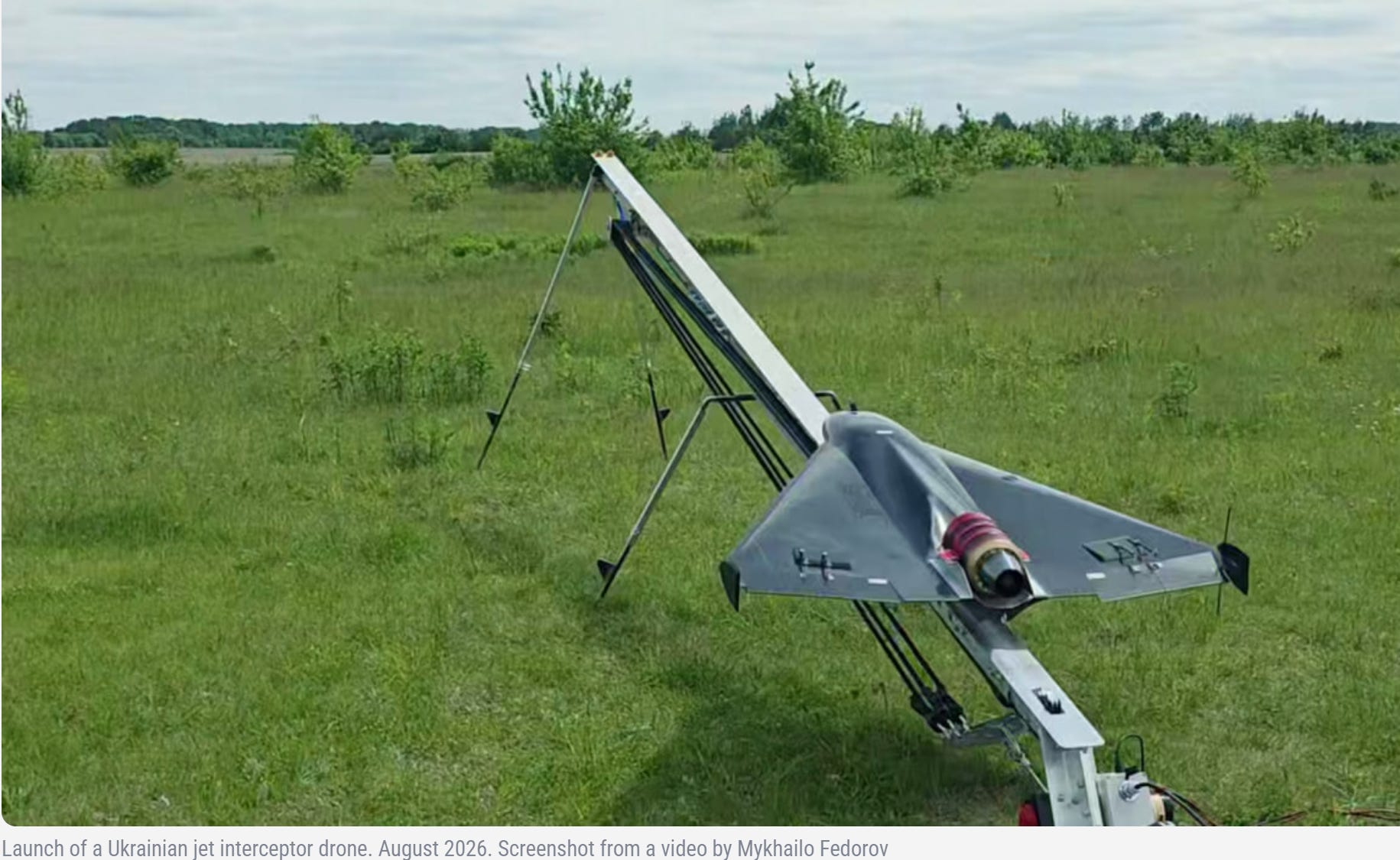
Over the course of the year, the Brave1 cluster provided grants to manufacturers and supported the testing, thanks to which several Ukrainian companies already have completed designs.
Fedorov reported that he visited the production facility of a company that was among the first to develop a similar drone, which is currently undergoing combat testing.
“The first confirmed interceptions of enemy targets are expected,” he added.
Below: Testing of a jet engine on a Ukrainian interceptor drone. August 2026 - video by Mykhailo Fedorov
That’s it for today’s Brief folks if you would like to keep up with events in Ukraine daily please consider subscribing, it’s free!
Comments
Nothing yet. Say the first thing.
Sign in to join the conversation.