

Slava Ukraini! In early 2022 I began a Telegram channel aggregating news from a number of sources daily on the war in Ukraine. In June 2023 I began providing a daily draft for the Ukraine War Brief Podcast collecting news from over 70 sources daily, which formed the basis of the script. While the Podcast no longer exists I have continued to make this Brief available for my subscribers here on Substack and anyone who wishes to keep up with the news from the war.
If you find the Brief informative I would appreciate it if you shared it with others.
For: Aug 12, 2026
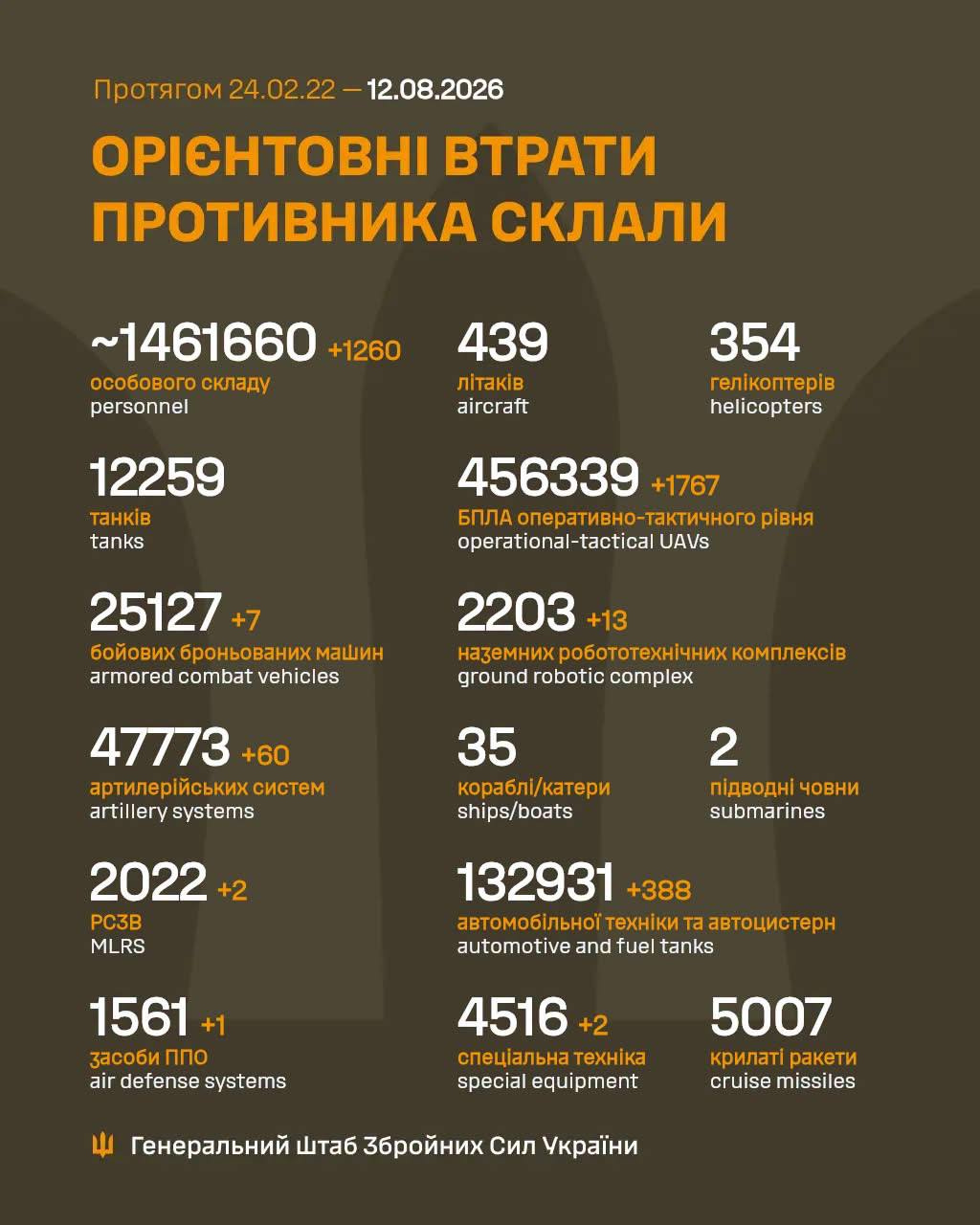
The General Staff of the Armed Forces of Ukraine in its Operational Information update at 08:00 on Aug 12 stated that day 1631 of the full-scale invasion of the Russian Federation against Ukraine had begun.
Ukrainian defenders continue to actively conduct the systematic destruction of the enemy and offer effective resistance in all areas of the front, causing them significant losses in personnel, equipment and technology. The AFU are exhausting the enemy along the entire front line and disrupting their plans to advance deeper into the territory of Ukraine.
Over the past 24 hours, 237 combat engagements took place.
During the past day, aviation, missile troops and artillery of the Defense Forces of Ukraine hit three control points, one area of concentration of enemy manpower, one artillery system and four control points of unmanned aerial vehicles.
Over the past 24 hours, the enemy carried out 2 missile strikes, 80 air strikes, used 11,155 attack drones and carried out approximately 3,420 attacks on populated areas and the positions of Ukrainian forces.
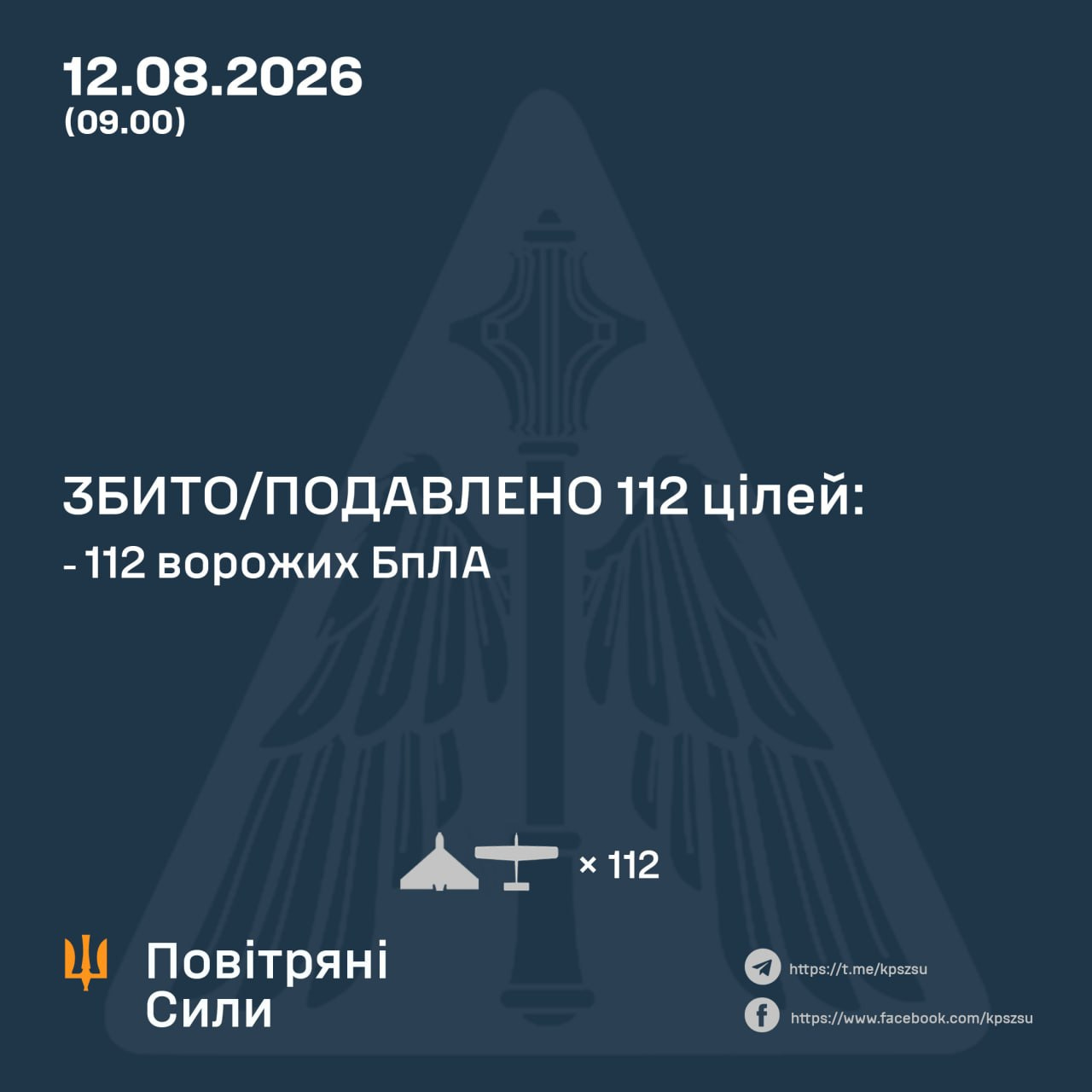
112 ENEMY TARGETS SHOT DOWN/SUPPRESSED
➖➖➖➖➖➖➖➖➖
During the night of Aug 12 (from 18:00 on Aug 11), the enemy attacked Ukraine with an Iskander-M ballistic missile, an Х-31P anti-radiation missile, guided Х-35 air-to-air missiles launched from the Rostov region and from the Black Sea, as well as 138 Shahed-type attack drones (including jet-powered, “Gerber,” and imitation drones of the “Parody” type) from the directions of Kursk, Millerovo, Orel, and Primorsko-Akhtarsk (Russia), as well as from the temporarily occupied Donetsk region and the temporarily occupied Crimean Autonomous Republic.
The main direction of the attack was Sumy and Odesa regions.
The air attack was repelled by aviation, air defense missile forces, electronic warfare units, and unmanned systems, as well as mobile fire groups of the Ukrainian Defense Forces.
According to preliminary data, as of 09:00, air defense forces shot down/suppressed 112 enemy Shahed-type drones, “Gerber” drones, and drones of other types in the north, south, and east of the country.
Hits by enemy air attack assets were recorded at 16 locations, and debris from downed drones fell at 2 locations.
This section of the Brief is compiled from information taken from the Institute for the Study of War (ISW), a US based think tank, in their daily Russian Offensive Campaign Assessment.
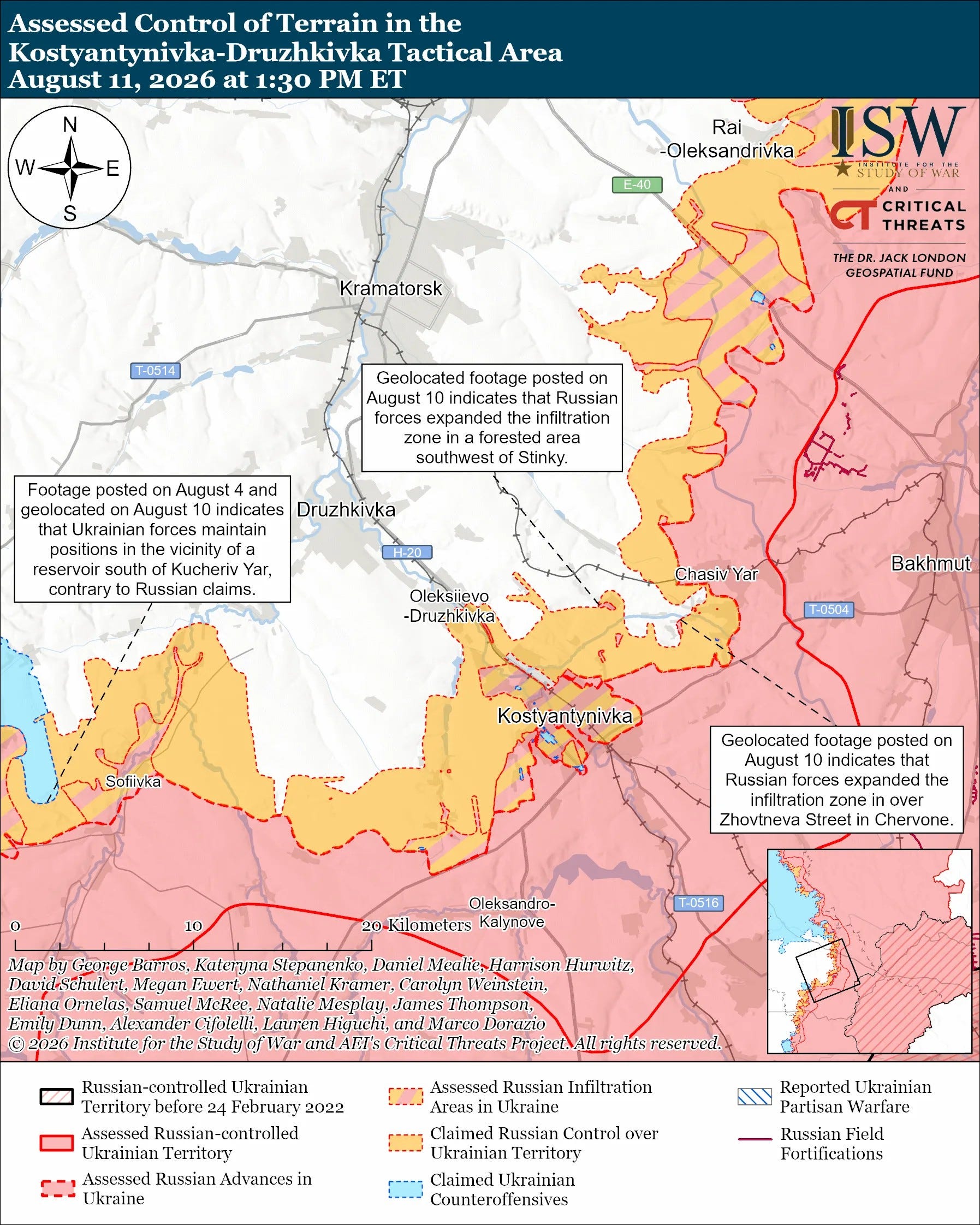
Kostyantynivka Sector: Russian forces recently conducted infiltration missions in the Kostyantynivka-Druzhkivka tactical area.
Geolocated footage posted on Aug 10 shows Ukrainian forces striking Russian positions southwest of Stinky (north of Kostyantynivka) and in Chervone (northeast of Kostyantynivka) after what ISW assesses were Russian infiltration missions.
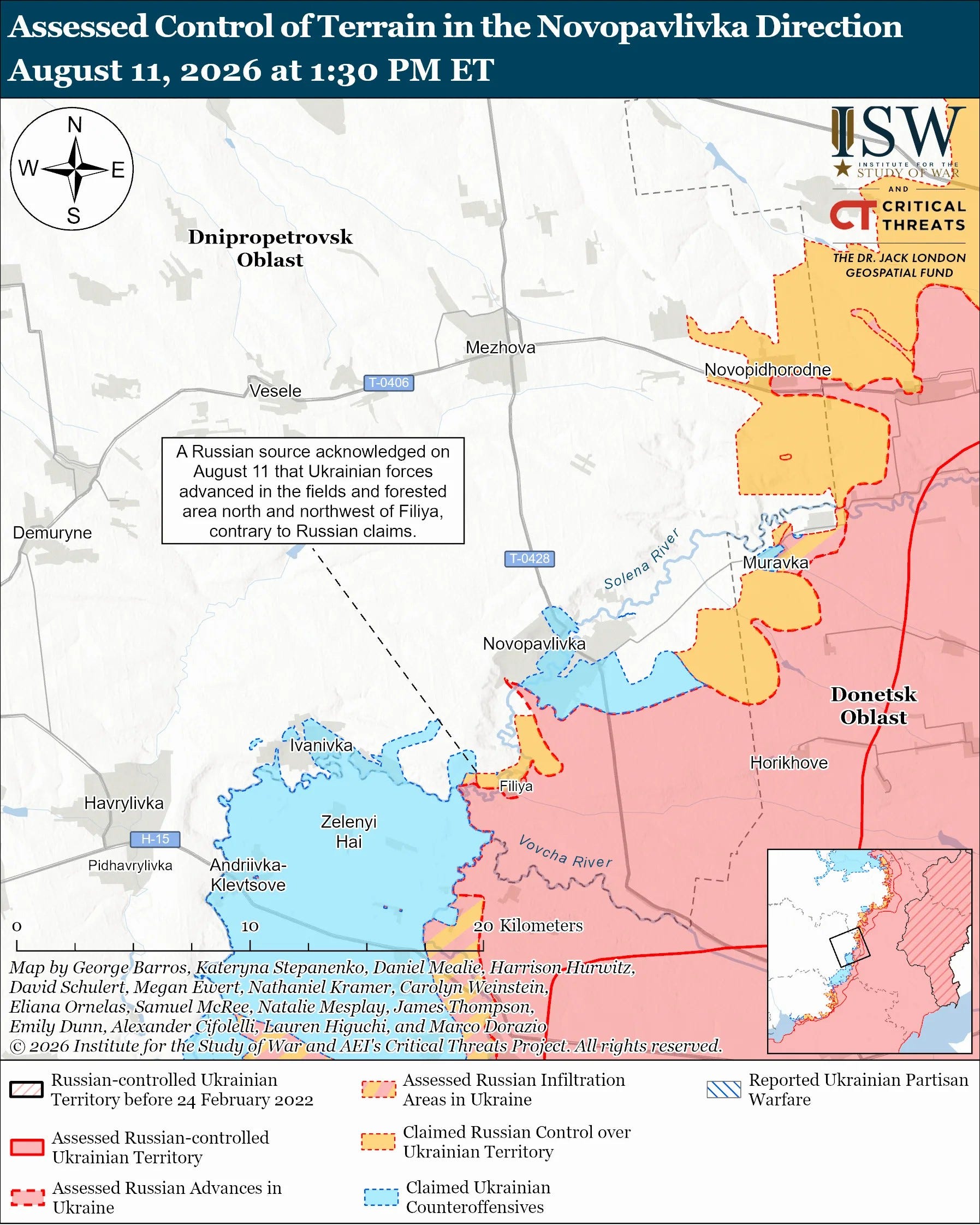
Novopavlivka Sector: Ukrainian forces likely recently cleared Russian infiltrators from an area in the Novopavlivka direction.
A Russian milblogger acknowledged on Aug 11 that Ukrainian forces advanced northwest of Filiya (southwest of Novopavlivka) — an area in which ISW previously observed evidence of a Russian infiltration mission.
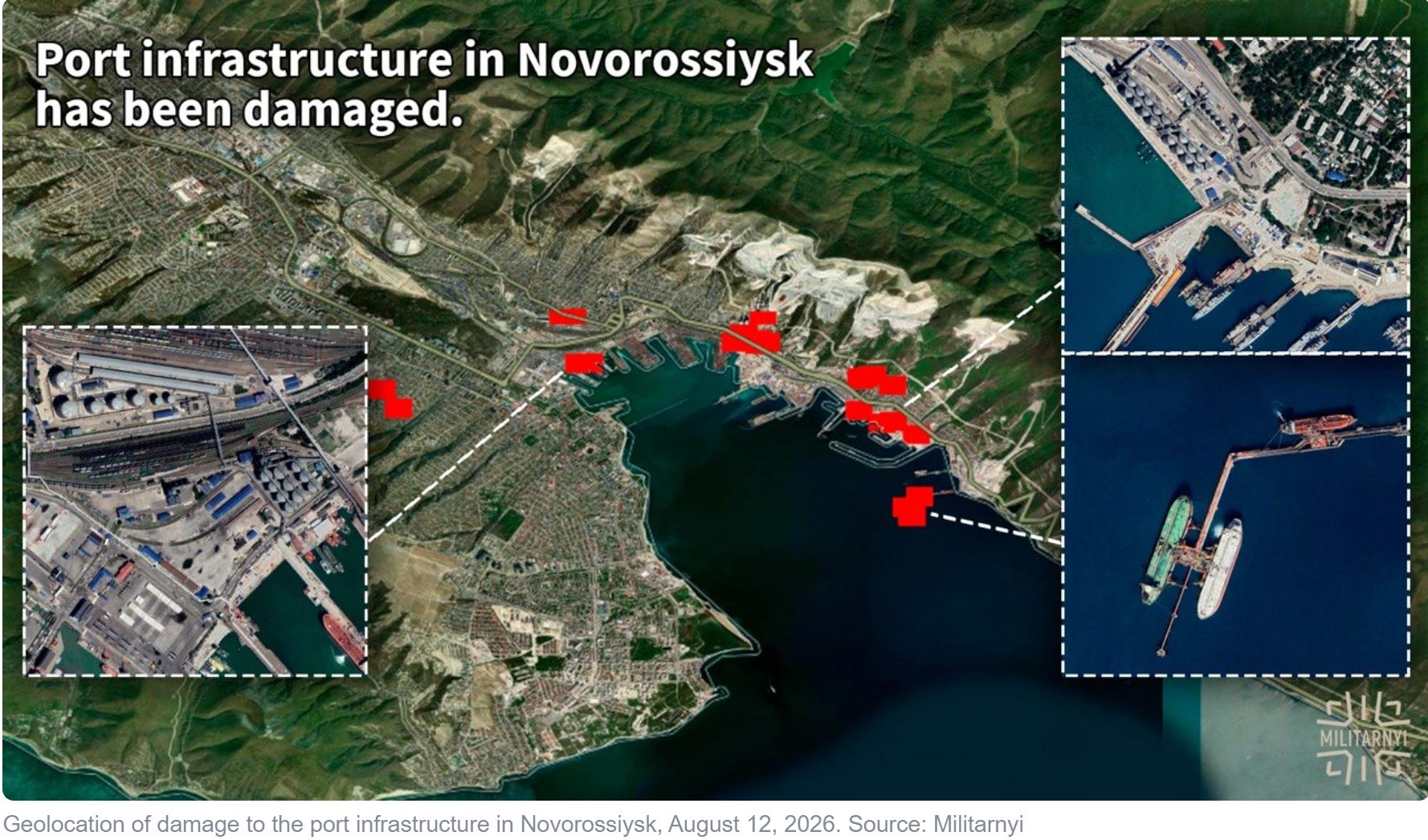
Ukraine hammered Russia’s Black Sea port city of Novorossiysk in a massive overnight drone attack which put two major grain terminals out of action, according to Russian industry sources, and which Kyiv said had targeted a naval base there, Reuters reports.
Russia is the world’s largest wheat exporter and most of those exports are shipped via its Black Sea ports like Novorossiysk. Russia’s main grain lobby group warned last month that Ukrainian attacks could shut down grain exports via the Black Sea in the near future, pushing up prices and causing hunger in Africa and the Middle East.
Ukrainian President Volodymyr Zelenskyy said on Telegram that Ukraine had hit Russia’s Novorossiysk naval base with drones, missiles and unmanned boats. Russia moved some of its Black Sea Fleet vessels to Novorossiysk after Kyiv’s forces attacked them repeatedly in Crimea, which Moscow seized and annexed from Ukraine in 2014.
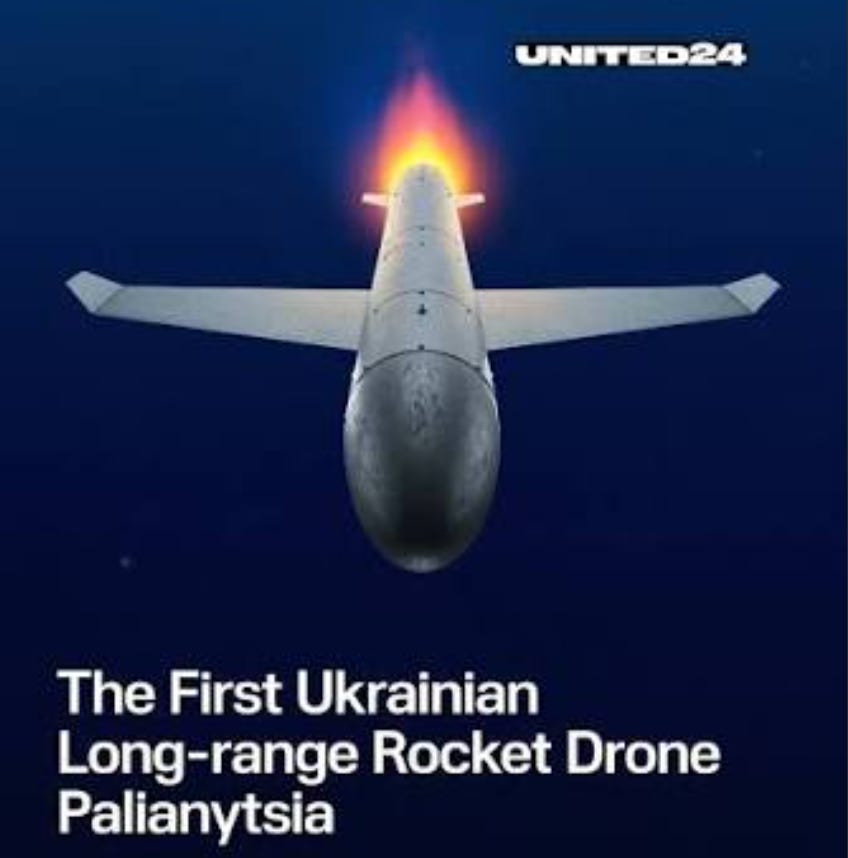
Zelenskyy said both Neptune and Palianytsia missiles were employed in the attack
Veniamin Kondratyev, the governor of Krasnodar region, where Novorossiysk is located, said a “massive” wave of Ukrainian attacks had targeted the area and killed at least two people, including an 8-year-old child.
Andrei Kravchenko, the mayor of Novorossiysk, said four unspecified enterprises and more than two dozen residential buildings had been damaged in the attack.
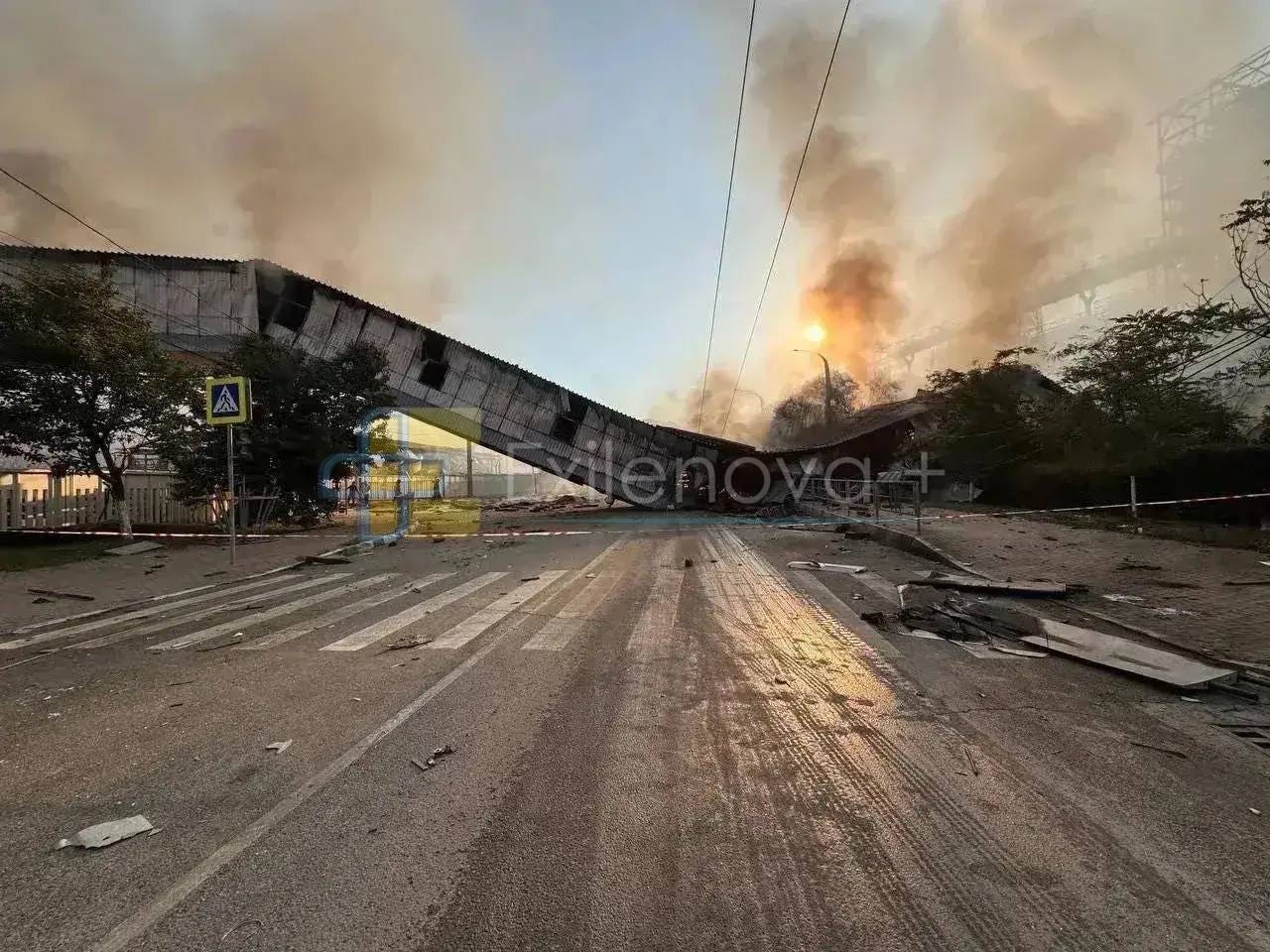
Unverified video on social media showed images of a tower of flames and smoke rising from somewhere in Novorossiysk.
Aside from grain export terminals, Novorossiysk also hosts oil export infrastructure, including for the Caspian Pipeline Consortium (CPC), which is owned partly by U.S. oil majors Chevron and Exxon Mobil and carries Kazakh oil exports to market.
The Financial Times reported on Wednesday that Ukraine has halted its strikes on tankers servicing the CPC after a request from U.S. Vice President JD Vance. There was no indication that the CPC or tankers collecting oil from the pipeline had been struck during the overnight attacks.
Russian President Vladimir Putin on Wednesday threatened to seize ships belonging to European countries in retaliation for plans to sell off cargo seized from Russian “shadow fleet” vessels, Euro News reports.
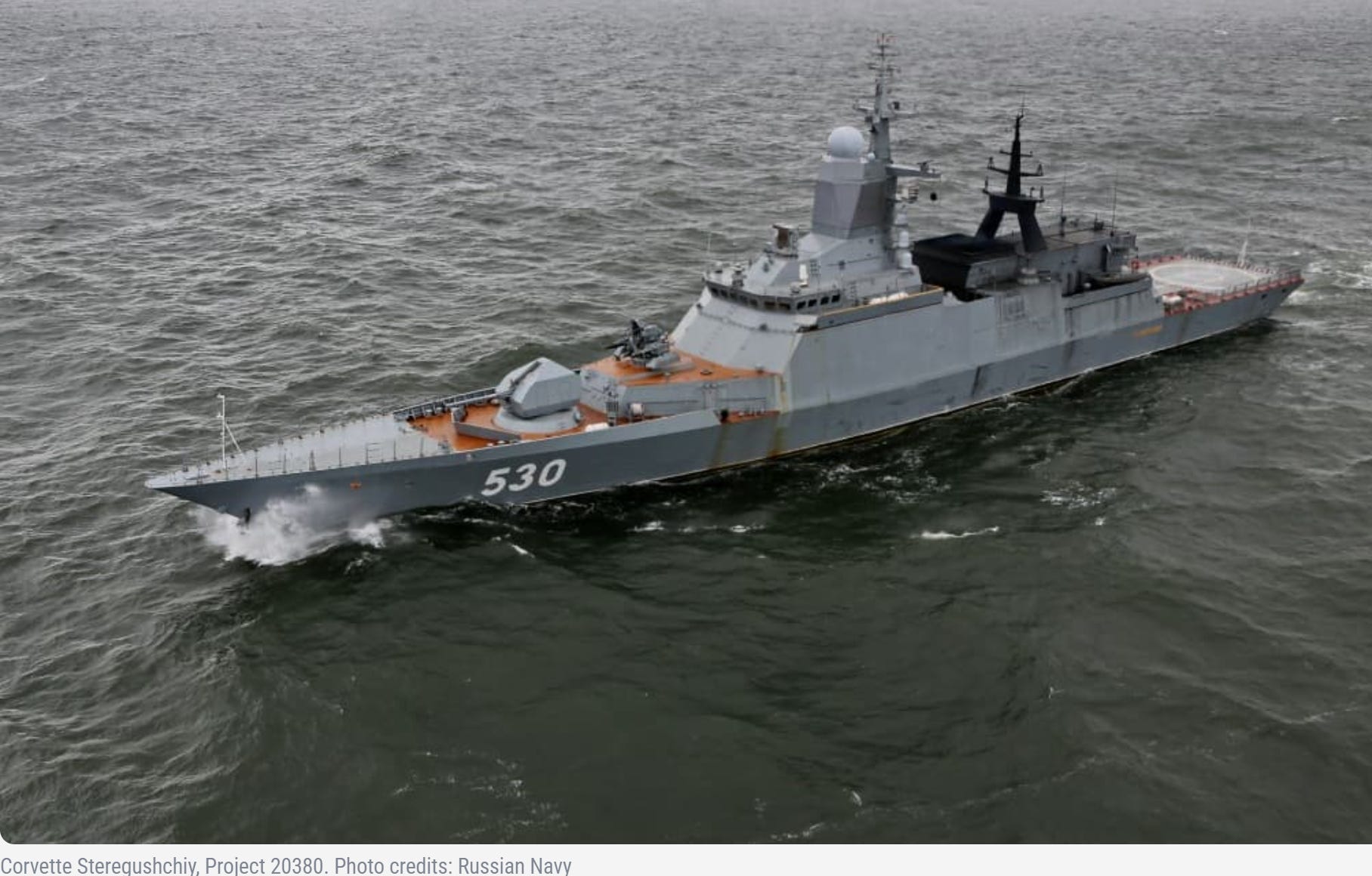
Several European companies have intercepted ships carrying Russian oil in contravention of European sanctions targeting the vital revenue source.
New sanctions passed last month permit EU members to sell the oil or any other cargo seized from the ships.
Moscow has bristled at the moves, with Putin calling it “piracy and banditry”.
“We will be forced to respond in kind,” the Kremlin chief said while overseeing naval drills in Russia’s Far East. Moscow would act “wherever we ourselves deem necessary and appropriate — anywhere,” he added.
Swedish court documents showed Stockholm will transfer to Kyiv a seized Russian ship suspected of transporting grain from occupied Ukraine.
Putin was speaking aboard the Russian cruiser Varyag off the island of Sakhalin, where Russia’s navy was conducting drills.
The exercises come a week before joint US-South Korean war games, designed to simulate a possible invasion from North Korea.
Tensions are high in the region amid accusations from Kyiv and Seoul that Pyongyang and Moscow are further intensifying their military cooperation.
Nothing major to report.
Russian attacks killed eight people and injured 57 others across Ukraine over the past day, the Kyiv Independent reported citing local authorities on Aug 12.
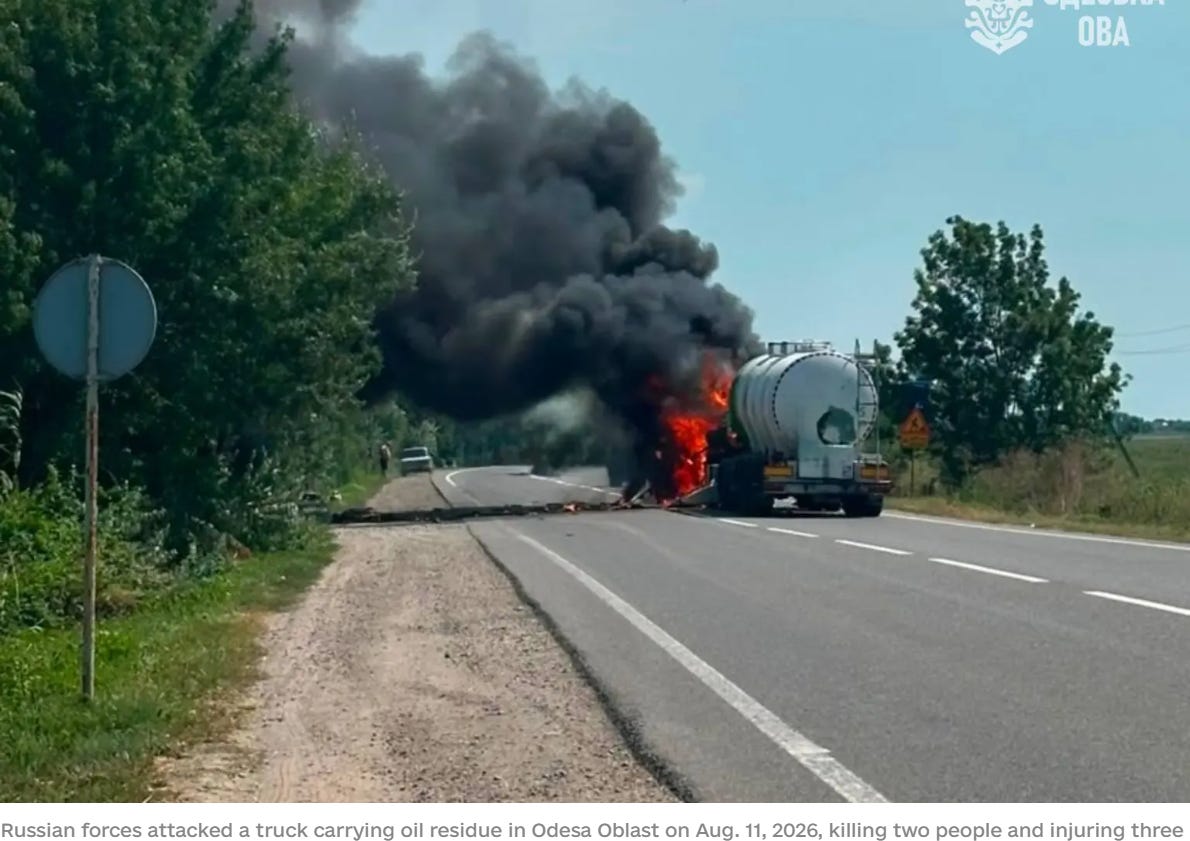
One of the attacks took place in Odesa Oblast on Aug. 11, when Russian forces struck a truck carrying oil. The flames spread quickly to a nearby passenger car, killing two people and injuring three others, regional Governor Oleh Kiper said.
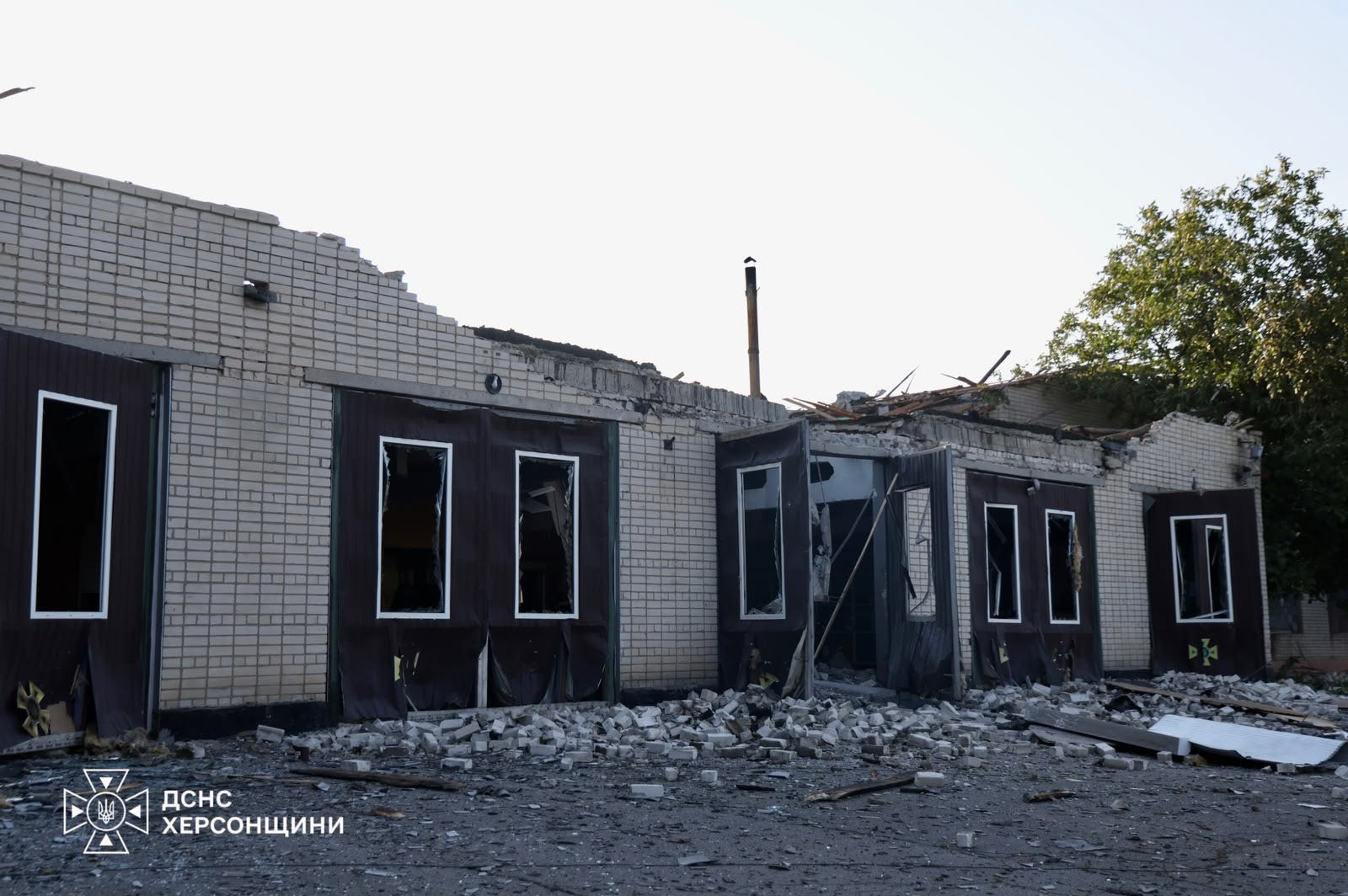
In Kherson Oblast, Russian forces targeted 33 settlements, including the regional center of Kherson, killing two people and injuring 14 others over the past day, the local military administration said.
In Sumy Oblast, Russian attacks killed a 61-year-old man in the Sumy community and a 62-year-old man in the Velyka Pysarivka community. Four other civilians were injured in Russian attacks elsewhere in the region, according to the local military administration.
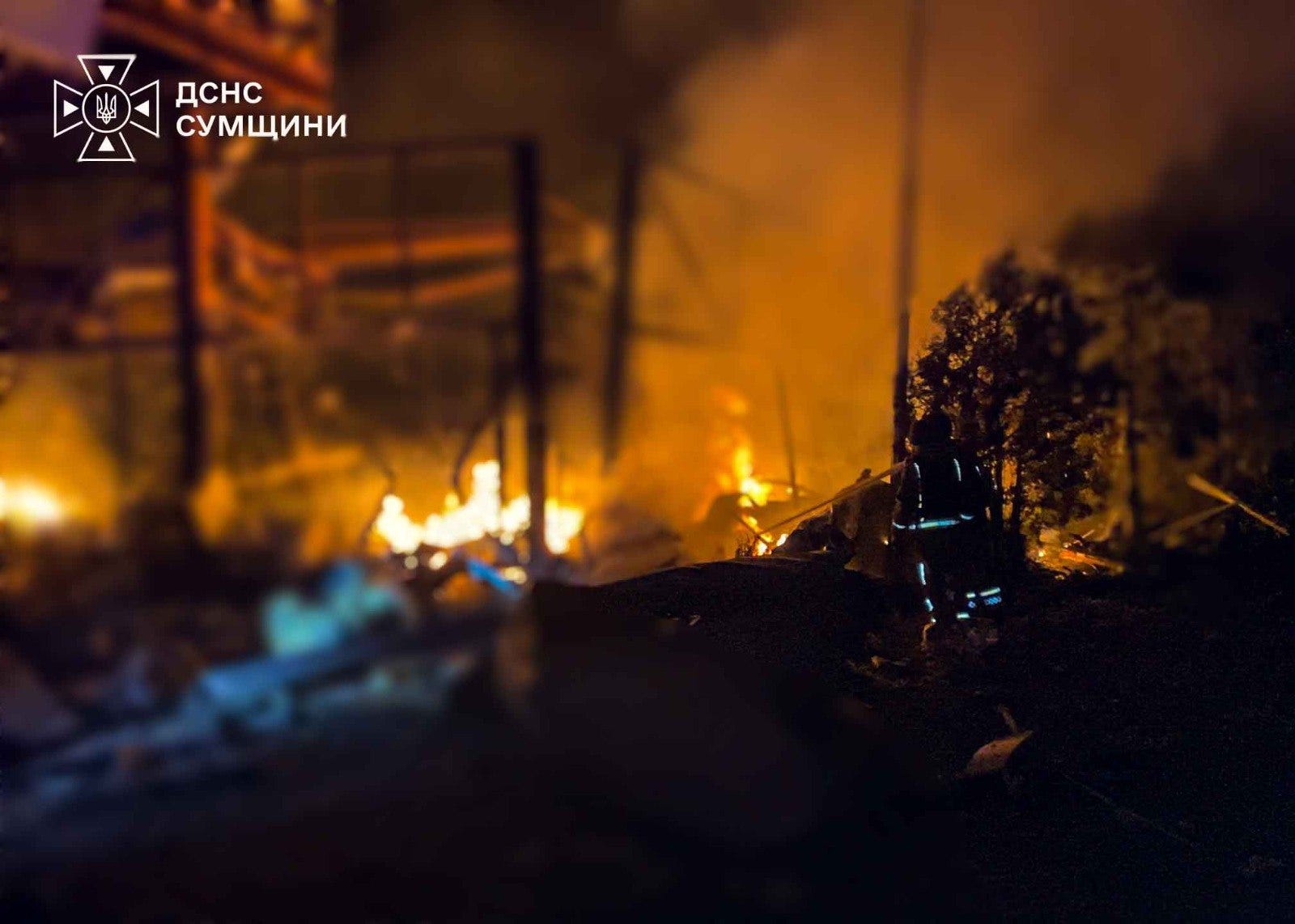
In Donetsk Oblast, Russian forces killed one person in Druzhkivka, while 14 others were injured in Russian attacks on other settlements across the eastern region, Governor Vadym Filashkin said.
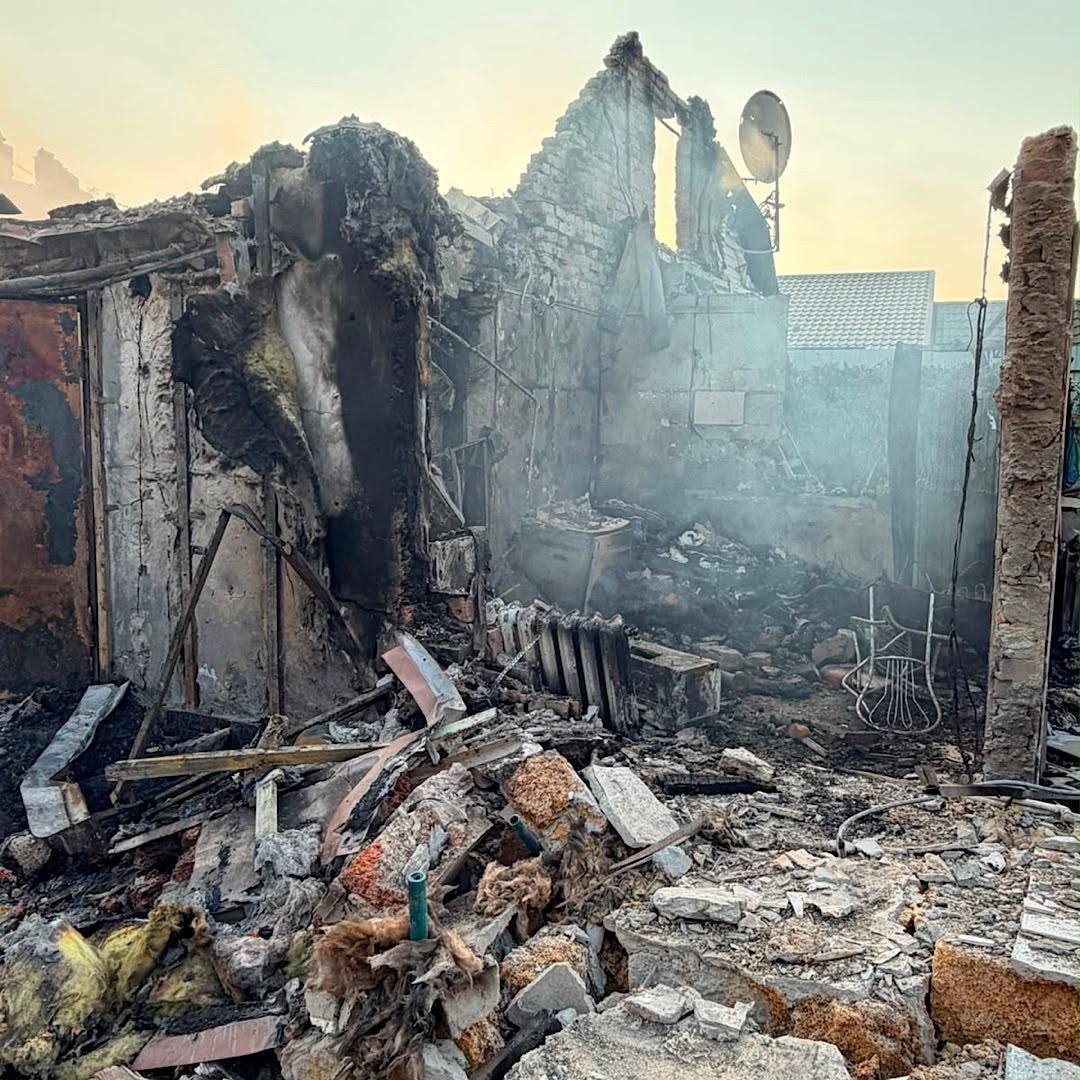
In southeastern Zaporizhzhia Oblast, Russian attacks killed one person and injured nine others over the past day, according to local authorities.
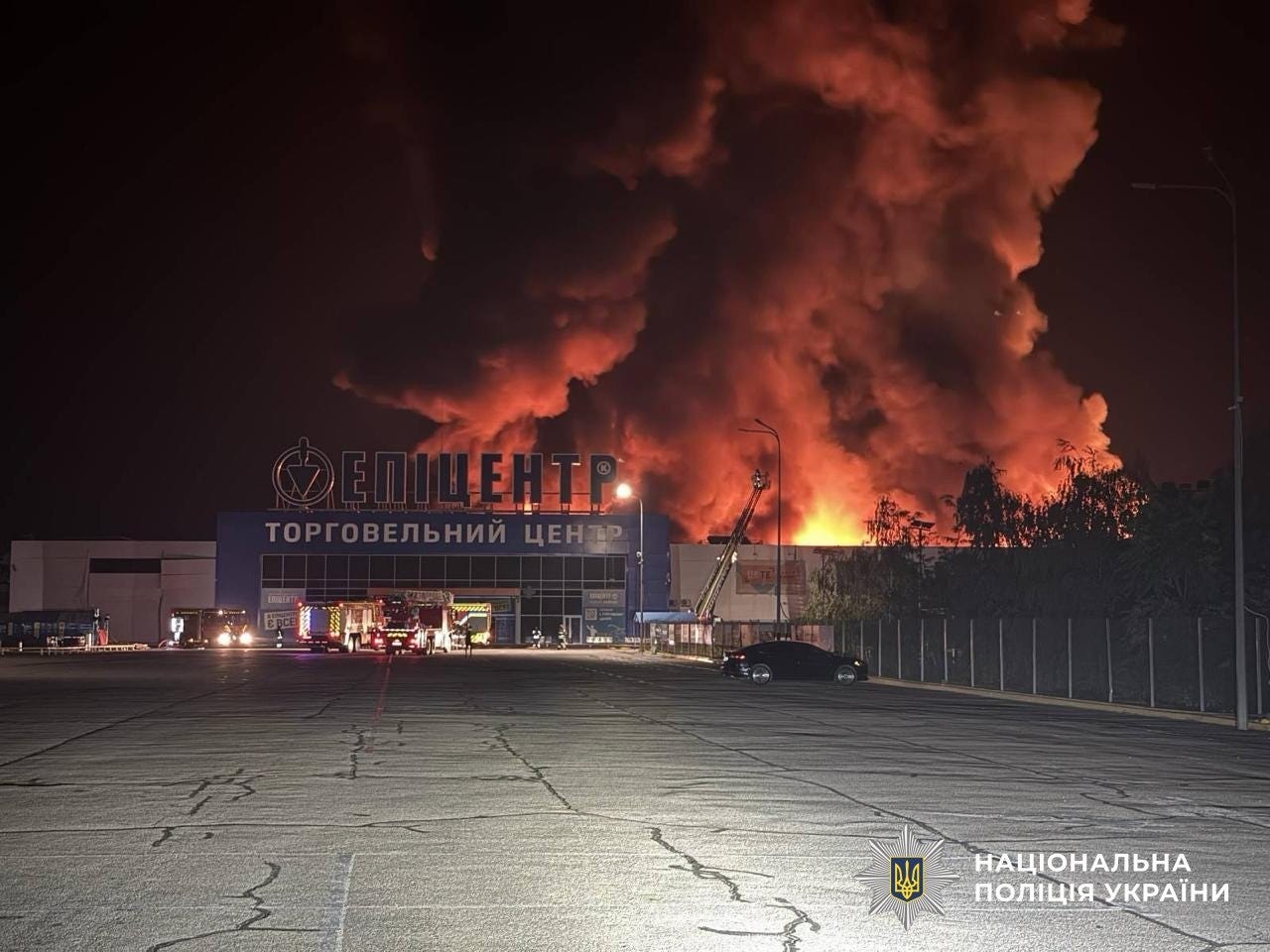
In northeastern Kharkiv Oblast, eight people were injured in Russian attacks, including a 15-year-old boy, Governor Oleh Syniehubov said.
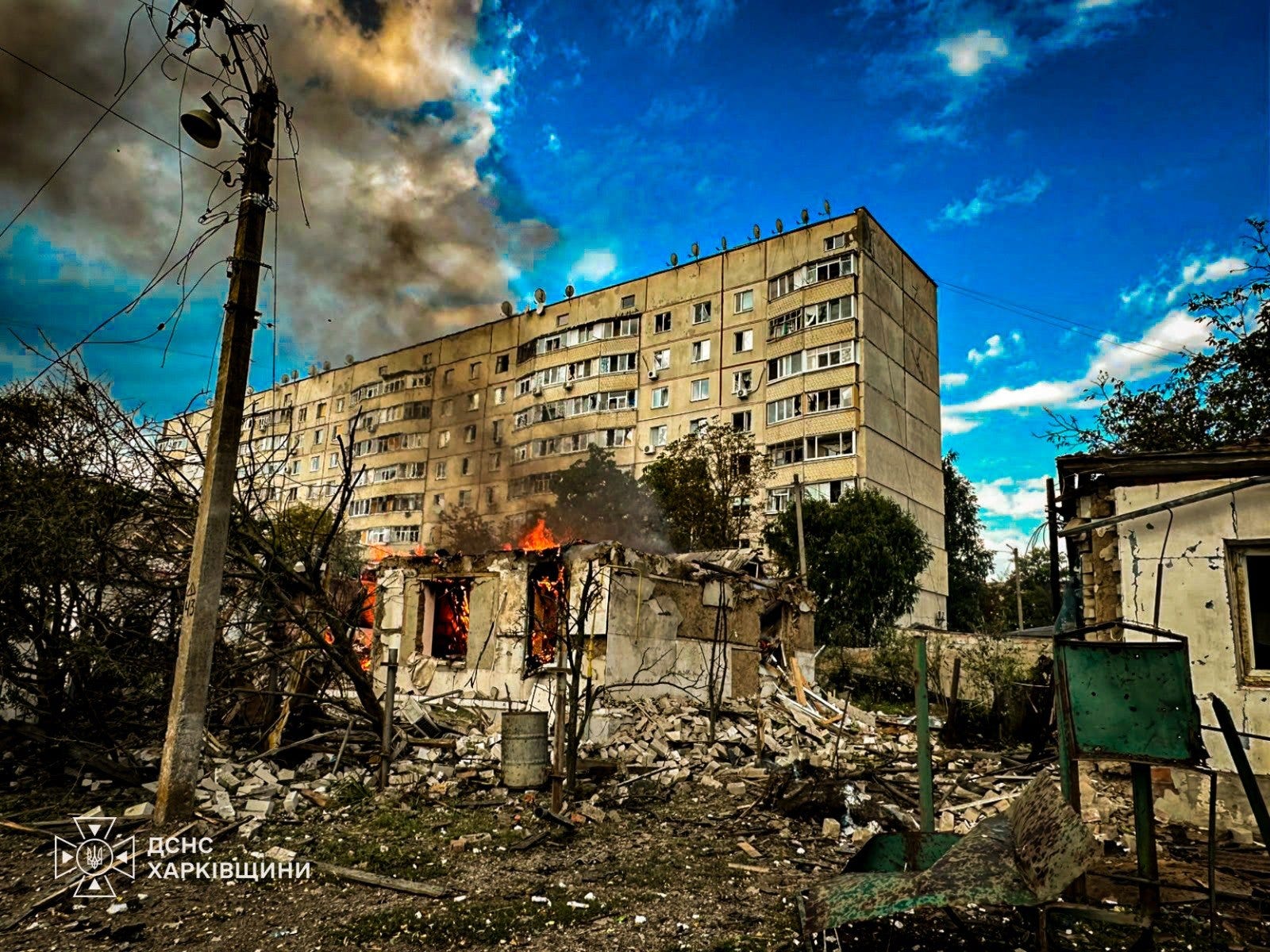
In northern Chernihiv Oblast, two people were injured in Russian drone attacks over the past day, Governor Viacheslav Chaus said.
In Kyiv Oblast, a 65-year-old man was injured in the Brovary district and hospitalized, local authorities said.
In Dnipropetrovsk Oblast, two people were injured in Russian attacks on the Nikopol district, which lies across the Dnipro River from Russian-occupied territory, Governor Oleksandr Hanzha said.
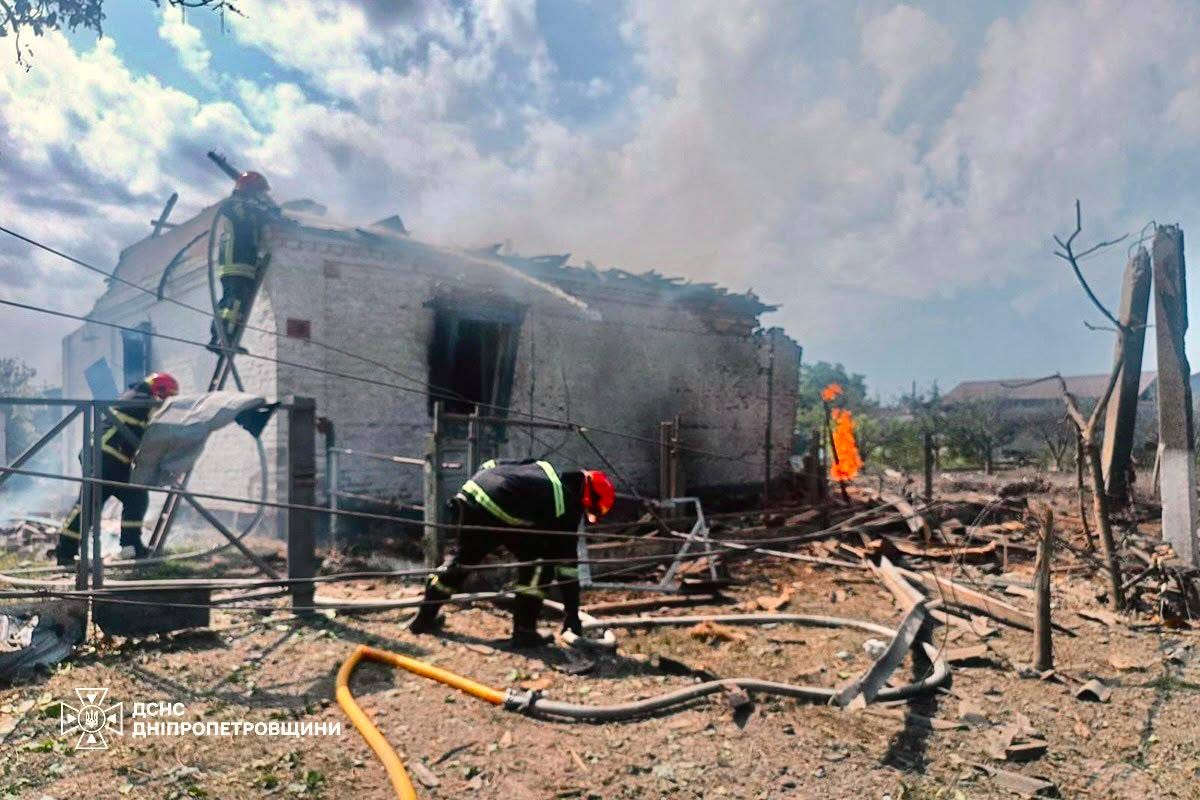
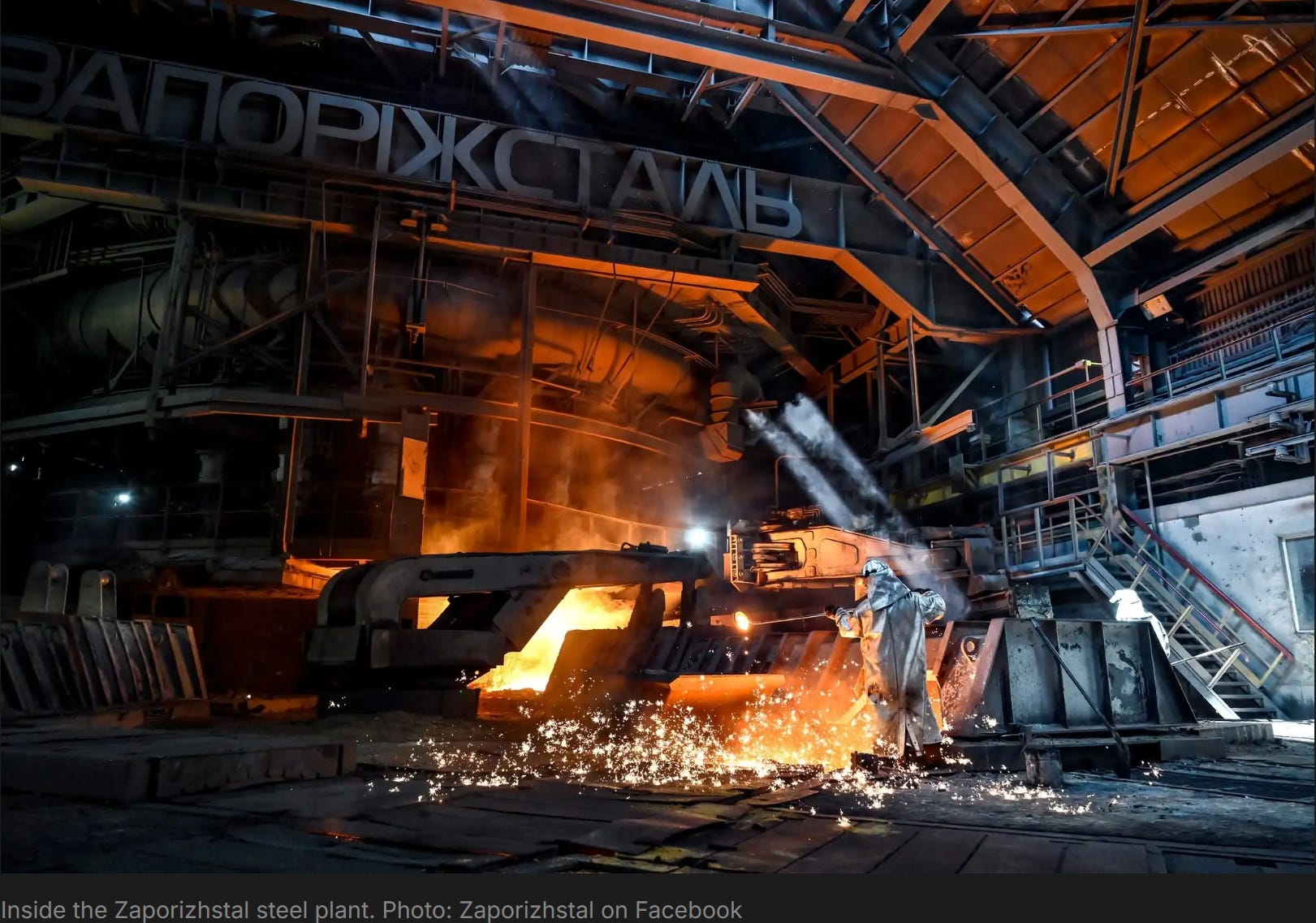
A Russian ballistic strike on Zaporizhzhia, Ukraine, killed seven employees of the Zaporizhstal steel plant and injured 21 others, Euromaidan Press reported citing Ukrainian steelmaker Metinvest, the plant’s majority owner, on 11 August.
The strike comes as Russia expands its use of North Korean KN-23 and KN-24 ballistic missiles, which are harder for Ukraine to intercept and have been linked to deadly attacks on civilians.
The workers were on their way to a shelter after an air raid alert was announced when the strike hit the industrial site, according to the company.
Metinvest said the attack also damaged energy facilities and infrastructure, as well as the main and auxiliary facilities of the plant’s coke and blast-furnace operations.
Russia’s ballistic missile strikes leave very little time between threat detection and impact for people to react and reach shelter. Several people have been killed from strikes across the country while on their way to bomb shelters.
Metinvest said Zaporizhstal has been completely shut down following the attack, while its other production sites in the city are operating at reduced capacity.
Company specialists are assessing the damage and determining the scope and timeline of repairs. Emergency and restoration work is already underway, according to the statement.
The company said its Zaporizhzhia facilities are civilian industrial sites that employ tens of thousands of people and produce steelmaking and coke-chemical products.
Metinvest said it is providing medical assistance and support to the 21 injured employees and staying in contact with the families of those killed and wounded.
The company’s facilities will fly flags at half-mast on 11 and 12 August in mourning for the seven Zaporizhstal workers killed in the attack.
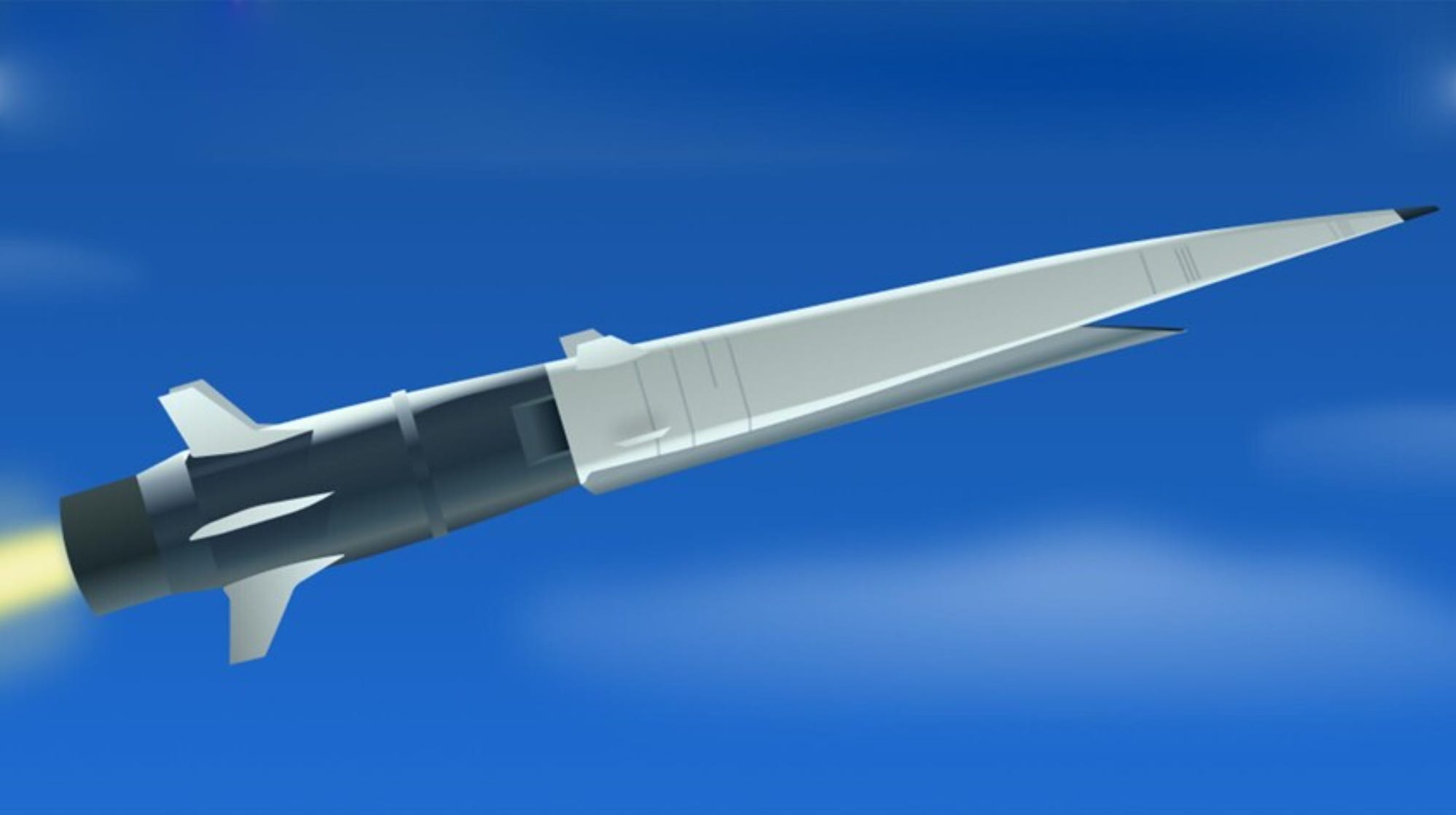
Ukrainian President Volodymyr Zelenskyy said Zaporizhzhia was targeted overnight with North Korean ballistic missiles, Russian Zircon missiles and guided aerial bombs.
Zelenskyy said the attack was designed to cause maximum damage to civilian infrastructure.
Moscow received its first gasoline shipments from India last week to cope with local shortages, Bloomberg reported on Aug. 12, citing Kpler data.
Nayara Energy Ltd., an Indian oil refining company backed by Russia’s largest oil producer, Rosneft, was revealed to be the source of fuel that traveled aboard Russian-linked tankers through Egypt.
Russia began importing gasoline from its partners, among them Belarus and India, as Ukrainian drone attacks continue inflicting damage to oil refineries thousands of kilometers from the front line.
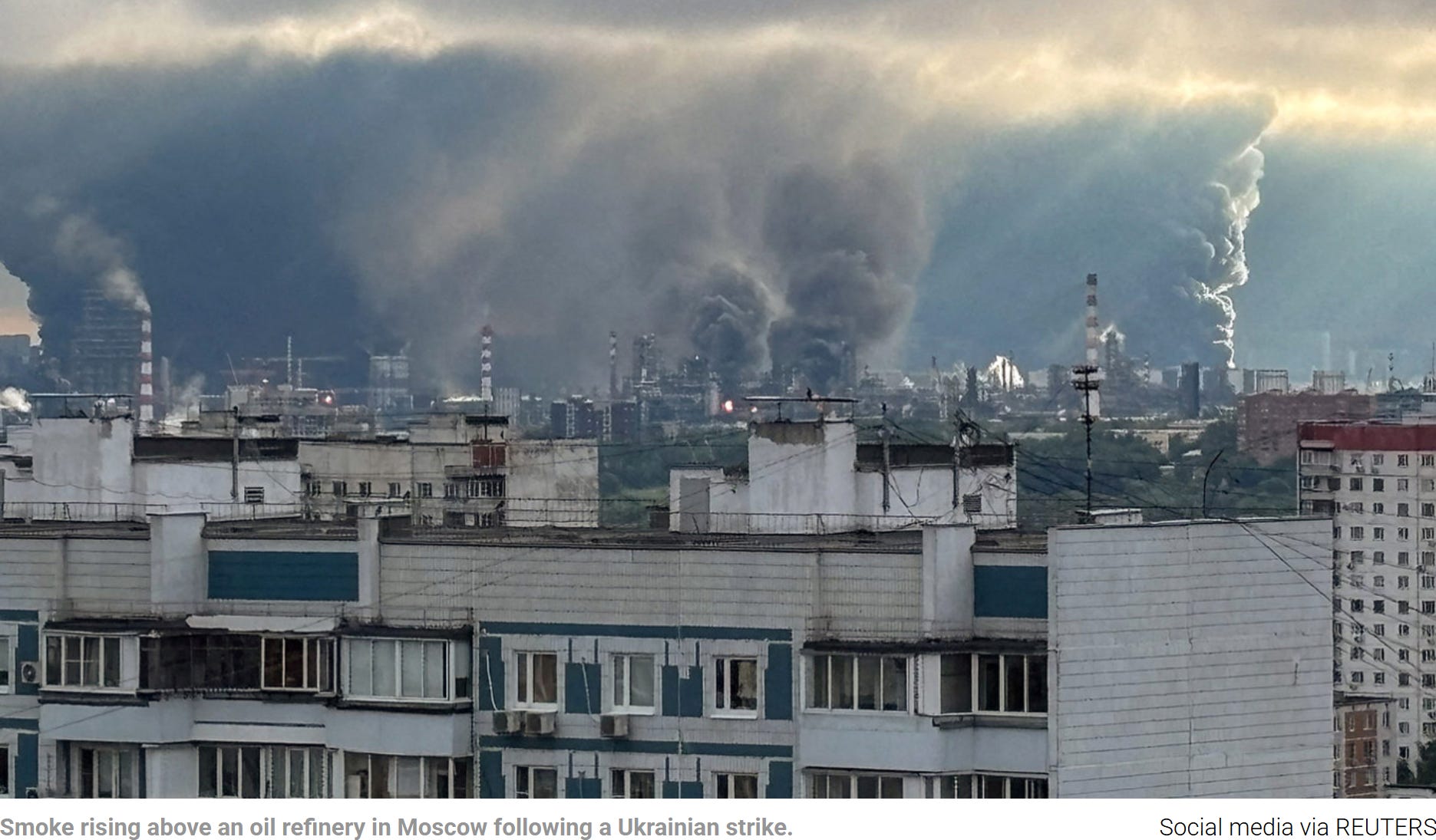
As Kyiv carried out its “40-day campaign” aimed at “weakening key elements of the Russian military machine”, analysts estimate that Russia’s current crude-processing rates are about a third below seasonal expectations.
Sumit Ritolia, lead analyst at Kpler, told Bloomberg that imports from farther countries like India underline “the severity of the current domestic gasoline imbalance.” In April, Moscow announced a complete ban on gasoline and diesel exports to prioritize its own consumers.
Despite sanctions, shadow fleet tankers continue to operate at sea, delivering fuel to Russia’s ports.
Nayara, sanctioned by the European Union last July, transferred a 42,000-metric-ton gasoline cargo from India’s Vadinar to a transfer point at Damietta Port in Egypt before the vessel departed for Russia, concluding its drawn-out journey.
Data compiled by Bloomberg reveals that more fuel may be on its way to Russia, as two tankers left Vadinar on July 6 and 13 before making transfers at Damietta.

Germany beefs up its intelligence services as threat from ‘foreign powers’ rises
German officials accuse Moscow of waging a “hybrid” campaign of sabotage, espionage and disinformation against the country, which is among Ukraine’s biggest military supporters in the war with Russia, Euronews reports.
The German government signed off on a major overhaul of the country’s intelligence agencies on Wednesday to give them broad new powers to conduct covert operations and take action against foreign threats.
Interior Minister Alexander Dobrindt announced a “new era” for Germany’s secret services, which have until now been largely limited to gathering intelligence.
The services will get greater latitude to conduct non-lethal operations such as hacking enemy servers or conducting sabotage under the reforms that still have to pass parliament before taking effect early next year.
Chancellor Friedrich Merz’s coalition has argued that more powerful intelligence agencies are needed to counter the threats posed by hostile foreign powers, terrorist groups and cybercriminals.
German officials accuse Moscow of waging a “hybrid” campaign of sabotage, espionage and disinformation against the country, which is among Ukraine’s biggest military supporters in the war with Russia.
“We are in the thick of a hybrid conflict not only with Russia but also with other actors,” Marc Henrichmann, chairman of the parliament’s intelligence oversight committee, told the AFP news agency.
He argued Germany’s cautious approach has left it “behind the curve” and unable to properly contribute to European security.
Henrichmann pointed to a string of recent incidents, including an explosive-laden drone discovered at Leipzig airport last week, to underscore the importance of the changes.
“We face adversaries who play without any rules at all,” he said. “They have no regard for law and order. Their goal is not merely to put the West, the EU and Germany under pressure, but ideally to bring them to their knees.”
For decades, Germany has placed its BND foreign intelligence agency and the BfV domestic spy service under tight restrictions that rule out direct and potentially lethal operations as practised by the CIA of the United States or Israel’s Mossad.
Those rules were imposed in part because of the gruesome abuses carried out by the Nazi dictatorship and communist East Germany, as well as a strong German sense of privacy rights.
“The German intelligence services were essentially, until recently, information collection services,” Peter Neumann, professor of security studies at King’s College London, told AFP.

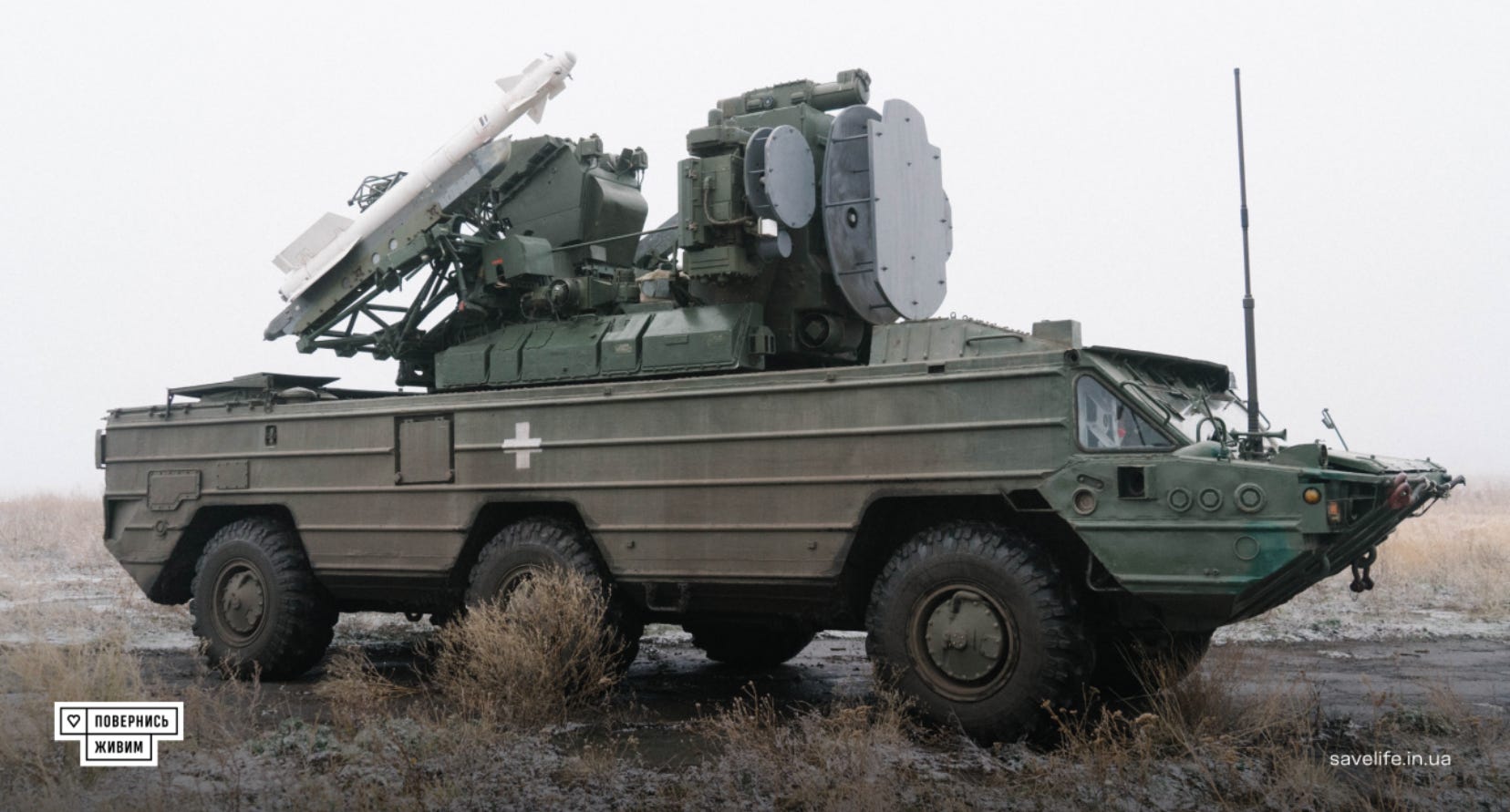
Ukraine’s 1129th Regiment has reported intercepting Russian Geran-4 unmanned aerial vehicle using the Osa surface-to-air missile system, Defense Express reports.
The regiment published footage of the engagement on August 11, showing its air defense crew tracking and striking the incoming drone.
According to the regiment, Russian forces are attempting to adjust their tactics as large-scale attacks involving conventional drones become less effective. Instead, Russian forces are increasingly experimenting with individual, more challenging aerial targets launched along different routes and at varying altitudes.
The Geran-4 system is part of this evolving threat. Russian forces have been expanding the types of unmanned systems used in attacks against Ukraine, seeking to complicate detection and interception by Ukrainian air defense crews. The Geran-4 replaces earlier models internal combustion engines with a jet engine, increasing its speed.
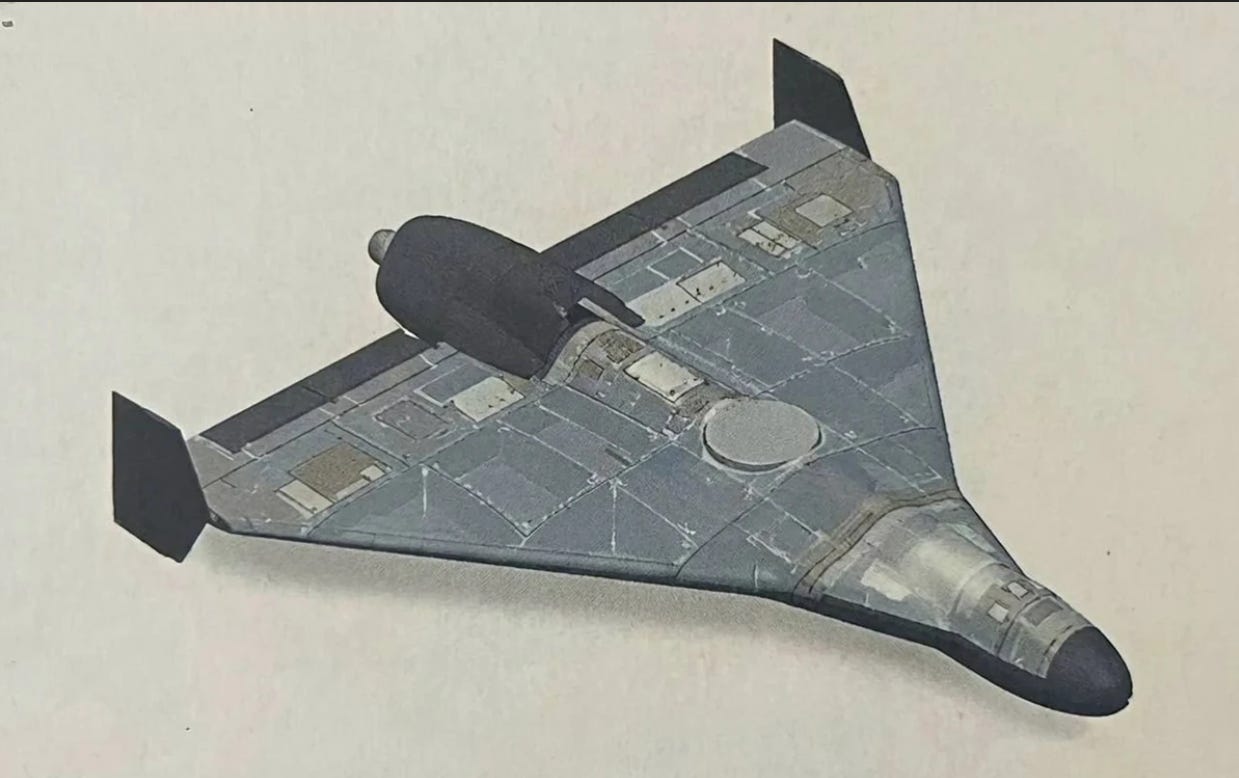
Ukrainian regiment said that its personnel are prepared to counter such threats. It argued that conventional air defense missile systems are particularly well suited to engaging aerial targets of this type, highlighting the continued relevance of legacy systems that were originally designed to destroy aircraft and other airborne threats.
The Osa surface-to-air missile system is an old Soviet made system introduced in the 1960s but has been considerably modernized in Ukrainian service.
That’s it for today’s Brief folks if you would like to keep up with events in Ukraine daily please consider subscribing, it’s free!
Comments
Nothing yet. Say the first thing.
Sign in to join the conversation.