
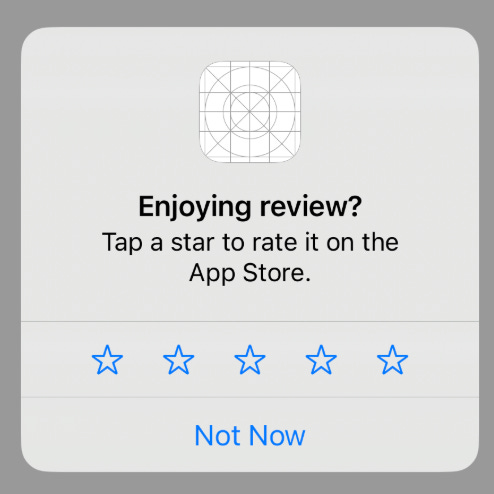
I was working with a startup that built their app around reviews.
The core experience was simple: test products, write reviews, post photos to social.
It started with beauty but expanded into other categories.
They had strong MAUs.
Products had hundreds, sometimes thousands, of reviews.
The community was active and vocal.
But the number of app store reviews stayed low, especially compared to how engaged people were in the app itself.
To change that, I built a simple plan.
We already knew people were leaving 4- and 5-star product reviews.
They were happy. They trusted the platform.
But no one thought to rate the app itself.
So I connected the dots and did two things:
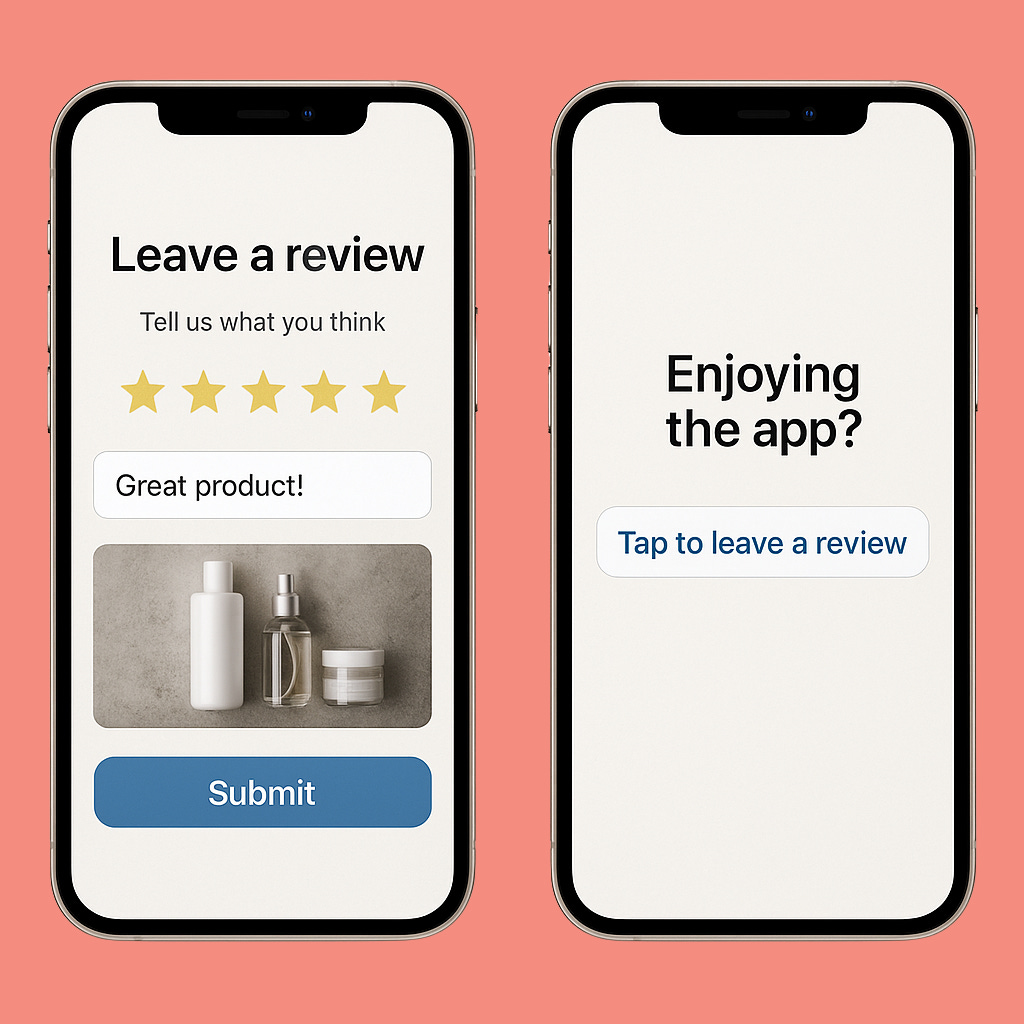
Added an app review prompt after someone left a positive product review
Timed it while they were still in the app and still in a good mood
One week later:
→ App reviews increased by 166%
→ Installs rose by 33%
This isn’t just anecdotal. There’s a science to it.
Even happy users don’t think to leave app reviews because the default brain state is inertia.
Psychologists call it the intention-action gap.
BJ Fogg’s Behavior Model emphasizes that a well-timed prompt is often the difference between inaction and follow-through. When someone is already mentally engaged, the likelihood of action increases significantly.
In other words, if someone just told you they loved a product, they’re far more likely to say yes to another request, like rating the app, right then and there.
This is also tied to a psychological principle known as affective carryover.
When people feel good in one context, that positivity can influence unrelated decisions.
Psychologist Norbert Schwarz has shown that positive emotions in one context can influence unrelated evaluations—a concept known as “affective carryover.”
Read More
That’s exactly what we tapped into.
We didn’t ask for an app review out of nowhere.
We asked when they were already feeling positive.
The common mistake is either:
Not asking at all
Asking at the wrong time (for example, when someone is in the middle of completing a task)
Timing matters more than frequency.
You only get a handful of chances before a user tunes you out or gets annoyed.
A better approach:
Identify moments of delight (after positive reviews, successful purchases, good support interactions)
Trigger review requests immediately afterward
Make it seamless (in-app, friction-free, no redirect)
Nir Eyal’s work on habit formation highlights how timing can make or break a prompt. The same request might feel annoying or effortless depending on when it’s delivered.
There’s no media budget here. No giveaway.
Just smarter product timing.
And it worked:
More app reviews → Better store visibility
Better visibility → More installs
More installs from high-intent users → Stronger conversion downstream
It’s not magic.
It’s just knowing when to ask.
If you want more reviews:
Find the moment users already feel positive
Ask for what you need, right then
Bonus if you do it in-app.
The fewer steps between prompt and publish, the higher the conversion.
Are you collecting reviews at the right moment?
Leave a comment, I’d love to hear what’s worked (or failed) for your team.
No posts
Comments
Nothing yet. Say the first thing.
Sign in to join the conversation.