
Before we get into this month’s Influencer Impact, I know everyone has been patiently waiting for the opportunity to have a drink with me. Great news. If you’re a creator, talent agent, progressive activist, or professional email-forwarder heading to Netroots Nation, join us in Philadelphia on Friday, June 5 for happy hour.
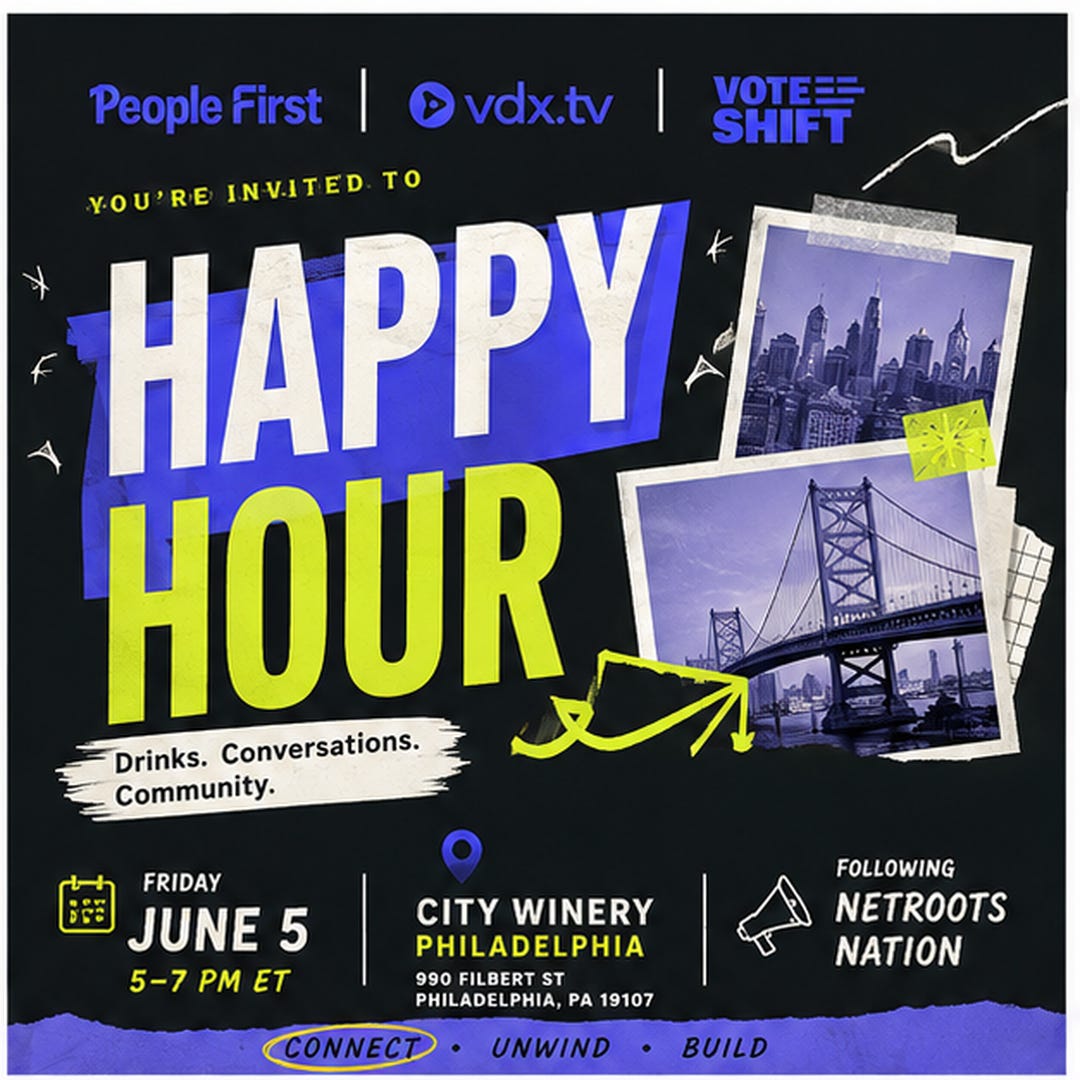
We’ll have free drinks, stimulating conversation, and a chance to hang with me and my colleague Ryan Long somewhere that’s not Google Meets.
If you can’t make it, I won’t hold it against you. Instead, you can keep up with People First by checking out this month’s Industry News, Campaign Spotlight, and a Creator Event featuring a small, unknown indie artist named Alicia Keys.
But before we get into it, I’m curious - how likely are you to become a clipper? Clipper (def.): Taking moments from events and interviews and spreading them far and wide on platforms like TikTok and Instagram. You get paid based on the number of views you generate per clip (e.g., earn $1.25 per 1,000 views).
Val Cheney
VP, Influencer & Partner
This month, Meta rolled out Instagram Plus, a paid subscription that gives users access to a bundle of extra cool features, most of them focused on Stories.
Finally, for only $3.99 a month, creators can do the things they’ve always dreamed of: send a super heart, extend a Story’s shelf life, search the viewer list, and pay for the privilege of reaching their existing audience.
The current feature set includes:
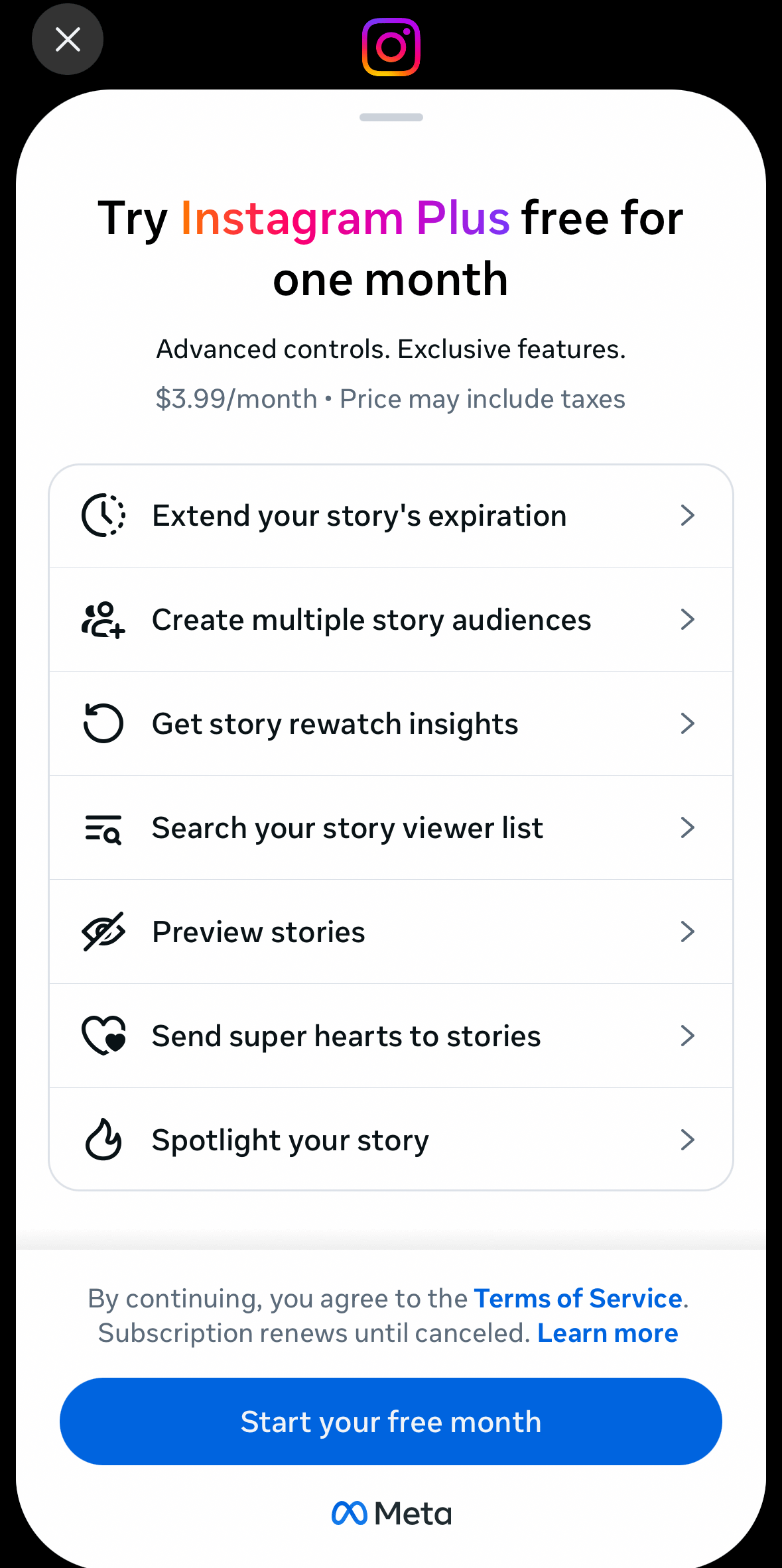
I must admit, most of these features made me laugh. I cannot think of a less interesting feature than a super heart.
But according to Meta’s Head of Product, Naomi Gleit, these features are meant to offer users richer ways to express themselves and connect. But as usual, I’m not convinced.
No, Meta must have some sort of ulterior motive when it comes to this release because who was actually asking for any of this? If there’s one thing we know its that creators are constantly reporting that their content isn’t reaching their followers. So, is the goal here to see if creators will pay to access the audience that Meta helped them grow?
I won’t deny that some of the features are genuinely useful. Viewer search, for example, lets me confirm in seconds whether the person who was supposed to watch my story actually did, instead of forcing me to scroll through hundreds of names.
But that is also exactly why it feels annoying to put it behind a paywall. It is not a luxury feature by any means.
Same with Story previews. Fine, I guess, but let’s not pretend we’ve invented electricity here. People have been half-swiping for free since the beginning of time. Not for nothing, this feature is also just plain weird. No one is trying to “preview” a story so much as they are deciding if they want to be included on your viewer list, which kinda defeats the whole purpose.
The most interesting feature is probably Story rewatch count. But even then, what good is it if I cannot identify my secret admirers by name? And how different is it from existing Story navigation insights, which already show forwards, backs, exits, and next Story taps? Because I’ll admit, nothing humbles you quite like learning that your Story inspired someone to exit completely, or went back to see the picture that I posted of my friend.
The problem for people like me who still use Instagram to keep up with friends is that the app is already flooded with ads, boosted posts, recommended Reels, sponsored Stories, and algorithmic reshuffling. The people I actually know and want to keep up with are buried under 6 feet of content that someone paid to put in front of me. Instagram Plus could exacerbate that, especially if more users and brands start paying to jump the line.
For creators and brands, though, Instagram Plus could create more ways to monetize. I can already imagine the contracting language: one rate for a 24-hour Story, another for a 48-hour Story. An added fee for Spotlight placement. Finding new ways to monetize attention is the spice of life. And lately, I’ve been noticing a few other tactics worth considering.
Instants. Instagram recently introduced Instants, a more casual photo-sharing feature designed for quick, close-friends-style updates. It feels a lot like BeReal (RIP).
Rent my Instagram Bio. If “Link in bio” is out then “Handle in bio” might be in. I creators renting out their bio space with phrases like “powered by @gatorade” or “brought to you by @brand.” It’s cute and way more organic than having that long as UTM link in your bio. You know who you are!
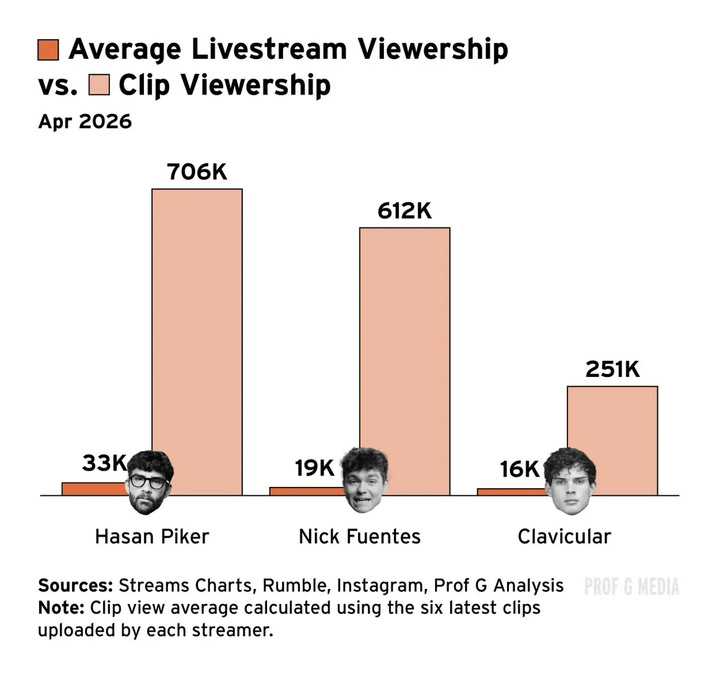
Clipped Content. Live viewership has changed. It’s all about clips now as we enter the new age of the internet. Taken Hasan Piker for instance, he averages 33k live viewers ,but collects about 706k views from his clips.
Finally, if Meta is going to charge people for premium Instagram features, I have a few requests of my own.
First, give us clean paid vs. organic metrics. Why can I still not easily see how many engagements a post earned organically versus after it was boosted?
More Instagram desktop metrics! Please stop making us marketers toggle between desktop and mobile to get the metrics, date of publication, view count, etc.
Improve the Lookalikes feature. Why have it if you’re just going to do a bad job at it? Seems like a pretty simple solve,
Until then, I will be taking full advantage of my free month of Instagram plus account and cancelling shortly thereafter.
For my friends who represent brands and creators: have you ever played the weird five-person game of chicken? The one where everyone tries to enforce a process that sets expectations, protects our clients, and makes collaboration across teams easier, yet somehow everyone involved still ends up frustrated and confused? I’m talking about profile pitching.
This usually starts when a brand (1) hires a larger partner, like a media company (2), which then brings in an influencer marketing agency (3). From there, the influencer agency works with talent agents (4) who represent creators (5). 5 different organizations are looped in to become the architects behind any given campaign. Everyone is essential, but undoubtedly there’s a lot of cooks in the kitchen.
As the marketing agency, our job at People First is to show the client creators we recommend for the campaign. Not just people who look like a fit, but people who are within budget, eligible, available, and theoretically interested if selected.
To do that, agencies like People First work with talent agents to preview their rosters. We share the timeline, budget, eligibility criteria, deliverables, and nice-to-haves. In return, we get a list of creators who appear to check every box except one: whether they actually want to participate.
The solution here is pretty simple, confirm that the creator is interested before pitching them to the client. But during the pitching stage, you often are not allowed access to that information.
Why? Because why would an agent contact their talent about a possible campaign? What good is it to bring the opportunity to the creator when a firm offer hasn’t been presented, or the details haven’t been confirmed?
Surely creators are being pitched a number of deals on any given day. The whole reason many of them hire agents is to have someone filter opportunities for them, so that they’re prioritizing the ones that are serious.
So naturally the marketing agency presents profiles to the client. Some creators may be ready and willing to participate. Others may have no idea they are even being considered. Regardless, the client is told to select from the list of available options, despite the fact that these are not all technically “options” per se.
This ultimately leads to a standoff. Most clients won’t accept accept reviewing a list of creators who simply “fit the bill”? And why would they? They’re bankrolling the entire campaign, the least they can ask for is to preview folks who actually would participate if given the go ahead.
Here lies the official problem: Everyone wants answers about each other’s commitment to the project, but no one is willing to give it.
The client finally makes a decision, runs it through the approval chain, and weeks later, a creator is finally selected. The offer gets sent to the talent agent, who brings it to the creator, who then proceeds to let you know that they will think about it. This is normally when I start to have a meltdown, because sometimes the answer is yes, and everyone celebrates. More often, the creator passes, and suddenly we’re back at square one. Except now the timeline that was already tight has been pushed to the point of no return. The work you did do, you can’t show for, so your client requests a refund for the campaign, and meanwhile you’ve spent your entire Valentine’s day not with your honey, but alone, sitting at your desk, on the phone with Ashley who is apologetic that her talent backed out.
Campaign teams often do not have time to go back out, vet new creators, confirm interest, pitch them to stakeholders, and wait for approvals all over again. The campaign dies before it even begins, all because the process designed to make things smoother became the one that totally got in the way.
So, if you have experienced this, please tell me how we mitigate this? Is the solution really just setting “clearer expectations” or communicating more frequently. Sure, I guess. But really, I’d much rather we all just stuck to the same playbook.
I love when agents send me a thoughtful roster. That is genuinely helpful. At the early stage. I understand that not every creator has been contacted yet, and I do not expect talent to weigh in on every possible campaign before there is a real path forward.
But once we shortlist our favorites and tell you, “These are the creators we want to submit for client approval,” that should be the call to action.
At that point, you have ~48 hours to confirm whether the creator actually wants to be considered. Not whether they are guaranteed to say yes. Not whether every term is final. Just whether they are aware of the opportunity, open to it, and comfortable being put in front of the client for approval.
That one step would save everyone time. It protects the creator from being looped into something too late. It protects the client from spending weeks approving someone who was never interested. And it protects the agency from building a campaign around a maybe.
That’s my recommendation, but what’s yours?
Your Personal, Private Health Companion: Are you someone who’s passionate about taking charge of your health, but often find it hard to get clear, trusted guidance? If so, we’d love for you to join our campaign and be among the first to experience Verily Me, a free app that provides personalized health recommendations from licensed providers.
Americans Holding Utility Companies Accountable: Utility bills are increasing, and most of us have no idea why. We’re inviting local community advocates – issue-driven parents, educators, local and regional activists, local business owners – based in Pennsylvania, New Jersey, Illinois, and Maryland, to educate their neighbors on what utility companies are trying to do that would make utility bills rise even more.
Voter Dollars: Influence for Everyone: Frustrated that politicians listen more to wealthy donors than to voters? Join our Voter Dollars campaign - a plan to get Dark Money out of politics and make voters the donors who fund campaigns.
Fair Elections: Americans across the political spectrum believe in protecting the democratic process. Yet every year, concerns about election integrity rise, causing participation in elections to fall. That’s why we’re calling on The People; creators who understand the importance of civic engagement and can effectively educate others around election processes.
Prostate Cancer Awareness Month: The American Cancer Society (ACS) is looking for prostate cancer patients in treatment, survivors, caregivers, loved ones, and advocates to share stories about how prostate cancer has impacted their lives this September.
Make Your Move, Build What Lasts: June is National Homeownership Month, and we’re inviting you to share your story! We’re looking for individuals who are currently navigating the home-buying process or have recently purchased a home and are open to sharing their real-life challenges. We seek stories that inspire those waiting for the “right” time or market to begin their homeownership journey.
Let’s Talk about Pleasure: Pleasure. Desire. Orgasm. Body autonomy. Fertility. Menopause. Sex after major life changes. The way our bodies shift over time. These are all things every human experiences and has questions about. Yet open conversations about our bodies are typically frowned upon. Apply to our campaign to join the conversation.
Clean Transportation for a more Prosperous California: This campaign highlights the economic side of clean transportation. Electric vehicle investment supports jobs, strengthens manufacturing, fuels innovation, and helps reduce everyday transportation costs for individuals, families, and businesses. If you have an electric vehicle that you’d like to brag about, this campaign is for you.
Stop Sportswashing in our Backyard: The World Cup is coming to cities like Boston, Atlanta, and Seattle this summer. This moment of unity is being undermined by FIFA’s partnership with Saudi Aramco, a state-owned oil company using the event for ‘sportswashing’. Join our campaign to tell FIFA to stop sportswashing and hold polluters accountable.
Parents for Health Education: What if the everyday things your family relies on—air, water, and food—carried more risk than you realized? Common Source is a public awareness initiative focused on the growing pollution and public health challenges facing American families. Contact ryan.long@peoplefirst.cc to learn more & apply.
Celebrate Hospital Workers: Hospitals and health care workers play a vital role in every community—showing up for patients and families during some of the most important and challenging moments in their lives. Join our campaign and share your appreciation for hospital workers.
The Constitution was designed to evolve with the needs of the people. But today, politicians, billionaires, and foreign interests have too much say in our democracy.
The People’s Bill of Rights 250 has partnered with People First to organize around our one core belief: the people should run the show.
Join People First and the leaders behind the People’s Bill of Rights 250 on June 10th, 2026 for a conversation about how this initiative offers a real path forward. One that is entirely shaped by the people closest to the problems.
Speakers include members from our very own People First creator community, like Melissa (@thepoliticalmommy,) Chris Mowrey (@chrisdmowrey) and Alex Beightol (@abaetol), as well as activists, attorneys, and artists like Alicia Keys and John Legend.
I promise, you won’t want to miss it. 👉 RSVP now to claim your spot.
That’s all I have for now, but if you’re hankering for more insights from our team, check out our sister-stacks:
Influencer Impact: Strategist Edition: “Campaigns need to catch up. Great creator content takes time, skill, judgment, emotional intelligence, and years of audience building. Real work that has value. Creators deserve to be paid fairly for it, just like everyone else involved in a campaign. And campaigns should be honest about those partnerships from the start. That is good politics, good policy, and basic respect for the people doing the work and the voters.”
The Month in Digital: “Google is turning search into AI Slop. Platforms are filling with fake fans, fake engagement, and fake content. LinkedIn wants more “human” posts, whatever that means. TikTok is getting more useful for search. YouTube is trying to label AI junk. And creator rates keep rising because people still trust actual people more than the feed itself. May’s Month in Digital has the links, updates, and weird little internet moments worth knowing.
Ciao for now,
People First
No posts
Comments
Nothing yet. Say the first thing.
Sign in to join the conversation.