
I never did see the programme Thunderbirds so missed out on the character of Lady Penelope in her super pink convertible car.
But I did think about her and, when both of my (consecutive) husbands were (consecutively) honoured with knighthoods, I regretted that amongst all the things I had missed out on was the title, ‘Lady Penelope’ (twice).
It was my husbands who had done the work, made the achievements and been recognised for them. It wasn’t me. I was merely the friend, the lover, the helpmeet, the wife, the mother of the children. And those things come with no public recompense or even recognition.

Lady Penelope no. 1
Far be it from me to claim any credit for the achievements of my husbands both of whom are exceptionally talented, sociable and cultured as well as highly motivated, ambitious and successful, and both of whom have been honoured with prizes, awards, generous amounts of money, honorary degrees, portraits, theses, essays and archival records, both at home and abroad, and of course, a large and appreciative public.
You can’t walk through Leicester without bumping into a statue of Sir Alan Tuckett, my first husband, and you can’t turn on the radio without hearing Sir Ian McEwan, my second, discoursing on feminism, climate change and free speech.
Looking back over their work-lives and my own and without making any comparisons as to merit, I am struck by the stark differences for men and women.
It is not just a question of the differences between males and females in size and strength or even brain power, what really forces the difference between the earning power and working lives of men and women is pace and timing.
Now that we are old it is possible to see how our lives panned out.
Both of my husbands were students when I met them and the world was still their oyster. I too was a student and I too had an oyster.
The pace at which both my husbands achieved and developed was typical of many men. They were ambitious, energetic and driven. They were encouraged by their parents, their former teachers and their current professors, by other students and by friends. They had shoulders to stand on and arms to carry them, voices to praise them, quote them, celebrate, honour and reward them.
Despite some traumatic personal circumstances, I got a reasonable degree. I was pregnant with my first baby during my finals and was studying for an MA during the baby’s first year.
Ironic then that though I finished each component of my MA and even completed a thesis on Vladimir Nabokov, I never did receive the MA degree since I never did hand the thesis in.
My mother- in-law thanked me. ‘That was nice of you not to outdo Alan,’ she said. ‘He would have been upset. It wouldn’t have done his confidence any good.’
I had done what was expected of me: my husband had been suffering. He was the golden boy with a first class degree and was meant to be writing his PhD thesis. (It did seem a bit silly to me that his thesis which was meant to take a minimum of three years was on only one book, and a boring one at that. How you could read and reread Moby Dick for three years or more? I tried to find out, reading it on the night shift at the Bird’s Eye factory in Great Yarmouth during those times when the conveyor belts stopped and we all had to wait in the freezing night for the new batch of peas to be loaded. The massive all-male book helped to pass the time but I didn’t dive into it with relish.)
No-one encouraged me to hand in my dissertation, I’m not sure anyone even noticed I hadn’t done so. My in-laws had left school at the age of twelve. I was fond of my mother-in-law who had lost her only daughter at the age of four. I was conscious of being something of a substitute and, as my own mother had only recently died and my father’s remarriage meant I no longer had a home to go to, it was not much of a sacrifice to devote myself to my mother-in-law. and her Cornish pasties.
We all seemed to have made a pact to fulfil the traditional roles.
My husband was at a low ebb and I did what wives did back then: I put all my energies into helping my husband. I made it my business to look through every newspaper searching for jobs and when I found the perfect post, I sent off for the application forms and sat him down to fill them in. When he was called for interview and the wife was expected to come along too, I booked us somewhere to stay, took the two small children and juggled the needs of husband and kids for the weekend (as one does).
In prioritising my husband’s needs, I had ignored my own. His job came with a cottage attached to the adult education Centre where he worked. Nice for him to be able to shuffle off to work in his slippers and to pop back home whenever he liked but for me, it was a challenge.
The cottage was in the Brighton Laines and only a pebble’s throw from the sea. It was picturesque and even romantic, with the call of the gulls all day and night, but totally impractical for a young family. It hadn’t been modernised, had no heating, no real kitchen, no sunlight and was located on two upper floors while the ground floor housed the men’s toilets which you had to pass through to get out of the building.
At the back of the cottage were some dangerously slippery and broken stairs which I had to rule out of bounds to the children. At the front there was a big garden which belonged not to our cottage but to the main Centre and the iron gates were permanently open onto the main road with busy traffic and day trippers passing by all day and strangers coming in and out of the Centre.
My time was occupied trying to keep the toddlers safe. I began to suggest we buy a house (this was still financially a possibility). Alan didn’t seem to hear. I became more assertive. No difference. I was becoming a nag.
It had been so normal for women to support their husbands in their work that some types of work had been organised around the notion that wives were their husbands’ secretaries, receptionists, hostesses or whatever.
The cards in the pack of Happy Families told the story: Mrs Bun the Baker’s wife was a character in her own right and had a role in the family’s story and the same was true for Mrs Bone, the Butcher’s wife, Mrs Wax, the candle maker’s wife and Mrs DeAth, the undertaker’s wife. Mrs Shut-ya-gob, the Taliban’s wife, had less of a role and remained unseen.
The vicar’s wife was a role in itself and so was the doctor’s wife. Back then, doctors didn’t get together in groups but practised alone in their own homes where their wives were their receptionists. Phone a plumber or a builder even now and you are still likely to get his wife answering.
I never did manage to persuade Alan that we needed to buy a house, or at least rent one that wasn’t attached to his work. In the end I left with the little girls and lived for some time in two rented rooms before I managed to buy a house. I could not of course get a mortgage without a guarantor since I was only Mrs Tuckett, the adult-education administrator’s wife, and it was still almost impossible for even a high earning woman to get a mortgage.
Alan went on to be highly successful in his work He earned very well, travelled a lot, bought a beautiful house, married again, had another child, and filled his house with wonderful art, a grand piano and mountains of books.
When he was given a knighthood, his family accompanied him to the Palace.
Lady Penelope mark 2
By the time I married Ian McEwan, my second husband, he was already in his mid-thirties and had, it seemed, got over any self doubt. He was massively successful. Agents and publishers queued up to represent him, newspapers interviewed him and his books were reviewed far and wide, nearly aways with praise. In Hollywood he was known as a ‘grand fromage’ and stretched limousines with darkened windows and stocked with champagne ferried him around.
We lived in a wonderful house in a sought-after location. We had two more children so I was now the mother of four. I could be a stay-at-home mum but I also worked from home, seeing individual clients and running groups, and I continued to write journalism. Ian applied himself full-time to his writing as he always had done.
My earnings were minimal but since Ian was such a high earner, nothing I earned was going to make much difference anyway.
When we divorced after our twenty one year relationship had come to an end, Ian explained to the judge that his career was over, he would no longer be a successful writer.
From now on, he would be living off whatever he might manage to earn from odd jobbing.
Judge Clark had the advantage not granted to many judges of actually knowing the house where the litigants lived since his sister lived only two doors away and used to come to me for therapy and I frequently looked after her children.
Nevertheless, the witness statement she supplied to the court was not on behalf of her therapist but of her therapist’s husband and in court Judge Clark, weirdly, allowed Ian’s legal team to interrupt the hearing and phone his sister to get her view on something that had come up.
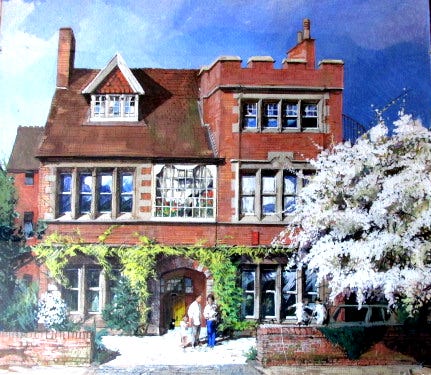
Our House
People were surprised that Ian should be having such a crisis of confidence after having been at the top of his game for so long.
I tried to explain. ‘Poor Ian,’ I kept saying to everyone. ‘He’s an amazingly creative person and you can’t be that creative without a certain amount of insecurity and even panic.’
But they wouldn’t listen.
‘He’s having you on’ they said. ‘How can he be claiming that his career is over! How can he be claiming that he will never earn another penny! Surely he is an exceptionally high earner! Hasn’t he been earning over half a million a year for the past ten years at least?’
I defended him as I always had.
‘Well, yes,’ I said. ‘Those are the figures he put into the court but he only put in one sheet of A4 paper to cover his earnings over all those years, so it was very much an approximation. He’s a very busy man, you can’t expect him to devote time to accurate accounting.’
‘So he’s hiding stuff,’ they said.
‘Well yes,’ I said. ‘But not much. Just a couple of bank accounts he seems to have forgotten about. And they don’t contain much, just the revenue from those Hollywood block-busters. The film agents in both the UK and the US seem quite happy to lie on his behalf and the judge seems quite happy to ignore any deception. They must know what they are doing and I am sure they are very ethical.’
Journalists following the case said much the same.
‘Your husband,’ they said, ‘is an exceptionally high earner. Not only does he make a huge amount from films but he also makes an unusually high figure from fiction. In fact he earns more than his three closest rivals - Salman Rushdie, Martin Amis and Julian Barnes - put together. ‘
‘That may be the case,’ I said. ‘But you really shouldn’t criticise him, he’s a hothouse flower, he needs constant care and attention or he will wilt.’
It wasn’t just the film industry that had made him so wealthy, it was fiction too and now publishers and literary agents said to me, ‘Surely your husband is the highest earning of all the writers on our books? No-one can beat him. He’s almost as popular as Barbara Cartland.’
Other writers said to me, ‘What ever is he so worried about? His books are now on exam courses. He is assured of a huge income for years to come. And the royalties he has already amassed are gynormous. He could support half a dozen wives and ex-wives on the income he makes from the interest on his bank accounts alone.’
Financial advisers and accountants, said, ‘He has always been so clever about investing and taking good advice. You really don’t need to worry. Even if he does nothing, he will be receiving an income through investments that will be more than enough for you all to live on.’
But the problem was, Ian was unable to provide accurate figures relating to his current income. The figures were simply not available. It wasn’t his fault. Although he employed people who were, like him, at the top of their game, they tended to lose stuff. Can you believe it but his top legal team had already mislaid two divorce petitions! How careless is that!
Very little financial material was available from Ian’s past. All that could be relied on was the future. And that didn’t look good.
In fact, it seemed, there was no future. Everything had fallen apart as assuredly as in a doomsday movie.
Judge Clark would simply have to make some guesses. It would all be up to him. What was he to do? It was a quandary.
It did seem a bit odd, the judge thought, that Ian McEwan was employing top lawyers to plead his case and yet he was stony broke!
But it was obvious to the judge that the litigant’s career was over. From now he would earn so little he would have to claim benefits and probably live in a shack in some slum the wrong side of the tracks.
My lawyers presented a great deal of contrary evidence and logical arguments but the judge would not be moved and, as it turned out, this judgement was only one of many he would make in Ian’s favour, having first secured all future hearings to himself, thereby protecting himself and everyone in the court from the pleadings ever being heard by anyone outside the courtroom.
Telling me I would from now on have to ‘paddle {my} own canoe’ Judge Clark awarded me £10,000 a year for three years and then nothing. He ordered the family home to be sold with Ian McEwan in total charge of the sale, despite the fact it was in joint names.
It wasn’t long before I was not only banned from revealing ‘the secrets of the marriage’ (though no-one would say what those secrets were), but banned too from speaking about anything that related to any of the (numerous) court hearings in England and France, and banned from ever speaking about my children. I was not only forbidden to talk to them directly but banned from mentioning anything to do with their ‘conduct wishes and behaviour’. And, of course, the children themselves were not permitted to speak. The only way they could make themselves heard was through the court welfare officer. (And that is a whole other story - I have written about some of the corruption relating to two court welfare officers in my Substack series, Aspects of the Family courts, on Blue Suburban Skies.)
Judge Clark made rulings preventing me from ‘harassing’, ‘pestering’ and ‘threatening violence’ to Ian McEwan.
I didn’t return from France to attend these hearings; I had managed to get away from the harassment, pestering, threats of violence, slander and libel that I had been subject to for quite some time, and, since I had been banned from seeing my children, there was no reason to return to England.
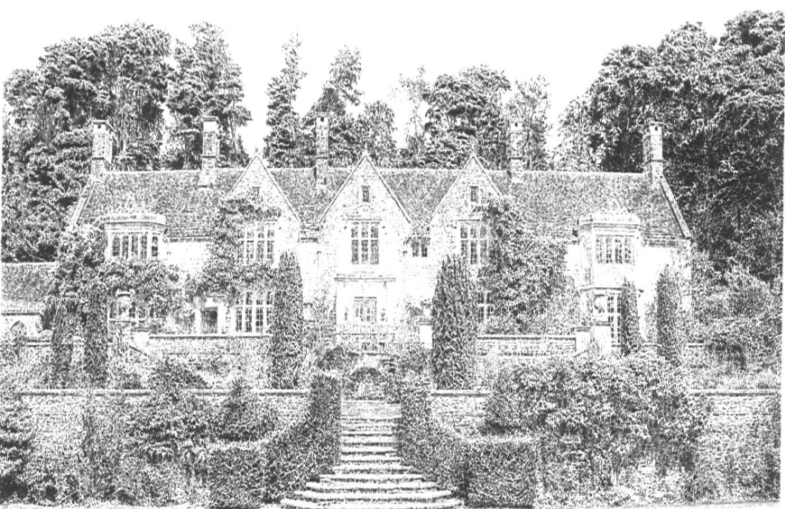
Ian’s main residence (other residences are available)
As it turned out, Ian McEwan never did have to live in a shack the wrong side of the tracks. He bought a house in Gloucestershire and another in the heart of London and employed an architect to build him another in the Scottish Highlands.
His career was by no means over and in fact he went on doing what he had always aimed to do, publish a book every two years, write some film scripts, preside over his films in the extremely lucrative role of executive producer….
Phew! What a relief it was to me to see that I had not been mistaken. I had chosen well; I had invested my youthful energies and wifely concerns into two men and both of them had excelled themselves. They had done me proud. I had fulfilled my role with flying colours.
It was just a shame that I would see none of the results. I would never become Lady Penelope despite having had not one but two chances. The best I could hope was that my reward, like that of Mrs Taliban and Mrs DeAth, would be in Heaven. (perhaps).
In fact, as it turned out, Ian McEwan was too important to be knighted. Instead, he became one of only a limited number of people to be appointed a Companion of Honour to the King. That year, 2023, he received his award along with his Scottish neighbour, JK Rowling.
Supposing I had been recognised as having had a significant role in both my husbands’ achievements? Supposing, too, that I didn’t really go along with the honour system? Supposing I wanted to make a stand and turn down my title? Supposing I really didn’t want to be anything as naff as Lady Penelope?
Well as far as I can see, it wouldn’t make any difference. You become a lady through your husband (if you want a title in your own right you need to go for a dame) and the deal is that you have to keep his name, which I suppose means you have to remember that it is only through him that you have gained the title. You can of course turn the title down simply by not using it. Wives can’t turn down ladyhoods with grand gestures. Only the people who are getting the honours in their own right can do that.
The list of people who have turned down honours is at least as illustrious as the list of those who have accepted them. Here are some of them:
Robert Graves, L.S. Lowry (who holds the record for the most honours declined), Ben Nicholson, Stephen Hawking, Honor Blackman, David Bowie who turned his down saying he didn’t understand the point of it, Alan Bennett who said, ‘Being a sir would be like having to wear a suit every day’, John Lennon who sent his award back in protest at Britain’s involvement in the Biafran war.
Dame Penelope
No posts
Comments
Nothing yet. Say the first thing.
Sign in to join the conversation.