
This essay was first published in The Pub, a relatively new print publication based in Chicago. It’s distributed for free in cafes and other shops throughout the city. I think it’s a great endeavor focused on building community here, and telling local stories that you might otherwise miss, so you should find a copy and give it a read. Thanks also to the editorial team at The Pub for helping to improve this piece.
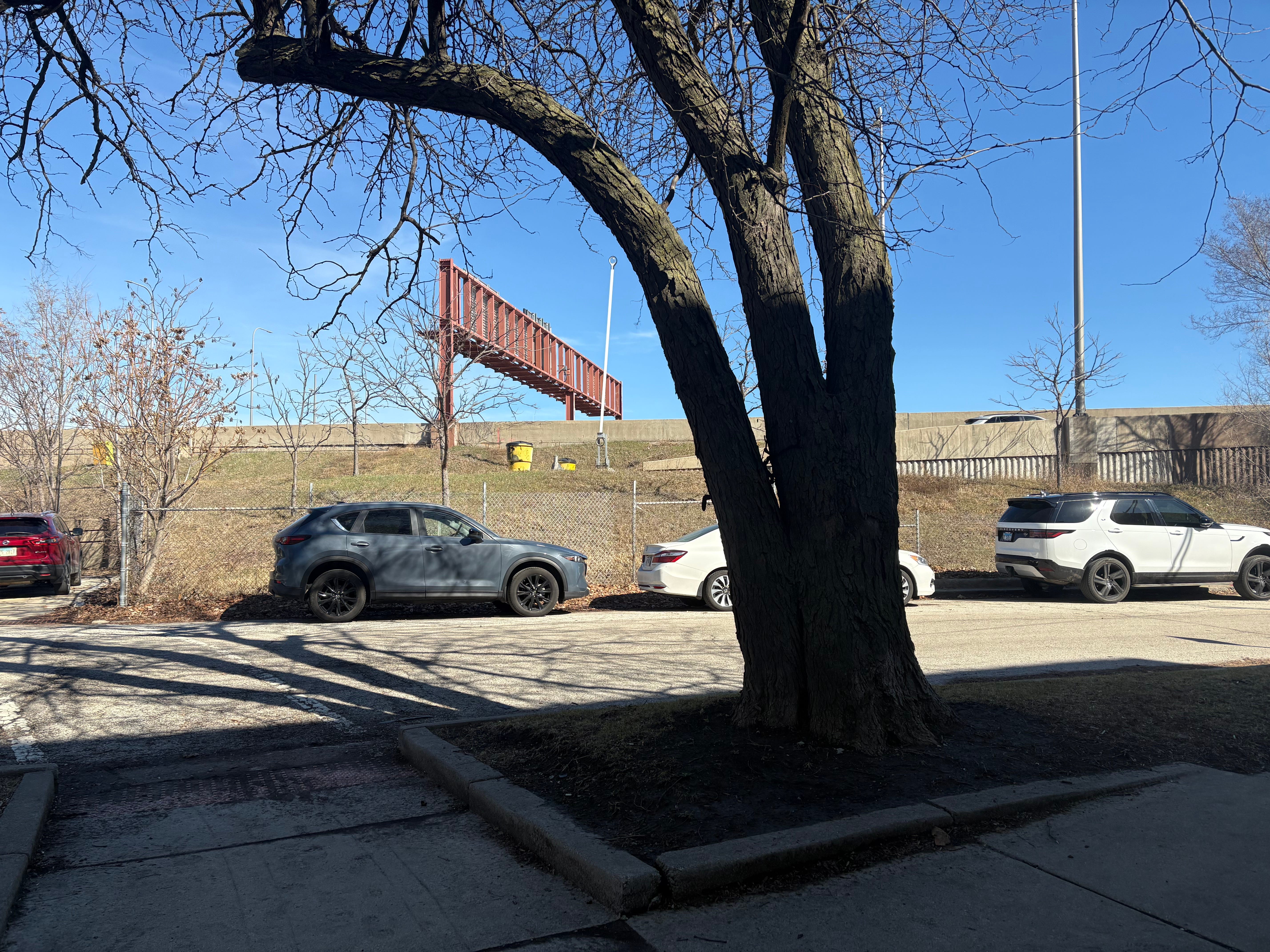
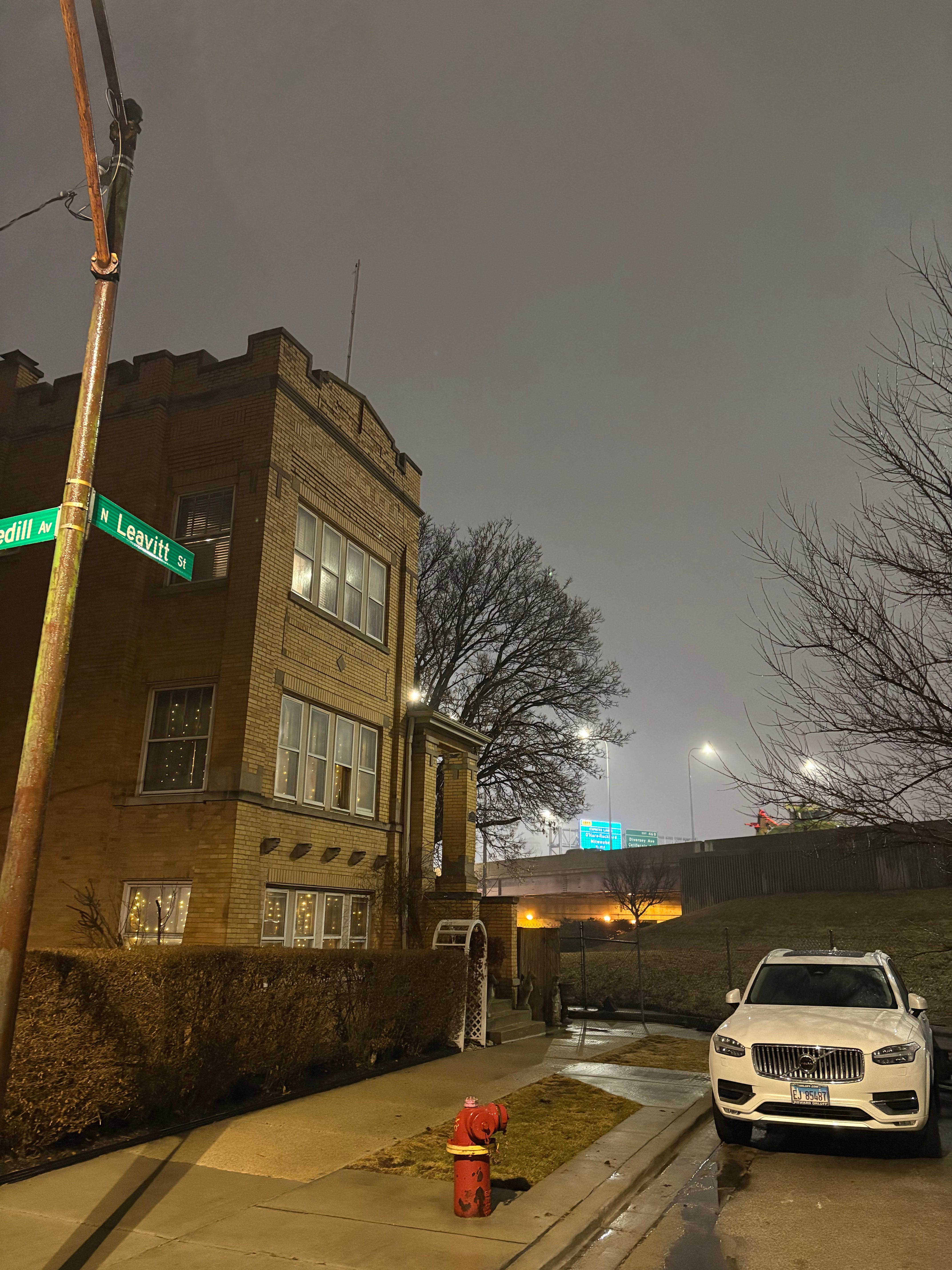
If you walk northwards from my house for a few minutes, you’ll find yourself on a residential block with a giant diagonal gash. The block’s western face essentially resembles a complete collection of Chicago houses, with a charming mix of 2-flats, 3-story apartment buildings, and worker’s cottages. The eastern side of the block, though, is conspicuously incomplete. After just three buildings, a 20-foot concrete barrier rises from the ground, abruptly blocking off any more buildings.
Behind this wall lies the Kennedy Expressway, one of Chicago’s three interstate highways.
The half-block north of my house was once a proper block, alongside many other residential blocks that were irreparably damaged or altogether destroyed by the Kennedy’s construction. Its scarred face serves as a particularly tangible reminder of the massive damage that freeways inflicted upon our neighborhoods. For the foreseeable future, they will serve as a painful social barrier dividing our city.
Not so long ago — in the childhood of my grandparents, or my great-grandparents — these highways did not exist. The 1950s and 1960s marked the golden age of American highway construction. Increasing pressure towards suburbanization and rising car ownership had generated new demand for road capacity. After 1956, enormous federal subsidies began to fuel the construction of dozens of high-speed, grade-separated roads through every American city.
Completed in 1960, Chicago’s highways were built like many American highways: by pummeling through miles of existing neighborhoods. Chicago Mayor Richard J. Daley, ever the fan of large public works and ribbon-cuttings, seized the opportunity to build freeways on the federal government’s dime. As a result, four major highways now radiate from the Loop — in addition to the Northwest-bound Kennedy, the Eisenhower, Stevenson, and Dan Ryan venture west, southwest, and south, respectively.
For each freeway built, thousands of homes were destroyed. Parkland, businesses, and sidewalks were all eliminated or severed. Of course, the routes of these highways were not randomly selected. Highway construction doubled as an opportunity for “slum clearance,” displacing residents of lower-income neighborhoods who were often a diverse mix of ethnicities.
Robert Caro, the author of The Power Broker, is perhaps our greatest chronicler of the havoc that freeways have wrought upon our urban fabric. To create such a large-scale public work within a city, Caro wrote, “one had to paint over an already existing mural, a mural whose brush strokes were tiny and intricate and often, when one looked closely, quite wonderful, lending to the vast urban panorama subtle shadings and delicate tints and and endless variety.”
Building an urban highway necessitates “obliterating the city’s intricacies indiscriminately,” ultimately “shattering [a neighborhood’s] essential unity, cutting its homes off from its playground or from its churches and shopping areas, filling its quiet residential areas with noise and gasoline fumes that made them no longer nice places to live and to bring up children.”
New highways were immediately painful to our urban communities, both exacerbating existing social divisions and generating divisions anew. For example, the economist Nathaniel Baum-Snow has found that on average, each highway constructed in an American city reduced its population by 18 percent, as residents flooded to the suburbs. Consider this in the context of Chicago — by 1990, the city’s population had fallen 23% from its 1950 peak of 3.6 million people. The city has not come close to recovering from this decline.
Nor was this depopulation evenly distributed. Although new highways greatly benefitted those who could suddenly buy cheap suburban housing, the remaining urban residents were left to deal with the many undesirable characteristics of living next to a freeway. The new suburban residents were wealthier and more likely to be white; those who stayed made less money and were more likely to be Black and Hispanic.
Unsurprisingly, the result was further segregation. Sarah Bagagli, another economist, has studied how new highways in Chicago accelerated the city’s already-stark patterns of racial segregation. New highways had a very direct impact on segregation, because Chicagoans with lower incomes — a disproportionately Black group — could not afford to move away from the highway. They also had a second-order impact on segregation, by cordoning off neighborhoods from each other, which led to greater concentration of Black residents and separation of white residents in the ensuing decades.
These initial impacts of highway construction will last for generations, as highways continue to further social division today. As any pedestrian could tell you — and almost all of us are pedestrians, at least occasionally — freeways act as profound barriers to everyday activity, severing access to our own neighborhoods.
Much of this effect comes from the awkward, uncomfortable experience of crossing a freeway. Between the underpass and the overpass, we must pick our poison in order to reach the freeway’s other side. Take an underpass, and you deal with pigeon shit, beer cans, shattered glass, salt piles, sloped sidewalks, and an unceasing urge to check back over your shoulder. Alternatively, you might take an overpass, and instead encounter deafening noise, ugly views, and those fences that arch over your head to cage you in, so that you don’t jump off the bridge. In a concrete, physical sense, the freeway removes your connection with your surrounding urban environment.
Quantitative research shows that this “barrier effect” is measurable and widespread. Using surveys of car trips or cell phone data from urban residents, multiple studies have shown that people go out of their way to avoid highways. For example, recent work by economist Siying Alice Wang finds that for short trips in urban areas, residents are 25% less likely to choose a trip that would require crossing a highway. As a result, those who live nearby highways typically deal with longer trips to access amenities. They even divide our digital social networks: One study recently published in the Proceedings of the National Academy of Sciences finds that even our social media networks are relatively less likely to cross highways.
As a result, highways shape how we think about our neighborhoods. I live in Avondale, slightly north of Diversey Avenue, where my neighborhood borders Logan Square. But with the freeway to my north, I’m cut off from half of the shops that make up Avondale. When I’m in search of a grocery store or cafe, I find myself more likely to make a longer walk to one in Logan Square, avoiding the dreaded underpass.
Yet for all of these tangible, quantifiable downsides of highways, there is no simple path to unwind this ratchet. Now that our entire metropolitan area has been reshaped by the highway system, it seems unlikely that we can simply snap our fingers and eliminate it.
It’s true that cities have removed major highways before. In response to road closures, travelers often opt to drive less, a phenomenon known as “traffic evaporation” — thereby avoiding the most severe traffic issues. San Francisco demolished their waterfront Embarcadero Freeway soon after a 1989 earthquake, reclaiming waterfront space for the city without resulting problems with congestion. In Seoul, South Korea, a major elevated expressway was torn down in the mid-2000s, daylighting a natural stream and creating a gorgeous public space.
But never has this been done on a project nearly as large as Chicago’s major expressways. The Kennedy, Dan Ryan, and Eisenhower Expressways are each critical routes for transportation in the city. Since the 1960s, hundreds of thousands of houses have been built on the promise of highway access into and across Chicago. More than 275,000 vehicles cross the Kennedy Expressway each day — compare this to 46,000 daily riders on the O’Hare branch of the Blue Line, which runs parallel to the Kennedy. That’s also substantially more vehicles than used to ride the Embarcadero Freeway (roughly 100,000 per day) at its peak or Seoul’s Cheonggyecheon expressway (roughly 168,000 per day).
In the short term, then, we won’t simply remove our highways. Still, we have to ask: for how long can the status quo be tenable? As challenging as freeway removal might be, it’s hardly acceptable to live with their many harmful byproducts until the end of time.
More feasible steps could substantially mitigate the costs of a freeway. Burying or capping highways — see Boston’s famous Big Dig — would reduce their pollution and eliminate the barrier effect, allowing us to replace urban fabric while letting vehicle traffic continue flowing underneath.
Building on top of freeways is typically a massive and costly effort, particularly for expressways that are not already sunken below street-level (including much of the Stevenson and large segments of the Kennedy). Currently, this idea is not present in the Chicago policy conversation whatsoever. But given the gains of removing the expressway scar from some of Chicagoland’s most valuable land, it deserves further consideration.
In the longer term, building a world without urban freeways would first require us to transform our transportation system at large. We’d likely need decades of public transit expansion and housing development in urban areas to even lay the groundwork for expressway removal.
In other words, it may be a long time before my neighbors’ severed block becomes complete again, if ever. We’ll all have to keep breathing worse air, and our neighborhoods will remain severed. For the time being, I’ll have to suck it up and keep walking through the underpass, past the pigeon shit and the unshoveled snow.
No posts
Comments
Nothing yet. Say the first thing.
Sign in to join the conversation.