
Hi Friends!
Welcome to my Showing Up to the Page series, where I chat with writers and creators about the small, real ways they keep showing up to their work, even when life is busy and full.
This is a blog-style edition, where I ask a few questions and get a peek into another creator’s world.
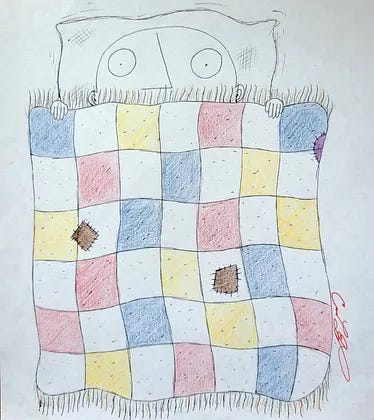
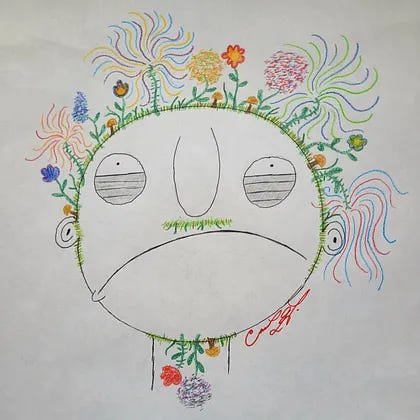
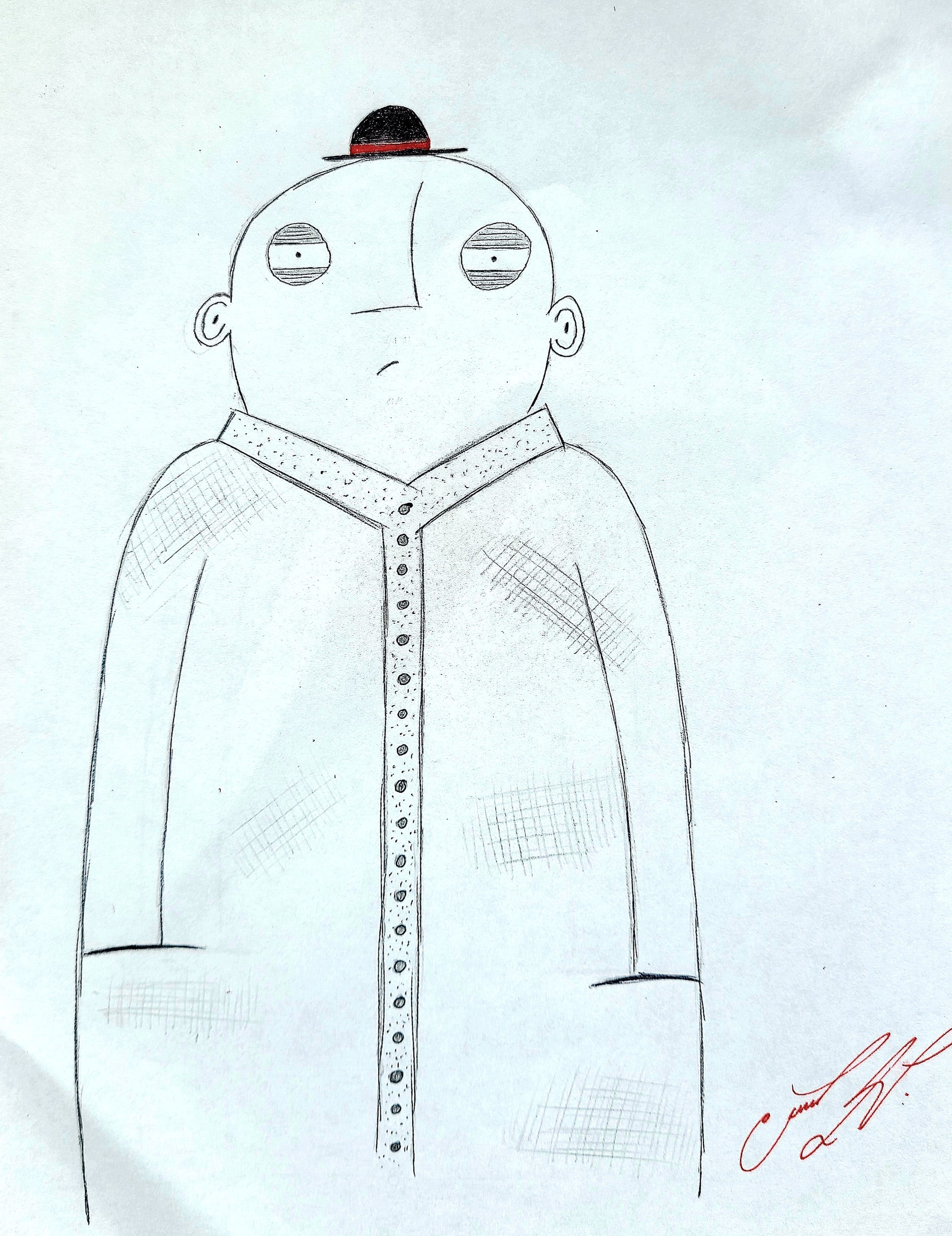
Today I’m so excited to share a conversation with Camden S. Holley, a children’s author, artist, Christian, and a child himself. He is the author of My Pet, Peeve and plenty of other books in the making. In everything he writes, he hopes to make children laugh, ask questions, and see things from another angle. Camden is fifteen and a lover of the wacky and weird, spending his time running, acting, making art, and (of course) writing in Prosper, Texas. You can visit him at camdensholley.com or at his Substack (Heads in a Box) and Instagram (@camdensholley).

Let’s dive right in and get to know more about Camden’s creative process.
STEENA: What does “showing up to the page” look like for you when you’re in the middle of drawing, writing, or just making up stories in your head?
CAMDEN: “Showing up to the page” normally just looks like making an effort to draw or write something every day and have some fun with it. I love making people laugh, and I’m trying my best to make people find something (a.k.a. laughter) in my art. So when I “show up to the page,” or just “show up to life,” I want to make or do something fun and maybe a little weird or wacky and make kids happy about reading, writing, drawing, creating, living, whatever, and make an impact on everyone.
STEENA: How is it for you to create while also being in school, and do ideas ever sneak in during the school day?
CAMDEN: School can be a bit restricting when it comes to making stuff. But I still try to make stuff throughout the school day.
And yes, ideas definitely pop up during school. Actually, the two manuscripts I just finished working on were thought up during the school day thanks to my teachers and friends. So school can hinder art, but it can also turn out to be the thing that’s helping me.
STEENA: When a drawing or story doesn’t turn out the way you imagined, what do you usually do next?
CAMDEN: I change it.
If a story isn’t really turning out how I’d like, I’ll either change it up a bit, do some editing, and come back to it or I’ll just forget about it. Oh, and there is one more thing I’ve been trying to do more of, and that’s taking the story to kids. They’re the best judges because they’re the people actually reading my books. If they don’t like it, there’s definitely something wrong with my book.
And if a drawing isn’t turning out right, I’ll just scrap it. If I’m not feeling the right vibe, I just create a new one.
STEENA: If your characters could follow you around for a day, what fun things do you think they would do with you?
CAMDEN: Well, most of my characters would be pretty annoying to be around.
With a pet peeve, a grumpy old man, a depressed grandma, and a clumsy duck, that would not be a very enjoyable day. If I had to spend a day with one, though, it’d be the grandma (at the end of my story, she’s not sad anymore). So yeah, it’d be her. I think she’d just talk about her life and we’d walk around and explore. She may get a little crazy in the process, but she’s crazy in my (possibly upcoming) book, so I think it’d be fun to see her out and about. She’s kind of based on my own grandma, so I sort of can have her follow me around already.

💛 One of my favorite things about this conversation is getting to hear a kid’s perspective. For those of us creating children’s stories, insights like these are such a gift. Thank you for sharing with us, Camden!
When writing a picture book, there are so many things you’ll need to know how to do and get familiar with, and they can take a long time to learn (I’ll never stop learning new stuff about them). Some very important things like rhythm, tone, structure, flow, plot, character development, feel, and style all contribute to picture book writing.
But I think the most important thing in a picture book is the ability to make a kid feel something without talking down to them. A good something, that is (you don’t want a kid to hate your book and get really mad at the world after reading it). You’ll want to make a kid laugh or smile or even cry after reading your book. You’ll want them to appreciate it. Because if a kid appreciates your book, you know you’ve got a good book.✨
✨ Creativity doesn’t wait for perfect conditions.
📚 School can sometimes feel limiting, but it can also be where creative ideas show up.
🔁 And sometimes the best creative decision is simply to start again.

Thanks again, Camden, for being here with us. It was so much fun chatting with you. Wishing you all the best with your writing, art, and future projects!
✨Have you ever had a story idea pop into your head at school, work, or in the middle of a regular day? I’d love to hear about it in the comments!
If you’d like to support me even further, you can buy me a coffee. Thank you all for being here with me!
Sonrisas,

Comments
Nothing yet. Say the first thing.
Sign in to join the conversation.