
Hi friends! Greetings from Miami, where I am on a vacation with my fam (what even is a vacation in this weird era of work?!).
Please enjoy this re-print of an article that’s been coming up soooo much in my world lately. And if you’re thinking, I had a c-section, this isn’t relevant, or I gave birth a while back and could really use some help with my scars, see the related reading section! I’ve got you covered.
If you know a preggo person who would love this information, please share it!
About four years ago, I was pregnant with my now raucous, almost-big-kid twins. By that point, I had been a pelvic floor therapist for several years, and I was determined to do everything right — isn’t everyone?
My pregnancy was a shit show. To top it off, both babies flipped from breech to vertex at around 34 weeks, meaning that the c-section I had planned for would now become an attempted vaginal delivery, and could happen “any day”. (I/they held out until 36 weeks.)
I panicked. I was unprepared.
Among the many things I slapped together in my eleventh-hour prep, perineal massage was one. And of course it was — every single one of my pregnant clients asks me about it, all under the same haze of doing their “good mom” duty.
But does it even work? Is it a massive waste of your time?
Research says a hard “yes” to perineal massage, for a lot of reasons. It’s good! Go for it!
There’s totally a right and a wrong way to do perineal massage. Before you panic, know that the “right” way is the way that doesn’t feel like shit. Other than that, there are many variations on a productive massage strategy!
Perineal massage isn’t an end-all-be-all in terms of vaginal birth outcomes. Prepping things like internal hip rotation, birth positions, and nervous system regulation are all huge factors!
Perhaps most importantly, you can influence birth, but you can’t change it. I will definitely repeat this point.


A c-section is not an apology. If you had a belly birth (or want to have one!) this one is for you. Similarly, A love poem to all the belly scars for folks post c-section!
About those stitches and scars in your vagina. If birth is well in the rearview window, this one might be for you!
The pregnancy game plan. My wish for all preggo people in terms of prep!
I feel like it’s appropriate to begin with the question most well-intentioned, well-informed pregnant people ask me: What actually is perineal massage?
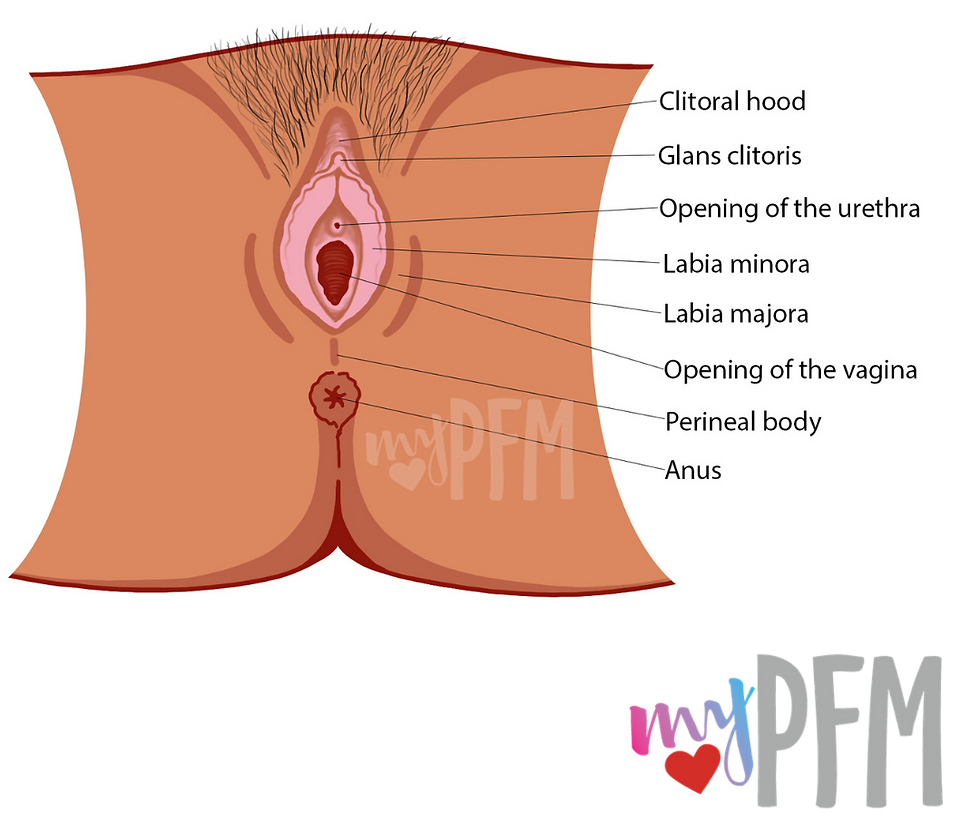
It’s a fair question, so let’s start with some anatomy review. Your perineum (also known as the perineal body) is the connective tissue between the vaginal opening and the anal sphincter. If you’re going for a vaginal delivery, the perineum is a hot bed of attention, because this is the structure that often tears during delivery (catch my primer on this here).
Let’s talk about why this might be worth your time. I found a recent meta-analysis that included 11 randomized control trials and a total of over 3,000 study participants. Here were the hella-impressive outcomes:
Reduced perineal tearing, especially reduced incidence of third and fourth degree tears (which include injury to the external and internal anal sphincters, respectively).
Reduced need for episiotomies.
Reduced perineal pain postpartum and “better wound healing” (I’m not sure how this was determined, but I’m guessing self-report).
Reduced second stage of labor (aka pushing time).
Interestingly, improved Apgar scores of baby’s wellbeing at the 1 and 5 minute markers, which nicely illustrates how a breezier birth supports baby’s health, too.
So we’re in, right? Oops, one question — what, pray tell, actually is a perineal massage? Here are the elements of a good one:
Begin with lighter touch, and slowly increase pressure. Any body work, much less anything involving one’s nether regions, should always lead with physical feelings of safety. Jabbing a finger on the perineum and rubbing out a big circle is not going to be a recipe for success. Instead, slowly introduce touch (this can work on yourself or with a clinician or a partner supporting you), noting and communicating how things are feeling. If you’re giving perineal massage, imagine your finger sinking into cold butter. Slowly add pressure as you feel the tissue begin to release, then drag the tissue in multiple directions, feeling for the ease of which the tissue moves in different planes. For example, you might be able to move the perineal body gently and easily to the left, but you might feel significant tension to the right.
Your goal is to effortlessly move the perineal body in all directions. Think of a clock, and assess and support movement of the perineal body going to every number. Which leads me to…
Don’t avoid spots of tension; respect them and give them the time they deserve. Pause where you begin to feel tension (this shouldn’t be painful for the receiver), and see if you can slowly begin to continue to move with more ease into the tough spot (again, with minimal or no pain).
Begin with external work, and progress to include an internal component if that’s comfortable for the receiver. If a person has a history of pelvic pain, trauma, is currently experiencing pain, or just doesn’t want anyone in their vag, external work is going to super helpful. I love working on the ischiorectal fossa, which is a fancy way to say the space to either side of the anal opening, for basically everyone. It’s a great way to externally access the pelvic floor and support its release as birth prep. If (and only if) a person is up for internal work, you can add to perineal massage by inserting an index finger about one or two knuckles deep, with the pad of the index finger facing back, towards the anus. Keep your thumb on the perineal body and gently slide the tissue in between your fingers. (Use lube! Here’s the one I use in my clinic.)
One last caveat: the benefits of perineal massage do not outweigh the trauma inflicted by any lack of consent. Under no circumstances should a provider perform perineal massage without your explicit and enthusiastic knowledge and agreement. Remember that all manual therapy is simply an interaction with your nervous system, so if you find perineal massage awful for any reason (it hurts, it freaks you out, you didn’t sign up for this shit) — it’s not going to be helpful. Advocate for yourself.
Here are other things I think are critical to supporting optimal vaginal delivery outcomes:
Train positions with internal rotation: While I still can’t find great research for this, I consider this prep absolutely critical to the work I do for pregnant folks. Here’s why: We want to optimize the shape of the pelvis during birth, which opens the most with internal rotation of the femur. Incidentally, many, many people are restricted in this direction just because modern society and life and sitting, etc. The best way to prep for upright positions (like side-lying or hands and knees, which do reduce tearing) that support internal rotation is, well, doing them while you’re pregnant, so that it’s not totally weird to try it out for the first time during labor, and so that you have the strength to support yourself in say, a squat, or a tabletop position.
Warm compress on the perineum in addition to perineal massage during labor: This has pretty solid research behind it, so if it feels good, so go for it!
The fantastic ladies on the sadly defunct podcast Birth Kweens had a saying I love and stand by: You can do a lot of things to influence birth, but you can’t change it. Babies sometimes have their own plans.
I think about this so, so much when working with pregnant folks. We do have research to support pelvic floor therapy having positive outcomes on reducing pushing time and improving overall birth outcomes, and I’ve seen this time and time again in my practice. But let’s be real: sometimes, shit happens. It’s no one’s fault.
The best and only parenting advice I have (beginning in pregnancy) is the following: Do what works for you, your partner (if you have one), and your kid(s). Fuck everyone else. This advice holds for matters of birth prep. If a technique or strategy or intervention resonates with you — do it! If not — don’t! It’s really that simple. At the end of the day, it’s your body, your kid(s), your birth experience, and any provider worth their salt should be supporting your vision for that, full stop.
I love hearing from you You can always contact me at cait@ritualpelvichealth.com.
Comments
Nothing yet. Say the first thing.
Sign in to join the conversation.