
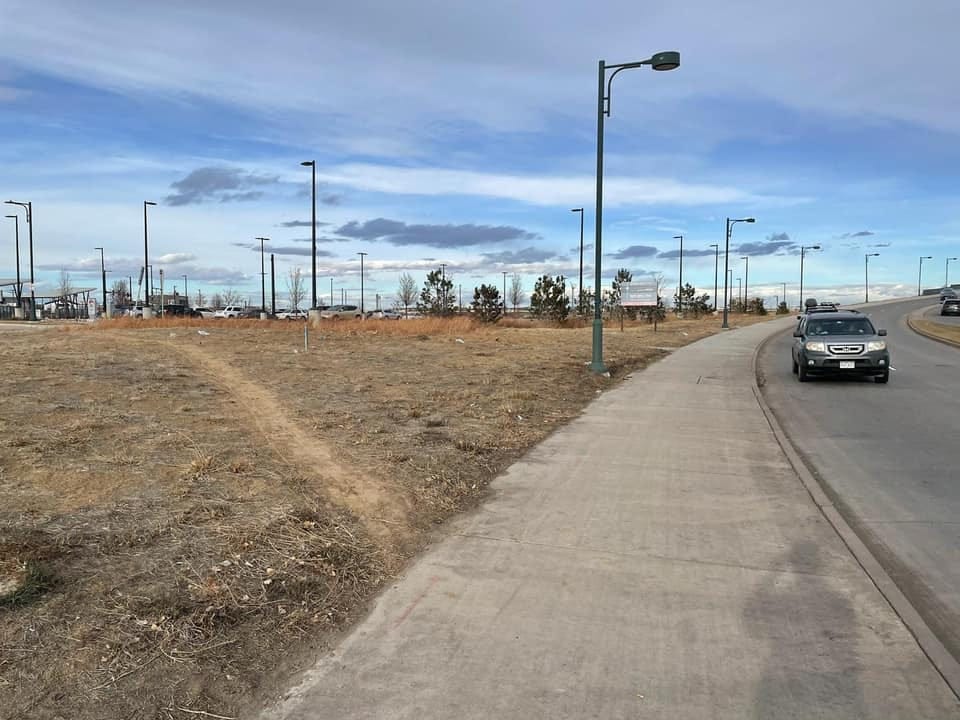
I prefer the term, “necessity line”. Trodden, dirt paths. Leaving the sidewalk or road. Revealing practical and more direct pedestrian behavior. Dirt and gravel stories that show how people scramble, dart, buckle, break, sweat, bleed, climb, and survive around systems designed solely or mostly for car drivers.
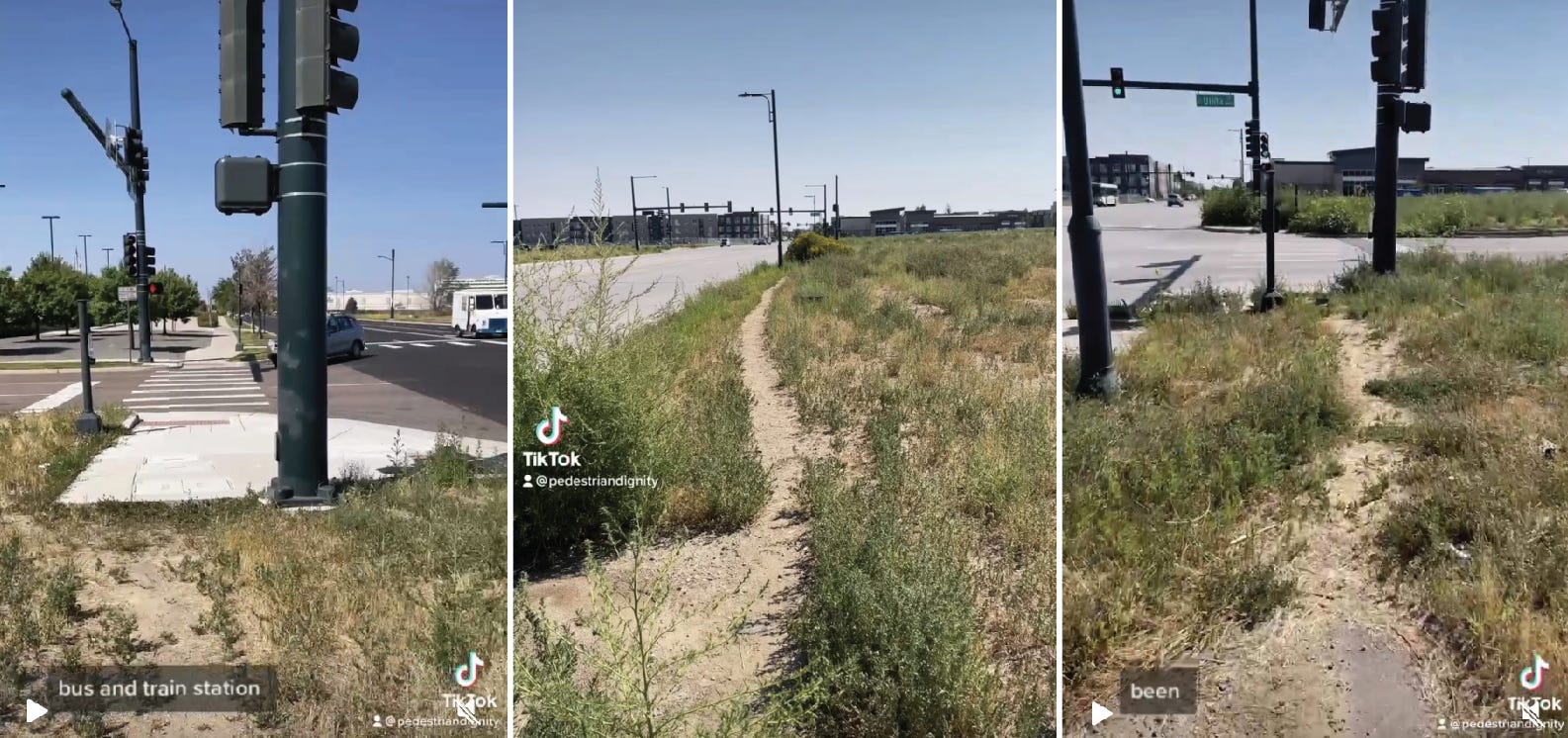
The more common term used for these paths is, “desire line”. I still use it. It rolls off the tongue. And. It doesn’t feel honest enough. To desire or want something is different than the more raw, scabbed up nature of necessity. Desire leaves too much room for excuses and justifications.
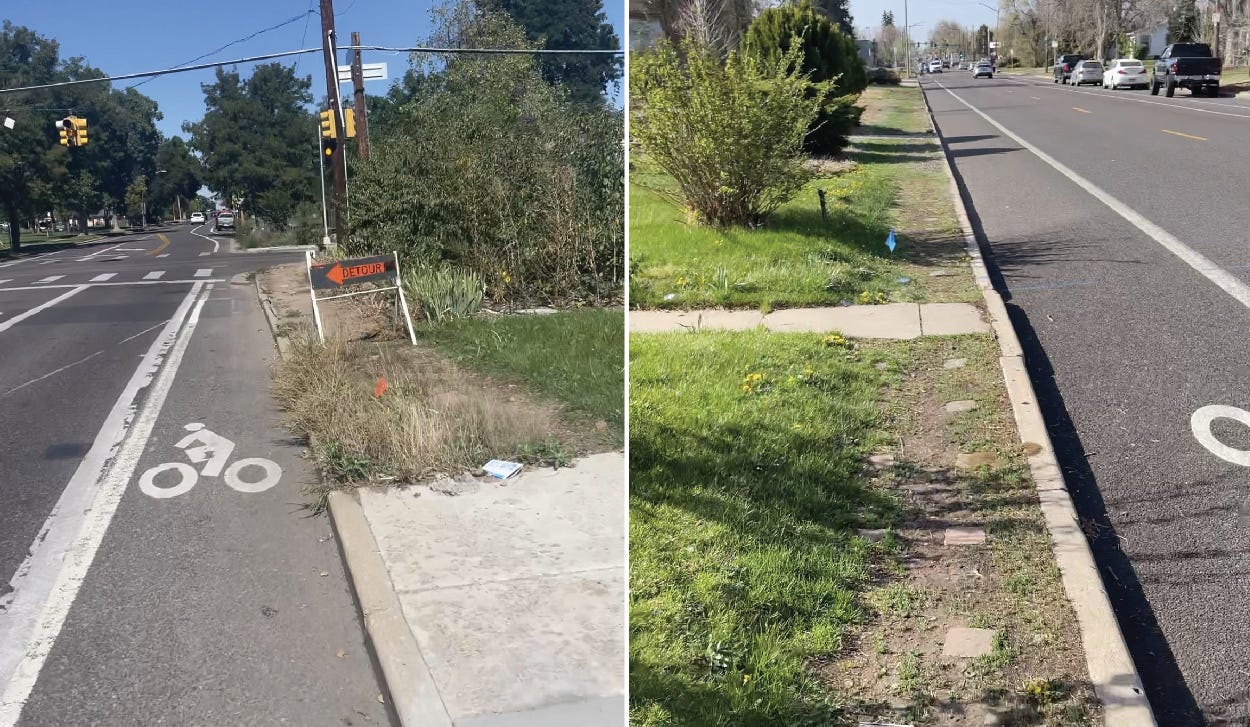
My own two feet have crunched and punched these dirt paths on Syracuse (above) well over 100 times. Of course I desire more sidewalks and support here. And. So many nondrivers don’t have time for desire. Too rushed and defeated.
Transportation decision-makers. Driving by. Air-conditioned. Radio up.
I can’t describe how bad it feels to be honked at. To be flipped off for being “in the way”. I have learned to numb it down. To ignore it. And the exhaust. Filling up my lungs under a baking sun. No benches. No shelter. No public restrooms. “Buy something”. “Private property”. Wait until you get sprayed with oily, warm tire water. A storm is coming. Who has time for desire when you are darting across eight lanes of traffic to catch the bus that only runs once an hour.
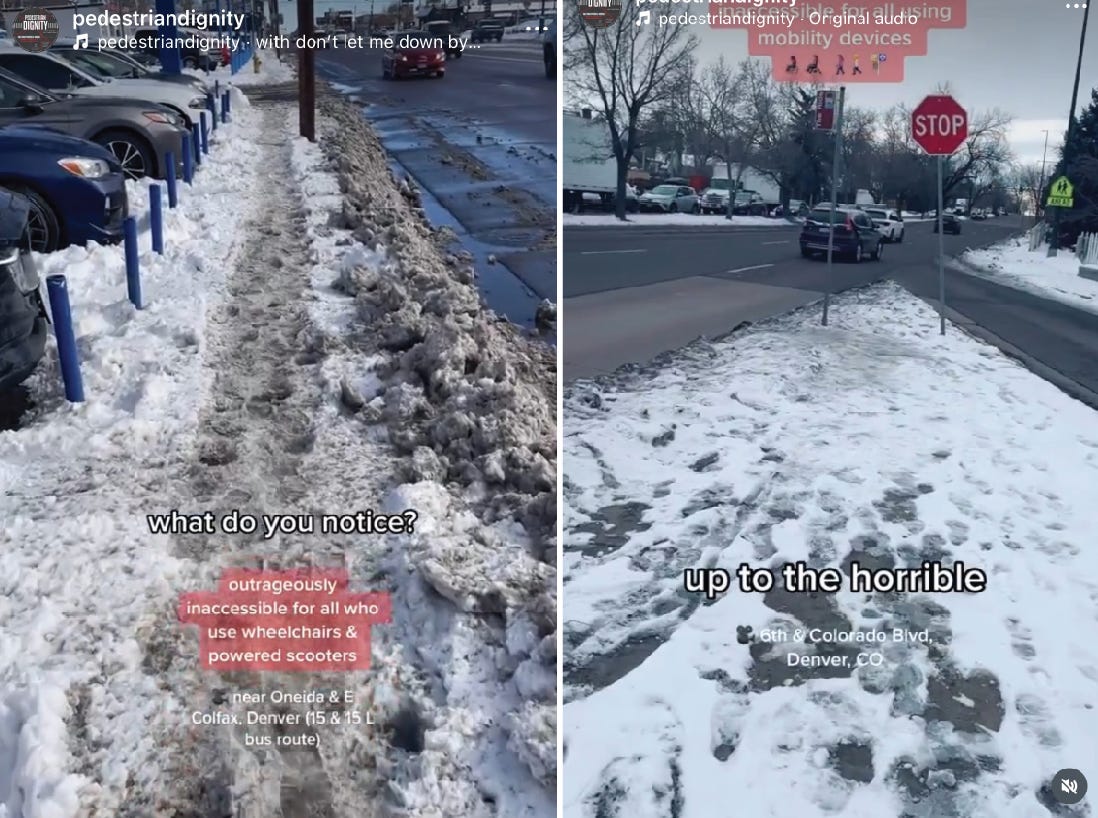
Necessity lines are justified by most people who make big budget, planning, and engineering decisions. The response is usually, “well, you see, this isn’t developed yet”. This exact response was given less than three months ago by a Director within the City of Denver’s Transportation and Infrastructure department. While her response wasn’t malicious, it is deadly. A standard response made by transportation professionals who mostly/only drive.
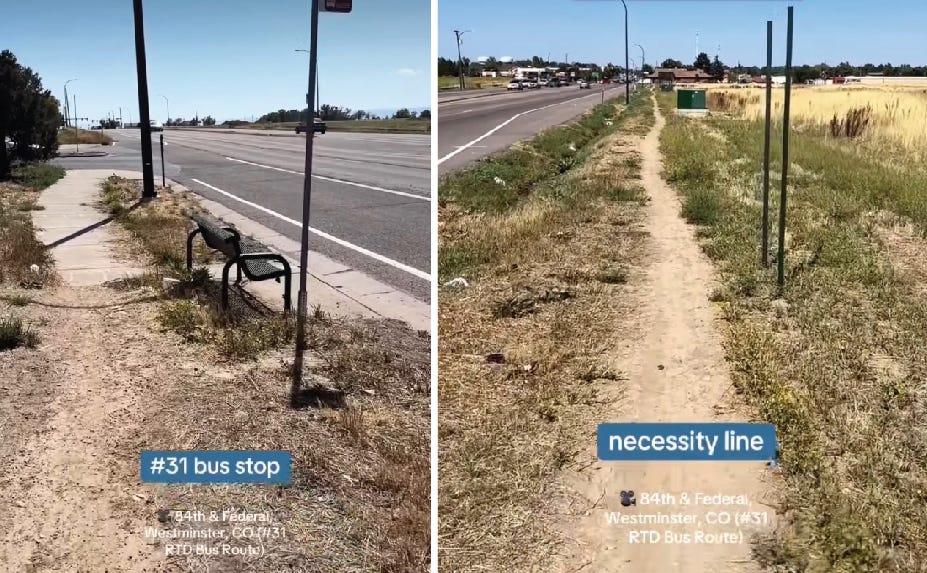
Most of our municipal budgets, engineering manuals, and elected officials treat - knowingly or unknowingly - mobility outside of a car as not needing complete, accessible, safe, comfortable, and connected networks. Also, do people actually desire to walk or roll - even if there are sidewalks - right next to Federal Boulevard (photos above) with high-speed car traffic ripping by them all hours of the day? Probably not.
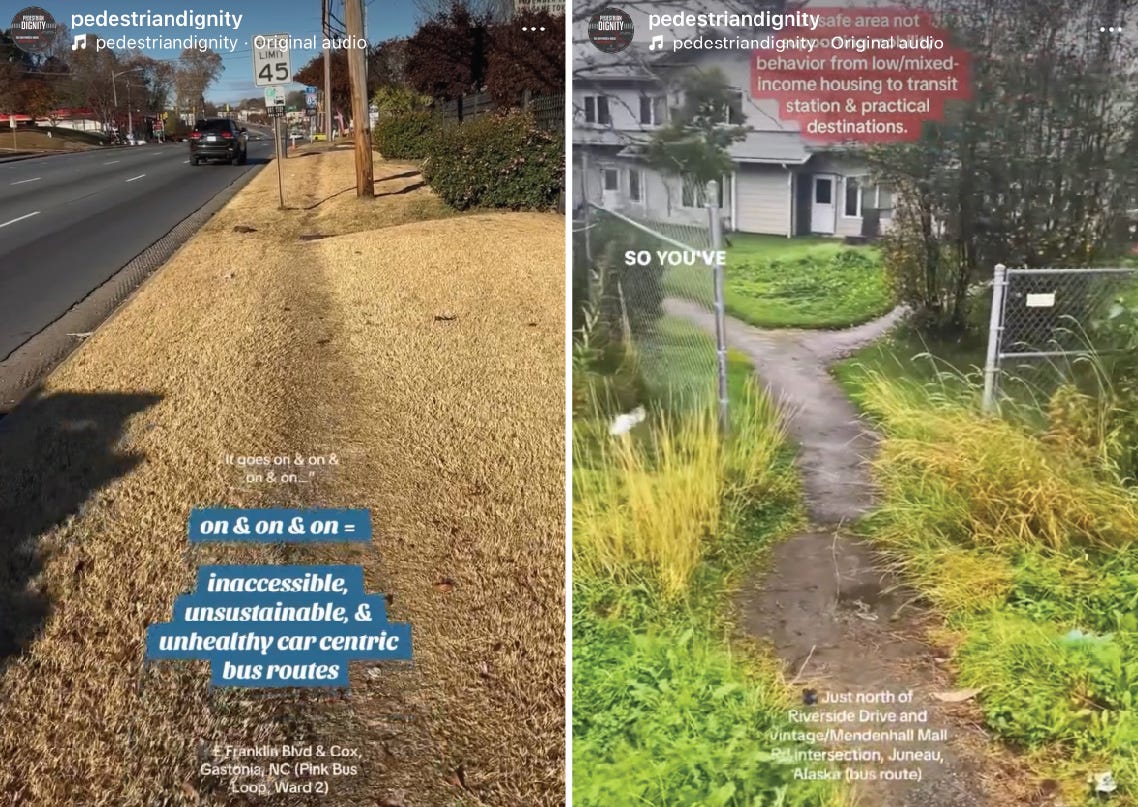
For most cities, counties, and municipalities, pedestrian mobility is left up to the whims of private property. Curating “lived experience” events is one of many things people can do to help make things better. Until we experience it for ourselves, in a variety of conditions, it remains intellectual. Are you involved yet with this year’s Week Without Driving campaign?
I also like to show good examples - Grand Junction Main St, Olde Town Arvada pedestrian mall, and Beach Ave in Vancouver - of what is possible when we actually treat people who walk, use a wheelchair, and bike with dignity. While the examples I’ve shared here are predominantly tourist-heavy areas (outside of practical transit routes), they do show we actually can build infrastructure that de-centers car driving.
What do you think? Necessity, desire, or both?
Do you experience necessity lines? I would love hear your stories. Comment below or tag @PedestrianDignity in any of your posts (here and on socials).
No posts
Comments
Nothing yet. Say the first thing.
Sign in to join the conversation.