
Little Known Fact:
I was a guest on the second episode of the television show ‘The View.’ It was part of the author publicity tour for my first book.
However, apparently, the first episode was such a dumpster fire that the producers came into the green room and told me and the show’s other guest (Barbara Walters’ former news co-host, Hugh Downs) that we would have to rein in the panelists, whom they described as being ‘out of control.’
Barbara, by the way, had just read my book Eat Right For Your Type, enjoyed it, and was obviously smitten. To be honest, so was I. She was very tiny, and despite her age at this time, quite attractive. Let’s face it: What boy in my generation didn’t have a crush on her?
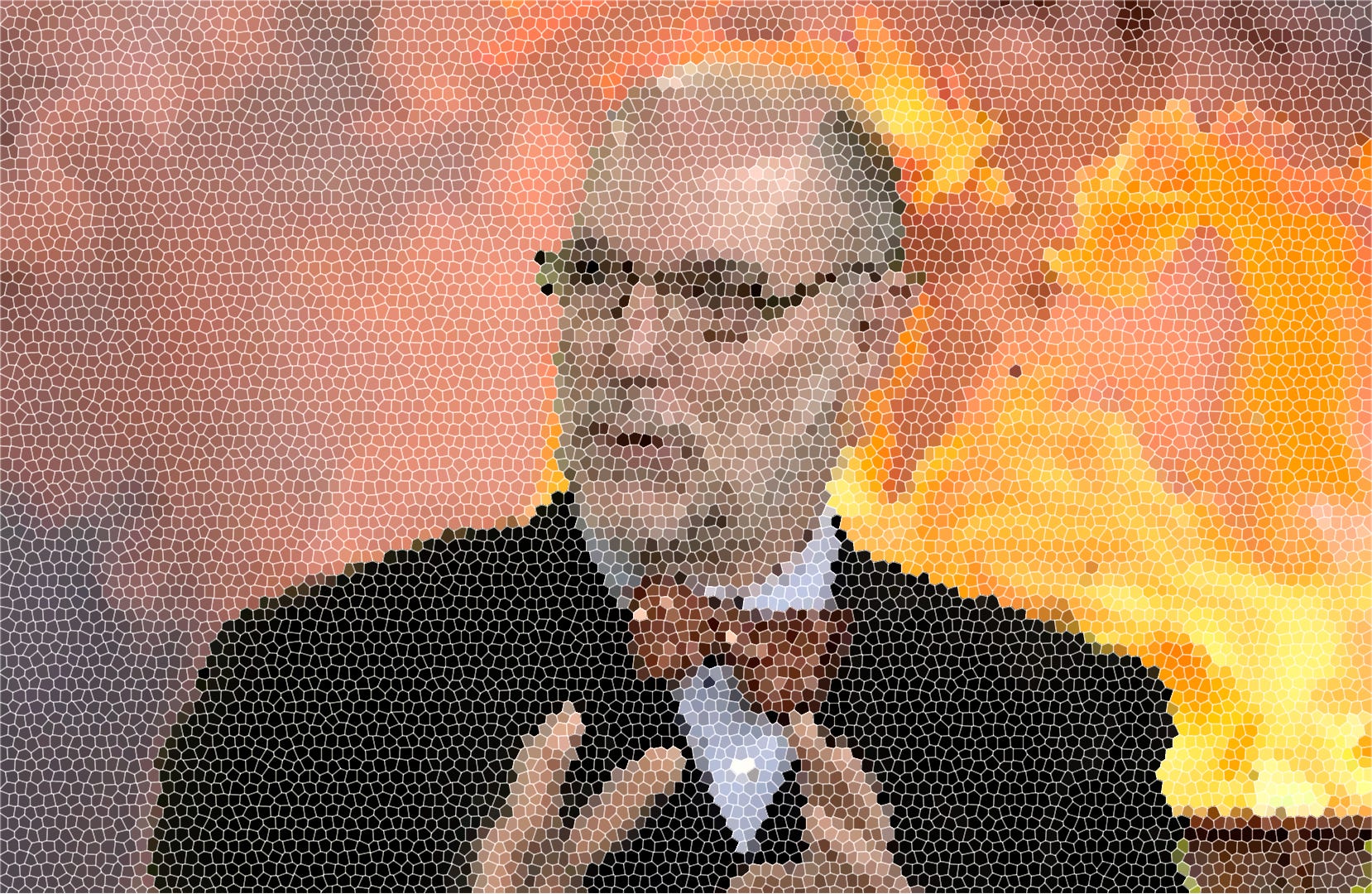
As typical of a show of this caliber, they had lined up a ‘skeptic’ (nephrologist) whose job it was to provide the ‘balanced journalism’ this show is so renowned for. However, when it came time to go live, he was nowhere to be seen.
What I learned from the showrunner, slightly before showtime, was how his morning had gone. He had eaten breakfast that day with his wife, who is a gastroenterologist, a specialist in the gut, and had mentioned, half laughing, that he was about to interview some crazy fellow who thinks being blood type O can give you ulcers.
His wife did not laugh. ‘Honey,’ she said, ‘we have known that for decades.’
I have thought about that breakfast for years, because the finding did not change as it traveled from one end of the table to the other. Only the listener changed. To the husband it was quackery. To the wife it was something she had learned in training and never thought to doubt, so ordinary she was almost surprised to hear it questioned.
People with type O blood do carry a higher risk of certain ulcers, the raw, painful breaks in the lining of the stomach and the first stretch of intestine. This is not folklore, and it is not new. It was worked out in the 1950s, in an unglamorous run of studies that counted blood types across thousands of patients and found the pattern sitting there plainly in the numbers. Most ulcers of that kind are driven by a bacterium, Helicobacter pylori, that colonizes the stomach lining. And the bacterium attaches to that lining by grabbing specific sugar structures displayed on its surface, the way a burr grabs wool. Type O individuals, and a related group called non-secretors, happen to display more of exactly the sugars the bacterium grips. Their stomach wall is, in effect, a better handhold. The blood type does not cause the ulcer directly. It just sets out the welcome mat for the organism that does.
How a Fact Gets Extinct
In the last century, there was a whole active field of medicine studying how blood groups tracked with disease, ulcers, certain cancers, and clotting disorders. Remember this was before DNA, and blood groups were a convenient objective way of stratifying otherwise similar groups. Then the field was abandoned. Not disproven, abandoned. Many of the key studies were from the early 1950s; these are not typically electronically indexed, and I can assure you that, unlike in my early career, people no longer sit in libraries and run from the Cumulative Index Medicus to pull up a volume of the ‘Hungarian Journal of Podiatry’ in the hopes that that article with the attractive title might prove useful.
Most people in medicine will not check what they cannot easily find. On the other hand, I’m that particular type of relentless guy who’d pay his landlord to translate articles into English from the French medical journals of the 1920’s.
A geneticist once put it to me on a radio program with a phrase I have never improved on: research in blood groups, he said, ‘went out with high-top shoes.’
A field that is abandoned rather than refuted does not vanish cleanly; it simply stops circulating. They survive here and there, in the training of one specialty and not another, in a textbook paragraph nobody updates, in the memory of a gastroenterologist who learned them while young. Unfashionable and unfindable at the same time.
That breakfast is the whole story in miniature. The husband was a good doctor working from what his own field currently carried, and his field had let this particular fact lapse. The wife was not brilliant for knowing it. She was simply in the specialty where it had never been dropped. The difference between quackery and we’ve known that for decades was not intelligence or evidence. It’s the particular room of the house you happen to be standing in.
Well, it turns out (unsurprisingly) that they never did air this episode, so you’ll have to take my word for it. However, I do remember one fact that could be checked. At one point, they asked us to name a historical figure we would want to be if we could be anyone. I’ve long forgotten my selection, but I do remember that Hugh Downs wanted to be Alexander the Great.
Comments
Nothing yet. Say the first thing.
Sign in to join the conversation.