
‘THE MUSIC IS UNIMPORTANT, derivative, false, and above all else, IMMATURE. It quite honestly doesn’t merit serious analytical space in a rock ‘n’ roll paper; it deserves very little space at all… It’s very difficult to write about such complete rubbish without condescension or amusement.’
This was Paul Morley (and the capitals were his), pontificating on an album by Rush specifically, and hard rock in general, for the NME, back in the 1980s. Morley’s was the standard consensus among the self-regarding rock hacks of the time. Typically, hard rock was by them derided or else dismissed out of hand. In short, it was a galaxy’s span from being perceived of ‘cool’, ‘hip’, or ‘in’… and it was my music all the same.
The odd snatched, precious record at youth club discos in a provincial small town. A constant in my teenage bedroom, the source of countless battles with my dad over the precise definition of ‘too loud’. Coming out of the radio, just once weekly, and courtesy of dear old Tommy Vance’s Friday Night Rock Show on Radio One. ‘TV’ apart, the mainstream media otherwise pretty much ignored it.
Gloriously, savingly, there was as well Kerrang! magazine. A veritable bible. I happened upon it from issue four, German axeman Michael Schenker on the cover, and with it there was entry into a whole other world. One in which I wasn’t an outsider.
Eyeing some lurid photograph or other in the Big K!©, say, Gene Simmons spewing theatrical blood, Ronnie James Dio flicking the ‘devil sign’, Lemmy leering over a hardly clothed Wendy O Williams, Angus Young, a grown man attired as a sweaty schoolboy, my mum, God bless her, would habitually caution, “You’ll grow out of this.” She didn’t get very much wrong, and but for that.
Forty-four years later, I still love hard rock. The sound of it. The thrill of it. As, of course, do so many, many of us. It’s out of the shadows now, bidden into the light, stamped indelibly in the pop-culture lexicon. About time, and rightly so.
As for this list, it could as easily have numbered 60, or a hundred, or more. The ‘anthem’, after all, is what hard rock did, and does as a rule. Drop in at any point here, alight on any one song, and the effect will be the same. Pure, primal joy, and with it, a simple, but correct assumption: truly, Paul Morley, and those like him, were the most insufferably pompous kinds of FOOLS…
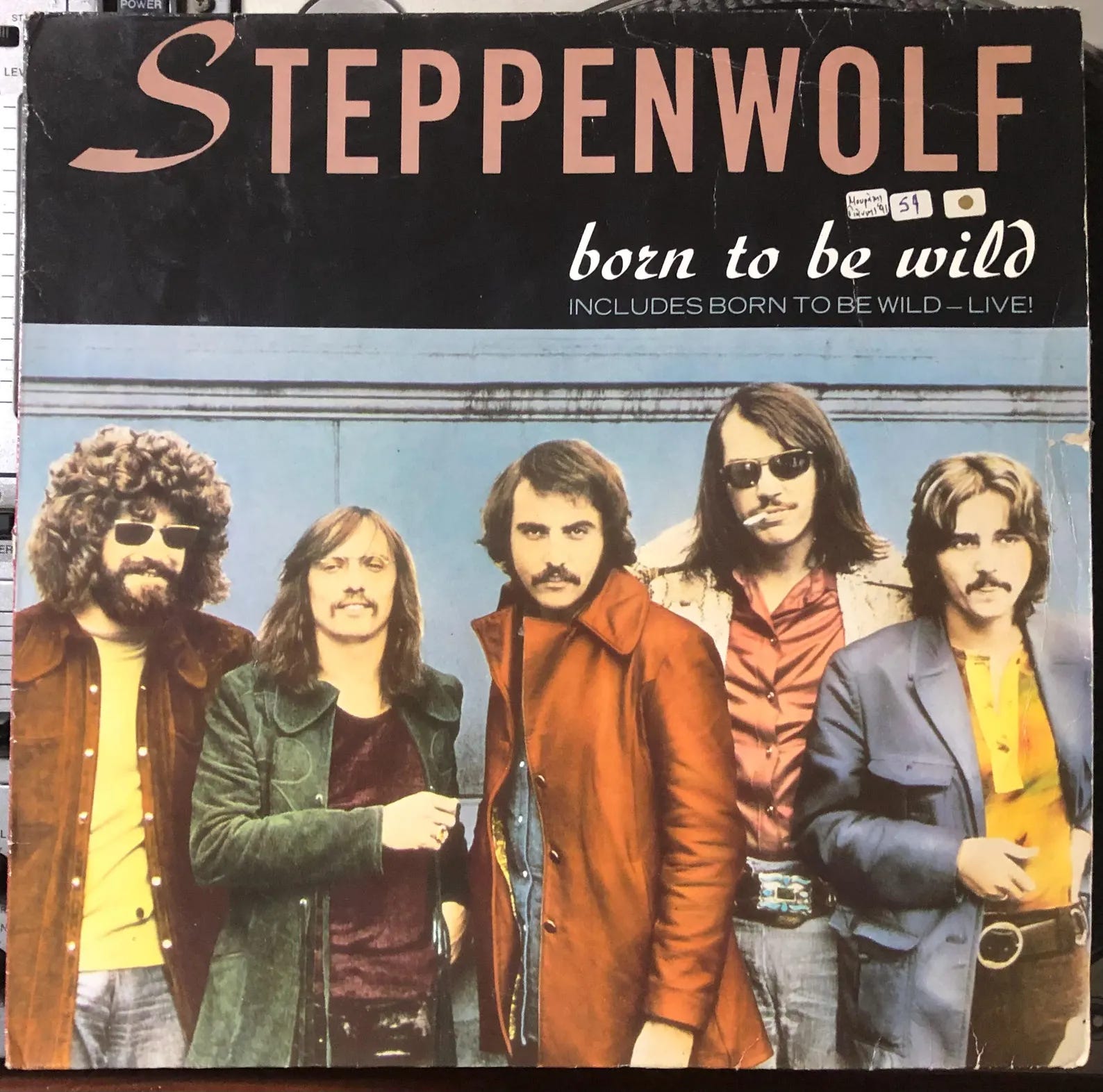
Out of Los Angeles, Steppenwolf’s third single was prised from their self-titled debut album, and the song that birthed the phrase, “heavy metal thunder.” Written by their Canadian guitarist Mars Bonfire, originally as a ballad, but sped up, bolted onto a neanderthal riff, and to be made famous soundtracking Peter Fonda’s and Dennis Hopper’s last chance power drive in 1969’s Easy Rider.
Robert Plant is ever liable to get shirty should the Zep be branded a mere hard rock band. They were more than that, so they were, but not here, and magnificently. Jimmy Page cranking up an old Chuck Berry riff, Plant wailing, the Rolling Stones’ eternal sideman Ian Stewart boogie-woogie-ing on guest piano, John Paul Jones’ cement-solid bass, John Bonham summoning the apocalypse. It does nothing but rock, and hard.
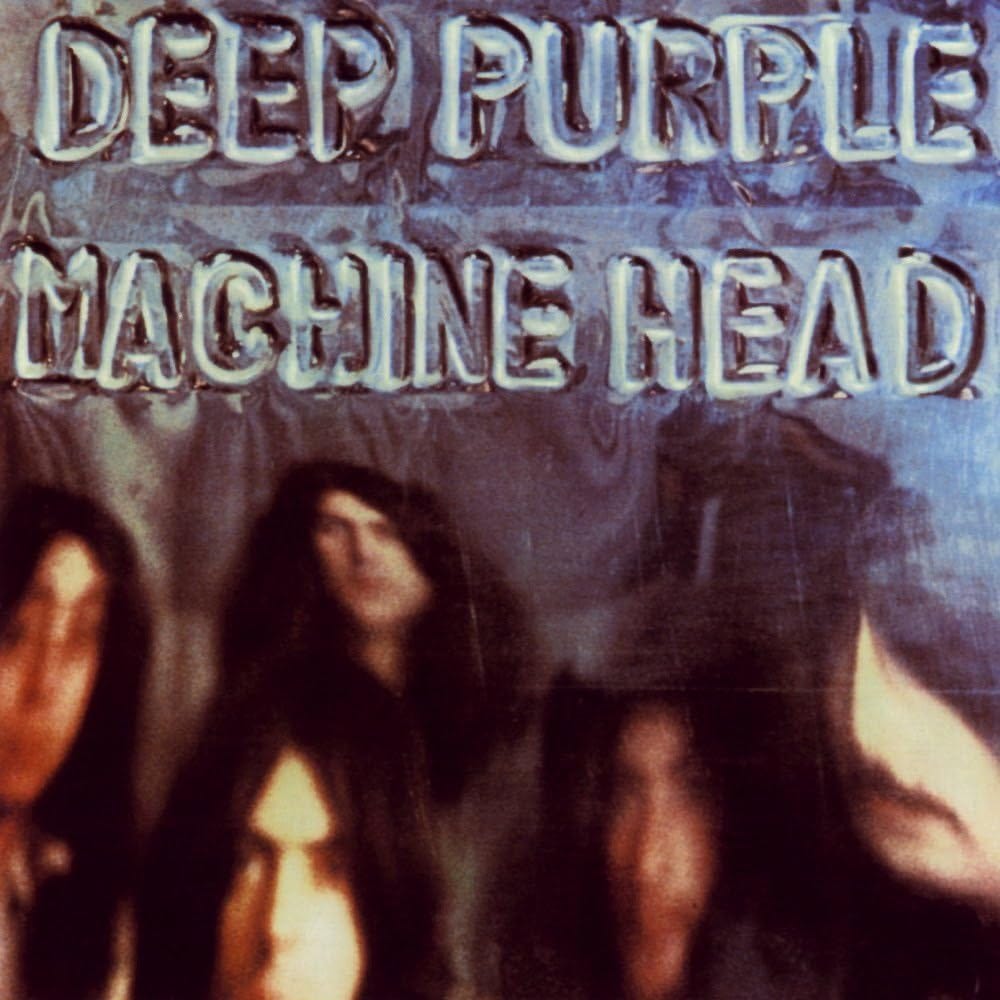
Launch point for the Purps’ sixth and greatest album, Machine Head. Begun with Ritchie Blackmore noodling out the riff on a tour bus bound for Portsmouth, cut in Montreux, Switzerland before the gambling house burnt down, and engineered by the late, great Martin Birch. It’s all in the chug… Blackmore’s motorific guitar, Jon Lord’s plangent Hammond, Roger Glover’s rumbling bass… and then, bang! Enter Ian Gillan and Ian Paice and we’re off. 6:06 of sheer hard rock heaven.
A Eurozone ‘Highway Star’, also breaching the six-minute mark, and likewise passing through several distinct sections. Written by the Dutch rockers’ guitarist George Kooymans and singer Barry Hay, from their ninth album, Moontan, and in this case, all about the chorus, which they tease, tempt, and then explode into.
By the time of their sophomore album, Second Helping, Ronnie Van Zant’s rule by iron rod had made Skynyrd into a fearsomely tight band. Here, in excelsis, is their three-pronged Southern Rock guitar attack, Gary Rossington, Allen Collins, and Ed King (the riff’s his), in rip-roaring flight. Famously, a riposte to Neil Young, who actually loved the song, and eternally wonderful.
Bittersweet right now (Frank Beard, RIP) but barnstorming just the same. Centrepiece of the righteous Tres Hombres album, this full-tilt homage to the notorious Fayette County brothel also immortalised in the Best Little Whorehouse in Texas is the Top at their lowdown and dirty finest. Billy Gibbons lifted the immortal riff from John Lee Hooker. The rest was hard baked in the Texan earth.
The one-time Vincent Furnier’s breakout hit, produced by Bob Ezrin, co-written with guitarist Glen Buxton, the man behind that barrier-crashing herald of a riff, and the impossibly exciting sound of teenage rebellion distilled into 3:30.
After their third album, Toys in the Attic, hit big, Aerosmith resolved to stir a harder-hitting brew on the follow-up, Rocks. Nowhere more so than on this rampaging highlight, born from a jam through Fleetwood Mac’s ‘Rattlesnake Shake’. Joe Perry’s murderous bottleneck, Steven Tyler yelping and yapping, “Going under, skin’s turning yellow; nose is running, losing my connection.” The Toxic Twins, before they were cleaned up in all senses, and musically at least, forever better this way.
Out of Purple, Ritchie Blackmore assembled Rainbow. Their second album of 1976, Rising, was titanic, but there’s a strong case to be made for the first half of their third, Long Live Rock ‘N’ Roll, being the genre’s monumental peak. Witness this, track two, Martin Birch again producing, in a French castle, and sounding just as epic as that implies. Blackmore, Cozy Powell, and Dio in tandem. Respectively, hard rock’s all-timer guitarist, drummer, frontman combination.
Introducing it on stage just recently in Toronto, Alex Lifeson proclaimed, “I love this song.” So he should. The one that comes right after the whole of ‘2112’, ‘A Passage to Bangkok’ unfolds from Lifeson’s exotic E minor riff, inspired by Jimmy Page’s on Zep’s ‘Kashmir’, takes a lyrical tour of the world’s pot hotspots, and altogether showcases rock’s most mercurial three-piece at the point of their fantastical flowering.
New Yorkers the Cult were regular touring partners of Rush’s back in the day. A good fit, since BOC’s brand of hard rock was, too, cerebrally otherworldly. Drawn from a poem penned by producer/manager Sandy Pearlman and meant by drummer Albert Bouchard for a concept album about an alien master race on Earth, ‘Astronomy’ ended up instead the high point of their more scaled down but still excellent third album, Secret Treaties. Over 6:28, it gathers, dramatically, from brooding, atmospheric verses to eruptive crescendo. Very well covered by Metallica for 1998’s Garage Inc.
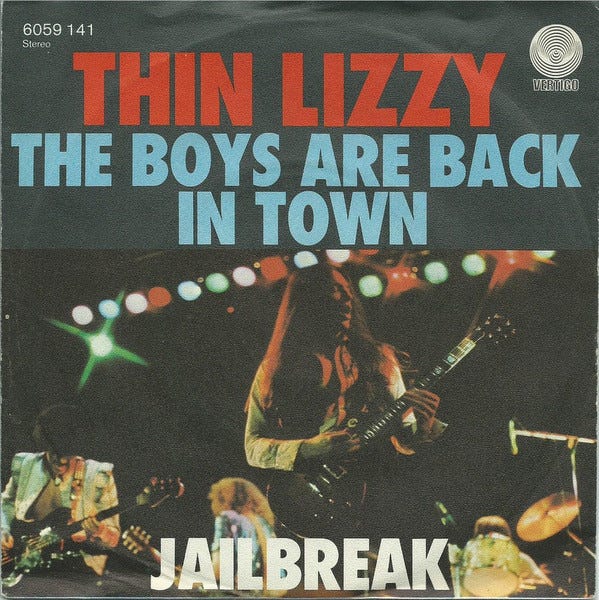
Lead-off single from Lizzy’s sixth, and best, album Jailbreak, and utterly unmistakable. Twin lead guitarists Brian Robertson and Scott Gorham drive it along, the incomparable Phil Lynott wrote and owns it. Impossible to imagine ever hearing it and not wanting to punch the air.
A second Deep Purple splinter band, for a while there, and before David Coverdale ‘went Hollywood’, the ’Snake were quite something. A hulking blues-rock beast, founded upon Coverdale’s impressive vocal power, ably backed by ex-Purple comrades Lord and Paice, a couple of understated guitarists in Bernie Marsden and Mickey Moody, and dependable bassist Neil Murray. When they hit just the right groove, as here, the standout from fourth LP Come An’ Get It, the ever-present Martin Birch running the desk, they were unstoppable.
De rigueur for all self-respecting hard rock bands of the golden era was the statement live album, preferably, but not essentially, a double. See these next three selections, and starting with this, the classic line-up of UFO – singer Phil Mogg, wunderkind guitarist Schenker, hooligan bassist Pete Way, Paul Raymond on keys, and drummer Andy ‘No Neck’ Parker – in their element, and as captured on the superb Strangers in the Night. Joe Elliott of Def Leppard once told me you could teach a gorilla to play the bass line to ‘Only You Can Rock Me’ and meant it as a good thing.
The definitive version of their best-loved song. Recorded in front of a baying Glasgow Apollo crowd, fabulously chanting “Angus! Angus!” in between each gonzo-boogie riff and preserved on If You Want Blood (You’ve Got It), a live classic contained on two sides of old vinyl. Simply, Bon Scott doing what Bon Scott did better than anyone else ever: “Wan’ tell you a story, ’bout a woman I know… 42-39-56, you could say she’s got it all.”
Own Kiss’ two live albums from the ’70s and you have all you’ll ever need know about them. The inner sleeve photograph on the gatefold of Alive II, picturing the explosive Kiss stage show in its full glory, was one I would pore over, spellbound, giddy, for literally hours. Cue, “You wanted the best, you got the best… the hottest band in the world… Kiss!” And ‘Detroit Rock City’. Larger than life in every sense.
The other four-piece band produced by Ted Templeman, with a hotshot guitarist and unmissable frontman, whose seminal debut album completely retooled the sound of Californian rock, Montrose at the time never got their due rewards. This was track three on Montrose, Ronnie Montrose’s earthshaker of a riff, Sammy Hagar singing the hell out of it, hard rock like a high-performance sports car, and yet they peaked at a lowly 133 on the Billboard Hot 200…
…Leaving the way clear, five years on, for Van Halen to pick up the baton and storm the barricades. Van Halen I basically amounted to the Pasadena band’s ten-song live show of the period, put down at Sunset Recorders with Templeman, and unleashed on an unsuspecting world. Even today, and forever more, it sounds impossibly exciting, Eddie Van Halen’s trailblazing playing, David Lee Roth’s grandstanding. They were the whole package and more besides.
“All aboard!” With those two words, near vomited out, Ozzy Osbourne, outcast from Black Sabbath, presumed wrecked, signalled his second coming. Behind him is that unforgettable circling riff, courtesy of Randy Rhoads, first and easily best of the generation of guitar heroes spawned by Eddie Van Halen, and a signature song to sweep all before it. “Mental wounds still screaming, driving me insane… I’m going off the rails on a crazy train.” He was, it bears repeating, one of a kind.
Yes, yes, there is ‘Paranoid’, ‘Iron Man’, ‘War Pigs’, and so many others from the Ozzy era. Yet with Dio taking over the mic, and that man Martin Birch at the helm, Sabbath mounted an astonishing rebirth of their own on the Heaven and Hell album. ‘Neon Knights’ roared it out of the gates. A colossal Tony Iommi riff, the quintessential Dio lyric: “Circles and rings, dragons and kings, weaving a charm and a spell.” If Game Of Thrones had been a rock anthem, and greater, it would be this.
Hailing from just up the road from Sabbath’s Birmingham, in the Black Country town of Walsall, the Priest were, and are, the hardest of rock, metal in actual fact, incarnate. From the self-explanatorily titled British Steel album, to the accompaniment of wailing police sirens and shattering glass (milk bottles, purloined from the local milkman, chucked around the studio carpark), Rob ‘Metal God’ Halford skewers Thatcher’s Britain as Glenn Tipton and KK Downing stage a dual-guitar assault: “There I was completely wasted, out of work and down.”
Erstwhile Jimi Hendrix roadie Ian ‘Lemmy’ Kilmister on caveman bass and gargling-battery-acid vocals. ‘Fast’ Eddie Clarke on lightning guitar. ‘Philthy Animal’ Taylor pummelling the drums. British rock’s most uncompromising, and finest ever three-man wrecking crew. All gone now, sadly, but this will live on forever.
Enter the New Wave of British Heavy Metal, and a fresh bunch of powerhouse rock anthems. Barnsley’s Saxon peaked with their fourth album, Denim and Leather, a UK Top 10 hit, and this piledriver, written by frontman Biff Byford in awe from playing the first Castle Donington Monsters Of Rock festival the year previous. “See the people, feel the power, there were 60,000 there,” air-raid sirens Byford, as his band detonates around him. Pub fact: heroically moustached bassist Steve ‘Dobby’ Dawson was the inspiration for Spinal Tap’s Derek Smalls.
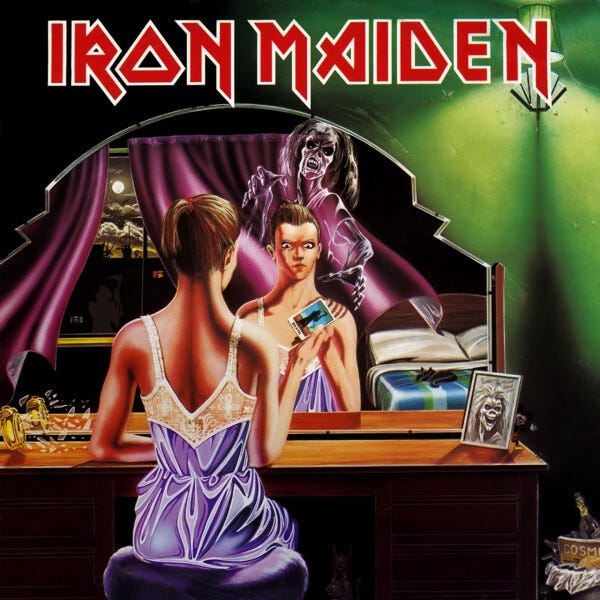
They were never so good as they were with the yobbish Paul Di’Anno fronting them. Here with the choice song from second album Killers (produced by, yes, Martin Birch, the undisputed artisan of the hard rock sound), as punkish as they ever were metal, a 2:54 snarl of pure frustration and intent. “My mother was a queen,” Di’Anno spits, “my dad I’ve never seen. I was never meant to be.” Authentically real.
Cast out from Sabbath, as from Rainbow, Ronnie James Dio hit back with a seminal album all of his own making. The title track, this is notable for the appearance of future Def Leppard guitarist Vivian Campbell, then a raw 20-year-old plucked from out of Northern Irish NWOBH-ers Sweet Savage, and with a pair of Dio’s ex-Rainbow and Sabbath cohorts, respectively bassist Jimmy Bain and drummer Vinnie Appice, completing the line-up. Essentially, though, it’s Dio’s anthem, his voice canyon-sized, eyes doubtless blazing, master of all he surveys.
Their album covers were, often as not, preposterously sexist. Ditto their lyrics. Yet, inarguably, Teutonic rockers the Scorpions were a fine-crafted hard rock machine. Their eighth album, Blackout, was all-round precision tooled, ‘No One Like You’ its muscular power ballad, a prime showcase for propulsive rhythm guitarist Rudolph Schenker, elder brother to Michael, and iron-lunged frontman Klaus Meine.
The other guru-producer of the period, Mutt Lange soared Def Leppard to new heights on their third album Pyromania, rock heft meeting pop smarts, ten million and counting sales in America the net result. ‘Too Late For Love’ was its power ballad, Lange making the absolute best out of singer Joe Elliott, the band supercharged, an armada of backing vocals, a hit out of the park.
Aerosmith’s sass, Motorhead’s brute force, mixed into a cocktail of their own making. Easy to forget with the overblown nonsense of the ensuing years, but with Appetite for Destruction, Guns N’Roses fired a dose of pure, unfettered adrenalin into rock’s ailing heart. ‘Nightrain’, an ode to the gut-rot wine, Slash and Izzy Stradlin’s guitars a match to the petrol of Axl Rose’s vocal, summed up how they came on: “Loaded like a freight train, flyin’ like an aeroplane.”
Written by main man Dave Wyndorf as a riposte to all those bands jumped on the grunge bandwagon, but as much a beacon flashing out hard rock’s ongoing path, ‘Negasonic Teenage Warhead’, awesome title, breakthrough hit from the Magnet’s third album, Dopes to Infinity, roars off the grid like a hot rod, and then keeps going, into the mother of all psych-rock, chant-it-from-the-bleachers choruses.
The keeper of the flame, Josh Homme, backed by Dave Grohl on Animal-from-The Muppets drums, and maniacal bass monster Nick Oliveri, and with a battering ram of a song co-written with Mark Lanegan. The Queens’ third album, Songs For the Deaf imagined driving through the California desert, the car radio tuning in and out of pirate radio stations broadcasting from the wilderness. Here, picking out the monster riff to end all monster riffs.
Now feast on the whole of this hard rock banquet on the playlist at the link:
No posts
Comments
Nothing yet. Say the first thing.
Sign in to join the conversation.