
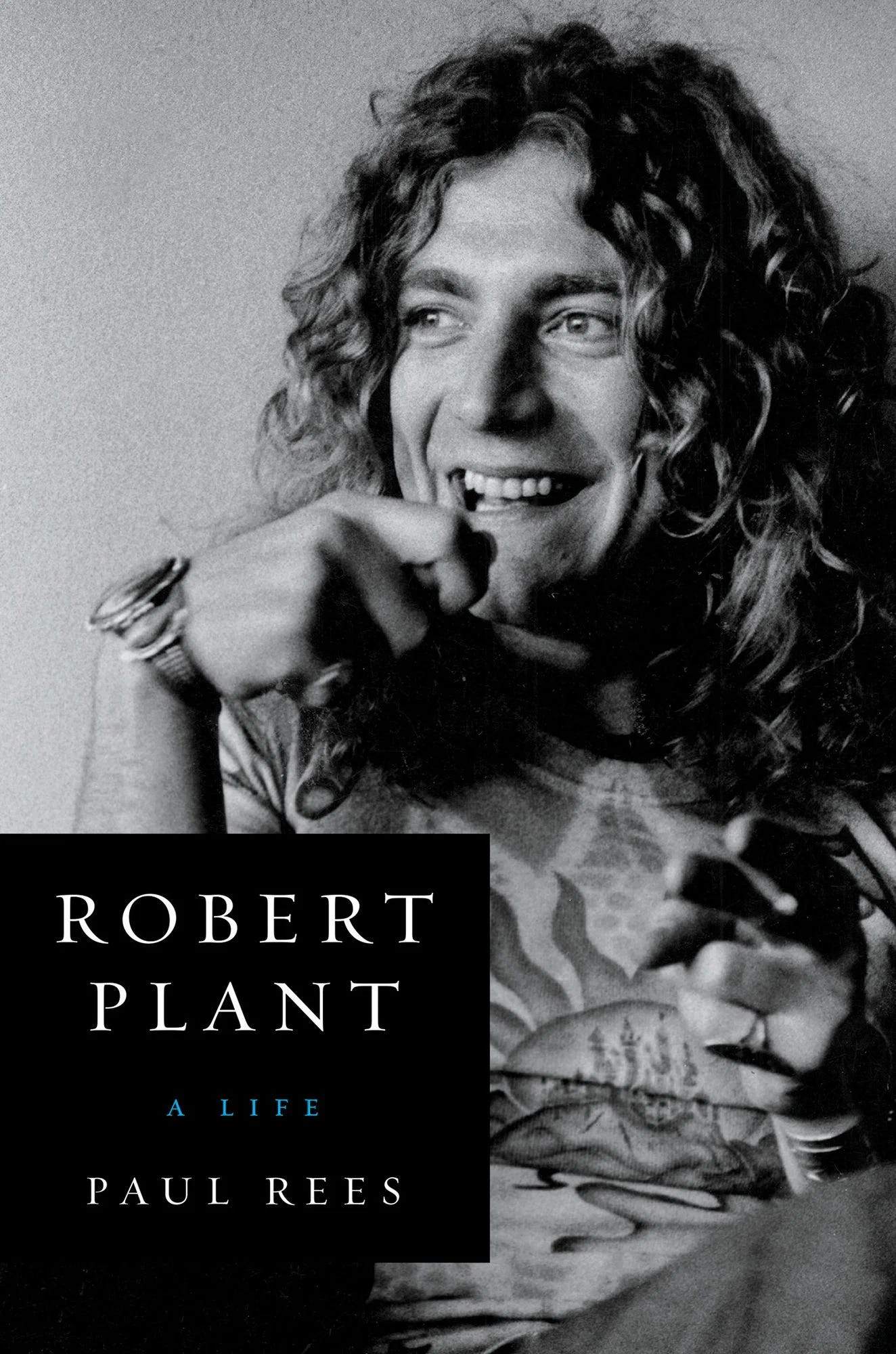
THE SUMMER OF 1965 would be the last time the teenaged Robert Plant’s parents were able to assert themselves when it came to his future prospects. At their behest, he enrolled on a short business studies course at Kidderminster College of Further Education, just nine miles along the road from the family home at 64 Causey Farm Road, on the more well-to-do fringes of England’s industrial heartland, the Black Country.
Before the new term began, Plant took a temporary job as a stock boy at Stringers department store on Stourbridge High Street. With money in his pocket, the young mod could be seen zipping around town on his scooter, sporting a parka jacket with a Union Jack emblazoned on the back.
Once he was at college, he continued to be animated much more by his life outside of academia. He was singing with a local band, the Crawling King Snakes, and ingratiated himself with a local promoter, Ma Reagan. She had him spin records in between acts at one of her venues, the Old Hill Plaza. Plant would play Stax and Motown tunes, but also selections by the Small Faces, the Rolling Stones, and the Beatles. On occasion, Ma Reagan also asked him to take on MC duties at the ballroom.
“I became the apple of her eye,” Plant told me. “I’d arrive at the Plaza on my Lambretta, go into the dressing room and put my suit on, and then go out and introduce people like Little Stevie Wonder. I remember he came out with his hand on his bandleader’s shoulder, who put him on the microphone. Then he started playing ‘Fingertips Part 2’.
“It was unreal to be able to hear such quality. To see that shit and still be in college. Man, you can’t ask for a better ticket than that. If that isn’t going to turn your head and make you say, ‘Is there anything else I can do?’”
There were more mundane matters to attend to first. Just as soon as he’d completed his college course, his father, also Robert, packed him off to an interview with a firm of chartered accountants in nearby Stourport. He was taken on as a trainee and went to work in the picturesque town on the banks of the River Seven on wages of £2 a week. Less than he could earn from doing a single gig.
The job didn’t stop him from going out most nights to perform, or else to watch other bands or go dancing in the clubs. As it happened, he dragged himself into the office for just two weeks before he was instructed to clear his desk. He decided to turn pro with the Crawling King Snakes, supplementing his income with additional labouring at a local carpet factory.
It was at this precise moment that Plant met John Bonham for the first time. Bonham, better known to one and all as Bonzo, approached him after the King Snakes had completed one of their regular 20-minute slots at the Plaza. Bonham told him the band was good, but their drummer hopeless. Bonzo inevitably took over the spot on their drum stool.
Bonham was only three months older than Plant but married already. He and his wife Pat were living in a caravan parked up behind his family home in Redditch. Not only worldlier than his new friend, in terms of ability Bonham was far ahead of anyone Plant had played with up to then. He was spoken of as a drummer of prodigious ability, a veritable powerhouse.
“Bonzo had been in a dance band,” Plant recalled. “He got all of his chops from being able to play those big band arrangements. I’d never seen anything like it.”
“Robert would dance across the stage like he was floating. My dad would ask me, ‘Is the Rubber Man coming tonight?’” - John Crutchley, Plant’s bandmate in Listen
FOR A SHORT SPELL the possibilities for the King Snakes seemed boundless. With Bonham propelling them, they got gigs opening up for the Spencer Davies Group, Gene Vincent, and the Walker Brothers. Plant was brought closer than ever to the magical centre of things. He and Bonham stood together at the side of the stage at Stourbridge Town Hall, watching the Walker Brothers, listening to teenage girls scream at Scott Walker as if her were a god.
“There was no notion of where we going to, but no known cure either,” Plant said. “I mean to say, I didn’t have any concept of fame as a 17-year-old kid. It was just the fact of being able to get away from the clerks’ desk as a chartered accountant.”
And then, as was his custom in those days, Bonham walked out on the band. Lured back to one of his previous groups, the Way of Life, by the promise of more money. He needed it since Pat was now pregnant. With Bonham gone, the King Snakes dissolved. Yet Plant didn’t have to wait long for his next gig. DJ-ing one night at the Plaza, he became acquainted with the Tennessee Teens.
A three-piece, the Teens played blues and Tamla Motown covers. They were recently returned to the West Midlands from a club engagement in Frankfurt. Plant introduced himself to their guitarist, John Crutchley.
“He asked me if he could sing with us,” Crutchley explained. “That’s how it started. We were doing the Plaza three or four times a week. It would always be the last venue of two or three we’d do each night. Whenever we got there, Robert would get up and do a song with us. Some blues stuff, some Chuck Berry, Solomon Burke’s ‘Everybody Needs Somebody to Love’. Eventually, we agreed to make it into a band.
“He stuck out even then. He wore bomber jackets and he’d got this big, blonde curly hair. The rest of us were working-class lads and he came from a completely different background. We would go pick him up on a Saturday night. His mum, Celia, was quite prim and his dad an ex-sergeant major type.”
Watching their son traipse off with yet another group, Plant’s parents made one final, futile attempt to persuade him into an office job. He left home instead, taking up lodgings at the bed and breakfast his new band’s bassist Roger Beamer’s parents ran in the neighbouring town of Walsall.
“Plant had that testosterone-filled thing about him. They used to have these Monday night dances. I saw him there, showing off to all the birds.” - Future Slade bassist, Jim Lea
AT THE START OF 1966, the Tennessee Teens changed their name to Listen. The band members also conjured up nicknames for each other, although it seems unlikely this over-extended their imaginations. Crutchley became ‘Crutch’, Beamer ‘Chalky’. Drummer Geoff Thompson’s bulk led him to be re-christened ‘Jumbo’. The derivation of Plant’s ‘Plonky’ is lost to time.
Fashioning themselves as a mod group, their first gigs as Listen were mostly in pubs such as the Ship and Rainbow and the Woolpack in Wolverhampton, alongside their warm-up engagements on the Ma Reagan circuit. Plant had developed into an impressive performer. His voice was strident, a blues roar, and he’d gained enough confidence to show off the dance moves he’d honed strutting his stuff on mod club nights.
“Oh, he was great,” Crutchley admired. “We’d start off our set with ‘Hold On I’m Comin’’ by Sam & Dave, and Robert would dance across the stage like he was floating. We rehearsed at my parents’ house, which was an old corner shop. My dad would ask me, ‘Is the Rubber Man coming tonight?’
“Rob gave us confidence. He was ambitious, but not so as it was in your face. For sure, he was very popular with the ladies, too.”
Bill Bonham, no relation to John, was then a 14-year-old schoolboy playing keyboards in another local covers group, Prim and Proper. They shared a bill with Listen at one of these early shows.
“To me, Robert was a star and I was mesmerised by him,” Bonham said. “We became friends, but you couldn’t trust him with your girlfriend for two seconds.”
That May, Bob Dylan and his new back-up band, the Hawks, played Birmingham Odeon. The very same tour on which a member of the audience at Manchester’s Free Trade Hall famously shouted out “Judas” at Dylan for the perceived crime of plugging in his guitar. Dylan was instrumental in whipping up the storm clouds of cultural change billowing into Britain from across the Atlantic. In all its speed-fuelled wonder, Dylan’s new record, Blonde on Blonde, cemented the idea of the rock album as an art form.
In Dylan’s wake, The Beatles made Revolver and the Beach Boys Brian Wilson’s extraordinary fantasia, Pet Sounds. The Byrds announced the arrival of the psychedelic movement with ‘Eight Miles High’ and its parent album, Fifth Dimension. These sounds coming out of America would soon enough have a profound effect on Plant, but Listen found inspiration closer to home.
Bringing together the pick of Birmingham’s musicians, The Move consisted of singer Carl Wayne, guitarists Trevor Burton and Roy Wood, bassist Ace ‘The Face’ Kefford, and drummer Bev Bevan, each of whom had served a beat-group apprenticeship. They were the first local group to add songs by the Byrds and the other West Coast acts to their repertoire, embellishing them with their distinctive multi-part harmonies and further set apart by the gangster-style suits they kit themselves out in.
Plant and his bandmates trooped off to a second-hand clothes shop in Aston and bought double-breasted suits. Future Slade bassist Jim Lea, then a member of the N’Betweens, often shared a bill with this new look Listen.
“Plant had got that testosterone-filled thing about him,” he remembered. “The first show we did with them was at Wolverhampton Civic Hall. He had on plaid trousers, a shirt buttoned up to the neck, and he’d backcombed his hair. He was doing this really exaggerated kind of strut.
“The girls thought he was wonderful. They used to have these Monday night dances at the swimming baths in Willenhall, down the road from Wolverhampton. I saw him there, dancing with a neck-coat on, showing off to all the birds.”
That May, Plant took himself off to see The Who play at Kidderminster Town Hall. Pete Townshend was forced into singing the lead vocals on the night, Roger Daltrey having temporarily walked out following the first of many clashes. After the show, Plant waited outside of the stage door for Townshend and offered him his services. If nothing else, he was ever so sure of himself.
HIS RESTLESSNESS DIDN’T SETTLE. Mindful of the fact The Move had struck out beyond the Midlands, securing a residency at the Marquee Club in London, Plant convinced the others in Listen they needed to get off the local circuit, too. To this end, they took on a manager, Mike Dolan, proprietor of a tailoring business in Birmingham.
Dolan got them taken on by two booking agencies, Astra in Wolverhampton and the London-based Malcolm Rose Agency. Enough for Listen to start to get gigs at such far-flung venues as the 400 Ballroom in Torquay on the south coast, and up north at Newcastle’s Club A’GoGo. On the 30th July, the day England won the football World Cup at Wembley Stadium, Listen opened for the Troggs, of ‘Wild Thing’ fame, at the Boston Gliderdrome in rural Lincolnshire.
“We went all over the place in a van Ma Reagan gave us,” said Crutchley. “A friend of Robert’s from Kidderminster, a lad named Edward, used to drive us. He was this chubby little guy who took loads of substances. A total nutcase.”
Carole Williams was then the receptionist at Astra. Each week, it fell to her to hand out the wages to the agency’s roster of bands.
“The lads came in and got their money on a Friday morning,” she said. “Listen were on £15 a night for two 45-minute slots, which was quite good in those days.
“Robert had an aura about him and stood out from the other guys in the band. He was drop-dead gorgeous, too. One Friday night, another Astra band called the Roulettes was doing a show in Shrewsbury, a couple of hours away. Robert offered to take me. He picked me up after work in this really old, black Ford Poplar. We trundled along to Shrewsbury, saw the band, and had a lovely night. We got home, and that’s when he told me he didn’t have a driving licence. To him, that was a mere technicality.”
What would be Listen’s last roll of the dice was to record a three-track demo tape for Mike Dolan to shop to record labels in London. Dolan managed to secure a deal with CBS, but unbeknown to the others, the label’s talent scout, Danny Kessler, had been taken by Plant’s voice, and it was their singer he signed, not the band. When the time came to record Listen’s first single, a cover of a song by American pop-rock band, the Rascals, ‘You Better Run’, it was Plant alone who was required to travel down to London.
Even at this distance, the power of Plant’s voice on the track is striking, and in spite of the smothering of Kessler’s own over-fussy production. By unfortunate coincidence, Jim Lea’s the N’Betweens, now fronted by a certain Noddy Holder, had also chosen ‘You Better Run’ as their debut 45, theirs a more stripped-down rendering.
Both versions were released the same day in November ’66. To boost Listen’s sales, Dolan directed his charges to go into every record shop in the area and pick up a copy of their own song. In the event, Listen’s ‘You Better Run’ crept into the UK Top 50 for one week, and then promptly vanished.
“After that, things started to peter out for us,” said John Crutchley. “A lot of money had gone into publicising the record. We were broke. We more or less sat down together and admitted it wasn’t working out.”
With no band or money coming in, Plant moved in with his girlfriend, Maureen, and her parents. He’d just turned 18 and he made Maureen a solemn promise. If he’d not realised his dream by the time he was 20, he would give it up and get a proper job.
“Terry Reid told me that he’d mentioned me to Jimmy. I knew The Yardbirds had cut some great records. I had nothing to lose.” - Robert Plant
DANNY KESSLER HAD HIS own ideas for Plant. CBS’s rival label, Decca, was enjoying great success with a couple of crooners. Tom Jones, plucked from the Welsh valleys, and the more unlikely Gerry Dorsey, an Indian-born club singer the company had re-branded Englebert Humperdinck. Kessler determined the middle of the road was also where Plant’s fortune lay.
Together, they reworked an old Italian ballad as ‘Our Tune’ and cut a more R&B-based song, ‘Long Time Coming’. Both of these singles flopped. Plant skulked back to the Midlands and with a relative of Maureen’s, Vincent Pereira, formed Band Of Joy, a group tailored towards the sound of the new American music. Most specifically, that being made by two bands out of San Francisco, Jefferson Airplane and Moby Grape, and one built upon the stellar talents of a couple of Canadians, Neil Young’s and Stephen Stills’ Buffalo Springfield.
Band Of Joy gigged on and off through 1967, the line-up shifting and with Plant persuading John Bonham to rejoin him on the drums, but audiences proved resistant to their Black Country variation of acid-rock. So, too, CBS, the label declining to pick up their option on Plant.
Going into 1968, approaching his fateful 20th birthday, and with Maureen now pregnant, Plant returned to labouring jobs. One of them laying the Tarmac on West Bromwich High Street. Still, he couldn’t quite admit defeat. The other Bonham, Bill, had a new group, one with the truly awful name of Obs-Tweedle, and Plant talked himself into and over them. The summer of ’68, they played a bunch of local gigs together billed as ‘Robert Plant plus Obs-Tweedle’.
One Saturday night, 20th July, they were booked to play the West Midland College of Education in Walsall. Their set stuffed with the same Buffalo Springfield, Jefferson Airplane, and Moby Grape songs Plant had performed with Band Of Joy. It didn’t go down any better now to a crowd of students.
“They just stood there and watched, trying to be cool,” bemoaned Bonham.
There were, though, two interested parties at least in attendance. One was The Yardbirds’ guitarist, Jimmy Page. The other was their manager, Peter Grant, a great, looming lump of a man. The reason they were in Walsall on this otherwise inauspicious evening was, in fact, Robert Plant.
With wunderkind guitarists Eric Clapton and Jeff Beck gone from their ranks, and their British blues-boom hits dried up, The Yardbirds were in their death throes. On their most recent, wretched tour, Page had confided to Grant his concept for a new band, one that could use the blues like heavy artillery and do much more besides.
Page had in mind an 18-year-old British blues singer, Terry Reid, to be his new venture’s frontman. Reid, however, was plotting a solo album and declined. He did think to tip off Page to Plant, recalling a gig he’d done with Band Of Joy. There Page and Grant had stood, watching Obs-Tweedle load their own gear onto the stage.
“They mistook me for a roadie,” Plant told me. “Makes perfect sense, I’m a big guy. Terry Reid had told me that he’d mentioned me to Jimmy, and I knew The Yardbirds had cut some great records. I’d seen them play with Eric. I didn’t have anything to lose.”
Extracted from my book Robert Plant: A Life, available to buy at the links: Amazon UK Barnes and Noble
No posts
Comments
Nothing yet. Say the first thing.
Sign in to join the conversation.