
Welcome to the Abbey’s very first ‘ask me anything’ post. Last week I asked readers to ask me anything about my recently republished novel The Wake, with the promise that the best question would win a signed copy. There have been some good and thought-provoking inquiries in response. My favourites, and my attempts at answering them, are below. The winner is revealed at the end, after a suitably tense and thrilling build-up.
I’ve tried to answer these questions without giving too much of the book away for those who haven’t read it, or the trilogy it is part of, so if I’ve not answered your question, it may be for that reason. Nevertheless, if you’ve not read the book, and you don’t want any hints at all about its direction, you might be best not to read on.
I enjoyed doing this. Maybe I’ll do something like it again soon. In the meantime, many thanks to all of you who chipped in. Oh, and The Wake is still on sale in all good bookshops, in case you inexplicably don’t have a copy yet.
You characterise Christ as the ingenga god who has no luf for the land, which makes it all the more remarkable that your recent work on saints and holy wells explores a Christianity that is rooted in England, even indigenous (if I can describe it that way) to it. How on earth did you go from one perspective to the other? When you think back to your portrayal of and perspective about Christ/the church in The Wake, what has changed, and what has stayed the same? Is there a story on what role writing the novel played in your conversion to Orthodox Christianity? Ok that’s three questions but I am curious!
- Justine Toh
How would this story be different if you had written it today (i.e., after your conversion to Orthodox Christianity)? Would writing it even have been possible?
- Thomas Hutt
These questions are obviously related, and there were a few others along the same lines. In some ways, it’s hard to look back at a distance and answer them. I began thinking about this book in 2009 - seventeen years ago now - and I was quite a different person back then. I certainly wasn’t a Christian, and had no thoughts that I would ever be. In fact, I was quite sympathetic to the story that Buccmaster tells in the novel: that the foreign religion of Christianity had swept in across the sea and been imposed on the ‘indigenous’ people of England and their gods by force.
But the writing of the novel upended a lot of things, and that story was one of them. I’ve said many times that this novel felt like it wrote itself through me, in a way nothing else ever quite has. The religious aspect of the tale was one element that seemed to grow without my watering it.
For a start, my original conception of the book did not include a battle between Christianity and paganism. There was no religious dimension to it at all. In fact, such a conflict is a bit ahistorical: England had been Christian for centuries by Buccmaster’s time. And yet, as this character emerged, his hatred of the Normans and his hatred of the Christians seemed to feed from each other. Both, to him, represented foreign impositions upon his individuality, his status and his culture.
As that story started to emerge in the writing, so did the ‘eald gods’ who Buccmaster still worshipped. Again, this was not by design: they just seemed to turn up and start speaking. Buccmaster believes throughout that he is doing their work. And yet what happens in the book undermines his entire story (look away now if you’ve not read it.) In the end, he is eaten alive by the gods he believes he is serving, and so are all those around him, who are increasingly disturbed by the violent fanaticism that his ‘gods’ are driving him to. Whether or not the voices he hears are even real - or, if they are real, who precisely they are - is left up to the reader to decide. But if Buccmaster intended his story to be a ringing defence of the ‘eald gods’ against the ‘ingenga crist’, that is very much not the story he ends up telling, or embodying.
Looking back now, it’s possible to see The Wake in some ways as a startlingly - albeit accidentally - Christian book; even a cautionary tale about the worship of false gods. Needless to say, that was not what I intended at the time. Would it be possible to write it now? No: and not just because I’m a Christian. The Wake was a one-off event. I’m still not quite sure what happened.
This might be a stretch, but is it fair to say that Buccmaster's paganism in The Wake - his invocation of the old gods not as living faith but as a banner for grievance and vengeance - is a similar move to the one you're warning against in "Against Christian Civilisation": treating a sacred tradition as a weapon for defending an identity under siege, rather than living out what that tradition actually asks of you? Did you have anything like that continuity in mind when you wrote the lecture, or is the resemblance more something I'm reading backward onto the novel?
- Mihai Gociu
No, that hadn’t occurred to me when writing that lecture, but now that you mention it I can see the connection. Buccmaster’s paganism, like the ‘paganism’ of the Greeks, Romans, Aztecs or Vikings is in many ways utilitarian: that is to say, pre-incarnation. You give the gods something, and they give something back. You hope for favours from capricious deities - and Wayland is nothing if not capricious. The gods are also intimately tied up with your culture and ethnicity. I suppose what I was warning about in that lecture was the danger of today’s Christians behaving like pagans in this way. That is to say, utilising the Christian story as the means to an end - building a good ‘culture’ or civilisation, whilst keeping the ingengas out - rather than as a transformative spiritual path which ultimately leads beyond the world, and requires a very different kind of sacrifice from its followers.
Was the decision to have Wayland be a connecting thread throughout the Buccmaster Trilogy a conscious decision while writing The Wake? Or did that grow in the telling of the story?
- Kentucky Squirrel
I never had any thoughts of turning The Wake into the first book in a trilogy while I was writing it. That notion came later, when I was considering my second novel, Beast. The writing of The Wake was very much a one-off, and since I didn’t expect it to be published, I wasn’t thinking of what came next. That might be why I enjoyed writing it so much. When you don’t think anyone’s going to read what you’re writing, you have a lot more freedom.
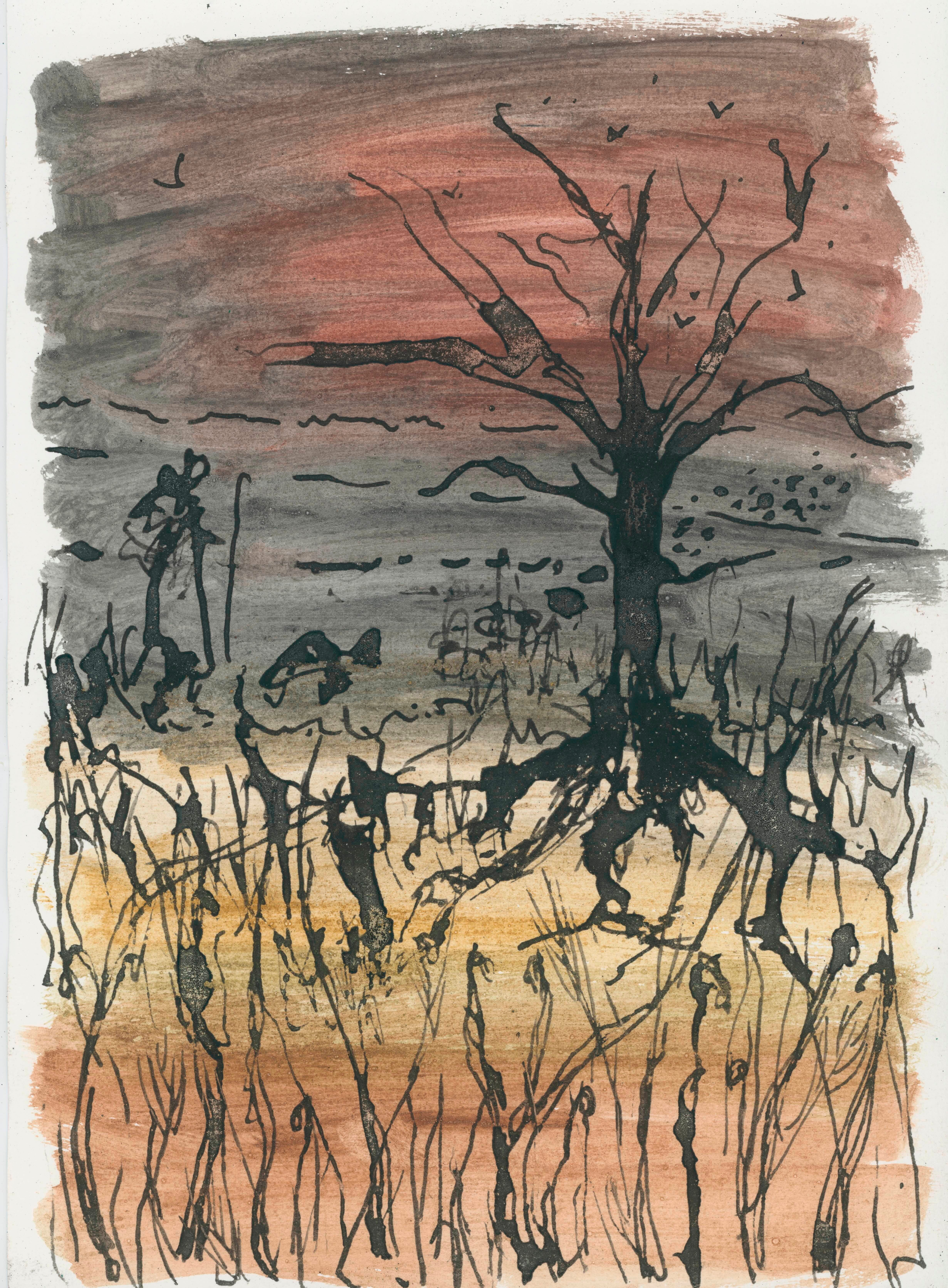
I read The Wake some time ago and am still haunted by Buccmaster. Where on Earth did you ‘find’ such a horrendous character??
- Marnie Shaw
How to answer this one? When a powerful character appears in a novel, I think it is probably bad luck for a writer to try and dig too deeply into where that character came from. Writing a novel really is a kind of mystical process, if you get lucky.
When I began writing The Wake, I experimented with all sorts of methods for doing so. One of them was quite a post-modern device, in which characters from across time would relate their own versions of the conquest in their own language and from their own point of view. One of those characters was a Saxon farmer in the fens: it was Buccmaster. As I kept writing, that character overpowered all the others, the post-modern device fell away and I was left with his story as it unfolded. Then I just had to follow him where he was leading.
Having said all that, Buccmaster is also partly based on a real person I once knew. I won’t say any more, not least because it would be unfair to tar anyone with his brush …
Do you think the reformation could have taken such a hold as it did without the Norman Invasion? I feel like a more corrupt form of the Church came in with the Normans. However, I certainly am no scholar in regards to all the influences and changes that came during that time. I just read Sir Walter Scott. :)
- Amanda Hamm
In hindsight, do you see the Norman invasion as depicted in the book a type of “The Machine” that you’ve written and warned the West about? An overwhelming onslaught and purgation of the old ways, the old gods and even what it means to be human?
- Mathieu Bernard
Two good and related questions here. In the foreword to the new edition, Mark Rylance explicitly makes the connection between what I like to call ‘the Machine’ and the Norman Conquest, and yes, it was in my mind as I was writing the book. I had just come off writing my previous book, Real England, which was a non-fiction travelogue exploring the many and varied ways in which the Machine was ravaging local culture across the country. Reading about the conquest made me realise that this story was a very old one. In the novel’s afterword, I write explicitly about what is sometimes called ‘the Norman yoke’, and why I think it is a real thing that persists to this day.
As for the church and the Reformation: well that’s probably too big a question for this Q&A but it is a fascinating one. William the Bastard had the blessing of the Pope for his invasion: he carried the Papal banner at Hastings, and wore relics around his neck. The Normans, once ensconced in England, helped to roll out an early version of the Reformation - the so-called Gregorian reforms, which gave far more centralising power to Rome. All the wooden churches were torn down and replaced by Norman churches, in solid stone, many of which still stand. There are some who will argue that England was Orthodox before the Conquest and Roman Catholic after it: East and West formally split just twelve years before the Norman invasion. Discuss.
So, in modern parlance, this Buccmaster chap is an "ethnonationalist", right? (Obviously, the use of the clearly French-derived "parlance" is something he would not approve of.)
- Paul Johnston
When you wrote The Wake, were you consciously and rigorously confining your thoughts and intentions within a narrow, English historical frame? Or did your mind occasionally guide your pen according to reflections upon other 'replacements' (of which, sadly, there have been very many)? One might venture to journey back in time as much as 30,000 years to the apparent 'replacement' of the Neanderthal people by Cro Magnon Man, which presumably had a British chapter.
- Simon
‘Ethnonationalist’ would obviously be an anachronistic term, but basically: yes. Buccmaster has a powerful, quite Romantic sense that his people - the ‘anglish’ - both own their land and spring from it. Even in the book, this view is questioned by other characters, and it’s not a coincidence that his young sidekick Tofe is of Danish descent, as so many people in eastern England were in 1066. But Buccmaster is having none of this: angland belongs to the anglish, and he gets to decide who they are. The reality of a genuine foreign threat, in the shape of the Normans, only strengthens and deepens his feelings. Those feelings are genuine and heartfelt: he has a deep connection to his place, of the kind which, today, we would be happy to hear about from, say, a Yanomami or a Maori, but not from a European, for various obvious historical reasons. What Buccmaster does with his feelings is another matter. Feelings like that can take you in any number of directions, and some of them are very dark. These days he’d be an avid follower of Elon Musk’s X account.
As for other replacements: yes, I suppose this was probably in my mind too. Even a cursory glimpse at human history seems to show two things: one, we are in a state of war most of the time; and two, that war very often springs from conflict over land. The entirety of human history, looked at in one way, is a story of peoples’ replacing one another, or merging into one another, and of nations and civilisations rising and falling. Buccmaster is living through just such an event.
Will my mother find it entertaining?
- N Maravich
Does she have a strong stomach?
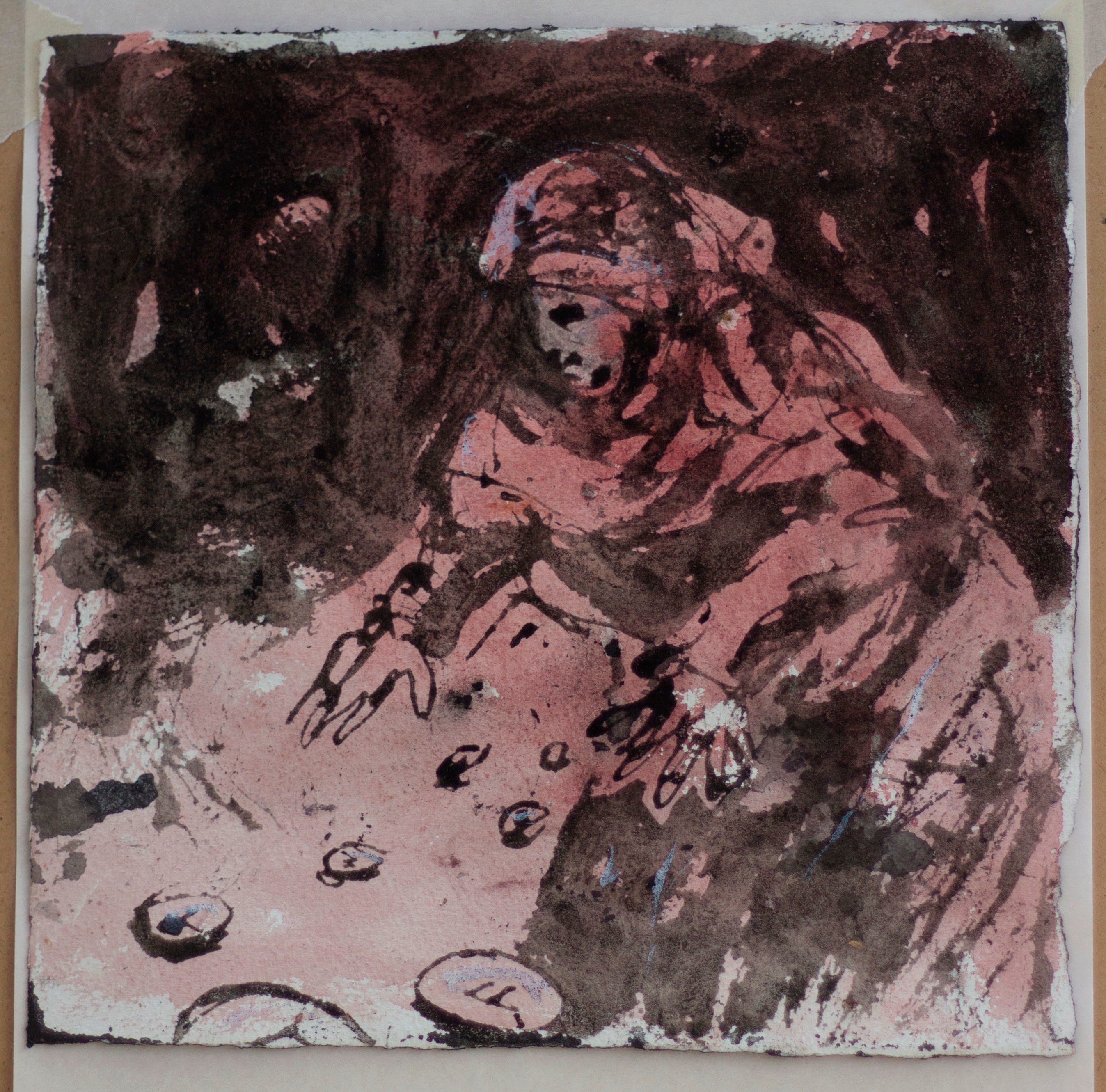
I’ve got two questions please, your honour. First, were you much influenced by Riddley Walker in your approach to The Wake? That book means a lot to me because as well as being fascinating in itself it was one of my father’s favourite books, and he died quite young; his last present to me was a copy of it.
Second, do you think that the figure of Hereward the Wake could become a potent symbol of English resistance to the Machine, and if so was that idea in your mind when you wrote The Wake?
- Riddley
People always ask me the ‘Riddley Walker question,’ because both books are written in their own language. It is a great book, and everyone should read it. Russel Hoban was totally unique as a writer, in a way I sometimes envy. But no, that book didn’t influence The Wake, whose language developed on its own, quite organically. Actually, I think that the novel which The Wake most resembles is Chinua Achebe’s Things Fall Apart, though this didn’t occur to me until long after I’d finished it.
Hereward is a great symbol of English resistance to The Machine. The fact that he disappears from history after his campaign of resistance gives him a real quality of mystery. Maybe he is still out there somewhere. Hereward and Robin Hood might be the English outlaws we need right now.
At the outset of the book I was empathetic towards Buccmaster, whose 'delusions' seem veridical. In Canada where I live, I notice a strong parallel with the colonization of the Wendat/Huron peoples as described in the powerful novel 'The Orenda' by Joseph Boyden. (The word "orenda" itself is a rich one from the Haudenosaunee people). My question is this: Do you think that these epic waves of change and conquest really do have some basis in the spiritual realm? If so, what is the defeated party’s duty in response? Would you defect to the greater ‘orenda’ or stand with your ancestors’ gods?
- Wade
How much of Buccmaster and his resistance is represented in the very language you wrote the story in? And in that tension between modern English and old Anglo Saxon and the English emerging on a global scale, what do you think it tells us about the relationship of language to a land, or even individual person as they attempt to deal with crisis, change, and faith?
- Alex Habighorst
Intriguing questions. I’ve no idea whether the endless waves of conquest and colonisation and war that make up so much of human history have any spiritual element to them. That is probably beyond my paygrade. The question of whether you stand with the gods of your ancestors or follow the new one/s resonates through history too. How can we know what we would do if this happened to us? Some of us might be Crazy Horse (fight), some might be Sitting Bull (retreat to be left alone), and others might be Ohiyesa (make an accommodation.) Buccmaster wants to fight, but he is not equipped to lead, and the gods he is fighting for have already lost their place in peoples’ hearts.
Ultimately there is also the big question: what is true? You need to follow the god/s you feel to be actually real. To do otherwise is going to lead you into a blind alley. But how to know …?
As for language: each of my trilogy of novels ended up defined by its own experiments with language. What The Wake taught me is that the words we use are intimately bound up with how we see the world. Modern, globalised ‘English’ is a Machine language, a long way from the messy, muddy guttural speech of Buccmaster’s fen people. He could not have spoken any other way, which is why the book ended up as it did. Thinking about how we use words today can be quite instructive in this context.
Before you wrote it, did you already have that nagging idea that our roots have (and are) being stripped from under us? I remember feeling a poignant sense of loss after reading it. Loss of the freedoms we had over land and self.
- Samwise
A good question to end on. I would say that in some ways all of my books are an exploration of this sense of loss: this sense that this ‘Machine’, which is older than the modern era, exists to strip these roots away from us.What we do about it is the question Buccmaster faced, and that we face too. With any luck, we can do better than he did.
It’s hard to pick a winner from all these, but I’ve decided that the signed copy with go to …. [drumroll] …. Justine Toh. I’ll be in touch.
Thanks again for the questions, everyone. Be triewe.
All my writing at the Abbey of Misrule is currently free to read. To help keep it free, and support those who can’t afford to pay, please consider a donation or a paid subscription. Thank you!
Comments
Nothing yet. Say the first thing.
Sign in to join the conversation.