

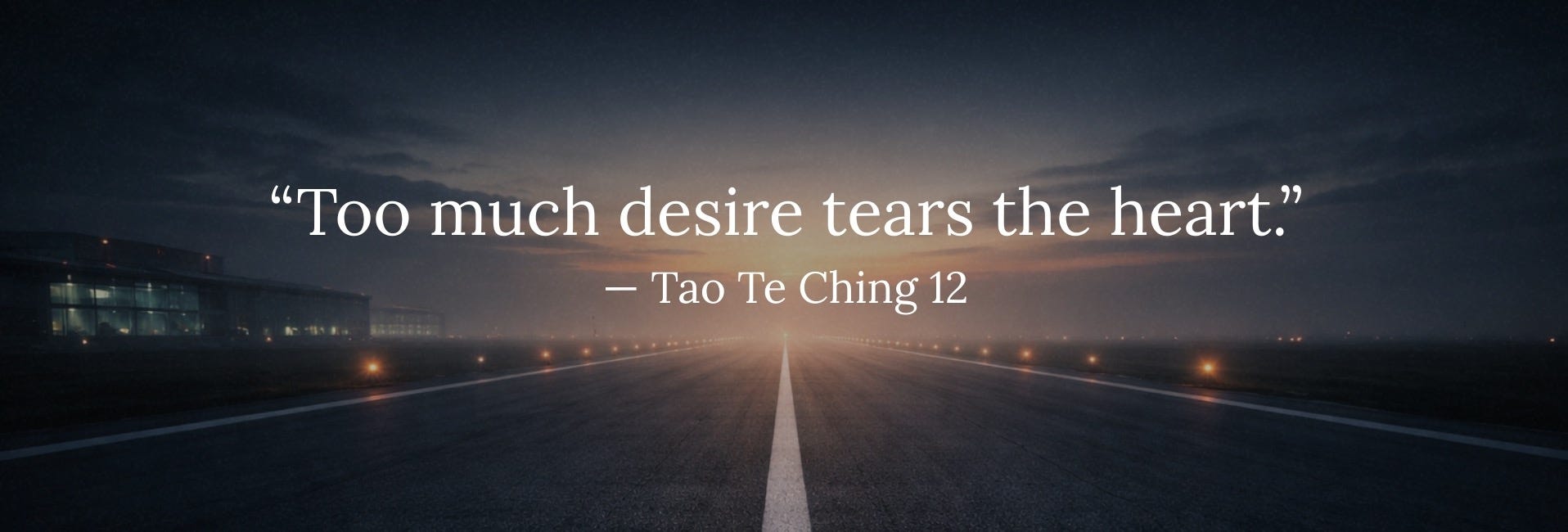
Some of our most consequential losses happen in moments that feel, at first, like self-trust.
You know the feeling. In the moment, it feels like conviction. You say what you were “really” thinking. You eat what you promised yourself you would not, or buy what you know you should not afford. You stop hesitating. Something in your body unclenches, and the release arrives with the intoxicating authority of certainty. For a moment, the move feels clean, confirming, overdue.
This is what makes impulse so difficult to recognize from the inside. It rarely feels like haste, compulsion, or error. It feels like necessity. Like clarity. Like the reasonable move—the obvious thing you “just know” you have to do. It brings immediate comfort: certainty, closure, satisfaction. At last, something to break the tension.
Only later do we see what that feeling concealed.
The nervous system is not foolish. It is ancient and adaptive. Under threat, it heightens urgency, narrows attention, and prepares the organism to act. In a true emergency, this is intelligence. The trouble begins when that same brilliance takes over in moments that require patience, proportion, and a wider contact with reality than immediate relief permits.
The body moves first; the worldview comes later. Before we have fully made sense of what we feel, the organism is already trying to reduce strain. It wants less ambiguity. Less exposure. Less inner conflict. It wants closure. And closure, once felt, is easily mistaken for wisdom.
Impulse almost never feels impulsive. It feels like resolution. What disappears first in such moments is rarely intelligence. It is range. The capacity to hold more than one truth in view. The willingness to hear a sentence all the way to its end. The humility to let another person’s reality complicate our own. Appetite, craving, pleasure-seeking, urgency, vindication, and self-soothing can all produce the same contraction of range.
That is why the losses here are not merely situational. They are perceptual.
A pressured person narrows. A pressured public narrows. A pressured civilization begins mistaking reduction for realism. Under enough strain, suspicion passes as discernment. Dehumanization passes as moral seriousness. The loss of perceptual range presents as necessity.
If we want to understand why social fabric frays, start there. Start with the human tendency, under pressure, to confuse intensity for insight, closure for understanding, and relief for truth. The same narrowing that happens inside a person under pressure can become a culture’s way of seeing.
After the Second World War, America did not simply inherit victory.
It inherited a new nervous system.
The hot war was over. The expectation of contest was not. What followed was not peace in the deeper sense, but a new arrangement of tension—less visible, more enduring, and increasingly organized around what science, industry, and state power could make possible.
The Cold War is often remembered as a geopolitical standoff. It was also a governing premise: that the future would be decided by technological superiority, and that hesitation could be fatal. Space, missiles, satellites, communications, computation—each became a proving ground in a contest where distance, speed, and height carried obvious military value. The space race was not just about discovery. It was one luminous theater in a much darker struggle over dominance.
If you want to rule the world, you want to be able to see the whole thing.
That competition produced extraordinary gains. It also taught the world’s most powerful nations to treat acceleration as virtue.
The race was no longer an event. It became a posture. Then a habit. Then an atmosphere.
The Cold War was not mere strategy. It was climate: a decades-long psychological weather system in which survival seemed to depend on alertness, secrecy, speed, and superiority. In that climate, caution begins to look like weakness. Restraint begins to sound like naiveté. Acceleration stops feeling like a choice.
It starts to feel like strength. Then leadership. Then survival itself.
Once acceleration acquires moral prestige, it does not remain confined to missiles and satellites. It drifts.
It enters institutions. It enters infrastructure. It enters family life. It enters the body. A society trained for vigilance does not leave that training at the edge of the battlefield. It carries it home. It teaches its children. It rewards the people who can speak in its cadence.
Look at the emotional architecture of the era. Suspicion was ambient. Loyalty was tested. Hidden enemies populated the imagination. Children rehearsed for catastrophe. Families organized themselves around dangers they could not see, but could not afford to dismiss.
We can debate the necessity of any single response. The broader effect is harder to dispute: the country became exceptionally practiced at living inside anticipatory hypertension under existential threat.
And once a society becomes practiced at hypertension, it begins to mistake tension’s style of thought for accuracy.
Binary thinking, in that context, is not a defect. It is efficient. Friend or foe. Loyal or suspect. Strong or weak. The mind moves quickly when reality is reduced to two lanes.
The problem is that those lanes rarely disappear when the immediate threat changes shape. They linger—in institutions, in media habits, in what we learn to treat as urgent, in the kinds of people rewarded for sounding decisive. A nation can outlive the emergency that trained it and still carry that emergency inside its cognition.
Once a culture is trained to mistake tension for accuracy, consensus can become a delivery system for error.
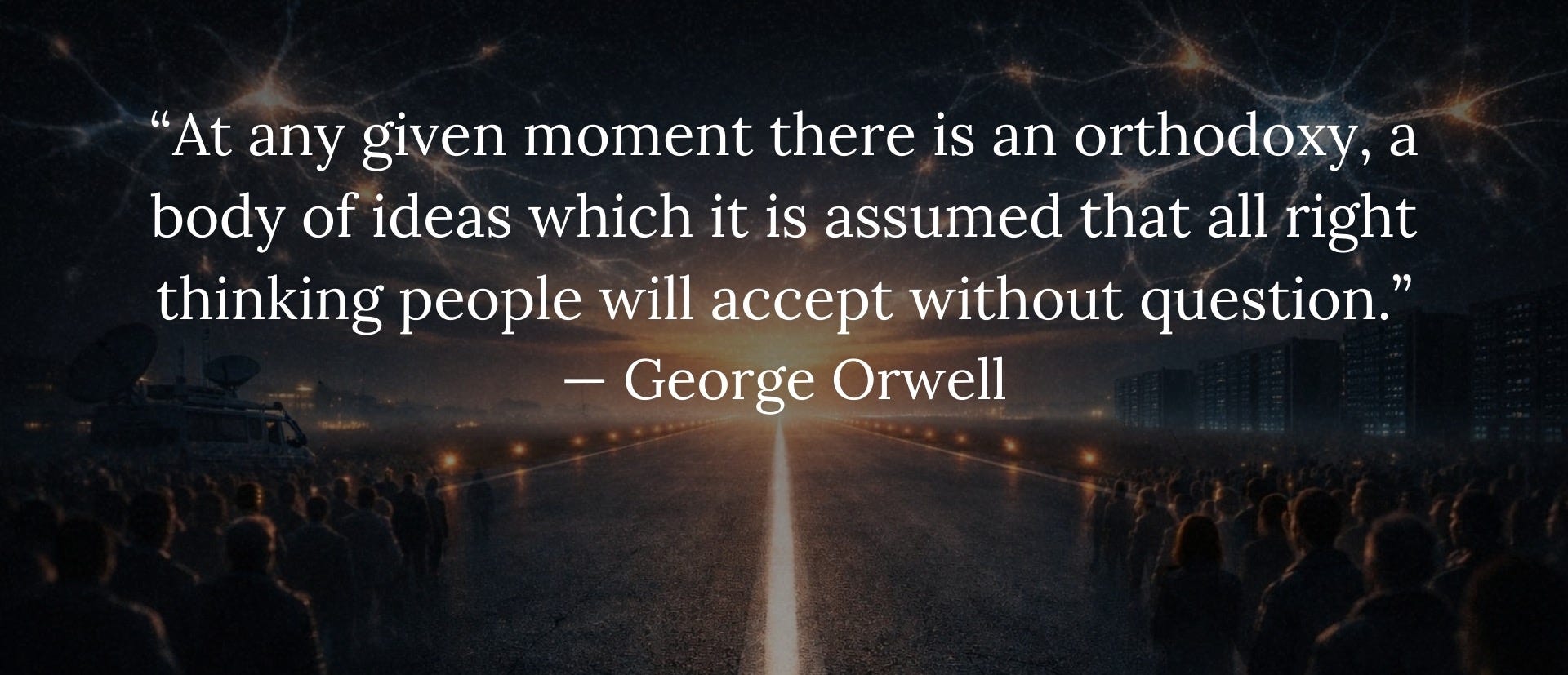
Consensus feels safe because it lowers the cognitive cost of uncertainty. It tells us where the group stands. It spares us the humiliation of thinking alone. It offers the warm, almost narcotic relief of belonging.
Yet it has a darker talent. It can sound disciplined, measured, even reasonable, and still be catastrophically wrong.
American life since the 1950s is crowded with moments when the dominant story was not merely mistaken but costly—moments when certainty outran discernment, and the invoice arrived only after the emotional weather had changed.
McCarthy-era suspicion is an obvious case. Fear became a method of sorting reality. Accusation stood in for evidence. Association became contamination. Many participants believed they were defending the country. That is what makes the pattern durable: panic seldom announces itself as panic. It arrives as duty.
Vietnam revealed a related failure: the logic of escalation. Once enough blood, pride, and institutional prestige have been spent, continuing begins to feel more rational than stopping. Under pressure, systems confuse sunk cost for principle. The collective mind narrows around self-justification because self-correction becomes too expensive to face.
The war on drugs flattened a profoundly complicated human problem into a moral binary. Public appetite demanded clarity. Political machinery supplied it. Substances were evil; prohibition was strength. The language hardened. The punishments escalated. A nation sorted the world into contaminants and the clean, criminals and the righteous, while deeper public-health realities remained inconveniently alive beneath the rhetoric.
Then the irony deepened.
The same country that criminalized naturally occurring psychoactive compounds built enormous legal markets for their engineered cousins, then watched prescription opioids become a central driver of the overdose crisis. The story kept changing. The harm did not politely follow the lines the story drew.
The lesson is not that all substances are harmless, or that public order does not matter. It does. The lesson is more humiliating than that: under collective strain, societies sort the world too quickly into saints and contaminants, medicine and menace, compliance and deviance. The sorting feels righteous in the moment. Later, it looks crude.
We have seen versions of this pattern again and again, under different flags, different fears, different moral vocabularies: loyalty tests substituting for truth; “security” dissolving procedural restraint; suspicion hardening into civic posture; dissent beginning to sound like betrayal.
The post-9/11 years offered the pattern in a modern key. Fear reorganized public reason. Some choices made under that uncertainty will always remain psychologically understandable.
That is not the point.
The point is how many choices, in hindsight, look less like wisdom than adrenaline with institutional backing.
Flash forward to the pandemic.
Under conditions of real uncertainty and mortal threat, American life was reorganized around emergency once again. Many restrictions and warnings were issued in response to genuine danger. Then, amid the moral shock of George Floyd’s murder and the convulsions that followed, the culture revealed something more difficult to admit: under enough pressure, moral consistency becomes fragile. Rules that feel absolute under one emotional frame become negotiable under another. The mind under duress does not stop reasoning. It starts triaging.
We mistake impulse for intelligence.
This is the pattern: under pressure, liberty becomes negotiable, complexity becomes exhausting, and dissent begins to resemble betrayal.
This is how a culture under stress talks itself into reductive thinking—not because it is uniquely foolish, but because this is what human beings do when the pressured nervous system is asked to govern a civilization.
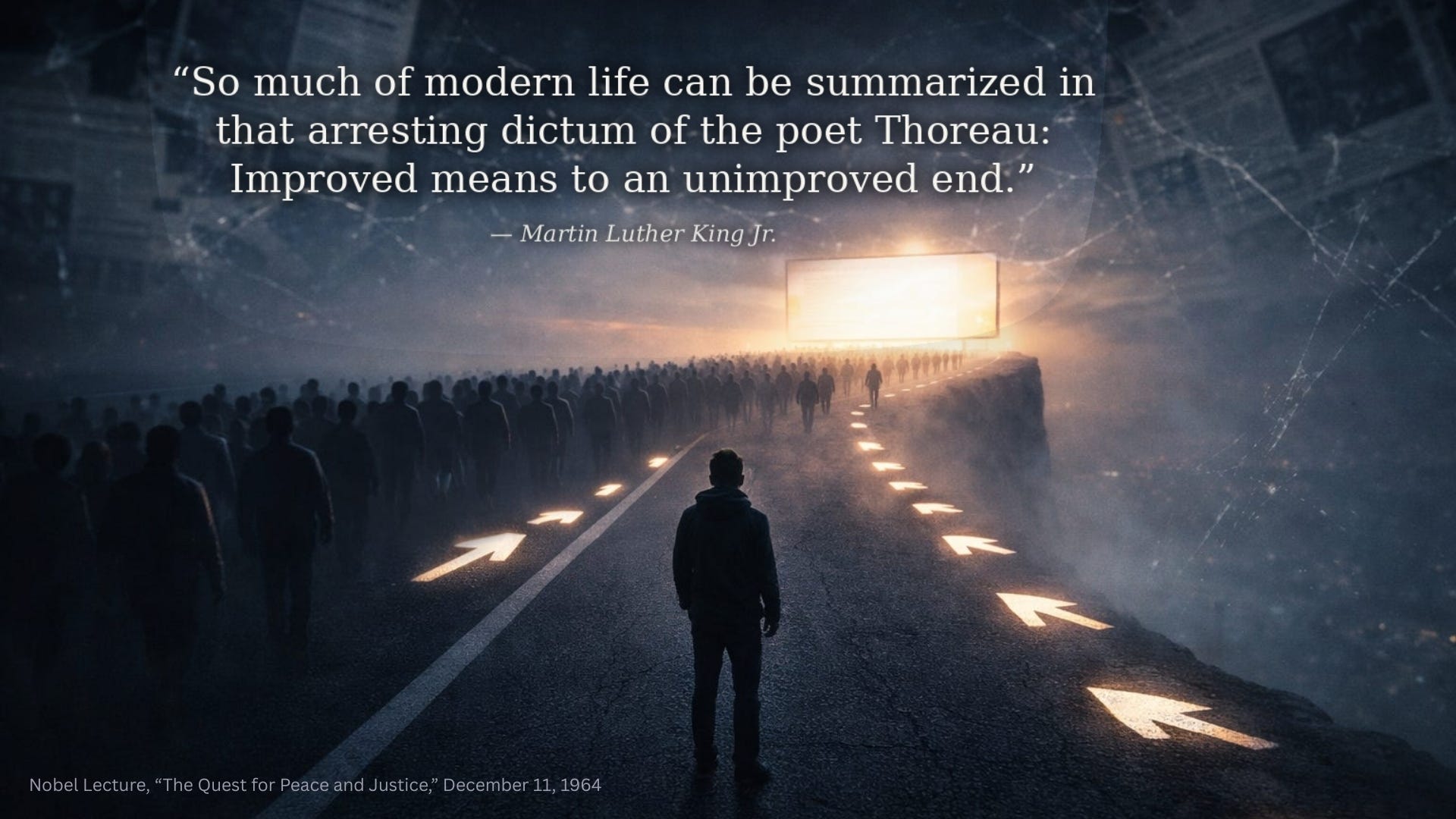
By now the pattern is familiar. Under pressure, a nervous system narrows. Ambiguity becomes harder to tolerate. Closure starts to feel like safety. What disappears is not intelligence so much as range.
Scale that logic from one person to millions or billions and the consequences intensify. Media can amplify threat. Institutions can reward confidence over discernment, speed over depth, certainty over humility. Citizens can chase escape as the uncontrollable tensions overwhelm the senses. What emerges is not just polarization, but a social state increasingly organized around vigilance, reactivity, and the management of perceived threat.
And once that becomes visible, something more unsettling comes into view.
Pressure is not only endured.
It can be designed.

We tend to tell the story of postwar American innovation in heroic terms, and not without reason.
Another story ran alongside it.
Television entered the home. Then twenty-four-hour cable. Then personal computing. Then the commercial internet. Then the smartphone. Then social media. Then algorithmic feeds. Then the expectation that every citizen must become a broadcaster, curator, brand manager, and combatant in a permanent contest for attention. Each wave promised some version of liberation: more access, more efficiency, more connection, more voice. Some of those promises were real. Many of the costs were deferred.
This is where the pattern becomes intimate—and more consequential.
A nervous system is shaped not only by biology, experience, and culture, but by the environments it must survive in.
Modern life has migrated us into environments that demand perpetual adaptation under pressure.
The city is one of the great achievements of human coordination. It is also a concentrated stress ecology: noise, crowding, compressed time, heightened comparison, constant status negotiation, ambient vigilance. Even when it is beloved, the city asks a body to remain externally oriented and highly responsive for long stretches, with fewer natural downshifts.
The internet did something stranger. It collapsed distance, multiplied stimuli, and created a portable pressure ecosystem that could follow you everywhere. Everything you love, dread, desire, envy, loathe, need, and cannot ignore now lives behind the same glass.
It did not merely add information to life.
It reorganized the field of salience.
If you place already-pressured organisms inside influence environments optimized for attention capture—status, comparison, outrage, compulsion—you do not simply get more connected people.
You get people with less range.
Not less intelligent. Less range.
Minds trained toward immediacy. Toward stimulus. Toward binary selection. Toward fast moral sorting. Toward the relief of certainty and the rewards of quick resolution.
Toward impulse.
This is one of the strangest features of modern life: high-pressure environments do not merely overpower our biology. They recruit it.
They work because they appeal to ancient reflexes—status vigilance, threat detection, tribal sorting, novelty seeking, comparative self-monitoring, relief seeking, desire satisfying. The result is not distraction alone. It is attentional drift away from embodied reality, natural-world problem solving, and co-created meaning, and toward an artificial world that increasingly becomes the primary theater of significance.
In other words: we did not merely invent new tools.
We invented new habitats for the human mind.
And every habitat selects for what can survive inside it.
We built a reality that is always on, always comparative, always legible to measurement, always vulnerable to manipulation—and then moved our ambitions into it. We invited our leaders, builders, artists, and strivers to compete inside environments that radically outcompete the body that must carry them. Then we expressed confusion when exhaustion, reactivity, tribalism, loneliness, and compulsive signaling surged.
The deepest paradox is not that technology introduces friction. Of course it does. It is that technology sells itself as the abolition of friction while manufacturing new forms of it at scale.
If you value deeper examination of the psychological, cultural, and biological forces shaping modern life, consider subscribing below.
This publication is reader-supported and focused on thoughtful, slow analysis rather than reaction.
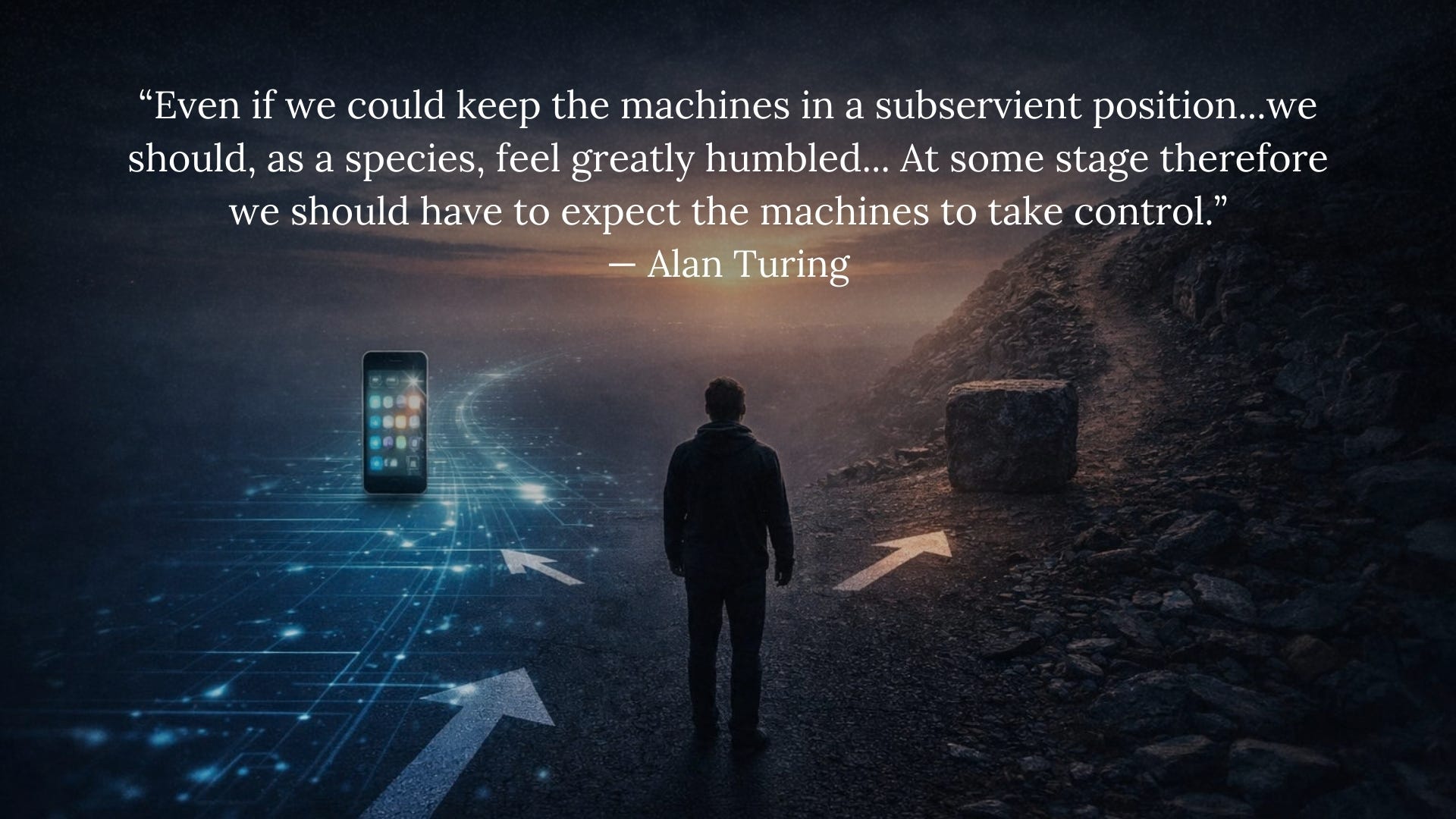
Of all the promises technology makes, the most irresistible may be this: that life can be made easier to bear.
Humans are quick to resent friction.
We want the process shortened, the delay removed, the confusion clarified, the burden lightened, the route straightened, the answer surfaced. Technology is seductive because it speaks directly to that ache. It promises relief.
Sometimes that relief is a gift.
Sometimes friction is needless. Sometimes the machine truly does free us for better things.
But the deeper paradox is harder to name, and harder to live with: technology rarely abolishes friction. It displaces it. It converts old burdens into new ones—often more psychological, more constant, and more difficult to metabolize than the old.
We are drawn to technologies that seem to solve what burdens us, while overlooking how quickly they become sources of new burden: new speed, new expectations, new dependencies, new pressures, new compulsions. The seduction is strongest where the downstream human cost is least immediate.
We relieved the friction of waiting, and weakened patience.
We relieved the friction of navigating, and weakened memory.
We relieved the friction of boredom, and weakened depth.
We relieved the friction of complexity, and weakened discernment.
We relieved the friction of effort, and made ourselves more dependent on systems we do not control.
That is not an indictment of technology.
It is an indictment of innocence.
Because some forms of friction are not defects in human life. They are conditions under which sound judgment forms. They are where negotiation happens. Where humility is practiced. Where humanity deepens. Where curiosity and creativity have room to grow. Where the body and mind remember that not every problem should be solved at the speed of desire.
When a culture loses its tolerance for friction, it does not become freer.
It becomes easier to steer.
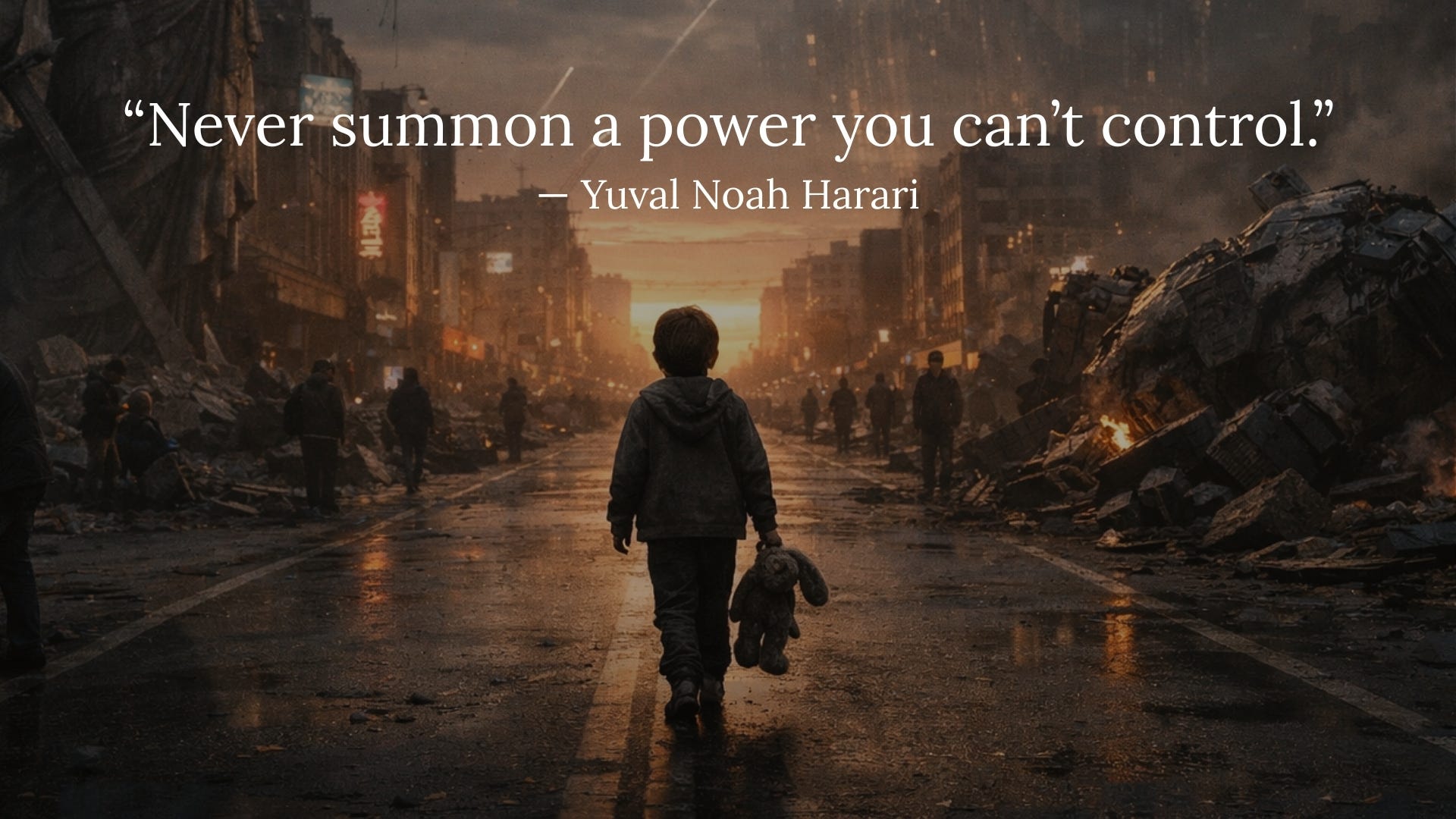
Most people ask: What could AI do to us?
A more urgent question is: What is the race already doing to us?
Before any future system becomes more capable than we are, the rush toward it is already intensifying some of our worst habits: the worship of speed, the contempt for deliberation, the preference for certainty over truth, the collapse of moral complexity into tribal identity, the outsourcing of judgment to systems we cannot fully audit, the normalization of influence environments as ordinary life, the belief that whatever is profitable must therefore be progress.
These are not merely cultural quirks.
They are symptoms of a civilization that has lived too long inside a narrowed state. That narrowed state is fertile ground for the most dangerous form of self-deception: the belief that acceleration is foresight.
We have seen earlier versions of this before. The last digital race promised connection, access, efficiency, and voice. The gains were real. So were the profits. The harms arrived much later, once they were structurally embedded and difficult to escape.
That lesson matters.
Systems optimize for what they are measured against, not what we morally intend. If we measure engagement, we get addiction. If we measure speed, we get inhuman pace. If we measure capability, we should be very careful what else we normalize along the way.
This race should not feel unprecedented.
It should feel familiar enough to make us humbler.
The AI race is not simply a race toward unprecedented capability. It is a race being run by a civilization already trained by earlier races to normalize speed over wisdom.
That is what makes it dangerous.
Not only the power of the tools, but the state of the culture steering them.
We have already seen that a civilization can build something powerful enough to outcompete its own discernment — not because the tool becomes evil, but because it becomes advantageous. Advantage attracts investment. Investment accelerates deployment. Deployment deepens dependence. Dependence makes restraint expensive.
By the time dependence is obvious, dependence is already the environment. By the time a society recognizes that its tools are reshaping the conditions of thought, speech, work, trust, and governance, it has already migrated much of its life inside them.
That is why the deepest danger here is not reducible to some future moment when a machine “turns.” It is that a pressured civilization keeps handing authority to whatever reduces friction fastest, without asking what kind of human future that logic selects for.

Binary thinking is natural.
It is the impulse.
It is the nervous system’s first draft of reality.
But if we begin narrow, we lose what is best in us.
Everything we most admire in human beings — creativity, forethought, repair, forgiveness, discernment, the ability to hold paradox — lives between the zero and the one. Between yes and no. Between friend and foe. Between safe and dangerous. Between right and wrong.
The space between is not merely where truth lives.
It is where humanity resides.
It is also where modern systems make life hardest to inhabit.
This is one of the central ironies of the present age: we have built tools of extraordinary complexity and deployed them inside cultural conditions that reward the simplest possible cognition.
Nuance is socially costly. Certainty is cheap — and easy to sell.
So people choose conviction over curiosity, performance over conversation, and coherence over contact with reality.
That is not merely a problem of discourse. It is a problem of habitat. A person can inhabit ambiguity only if the environment leaves room for it. A civilization can think in gradients only if its incentives do not punish hesitation, complexity, and good-faith doubt.
We have built too many environments that do the opposite.
And once a culture becomes habituated to the false relief of binary thinking, it becomes especially vulnerable to every system that promises clarity at speed.
The most important question may not be whether our tools become powerful.
It may be whether we remain spacious enough to govern them.
That question is not only for institutions.
It is for each of us.
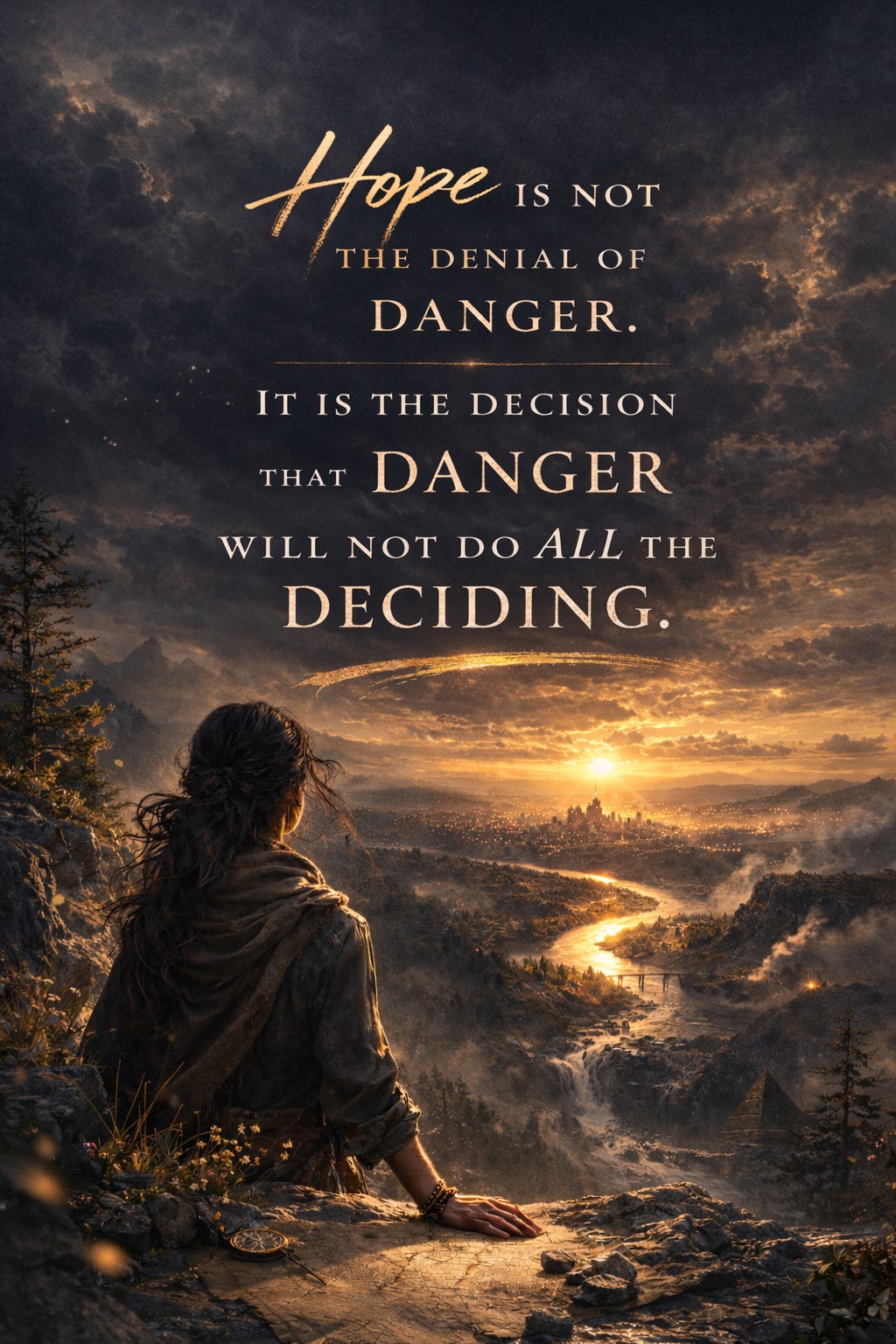
A mature civilization does not reject power.
It approaches great power carefully.
It understands that the greater the capability, the more sacred the friction around its deployment must become. It knows that not all delay is dysfunction. Some delay is wisdom. Some difficulty is a safeguard. Some resistance is not backwardness, but evidence that the human organism is still trying to protect something essential.
The real divide is not between people who are “for” technology and people who are “against” it.
It is between pressured civilizations and spacious ones.
A pressured civilization asks: How fast can we ship? How much can we save? How far ahead are the competitors? What happens if we wait?
A spacious civilization asks: What must remain human? What frictions are worth preserving? What forms of slowness protect dignity? What kinds of dependence become too costly? What happens if we never learn how to say no?
One set of questions comes from stewardship.
The other comes from pressure.
We are closer to the second than we should be.
Inevitability is a dangerous story. We call the race inevitable because inevitability relieves us of moral burden. If it is going to happen regardless, then our job is simply to adapt — to move quickly, to outpace the competition, to avoid being left behind.
But inevitability is often the story pressured civilizations tell themselves when they no longer want to feel responsible for consequences.
The future is not arriving untouched by human choice.
It is being built by people inside environments that shape what feels reasonable, urgent, profitable, patriotic, and impossible to resist.
That is why this conversation cannot remain purely technical. It is not only about the systems. It is about the state of the people building and normalizing them. About the habits of thought rewarded by the culture around them. About whether a society still remembers how to distinguish what feels urgent from what actually matters.
Because if it does not, then every extraordinary new tool will be asked to solve problems created by what we forgot, and in doing so, it will deepen the loss.
The most haunting possibility is not that technology will one day overpower us.
It is that we will reduce ourselves first.
That we will keep mistaking compression for clarity, speed for prosperity, optimization for wisdom, convenience for alignment.
That we will keep building environments that reward our narrowest states, and then wonder why our humanity feels harder to access inside them.
The interval between impulse and action is precious human space.
Whatever remains most human in us depends on our ability to resist the oldest seduction in pressured times: the promise that speed will save us from having to think.
It will not.
Speed can help us win races. It cannot tell us which races are worth running, what winning would cost, or what should remain difficult because difficulty is part of what keeps us safe.
A civilization under pressure always believes it can afford to narrow for a little while longer. A little more certainty. A little more efficiency. A little less friction. A little less patience for complexity. A little more willingness to let the system decide.
But all that we lose on impulse is not easily recovered:
Trust.
Depth.
Moral range.
The capacity to pause before power hardens into structure.
The ability to see another human being whole when the environment keeps rewarding us for seeing them as symbol, obstacle, audience, or threat.
That is the deeper warning.
Not that technology is unnatural. Human beings are natural, and technology is one of the things human beings do. The warning is that our tools begin shaping the conditions under which our humanity must survive. And if those conditions increasingly reward reactivity over reflection, certainty over humility, speed over wisdom, and artificial salience over lived reality, then the issue is no longer whether the tools are impressive.
Of course they are.
The issue is whether the civilization wielding them still possesses enough interior freedom to govern power without becoming subordinate to its logic.
If we continue building from our narrowest state, we will not only produce dangerous systems. We will produce a world calibrated to the very qualities most likely to diminish us — a world that flatters our impulse, exploits our fatigue, rewards our division, and then calls the outcome progress.
That is how a society begins cooperating with its own reduction.
Not knowingly.
Not all at once.
Not because it wanted ruin.
Because every step along the way felt urgently necessary.
Again and again, the costliest errors were made by people who believed they were being realistic. Again and again, consensus hardened before wisdom had time to catch up. Again and again, what later looked crude first felt necessary. Again and again, pressure narrowed the field until only the most expedient choices remained visible.
And again and again, we paid for that narrowness later.
We are paying for much of it now.
So perhaps the most important act available to us now is not acceleration, but recovery.
Recovery of range.
Recovery of proportion.
Recovery of the ability to think in gradients.
Recovery of the humility to admit that a high-pressured mind (whether individual or collective) should not be handed the final draft of the future.
That recovery will not feel like dominance. It will feel like restraint. It will feel slower than the market wants, slower than the machine rewards, slower than the culture has trained us to tolerate.
It may even feel, at first, like loss.
But some forms of slowing are not surrender.
They are the first signs that a civilization remembers it has a soul.
And if we can still remember that — if we can still recover the space between zero and one, the interval where discernment, patience, moral imagination, and co-creation live — then perhaps we have not yet lost the most important race.
Not the race for dominance.
The race against our own reduction.
The gravest danger before us may not be that technology becomes more powerful than humanity, but that we become so compressed we can no longer recognize what power has been making of us.
What follows will not look like collapse at first.
It will look like progress.
Efficient. Measurable. Applauded.
Until the interior freedoms that make a people human are no longer available on demand, and we finally notice that the speed was never the point.
Reduction was.
If this essay resonated with you, it is part of Breaking the Spell, a series exploring the deeper forces shaping modern life: technological acceleration, institutional pressure, cultural narratives, biological necessity, and the environments that shape how we think, decide, and live together.
The aim is not commentary, but clarity — to slow the forces that rush us toward easy answers and recover the space in which better questions can be asked.
If that kind of inquiry matters to you, consider subscribing.
Comments
Nothing yet. Say the first thing.
Sign in to join the conversation.