
Reproduced from Shutterstock By Subscription
A recent post discussed Rules I used on my five days and nights of call the week before. The Rules I presented dealt with treating patients with congestive heart failure, the use of diuretics, and the importance of not worrying about what might happen.
I called it “Practicing at the Hospital of What’s Happening Now” in reference to Flip Wilson’s skit (The Church of What’s Happening Now) on his TV comedy show. One smart reader, whom I will not name because I don’t have his permission, wrote that Mark Twain said, “I have spent most of my life worrying about things that have never happened.” We sometimes do the same in medicine.
At any rate, here are two other Rules from my recent clinical week.
The Dye Don’t Lie – Our hospital, like most big city hospitals, is overflowing. There are patients on stretchers in the halls of the emergency department and the hospital. We often struggle with how to evaluate patients with chest discomfort. I usually try to get a regular, non-imaging exercise stress test as soon as possible. I am not trying to diagnose if they have coronary atherosclerosis; I am trying to decide if their discomfort represents cardiac ischemia and they have to stay in observation. We discussed the benefits of exercise tests over pharmacological testing, and why I prefer the exercise tests in “Say No To Drugs…For Cardiac Stress Testing”.(2)
When the discomfort is more suggestive of disease, I will often proceed right to angiography, preferably invasive. Since coronary access is now done via the radial artery, there is very little risk of serious bleeding. Invasive angiography is incredibly safe, and if there is no important disease, I free up a bed usually on that day. I also use CT angiography, but CT frequently overestimates the severity of the lesion because of calcium “bleeding”. That occurs when the density of the lesion’s calcium overestimates the stenosis. Such cases wind up needing an angiogram anyway. I do the invasive study because “the dye don’t lie.” It’s one test and done.
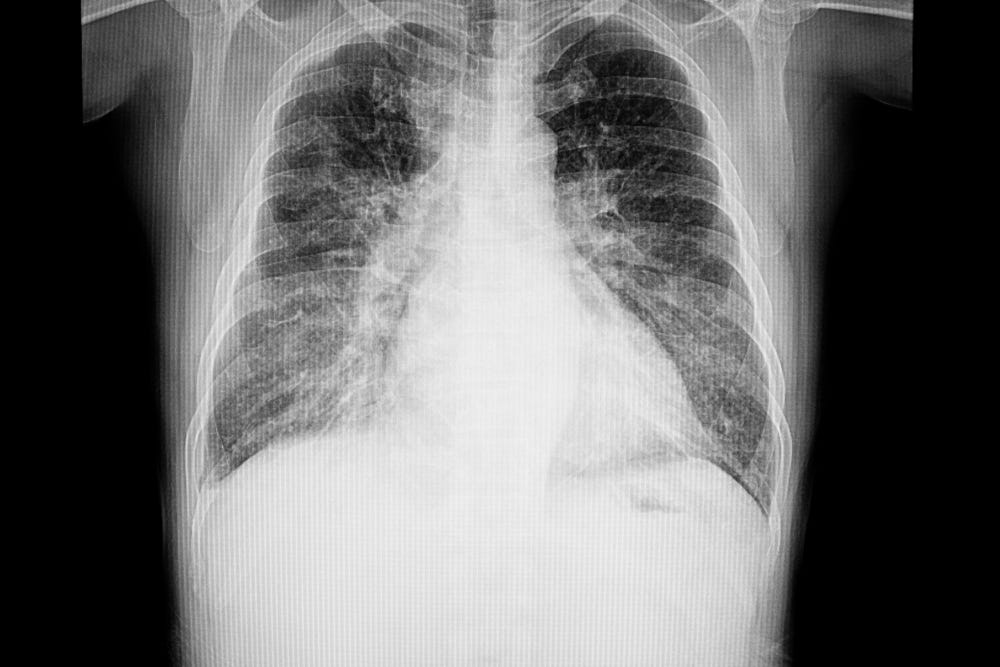
“Bilateral Pneumonia”, “Recurrent Pneumonia” and “Pneumonia in a Heart Failure Patient” need an NT-pro-BNP measurement. My team and I saw two patients last week who were labeled as having pneumonia and were treated with antibiotics. Both probably had only heart failure because both had markedly elevated NT-pro-BNP levels, and both had their cough and shortness of breath relieved by diuresis. One of these patients had been seen a week or so previously and treated for outpatient pneumonia. Heart failure can mimic pneumonia in symptoms and on the chest X-ray. Heart failure can also produce a temperature. In fact, Paul Dudley White, the famous Boston and Massachusetts General Hospital cardiologist lamented in 1940 that clinicians frequently did not know that heart failure patients can develop a fever. (2). So, inquire about heart failure symptoms in patients with “pneumonia” and get an NT-pro-BNP if heart failure is even a remote possibility.
Here are some corollaries:
1. Look at any sputum the patient can produce. The sputum of pneumonia should be colorful: yellow, green, or rusty orange. In contrast, the sputum of heart failure is white, although it may have light bloody steaking from alveolar ruptures especially if the onset is acute such as with an anterior wall myocardial infarction and acute heart failure. And the sputum of heart failure is not only usually white but also bubbly or frothy. It’s frothy because it contains a lot of surfactant because it originates in the alveoli. Surfactant reduces surface tension in the alveoli to keep them open. It also reduces surface tension in the sputum of heart failure patients to help you make the diagnosis.
2. Cardiac patients don’t have a cold unless they have a runny nose (coryza). Cardiac patients, and their doctors, are only allowed to diagnose a “cold” if the patient has coryza. Heart failure can mimic the cold or the flu and patients with heart failure often mistakenly diagnose themselves with a cold when they really have heart failure. So, the most important question to ask a cardiac patient who calls the office to inquire which cold remedy they can take is, “Do you have a runny nose?” It the answer is “no”, squeeze them into the schedule. They may need a NT-pro-BNP measurement to exclude heart failure.
3. Don’t Dismiss Heart Failure If The Patient Has a Normal Ejection Fraction – because more than half of folks over age 65 with heart failure have heart failure with a preserved ejection fraction. Many times when heart failure has been missed the clinician will say, “But their ejection fraction was normal.” As the population gets older, older heart failure with preserved ejection fraction will become more common.
References
1. https://pauldthompsonmd.substack.com/p/say-no-to-drugs-for-cardiac-stress
2. Kinsey, D. White, PD. Fever in Congestive Heart Failure. Arch Intern Med (Chic). 1940;65(1):163-170.
#coronaryangiography; #chestpain; #pneumonia; #heartfailure; #heartfailurepreservedejection; #HFpEF: #HRrEF
No posts
Comments
Nothing yet. Say the first thing.
Sign in to join the conversation.