
Our college experiences could hardly have looked more different. One of us was in Army ROTC, doing PT every Monday, Wednesday, and Friday, with days that began before sunrise and a college experience structured around duty, discipline, and service. The other became Rush Chair for Chi Omega, immersed in a very different American college tradition built around friendship, community, and belonging.
Decades later, those experiences don’t seem nearly as different as they once did.
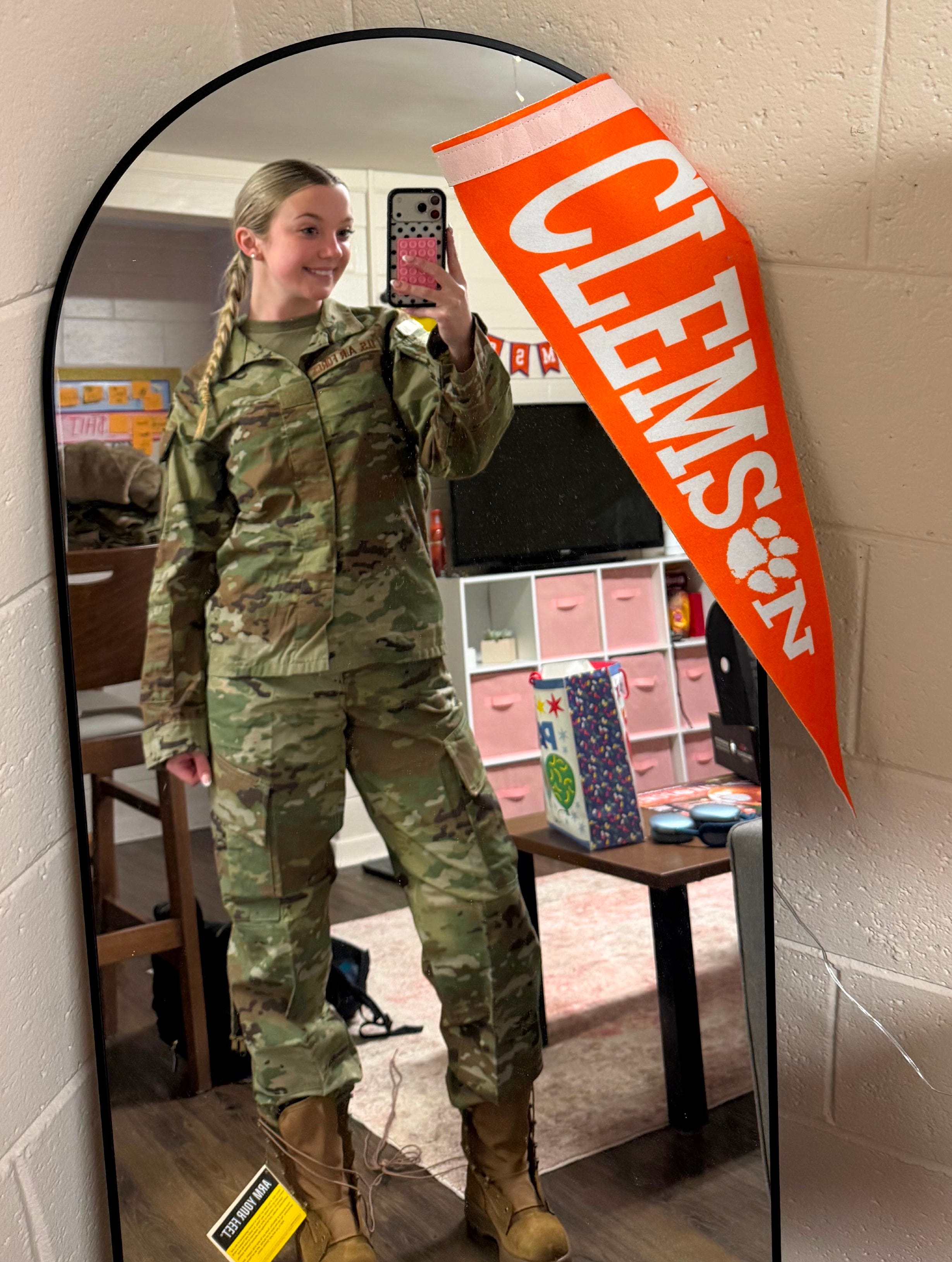
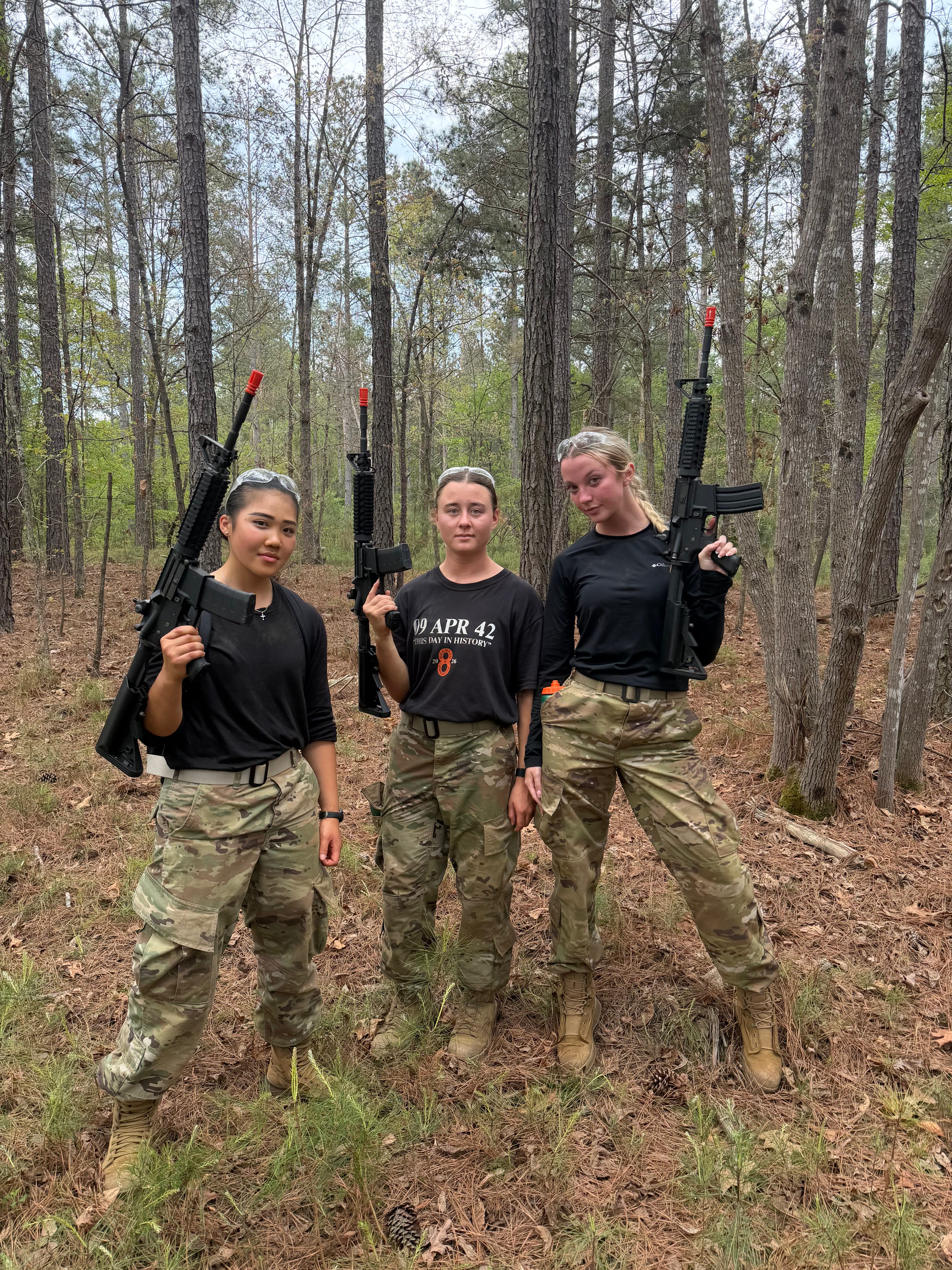
As we help prepare our three boys, Mark, Patrick and Jack, for college, and watch Patrick’s daughter Maggie navigate Clemson as both an ROTC cadet and a member of Zeta Tau Alpha, we’ve started to recognize a common thread. Young people need places where they belong. They need mentors who know them, peers who depend on them, standards that challenge them and opportunities to test themselves.
Social isolation remains a real problem on college campuses, with academic pressures, geographical relocation, technology, and social anxiety often making it harder for new students to form meaningful connections. One study says 57% of college students report feeling lonely. But we also believe college students need something that can be harder to find in a culture of nearly unlimited choice: a reason to look beyond themselves.
That is why we’ve found ourselves returning to a phrase that initially sounded almost playful but increasingly feels serious to us: ROTC is the new rush.
We don’t mean that ROTC should replace fraternities or sororities. Genine’s experience in Chi Omega helped shape her, and Maggie’s experience at Clemson makes the case against that false choice better than we ever could. She is doing both. The more interesting question is what these institutions tell us about what young people are looking for when they arrive on campus in the first place.
Greek life has endured because the basic human desire for connection and belonging underneath it is fundamental to personal development. Hundreds of thousands of students still participate in fraternities and sororities across American higher education. Hell, there are 240,000 women nationally like Maggie that are Zeta. Social media has made recruitment more visible than ever, turning bid days, coordinated outfits and choreographed dances into content consumed far beyond individual campuses.
It is easy to look at an Instagram feed filled with sorority recruitment and see only the marketing of college life. We see something else underneath it. Young people are still searching intensely for belonging. In a generation that can connect digitally with almost anyone, anywhere, there remains enormous value in being able to say these are my people, this is my community, and this is where I am expected to show up.
At the same time, there is growing evidence that belonging by itself is not enough. Gallup reported in 2026 that 45% of Gen Z adults lack a strong sense of meaning, purpose or both in their life. Nearly eight in ten said they wanted work centered on helping others. Young people who believed they were making a positive difference in other people’s lives were substantially more likely to report meaning and purpose in their own.
We don’t read those numbers as an indictment of this generation. We think they may be telling us something important about it. Young Americans have not lost their appetite for commitment. They are searching for institutions, communities and careers that feel worthy of commitment. They want to find their people, but they also want to know why what they are doing matters.
That is not a new American impulse. In fact, some of the most consequential investments in our history were built around precisely that combination of opportunity, responsibility and purpose.
In 1862, with the Civil War raging, Abraham Lincoln signed the Morrill Act, creating America’s land-grant university system and dramatically expanding access to practical higher education. Less remembered is that military instruction was explicitly part of the model.
The idea reflected something larger about how the country understood education. America needed engineers, farmers, scientists and teachers who could build the nation, but also citizens prepared to lead their communities and, when necessary, defend it. Education was not simply preparation for employment. It was part of the infrastructure of citizenship.
Congress expanded that idea in 1916 when the National Defense Act formally established the Reserve Officers’ Training Corps (ROTC). Rather than relying exclusively on the service academies to develop officers, America created a leadership pipeline across civilian colleges and universities.
Future officers would study alongside future physicians, engineers, teachers, and business leaders earning civilian degrees while preparing for military service. Leadership development would become part of the broader American college experience.
More than a century later, ROTC remains the largest single source of commissioned officers for the U.S. military, producing more than 8,500 officers annually. Army ROTC alone has commissioned more than 600,000 men and women over its history. Its alumni have gone on to become chairmen of the Joint Chiefs of Staff, Cabinet secretaries, senior business leaders, physicians, educators, astronauts and public servants.
The institution has evolved alongside the country it serves. Women now represent a significant share of ROTC participation across the services. Maggie is part of that evolution. At Clemson, she can pursue her degree, be a Zeta, enjoy football Saturdays (unless it’s a field training weekend) and everything else that makes college memorable while simultaneously preparing herself for the responsibility of military leadership.
What interests us isn’t simply the uniform. It is the model underneath it. ROTC invests in the whole person. Cadets earn the same degrees as their classmates while developing capabilities that do not appear neatly on a transcript. They maintain physical standards, take on increasing responsibility, learn to lead and follow, recover from mistakes and operate within a team where other people depend on them.
Patrick knows what that kind of formation can mean because he experienced an intensive version of it at King’s College Army ROTC and later as a professor at West Point. The crucible of balancing military training taught lessons no classroom could have replicated. Discipline became less about following rules than developing the habit of doing what was required even when you didn’t feel like doing it. Leadership meant being accountable for other people’s welfare and performance, not simply being the person in charge. Purpose came from understanding that your decisions affected people beyond yourself.
In an age of almost unlimited choice, that can be powerful.
College has traditionally been the moment when young Americans encounter extraordinary freedom. That freedom is valuable. It gives students room to experiment, discover new interests, change their minds and become independent adults. But freedom without any structure can also become drift. A student can spend four years accumulating credits, experiences and credentials without ever being seriously responsible for anyone other than himself or herself.
ROTC provides a counterweight. There is somewhere to be at 0550 in the morning. There are physical standards to meet. There are teammates counting on you. There are mentors paying attention to whether you are improving. Eventually, there are people you will be responsible for leading.
Those obligations can look restrictive from the outside. For the right young person, they can be liberating. Purpose often begins when someone else is counting on you.
There is another reason ROTC deserves a fresh look, and it may be the most practical one for families staring at the cost of college: the economics.
For decades, Americans were encouraged to think of higher education as an almost automatic investment. Earn the degree, take on debt if necessary, and trust that higher lifetime earnings would justify the cost. For many families, that bargain has become harder to accept without question. College is getting more and more expensive - Patrick is still paying his off and the average debt is $32K+. Student debt follows millions of Americans well into adulthood. At the same time, technological disruption is making the future value of some credentials harder to predict.
For students who qualify and are prepared to accept the accompanying four year active duty or eight year reserve service obligation, ROTC offers a fundamentally different proposition. Scholarships and education benefits can substantially reduce the cost of earning a college degree. Cadets can graduate with an accredited education, several years of structured leadership development, a professional network and a defined first career as a commissioned officer, which makes up about 12% of our troops.
No student should join ROTC simply to avoid college debt. A commission carries a real obligation to serve, leading America’s sons and daughters in uniform, and that obligation should be understood clearly before anyone signs up. But for students already drawn to service, the economics deserve serious attention. ROTC connects things that modern higher education too often treats separately: what you learn, how you develop, what it costs and what you are prepared to do when you graduate.
That distinction may become considerably more important in the age of artificial intelligence.
AI will make knowledge cheaper and more accessible. It will write software, analyze data, summarize documents, perform research and automate tasks that once required years of specialized training. No one can say with confidence what the labor market will look like when today’s freshmen are forty, or even thirty.
We can be more confident about what will remain scarce.
Judgment, integrity, resilience, courage, empathy and the ability to earn trust do not become less valuable because information becomes abundant. The ability to bring people with different backgrounds together, make decisions with incomplete information, accept responsibility when something goes wrong and persuade others to work toward a common objective may become more valuable precisely because so much else can be automated.
We often call these “soft skills.” There is nothing soft about them. They are among the hardest capabilities to develop and among the most consequential when a company, a community or a country is under pressure.
This is where the contemporary search for purpose becomes especially interesting.
We don’t believe today’s students have lost their appetite for commitment. The continuing pull of fraternities, sororities, athletics, faith communities and other campus organizations suggests the opposite. Young people still want to belong. Research showing their desire for meaningful work suggests that belonging alone may not be enough. They also want significance, a sense that what they do matters to someone beyond themselves.
That is what makes ROTC feel unexpectedly modern.
Maggie’s experience has made that tangible for us. As both an ROTC cadet and a member of Zeta Tau Alpha at Clemson, she is living the “and,” not the “or.” Her sorority offers friendship, tradition, service and community. ROTC asks her to develop another dimension of herself through discipline, preparation, leadership and an obligation to serve. Together, those experiences demonstrate something that can get lost in the debate over the purpose of college: students don’t have to choose between belonging and purpose. The most formative college experience may come from finding both.
Our high school junior sons Mark, Patrick and Jack will ultimately make their own choices, as they should. We aren’t trying to determine their professions before they’ve chosen their majors, and we don’t assume military service is right for every young person. Our role as parents together isn’t to engineer their outcomes. It is to help create the conditions in which they can become the best versions of themselves.

That means encouraging them toward environments that demand something of them, mentors who will challenge them and communities where people notice when they don’t show up. It means encouraging them to accept responsibility before they feel completely ready for it and to understand leadership not as another credential for a résumé, but as an obligation to other people. Whether they eventually become entrepreneurs, engineers, physicians, tradesmen, business leaders, public servants or military officers matters less to us than whether they become men whom other people can trust.
For generations, rush has helped students answer one of the first questions they encounter when they arrive on campus: Where do I belong? That question isn’t going away. If anything, in an increasingly digital and fragmented culture, belonging may matter more than ever. But another question is becoming just as important: What am I willing to commit myself to?
For our family, that is where ROTC enters the conversation. It offers community while asking something in return. It offers educational opportunities while attaching responsibility to it. It develops leadership not as an abstract concept but through the daily experience of being accountable to other people. It can offer a pathway through college with less financial burden, but only in exchange for the very real commitment of service afterward.
That combination of belonging and obligation, opportunity and responsibility, is not new. It is a very old American idea. What feels new is how relevant it has become again.
Perhaps the great challenge for this generation isn’t that young people lack ambition. Perhaps it is helping them connect that ambition to something larger than themselves. The evidence suggests they are already looking for it. Our responsibility, as parents and as a country, is to make sure the institutions that offer it remain visible, accessible and valued.
For more than a century, ROTC has been one of those institutions. In an age searching again for community, leadership and purpose, it deserves another look.
ROTC is the new rush.
Comments
Nothing yet. Say the first thing.
Sign in to join the conversation.