
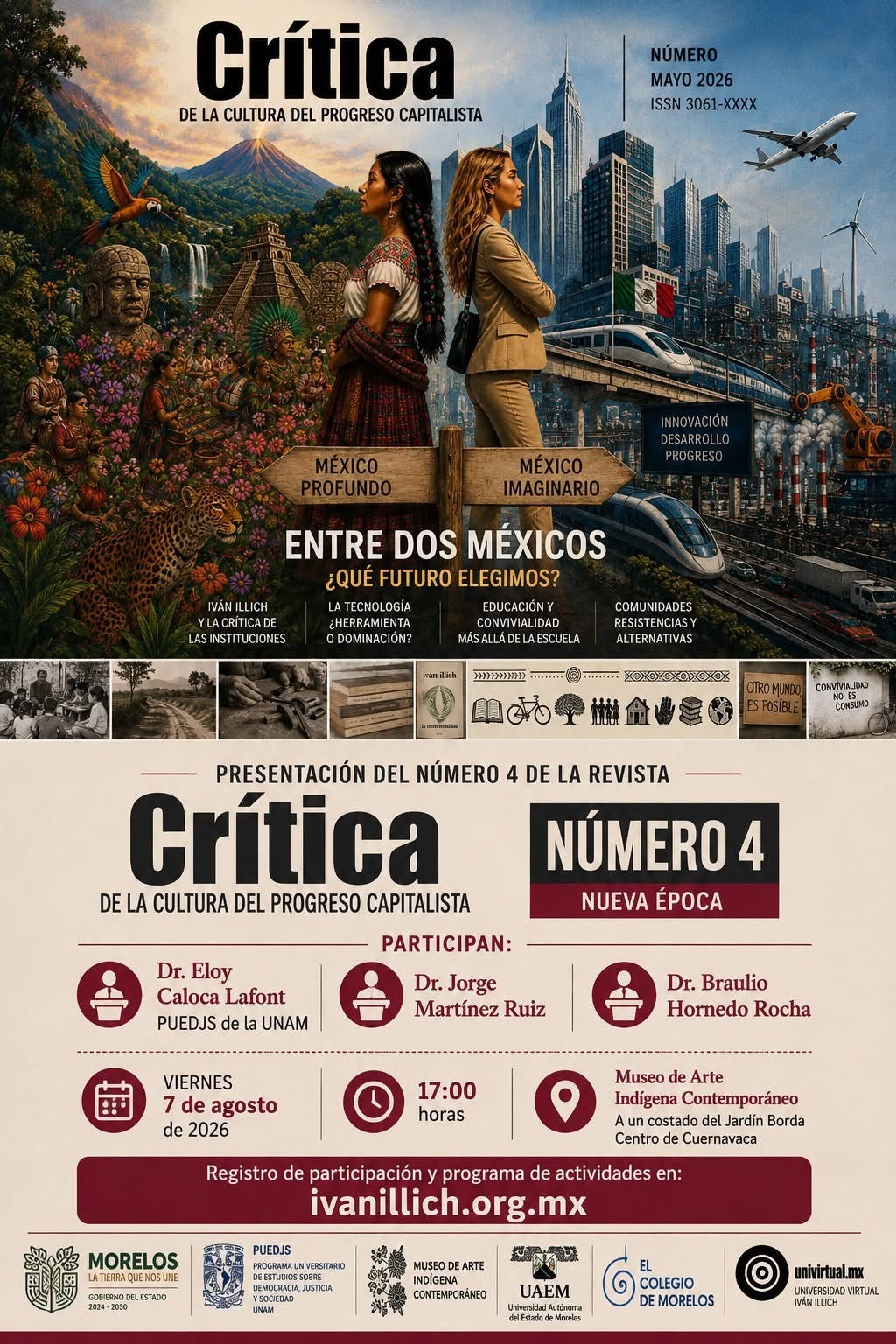
The centenary of Ivan Illich’s 100 birthday is Sept. 9, 2026 and celebrations of his wide-ranging work and insights about history and modern society are occurring in Portugal, Mexico, Italy, Croatia, France, and the United States, with smaller, more intimate celebrations planned in other countries for September.
Illich was a polymath, a Catholic priest, and a missionary who worked with rural communities in Latin America and the US, particularly in Cuernavaca, Mexico and Puerto Rico. He wrote about the value of cultural and historical knowledge and how modern society, through its economic, educational, and political institutions, extracts knowledge, friendship, money, and attention from our lives towards the goals of progress defined by the institutions.
David Cayley, an insightful scholar and biographer of Illich, sadly passed away unexpectedly last month. Fortunately, he left us some amazing books written with or about Illich. His last book, Ivan Illich: An Intellectual Journey (2021), contains valuable information, quotes, and interpretations of Illich’s work. Here he summarizes Illich’s thinking and disappointment about the social changes he explored throughout his life.
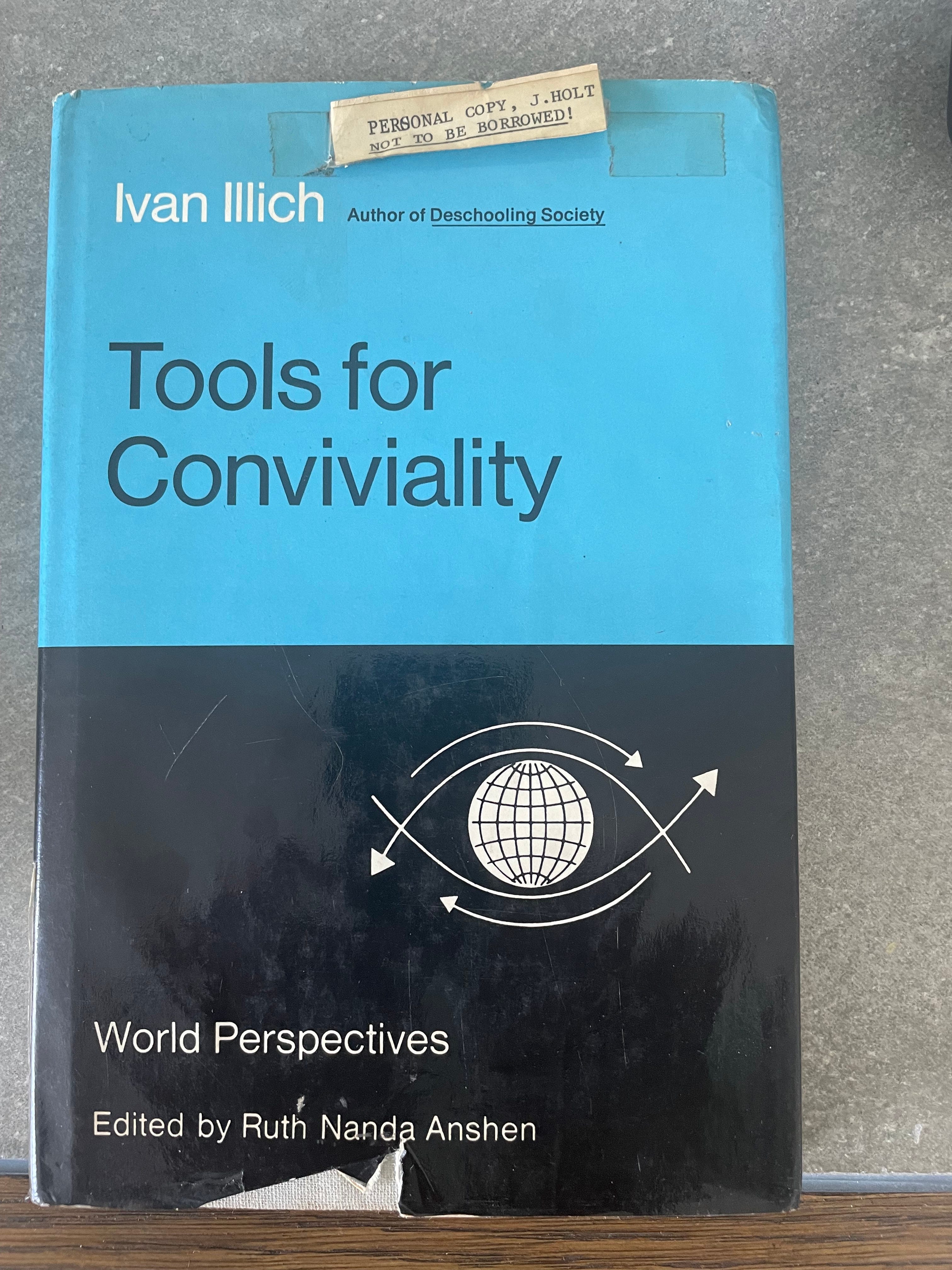
There was a moment, now nearly a half century ago, when Illich believed this time had come historically—a time at which he thought people might suddenly awaken from the impossible dream of endless growth and ever-intensifying institutional care and begin to undertake the renunciations that would allow them to celebrate present abundance. But the moment that Illich had thought “propitious for a major change of direction in search of a hopeful future” passed. The judgment entered against a society swaddled in counterfeit care and on the brink of terminal social paralysis was again deferred, the crisis prolonged. This does not mean Illich to have been wrong. Indeed, the consequences he foresaw, if people did not undergo that “change of mind” of which the New Testament speaks, have largely come to pass. He predicted in Tools for Conviviality (1973) that, should technology not be restrained and the “balances” proper to nature and society restored, the consequence would be an increasingly “uninhabitable” social and natural environment in which personal initiative would shrink, polarization would grow, “all bridges to a normative past” would be broken, and “the world [would be] transform[ed] … into a treatment ward in which people are constantly taught, socialized, normalized, tested and reformed.” This seems to me a pretty accurate pencil sketch of the present moment, even if the “uninhabitability” is unevenly distributed. (p. 21)
Illich noted that schools are essentially the same around the world, regardless of their economic or political systems, because their primary function is to teach obedience to authority, acceptance of social control, and establish a “hidden curriculum” of institutional dependence. Institutional dependency is enforced by conditioning students to prefer institutional rankings, expert teaching, and the consumption of services instead of developing self-reliance, self-directed learning, and personal growth. Indeed, the legal reasoning in the U.S. for enforcing compulsory attendance laws is that schooling creates “good citizens,” but there is no definition of what a good citizen is in the law, nor any logic as to why only forced attendance in school can create them.
To me, the most striking part of Ivan’s thinking is how he makes friendship a defining feature missing from all our conceptions of progress and modernity. In 1996 he wrote, “For five years now I had commented old texts to trace the long history of western philia, of friendship. … Learned and leisurely hospitality is the only antidote to the stance of deadly cleverness that is acquired in the professional pursuit of objectively secured knowledge. I remain certain that the quest for truth cannot thrive outside the nourishment of mutual trust flowering into a commitment to friendship. Therefore I have tried to identify the climate that fosters and the ‘conditioned air’ that hinders the growth of friendship.”
The decay of relationships is growing at a rapid rate in our world. Young people are not dating, marrying, or having children as much as previous generations. In 2023 the Surgeon General of the U.S. declared loneliness and isolation an “epidemic.” And the decline in public friendship, in general, is before our eyes as social clubs, amateur and local sports leagues, live music and theater groups scale down. The loss of “third places,” typically public or commercial spaces that allow people to meet and mingle freely and inexpensively, such as public parks, coffee shops, pubs, and playgrounds has been studied since the late 1980s. These are the types of structures that support the atmosphere that Illich believes invigorates friendly interactions over manipulative behaviors. Will we turn towards each other to create a better society or continue down the path of technocratic control of our lives?
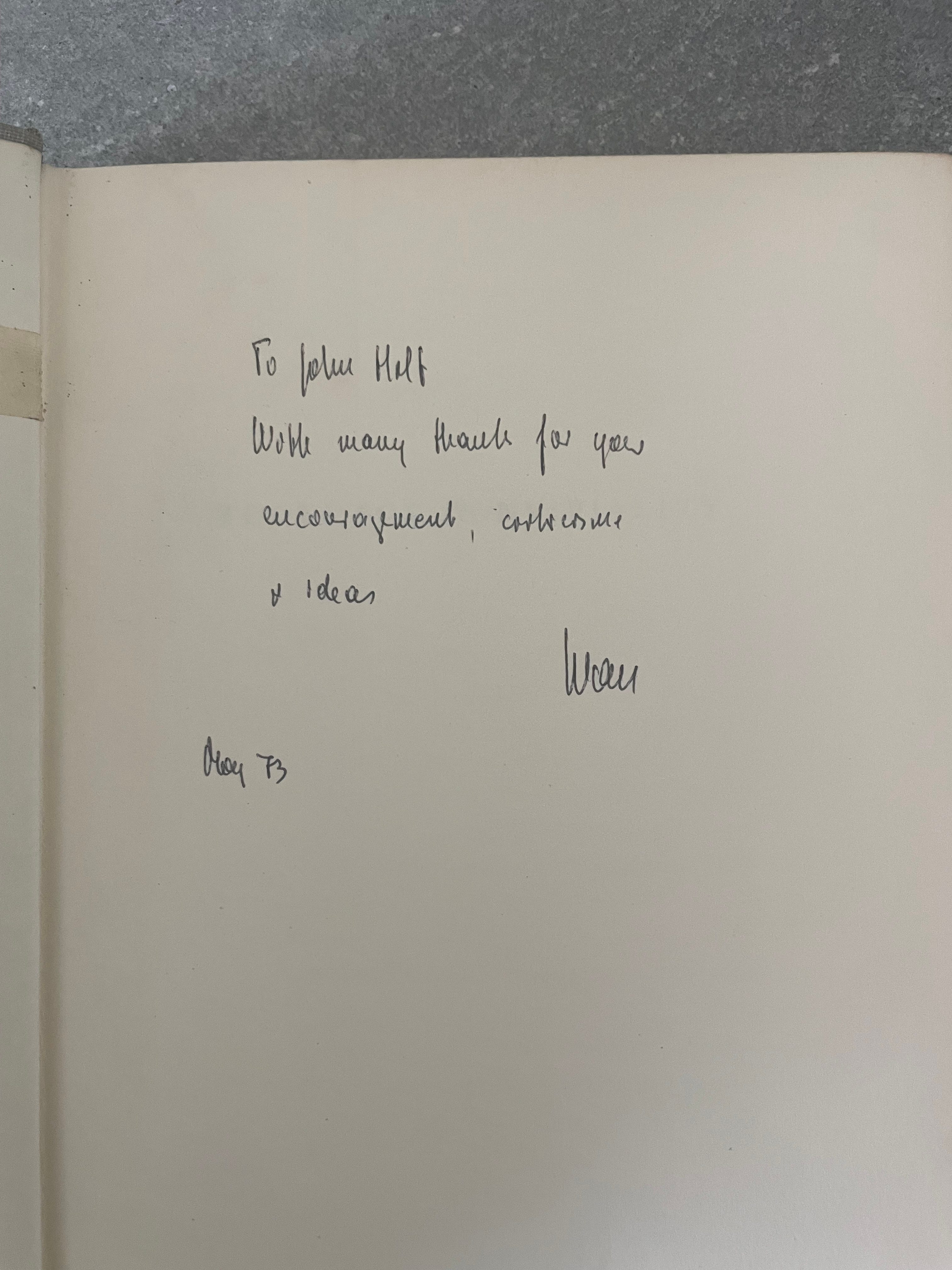
I can’t help but think of the many friends I’ve made over the years through meetings and conversations with or about Ivan and I look forward to celebrating Ivan’s life and work with them. However, I want to call out one of these friends—John Winslow Verity—who promoted Ivan’s work throughout his life. I met Winslow at Penn State during one of Illich’s visits there and we bonded over our work in publishing, our mutual hobby of sleight-of-hand magic, and his interest in homeschooling his son. John died young, but his wife keeps his website, New Scare City, online. There John’s research and thoughts about Illich’s life and work shines, and some of the recordings he unearthed are fascinating. Here is one: a recording of a speech by Illich, “Overgrowth,” that he summarizes:
[Illich] starts off, though, by discussing schooling, and he pushes his argument well beyond what he had laid out in Deschooling Society. Many people discussing that book, at least as seen on the Web these days, fail to recognize that Illich’s analysis of education continued to deepen well after the book’s publication in 1971. It wasn’t long before he’d come to realize, with help from discussing things with Wolfgang Sachs and other students, that as compulsory school was losing its legitimacy, the educational establishment, or industry, was scrambling to find other ways of plying its services—of keeping itself in business, essentially. As he states here, his fear was that “more subtle ways of education can be financed and become acceptable. For instance, teachers can escape the classroom and bother us like mosquitos all during our lifetimes, just as doctors now can tell us all day long what we have to do.” By 1976, Illich had co-authored a book titled Imprisoned in the Global Classroom.
As we see it, one misunderstanding of Deschooling Society is particularly widespread. Many people dwell heavily, and even to the exclusion of other ideas in the book, on Illich’s description of “learning webs” that would help learners and teachers to identify and meet with each other—perhaps over coffee somewhere, or even in a formal classroom setting. It’s an attractive proposal, an easily-grasped alternative to traditional schooling. The obvious extrapolation, made by many people writing on the Web, is to move not only the arrangement of such teaching sessions but the sessions themselves to the Internet. And even more attractive to those enamored of using technology to re-vivify education is to have computers do as much of the instruction as possible. Sure enough, right now, online education is turning into a big business, with many corporations, including established textbook publishers and myriad venture-capital backed startup companies, along with many universities, rushing to cash in.
But here, Illich makes it quite clear that he was not seeking simply to reform education, to fix it by finding new, more efficient and effective methods of instruction. No, he had a quite radical idea in mind: “My concern was, how can we de-school … society,” we hear him saying in 1971–72. “That is, destroy within society the need for education.”
Comments
Nothing yet. Say the first thing.
Sign in to join the conversation.