
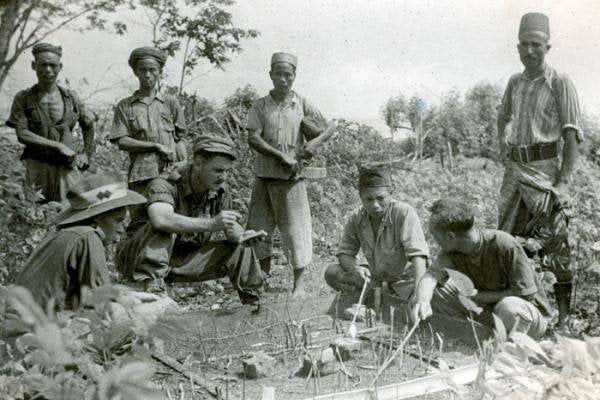
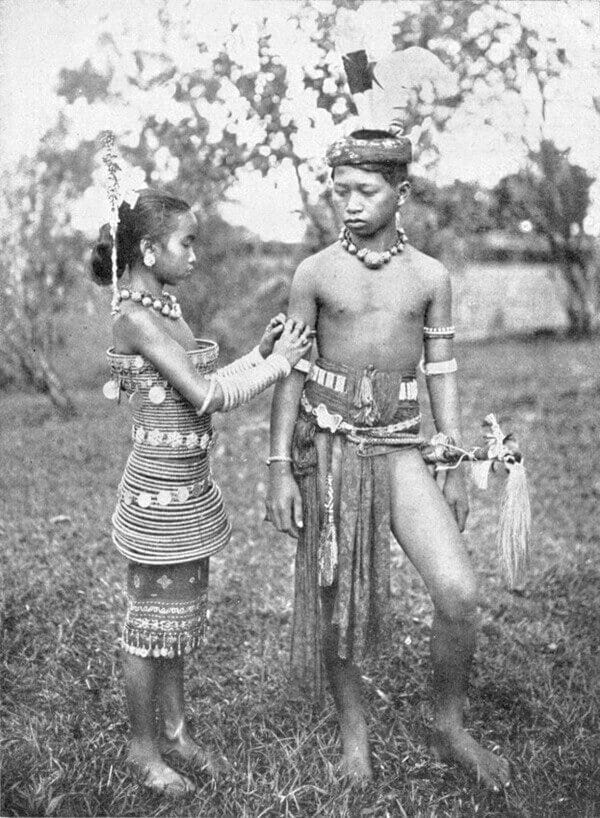
Comprising a group of 200 different tribes and subgroups in the central and southern parts of the island of Borneo, the Dayaks are an Austronesian group who have lived on the island for at least 3,000 years. The term ‘Dayak’ itself is a European invention; the different tribes all have their own culture, dialect, and customs. Nonetheless, they were united by years of colonial rule and became part of the Malaysian and Indonesian states after the war ended.
The Dayak people historically spoke a mixture of Malayo-Polynesian languages that reflected their diversity as a people. Over time, they started to speak main standard Malay or Indonesian. Traditionally, Dayaks lived in long houses, or Lamins, practiced shifting cultivation for their crop fields, and were animists before the arrival of the Europeans. Missions set up throughout Borneo led to them accepting Christianity or Islam. They also have legendary reputations as warriors, which continues to this day with their participation in the Indonesian and Malaysian militaries.
Before the arrival of the Europeans, Borneo was under the leadership of the Sultanate of Brunei, a Muslim kingdom that became independent in the 15th century, and the Sultanate of Sulu, a Muslim state that ruled part of the island and elements of the southern Philippines. Starting in the early 1500s, Portuguese traders came to the island, though they didn’t try to conquer it. The Spanish did attempt to take parts of the island, but their rule did not last long until the British seized the northern part of Borneo and the Dutch took the southern part. This division lasted until the Japanese occupation in 1941.
Colonial rule took different forms around the island. To help them govern, the British colonial administration set up the Raj of Sarawak, a puppet regime dominated by a British settler family that lasted until 1946. Both the Dutch and British exploited the land for its resources, often forcing locals to work in the mines and ports. The Dayak practice of headhunting (decapitating dead enemies) was stopped until the insurgency against the Japanese began. The Dutch, in a similar fashion to the British, set up several puppet sultanates to assist in their administration. In both colonies, the Dayaks were at the bottom of the social pyramid, considered savages by their European masters.
In the period leading up to the war, Borneo was a sparsely populated territory of around 3,000,000 people scattered around the island. The Dayaks comprised the majority of residents in the interior. Most of the island’s economic output came from the urban areas on the coast, including valuable oil fields. The natural resources present on the island were an attractive target for the oil-starved Japan, which began eyeing the island while making its war plans.
Sources:
https://come2indonesia.com/dayak-tribes-borneo/
https://www.ebsco.com/research-starters/language-and-linguistics/dayak-people
https://wwf.panda.org/discover/knowledge_hub/where_we_work/borneo_forests/about_borneo_forests/people
https://businesseventssarawak.com/warriors-at-heart-the-iban-clan/
https://www.nzasia.org.nz/uploads/1/3/2/1/132180707/talib.pdf
https://read.dukeupress.edu/journal-of-asian-studies/article/7/1/43/322067/The-State-of-North-Borneo-1881-1946
https://www.britannica.com/topic/Brooke-Raj
https://www.latimes.com/archives/la-xpm-2001-mar-03-mn-32560-story.html
http://pwencycl.kgbudge.com/B/o/Borneo.htm
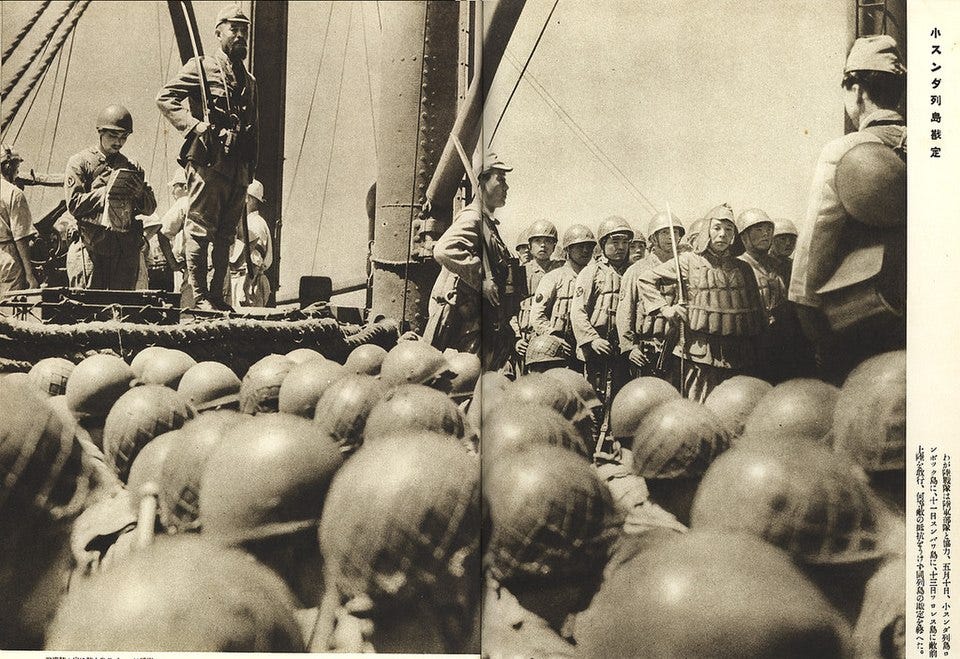
On the surface, seizing Borneo seemed like a distraction from Japan’s main goal of defeating the Americans and deterring the Soviet Union. However, Tokyo was attracted to the port city of Balikpapan thanks to the oil refineries there. Similarly, the British-controlled northern part contained several vital oil fields. Japan could only conduct military operations if it had access to a steady flow of oil and Borneo was a crucial node in the Southeast Asian oil supply chain. Borneo also seemed like an easy target to capture because the British and Dutch did not have sufficient naval resources in the area to defend it.
Torn by commitments all around its empire, London did not have major defenses in place on Borneo. Only the Royal Sarawak Regiment and the 2/15 Punjab Regiment were garrisoning British Borneo. Similarly, the Dutch colonial force known as KNIL kept most of its forces on Java and Sumatra, meaning it barely had 1,000 defenders available to protect Dutch Borneo. The Allies knew that they lacked the resources to defend the whole island, so they planned to hold several strongpoints until they needed to fall back. They also planned to destroy much of the island’s infrastructure to deny it to the Japanese.
On December 16th, 1941, Japanese forces from the Kawaguchi Detachment, a brigade-sized element from the 18th Infantry Division, began landing in British Borneo. The defenses collapsed quickly and Japanese engineers were able to repair any infrastructure the British destroyed. After seizing the northern part of the island, part of the brigade was sent by ship to assault Dutch Borneo. Most of the Allied troops were either killed or forced to surrender. Only some managed to escape to hide in the island’s interior or took small boats off the island.
By March 1942, the Japanese had taken the whole island. Small-scale efforts by Allied naval forces to attack the Japanese fleet failed to shift the tide of the battle. Most of the locals kept out of the battle. A lot of them owed no loyalty to either the British or the Dutch and many even hoped that Japanese rule would be better than European hegemony. The exceptions were the islanders, including Dayaks, who fought in the Royal Sarawak Regiment and the KNIL battalion. The men of these units who escaped Japanese activity would be the nucleus of the resistance movement that later developed on the island.
Sources:
https://ww2db.com/event/timeline/place/Dutch-East-Indies/_Balikpapan
https://www.pacificatrocities.org/blog/why-did-japan-attack-so-many-southeast-asian-countries-in-world-war-ii
https://www.bbc.co.uk/history/ww2peopleswar/timeline/factfiles/nonflash/a1121068.shtml
https://ww2db.com/battle_spec.php?battle_id=63
http://pwencycl.kgbudge.com/K/a/Kawaguchi_Kiyotake.htm
https://www.oocities.org/dutcheastindies/borneo.html
https://www.history.navy.mil/content/history/museums/nmusn/explore/photography/wwii/wwii-pacific/us-entry-into-wwii-japanese-offensive/1942-January-15-abda-japanese-octopus/1942-january-24-battle-of-balikpapan.html
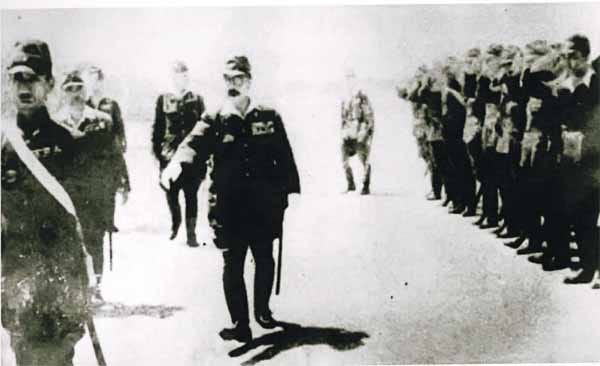
Japan’s conquest of the island allowed it to utilize the island’s infrastructure and resources. At the same time, Tokyo had to assume the burden of becoming the occupying power. From 1942 to 1945, Japan instituted a military regime that involved enforcing its laws on Borneo’s residents, recruiting local collaborators, and conducting counterinsurgency operations across the island. This culminated in the Allied reconquest of the island, which cost the Japanese a major hub in their oil supply.
Both the army and the navy coveted access to Borneo’s infrastructure and resources. After the conquest, both services decided to partition the island’s defenses between them. The northern areas formerly under British control came under the army’s supervision. The navy took control over the southern areas formerly part of the Dutch East Indies. Tokyo also created a civil administration known as the Civil Administration Department, which was responsible for administering the territory and enforcing Japanese laws. The civilian superintendent (or sokan) relied both on Japanese officials brought over from the Home Islands and local collaborators who had experience working for the British and the Dutch. Many of these locals worked in low-level administrative roles and were predominantly Malayan or Indonesian nationalists, as well as some anti-Kuomintang Chinese.
While some Japanese officials argued that they needed to win over the hearts and minds of the people they ruled over, this theory was rarely put into practice. Japanese political thought at the time was dominated by a theory of racial supremacy and this included non-white people. Japanese soldiers were harsh in their treatment of the locals, especially Dayaks, who quickly came to resent the heavy-handedness of their new occupiers. Additionally, the feared Kempeitai and Tokkeitai (the army and navy’s secret police forces) established a presence on the island. Their use of local informants to target anyone planning on conducting an insurgency caused serious internal rifts in Borneo’s society.
The most humiliating aspect of the Japanese occupation was the use of forced labor (romusha). Japanese companies, known as zaibatsu, took over the island’s plants and resources to assist Tokyo’s war effort. Because Japan did not create settlements as it did in Korea and Manchuria, it needed to recruit from the locals. Mitsubishi, Mitsui, and Sumitomo all forced locals to help extract resources and build more infrastructure for the Japanese occupiers. The Dayaks were used predominantly for this on Borneo because they were the largest population group on the island. It is not known exactly how many Dayaks were used as romusha, but it is possible that they numbered in the thousands or even tens of thousands.
Sources:
https://s3.us-west-1.wasabisys.com/p-library/books/9b4dac57dfde0eb7473251370e0165a5.pdf
https://library.search.stmarys-ca.edu/discovery/fulldisplay/alma991007581351407466/01STMARYSCA_INST:BASELINE
https://go.gale.com/ps/i.do?id=GALE%7CA375949172&sid=googleScholar&v=2.1&it=r&linkaccess=abs&issn=00067806&p=AONE&sw=w&userGroupName=anon%7E12111b44&aty=open-web-entry
https://liewchintong.com/2020/08/15/world-war-ii-legacies-that-shaped-malaysias-sociopolitical-reality/
https://www.historynet.com/a-culture-of-cruelty/
https://www.ojp.gov/ncjrs/virtual-library/abstracts/kempeitai-ruthless-policemen-rising-sun
https://www.cambridge.org/core/books/world-war-ii-and-southeast-asia/labour-and-the-japanese/E71028740B7061C29C6D73D6CCC0F080
https://www.jstor.org/stable/23752572
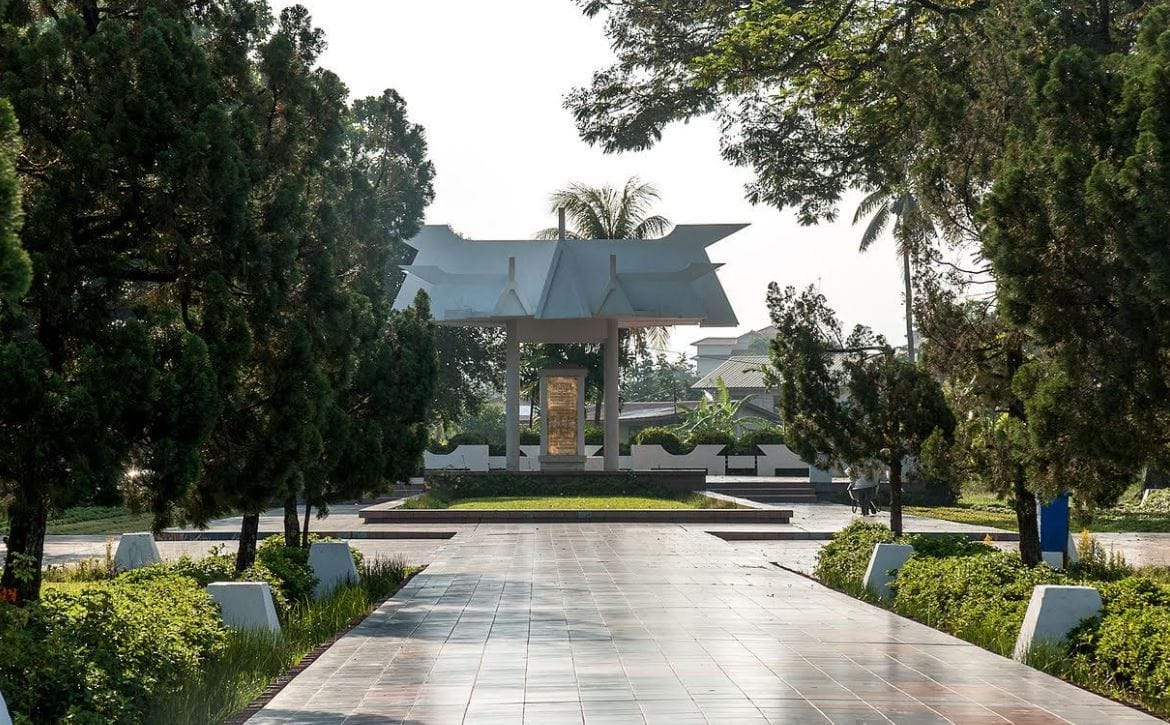
Japan’s brutality ensured that any support it had from Borneo’s residents (of any background) waned very quickly. It was a matter of time before a revolt broke out. Albert Kwok was a Chinese Kuomintang member who had been living in Sarawak when the Japanese invaded. Even though he was a Chinese nationalist, he hoped to galvanize a revolt from different ethnic groups in northern Borneo. In 1942, he contacted Filipino and American guerrillas in the Sulu Archipelago to get arms and training for an insurgency. Despite receiving some support, he lacked sufficient weapons for a sustained insurgency and many of the local Dayak tribal leaders in Sarawak were reluctant to join an uprising without more support.
On October 9th, 1943, he launched a coordinated assault on Japanese garrisons in the towns of Jesselton, Tuaran, and Kota Belud. Around 100 Chinese partisans joined him and he was reinforced by a heterogeneous mixture of Dayaks from the Dusun, Murut, Bajau, and Suluk tribes. Some of the dayaks joined the assault by sea and the partisans killed between 50-100 Japanese and Taiwanese auxiliaries. However, Kwok’s fighters did not have the necessary weapons to attack additional garrisons and the reinforcements they received were limited to some British survivors of the invasion and Indian policemen who turned against the Japanese.
Kwok’s decision to attack without enough weapons proved to be fatal. Several Japanese infantry companies arrived, along with members of the Kempeitai. The Japanese concluded that the locals supported the uprising and began slaughtering thousands of people to pressure Kwok to leave his hideout. The Dayak tribes suffered horrendously and the Bajau and Suluk people were almost annihilated. As a result, Kwok agreed to surrender and was executed along with 175 other people on January 21st, 1944. The revolt was absolutely devastating for some of the coastal tribes in northern Borneo, but Japanese atrocities did not pacify the island.
Sources:
https://www.dailyexpress.com.my/read/4745/japanese-treatment-of-chinese-angered-kwok/
https://muse.jhu.edu/article/744606
https://thcdc.hakka.gov.tw/12343/12344/12361/12365/75472/post
https://www.malaysiakini.com/columns/671250
https://www.freemalaysiatoday.com/category/leisure/2021/01/21/the-jesselton-revolt-when-sabah-ran-red-with-blood
The Japanese occupation of southern Borneo was also very cruel towards the natives. The Dayak tribal leaders did not support the efforts by Indonesian nationalists such as Sukarno to collaborate with the Japanese because collaboration brought them few benefits. Additionally, the Japanese use of forced labor affected tribal cohesion and culture. Dayaks, Malays, and Chinese were press-ganged into working for Japanese companies alongside Allied POWs brought to camps on the island. On May 13th, 1945, a Japanese foreman named Osaki got into a quarrel with a Dayak chief named Pang Linggan over his intention to marry the chief’s daughter. In the ensuing clash, Osaki and several other Japanese industrial and plantation officials were killed.
Dayak tribes all over southern Borneo initiated the mangkuk merah ceremony, which was a call for war. It was one of the few armed uprisings against Japanese rule in the Dutch East Indies during the war. The tribes lacked outside support because the Dutch government-in-exile refused to arm rebels in their former colonies. Nonetheless, they fought very hard with the meager weapons that they had. Anywhere between hundreds to thousands of Dayaks ambushed Japanese garrisons all around the interior and managed to push them out of the dense jungle. Several Japanese advances into the jungle to hunt down the rebels failed and the Dayaks became emboldened.
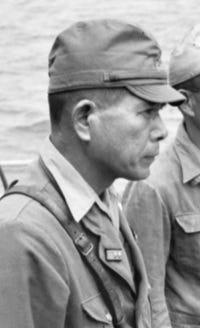
The Japanese reacted with vicious ruthlessness and torched villages near ambush sites on the orders of Admiral Michiaki Kamada. He would subsequently be executed by the Dutch government after the war for the killings of over 1,500 natives on Borneo and the abuse and murder of Dutch POWs. By the end of the war, Japanese garrisons in southern Borneo faced the Allied offensive on their positions and increasing Dayak attacks in their rear. The rebellion in southern Borneo’s interior revealed two things: Japan’s brutality alienated the locals into open revolt and that the garrison was not strong enough to defend the island from an amphibious attack and conduct a counterinsurgency at the same time. The Allies, hearing about the Dayak revolt, came to conclude that a partnership with the tribal chieftains was a strategic necessity.
Sources:
https://ari.nus.edu.sg/wp-content/uploads/2018/10/wps03_009.pdf
https://en.wikipedia.org/wiki/Dayak_Desa_War
https://repository.usd.ac.id/27355/3/024314028_Full%5B1%5D.pdf
https://s3.us-west-1.wasabisys.com/p-library/books/9b4dac57dfde0eb7473251370e0165a5.pdf
https://en.wikipedia.org/wiki/Michiaki_Kamada
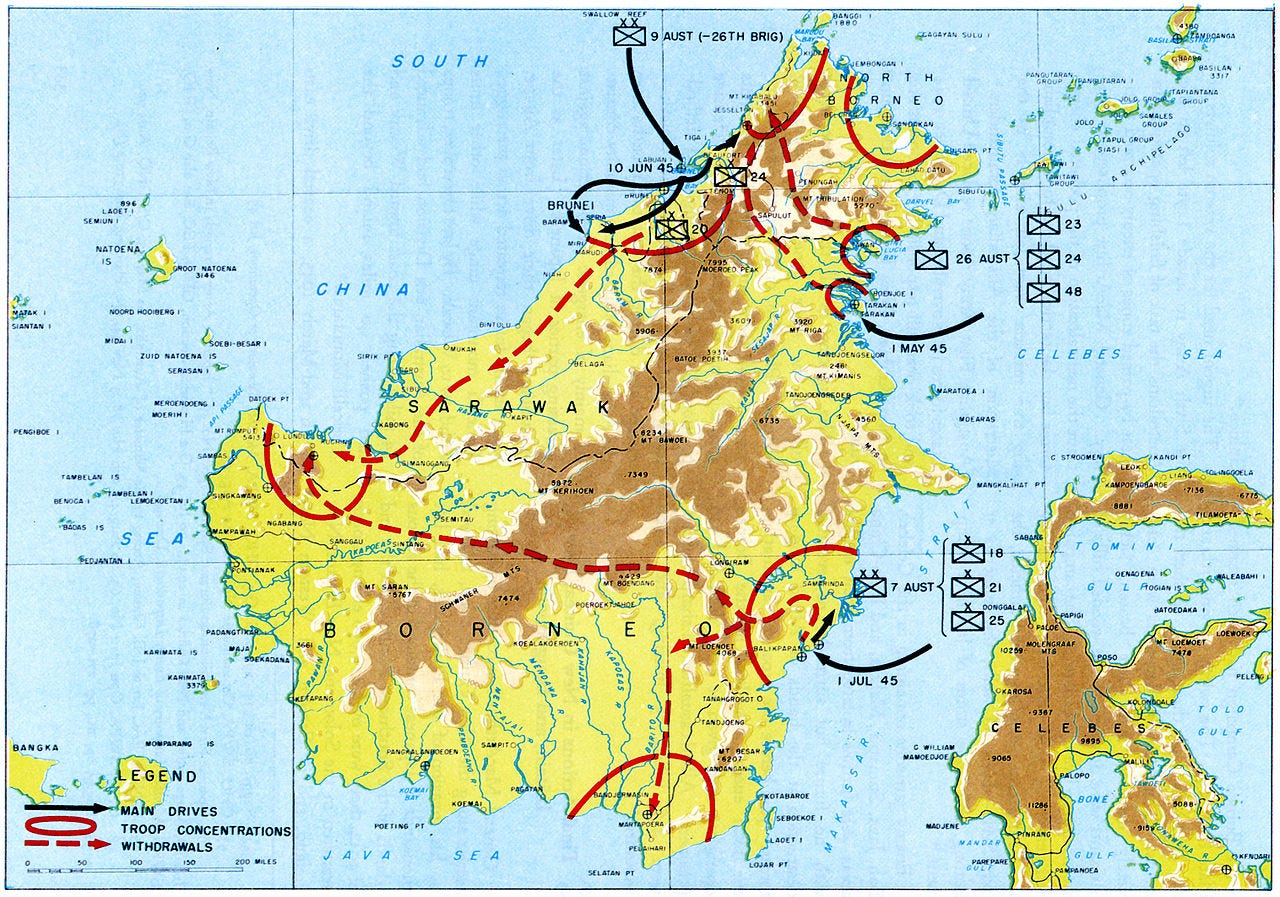
The Allies, as part of their advance towards the Japanese homeland, hoped to cut off the flow of oil and weaken Japan’s hold on Southeast Asia. The Americans, tied down by attacking the Ryukus and the Philippines, did not want to spare more forces to attack other Japanese-held territories. The British did not have divisions to spare for an assault on Borneo either, which meant that the task of retaking the island fell to the Australians and some Dutch forces loyal to the government in exile. The Australian I Corps, commanded by Lieutenant General Leslie Morshead, was assigned to plan for Operation Oboe, the eventual assault on Borneo.
Tokyo had formidable resources available to defend the island, making an Australian assault difficult. The Japanese Army’s 37th Army and the Navy’s 2nd Naval Guard Force garrisoned the island with 32,000 troops, half of whom were combat personnel. The Allies had a pretty clear picture of the Japanese defenses and the Australians were aware of the challenges. To give them an additional advantage, the Special Operations Australian Command (SOA) decided to recruit a force of Dayak warriors to launch hit-and-run attacks against the Japanese garrison. Australian commandos had already made contact with some of the natives in prior reconnaissance missions, but there had not been a coordinated effort by the Allies yet to help the Dayak people.
The Australian commandos and spies assigned to this task planned two operations, predominantly taking place in Northern Borneo. Operation Agas involved members of the Services Reconnaissance Department and Z Special Unit being parachuted and landed by boat near the town of Sandakan. They were going to gather information on the Japanese near there and work closely with Dayak tribesmen in the area. Operation Semut was on a larger scale and involved additional commandos and former British colonial administrators working to arm and train Dayak tribesmen for a sustained insurgency behind Japanese lines. Both operations were critical to ensure that the Japanese would struggle to resist the Australian assault.
Sources:
https://ww2db.com/battle_spec.php?battle_id=166
https://vwma.org.au/explore/units/2023
https://books.google.com/books?id=X-TDDQAAQBAJ&pg=PA42
https://warfarehistorynetwork.com/article/z-special-unit-the-elite-allied-world-war-ii-guerrilla-force/
https://codenames.info/operation/agas/
https://www.lowyinstitute.org/the-interpreter/semut-australia-s-secret-war-against-japanese-borneo
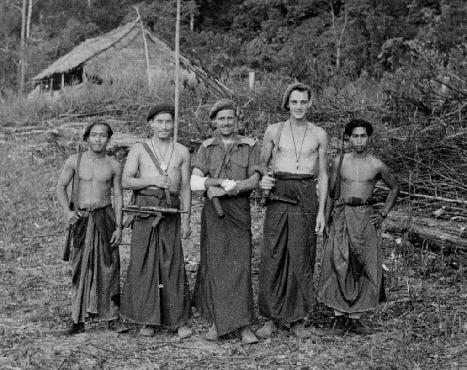
Operation Agas (the Malaysian word for sandfly) was conducted on the northeastern tip of Borneo, closest to the southern Philippine islands. The Australians hoped to gain information on the status of the Japanese garrison in this area and link up with the local tribes, who were believed to be supportive of an Allied offensive. In March 1945, Major F. G. L. Chester, a British officer assigned to Z Special Unit, landed with six other men near Sandakan and proceeded to make contact with some locals. They learned of the presence of a POW camp, but could only take limited action due to their shortage of munitions and the reluctance of local tribesmen to help. Two months later, an additional team arrived in the same area and built upon the progress made by Major Chester. They created a network of local spies to track Japanese troop movements and staged small ambushes against Japanese patrols.
Over the next several months until the Australian invasion, the Agas teams managed to create an intelligence-gathering infrastructure that provided important information to the Allies about Japanese dispositions. When elements of the Australian 9th Infantry Division arrived, the commandos and their local resistance counterparts served as a reconnaissance force to assist the army in its advance. 44 Australian and British commandos participated in Operation Agas and received assistance from several hundred Dayak guerrillas who were armed and trained by the Aussies. The Agas teams also set up hospitals and a governing administration to help the locals and convince them to side with the Allies. This proved to be somewhat successful, as the commandos received a lot of useful information about the presence of Allied POWs in northern Borneo and the movement of Japanese forces.
However, Operation Agas proved to be a failure in other respects. Many Dayak tribal leaders, especially those from the Dusun, Murut, Bajau, and Suluk tribes, were reluctant to do anything that could put them in danger of Japanese retaliation. They had memories of the Japanese atrocities after the failure of the Jesselton Revolt in 1943. Additionally, the commandos lacked the manpower and firepower to rescue Allied POWs kept in camps in the northern Borneo area. The local tribes were sympathetic, but had no way of rescuing those men either. As a result, the participants of Operation Agas were able to undertake limited actions that only marginally harmed the Japanese presence in the northernmost part of the island.
Sources:
https://codenames.info/operation/agas/
https://www.awm.gov.au/collection/E84747
https://www.awm.gov.au/collection/E84748
https://anzacportal.dva.gov.au/resources/borneo-1942-1945
https://military-history.fandom.com/wiki/Operation_Agas
https://www.awm.gov.au/research/guide/pow-ww2-borneo
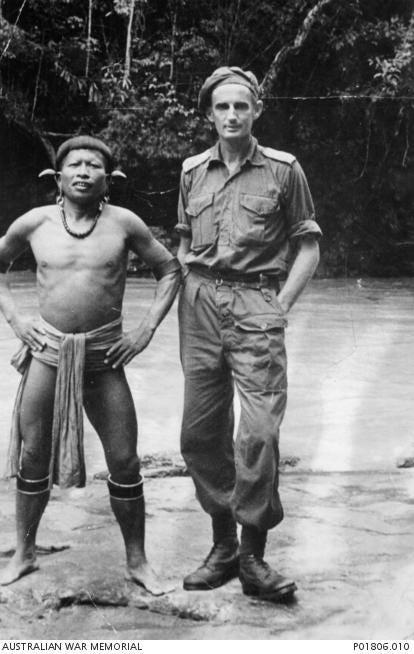
One of the most celebrated Australian special operations in the Second World War, Operation Semut (the Malay word for ant) proved to be very effective in weakening the Japanese presence in Borneo. Unlike in Operation Agas, the Allied special forces teams found that they could draw upon substantial local support, both militarily and nonmilitarily, from the Dayak population. During the planning for Oboe, the Allies decided to commit several teams with a total of 82 men to arm and train a resistance network. Semut was to take place predominantly in Sarawak and some areas of Dutch Borneo. Former British colonial officials were able to identify several tribal leaders who were sympathetic to the Allied cause.
All of the team leaders had prior experience in Borneo before the war, either living or working there. Semut I operated in the Trusan valley, Semut II in the Baram valley, and Semut III in the Rajang Valley. Starting at around the same time as Operation Agas, the Semut teams dropped by parachute in their respective areas of operation. British-born Major Tom Harrisson had overall command of the operation. Team I worked with the Kelabit and Lun Bawang tribes and some of them went into formerly-Dutch territory. Team II worked with the Kenyah and Kayan people. Lastly, Team III was aided by the Kayan, Iban, and Punan tribes.
Thanks to the anger of the locals towards the Japanese and ties between the team leaders and Dayak chieftains, the Australians created a substantial guerrilla force. An estimated 1,000 Dayaks took up arms to fight with the commandos and thousands more provided logistics or intelligence support. The commandos trained the tribesmen on using modern weapons in addition to the more traditional forms of fighting that the Dayaks were used to. Most controversially, they encouraged the Dayaks to practice headhunting against the Japanese, in which dead Japanese soldiers’ heads were severed and placed on a stake. The tribesmen and the commandos were able to kill 1,500 Japanese soldiers and sailors while losing no Australians and around 30 Dayaks.
Allied commanders found that the information provided by the Dayaks and Semut teams was very useful during the Oboe landings. For instance, warnings provided by the locals near Brunei Bay meant that the Australians knew what areas they needed to hit with airstrikes before the landings took place. Additionally, the commandos and the Dayaks also advised the Australian I Corps about the routes Japanese forces were using to retreat from the beaches, enabling the Allies to target these roads. The commandos and their native allies played a similar role to the Filipino partisans and their American partners. When the locals informed the Australians about the presence of POW camps and worksites, the Australians made sure to enter these areas and liberate the prisoners being held.
By September 1945, the Australians were mopping up the remaining Japanese garrisons on the island and setting up a postwar administration. Z Special Unit and the Dayaks assisted in this by accepting surrenders of isolated Japanese units and putting pro-Allied headmen in charge of liberated villages. Notwithstanding instances of false information being given by the Dayaks to Allied officers, Operation Semut was considered a major success in terms of accomplishing most of its objectives. Thanks to Dayak and Australian ambushes, the Japanese found themselves fighting both the enemy in the front and rear.
Sources:
https://www.newmandala.org/semut-the-untold-story-of-a-secret-australian-operation-in-wwii-borneo/
https://military-history.fandom.com/wiki/Z_Special_Unit#:~:text=On%2025%20March%201945%2C%20Tom,invasion%20of%20Borneo%20in%201945.
https://www.warhistoryonline.com/war-articles/operation-semut-most-successful-stealth-operation-of-the-second-world-war.html
https://warfarehistorynetwork.com/article/tom-harrisson-an-anthropologists-war-in-borneo/
https://www.awm.gov.au/journal/j37/borneo.asp#84
https://www.awm.gov.au/articles/blog/with-the-dayaks-in-borneo
https://www.routledge.com/Post-War-Borneo-1945-1950-Nationalism-Empire-and-State-Building/KeatGin/p/book/9781138956544
https://www.awm.gov.au/articles/blog/christine-helliwell-wins-les-carlyon-literary-prize-for-semut#:~:text=The%20Dayak%20guerrillas%20had%20been,They%20were%20absolutely%20marvellous.%E2%80%9D
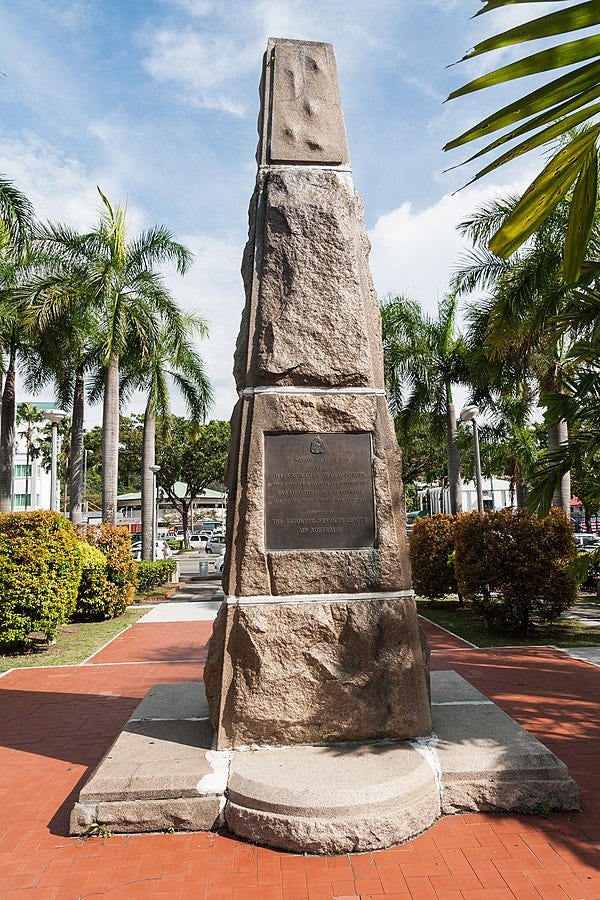
The end of the war brought new challenges to the Dayak tribes in Borneo. The British authorities retook control of northern Borneo from the Australians and vowed to return the colony to its prewar status. North Borneo and Sarawak became a Crown Colony in 1946, an act that embittered Malay nationalists in those territories. The Dayak tribal leaders remained neutral in the subsequent Malayan Emergency, but did pledge loyalty to the new Malaysian state when it gained independence in 1957. In Dutch Borneo, many of the Dayak rebels joined the Indonesian Republicans and fought the Dutch until they vacated the island in 1949. Notwithstanding the commitment of Dayak tribes to supporting Malaysian and Indonesian independence, both governments implemented policies that marginalized the Dayak people. Their stories were not included in the national narratives created by both the Indonesian and Malaysian governments.
Nonetheless, many Dayaks remember the stories of the Japanese occupation and the subsequent rebellions against them. An airport and some other pieces of infrastructure on the island for the Dayak chief Pang Suma, who participated in the Dayak Desa War. Additionally, the yearly commemoration of the Allied POW death march that took place on the island typically mentions the assistance the POWs got from local Dayaks during their time in captivity. According to the New Zealand author Christine Helliwell, Dayak families have a tradition of passing down the stories of the perils that their relatives faced during the Japanese occupation. Reunions of Australian commandos from Z Special Unit often mentioned the role the Dayaks played and some of them even went to the island after the war to meet with former Dayak comrades. Kenyah chief Penghulu Tama Wen Agin, who played a critical role during Operation Semut, was awarded the MBE (Member of the Order of the British Empire).
While the Australian government initially downplayed the experiences of the Dayaks in their official reports about the liberation of Borneo, there have been more efforts in Australia to talk about the Dayaks. The Australian War Memorial has begun hosting exhibitions about the Dayaks, particularly those who assisted the Allies, in recent years. To this day, the legacy of the war plays a critical role in the stories that Dayak people tell about their history, even though the story of the Japanese occupation of Borneo is not well known.
Sources:
https://drshirley.org/geog/geog61.html#:~:text=Also%20in%201963%20both%20British%20North%20Borneo,In%201965%20Singapore%20was%20expelled%20from%20Malaysia.
https://drshirley.org/geog/geog61.html#:~:text=Also%20in%201963%20both%20British%20North%20Borneo,In%201965%20Singapore%20was%20expelled%20from%20Malaysia.
https://journal.equinoxpub.com/JASR/article/view/2602#:~:text=Abstract,politics%20of%20ethnicity%20in%20Kalimantan.
https://kalbar.antaranews.com/berita/424308/kawasan-gor-pangsuma-pontianak-kembali-ramai-dikunjungi-masyarakat
https://www.facebook.com/SabahMalaysianBorneo/posts/sandakan-day-2025honouring-80-years-of-courage-sacrifice-and-remembrancein-2025-/1164799135680702/#:~:text=Sandakan%20Day%202025%20Honouring%2080,Aug%2015%F3%B0%9E%8B%F3%B1%9F%A0
https://www.newmandala.org/semut-the-untold-story-of-a-secret-australian-operation-in-wwii-borneo/
https://www.facebook.com/groups/461558781861220/posts/961060645244362/
https://www.awm.gov.au/visit/exhibitions/a-matter-of-trust
No posts
Comments
Nothing yet. Say the first thing.
Sign in to join the conversation.