
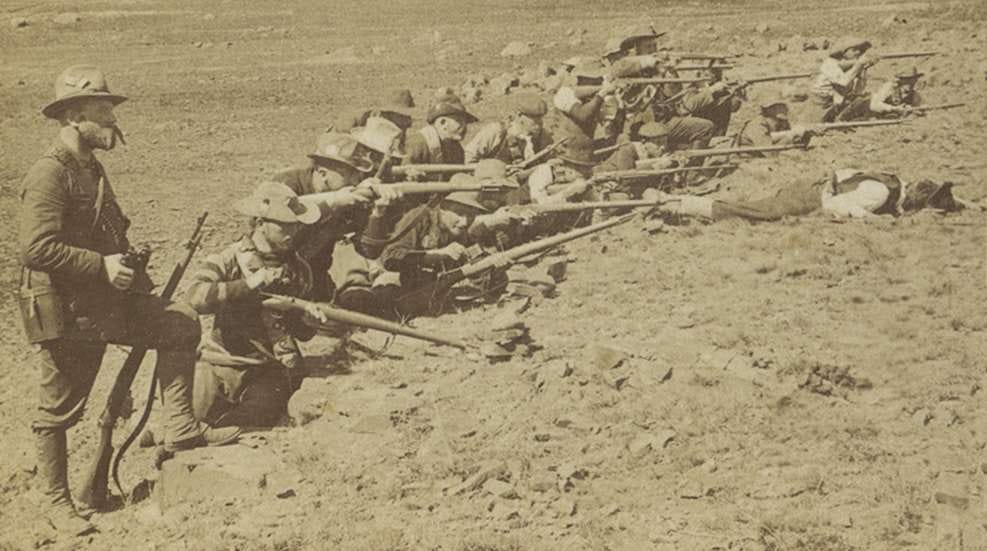
Previously, I wrote an article about Confederate arms imports from Europe during the American Civil War. Relying heavily on cotton exports, Confederate diplomats and agents arranged for the purchase of hundreds of thousands of small arms and artillery, as well as warships and other needed supplies. It was all for nought, but the method of importation proved effective in keeping Confederate forces in the field. Down in the southern tip of Africa, a group of people who also idolized slavery and the rural, conservative way of life that defined the Confederacy examined closely how they could be more successful than the rebellious states in America.
In the 1830s-1840s, tens of thousands of European settlers who descended from Dutch, German, French, and Belgian colonists left the British-controlled Cape Colony and headed north in search of land to settle in the African countryside. These people, known today as Afrikaners or Boers (Boer means farmer in Dutch), settled in several tracts of land north of the Tugela and Orange Rivers. The Boers established two separate republics, known as the Orange Free State and the South African Republic (more commonly known as the Transvaal or ZAR). These two republics had loose republican governance, slavery, and incorporated Calvinist doctrine into their laws. They sometimes feuded with each other while constantly battling African tribes angered by their treatment of nonwhites.
To maintain their existence, the Boer republics sought a steady supply of arms. This proved challenging because both republics lacked the robust domestic industry needed to mass-produce weapons. For many decades, they purchased whatever weapons they could get their hands on in the British-controlled Cape Colony or Natal. However, British officials distrusted the Boers and sought to cut off their access to foreign weapons. Britain repeatedly annexed the territory both republics existed on, supplied weapons to African tribes fighting the Boers, and briefly went to war with the ZAR in the 1880s. Even though their attempts to conquer both republics failed, London still aimed to conquer as much of South Africa as possible, and the Boer Republics knew it was only a matter of time before they had to fight a major war against Britain.
The subsequent arms purchases by both republics led to Afrikaner militiamen becoming among the best-armed combatants in Africa. It also set the stage for one of the continent's biggest colonial wars to date. While the Boer Republics would not survive into the 20th century, their tenacity and skilled use of European weapons led to the creation of independent South Africa and the future establishment of the Afrikaner-dominated Apartheid regime. The Great Boer War proved to be one of the most cataclysmic events in southern Africa and its effects still reverberate today.
Sources:
https://sahistory.org.za/article/great-trek-1835-1846
https://blogs.loc.gov/maps/2018/06/the-rise-and-fall-of-the-orange-free-state-and-transvaal-in-southern-africa/
https://www.facinghistory.org/resource-library/afrikaner-identity
https://gundigest.com/more/classic-guns/holding-history-a-boer-war-martini-henry
https://sahistory.org.za/article/first-anglo-boer-war
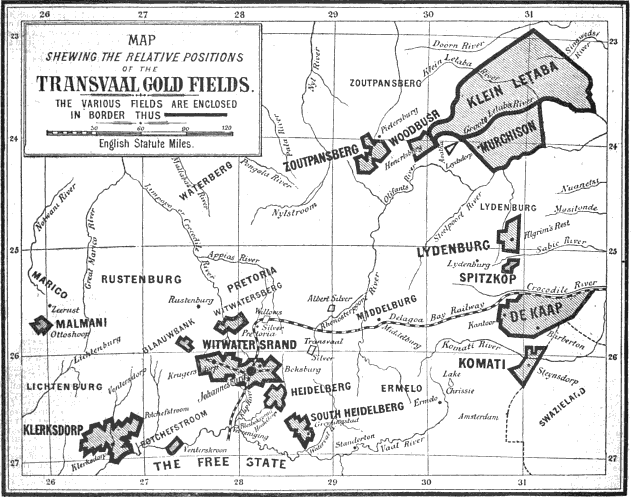
In 1852, a Welsh-born mineralogist reported to the authorities in the Transvaal that he found gold near Krugersdorp. Fearing that if the discovery went public, thousands of non-Boer settlers would storm the site, the local authorities ordered him to sell it quickly and leave. Some other minor discoveries were found by local farmers, but it wasn’t until 1886 that the British-born farmer George Harrison stumbled upon the Main Reef Leader at Langlaagte. What no one knew yet was that Harrison had discovered part of the world's largest goldfield, known today as the Witswatersrand Basin. Word spread quickly, and thousands of westerners began setting up camps near the area along with mining equipment.
The miners were known to the Boers as uitlanders (foreigners) and they established several settlements (including the future city of Johannesburg) with the reluctant consent of the Transvaal authorities. Most of the uitlanders could not vote or become citizens of either Boer republic, but they were allowed to mine as long as they followed local laws. The discovery of gold benefited the Boers by enabling them to develop their infrastructure and establish trade ties separate from the British. However, it also attracted British attention when Cecil Rhodes learned about the fields and began to pressure British authorities to take control over the mining sites. This set the stage for the Great South African War, as Rhodes aimed to secure gold for the British Empire.
Gold was not the only valued commodity that the Boers had access to. The Orange Free State did have major gold fields on its territory, but they were not discovered until the 20th century. However, there was a major discovery of diamonds on a farm owned by the De Beer brothers in the OFS. The mine set up there became known as the Kimberley Mine. Tens of thousands of miners rushed there and the British government took advantage, forcing the OFS to give up the diamond mines to the British-aligned Griqua people in exchange for £90,000. This money helped the cash-strapped OFS develop infrastructure and buy weapons, but it was a pittance compared to the value of the diamonds discovered on the De Beer farm. Other diamond mines helped keep the republic’s economy going up to the period war was declared.
Both republics were very similar and were essentially governed the same way. Despite some differences and conflicts between them in the mid-1800s, the ZAR and the OFS recognized they needed to work together to face hostile African tribes and British expansionism. Even though the OFS did not directly fight the British in the 1st Boer War, they did support the Transvaal in defeating the British incursion. In 1889, both republics signed the Potchefstroom Treaty, promising to support each other if either republic’s independence was threatened. After the aborted Jameson Raid of 1895, a failed attempt by Rhodes to get mercenaries to take control of the Witwatersrand Basin, both republics signed another treaty in 1897 that provided explicit security guarantees and mandated the mass purchase of arms for both republics. Presidents Paul Kruger of the ZAR and Marthinus Steyn of the OFS looked north to Europe for salvation.
Sources:
https://www.wits.ac.za/media/migration/files/EGRI%20274.pdf
https://www.thenaturalsapphirecompany.com/education/additional-precious-metals-information/witwatersrand-gold-rush/?srsltid=AfmBOopEvPL5GEh3IV93UNOY-Q91WgXzZb-nYxhacrTcLI8tdkF3jkZ5
https://www.nytimes.com/1896/01/11/archives/boers-and-uitlanders-facts-about-the-people-who-live-in-the.html
https://www.historic-uk.com/HistoryUK/HistoryofEngland/Cecil-Rhodes/
https://www.gia.edu/gia-news-research/historical-reading-diamond-fields-south-africa-1868-1893#:~:text=As%20news%20of%20the%20initial,diamond%20mines%20of%20South%20Africa.
https://samilhistory.com/2023/03/06/stealing-republics-gold-diamonds-and-other-myths/#:~:text=As%20to%20the%20’stealing%20of,%2C%20inconvenient%20truth%20%E2%80%93%20number%206.
https://itumeleng-trust.org/jagersfontein-history/
https://www.angloboerwar.com/images/pdf/TimesHistory01-13a.pdf
https://www.angloboerwar.com/other-information/87-jameson-raid/1754-the-jameson-raid
http://www.boereafrikana.com/Mense/Anglo_Boere_Oorlog_Leiers/President%20Steyn/President_Steyn.html#:~:text=Closer%20cooperation%20with%20the%20South%20African%20Republic%20did%20not%20exclude,franchise%20and%20the%20dynamite%20monopoly.
The Boers had always relied on an arsenal of small arms that they purchased or brought with them on the Great Trek. This had been sufficient to fight the African tribes that stood in their way and the brief British incursion into the Transvaal. Prominent leaders in the ZAR and OFS realized that the available stockpiles were insufficient to hold off a major British offensive. After the Jameson Raid, an audit revealed that 41% of Boers did not own a firearm and many of the ones in use were old or defective. Thus, Commandant-General Piet Joubert of the ZAR urged both republics to embark on a mass purchase of European arms to ensure that every family was prepared for the coming onslaught.
The governments of both republics heavily taxed any people or institutions engaged in mining on their lands. The ZAR also took the step of creating a government-controlled monopoly on dynamite, ensuring that the government could reap the profits. The money gained from the sales of gold abroad and dynamite to uitlander miners was placed in a Special Service Fund. Both republics had developed financial institutions (the De Nationale Bank for the ZAR, the National Bank of the Orange River Colony for the OFS) capable of managing financial transactions abroad and had placed their gold and silver reserves with Dutch and German banks. Since the European powers relied heavily on South Africa’s rail and road networks to transport goods to and from African ports, the ZAR and OFS were able to benefit substantially by levying high customs duties. The OFS, having less valuable minerals than the Transvaal, sold a lot of ivory, agro-exports, and merino wool to help buttress its economy.
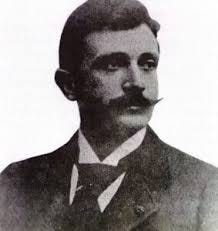
The Transvaal led in purchasing arms from Europe. Willem Johannes Leyds was a Javanese-born Transvaal civil servant who became the ZAR's minister plenipotentiary in Europe. He developed very close ties to governments and businesses in Germany, the Netherlands, and France and was tasked by President Paul Kruger to lead both republics’ missions in Europe. He began meeting with Isodore Loewe, head of Ludwig Loewe & Co. (later DWM). Loewe agreed to a major contract with the ZAR to sell tens of thousands of Mauser 7x57mm rifles that outperformed any British-made bolt-action rifle. Additionally, he and other Boer representatives, including General Joubert, began negotiating with representatives working for Frederich Krupp. He was the head of a German arms company specializing in field and siege artillery. After witnessing demonstrations by company representatives in both republics and extensive contractual negotiations, the ZAR and OFS began purchasing arms from the following companies en masse:
1: DWM: Mauser 7x57mm rifles
2: Krupp AG: 75mm and 120mm artillery
3: Schneider-Creusot: 155mm siege artillery
4: Skoda Works: 37mm mountain artillery
5: Maxim-Nordenfelt: 37mm “Pom-Pom” autocannons
While most of the arms were purchased directly by funds gained from Boer gold and silver deposits, the republics also found other ways to finance their war effort. The ZAR issued a £2.5 million loan bond in 1892, underwritten by the Rothschilds, to fund infrastructure in the territory. Ironically, most of the subscribers were British investors. By the time war broke out in 1899, the British public effectively held a significant portion of the Transvaal’s national debt. Even as war clouds gathered, ZAR bonds traded near par (100%) or even at a premium. Investors calculated that even if the Boers lost, the British Empire would be legally forced to assume the debt to protect London’s reputation as a global financial center. This meant the Boers could keep borrowing right up until the ultimatum. The OFS was less ambitious because its officials were more fiscally conservative, but it did declare postal orders legal tender on January 1, 1898, to maintain liquidity without issuing new international bonds. Thanks to careful management and skilled diplomacy, the Boer republics were able to amass a major war chest and purchase an enormous amount of weaponry.
Sources:
https://www.thefirearmblog.com/blog/2017/12/29/overmatching-british-empire-paul-kruger-upgraded-woefully-armed-boer-military/
https://safreachronicle.co.za/explosive-denial-about-dynamite-by-former-number-1/
https://ideas.repec.org/h/pal/palchp/978-1-349-11536-5_5.html
https://www.academia.edu/144676606/The_Bridge_Linking_Financial_Interests_to_the_Destruction_of_Boer_Sovereignty#:~:text=The%20Boers%20of%20the%20ZAR,May%2C%20G.%20H.%20L.%20(1965).
https://encyclopaediaafricana.com/leyds-willem-johannes/
https://www.peterlang.com/document/1353869
https://samilitaryhistory.org/vol022dh.html
https://journals.co.za/doi/pdf/10.10520/EJC95635
Ibid
https://www.dcstamps.com/orange-free-state-1854-1902/#:~:text=types%20of%20defects.-,Banknotes,Noot%20(or%20Postal%20Note).
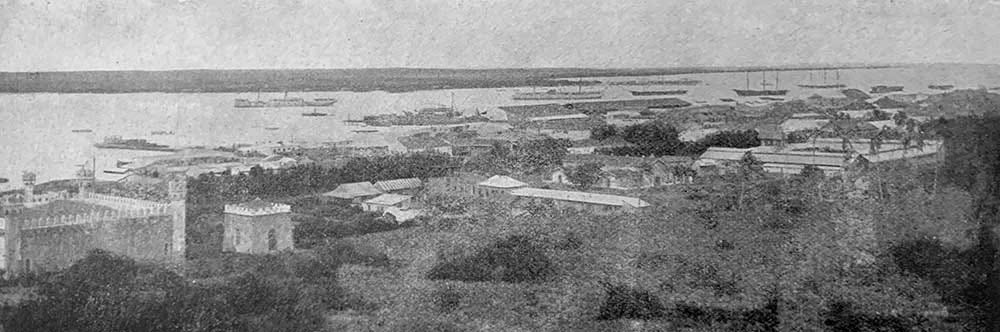
Once the contracts were signed between the Boers and the Europeans, weapons began flowing to South Africa. Both republics were landlocked and faced significant challenges in getting ship-borne materials delivered without attracting the attention of the British. To get around this, Leyds and several of his colleagues devised a shrewd plan, taking advantage of Portugal’s neutrality laws. Knowing that the British would stop and inspect any shipments bound from Europe to the republics if the ships docked in Durban or Cape Town, ZAR and OFS officials decided to route as many ships carrying arms as possible through the Portuguese Province of Mozambique. The port of Lourenço Marques had sufficient harbor facilities to allow large merchant ships with weapons to dock and unload. Portugal, the Netherlands, and Germany were all wary of British expansion in the Horn of Africa and were eager to help the Boer republics defend themselves.
Knowing that British spies and saboteurs were looking for European arms going to South Africa, the European companies and the Boer representatives vowed to ship weapons overseas disguised as civilian goods. Rifles, artillery, ammunition, and other military hardware were shipped in boxes labeled “Agriculture Machinery” or “Mining Equipment”. Rifles were often packed in the center of large crates, surrounded by legitimate heavy machinery or ironmongery. The equipment was generally shipped from Hamburg, Rotterdam, Antwerp, and Marseilles. Since the Boer republics did not own any ships, they contracted the German East Africa Line (DOAL) or French Messageries Maritimes. These companies used a variety of ships with false manifests to transport Boer weapons south of the Equator as quickly as possible. Officials from the OFS and ZAR, along with company representatives, personally supervised the loading in Europe.
Waiting in Delagoa Bay, Mozambique, was the Transvaal consul Gerard Pott. His small staff oversaw the unloading of the ships to ensure that they were not inspected. Once off the ship, the weapons were loaded onto trains owned by the Netherlands–South African Railway Company (NZASM). A company largely founded by German and Dutch investors in 1887, NZASM had completed a loose network of rail lines connecting the ZAR and OFS with other European colonies. Their most successful track-laying took place in 1895, when Pretoria was connected by rail directly to Lourenço Marques. The Boers used the 600-mile line to transport all the goods they purchased, running past the British to the Transvaal. Trains ran at night, covering the weapons in tarpaulin, and arrived directly at the Pretoria state arsenal. From there, weapons were distributed to Transvaal Boers or shipped to Bloemfontein for use by the OFS. Once the war began, the ships were contracted to transport Boer gold reserves to Europe to prevent them from falling into British hands.
The system proved to be effective in getting weapons south. Any British attempts to seize ships carrying weapons to the Boers nearly caused a war with other European governments. Additionally, the Boers did not delay their payments. The main issue was that they did not get enough weapons to decisively outgun the British. Both the OFS and ZAR purchased between 70,000 and 80,000 Mausers for their men, of which 50,000 and 60,000 were actually shipped to the republics. 50 million rounds of ammunition were sent with these rifles. As for artillery, both republics purchased 80 to 90 guns:
1: Four 155mm Creusot guns (“Long Toms”)
2: Around twenty-eight 75mm Creusot field guns
3: Around thirty-four 75mm Krupp field guns
4: Between four and eight 120mm Krupp guns
5: Around twenty-two 37mm Maxim Nordenfelt autocannons (“Pom-Poms”)
6: Around thirty 7x75mm Maxim machine guns
Due to the high priority the republics placed on getting these weapons shipped south, the overwhelming majority of the heavy weapons purchased reached their destination. The Transvaal, with its bigger budget and large gold reserves, purchased the lion’s share of the equipment. The OFS did get access to a lot of the European weapons and followed the Transvaal’s practice of distributing rifles to every family that could fight. However, many of the 20,000 Mausers the OFS purchased did not get shipped in time, leading to thousands of them being redirected to Chile, where they remain today. The ZAR got thirty-eight of the heavy guns and machine guns, while the OFS got fifteen field guns. This uneven distribution did not matter because once the fighting began, both Boer republics fought alongside each other.
Sources:
https://oxfordre.com/africanhistory/display/10.1093/acrefore/9780190277734.001.0001/acrefore-9780190277734-e-808?d=%2F10.1093%2Facrefore%2F9780190277734.001.0001%2Facrefore-9780190277734-e-808&p=emailAyyvCvCUuX0eE
https://www.angloboerwar.com/books/57-campbell-neutral-rights-and-obligations/1230-campbell-chapter-iii-contraband-of-war-and-neutral-ports#:~:text=It%20was%20alleged%20in%20England%20that%20at,forbidden%20forms%20of%20commerce%20was%20practically%20impossible.
Ibid
https://www.briefhistory.co.uk/1935/deutsche-ost-afrika-linie
https://www.academia.edu/10517400/The_Contraband_King_Consul_Pott_in_Colonial_Lourenco_Marques_during_the_South_African_War
https://www.artefacts.co.za/main/Buildings/archframes.php?archid=1184
Ibid
https://www.angloboerwar.com/forum/8-events/32429-the-disappearance-of-the-kruger-millions#:~:text=On%20the%2011th%20of%20July%201900%2C%20a,firm%20Wilcken%20&%20Ackermann%20in%20Lourenco%20Marquez.
https://www.shootingtimes.com/editorial/longgun_reviews_st_boermodel_201007/99362
http://samilitaryhistory.org/vol022dh.html
The British government under Prime Minister Robert Gascoyne-Cecil, 3rd Marquess of Salisbury, made significant attempts to stop the Boers from purchasing and transporting European arms. In 1898, Salisbury signed an agreement with the German Kaiser Wilhelm II, agreeing to partition Portugal’s African colonies if Portugal could not pay off its debts to both countries. This agreement managed to convince the German government not to intervene directly in South Africa. Additionally, Britain managed to convince other European powers, such as France and the Netherlands, that its naval strength was powerful enough to stop any attempts to reinforce the Boers. This meant that Kruger and Steyn could not rely on significant external support once hostilities began.
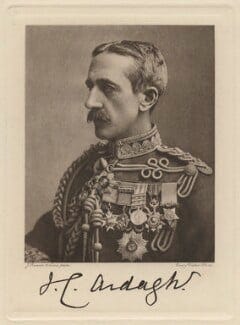
However, the British intelligence community was very disorganized in the late 1800s and was not trusted by much of the War Office or Commander-in-Chief Garnet Wolseley. The War Office had a small 13-man team called the Intelligence Department that was commanded by Major General Sir John Ardagh. Additionally, the Navy had its own intelligence department that monitored ships headed from Europe to South Africa. To learn about Boer negotiations with European arms companies, the War Office relied on reports from British military attaches in embassies in Europe. There was no counterintelligence branch and no signals intelligence unit. The British Foreign Office paid some people to identify what ships were headed from Europe to South Africa with weapons, but they underestimated the scale of the weapons purchased. Consul-General A.C. Ross in Lourenço Marques employed a small team to identify the amount of weapons headed from the port to Pretoria. Between the reports from Ross and British spies in continental Europe, the Intelligence Department began to see that the Boers had a massive amount of modern weapons available to them in case of hostilities.
General Ardagh put together a report known as Military Notes on the Dutch Republics. This report revealed very accurate information: that the Boers had purchased over 70,000 Mauser rifles and modern artillery from Germany and France. It also predicted that the republics would mobilize tens of thousands of men and that the British needed hundreds of thousands of troops to defeat them. His report was precise in noting where the Boers were getting their weapons from and also highlighted their battle experience. However, other officials in the War Office mocked Ardagh’s assertions, claiming that the Boers were mere peasants who would run at the sound of British artillery. General Wolseley did not think that London needed such large forces and General Redvers Buller, assigned to command the expeditionary force that would conquer the republics, did not consult Ardagh during his planning meetings. British commanders and troops in the field were horrified to learn that the Boers were much better armed and organized than they had originally envisioned and parliamentary hearings after the war vindicated Ardagh’s analysis.
Once the war was in full swing and Salisbury’s government began to take the Boers seriously, efforts to crack down on Boer arms shipments increased. The Royal Navy’s Cape Squadron intercepted German, French, and Dutch vessels. While some of these seizures caused international incidents, ships with weapons and foreign volunteers for the Boer forces slowed down their trips to South Africa. British agents in Europe and Africa were authorized to buy up stocks of explosives, coal, and foodstuffs that were intended for the Boers. In Lourenço Marques, the Portuguese acquiesced to British demands and stopped the transportation of trains to Pretoria due to the British invocation of their centuries-long alliance. Prussian-born Baron Francis von Steinaecker, a British officer stationed in Mozambique, led small cross-border raids that disabled tracks owned by NZASM. As the war went on, Boer supply lines to Europe were largely cut off and British diplomatic pressure was increasing on European countries to stop arms shipments or even accept Boer payments.
These efforts largely worked. By 1901, most Boer troops in the field used captured British rifles due to a lack of ammunition for their Mausers. The Boers lacked the necessary infrastructure to produce enough ammunition for their artillery, so most of it was abandoned after the fall of Pretoria, Johannesburg, and Bloemfontein. The British waged economic warfare, burning down much of the infrastructure in Boer cities, villages, and farmsteads. Despite the intense resistance that the Boers put up for several years, they could not overcome the brute force of the British and Commonwealth armies. Once they lost the ability to resupply their men, the republics were doomed.
Sources:
https://digitalcommons.unomaha.edu/studentwork/437/
https://www.army.mod.uk/media/2373/intelligence_corps_history.pdf
Ibid
https://samilitaryhistory.org/vol103jo.html#:~:text=The%20Military%20History%20Journal%20recently,only%20incorrect%20and%20flippant%20attention.
https://journals.openedition.org/etudesirlandaises/3288?lang=en
Ibid
Ibid
https://www.tandfonline.com/doi/full/10.1080/07075332.2023.2300282#:~:text=Neutrals’%20protest%2C%20trade%20control%2C%20and%20Louren%C3%A7o%20Marques,neutrals%2C%20which%20had%20regularly%20protested%20against%20them.
https://www.tandfonline.com/doi/full/10.1080/07075332.2023.2300282
https://samilitaryhistory.org/vol103jo.html#:~:text=The%20Military%20History%20Journal%20recently,only%20incorrect%20and%20flippant%20attention.
https://www.nam.ac.uk/explore/boer-war#:~:text=Origins,also%20known%20as%20the%20Transvaal).
The end of the war saw South Africa’s economy devastated. While the British-controlled areas of the Cape Colony and Natal were largely unaffected, the OFS and the ZAR suffered horrendous losses, both in their populations and their industries. Almost all the weapons that the Boers had received from Europe were seized or destroyed under the terms of the Treaty of Vereeniging. The industry that the Boers had been slowly setting up was mostly wrecked by the British when they fully conquered both republics. Additionally, the hopes that the European countries would intervene on the side of the Boers proved to be in vain.
In Europe, the British tried to seize all of the Boers’ financial assets. They conducted audits of the National Bank of the South African Republic and pressured European governments to help recover funds. Despite Boer claims that they had exhausted all of the funds they had overseas, the British searched for years for gold and diamond reserves that both republics allegedly kept in Europe. However, much of the money that the republics had shipped up north was kept in private accounts that London was not able to access. Ironically, significant portions were paid out to European firms (like Krupp and Schneider) to settle outstanding bills for the very weapons the British had spent years trying to interdict. As part of the peace terms, the British agreed to compensate the Boers with several million pounds to help them get back on their feet.
South Africa formally gained independence in 1902, though it remained a member of the British Commonwealth and was dominated by Anglo-South Africans and some loyal Afrikaners. The British government provided the new country with almost all of its military equipment, making the Union very reliant on Britain. In both World Wars and the Korean War, the South Africans were armed and supplied with British weapons and uniforms. This started to change after the National Party took over in 1948. Composed of ultra-conservative Afrikaners, they hoped to rejuvenate the memory of the Boer Republics. As the country began facing significant internal turmoil due to opposition to Apartheid and the threat of an invasion from the newly independent “Frontline States”, the NP began setting up an indigenous arms industry. Remembering that the Boer Republics had been largely reliant on European arms to fight, the government in Pretoria hoped to make its military immune to any possible arms embargo from the outside world.
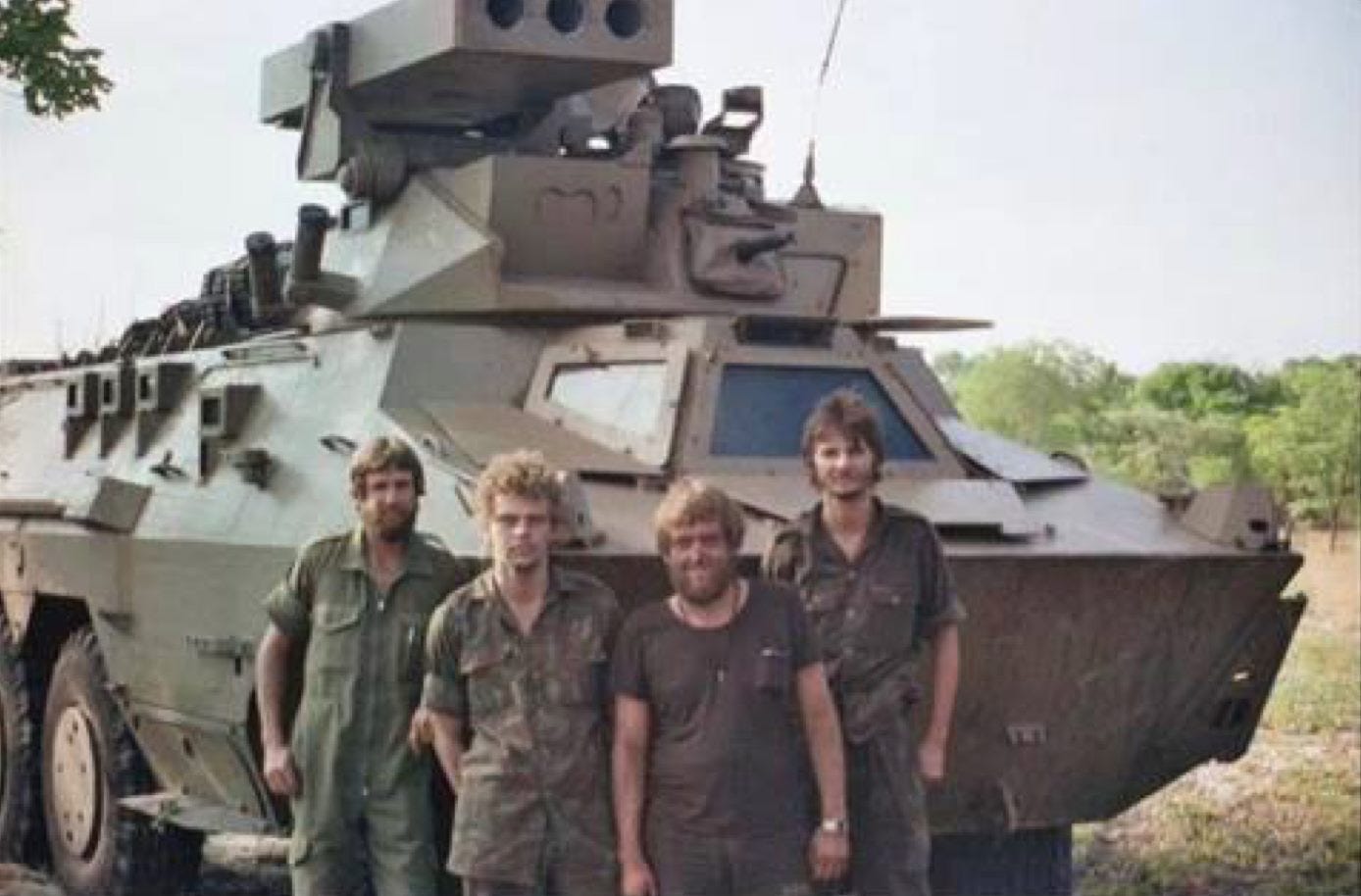
In 1968, several government-owned entities were merged to form Armscor: South Africa’s weapons production conglomerate. By 1977 (when the UN established a full arms embargo on South Africa), Armscor had become a state within a state, with 100,000 employees. It repurposed former French and British equipment that the South African Defense Forces had been using and mass-produced locally-made versions of weapons shipped in from countries like Israel. Armscor designed and produced the G5 and G6 howitzers (similarly to the 155mm Long-Toms, they were some of the most effective artillery produced at the time), the Casspir and Ratel infantry fighting vehicles, and the Olifant tank. While the Apartheid regime collapsed due to the turmoil engulfing the country, South Africa retained its domestic weapons production capabilities. Today, its defense industry revenue is among the highest in Africa and South Africa’s military is largely equipped with weapons produced domestically. Even the ruling ANC absorbed the lessons from the Boer War about not being overly reliant on external arms shipments.
Sources:
https://www.britannica.com/event/Peace-of-Vereeniging#:~:text=Peace%20of%20Vereeniging%2C%20(May%2031%2C%201902)%2C%20treaty,of%20the%20British%20and%20ex%2Drepublican%20Boer%20governments.
https://ideas.repec.org/a/eee/bracre/v57y2025i1s0890838925000071.html#:~:text=Power%2C%20Sean%20Bradley-,Abstract,auditors%20to%20adopt%20standardised%20wording.
https://www.abi.org/feed-item/boer-bonds-and-the-doctrine-of-war-debts#:~:text=The%20international%20law%20of%20state,taken%20on%20by%20the%20victor.
http://samilitaryhistory.org/lectures/aftermath.html#:~:text=Then%20there%20were%2030%20000,eventually%20reached%20%C2%A316.5%20million!
https://www.thecollector.com/heroic-south-african-contributions-world-war-2/
https://omalley.nelsonmandela.org/cis/omalley/OMalleyWeb/03lv00017/04lv01495/05lv01506.htm
https://www.epsjournal.org.uk/index.php/EPSJ/article/view/18
https://www.cia.gov/readingroom/docs/SOUTH%20AFRICA%20%20ARMAMENTS%20I%5B15792688%5D.pdf
https://defenceweb.co.za/editors-pick/mapping-south-africas-arms-exports-trends-key-markets-and-regional-demand/#:~:text=South%20African%20defence%20exports%20have,the%20growth%20in%20international%20demand.
Postscript
This article and the prior one on Confederate arms imports showcase how an underdog can import arms at scale and still lose. The next and final article in this series will showcase a different story: how an underdog can turn a large influx of imported weapons into a victory. For that, we turn to Indochina from 1945 to 1954.
No posts
Comments
Nothing yet. Say the first thing.
Sign in to join the conversation.