
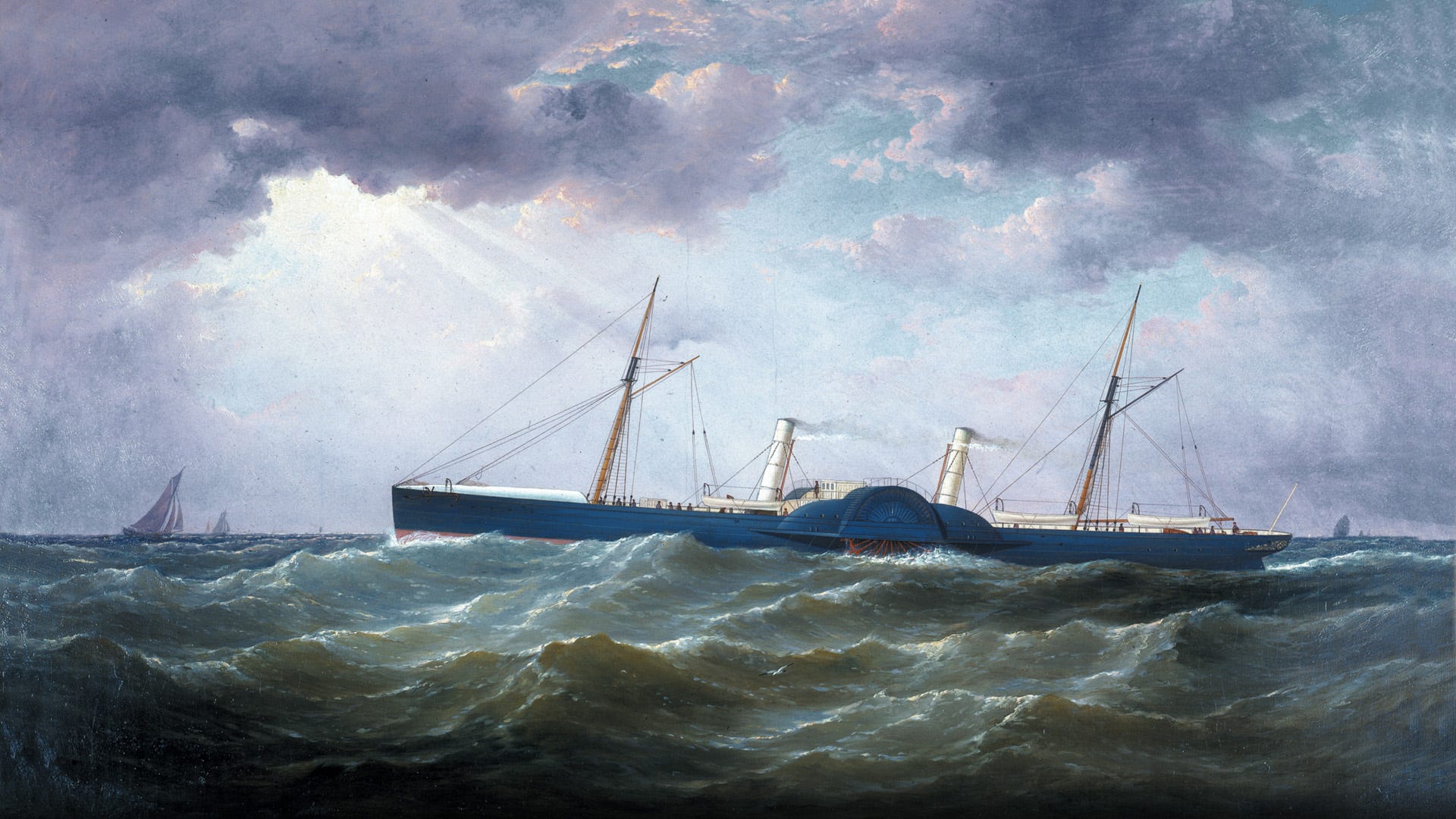
From 1861 to 1865, the United States was convulsed by its most bloody and intense conflict to date. Despite being vastly outnumbered and outgunned, the Confederacy was able to put up a tough fight for years and inflict heavy casualties on the Union forces arrayed against it. The reasons for this varied: Southern battlefield prowess, mistakes by Union commanders, the scale of the fighting, etc. One major reason that will be explored below was the mass importation of arms from companies based in Europe to Confederate stockpiles. Hundreds of thousands of rifles, hundreds of artillery pieces, and other much-needed supplies poured into Southern ports after crossing the Atlantic. The Union was never fully able to cut off these shipments; even up to the last days of the war, military equipment was shipped over the Rio Grande River into Confederate-controlled Texas.
If a weaker party faces a stronger adversary in an armed conflict, it will always seek to even the odds by gaining outside support. The Confederacy’s acquisition of weapons is a perfect case study of this. The willingness of European arms and ship manufacturers to support the Confederates almost led to hostilities between the Union and the French and British governments. That being said, the Confederacy was not able to tip the balance against the Union, even with the weapons it received. Its forces were consistently outgunned and outmanned when fighting the Federals. Many of these same manufacturers sold arms to the Union as well. Therefore, it can be said that, despite the major efforts by Southern diplomats to secure arms from abroad for their soldiers and sailors, the South’s plan of gaining the upper hand via outside support proved all for nought.
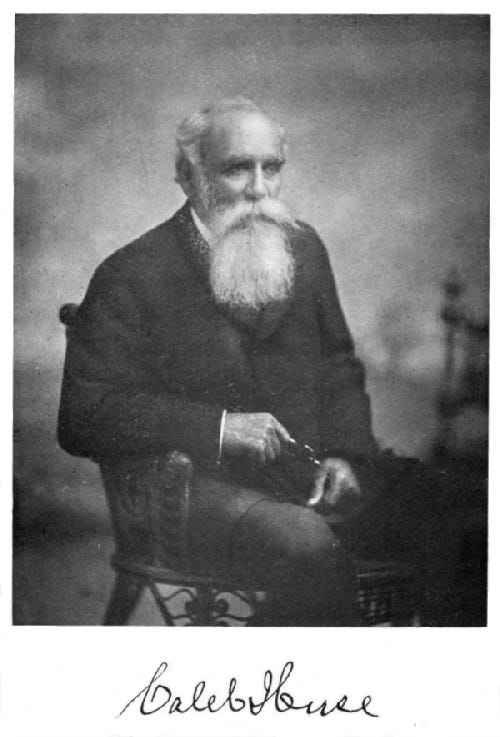
In April 1861, the Confederate cabinet summoned the newly-commissioned Major Caleb Huse to Richmond for an important mission. He was to sail to Great Britain and arrange for the purchase of as many light and heavy weapons as possible from European arms manufacturers. President Jefferson Davis and Secretary of War LeRoy Pope Walker gave Huse carte blanche to purchase any weapons he could find without having to wait for approval from the Treasury. The Northern-born Huse eagerly accepted the assignment and arrived in England on May 10th, 1861.
Huse found that he was in a competition with representatives from Lincoln’s government, who were also seeking arms from European manufacturers. Even though the US government had a much bigger budget and more international legitimacy, Huse had several advantages. First, the Confederacy was willing to spend as much money as it could to buy arms. Additionally, several European arms companies were eager to outdo American arms companies based in the North. The Confederacy offered some of the biggest contracts to date to some companies, such as the London Armory Company. Huse, being a prewar US Army officer, prioritized the best-quality weapons he could attain. Rifled muskets such as the 1853 Enfield or the Lorentz rifle were prized by Confederate troops because of their accuracy and durability.
In 1863, the South professionalized its financing through the Erlanger Loan. This was a $15 million international bond issue that was convertible into cotton at a fixed, deeply discounted price. Huse and other Confederate agents (such as the famed James Bulloch) sent to Europe used these bonds as hard currency to purchase arms directly. The Confederacy’s unofficial “bank” in Europe, Fraser, Trenholm & Co., used its capital directly to buy weapons and, later in the war, to build ships for the Confederate navy. Companies that helped the South were reimbursed with “produce loans”: government-owned cotton that had been pledged by Southern planters as security for foreign purchases. European investors in the Southern cause could buy bonds with coupons attached that paid interest in “hard” British Sterling. The bondholder could choose to forgo the cash interest and instead redeem the bond for cotton at a fixed price of 7 pence per pound. Because cotton prices skyrocketed during the war, the South was able to reap a huge profit by purchasing cotton for around 10 cents per pound and selling it in Europe for around 70 cents per pound.
While the Confederacy did manage to purchase a substantial amount of arms in exchange for discounted cotton shipments, serious financial issues began to plague the South’s ability to purchase and obtain arms from overseas. Southern states had been notorious for defaulting on their debts before the war, meaning that they had a toxic credit reputation. Union diplomats told Europeans that Jefferson Davis had personally advocated for the repudiation of state debts while serving in the U.S. Senate. In order for European companies to get the cotton produced in the South, ships had to get cotton bales through the Union blockade, a dangerous venture. The South attempted to float 8% coupon bonds in the Netherlands, but they raised a mere £2,500. Investors shied away because the South lacked assets in the Netherlands that could be seized in case of default.
By 1862, British arms manufacturers, enraged by Southern delays of payment, slowed arms shipments down unless the Confederacy stopped delaying its payments. It was only the threat of a total gun embargo that forced the Confederacy to service its European cotton bonds as late as March 1865, even as its domestic economy collapsed under hyperinflation. The Confederate dollar was so worthless that the only way that Southern agents could purchase arms was through whatever bonds they could get shipped overseas or gold they could spend. High brokerage commissions, secret debt buybacks (to prop up bond prices), and shipping insurance meant the Confederacy often received less than 2% of its total war expenditures from the foreign loans. A mixture of hyperinflation, the destruction of cotton meant to be sold to European markets, and very poor decisions made by the Confederate Treasury ensured that the South did not gain the necessary support it needed from European arms and ship manufacturers.
Sources:
https://www.gutenberg.org/files/24469/24469-h/24469-h.htm
Ibid
http://www.historyisnowmagazine.com/blog/2023/6/5/how-did-the-confederacy-fund-its-war-effort-in-the-us-civil-war#:~:text=Beating%20the%20Blockade,for%20trade%20and%20for%20sale.
https://www.amazon.com/Suppliers-Confederacy-British-Arms-Accoutrements/dp/0764342487
https://civilwarmonths.com/2023/03/18/the-erlanger-loan/#:~:text=Confederate%20commissioner%20John%20Slidell%20and,potential%20margin%20for%20profit%20enormous.
https://theconversation.com/how-british-businesses-helped-the-confederacy-fight-the-american-civil-war-52517
https://www.tshaonline.org/handbook/entries/wartime-cotton-trade#:~:text=Wartime%20Cotton%20Trade.At%20the,be%20run%20through%20the%20blockade.
https://www.econstor.eu/bitstream/10419/94566/1/2000-13.pdf
https://www.nber.org/system/files/working_papers/w10960/w10960.pdf
https://www.econlib.org/inflation-and-the-demand-for-money-the-confederacy-in-the-civil-war/
https://eh.net/encyclopedia/money-and-finance-in-the-confederate-states-of-america/#:~:text=The%20Confederacy%20floated%20two%20small,future%20Prime%20Minister%20of%20England.
Exact numbers aren’t known because of the destruction of files during the fall of Richmond, but the Confederacy was estimated to have recruited or drafted just over one million men into its army and navy during the war. Equipping these men was a difficult undertaking, meaning that Confederate agents overseas had to work extra hard to secure the necessary supplies for the cause. Despite the financial issues mentioned above and the difficulties in shipping the necessary arms overseas, Southern agents managed to purchase an enormous amount of weapons. In the holds of merchant vessels and blockade runners, rifles, howitzers, mortars, pistols, and other weapons poured across the Atlantic into the hands of desperate Confederate troops. The shipments continued through the entirety of the war in spite of Union naval activity.
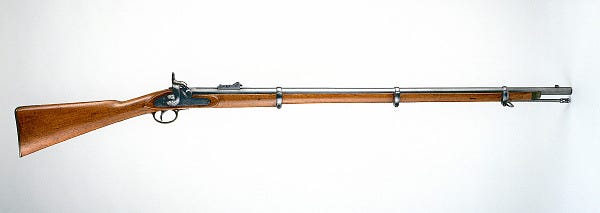
The 1853 Enfield .577 calibre rifled musket was the main weapon that Confederate infantry relied upon from European stockpiles. The British Army had used it to devastating effect in the Crimean War and Confederate agents like Major Huse happily signed contracts to get them shipped to the South. Confederate troops liked the Enfield a lot for its stopping power and its accuracy. The Union did as well; over 500,000 of them were shipped to northern ports during the war. The Confederates managed to purchase and obtain as many as 400,000 Enfields, making it the main rifle imported into the Confederacy. Supplementing them were 100,000 Lorenz rifles, produced in Austria and purchased by Southern agents through British middlemen. These rifles were being phased out by the Austrian Army and the Imperial Arsenal in Vienna happily provided their surplus stocks to whoever was willing to buy them. Tens of thousands of French and Belgian rifles were shipped overseas as well, mainly Model 1842s and Light Minié Rifles. Swords, bayonets, and thousands of revolvers from different manufacturers rounded out the Confederate small arms and light weapons imports. The South did face challenges with competing calibres of ammunition (.577, .54, .71, and others) that caused significant logistical difficulties when they were distributing arms and ammunition to its troops.
The South needed artillery too because their gunners were consistently outgunned in pitched battles with the Federals. Approximately 200-250 heavy guns and 100-150 light guns were purchased and shipped to the South. Most of the heavy guns came from Great Britain: Armstrong, Whitworth, and Blakely Rifles were the main producers. French Napoleons, Austrian smoothbores, and others were also shipped, though the Confederacy was mainly hoping to secure siege artillery from Europe because it was able to produce enough field guns internally. Because many “heavy” guns were shipped as “machinery” to evade British neutrality laws, tracking all of the purchases and how much of the purchased weapons were able to get through is difficult. Nonetheless, historians such as Stephen Wise and Warren Ripley were able to tabulate estimated numbers. While the number of artillery pieces shipped was not sufficient for the intensity of the fighting, the quality of the guns (especially the British models) was very good and the South was able to fortify its ports with artillery it could not produce domestically.
Confederate officials also needed a lot of raw materials imported for manufacturing. According to reports submitted to the Confederate Congress, 2,250,000 lbs of saltpeter were
shipped overseas for gunpowder production. 4,500,000 lbs of lead arrived from British and Spanish mines. Lastly, tens of millions of percussion caps were shipped to the South because Southern factories struggled with the fulminate of mercury required for primers. The Quartermaster, Ordinance, and Navy Departments all feuded over who controlled the distribution of these materials, a major problem that hindered the Confederate war machine.
The Confederacy had major issues with the development of its navy during the war. Most of the US Navy stayed loyal to the Union in 1861, meaning that the Confederates had to develop a navy from scratch. Thanks to the efforts of Confederate agents and diplomats, nine purpose-built warships were contracted to be built in England and France. Only a few, including ships like the CSS Shenandoah and CSS Alabama, were actually delivered. In many cases, they had to leave European ports disguised as merchantmen and were armed at sea. However, British shipyards did produce hundreds of greyhounds (sleek, coal-powered ships) that were used for blockade running. These were crucial for the South’s attempt to get cotton, money, and weapons overseas.
Sources:
https://macuniversity.libguides.com/c.php?g=1440835&p=10712224#:~:text=Since%20records%20were%20destroyed%20there%20is%20not,includes%20volunteers%2C%20conscripts%2C%20and%20professional%20military%20personnel.
https://archive.org/details/introductiontoci0000coat
https://researcharsenal.com/civil-war-weapons/#:~:text=The%20following%20weapons%20were%20listed,weapons%20as%20%E2%80%9CThird%20Class%20Arms%E2%80%9D
https://collegehillarsenal.com/confederate-imported-austrian-m-1854-lorenz
https://www.horsesoldier.com/products/firearms/longarms/35012#:~:text=This%20is%20a%20very%20good,discourage%20meddling%20by%20curious%20privates.
https://archive.org/details/artilleryammunit0000warr
https://www.military-history.org/feature/american-civil-war/it-was-british-arms-that-sustained-the-confederacy-during-the-american-civil-war-peter-tsouras.htm
https://historicsites.nc.gov/all-sites/brunswick-town-and-fort-anderson/history/building-confederate-fort
https://digital.tcl.sc.edu/digital/collection/mcraehuse#:~:text=South%20Carolina%20Confederate%20Relic%20Room%20&%20Military%20Museum%20*%20Home.%20*%20Browse%20Collection.
https://books.google.com/books/about/Lifeline_of_the_Confederacy.html?id=_kq7diciSsQC
https://emergingcivilwar.com/2022/05/25/symposium-spotlight-goals-of-the-confederacys-european-built-ironclad-fleet/#:~:text=The%20Confederacy%20contracted%20for%20five,and%20regain%20the%20Mississippi.%E2%80%9D%5B
https://www.usni.org/magazines/naval-history-magazine/2021/june/blockading-raiding-navies-civil-war#:~:text=Yet%2C%20that%20was%20still%20only%20a%20fraction,ships%20that%20established%20and%20maintained%20the%20blockade.
Managing the purchases of weapons was one thing; getting them to the Confederates was another. By 1864, around 500 Union warships were involved in blockade duty, strangling Confederate commerce. Additional warships patrolled the Mississippi River or hunted for Confederate warships at sea. Arranging large convoys of weapons and other necessary trade goods was not possible in the face of such overwhelming odds. Therefore, Confederate officials and their European business partners came up with a solution that the Union struggled to curtail.
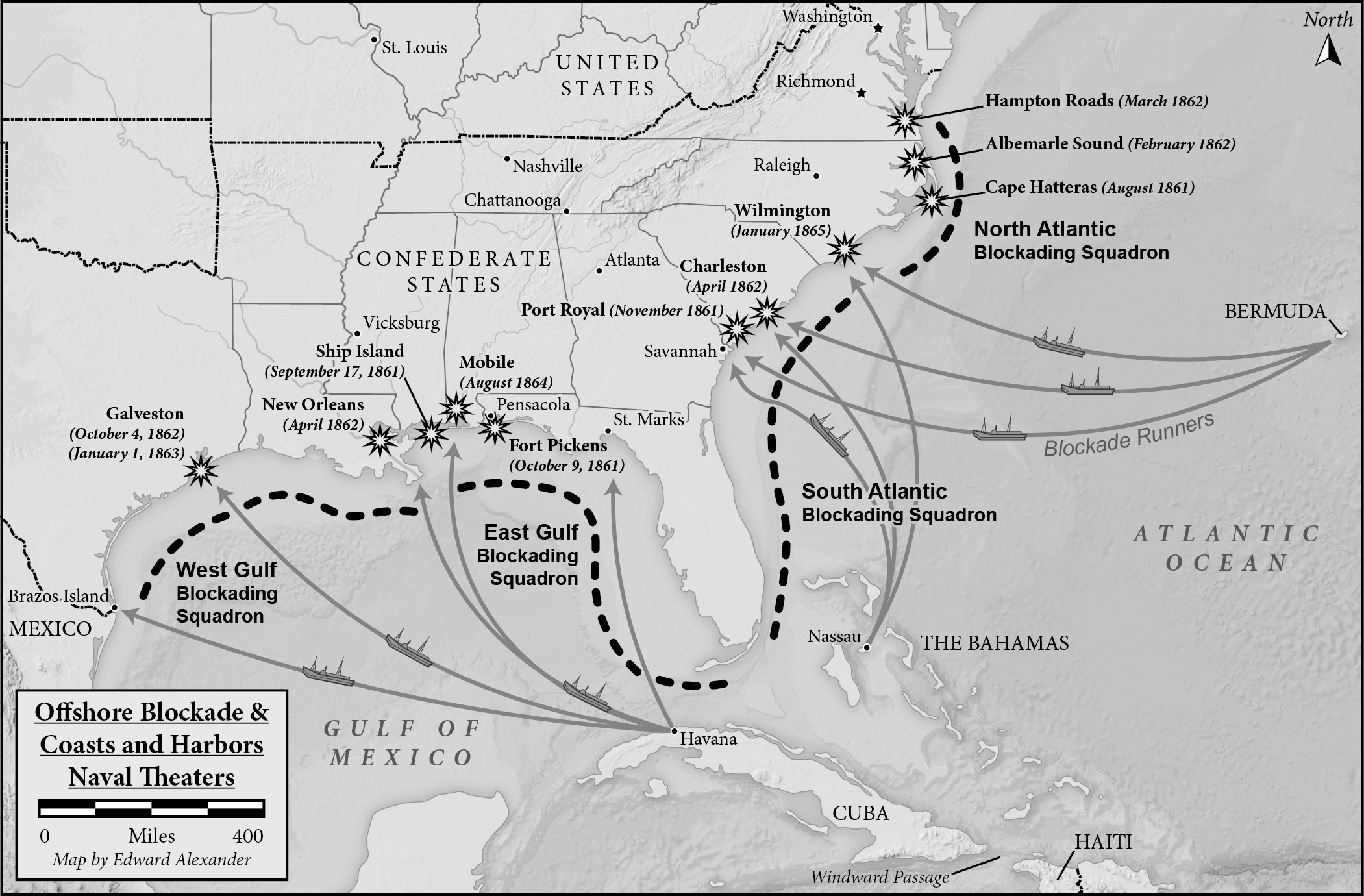
Because deep-draft European merchant ships were too slow and conspicuous to evade the Union Navy, the South utilized a relay system involving neutral “middleman” ports. European merchant vessels would carry the “goods” purchased by the South to ports in the Caribbean. The three main ports were Nassau in the Bahamas, St. George’s in Bermuda, and Spanish-controlled Havana, Cuba. After arriving, the merchantmen carrying these weapons took cotton with them back to Europe as part of the arrangements set up by Confederate agents. Because these ships sailed under a neutral flag, Union vessels could not intercept them at sea. Once at the Caribbean port, the weapons were transferred to faster ships for the run through the Union cordon. In harbors where larger ships could not dock directly due to shallow waters, lighters (flat-bottomed barges) were used to ferry heavy crates of rifles and gunpowder from anchored ships to the docks or directly to waiting blockade runners. Warehouses in these ports were stocked with materials awaiting transport because Confederate ship captains generally sailed when there was a moonless night. False papers were provided to give blockade runners some measure of legal protection, although it rarely mattered. Local merchants benefited from this business because they reaped profits due to the costs associated with transferring the weapons.
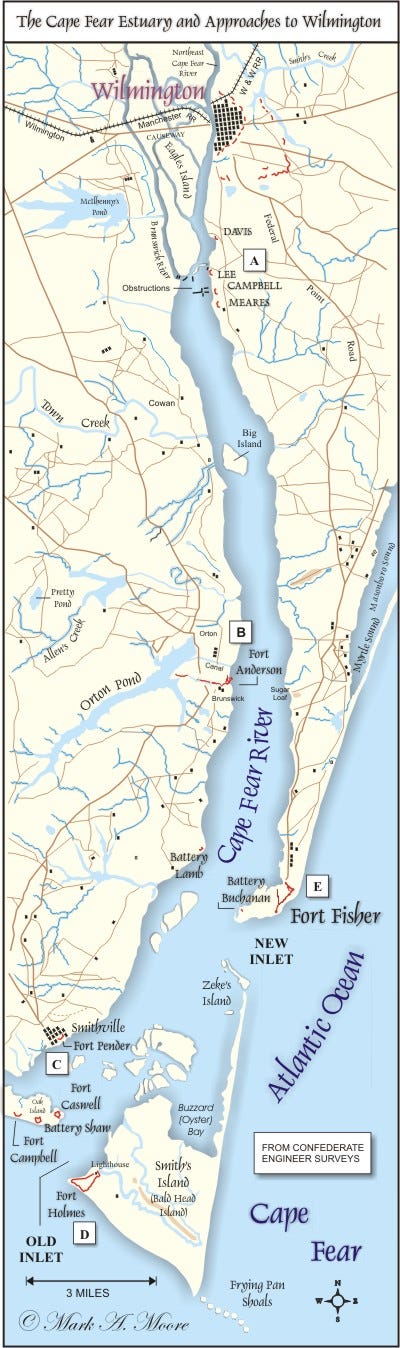
Once the blockade runners made sail, they rushed for any Confederate port that could take them. Cities like Wilmington, North Carolina, or Charleston, South Carolina, were prized because of their ample port facilities and proximity to major rail lines. New Orleans could not be used because it fell to the Union early in the war. Navigating ships to Confederate ports was a risky business. Captain John Wilkinson, a notable blockade runner, talked about being pursued by a Union warship:
“The sloop was within four miles, and still gaining... The engineer was then directed to make a black smoke... The moment the word came [that we were lost in the deepening twilight], orders were given to close the dampers, and the volumes of smoke ceased to pour out; the helm was put hard-a-starboard, changing the course eight points; and the blockade-runner disappeared in the darkness, while the cruiser continued her course in pursuit of a shadow.”
Despite the dangers, hundreds of ships were involved in this venture, enabling the Confederacy to continue gaining supplies throughout the entire war. Richmond also had a friend in Emperor Maximilian of Mexico, the Austrian-born (and French-imposed) leader of Mexico in the midst of a civil war in that country. Maximilian and French Emperor Napoleon III sympathized with the Confederacy and allowed European arms to pour through Mexican ports and over the Rio Grande into Texas. The city of Matamoros, in the hands of Maximilian’s army, became a major trade hub where weapons were offloaded and transferred for the trip up north. The Lincoln administration was furious and tried to stop it by requesting that the Mexican Republicans under Benito Juárez attack arms convoys on land in Mexico. Juárez agreed, but this back door remained open. However, Confederate officials had difficulty getting weapons from Matamoros to the rest of the Confederacy because the train lines in Texas were limited and the Union had control over the Mississippi River by 1863. Internal transportation challenges limited the effectiveness of the Confederacy in getting the necessary weapons to its various field armies and fortifications.
Sources:
https://www.historyonthenet.com/civil-war-the-naval-war
https://www.usni.org/magazines/naval-history/2024/october/business-blockade-running#:~:text=Blockade%20running%20involved%20both%20importing,%2C%20Alabama;%20and%20New%20Orleans.
https://history.state.gov/milestones/1861-1865/blockade#:~:text=During%20the%20Civil%20War%2C%20Union,in%20those%20regions%20and%20elsewhere.
https://americansocietyofarmscollectors.org/wp-content/uploads/2022/04/1986-B54-Blockade-Running-During-the-Civil-War.pdf
https://historicsites.nc.gov/blockade-runner-activitydocxpdf/open#:~:text=Page%204,mission%2C%20supplying%20the%20Confederate%20Army.
https://cwnc.omeka.chass.ncsu.edu/items/show/387
https://history.state.gov/milestones/1861-1865/french-intervention
https://medium.com/war-is-boring/a-wild-mexican-border-town-prolonged-the-american-civil-war-195d93ba363e
https://www.utrgv.edu/civilwar-trail/civil-war-trail/imperial-mexico/mexico-us-civil-war/index.htm#:~:text=When%20Matamoros%20briefly%20passed%20into,austr%C3%ADacos%20de%201862%20a%201867.
https://www.historyisnowmagazine.com/blog/2023/11/3/the-logistical-challenges-of-the-confederacy-in-the-us-civil-war
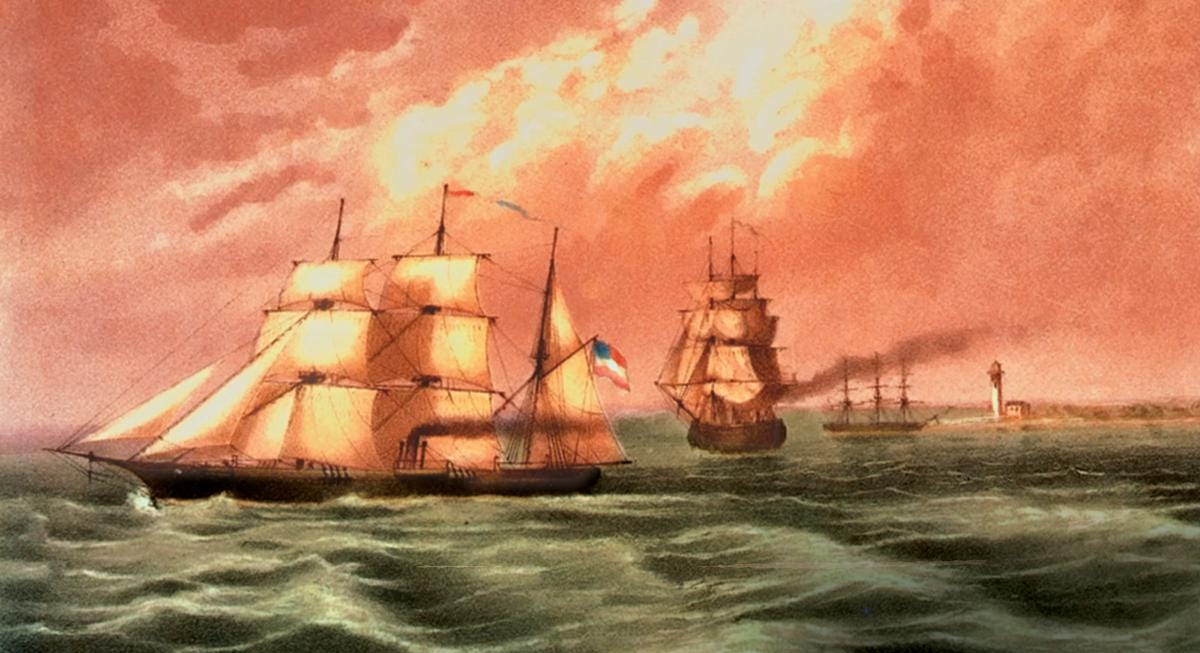
A major part of the Union’s war strategy, drawn up in 1861 by General Winfield Scott, was a blockade of Southern ports. Officials in Washington knew that the South would draw upon the American experiences in the American Revolution and the War of 1812 to smuggle arms through a blockade. Therefore, the main objective of the US Navy was simple: cut off the South from imports and exports and starve the Confederate economy. Secretary of the Navy Gideon Welles created a “Blockade Board” consisting of officers and civilians to organize the effort to cut off the South from the rest of the world.
This was no small feat. The Confederacy consisted of 3500 miles of coastline with hundreds of small and large ports. Some of the waterways off the coast were very treacherous and the US Navy did not have enough vessels at the start of the war to blockade all of them. The Board created four different quadrants to organize the different naval task forces. Additionally, it recommended seizing some isolated southern ports like Port Royal, SC, or Key West, FL, to act as supply depots so that blockading warships did not need to sail north for refitting. A crash construction program and mass purchases of former merchant shipping grew the US Navy by hundreds of ships. Additionally, the Navy acquired light vessels to infiltrate southern ports and patrol rivers such as the Mississippi. To motivate sailors, the administration utilized the Prize System. When a ship was captured, it was sent to a “Prize Court” (usually in New York, Philadelphia, or Key West). If the capture was ruled legal, the value of the ship and cargo was split between the U.S. government and the crew of the capturing vessel. This created a massive financial incentive for Union captains to hunt blockade runners.
1864 proved to be a disastrous year for Confederate shipping. The Union seized or closed one major port after another: Mobile Bay (Aug 1864), Savannah (Dec 1864), and finally Wilmington/Fort Fisher (Jan 1865). By 1865, one out of every two blockade runners was being seized by the Union, a massive increase since the start of the war. Several major Confederate warships, such as the famed CSS Alabama, were destroyed at sea. Additionally, Union spy networks in Europe and the Caribbean tracked arms shipments going to the South. In Europe, Thomas Dudley and Henry Shelton Stanford oversaw networks reporting on which ships were carrying arms for the Confederacy. In the Caribbean, local American consular officers reported to Washington how these weapons were being transferred for the final run north. The flow of information enabled the Union to hunt down every blockade runner it could. In 1863, Washington declared that under the “Doctrine of Continuous Voyage”, it could seize any ship carrying arms for the South. This meant that European merchantmen carrying arms to the Caribbean before being shipped to Southern ports were fair game. Slowly and surely, the blockade made it very difficult for the South to fight on even terms with the North.
These efforts were crucial, but not perfect. Right up to the end of the war, ships were still entering Confederate ports with arms for Confederate troops. Galveston proved especially difficult for the Union to blockade and some blockade runners managed to dock there even in January 1865, a mere few weeks before the war ended. To avoid a war with France, Lincoln did not allow attacks on shipping headed to Matamoros, meaning that weapons bound for the Confederacy continued pouring into Texas even after the surrender at Appomattox Court House. Confederate blockade runners proved to be very fast and adept at using the difficult coastline for protection. Even smaller ports could handle many of the cargoes being delivered and the Union could not cover them all. Despite the incompetence that plagued the Confederate war effort, the Rebels did manage to be very skilled at importing weapons in spite of overwhelming Federal pressure.
Sources:
https://www.nationalcivilwarmuseum.org/lectures/scotts-anaconda-plan/?srsltid=AfmBOoos9lUUlC9eF12FA3VAUvEPUuQdjIr5ZFQRXkQYo_5X0koObHW3
https://muse.jhu.edu/article/9053/summary
https://digitalcommons.georgiasouthern.edu/etd_legacy/16/#:~:text=To%20handle%20this%20daunting%20task%2C%20the%20blockading,had%20one%20of%20te%20most%20difficult%20tasks.
https://www.usni.org/magazines/naval-history-magazine/2011/march/navys-evolutionary-war
https://pensionresearchcouncil.wharton.upenn.edu/wp-content/uploads/2017/02/07-Chapter-7.pdf
https://history.state.gov/milestones/1861-1865/blockade#:~:text=By%20July%20of%201861%2C%20the%20Union%20Navy,as%20a%20belligerent%20in%20the%20Civil%20War.
http://samilitaryhistory.org/lectures/livplspy.html#:~:text=Dudley’s%20first%20move%20was%20to,government%2C%20the%20most%20frequent%20offender.
https://www.lexology.com/library/detail.aspx?g=cbd2a585-8b23-4647-b640-f05a9a5a7f8a
https://easttexashistory.org/items/show/160
https://historicsites.nc.gov/blockade-runner-activitydocxpdf/open#:~:text=Blockade%20runners%20were%20usually%20steam,Navy%20ships%20could%20not%20go.
The scale of Southern arms imports was truly impressive. Hundreds of artillery pieces, hundreds of thousands of rifles and muskets, gunpowder, saltpeter, clothing, and other needed materials were shipped from European companies across the Atlantic and the Caribbean to the Confederacy. Southern troops may have been outnumbered and outgunned, but they did have a formidable array of firepower that made it much harder for the Union army to defeat them. The Union went to great lengths to stop Confederate ships from carrying arms to Southern ports and cotton to Europe. These efforts became more effective as the war went on, but they never fully cut off the Confederacy from outside support. So why didn’t these weapons prove decisive in enabling the South to win?
The Confederacy had different field armies and garrisons stretched across its territory, and it needed to be able to supply them all. While the South had a formidable port system, its rail network was a disaster. Many train lines ran on different gauges, meaning that trains had to stop to transfer their cargoes. The roads also struggled to handle the large-scale movement of troops and supplies. Additionally, almost all imported goods were funneled to the Richmond Arsenal for inspection and stamping. This created a massive backlog where thousands of rifles sat in warehouses while Lee’s army in the field was still carrying antique smoothbores.
Cotton (nicknamed King Cotton at the time) was very valuable and appreciated in value as the war went on. However, the South made a devastating mistake at the start of the war by burning millions of bales to intentionally stoke a crisis and elicit European support. Instead, European countries began sourcing cotton from India and other parts of the world not involved in the war by 1862 to deal with their shortages. Whatever profits the South made by selling cotton to increase its purchasing power was erased by skyrocketing shipping insurance costs. Richmond badly overestimated the power of its strongest commodity on the market.
Weapons need spare parts to function for long periods. While Richmond did make efforts to domestically produce imported weapons parts, it did not do enough to produce these at scale. For example, if a spring on a Whitworth gun broke, the Confederacy was unable to replace it immediately. The South did produce a lot of its own artillery during the war (or captured them from the Union), but still required specialized guns to bombard fortified Union positions or to protect its own ports. Confederate industrial capacity couldn’t possibly match the Union in this respect.
The naval component of the war was very important, but still secondary to the land battles between the two armies. As the Union made major advances, it devastated the South’s rail and road network. It also seized major ports that the South needed to import weapons at scale. These advances came at a major cost for the Federals, but they did destroy the South’s ability to create a war economy. Between this and the devaluation of the Confederate dollar, the South’s ability to purchase and transport weapons became much more limited towards the end of the war. The Confederacy proved to be very effective at weapons procurement from abroad, utilizing the lessons from the American Revolution and the War of 1812. However, it failed to ensure that all of its forces were properly provisioned and could not mobilize enough resources to stop the Union advances.
Sources:
https://www.armyupress.army.mil/Portals/7/combat-studies-institute/csi-books/gabel6.pdf
https://www.battlefields.org/learn/articles/cotton-king
https://muse.jhu.edu/article/421417/summary
https://www.investopedia.com/terms/c/confederate-dollar.asp
Postscript
My next article will cover another case of an underdog importing weapons to stop a larger adversary. In the 1890s, the Boer Republics also sought European arms to fight against the British Empire. Their gold-for-arms deals helped set the stage for one of the bloodiest conflicts in Africa at the time.
No posts
Comments
Nothing yet. Say the first thing.
Sign in to join the conversation.