
OneRiverTea, a venerable tea vendor focused on “seeking out and working with disadvantaged farmers throughout China”, has recently introduced a new sample set, the “Odds & Ends: Untea Sampler”1. ‘Tea’ is generally defined as the leaves of the Camellia Sinensis plant, but this sampler focuses on the non-leaf portions of the plant, nonetheless processed as if they were teas. The sampler includes teas made from the stems, flowers, fruits, and axillary buds of the tea plant, intended to explore the non-leaf portions of the plant we have come to know and love.
But, are these teas any good?
Most tea drinkers generally forget the nature of the ‘tea’ plant that provides their beloved brew. The tea plant is a species within the genus of Camellia, a species largerly known for beautiful flowers, and commonly grown for decorative flowers worldwide. Camellia Sinensis, much like any other Camellia, grows rather beautiful flowers:
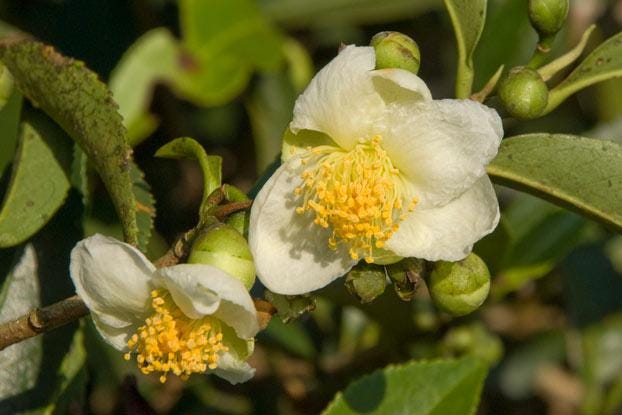
But, do these flowers produce a pleasant brew when infused?
When processed as one would any other flower, by simply drying or baking, it seems no. Most flower teas are processed in a rather simple manner, and produce quite an effective brew when are they infused. However, the 2024 Baked Tea flowers produced a brew that I can only describe as ‘generic’. The times I’ve attempted to brew them, the results were slightly nutty (presumably from the baking), lightly floral, vaguely thick, and overall incredibly subtle. These flowers did not produce a powerful or incredibly fragrant brew as other flowers, such as rose, hibiscus, chamomile, or lavender, instead tasting as one might expect any random flower to taste - ‘generic’.
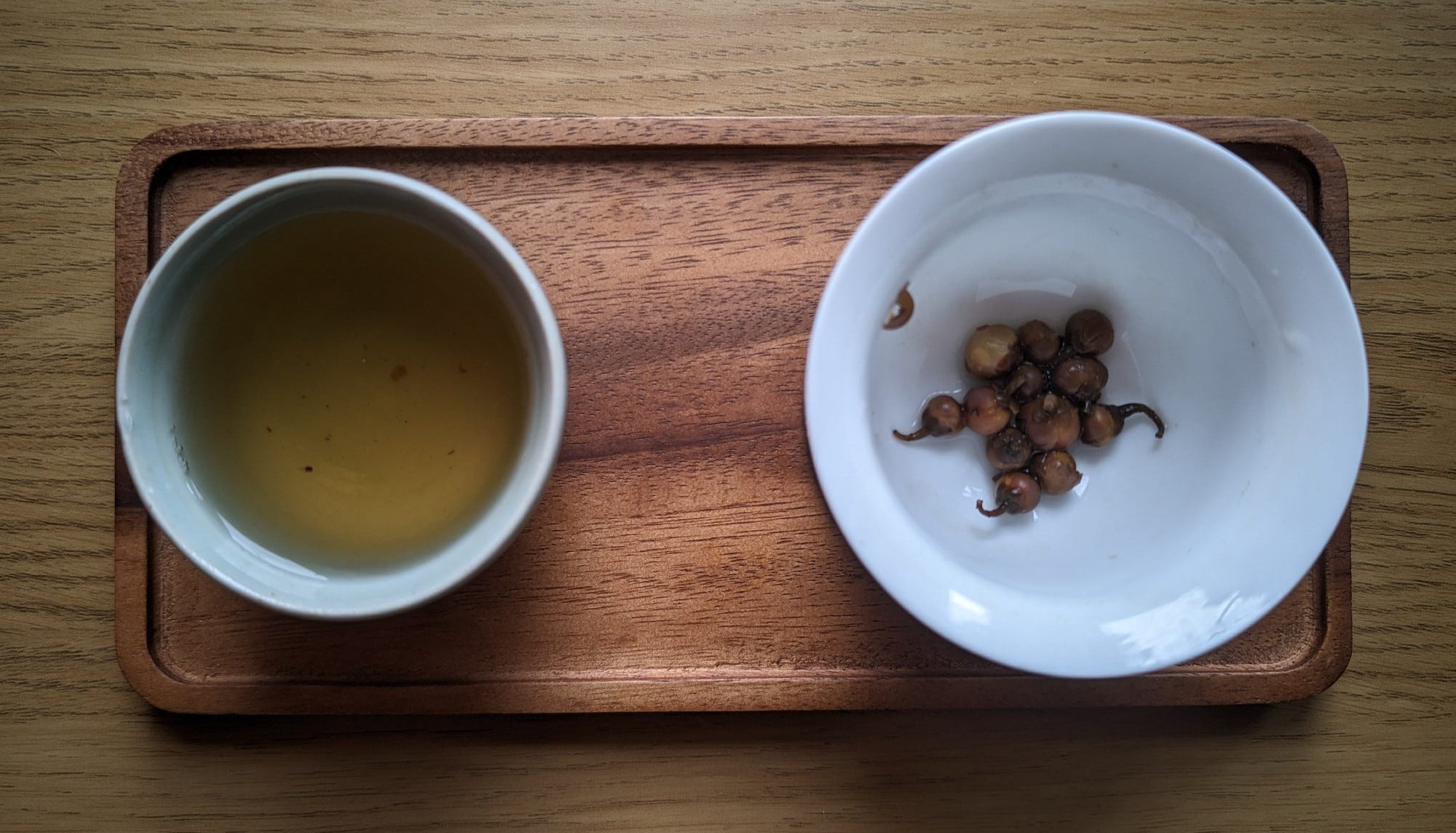
However, not all hope is lost for the flowers of the tea plant - OneRiverTea also offers the tea ‘2025 Sugar Buds’, a flower production that has had a fermentation3 and oxidation process, promising to produce an incredibly sweet and fragrant brew. I look forward to trying it, but until I do, I cannot in good faith rank the 2024 Tea Flowers any higher than this.
Once a flower has been pollinated, it begins a transformation process, and becomes a fruit, ready to propagate the next generation of plants. In the case of Camellia Sinensis, the fruit takes the form of what is largely known as a ‘seed pod’, with very little flesh as one might eat. These seeds have a history of being brewed, largely due to their inadvertent inclusion in lower grade compressed teas. As with any ‘rougher’ selection, the seed pods tend to have a particular sweetness to them, and OneRiverTea’s Aged Tea Seeds are no exception to this rule of thumb.
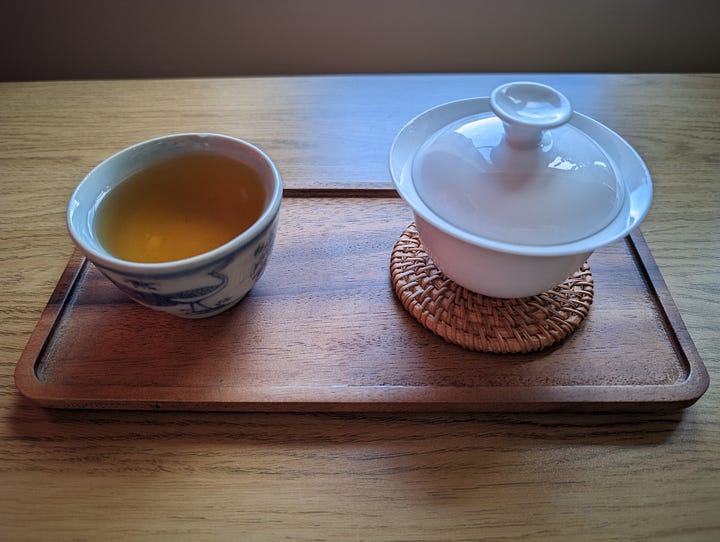
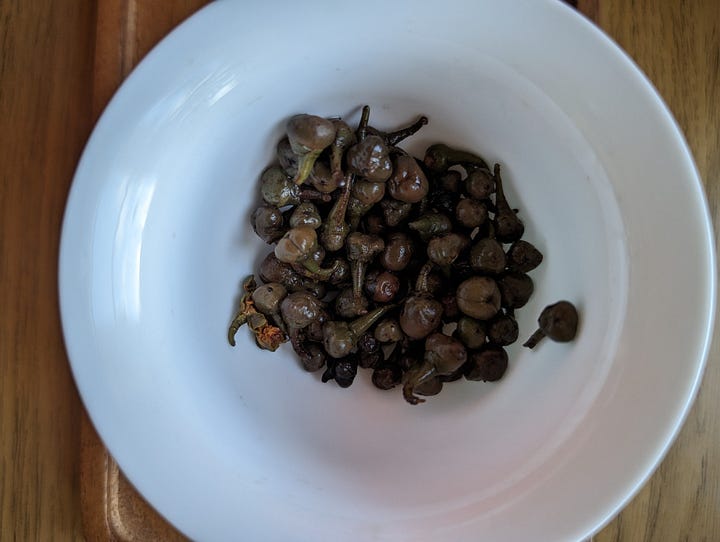
This tea had a strong spicy and sharp note, alongside a distinct freshness, like that of a white tea. It was quite sweet, also. The seed pods themselves, when eaten, did not produce much of a distinct taste experience, despite the brew having a somewhat astringent and drying quality.
The main brewing practice for tea fruit, however, is not them on their own. Generally, they are included with other material, usually inadvertently, as a result of the blending and processing of the tea. However, the brewing of Guangxi Liubao has a history of including tea seeds explicitly in the brewing process, where they enhance texture and depth.
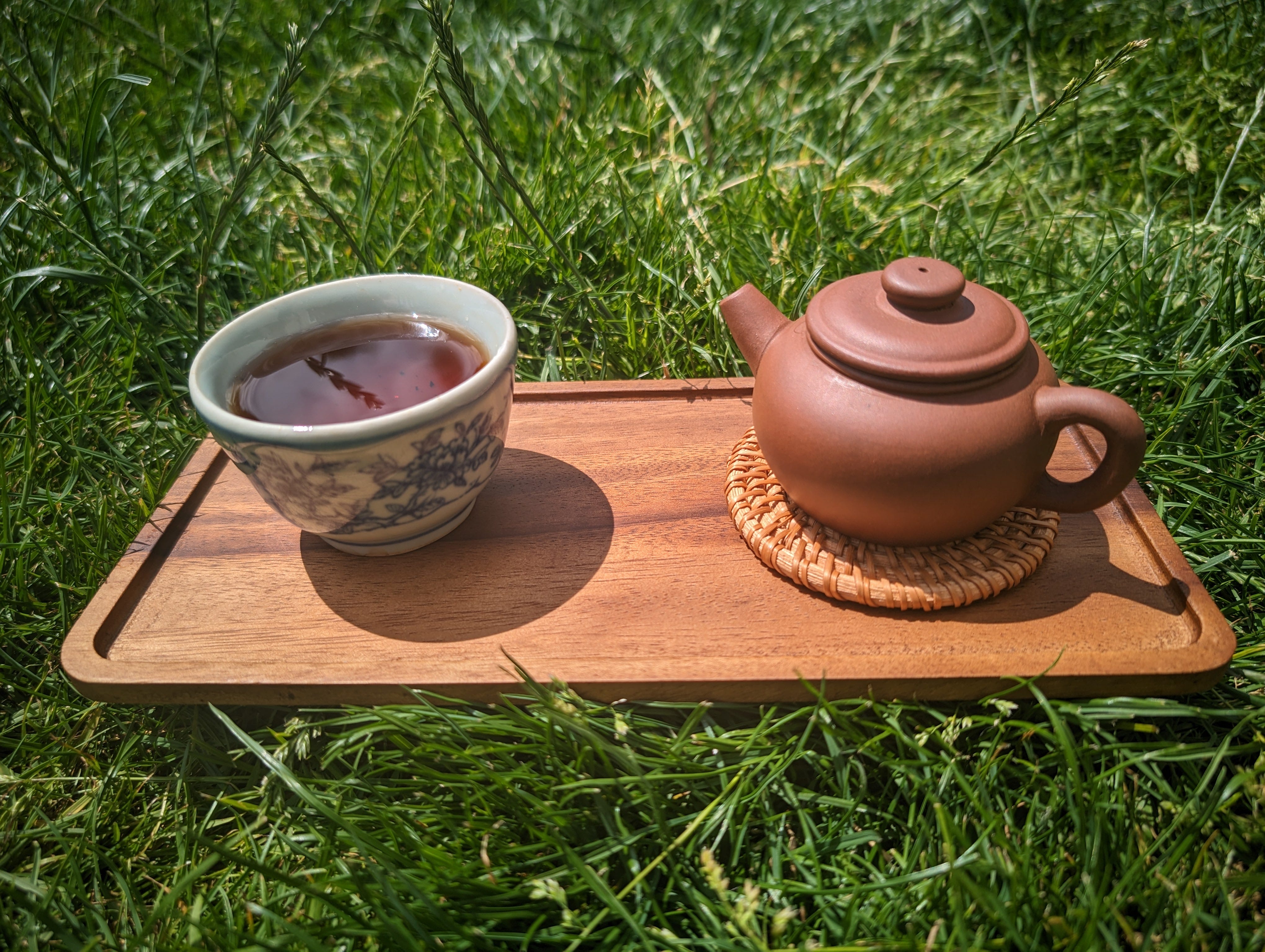
As of such, I tried to brew some Liubao with OneRiverTea’s Tea Seeds. The first tea with the seeds I tried was a 2005 4 Gold Coins Liubao, at 5.5g with 2.5g of seeds, which resulted in a rather confused brew. This particular instance of the 05 4GC was on the weaker side, and was easily overpowered by the seeds. The resulting brew was bright, sweet, full bodied, and quite thick, as a rather strong contrast to the thinner brew of the seeds themselves. However, the Liubao in this scenario served to enhance the seeds, more than the seeds enhancing the Liubao. It was entirely overwhelmed, simply providing texture and depth to the brew of the tea seeds.
However, the Liubao had some dark, ripe notes, from the aging and fermentation, which conflicted with the brighter notes of the tea seeds, and overall damped the experience.
Nonetheless, I was not deterred, and tried the Liubao and Tea Seeds combination once more, this time with the much more powerful CNNP Red Box Liubao. This tea, on it’s own, has strong chocolate notes, ripe moisture, and a reasonable degree of power and bitterness even when brewed at lower tempuratures. However, these characteristics made for a worse pairing with the tea seeds, even when their quantity was significantly reduced, to 1g of seeds with 5.5g of Liubao. This brew presented as even more confused than the prior one, with chocolate dankness and bitterness and white tea-adjacent brightness and sweetness appearing at the same time.
The processing of these tea seeds appears to be remarkably different to that which would have been brewed alongside Liubao traditionally, and I suspect these tea seeds would find themselves at home in a blend with young, green, white tea, or green tea, rather than the Liubao I tried to brew them with.
Yabao is a term that refers to the axillary buds of ‘non standard varietal’ (NSV) puerh tea - that is, the branch-producing buds of Yunnanese tea trees that are not Camellia Sinensis var. Assamica. Being ‘NSV’, they have the ability to produce some rather unique flavours not found in the standard cultivars used for puerh, and being branch buds rather than leaf buds, they are considerably lighter on active ingredients such as caffeine and theanine than the standard selection for tea production. In some cases, such as that of Camellia Crassicolumna, the non-standard varietals exclusively have their axillary buds harvested, with their leaves entirely neglected.
This combination of factors produces a rather interesting brew.
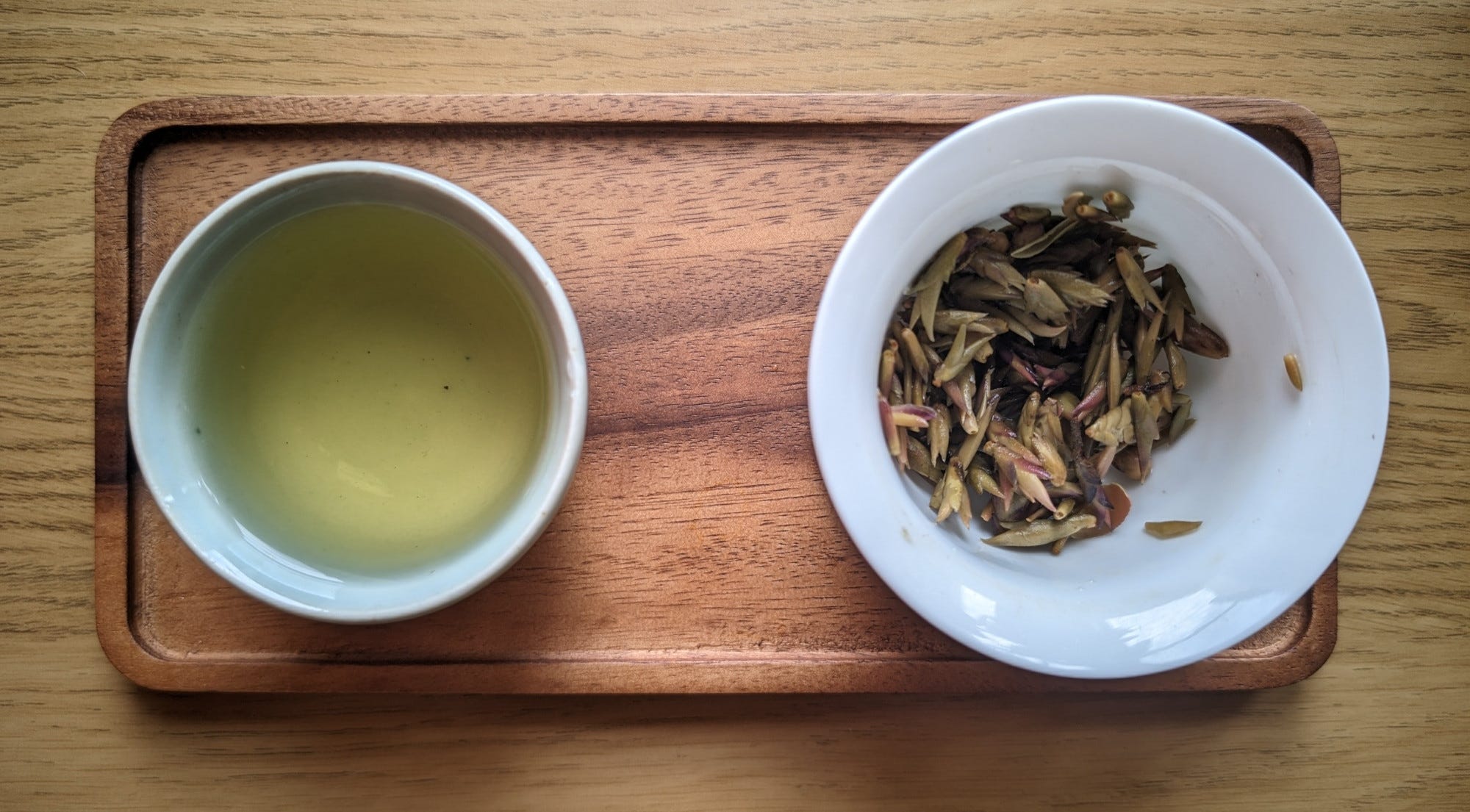
A porcelain gaiwan has rather poor heat retention capabilities, struggling to keep enough heat in the later stages of a brew to fully extract the last energy remaining in the leaves. In teas such as Yabao, this becomes particularly apparent.
Most teas tend to have a grading system, with the buds of the leaf recieving the highest ranking, due to their potency and strength, and more mature leaves recieving lower and lower grades, until you reach the stems, which are the lowest grade. The raison d’etre of this grading is not simply exclusivirty, but rather, extractability. Buds have the highest concentration of ‘tea chemicals’, with each step towards the base of the plant having less and less. As of such, the lower grades have less ‘strength’ compared to a bud, due to the lower concentration requiring more time and heat to extract. Yabao (effectively) sits right at the bottom of this grading system, being that it is the part of the plant that generates stems and branches, which have no need for the insect repellants caffeine, theanine, and the other psychoactives found within tea.
As of such, despite the gong-fu/repeated infusion methodology producing a variety of remarkably interesting notes, such as pine resin, rose water, cucumber, green wood, citrus, hops, and mint, the tea falls short. It is missing something - namely, potency. All the notes are short and sweet, a wisp on the breeze. The brew has little else to offer than fleeting aromas. It is entertaining, certainly, but it is missing something, largely due to the inability of the gaiwan to produce a strong extraction.
Given this, I attempted a brew in one of my thermoses next. This is a thermos that has been very well seasoned with the water I have at home - it has a thick layer of minerals encrusted internally that should minimise the interactions between the tea and the oxidising stainless steel inside. However, the yabao (at 5g/600ml) still oxidised. This produced a brew with a respectable level of sweetness, and a nice coating thick texture with the slightest hint of drying astringency, but the complex aromatic and flavour experience of the gaiwan brew was entirely lost. The tea was dominated by a note of lemon zest, and little else. While interesting, had I wanted to drink lemon zest, I would have simply peeled a lemon and infused that. This brew fails to extract the yabao adequately.
My next attempt to produce a satisfactory extraction was coldbrewing, a popular method of preparing tea in the summer. I gave the 5g of Yabao a brief ‘rinse’ with boiling water, in order to prepare the buds to recieve water, and added them to a glass bottle which I filled with 700ml of water, and stored in the fridge for 4 days.
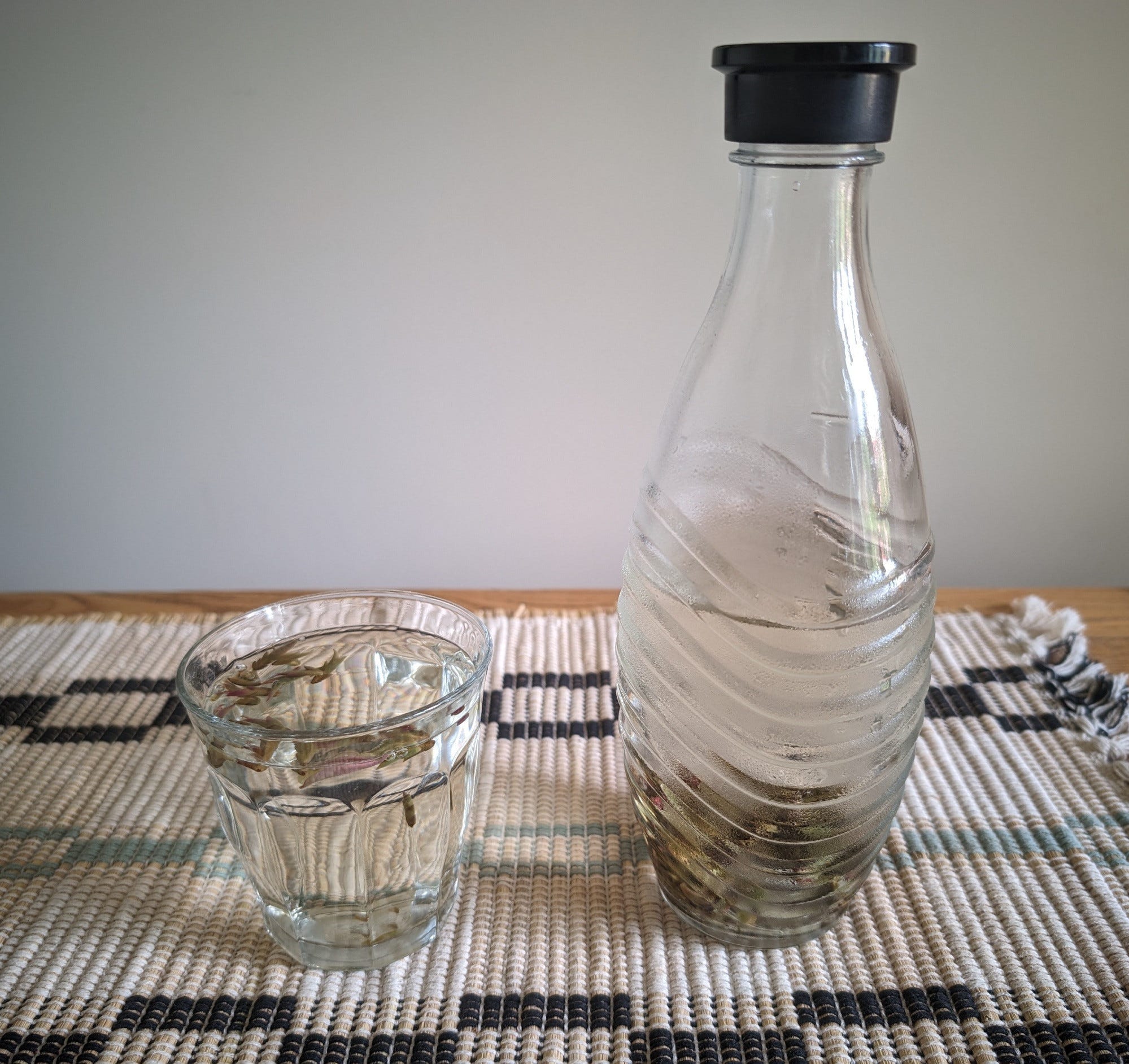
The figure of 4 days was based on the fact that the majority of the Yabao had absorbed enough water to sink to the bottom of the bottle by the fourth day, indicating that it had infused to a significant degree.
This brew had a remarkably different, yet reminiscent, profile to the hot brews, bearing notes of green wood, ginger, herbs, spice, and parsley, with a sweet aftertaste and a thick coating texture. It was very refreshing, but the cucumber note from the hot brew was missed.
This tea, overall, always felt like it was on the verge of producing a better extraction, but that greater, thicker, more aromatic, sweeter extraction never appeared, no matter what you did. My next step will likely be to boil what I have left, once I have ceramic wares that are suitable for boiling tea.
Kukicha is a Japanese term, referring to the stems of tea. In the production of Sencha and Gyokuro, these are generally sorted out, as they do not infuse as strongly as the leaves, thereby detracting from the experience. They are often included as part of the byproduct known as karigane, which also includes the veins of the tea leaves, and is processed as green tea, producing a sweet and savoury brew. However, the stems can also have another fate - that of Hojicha, where they are known as Kukicha. In this case, the stems are roasted, and develop a nutty, dark, sweet taste. One of the teas I first enjoyed was a Hoji-kukicha, given the natural sweetness of the stems. OneRiverTea’s Yellow Kukicha takes all that aspects of that tea that I loved, and pumps it to the maximum.
Yellow tea is a category of tea wherein prior to the final drying, a green tea is repeatedly ‘sweltered’ in humid piles and panfried, introducing notes of corn, roast, grain, and sweetness, among others. OneRiverTea’s Yellow Kukicha had all the aspects of a yellow tea that I am fond of, being the reduced astringency, the more intense body and aftertaste, the greater sweetness, as well as all the great parts of a hoji-kukicha, being the intense sweetness, the dark roastiness, and the thicker texture. It lacks any acidity, and, when brewed in a gaiwan, the tea had a unique bright herbal and caramel note that reminds me of coriander and Cola. When cold-brewed, it is incredibly sweet and thick, with light notes of roast making for a refreshing summer drink.
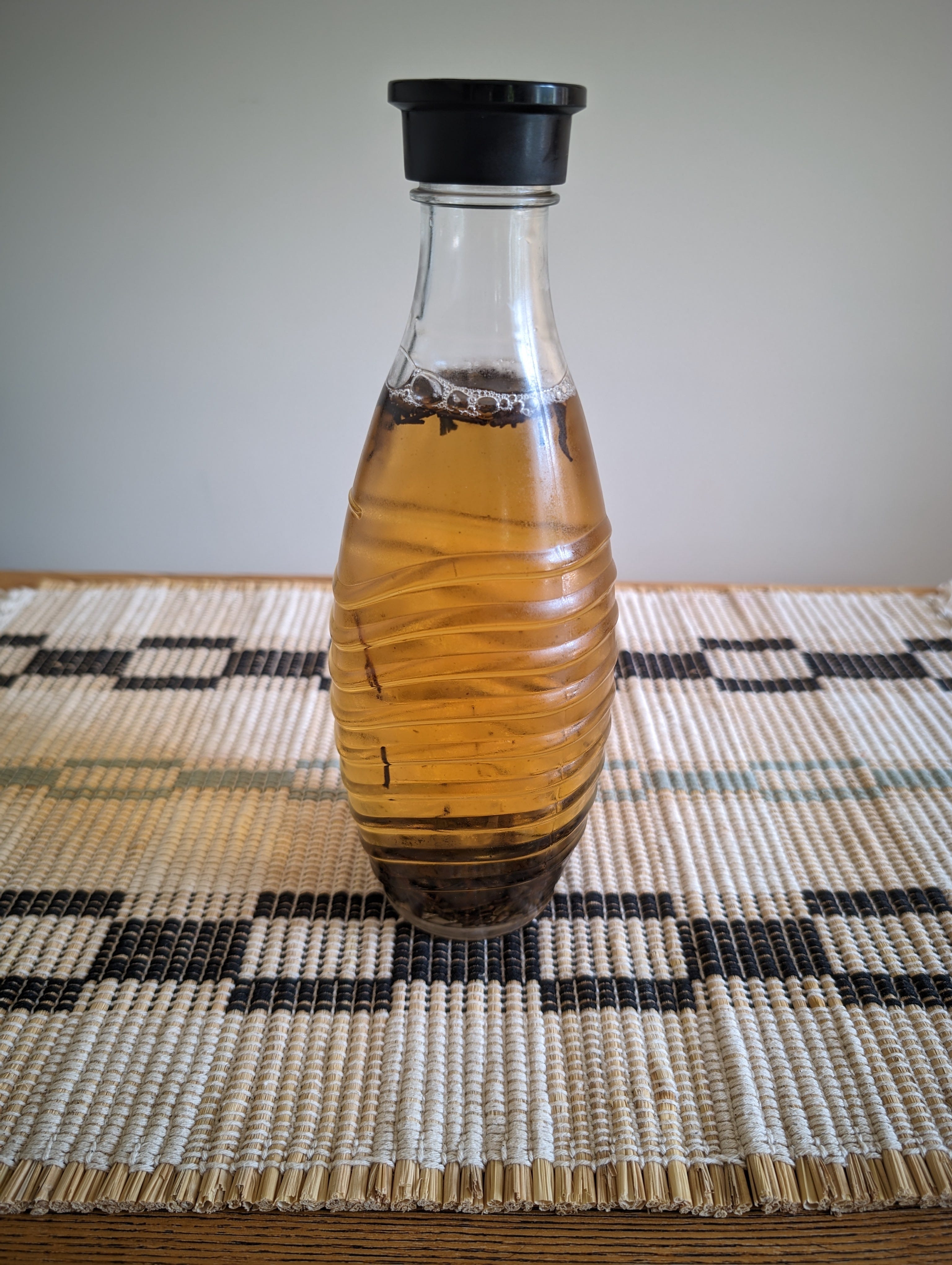
When brewed in a thermos, however, the tea’s otherwise grand performance slightly falters, given the oxidative effect of the stainless steel interior. It becomes more one-note, simply sweet and roasty. However, this is equivalent to the performance of any other kuki-hojicha in a gaiwan, which is rather impressive nonetheless. This tea is incredibly impressive, and is my favourite of the unteas. I hope OneRiverTea produces more.
https://onerivertea.com/products/odds-ends-untea-sampler
No posts
Comments
Nothing yet. Say the first thing.
Sign in to join the conversation.