
France has been my favorite getaway for a decade. Ten years of it with my husband, and more recently as a family, until it's turned into something close to a pilgrimage: the trip I yearn for all year. We go when we can, but the summer trip is the one that matters most that at this point is non-negotiable. The summer one is slow. We have enough time that it becomes about wandering without a perfectly planned itinerary, cooking at the rental with whatever the market had that morning, and eating dinner late because nobody's counting.
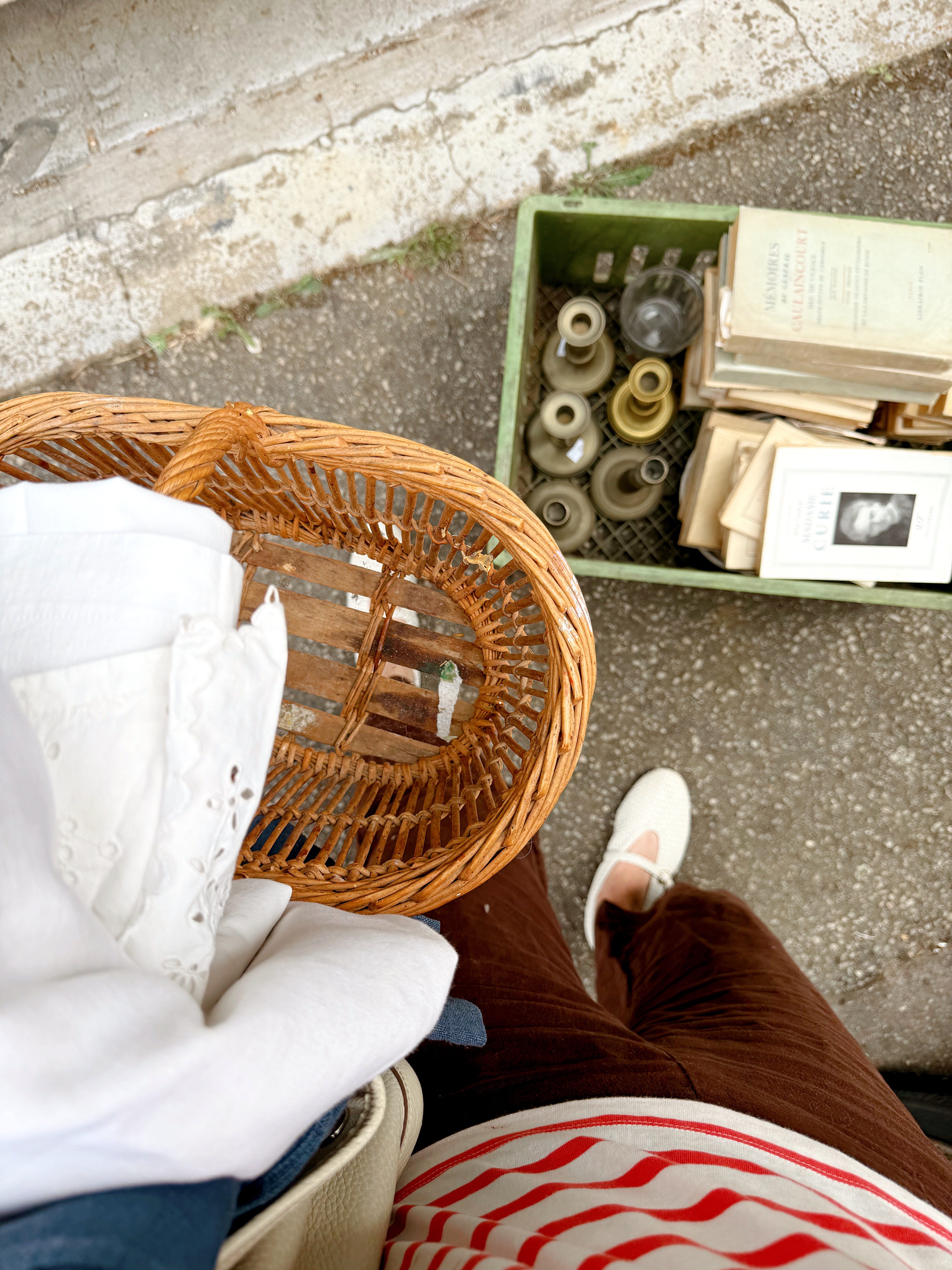
What I love there isn’t the postcard version, the main attractions. It’s the épicerie on the corner. The hand-lettered signage at the farmers market. The bistro tables outside a café that no travel guide has ever mentioned and that everyone on the street would be furious to lose. It’s wandering into a dealer’s antique shop in a nondescript village only to realize it’s one of the best I’ve seen anywhere. It’s the way we all slow down and synchronize into a totally different rhythm. A rhythm that makes me stop and wonder, “How do I bring this home?”
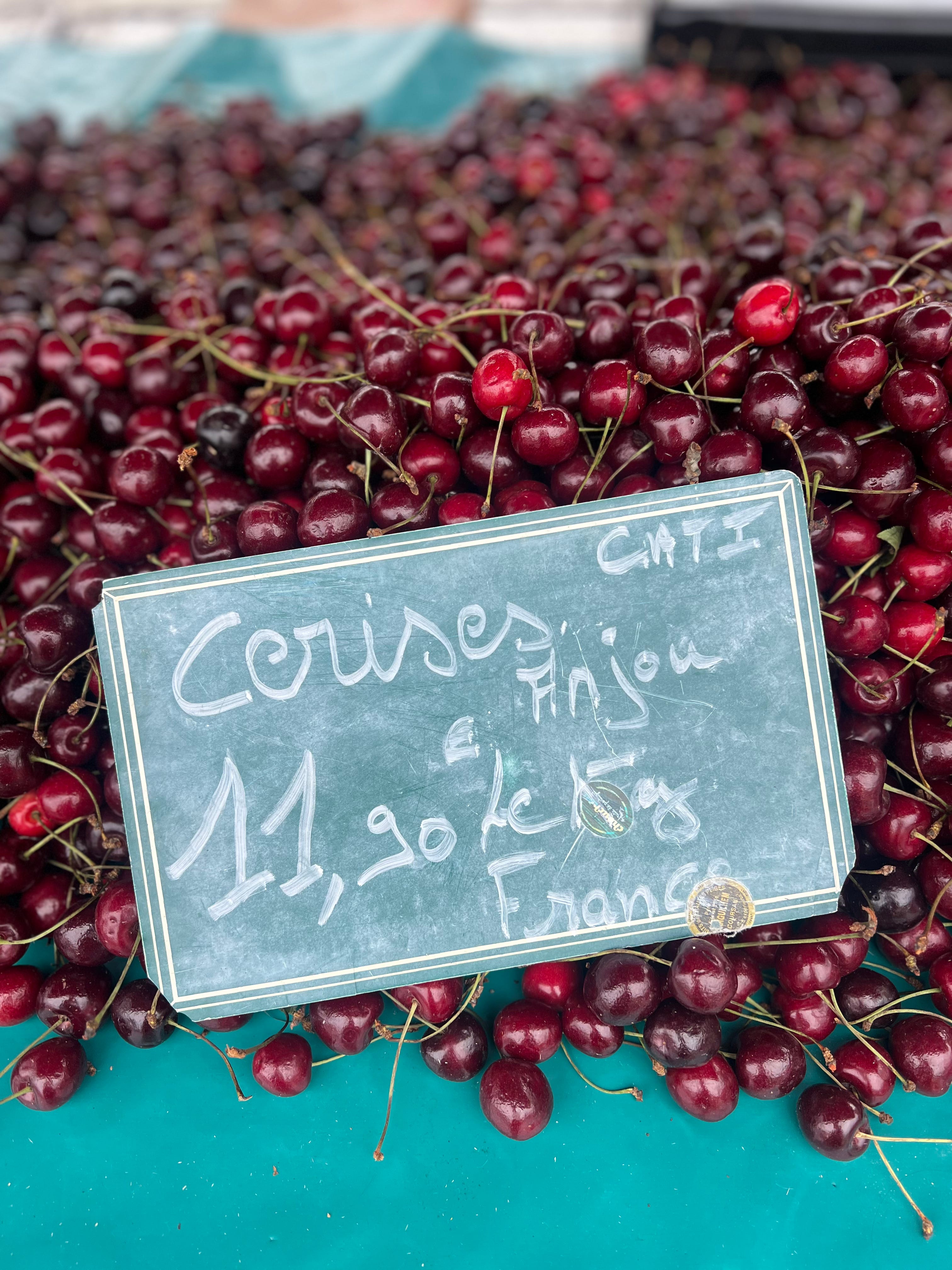
This summer I’ve realized that so much of what it all has in common is a human touch. Somebody lettered the sign that made my shoulders drop. Somebody chose the tablecloth in just the right shade of turquoise, set the tables out, and swept around them before anybody arrived to sit down at the café I didn’t want to leave. The dealer who collected diligently, curated the perfect selection, and made mates of items where there were none. The farmer at the market who lovingly placed their cherries on display. The winemaker who put their blood, sweat, and tears into the work. I find myself wanting to squeeze them all and say, “I see what you’re doing, and I feel it.” It’s magic. Pure magic to witness and experience, while also knowing that so much of the time the work goes unnoticed and unappreciated. How often do we thank people for the beauty and the care they bring to their work? Their profession? Their passions?
That’s the whole thing for me. Not beauty on its own, but the care. The mark somebody left because they took their work seriously, and knew the beauty was in the details.
It isn’t purely aesthetic. It’s something that settles into my bones, our bones. I see it in my children and my husband even when none of us have the language for it: a way of noticing, of slowing down, of letting something well-made hold our attention for a moment longer. Beauty and rest matter more than I used to let myself admit.
Which is why a month away, once a year, has come to feel less like a holiday and more like a convalescence. Feeding my eyes on things made with care, in a place that keeps the pace of the tide, puts something back that the rest of the year quietly takes out.
And that, I’ve come to realize, is the same idea governs everything I bring home.
Because when I say I collect French antiques, I want to be clear about what I don’t mean. I don’t mean the fine ones. Not the signed, not the pedigreed, not the pieces that turn a house into a museum where nothing is touched and everything quietly collects dust behind glass. You know me well enough to know that couldn’t possibly be it.
I mean the other kind. The quirky. The objects that make me gasp that instantly feel like heirlooms. Almost always worn, and always well loved by somebody before me. A pile of monogrammed linens for weddings that passed over a century ago. A stack of striped plates that don’t match and are better for it. An indigo work jacket a man wore for twenty years and mended by hand twice. These things were made to be used, and then they were, hard, for decades. The using is what makes them beautiful. Nothing in my house, my life, is too precious to touch and that is the entire point of it.
The collections have turned my home into something closer to a scrapbook than a showroom. Every room has many MANY things in it from somewhere. And they do the thing I care about most, which is make an ordinary day feel like something.
Which brings me to the reason I’m writing this today.
Every summer the same questions arrive, from friends and acquaintances and readers and, most often, from someone who has just seen a photo of a corner of my home. How do you do it? Where do you go? What are you actually looking for when you walk in, because I’ve been in shops like that and left with nothing?
I’ve never had a short answer, so I finally sat down and wrote the long one. It comes in two parts.
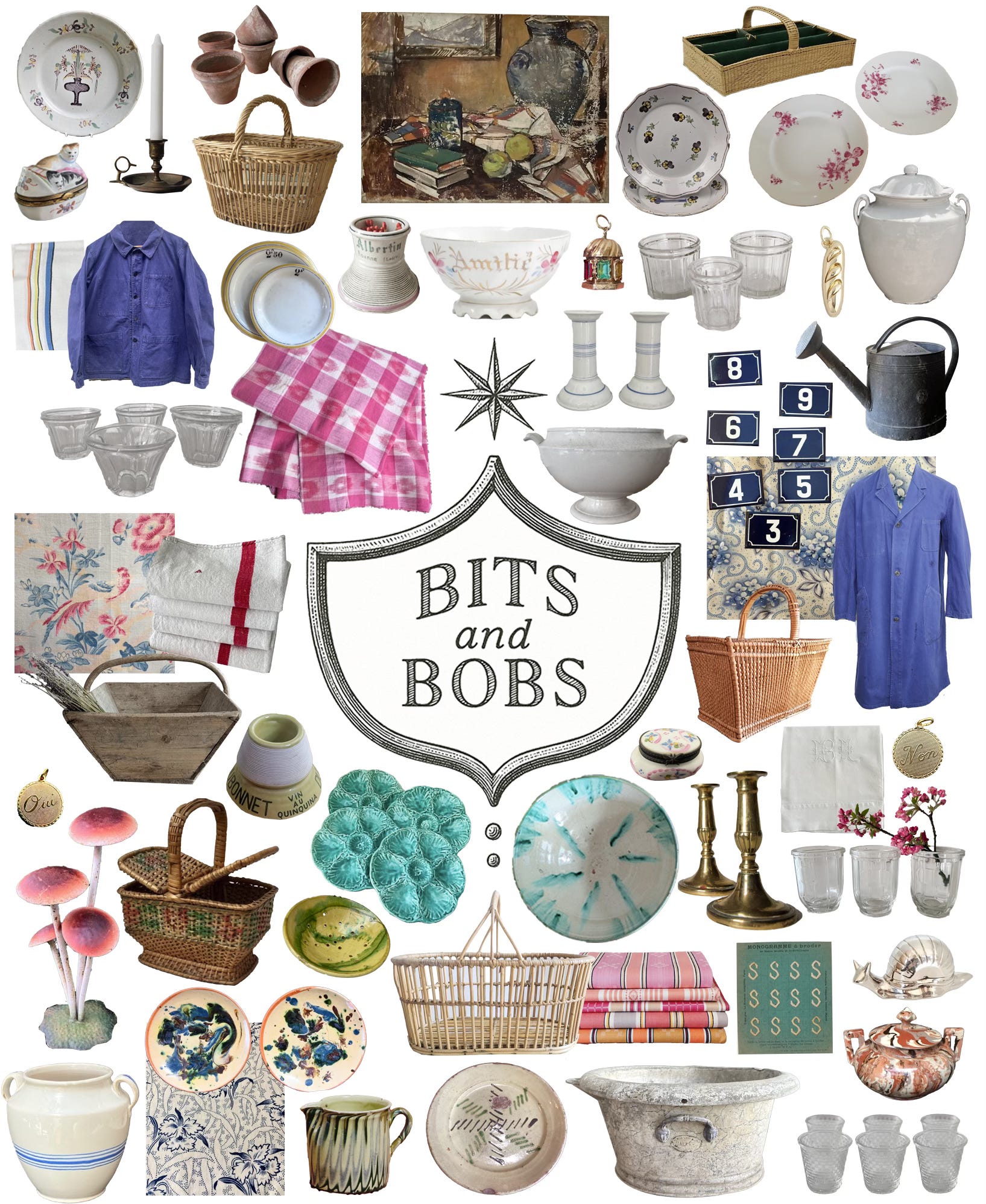
This weeks Bits & Bobs are pieces I sourced online if you want to take a quicker route to procuring some of these items for yourself. Links found here. Not a ShopMy member yet? Create an account here.
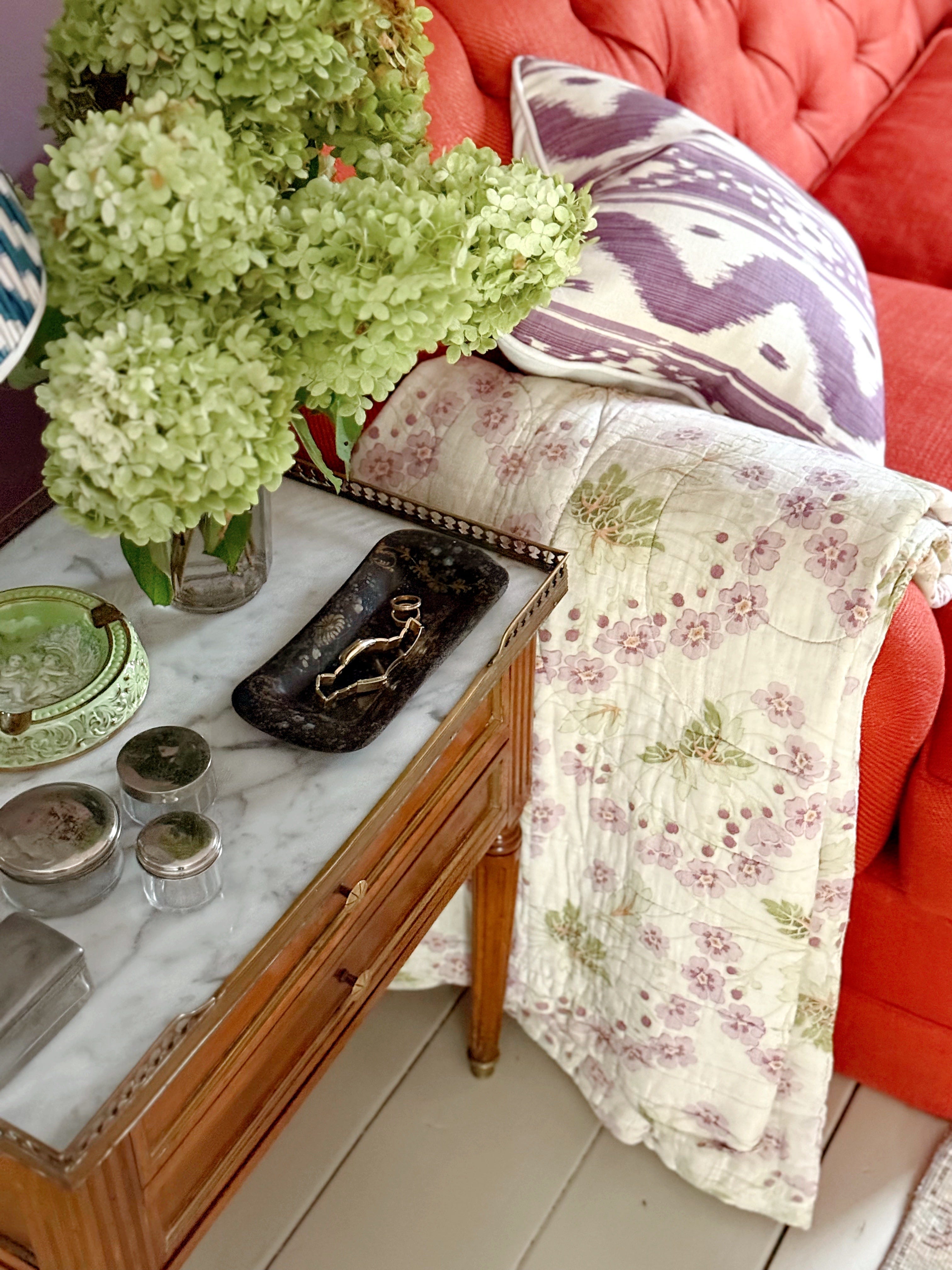
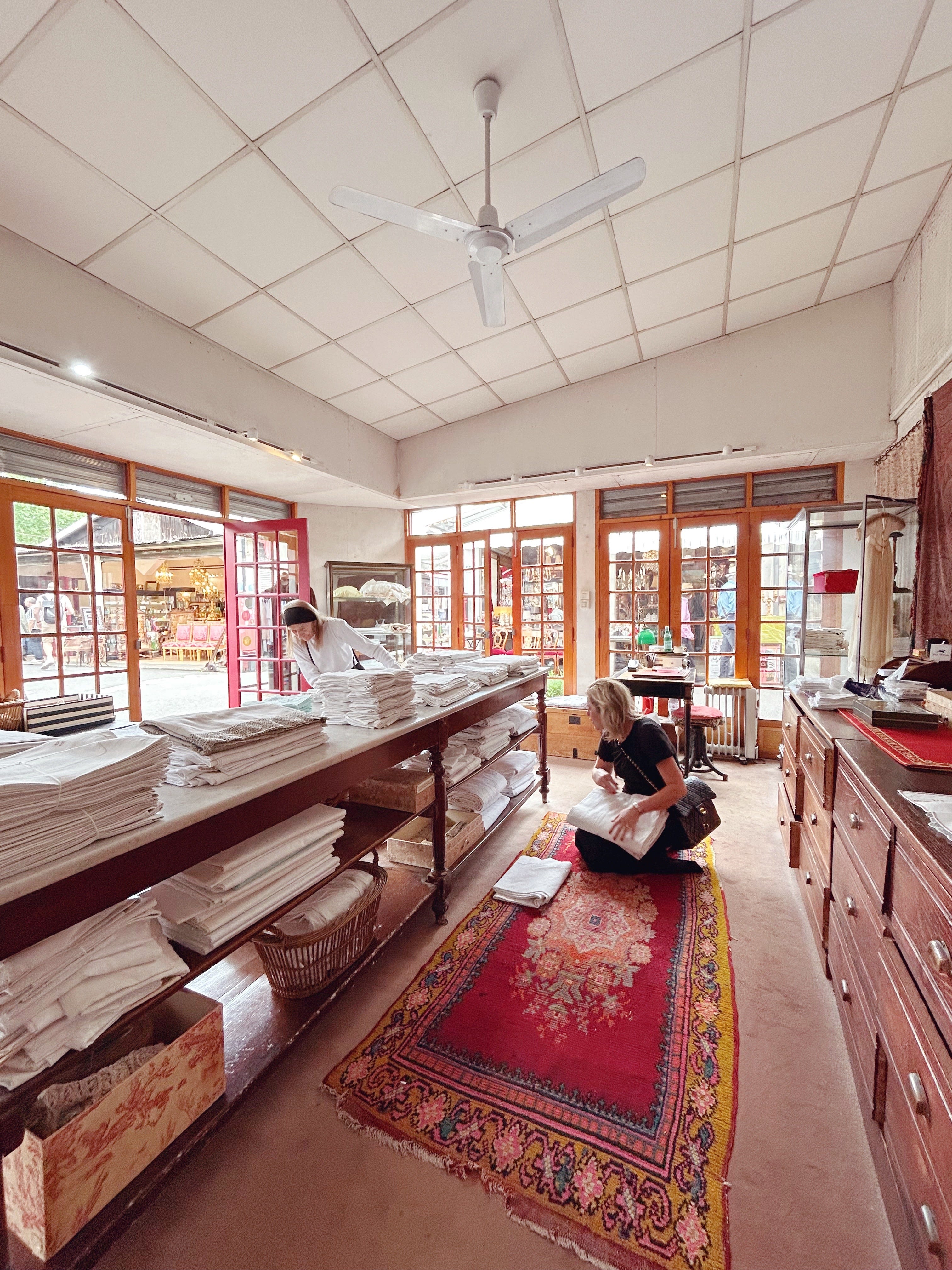
Hemp sheets, torchons, napkins, pillowcases. Anything with a monogram embroidered white on white by a woman preparing for a marriage in the early 1900’s. The initials are the whole point, and the fact that they’ll never be yours is the whole charm. Check the folds for wear and the corners for rust spots, then buy them anyway. Hemp only improves. A stiff sheet you’re unsure about will be the softest thing in your house within a year.
*Bonus points if you can find your initials in the mix - it’s something to celebrate when that happens and has become one of my favorite scavenger hunts.
Curtains cut down, indienne florals, faded toile, a length of something rolled in a corner with no explanation. Fabric gets priced by the piece rather than by what it is, which is exactly why the real finds hide here. I once pulled a set of hand stitched vintage Porthault out of a stack of ordinary linens and bought it for a song, and I have not fully recovered. Brunschwig and Fils no longer in production? You bet!
The tell is the edge and the texture: look for hand finished scallops, tiny stitches, a hem someone clearly spent an afternoon on. Screen-printed fabric with just a bit of imperfection? It makes my heart sing.
Faience, creamware, ironstone. Tureens, platters, pitchers, soup plates. I’m looking for crazing, that fine web of lines in the glaze that only comes from a century of hot dishwater, so hold it up to the light. Buy in odd numbers, buy mismatched, buy the one with the chip if the shape is good. A shelf of imperfect white is one of the quietest luxuries there is.
Amitié. Souvenir. Confiture. Bonne Fête. This started by accident, with a pot in a dusty shop that said friendship and refused to let me leave without it. A word turns an object into evidence: someone made this for someone, on purpose, for a reason. Look at the backs of plates, the fronts of pots, the rims of glasses.
Still lifes are the ones I can’t walk past. A bowl of fruit. A dead partridge and a lemon, painted with an entirely unwarranted amount of seriousness. Half of them are student work and it doesn’t matter at all, because a still life only has to get the composition and the dark right. Even a mediocre one holds a wall better than something new. Buy the ones where the varnish has gone amber, and remember that a bad painting in a beautiful frame is really two purchases.
Brass, silver plate, turned wood, chipped ceramic, church tall and dinner table short. I buy singles almost exclusively, because a mismatched cluster at three heights looks like a life and a matched pair looks like a shop. Pick them up, since real brass has a weight that surprises you. Old wax in the cup is a good sign, and so is a base where the felt has worn through.
Tins, snuff boxes, card boxes, papier mâché, anything with a hinge and a bit of tarnish. They’re the most useful thing in the car on the way home, since everything small and breakable ends up inside one, and they’re usually a few euros. They also tend to still have something in them: a button, a ticket, a photograph of someone’s dog in 1958. Always ask to open the box.
The small ones with the ribbed or sandpapered band around the base, usually shelved next to the ashtrays. Porcelain, faience, brass, occasionally advertising a business that no longer exists. They sat on every café counter in France and now they sit on almost none, which is exactly the moment to be buying them. Run your thumb across the band. Worn smooth in one spot means someone struck a thousand matches there.
I had one for years and carried it room to room like a small ceremonial object, lighting candles and incense with it. The collection solved that. Now there’s one wherever I’m likely to want one, which turns out to be the entire argument for collecting anything.
Galvanized watering cans with the long swan necks. Wire trugs, wooden trugs, zinc buckets, seed trays, terracotta pots stacked in a tower behind the barn, hand forged trowels worn thin on one side. The holy grail is a copper watering can. Yesterday, in a second hand shop there it was. Twenty five euros. Which is the whole lesson, keep looking and you’ll know what you have when you see it.
* Look behind the stall. In the alley. Garden things are heavy and unglamorous, so they rarely make it onto the table or even on display.
The French worked in indigo cotton twill for a century, in chore jackets and wide trousers and smocks and moleskin coats, and enough survived that you can still find pieces for less than a nice lunch. You want the faded ones. Real indigo goes at the elbows and the seat and the seams first, so it fades in a pattern that tracks a body, from ink to that soft chalky sky blue everyone has spent twenty years trying to reproduce and nobody has managed. Check the pockets, count the buttons, hold it to the light at the shoulders. Small mends are good news, and a patch sewn on by hand is better news, because it means somebody thought the jacket was worth saving.
I buy them because they do three jobs at once. It’s the jacket I garden in, the jacket I wear to a job site, and, thrown over a favorite dress with the sleeves pushed up, the thing that makes the dress look like I wasn’t trying. Buy up a size. They were cut to move in.
The most useful thing I own. They haul snacks, groceries, market flowers, material samples, and whatever else the day requires, and this summer I started carrying one as a purse, to the delight and mild confusion of everyone I know. If it was good enough for Jane Birkin it’s good enough for me.
This is the newest habit and the most portable one, which makes it dangerous. Flea markets and brocantes are full of them, usually in a dish by the register or tangled at the bottom of a jewelry box nobody has sorted. A gold shovel set with tiny stones, to hang alongside my snail shell and my clover? Yes, obviously.
They’re small enough that you’ll find them anywhere and cheap enough that you’ll stop counting. Look for a solid jump ring, wear on the loop, and any hallmark you can find, but the truth is I mostly buy the ones that make me laugh.
Almost a decade ago one of my favorite dealers had a set of angular ones, an odd shape I’d never seen before, and I couldn’t pass them up. I had no idea what I’d use them for. Turns out the answer is everything. Votive candles, the haphazard arrangements my children bring in from the garden, spare change, mustard and cornichons at the table, pencils on my desk. They cost nearly nothing and they never sit idle, which is a rare combination.
Look for the old shapes: heavy bases, thick lips, slightly wonky glass, embossed lettering if you’re lucky. Buy them by the handful. You’ll find a use before you’re home.
Underneath this list there's one rule that overrides the rest: if you keep circling back to it, buy it. Not because it's rare or a bargain or fills a gap on a shelf, but because your eye keeps going back and won't tell you why. Every object in my house I truly love came home that way. Every regret I have is something I walked past three times and then talked myself out of at the car.
I collect places the same way I collect objects. Not shells in a basket or pottery on a shelf, but dropped pins. A restaurant someone recommended quietly, almost reluctantly, the way people do when they’d rather it stayed theirs. A hotel I’d happily stay in again. A bakery worth taking the long way for. A beach that surprised me. A village I’m still thinking about months later. A brocante far enough off the main road to keep things interesting. Some of these places I’ve been to a dozen times, and others arrived secondhand from antique dealers, chefs, designers, friends, and a handful of readers whose taste I’ve come to trust completely. Somewhere along the way it stopped being an itinerary and became a living notebook. Today I’m handing it over: restaurants, cafés, hotels, gardens, markets, museums, villages, beaches, and hundreds of saved places across France.
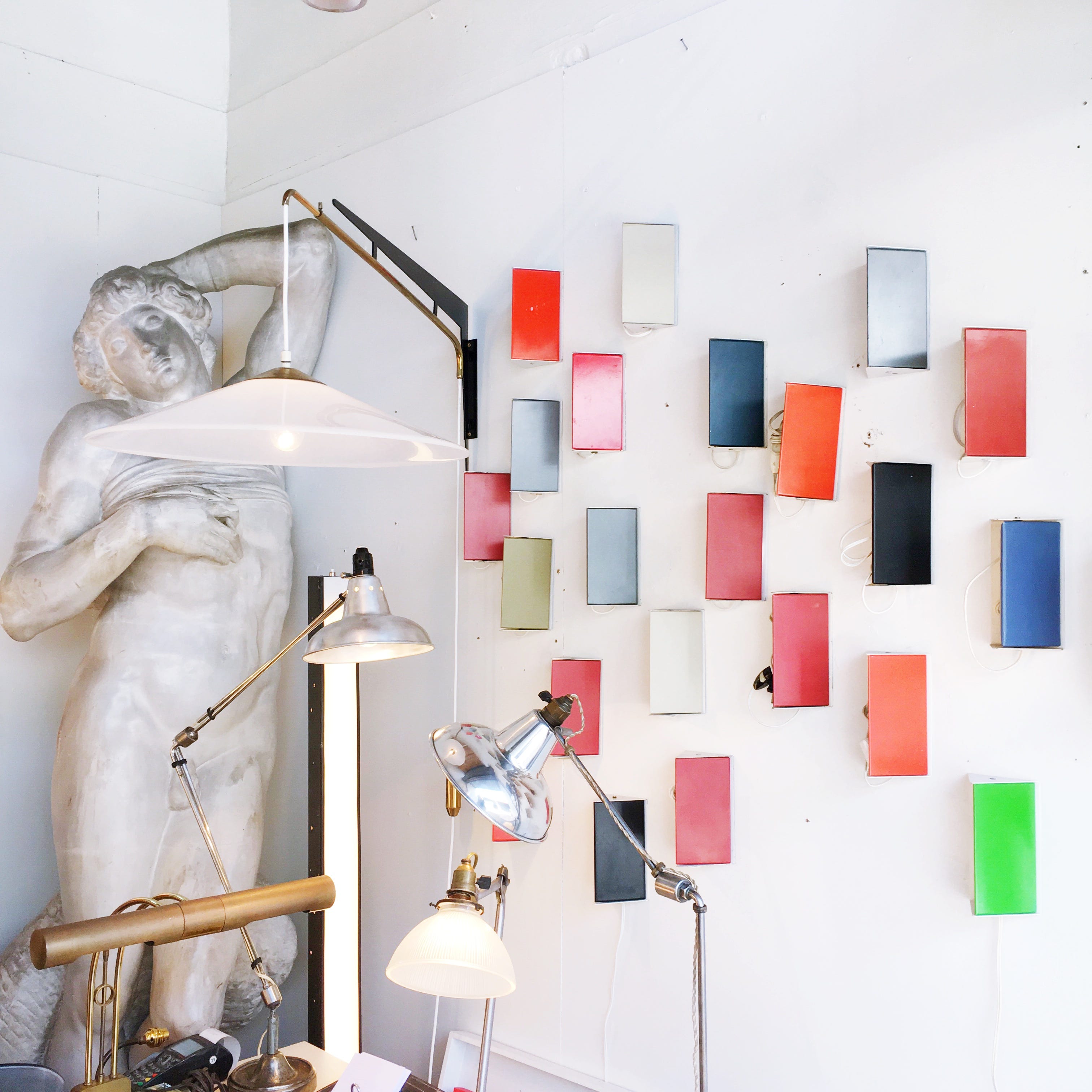
But if I’m honest, the real reason I wanted to share it is the brocantes. Anyone can search antique store near me. The magic is knowing which ones are worth pulling over for, which villages are worth building a day around, and what to do once you’re through the door.
Comments
Nothing yet. Say the first thing.
Sign in to join the conversation.